
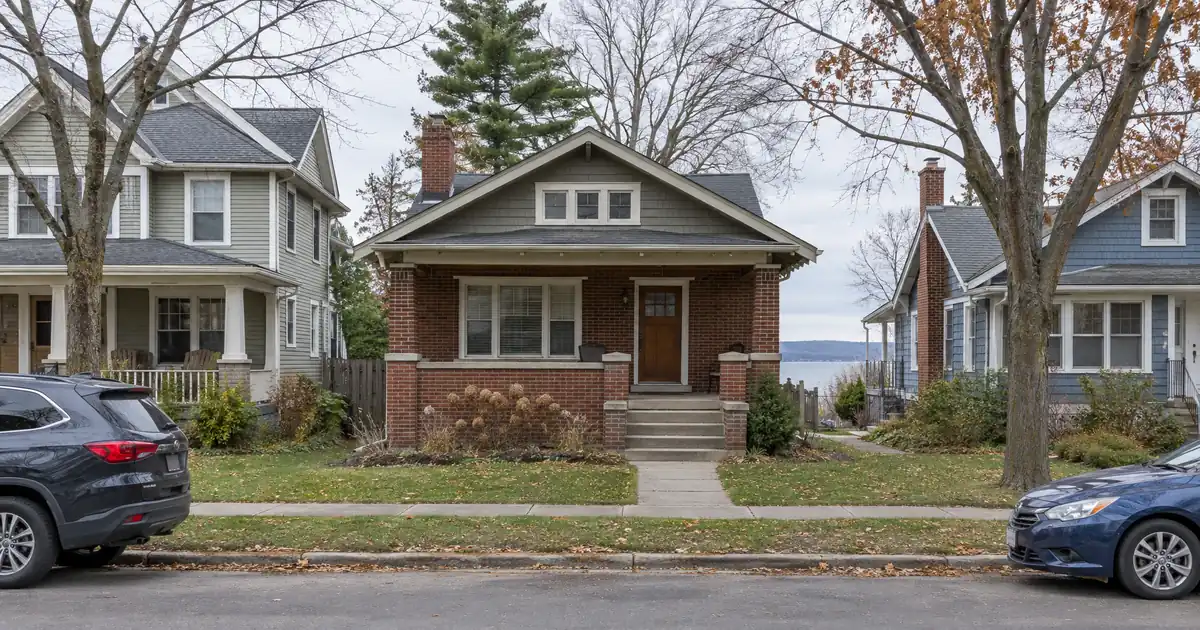
Can a single-family rental in Traverse City actually cash flow at today’s prices, or is this a market where investors are really just buying appreciation and hoping the rent check helps a little? The honest answer, after running the numbers on a handful of neighborhoods, is that it depends heavily on unit count and entry price — a $600,000-plus historic home downtown rarely pencils on rent alone, while a well-chosen duplex or fourplex in the right corridor often does.
The Short Version: Investment property loans in Traverse City, Michigan tend to fit buyers targeting multi-unit properties or entry-priced single-family homes in the $300,000-to-$425,000 band, where rent-to-price ratios hold up better than in the city’s premium historic districts. A DSCR loan is underwritten primarily on the property’s rental income measured against its full monthly obligation, which matters here because Traverse City’s price spread between neighborhoods is unusually wide for a city this size.
DSCR Calculator
Run the numbers in Traverse City, MI
Rate source: Freddie Mac 30-yr average via FRED® — Federal Reserve Bank of St. Louis · effective Sep 17, 2026
Prefilled with starting assumptions — enter your own rent or nightly figures, taxes, insurance, and HOA for a more accurate picture.
Program parameters update from Lendmire’s centralized guideline source. Taxes and insurance are editable estimates.
As of Sep 17, 2026 · General Freddie Mac market benchmark, not a Lendmire loan offer. Rent, nightly rate, occupancy, taxes, and insurance are editable estimates. Short-term rental figures are estimates only and vary significantly by season, property type, management approach, and local short-term-rental rules — confirm local regulations before relying on them. Qualifying income for short-term rentals varies by program — some use appraisal market rent, others use documented STR history or projections — and is confirmed in underwriting. Not a Loan Estimate, approval, or commitment to lend. Program availability and eligibility are subject to lender guidelines, credit approval, property review, and underwriting.
- City-proper population sits at 15,593, with a metro population of 156,600.
- Traverse Heights and Old Towne carry the lowest neighborhood entry prices, around $323,000 and $366,000 respectively.
- The $300,000-to-$350,000 price band has run tight, roughly two months of supply, according to MyNorth.
- A documented duplex near Old Mission Peninsula generates $4,790 per month in gross rent — well above what a comparable single-family price point produces from one tenant.
- Grand Traverse County home values have risen roughly 63 percent over five years, per Taylor & Janel Brown’s market analysis, which stretches day-one rent coverage even as it strengthens the long-run equity case.
Traverse City Market Snapshot
A quick read on the Traverse City investor landscape — figures come from the cited sources below. Confirm current property-level numbers before underwriting.
| Metric | Detail |
|---|---|
| Home prices | $345,000 median (Feb 2025) (Redfin) |
| Typical rents | $1,111 gross rent (2024) (City-Data.com Traverse City) |
| Recent appreciation | County price range/appreciation % (Taylor & Janel Brown Market) |
| University enrollment | 4,054 students (2024-25) (Northwestern Michigan College) |
| Population | 15,593 population (Census Reporter (ACS 2024 5-yr)) |
| Employment | 8,000+ employees (Michigan’s Creative Coast) |
The Price Spread Problem
Traverse City’s neighborhood pricing doesn’t behave like a typical Midwest small city, where price differences between areas are modest. Here they’re not. According to a local neighborhood guide, recent medians ran roughly $323,000 in Traverse Heights, $366,000 in Old Towne, $425,000 in Slabtown, $535,000 in Oak Park, $635,000 downtown, and $720,000 in Boardman. That’s more than a two-times spread across a city of 15,593 residents packed into 8.3 square miles.
For an investor running DSCR math, that spread is the whole story. Rent doesn’t scale with price the same way across those tiers — a three-bedroom rental in Traverse Heights and a three-bedroom rental in Boardman don’t command proportionally different rents, even though the purchase prices differ by hundreds of thousands of dollars. That mismatch is exactly why entry-price neighborhoods, not premium ones, tend to be where the coverage ratio actually clears at standard leverage.
Zillow’s citywide average home value sits at $451,364, up modestly year over year, while Redfin’s city-level median sale price landed at $345,000 as of a February reading. The gap between those two figures reflects methodology, not a typo — Zillow’s index skews toward a broader value estimate, Redfin’s reflects actual closed transactions in a specific window. Investors should treat any single portal figure as directional and pull current comps before underwriting a specific property, but the takeaway holds regardless of which number is used: this is not a market where one median tells the whole story.
Where the Single-Family Math Actually Works — and Where It Doesn’t
The single-family rental math in Traverse City is thinner than most investors expect, and it’s worth saying plainly: several of the city’s most desirable neighborhoods do not clear a 1.00x coverage ratio on a single-family purchase at standard leverage, using long-term rent alone.
Take a modeled example in Slabtown, where the neighborhood median runs around $425,000 and NeighborhoodScout puts the average rental price at $1,801 a month. Financing that purchase at 75 percent loan-to-value and modeling a full monthly obligation — principal, interest, property tax, and insurance, not principal and interest alone — produces a coverage ratio well under 1.00x on a single rental unit. The rent simply doesn’t keep pace with a $425,000 purchase price on one tenant’s income. Old Towne, despite a lower entry price around $366,000, runs into a similar wall when modeled against a typical two-bedroom rent in the $1,800-to-$1,900 range: coverage lands in the high-0.70s to low-0.80s, not at breakeven.
Where the math changes is Traverse Heights. Modeling a $323,000 purchase at 75 percent LTV against a three-bedroom rent near $2,256 — the Apartment Finder average for that unit size — produces a coverage ratio in roughly the 1.10x range once taxes and insurance are folded into the monthly obligation, not just principal and interest. That’s the difference between a property that clears standard DSCR guidelines with room to spare and one that requires a rate buy-down, extra reserves, or a smaller loan amount to get there. It’s not a coincidence that Traverse Heights and Old Towne are also flagged in recent market reporting as the tightest, fastest-absorbing entry-level band in the county, with supply running lean according to MyNorth’s coverage of the northern Michigan market.
This is the point where the multi-unit case gets compelling, and skeptical investors should pay attention here rather than assuming a duplex automatically solves everything. A duplex near the base of Old Mission Peninsula currently lists with gross rental income of $4,790 a month across its units — a figure that, spread over two or three tenants instead of one, produces materially more coverage against a comparable purchase price than a single-family home ever could at Traverse City’s current price-to-rent ratios. The same logic applies to the small multi-family stock already sitting in Kids Creek, one of the city’s older neighborhoods with a documented mix of single-family homes and existing multi-family buildings near Munson Medical Center and the West Front Street corridor. Slabtown’s own housing stock — originally built from lumber-mill slab wood by Czech immigrant workers on roughly 7,500-square-foot lots — often comes with alley-loaded garages and room for accessory dwelling units where zoning allows, which is a real lever for adding a second income stream to a property that doesn’t clear coverage as a standalone single-family rental.
DSCR files in markets structured like Traverse City tend to follow a recognizable pattern: single-family purchases in the premium historic districts routinely come in with rent well short of the monthly obligation on long-term lease assumptions, while duplex and triplex files in the same price range clear standard guidelines without much drama. The stronger files almost always pair a mid-priced entry neighborhood with a second or third rentable unit rather than chasing a marquee address on rent income alone.
The Anchors Behind Long-Term Demand
Traverse City’s tenant base is more diversified than its tourism reputation suggests. Munson Healthcare, the region’s dominant health system, employs more than 8,000 people system-wide according to Michigan’s Creative Coast, with its flagship Munson Medical Center serving as the largest employer north of US-10. A regional economic development directory separately confirms other 400-plus-employee anchors in the area, including Traverse City Area Public Schools, Traverse Bay Intermediate School District, and Grand Traverse Resort & Spa, alongside Northwestern Michigan College and Interlochen Center for the Arts.
That last one deserves its own paragraph, because it’s the piece most out-of-market investors miss. Interlochen isn’t a summer-only draw — the Interlochen Arts Academy operates as a year-round boarding school on a 1,200-acre campus roughly 10 miles southwest of the city, enrolling around 500 students during the academic year on top of a summer camp population exceeding 3,300. Interlochen’s own staffing runs somewhere between 501 and 1,000 employees system-wide, which creates a durable, year-round renter pool of faculty and support staff independent of the July tourist surge most competitor content leans on. NMC adds another 4,054 students across its Grand Traverse-area campuses, per the college’s Wikipedia-sourced enrollment data — a smaller renter base than a big state school, but a steady one.
The point isn’t that Traverse City runs on tourism dollars alone. It’s that healthcare, education, and arts institutions provide the year-round lease demand that keeps a rental occupied in February, not just July.
The Appreciation-Versus-Cash-Flow Tension
Here’s where a skeptical read on this market matters most: Traverse City is structurally an appreciation-led market right now, not a cash-flow-led one, and pretending otherwise sets investors up for disappointment. County-level home values have climbed roughly 63 percent over five years — nearly $158,000 on the average home — largely because construction hasn’t kept pace with demand, according to Taylor & Janel Brown’s market reporting. The city has responded with zoning reform allowing up to four units in R-2 zones, ADUs by right, and reduced minimum lot sizes, but that reform has a multi-year lag before it shows up as new inventory. In 2026, the market is still described as critically starved for supply.
That combination — strong appreciation, thin day-one rent coverage on single-family purchases — means the investor profile that fits Traverse City best is someone buying for a longer hold with an eye toward future equity, not someone who needs a property to cash flow cleanly from month one. An investor who needs immediate, strong positive cash flow to make a deal work is often better served looking at multi-unit inventory here, or at a different market entirely where price-to-rent ratios are looser. That’s not a knock on Traverse City — it’s a statement about fit. How it compares to conventional financing is worth reviewing directly, since a conventional loan underwritten on personal income might actually make more sense than a DSCR structure for a W-2 borrower buying one property here, where the rent alone doesn’t carry the payment.
For investors focused on entity-held portfolios, LLC-titled purchases remain workable through most DSCR programs, subject to program eligibility, and Traverse City’s multi-unit stock in Kids Creek and along the West Front Street corridor gives that structure somewhere real to land.
What Standard DSCR Parameters Look Like Here
Most DSCR purchase files in this market run 75 to 80 percent loan-to-value, meaning roughly 20 to 25 percent down, with select high-leverage files reaching 85 percent on the strongest credit profiles. The standard qualifying threshold sits around 1.00x — meaning modeled rent needs to cover the full monthly obligation, taxes and insurance included, not principal and interest alone — though a property landing below that isn’t automatically disqualified. Lenders may review sub-1.00 files with reduced leverage, added reserves, or blended income sources, subject to lender guidelines and credit approval. Reserve requirements typically run around six months of PITIA, rising to roughly nine months on loans above $1,500,000, which matters for anyone eyeing Boardman or downtown’s higher price points. Lendmire’s Michigan DSCR loan programs outline the broader state-level framework these figures sit inside.
None of this is a promise of approval — every file is subject to lender guidelines, credit profile, property review, and program overlays that shift by lender and by borrower. But the entry-level neighborhoods here at least give an investor a realistic shot at clearing the bar without stretching leverage or reserves to their limits.
Frequently Asked Questions
How do you qualify for a DSCR loan in Traverse City, Michigan?
Qualification centers on the property’s projected rental income measured against its full monthly obligation, rather than the borrower’s personal income documentation. Most lenders in Lendmire’s network look for a coverage ratio around 1.00x or higher, credit scores generally starting in the 620-to-680 range depending on leverage, and roughly six months of reserves, subject to lender guidelines and program overlays.
DSCR vs. conventional financing
Two common ways to finance an investment property in Traverse City, MI. They qualify you differently — here’s how investors weigh them.
Why investors choose it
- Qualifies on the property’s rental income — no personal tax returns, W-2s, or pay stubs needed to document income.
- No personal debt-to-income ceiling to clear, so existing mortgages and obligations don’t cap your borrowing the same way.
- Can be closed in an LLC, keeping the property inside a business entity.
- Built for scaling — not held to the limit on number of financed properties that conventional financing applies.
- Underwriting centers on the deal: generally qualifies when the rent covers the payment, a 1.00x coverage ratio being a common baseline (confirmed in underwriting).
- Designed specifically for investment property, including long-term and, where the program allows, short-term rentals.
Where it’s strong
- Often the lowest ongoing financing cost for a buyer who fully qualifies on personal income — a fit for a first property or a cost-first purchase.
Trade-offs for investors
- Requires full personal income documentation and must fit within a debt-to-income limit — salary, existing debts, and other mortgages all count.
- Typically held in your personal name rather than a business entity.
- Caps how many financed properties you can carry, which can become a ceiling as a portfolio grows.
- Evaluates you as a borrower as much as the property, which usually means more paperwork.
How investors usually choose: a first or single property often optimizes for the lowest financing cost; portfolio builders often optimize for leverage, vesting in an LLC, and scaling past conventional caps. The right answer depends on your goals, the property, and current guidelines — both paths run through select lenders in Lendmire’s wholesale network, with eligibility and terms confirmed in underwriting.
What are the requirements for an investment property loan in Traverse City, Michigan?
Standard purchase files typically run 75 to 80 percent loan-to-value, with some high-leverage programs reaching 85 percent for stronger files, and reserve requirements around six months of PITIA. Given the city’s wide price spread between neighborhoods, the appraised value and comparable rents matter more here than in a market with tighter neighborhood-to-neighborhood pricing.
Do single-family rentals cash flow in Traverse City, or do investors need multi-unit properties?
Single-family rentals often fall short of standard coverage thresholds in premium neighborhoods like Slabtown and Old Towne, based on modeled rent-to-obligation math. Traverse Heights performs better at its lower entry price point, but multi-unit properties — duplexes, triplexes, and the existing small multi-family stock in Kids Creek — generally produce stronger coverage across the board because rent from two or three units offsets a single purchase price.
Which Traverse City neighborhoods have the strongest DSCR math for a first purchase?
Traverse Heights and Old Towne carry the city’s lowest entry prices, around $323,000 and $366,000 respectively, and both sit within the tightest-absorbing price band in the county. Kids Creek and Slabtown add value through existing multi-family stock and ADU-eligible lot sizes, which can supplement single-unit rent with a second income stream.
For current guidelines and terms, see Lendmire’s DSCR loan programs page.
About Lendmire
Lendmire (NMLS# 2371349) is a mortgage brokerage focused on DSCR investor financing, arranging programs through wholesale and investor-lending channels across 41 markets, including Washington, D.C. Lenders evaluate DSCR loans primarily on the property’s cash flow rather than the borrower’s personal income, subject to lender guidelines, and many programs support LLC closings and accommodate investors already holding four or more financed properties. Lendmire has been recognized as a 2025 Scotsman Guide Top Mortgage Workplace and a 2026 Scotsman Guide Top Workplace. Investors evaluating a Traverse City purchase can reach Lendmire at 828-256-2183 or run the numbers with Lendmire directly.
Get Started
Ready to find the right loan for you?
In about 30 seconds you can review financing options available for your investment property. No commitment required.
Informational only. Not a Loan Estimate, approval, or commitment to lend. Program availability and eligibility are subject to lender guidelines, credit approval, property review, and underwriting.
References
1. 15,593
2. USAFacts — Traverse City Metro Population
3. MyNorth — Northern Michigan Housing Market
4. Taylor & Janel Brown Market Analysis
5. Redfin
6. City-Data.com Traverse City
7. Northwestern Michigan College
8. Michigan’s Creative Coast — Munson Healthcare Employment
10. Northwestern Michigan College
11. Interlochen Center for the Arts
12. Interlochen Center for the Arts — Wikipedia
13. a 2025 Scotsman Guide Top Mortgage Workplace
14. a 2026 Scotsman Guide Top Workplace
This article is part of Lendmire’s DSCR loan program — full qualification details, guidelines, and scenarios live on the program page.
Related reading: DSCR Loans in Traverse City, Michigan: Investor Financing for Old Town, East Bay, Leelanau Peninsula & Real Estate Investors · Investment Property Loans in Michigan City, IN: The 2026 DSCR Guide to Elston Grove · DSCR Loans in Detroit, Michigan: Investor Financing for Midtown, Corktown, Hamtramck & Real Estate Investors
Guides: DSCR Loans in Traverse City, MI · DSCR Loans in Michigan
Brandon Miller
Founder & CEO, Mortgage Loan Originator, Lendmire LLC
- Mortgage Loan Originator · NMLS# 1129696 · Verify on NMLS Consumer Access
- North Carolina Real Estate Broker · License# 343312 · Verify on NCREC
- North Carolina Insurance Producer · License# 19053198 · Property, Casualty, Life, Health · Verify on NAIC SBS
- Lendmire LLC · Firm NMLS# 2371349 · Verify firm licensure
Compliance and disclosures. Lendmire (NMLS# 2371349) is a licensed mortgage broker and is not a direct lender, depository institution, financial advisor, or tax professional. Content in this article is general market analysis and educational information — not financial, legal, or tax advice for any specific situation. Lendmire does not guarantee loan approval; every transaction is subject to underwriting by the funding lender. Mortgage pricing and loan program guidelines are subject to change at any time without notice and vary by borrower characteristics, property type, and state regulations. Lendmire complies with Equal Housing Opportunity. Licensure verification: NMLS Consumer Access.