
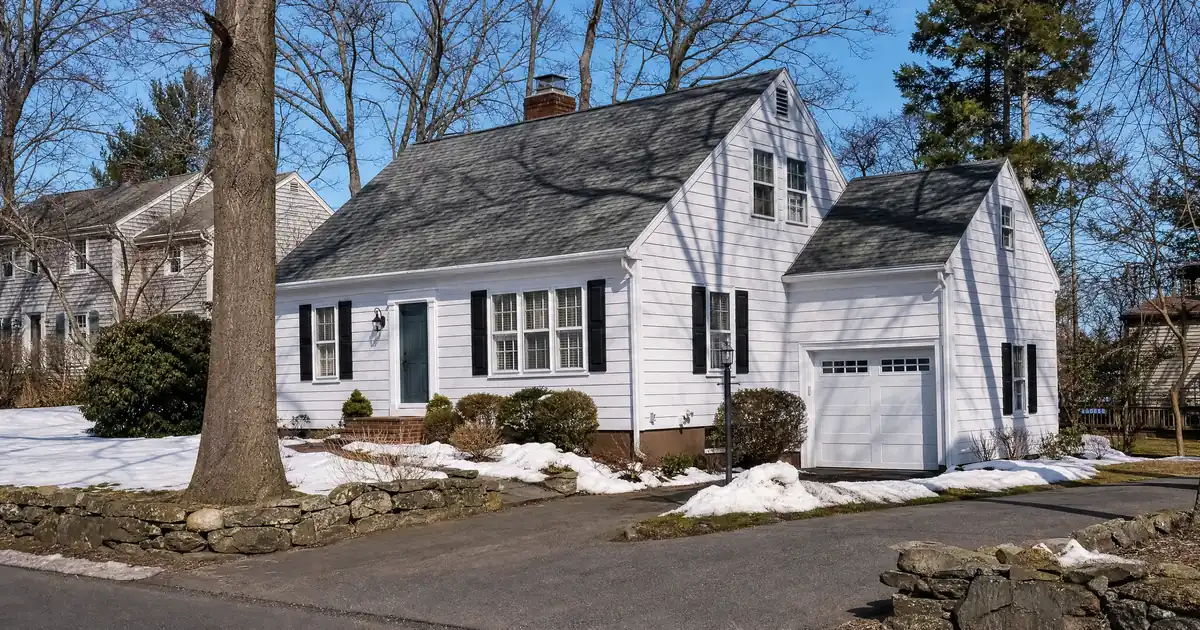
Property loans in Old Saybrook serve investors who need underwriting based on rental income rather than personal tax returns. Three-bedroom rents in Old Saybrook fell 10.47% year-over-year, dropping from $3,463 to $3,100 a month, according to RentHop — at the same time home values in town posted a twelve-month appreciation rate of 12.78%, among the highest in the country per NeighborhoodScout’s tracking. That split, rents falling while prices climb into double digits, is the single most important fact an investor needs before writing an offer here. It tells you exactly what kind of market this is, and it is not the kind where rent growth bails out a thin coverage ratio.
DSCR Calculator
Run the numbers in your market
Rate source: Freddie Mac 30-yr average via FRED® — Federal Reserve Bank of St. Louis · effective Jul 30, 2026
Prefilled with starting assumptions — enter your own rent or nightly figures, taxes, insurance, and HOA for a more accurate picture.
Program parameters update from Lendmire’s centralized guideline source. Taxes and insurance are editable estimates.
As of Jul 30, 2026 · General Freddie Mac market benchmark, not a Lendmire loan offer. Rent, nightly rate, occupancy, taxes, and insurance are editable estimates. Short-term rental figures are estimates only and vary significantly by season, property type, management approach, and local short-term-rental rules — confirm local regulations before relying on them. Qualifying income for short-term rentals varies by program — some use appraisal market rent, others use documented STR history or projections — and is confirmed in underwriting. Not a Loan Estimate, approval, or commitment to lend. Program availability and eligibility are subject to lender guidelines, credit approval, property review, and underwriting.
At a Glance: An investment property loan in Old Saybrook, Connecticut is underwritten primarily on the subject property’s projected rental income measured against its full monthly housing obligation — principal, interest, taxes, insurance, and any dues — rather than the borrower’s traditional personal-income documentation, with the lender weighing that coverage ratio alongside credit and reserves.
- Old Saybrook Center’s median sale price sits at $622,500, per Redfin, the town’s most liquid comp set.
- Duplex, triplex, and small-apartment stock makes up just 3.38% of Old Saybrook housing, per NeighborhoodScout.
- Town-wide three-bedroom rents fell 10.47% year-over-year even as home values kept climbing.
- Shore Line East commuter rail terminates in Old Saybrook, anchoring downtown workforce tenant demand.
- Saybrook Point carries extreme flood exposure — 118 properties, half the neighborhood, at 30-year risk.
Old Saybrook Market Snapshot
A quick read on the Old Saybrook investor landscape — figures come from the cited sources below. Confirm current property-level numbers before underwriting.
| Metric | Detail |
|---|---|
| Home prices | $622,500 median (Redfin) |
| Typical rents | $3,244 average (RentCafe) |
| Recent appreciation | 7.08%/98.20%/12.78% (NeighborhoodScout Old Saybrook) |
| Population | 10,575 population (Census Reporter) |
| Vacancy | 25.46% (NeighborhoodScout Old Saybrook) |
The Number Nobody Puts in the Brochure
Old Saybrook’s ten-year cumulative appreciation runs 98.20%, an annualized average near 7.08%, ranking in the top half of the country according to NeighborhoodScout’s analysis. Rent, meanwhile, hasn’t kept pace — and in the three-bedroom segment it has moved in the opposite direction. Two-bedroom rents did climb, up 17.82% year-over-year to $2,975 per RentHop, with Apartments.com putting the town-wide two-bedroom average even higher at $3,457. But that’s a thin, volatile rental pool feeding those averages — Old Saybrook is 85% owner-occupied, and only 15% of its housing is rented at all.
This is an appreciation-led market, not a cash-flow-led one. Investors buying here should think in terms of equity capture and long-term value gains, not expecting rising rents to carry an aggressive purchase price. That distinction matters for how a deal gets structured, and it’s the thread running through every neighborhood discussed below.
Old Saybrook Center Is the Only Submarket Built for This
Downtown is the strongest DSCR candidate in town, and it isn’t close. Old Saybrook Center carries the most liquid comp set (a median sale price of $622,500 per Redfin, with Zillow’s neighborhood-level index showing an average value of $601,777, up 7.1% over the past year), walkability to Main Street shops and restaurants, and direct access to the Katharine Hepburn Cultural Arts Center and the Amtrak/Shore Line East station.
That said, pricing data here has been genuinely volatile — Redfin’s own housing-market trend page showed a median of $888,000 in one month with only six homes sold, a swing that reflects how few transactions actually clear in a town this size rather than a real repricing of the market. Movoto’s May listing data put the median asking price at $799,000. Treat any single monthly snapshot with caution; the broader trend across sources points to a sub-$700,000 workforce tier surrounding a much smaller, higher-volatility luxury tier — and that workforce tier is where the DSCR math has any chance of working.
Tenant demand downtown skews toward young professionals commuting off the Northeast Corridor and retirees downsizing near services — not beach-season renters. That’s a meaningfully different, more stable tenant base than anything found closer to the water.
Skip the Water’s Edge
Fenwick, Saybrook Point, Cornfield Point, and Chalker Beach are trophy and second-home inventory, not DSCR long-term-rental plays — the rent-to-value math simply doesn’t scale at those price points.
Fenwick is its own incorporated borough — a legally distinct municipality nested inside Old Saybrook, a structure most comparably sized Connecticut shoreline towns don’t have — built around a private golf course and a lighthouse, and it was Katharine Hepburn’s childhood summer home. No reliable rent data exists for it because there’s essentially no long-term rental market to measure.
Saybrook Point is the more data-rich cautionary tale. Median sale price there runs $1.5 million, up 10.7% year-over-year, at $474 per square foot, according to Redfin’s neighborhood data — while town-wide rents cluster in the $3,000-$3,400 range regardless of which submarket the tenant is renting in. Rent doesn’t scale with a million-dollar-plus purchase price, full stop. Add in Redfin’s own flood-risk data showing 118 properties in Saybrook Point, roughly 50% of the neighborhood, facing extreme flood exposure over the next thirty years, and the risk-adjusted return gets worse, not better, the closer you get to the marina.
Cornfield Point, Chalker Beach, and Knollwood Beach function the same way — waterfront, seasonal, private-beach-access inventory best suited to a seasonal-income underwriting approach rather than standard twelve-month lease comps. No independent neighborhood-level rent data exists for any of them; that absence is itself informative about how thin the year-round rental activity is out there.
The Multi-Unit Scarcity Play
Multi-family inventory in Old Saybrook is scarce enough that it cuts both ways for buyers — less competition to acquire it, but a thinner comp set when it’s time to size a rent roll against appraisal. Only 3.38% of the town’s housing stock is duplex, converted-home, or small-apartment product, according to NeighborhoodScout’s housing-type breakdown, with detached single-family homes accounting for 86.33% of everything else.
That scarcity means any legally configured multi-unit near downtown is worth chasing. Local listings show exactly the kind of asset to look for: a 7,300-square-foot mixed-use building on the town green currently carries one small one-bedroom apartment and a larger second-floor three-bedroom unit above commercial space — precisely the combined-unit rent stacking that can clear coverage where a single-family purchase at a comparable price would not. The catch is inventory. There simply aren’t many of these listings at any given time, and investors should expect to compete hard for the few that surface rather than assume a steady pipeline.
What Actually Drives Tenant Demand Here
Old Saybrook has no university and no student-rental demand — a real contrast to Connecticut towns built around a campus, and one reason the town’s tenant base skews older and more work-driven than rent-by-the-bedroom markets elsewhere in the state.
What it does have is rail. Old Saybrook station sits on the Northeast Corridor, the busiest passenger rail line in the country, with Shore Line East commuter service terminating there for a meaningful share of its trains — New London serves as the terminus for roughly half, with Old Saybrook effectively anchoring the eastern end of the New Haven commuter run and its Metro-North connection into Grand Central. That’s a structural, year-round demand driver for downtown workforce housing that has nothing to do with tourism season.
Healthcare adds a modest layer on top. Yale New Haven Health operates a multi-specialty outpatient campus in town offering cardiac and vascular, orthopedic, allergy, and pediatric specialty services, and Middlesex Health maintains a Care at Home office and primary-care presence locally, with its main Shoreline Medical Center campus serving over 80,000 regional residents from nearby Westbrook. Neither is a flagship hospital based in Old Saybrook itself — both are satellite locations of larger Middletown- and New Haven-based systems — so this is a real but secondary anchor, not the kind of single-employer demand engine that carries a market on its own.
Running the Purchase Numbers
Price the acquisition off Old Saybrook Center’s current median of $622,500, finance it at 75% LTV (25% down, the applicable purchase ceiling on Lendmire’s Connecticut-specific program overlay), and modeled coverage — assuming typical financing-cost assumptions plus Connecticut-average property tax and insurance figures folded into full PITIA — lands in roughly the 0.70x to 0.85x range against town-wide rents alone. That’s sub-1.00 on long-term rent, and it’s an honest reflection of what the appreciation-versus-rent split discussed above actually produces at the property level. Terms vary by lender guidelines, property type, leverage, credit profile, and full file review.
Sub-1.00 coverage doesn’t end the conversation, but it does change the structure. A larger down payment to reduce leverage, an interest-only structure to lower the qualifying payment, or targeting the multi-unit stacking play described above to combine two rent streams against one purchase price are the paths a lender would typically review — all subject to credit approval, reserves, and property-level underwriting, with a standard DSCR program generally built around a 1.00x benchmark and reduced-ratio scenarios requiring stronger compensating factors. Reserve requirements here run around six months of PITIA on standard files, stretching to roughly nine months above the $1.5 million loan-amount threshold that Saybrook Point buyers will bump into fast. Credit tiers on Lendmire’s network programs run from a 620 floor up through 660, 680, and 700, with pricing and leverage generally improving as credit strengthens — Lendmire’s DSCR walkthrough covers how the ratio itself gets built, and the guide “Where DSCR and Conventional Diverge” is worth a read for anyone weighing a DSCR file against a conventional one, or entity-titled ownership against a personal-income approach.
DSCR files in small coastal towns with this kind of bifurcated luxury-versus-workforce housing stock tend to show a predictable pattern: appraisers have a thick, reliable comp set in the sub-$700,000 downtown tier, and a thin, noisy one at the water’s edge, where a single high-dollar closing can swing a whole neighborhood’s median. Files anchored to Old Saybrook Center or the surrounding 06475 ZIP pricing tend to move through underwriting with fewer surprises than files leaning on Saybrook Point or Fenwick comps.
What Does 25% Vacant Housing Really Mean for Investors?
A quarter of Old Saybrook’s housing stock — 25.46%, per NeighborhoodScout — is classified as vacant, and that figure is mostly seasonal second homes in the beach colonies rather than true rental vacancy, but it distorts what “housing inventory” means at the town level. Investors underwriting against town-wide unit counts are effectively including a large pool of homes that were never configured or marketed for a twelve-month lease in the first place.
The practical takeaway: discount town-wide inventory statistics and focus underwriting on the smaller, actual pool of homes built and rented for year-round occupancy, which concentrates in and around Old Saybrook Center rather than spreading evenly across the town’s 15.1 square miles.
DSCR vs. conventional financing
Two common ways to finance an investment property in Old Saybrook, CT. They qualify you differently — here’s how investors weigh them.
Why investors choose it
- Qualifies on the property’s rental income — no personal tax returns, W-2s, or pay stubs needed to document income.
- No personal debt-to-income ceiling to clear, so existing mortgages and obligations don’t cap your borrowing the same way.
- Can be closed in an LLC, keeping the property inside a business entity.
- Built for scaling — not held to the limit on number of financed properties that conventional financing applies.
- Underwriting centers on the deal: generally qualifies when the rent covers the payment, a 1.00x coverage ratio being a common baseline (confirmed in underwriting).
- Designed specifically for investment property, including long-term and, where the program allows, short-term rentals.
Where it’s strong
- Often the lowest ongoing financing cost for a buyer who fully qualifies on personal income — a fit for a first property or a cost-first purchase.
Trade-offs for investors
- Requires full personal income documentation and must fit within a debt-to-income limit — salary, existing debts, and other mortgages all count.
- Typically held in your personal name rather than a business entity.
- Caps how many financed properties you can carry, which can become a ceiling as a portfolio grows.
- Evaluates you as a borrower as much as the property, which usually means more paperwork.
How investors usually choose: a first or single property often optimizes for the lowest financing cost; portfolio builders often optimize for leverage, vesting in an LLC, and scaling past conventional caps. The right answer depends on your goals, the property, and current guidelines — both paths run through select lenders in Lendmire’s wholesale network, with eligibility and terms confirmed in underwriting.
One genuine, permanent differentiator worth knowing: Old Saybrook sits adjacent to The Preserve, a 963-acre forest spanning Old Saybrook, Essex, and Westbrook that was permanently protected after a fight against a planned 200-home development and golf course. Connecticut’s DEEP calls it the largest remaining unprotected coastal forest between Boston and New York before that protection took hold — a legally locked land-supply constraint that’s rarer and more durable than the generic “no room to build” claim investors hear about most towns.
Frequently Asked Questions
Does Old Saybrook actually cash flow as a DSCR purchase, or is this really an appreciation play?
Modeled on Old Saybrook Center’s current median and town-wide rent levels, purchase-side coverage lands below 1.00x on long-term rent alone — this reads as an equity-and-appreciation market first, cash-flow market second. Investors chasing coverage should look at multi-unit or mixed-use stacking downtown before assuming a standard single-family purchase clears the bar.
Can I get a DSCR loan on a property in Fenwick?
Fenwick’s housing stock is largely trophy and second-home inventory with no reliable rent comps, which makes standard long-term-rental DSCR underwriting difficult there regardless of leverage or credit profile. Properties in that borough are generally a poor fit for this loan type; investors focused on rental coverage should look toward Old Saybrook Center instead.
Why does the multi-unit scarcity in Old Saybrook cut both ways?
Fewer duplexes and small apartment buildings mean less competition when one comes up for sale, but it also means a thinner appraisal comp set to support a rent roll on refinance. Investors sourcing a legal multi-unit near downtown should expect a smaller buying pool working against them and a smaller comp pool working against the eventual valuation.
Is the Shore Line East rail connection really a meaningful factor for tenant demand?
Yes — Old Saybrook effectively anchors the eastern end of the Shore Line East commuter run into New Haven and, via Metro-North, into Grand Central, which supports year-round tenant demand for downtown workforce housing independent of the tourism season. That’s a structurally different demand base than the seasonal-rental economics found in the beach colonies.
What credit score do I need for a DSCR loan in Old Saybrook?
Credit tiers on Lendmire’s network programs generally start at a 620 floor and step up through 660, 680, and 700, with leverage and terms typically improving at the higher tiers, subject to lender guidelines and property review. Reserve requirements typically run around six months of PITIA, moving toward nine months on loans above $1.5 million — relevant for anyone eyeing the Saybrook Point price tier.
Investors evaluating a specific address should start a quote or reach Lendmire at 828-256-2183 to walk through how a given property’s price point and rent profile fit against Lendmire’s Connecticut DSCR loan programs.
Qualification centers on the property’s own rental income as reviewed by the lender rather than personal W-2 documentation, subject to program guidelines, which suits entity-titled and multi-property investors working through smaller, thinly traded markets like this one.
If you only take one thing from this piece, it’s this: in Old Saybrook, buy for the equity curve and the rail-anchored downtown tenant base, not for a rent roll that’s supposed to grow into the purchase price.
About Lendmire
Lendmire — NMLS# 2371349 — is a mortgage brokerage specializing in DSCR investor loans, helping arrange financing across 41 markets, including Washington, D.C., through wholesale and investor-lending channels. The model centers on property-level rental income reviewed by the lender rather than W-2 documentation, subject to lender guidelines, suiting entity-owned and multi-property investors. Lendmire holds Scotsman Guide Top Mortgage Workplace recognition for 2025 and 2026.
For broader investor-financing rules and property-type coverage across the state, see Connecticut DSCR loans.
Get Started
Ready to find the right loan for you?
In about 30 seconds you can review financing options available for your investment property. No commitment required.
Informational only. Not a Loan Estimate, approval, or commitment to lend. Program availability and eligibility are subject to lender guidelines, credit approval, property review, and underwriting.
References
1. RentHop
2. Redfin
3. RentCafe
4. NeighborhoodScout Old Saybrook
7. Katharine Hepburn Cultural Arts Center
11. The Preserve
12. a 2025 Scotsman Guide Top Workplace
13. a 2026 Scotsman Guide Top Workplace
This article is part of Lendmire’s DSCR loan program — full qualification details, guidelines, and scenarios live on the program page.
Related reading: Cash Out Refinance Investment Property in Merrillville, Indiana · DSCR Investment Property Loans in Whitefish, MT: Duplex Math in a Rail-and-Resort Town · DSCR Loan For A Waterfront Rental: Complete Guide
Guides: DSCR Loans in Connecticut
Brandon Miller
Founder & CEO, Mortgage Loan Originator, Lendmire LLC
- Mortgage Loan Originator · NMLS# 1129696 · Verify on NMLS Consumer Access
- North Carolina Real Estate Broker · License# 343312 · Verify on NCREC
- North Carolina Insurance Producer · License# 19053198 · Property, Casualty, Life, Health · Verify on NAIC SBS
- Lendmire LLC · Firm NMLS# 2371349 · Verify firm licensure
Disclosures. The information presented in this article is general market commentary, not financial, legal, or tax advice. Lendmire is a mortgage brokerage (NMLS# 2371349) — not a direct lender or depository institution — and loan placement is subject to lender underwriting. Nothing in this content represents a commitment to lend. Loan terms, pricing, and program availability vary based on borrower qualifications, property characteristics, and state of subject property, and are subject to change at any time. Lendmire complies with Equal Housing Opportunity requirements. Consumer access: nmlsconsumeraccess.org.