
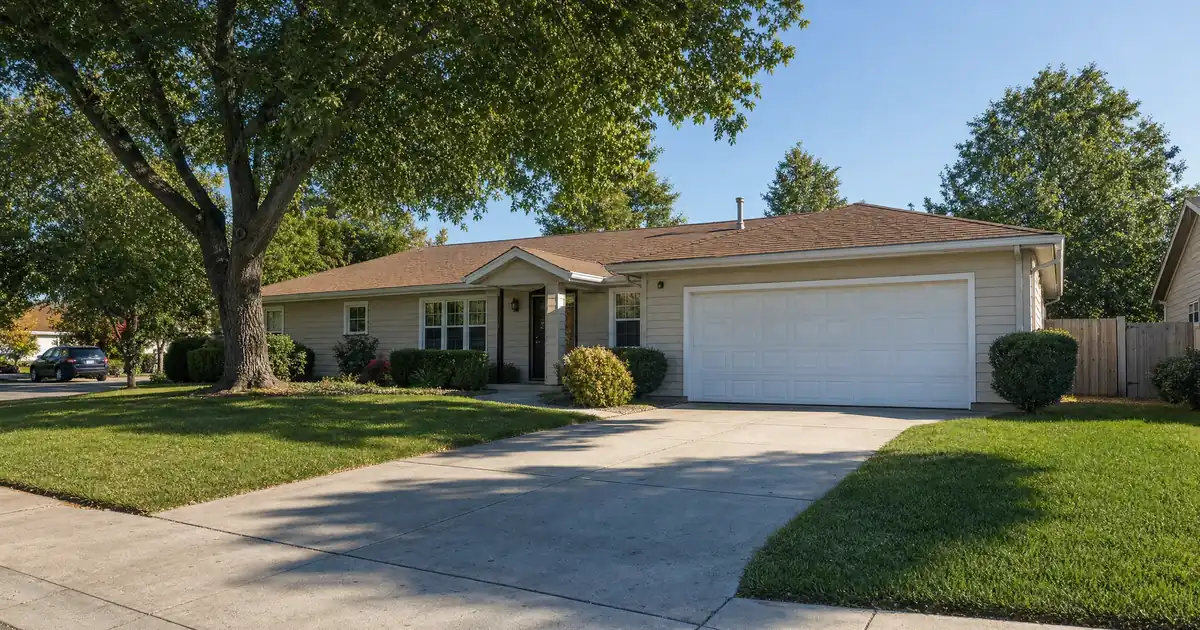
The Quick Read: A DSCR loan file skips personal income paperwork entirely. Lenders review rental income instead of personal income documents. No pay stubs needed. Instead, lenders want four things. They want identity and credit documentation. They want proof the property produces rent — a lease, an appraisal rent schedule, or short-term rental income history. They want reserve and asset statements. And they want entity paperwork if the property closes in an LLC. The property’s income does the talking. The borrower’s paycheck never enters the conversation.
DSCR Calculator
Run the numbers in your market
Rate source: Freddie Mac 30-yr average via FRED® — Federal Reserve Bank of St. Louis · effective Jul 30, 2026
Prefilled with starting assumptions — enter your own rent or nightly figures, taxes, insurance, and HOA for a more accurate picture.
Program parameters update from Lendmire’s centralized guideline source. Taxes and insurance are editable estimates.
As of Jul 30, 2026 · General Freddie Mac market benchmark, not a Lendmire loan offer. Rent, nightly rate, occupancy, taxes, and insurance are editable estimates. Short-term rental figures are estimates only and vary significantly by season, property type, management approach, and local short-term-rental rules — confirm local regulations before relying on them. Qualifying income for short-term rentals varies by program — some use appraisal market rent, others use documented STR history or projections — and is confirmed in underwriting. Not a Loan Estimate, approval, or commitment to lend. Program availability and eligibility are subject to lender guidelines, credit approval, property review, and underwriting.
That’s the short version. The longer version matters more. The document list changes depending on a few things. Is the property occupied or vacant? Is it a long-term rental or a short-term rental? Is the borrower buying as an individual or through a company? Getting the right paperwork ready before the file goes to underwriting matters a lot. It keeps a DSCR loan moving instead of stalling on a stipulation nobody saw coming.
Key Terms Defined
DSCR (Debt Service Coverage Ratio) — This is the number you get when you divide the property’s monthly rental income by its full monthly obligation. A ratio at or above 1.00 means the rent covers the payment.
PITIA — This means principal, interest, taxes, insurance, and association dues. All of it rolls into one monthly figure. This is the denominator in the DSCR calculation.
Lower-of-rule — Sometimes a lease and an appraisal both estimate rent. When that happens, most programs qualify off whichever number is lower. It’s a conservative check against an inflated lease.
Rent schedule (Form 1007/1025) — This is an addendum an appraiser completes alongside the standard appraisal. It estimates fair market rent. Form 1007 covers single-family properties. Form 1025 covers two-to-four-unit properties.
Business-purpose loan — This is a loan made to acquire, improve, or hold a non-owner-occupied rental property. Federal lending law treats it differently than a loan on a home you live in.
Seasoning — This describes how long funds have sat in an account, or how long a property has been owned, before a lender will count them without extra explanation.
Non-QM — This is short for “non-qualified mortgage.” It refers to loans, including most DSCR products, that fall outside the standard conforming-loan box. These loans get underwritten to their own set of investor-focused rules.
What Documents Do Individual Borrowers Need for a DSCR Loan?
The identity and credit bucket looks a lot like any mortgage application, minus the income piece. Expect to provide a government-issued photo ID. Expect to sign a credit authorization. Expect to complete a standard loan application. No employer verification gets initiated. That’s because no employer income will ever be used to qualify the file.
Credit still drives pricing tier and leverage, even though it doesn’t drive income calculation. Across the wholesale network Lendmire works with, a 620 floor exists on select programs. But most lenders want something closer to 660 for a clean approval path. A 700-plus score is generally what unlocks the strongest leverage tiers, including higher-LTV purchase structures. If your credit file has recent hard inquiries, a short letter of explanation is a common and easy request to satisfy. Underwriters aren’t trying to trip anyone up. They just want a clean story.
For more on how these thresholds interact with leverage and property type, Lendmire’s overview of DSCR loan requirements for investment properties walks through the full picture.
How Do You Prove Rental Income Without Pay Stubs?
This is the document set that replaces a paycheck. It splits into four scenarios depending on the property’s status.
Occupied property. Submit the signed lease agreement. Expect the lender to want recent bank statements too, showing the rent actually landing in an account. A lease that’s never been paid doesn’t help much.
Vacant property or new purchase. No lease exists yet. So the lender orders an appraisal that includes a rent schedule addendum. Use Form 1007 for a single-family property, or Form 1025 for a two-to-four-unit building. The appraiser’s market rent estimate becomes the qualifying income figure.
Multi-unit properties. Every unit needs its rent supported, not just the largest or best-performing one. A rent roll covering all units, plus the Form 1025 rent schedule, rounds out the file.
Short-term rentals. Nightly-rate properties don’t fit neatly into a standard rent schedule. So most programs in the network lean on trailing 12-month platform earnings statements from Airbnb or VRBO. Market-data reports from a source like AirDNA work too, in place of a signed lease. Expect roughly 12 months of hosting history to be a common ask. Expect a credit score in the 640-plus range too, alongside a 1.00 coverage floor on most STR files. Short-term rental rules can vary by city, county, HOA, and property type. Confirm local rules before relying on projected rental income.
Sometimes both a lease and an appraisal rent figure exist. When that happens, most programs apply the lower-of-rule. They qualify off whichever number is smaller. It’s a conservative habit. It protects both the lender and the borrower from overstating what a property can actually carry.
What Documents Cover the Debt Side of the Ratio?
Rent is only half the DSCR calculation. The other half is PITIA, and it comes from its own document set. That set includes the purchase contract, or on a refinance, the current mortgage statement. It includes a property tax bill or assessor estimate. It includes an insurance quote or binder. And it includes HOA documentation if the property carries dues. The underwriter assembles all of it into one monthly figure. Then the underwriter divides the rent used for lender review by that number. That gets you the coverage ratio.
One thing worth saying plainly: clearing 1.00 on this ratio is not the same thing as positive cash flow. DSCR compares rent to PITIA only. It doesn’t account for repairs, vacancy, property management, utilities, or capital expenditures. A file that clears 1.15x on paper can still run thin in practice, once those real-world costs get factored in.
DSCR loans are designed for non-owner-occupied investment properties. They’re structured as business-purpose investor loans rather than consumer mortgages. Because of that, federal regulation defines what counts as business-purpose credit. That classification is exactly why the document list looks so different from a mortgage on a home you live in. There’s no income documentation and no employment verification, because none of it factors into how the loan gets underwritten.
What Reserve and Asset Documents Does a Lender Want?
Reserves prove you can carry the property through a rough patch. Think vacancy, a slow tenant transition, or an unexpected repair, all without missing a payment. Lenders want bank or brokerage statements to back that up. The requirement varies by lender, leverage, loan size, and transaction type. But a common baseline across the network sits around six months of PITIA in reserves. Loans above $1,500,000 typically step up toward nine months. On the other end, some files see reserves waived entirely. This happens on conservative rate-and-term refinances at modest leverage under $1,500,000. It depends on the specific file.
Large or unusual deposits showing up in those statements usually trigger a request. The lender wants a short written explanation. Underwriters aren’t accusing anyone of anything. They just need the source-of-funds trail to make sense. A deposit that’s clearly seasoned savings clears fast. A large, unexplained transfer the week before closing tends to slow things down.
Buying Through an LLC? Here’s the Entity Paperwork.
Sometimes title and the note will sit in a business entity. If so, add four documents to the file. You need Articles of Organization. You need the Operating Agreement, showing ownership percentages and who has signing authority. You need an EIN letter. And you often need a Certificate of Good Standing. The entity name has to match across every document — the purchase contract, the title commitment, the loan application, and the operating agreement. A mismatch here is one of the more common reasons files get held up in underwriting.
Tax treatment can depend on how loan proceeds are used and how the property is titled. Keep clean records. Talk to a qualified tax professional before relying on any deduction tied to the entity structure.
DSCR vs. conventional financing
Two common ways to finance an investment property. They qualify you differently — here’s how investors weigh them.
Why investors choose it
- Qualifies on the property’s rental income — no personal tax returns, W-2s, or pay stubs needed to document income.
- No personal debt-to-income ceiling to clear, so existing mortgages and obligations don’t cap your borrowing the same way.
- Can be closed in an LLC, keeping the property inside a business entity.
- Built for scaling — not held to the limit on number of financed properties that conventional financing applies.
- Underwriting centers on the deal: generally qualifies when the rent covers the payment, a 1.00x coverage ratio being a common baseline (confirmed in underwriting).
- Designed specifically for investment property, including long-term and, where the program allows, short-term rentals.
Where it’s strong
- Often the lowest ongoing financing cost for a buyer who fully qualifies on personal income — a fit for a first property or a cost-first purchase.
Trade-offs for investors
- Requires full personal income documentation and must fit within a debt-to-income limit — salary, existing debts, and other mortgages all count.
- Typically held in your personal name rather than a business entity.
- Caps how many financed properties you can carry, which can become a ceiling as a portfolio grows.
- Evaluates you as a borrower as much as the property, which usually means more paperwork.
How investors usually choose: a first or single property often optimizes for the lowest financing cost; portfolio builders often optimize for leverage, vesting in an LLC, and scaling past conventional caps. The right answer depends on your goals, the property, and current guidelines — both paths run through select lenders in Lendmire’s wholesale network, with eligibility and terms confirmed in underwriting.
What Documents Are NOT Required for a DSCR Loan?
Here’s the contrast that surprises most first-time DSCR borrowers. No W-2s. No traditional personal-income documentation. No pay stubs. No employment verification letter. None of it factors into qualification. That’s because the loan is underwritten to what the property earns, not what the borrower earns at a job.
That doesn’t make it a no-doc loan, though. It’s a different-doc loan. The file still needs identity verification, credit documentation, reserve statements, property income support, and entity paperwork where applicable. The difference is what’s being verified. Lenders check the asset’s ability to carry itself, not the borrower’s household income. For a full walkthrough of how that qualification logic works, Lendmire’s guide to “What Is a DSCR Loan” breaks down the mechanics in more detail. The complete DSCR loans guide covers the program end to end.
What About Foreign National or ITIN Borrowers?
A few lenders in the network work with foreign national and ITIN borrowers. But the document set changes to fit. Alternative identity documentation and non-domestic credit history stand in for a Social Security number and a U.S. credit file. This is a lender-by-lender carve-out rather than a network-wide standard. So exactly what’s accepted depends on the specific program. Confirm this early, before a file gets built around assumptions that don’t hold.
Which Property Types Fall Outside DSCR Documentation Entirely?
Not every property type has a DSCR path, no matter how complete the paperwork is. Manufactured homes are ineligible in the network — both single- and double-wide. Log homes and barndominiums are ineligible too. These sit outside the DSCR programs available through the network. That’s not a “harder to document” situation. It’s a “not offered” situation on these particular structures. No amount of extra reserves or a stronger lease changes that. If a property falls into one of those categories, it simply isn’t reviewable through these programs.
Standard loan sizes on eligible property types typically run up to $3,000,000. Smaller balances are available through select lenders in the network. Above roughly $2,500,000, expect the file to be steered toward a 30-year fixed structure rather than an adjustable option. State overlays add another layer worth knowing before a file gets built. Purchases in Connecticut, Florida, Illinois, New Jersey, and New York generally cap near 75% LTV. Overlay-state deals tend to cap loan size around $2,000,000.
Common Document Mistakes That Delay Underwriting
A handful of habits show up over and over in files that stall:
- Mixing rental and personal deposits in the same account. It muddies the source-of-funds trail and forces extra explanation letters.
- Submitting an unsigned or expired lease. Underwriters need a fully executed document, not a draft.
- Entity name mismatches. If the LLC on the purchase contract doesn’t match the operating agreement exactly, expect a stipulation.
- Waiting on the insurance binder. This is often the last document in the file and the easiest one to forget until it’s holding everything up.
- Ignoring a large deposit until asked. Get ahead of it — write the explanation before underwriting requests it.
When Should You Start Gathering Documents?
Start as soon as you’re seriously considering the purchase or refinance. Bank and brokerage statements need to reflect seasoned funds. The earlier they’re pulled together, the less chance a last-minute deposit needs an explanation letter. Lease agreements, entity paperwork, and insurance quotes are all things a borrower can have ready before the appraisal is even ordered. That keeps the file moving smoothly through review once it lands with an underwriter.
DSCR lending has become large enough that this documentation approach is now standard industry practice, not a niche workaround. Investor and DSCR loans made up 28.7% of non-QM origination volume as of mid-2025. That’s up nearly three points year over year, according to National Mortgage Professional’s analysis of non-conforming loan trends. Looking ahead, HousingWire’s coverage of a Bank of America Securities forecast projects non-QM origination volume climbing to $175 billion. Growth here is driven largely by DSCR and investor products.
Lendmire, NMLS# 2371349, arranges DSCR loans through select lenders across a 41-market footprint spanning 40 states and Washington, D.C. Lendmire connects rental property investors with wholesale-network programs built around exactly this documentation structure.
If you’re buying or refinancing a rental property and want to see how the numbers work, Lendmire can help. The team compares DSCR loan options based on the property’s income, your credit profile, available leverage, and your investment goals. Reach the team at 828-256-2183 or request a quote directly through Lendmire’s mortgage quote form.
Loan approval is never guaranteed, and nothing here is a commitment to lend. Every scenario described here is subject to lender approval and to borrower, property, and program guidelines, which vary and can change. This article is general information only, not financial, legal, or tax advice.
Frequently Asked Questions
What documentation is required for a DSCR loan?
Four categories cover it. You need identity and credit paperwork. You need proof of the property’s rental income — a lease, an appraisal rent schedule, or a rent roll. You need reserve and asset statements. And you need entity documents if the property closes in an LLC. Personal income documents like W-2s and traditional personal-income documentation aren’t part of the file. Qualification runs on what the property earns.
What documentation is required to secure a short-term rental loan?
Most programs want roughly 12 months of hosting history. That gets documented through platform earnings statements or market-data reports, in place of a signed lease. A 640-plus credit score and a 1.00 coverage floor are common expectations on STR files. Standard identity, reserve, and entity documentation apply too, just like any DSCR file.
Do I need traditional personal-income documentation for a DSCR loan?
Not on a standard DSCR file. Qualification is based on the property’s rental income rather than personal income. So traditional personal-income documentation typically isn’t part of the document request. Some lenders may still ask for supporting paperwork in unusual situations, like an entity with a complex ownership history. But that’s a program-specific exception, not the general rule.
How does a vacant property prove rental income with no lease in place?
The lender orders an appraisal that includes a rent schedule addendum. Use Form 1007 for a single-family home, or Form 1025 for a two-to-four-unit property. No signed lease is needed to establish that number.
Can I get a DSCR loan on a manufactured home?
No. Manufactured homes are ineligible in the network, including single- and double-wide units. Log homes and barndominiums are ineligible too. All of these fall outside the DSCR programs available through it. These property types are not reviewable through these programs, regardless of how complete the rest of the documentation package is.
About Lendmire
As a DSCR and non-QM mortgage broker, Lendmire — NMLS# 2371349 — connects investors with wholesale lending channels across 41 markets, including Washington, D.C. The property’s rental income, not the borrower’s tax returns, is central to lender review. This works well for self-employed operators and for portfolios beyond four financed properties. Scotsman Guide named Lendmire a Top Mortgage Workplace in both 2025 and 2026.
Get Started
Ready to find the right loan for you?
In about 30 seconds you can review financing options available for your investment property. No commitment required.
Informational only. Not a Loan Estimate, approval, or commitment to lend. Program availability and eligibility are subject to lender guidelines, credit approval, property review, and underwriting.
References
1. Consumer Financial Protection Bureau — Regulation Z, Business Purpose Credit
2. National Mortgage Professional — Non-Conforming Loans Surge, Led by Record Non-QM Share
3. HousingWire — Non-QM Originations Projected to Reach $175B in 2026
This article is part of Lendmire’s DSCR loan program — full qualification details, guidelines, and scenarios live on the program page.
Related reading: DSCR Loan Documents For A Luxury Short-term Rental In An LLC · No-Ratio DSCR Loan Documentation Checklist · DSCR Loan for Foreign Nationals Buying U.S. Rentals
Brandon Miller
Founder & CEO, Mortgage Loan Originator, Lendmire LLC
- Mortgage Loan Originator · NMLS# 1129696 · Verify on NMLS Consumer Access
- North Carolina Real Estate Broker · License# 343312 · Verify on NCREC
- North Carolina Insurance Producer · License# 19053198 · Property, Casualty, Life, Health · Verify on NAIC SBS
- Lendmire LLC · Firm NMLS# 2371349 · Verify firm licensure
Legal disclosures. Lendmire (NMLS# 2371349) is a state-licensed mortgage brokerage that arranges financing through wholesale lender relationships. Lendmire is not a direct lender, depository institution, or registered financial advisor. The discussion above is general informational content about real estate financing — it is not financial, legal, or tax advice, and readers should consult licensed professionals for guidance on their individual circumstances. Loan inquiries are subject to lender underwriting; this article does not represent a commitment to lend. Loan terms, rates, and qualification standards vary by borrower, property, and state, and are subject to change at any time. Equal Housing Opportunity. NMLS Consumer Access: nmlsconsumeraccess.org.