
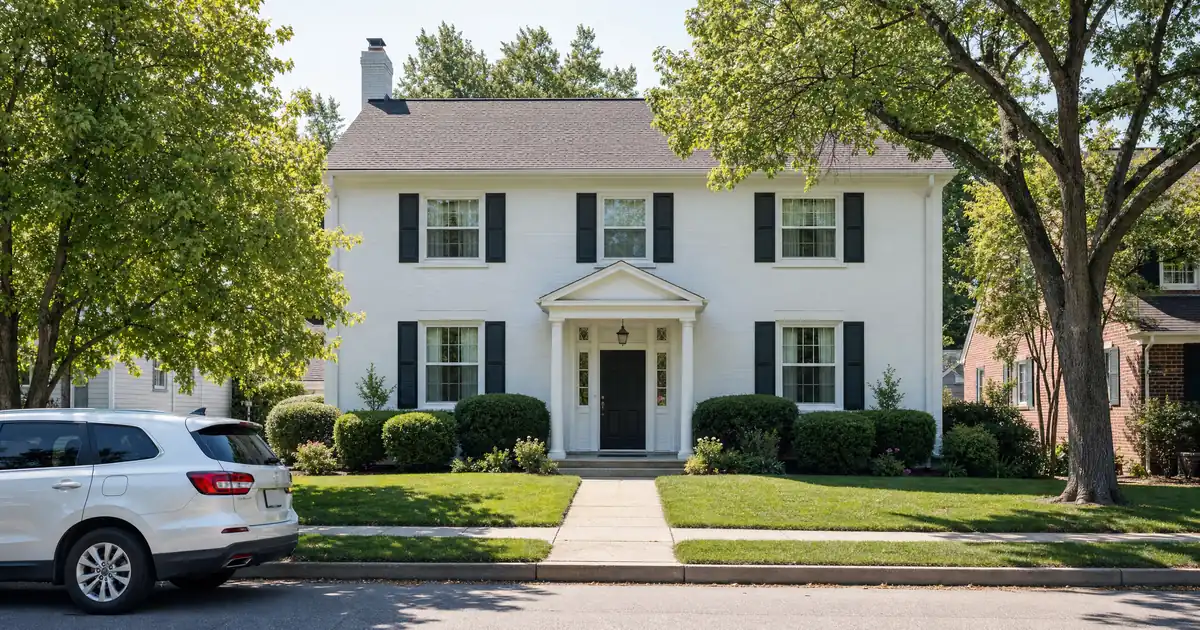
The Quick Read: A DSCR loan amount under $75,000 isn’t against any rule — there’s no government-set floor on how small a DSCR loan can be. Any minimum loan size is a lender overlay, not a regulation, and it exists because the fixed cost of underwriting and closing a loan doesn’t shrink just because the loan balance does. Sub-$75K deals still get financed — usually through select lenders in a broker’s wholesale network, a larger down payment, or a portfolio structure — but not every program on the shelf will touch one.
DSCR Calculator
Run the numbers in your market
Rate source: Freddie Mac 30-yr average via FRED® — Federal Reserve Bank of St. Louis · effective Jul 30, 2026
Prefilled with starting assumptions — enter your own rent or nightly figures, taxes, insurance, and HOA for a more accurate picture.
Program parameters update from Lendmire’s centralized guideline source. Taxes and insurance are editable estimates.
As of Jul 30, 2026 · General Freddie Mac market benchmark, not a Lendmire loan offer. Rent, nightly rate, occupancy, taxes, and insurance are editable estimates. Short-term rental figures are estimates only and vary significantly by season, property type, management approach, and local short-term-rental rules — confirm local regulations before relying on them. Qualifying income for short-term rentals varies by program — some use appraisal market rent, others use documented STR history or projections — and is confirmed in underwriting. Not a Loan Estimate, approval, or commitment to lend. Program availability and eligibility are subject to lender guidelines, credit approval, property review, and underwriting.
Key Terms Defined
- DSCR (debt-service coverage ratio): the number that compares a property’s rent to its full monthly housing payment — gross rent divided by PITIA.
- PITIA: principal, interest, taxes, insurance, and any association dues — the full monthly obligation the rent has to cover.
- LTV (loan-to-value): the loan amount expressed as a percentage of the property’s value or purchase price.
- Non-QM (non-qualified mortgage): a loan underwritten outside the standard conforming box, on rules the lender sets itself — DSCR loans are the most common non-QM product for rental property.
- Business-purpose loan: financing tied to an investment property rather than a home, which is why DSCR files skip W-2s and traditional personal-income documentation.
Is $75,000 the Loan Amount or the Purchase Price?
Almost always, it’s the loan amount — not the price tag on the property. That distinction trips up more first-time DSCR borrowers than anything else in the small-balance space.
A $100,000 property purchased with a 25% down payment lands right at a $75,000 loan — which is precisely the size where a lot of standard DSCR programs start to get uneasy. Bump the down payment up and the loan shrinks further below that line. Bump it down and the loan clears it. The property’s list price tells you almost nothing on its own; what matters is what’s actually being financed after the down payment lands. Actual eligibility depends on lender guidelines, property type, leverage, credit profile, and full file review.
This matters most in lower-cost markets, where a rental that produces strong price-to-rent numbers is often exactly the kind of deal that also produces a loan amount sitting right at — or under — where a program’s practical floor kicks in. An investor chasing cash flow in affordable inventory runs into small-balance friction more often than an investor buying in a pricier market, purely because of arithmetic.
Why Do DSCR Lenders Set a Minimum at All?
Because the underwriting and closing costs on a DSCR file are largely fixed — the appraisal, the title work, the file review, the servicing setup — and none of that scales down with the loan size. A lender doing the same amount of work for a $65,000 loan as for a $650,000 loan makes a fraction of the return on the smaller file, so a chunk of the market simply opts out below a certain size.
That’s the honest economic answer, and it’s worth being blunt about it rather than pretending every lender treats small loans the same way. Across a wholesale network of DSCR lenders, this plays out unevenly — some programs draw a hard line around the low six figures, some flex lower for the right borrower profile, and a handful specialize in exactly this corner of the market because the bigger shops have abandoned it. That unevenness is normal for DSCR lending generally, since these are non-agency, privately underwritten products with no conforming loan limit forcing consistency across the industry the way it does on a conventional mortgage.
Many standard DSCR programs start somewhere around $100,000, though that’s a lender-by-lender practical starting point, not a fixed industry rule — smaller balances can and do route through select lenders elsewhere in the network, typically with different pricing or leverage tradeoffs attached.
How Underwriting Actually Treats a Sub-$75K File
Step 1 — The ratio itself. The lender divides the property’s gross monthly rent by PITIA. That number — the coverage ratio — sets both the pricing tier and the leverage the lender will offer. Across most of the wholesale network Lendmire works with, 1.00 coverage is where programs start; it’s the standard floor, and stronger ratios open better leverage and pricing. Some lenders in the network will review deals below that line, but LTV and terms adjust accordingly to compensate for the thinner cushion.
Step 2 — The rent gets documented, not self-reported. For a one-unit rental, the appraiser attaches a Single-Family Comparable Rent Schedule — Form 1007 — to the appraisal. For a two-to-four-unit property, the appraiser uses the small-residential-income version, Form 1025. Both forms exist under the Fannie Mae Selling Guide, and while DSCR lenders borrow the format as an industry convention, the loan itself is never sold to Fannie Mae or Freddie Mac — it stays entirely in the non-agency, privately underwritten world.
Step 3 — Credit and reserves layer on top of the ratio. A 620 floor exists in parts of the network, though most programs want something closer to 660, and a 700-plus score tends to unlock the strongest leverage tiers. Reserves — the liquid funds a borrower needs on hand after closing — commonly run around six months of PITIA on most files, stepping up toward nine months on larger loans, though conservative rate-and-term files at modest leverage can sometimes see reserves waived entirely. None of that changes because the loan is small; if anything, a thinner-balance file gets scrutinized just as closely on credit and reserves as a much larger one.
Step 4 — The business-purpose framing. DSCR loans are designed for non-owner-occupied investment properties. Because they are business-purpose investor loans, they are reviewed differently from a standard owner-occupied mortgage — that’s the CFPB’s own regulatory framing for non-owner-occupied rental property, and it’s the reason a DSCR file never asks for a tax return or a pay stub in the first place.
Step 5 — The document stack stays narrow. Entity paperwork if the property is titled to an LLC, bank statements to source the down payment and reserves, an insurance quote, existing leases if the unit is occupied, and the appraisal package carrying the rent schedule. No personal income documentation — qualification runs on the property’s income, full stop.
What Structures Exist for Small-Balance Deals
A larger down payment is the first lever, and it does real work — it shrinks the loan amount, which can move a borderline file into a program’s comfort zone, and it also tends to lift the coverage ratio because the monthly obligation drops. But a bigger down payment doesn’t erase a credit floor, a reserve requirement, or a property-type exclusion. The strongest small-balance files clear both tests at once: enough equity in the deal and rent that clears the lender’s coverage bar. What ultimately closes still comes down to the individual lender’s guidelines, the property type, the leverage requested, and the borrower’s credit profile after full file review.
Some investors ask the reverse question — whether a low- or no-down-payment structure exists for DSCR loans generally. It’s a fair question given how leverage-focused DSCR investing tends to be, and Lendmire’s team can walk through what’s realistic on that front through its no-down-payment DSCR options page; for small-balance purchases specifically, though, more equity down is usually the more useful lever, not less.
Portfolio, or blanket, structures come up constantly in small-balance conversations. Instead of one $65,000 loan a lender doesn’t want to touch, an investor bundles three or four similar rentals under a single note, and the combined balance clears the practical comfort zone that killed each deal individually. This is a real path, and it’s worth exploring with a broker who can see it across multiple lenders — but the specific terms (how properties release from the note, how cross-collateralization is structured) vary too much by program to generalize, and eligibility for entity-titled portfolios is always subject to lender program eligibility.
Pricing on any small-balance file also tends to move with the coverage ratio and leverage together rather than independently — that relationship is explained in more depth on Lendmire’s DSCR loan interest rates page, which is worth a look before assuming every small loan prices the same as a standard-size one.
Where the General Rule Breaks: Named Edge Cases
House-hacking a small multifamily changes the exemption math. If an investor plans to occupy one unit of a two-to-four-unit property, the business-purpose framing that applies cleanly to a pure rental doesn’t automatically apply the same way — acquisition financing on an owner-occupied small multifamily gets evaluated under different unit-count thresholds than a straight investment purchase. That’s a real conversation to have with a lender before assuming a DSCR structure fits, and it’s a distinct enough scenario that it deserves its own look rather than a blanket assumption either way.
Short-term rentals without an operating history underwrite differently. DSCR programs for short-term rentals in the network generally cap purchase leverage around 75% LTV, refinance and cash-out closer to 70%, expect roughly a 640-plus score, a 12-month rental history or a market data report, and a 1.00 coverage floor. A property with no STR track record yet often gets evaluated on projected income rather than trailing revenue, which is a different underwriting lane than a long-term lease with a straightforward rent schedule. Short-term rental rules can also vary by city, county, HOA, and property type, so confirming local rules before relying on projected rental income matters as much as the financing itself.
Certain property types are off the table regardless of loan size. Manufactured homes — single- or double-wide — log homes, and barndominiums are not offered through DSCR programs in the wholesale network Lendmire places files with. That’s not a “harder to finance” situation; it’s simply outside what these programs cover, small balance or not. Mixed-use properties sit in their own category too, with eligibility depending on how much of the building is residential versus commercial — worth checking Lendmire’s guide to DSCR loans for mixed-use properties before assuming a corner-store-with-apartments deal fits the same box as a straight duplex.
DSCR vs. conventional financing
Two common ways to finance an investment property in this market. They qualify you differently — here’s how investors weigh them.
Why investors choose it
- Qualifies on the property’s rental income — no personal tax returns, W-2s, or pay stubs needed to document income.
- No personal debt-to-income ceiling to clear, so existing mortgages and obligations don’t cap your borrowing the same way.
- Can be closed in an LLC, keeping the property inside a business entity.
- Built for scaling — not held to the limit on number of financed properties that conventional financing applies.
- Underwriting centers on the deal: generally qualifies when the rent covers the payment, a 1.00x coverage ratio being a common baseline (confirmed in underwriting).
- Designed specifically for investment property, including long-term and, where the program allows, short-term rentals.
Where it’s strong
- Often the lowest ongoing financing cost for a buyer who fully qualifies on personal income — a fit for a first property or a cost-first purchase.
Trade-offs for investors
- Requires full personal income documentation and must fit within a debt-to-income limit — salary, existing debts, and other mortgages all count.
- Typically held in your personal name rather than a business entity.
- Caps how many financed properties you can carry, which can become a ceiling as a portfolio grows.
- Evaluates you as a borrower as much as the property, which usually means more paperwork.
How investors usually choose: a first or single property often optimizes for the lowest financing cost; portfolio builders often optimize for leverage, vesting in an LLC, and scaling past conventional caps. The right answer depends on your goals, the property, and current guidelines — both paths run through select lenders in Lendmire’s wholesale network, with eligibility and terms confirmed in underwriting.
A handful of states run their own overlays. Purchases in Connecticut, Florida, Illinois, and New Jersey generally cap near 75% LTV even where other states allow more, and overlay-state deals often cap around $2,000,000 regardless of leverage. That doesn’t change the small-balance math much on its own, but it’s a factor worth knowing if a small-balance strategy is being built across multiple states.
No standardized floor exists, so “edge case” and “typical case” blur together. Because DSCR is a non-agency product with no conforming loan limit, there’s no single number that draws a clean line between “normal” and “small balance” the way there is on a conventional mortgage. That ambiguity is inherent to how these loans are structured — not a gap anyone is trying to close.
What the Decision Looks Like in Practice
Picture two versions of the same rental at different price points, both financed at 75% LTV, both producing rent that clears roughly 1.15x coverage. At a higher price point, the resulting loan sits comfortably inside where most standard programs operate. Shave the price down into affordable-market territory, and the same leverage and the same healthy ratio can still land the loan amount below where a chunk of the lender pool stops taking files. Final terms still hinge on the lender’s own guidelines, the property type, the leverage level requested, and a complete review of the borrower’s credit profile.
That’s the actual decision an investor is making in the sub-$75K corner of DSCR lending: it’s rarely about whether the deal cash flows — plenty of these properties clear coverage comfortably. It’s about whether the loan size fits the shelf of lenders willing to underwrite it, and whether a larger down payment, a portfolio structure, or a broker with access to more of the network closes that gap. An investor working alone with one lender’s website often just gets told no. An investor working with a broker who can shop the file across a wholesale network is more likely to find the two or three programs that actually take small balances — that’s the practical difference, more than any single number.
For a broader look at “What Is a DSCR Loan” end to end, Lendmire’s complete DSCR loans guide covers the mechanics in more depth than any single-topic page can.
Loan approval is never guaranteed, and nothing here is a commitment to lend. Every scenario described is general information, subject to lender approval and to the specific borrower’s, property’s, and program’s guidelines — not financial, legal, or tax advice, and not a substitute for a full underwriting review.
Frequently Asked Questions
Can I actually get a DSCR loan for less than $75,000?
Yes, through select lenders in a broker’s wholesale network, though not through every standard program on the market. A lot of shops set a practical floor somewhere in the low six figures for cost reasons, but there are lenders that specifically work smaller balances — finding them usually takes a broker who can shop the file across multiple programs rather than a single lender’s website.
Why do so many DSCR programs avoid small loans?
The underwriting and closing costs on a DSCR file are mostly fixed — appraisal, title, file review — and they don’t scale down with the loan size. A lender doing the same work for a small loan as a large one earns far less on it, so a meaningful share of the market simply sets a minimum rather than take the smaller return.
Does a bigger down payment fix a small-loan problem?
It can help, but it doesn’t override everything else. A larger down payment shrinks the loan amount and can lift the coverage ratio, which may move a file into a lender’s comfort zone — but credit floors, reserve requirements, and property eligibility still apply regardless of how much equity is in the deal. Terms vary by lender guidelines, property type, leverage, credit profile, and full file review.
Can I combine several small rentals into one DSCR loan?
Portfolio or blanket structures exist for exactly this purpose — bundling multiple properties under one note so the combined balance clears a lender’s practical minimum. The specific terms vary by lender, and eligibility for entity-titled portfolios is subject to lender program eligibility, so this is a conversation to have directly rather than assume.
Are there property types that never qualify no matter the loan size?
Yes — manufactured homes (single- or double-wide), log homes, and barndominiums fall outside DSCR programs in the network Lendmire places files with, regardless of loan amount or leverage. That’s a category exclusion, not a small-balance issue specifically.
About Lendmire
Lendmire is a non-QM DSCR mortgage broker, NMLS# 2371349, working with a wholesale network of lenders across 41 markets. As a broker rather than a direct lender, Lendmire matches individual borrower files — including small-balance and portfolio scenarios like the ones described above — with the lenders in its network whose guidelines fit that specific deal. Program terms, minimums, and eligibility are always set by the individual lender, not by Lendmire, and every file is still subject to that lender’s full underwriting and approval. Scotsman Guide named Lendmire a Top Mortgage Workplace in both 2025 and 2026.
Get Started
Ready to find the right loan for you?
In about 30 seconds you can review financing options available for your investment property. No commitment required.
Informational only. Not a Loan Estimate, approval, or commitment to lend. Program availability and eligibility are subject to lender guidelines, credit approval, property review, and underwriting.
References
1. Fannie Mae Selling Guide — B3-3.8-01, Rental Income
2. Consumer Financial Protection Bureau — Regulation Z, Exempt Transactions
This article is part of Lendmire’s DSCR loan program — full qualification details, guidelines, and scenarios live on the program page.
Related reading: Cash Out Refinance on Investment: DSCR Rules Explained · Working with an Investment Property Loan Broker · 40-Year DSCR Loans Explained
Brandon Miller
Founder & CEO, Mortgage Loan Originator, Lendmire LLC
- Mortgage Loan Originator · NMLS# 1129696 · Verify on NMLS Consumer Access
- North Carolina Real Estate Broker · License# 343312 · Verify on NCREC
- North Carolina Insurance Producer · License# 19053198 · Property, Casualty, Life, Health · Verify on NAIC SBS
- Lendmire LLC · Firm NMLS# 2371349 · Verify firm licensure
Compliance and disclosures. Lendmire (NMLS# 2371349) is a licensed mortgage broker and is not a direct lender, depository institution, financial advisor, or tax professional. Content in this article is general market analysis and educational information — not financial, legal, or tax advice for any specific situation. Lendmire does not guarantee loan approval; every transaction is subject to underwriting by the funding lender. Mortgage pricing and loan program guidelines are subject to change at any time without notice and vary by borrower characteristics, property type, and state regulations. Lendmire complies with Equal Housing Opportunity. Licensure verification: NMLS Consumer Access.