
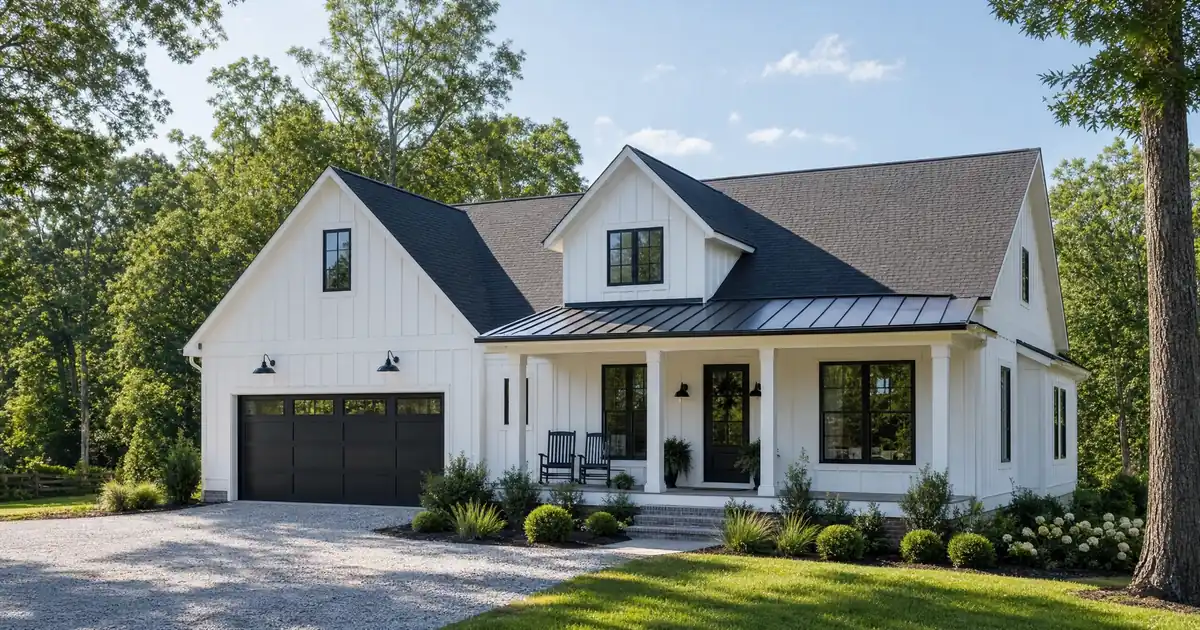
The Quick Read: No. Properties bought with a DSCR loan must remain non-owner-occupied for the life of the loan. Every program built this way requires one thing: the borrower and any family member must stay out of the property. This rule lasts as long as the loan is outstanding. That means no living there part-time. No moving in “just for a few months.” No occupying one unit of a duplex while renting out the rest. If there’s any real chance you might live in the property, DSCR is not the right loan for you.
DSCR Calculator
Run the numbers in your market
Rate source: Freddie Mac 30-yr average via FRED® — Federal Reserve Bank of St. Louis · effective Jul 30, 2026
Prefilled with starting assumptions — enter your own rent or nightly figures, taxes, insurance, and HOA for a more accurate picture.
Program parameters update from Lendmire’s centralized guideline source. Taxes and insurance are editable estimates.
As of Jul 30, 2026 · General Freddie Mac market benchmark, not a Lendmire loan offer. Rent, nightly rate, occupancy, taxes, and insurance are editable estimates. Short-term rental figures are estimates only and vary significantly by season, property type, management approach, and local short-term-rental rules — confirm local regulations before relying on them. Qualifying income for short-term rentals varies by program — some use appraisal market rent, others use documented STR history or projections — and is confirmed in underwriting. Not a Loan Estimate, approval, or commitment to lend. Program availability and eligibility are subject to lender guidelines, credit approval, property review, and underwriting.
That’s the whole answer in one paragraph. Below, you’ll find why it’s true, where the tricky edge cases sit, and what to use instead if living in the property is part of your plan.
What Actually Counts as “Living In” the Property?
Occupancy isn’t about how many nights you spend there each year. There’s no threshold you get to set yourself. Instead, it comes down to two things: the certification you sign at closing, and how you actually use the property afterward. Even casual or part-time stays break that certification. There’s no “just a little” exception here.
Across Lendmire’s wholesale network of DSCR lenders, the approval decision rests almost entirely on the property’s rental income. Your personal living situation doesn’t factor in. This is what makes DSCR useful for self-employed investors and portfolio owners who don’t want their personal income documents driving the loan file. You can read more about the full mechanics in “What Is a DSCR Loan”. But here’s the catch: the same design that removes personal income from underwriting also removes any room for personal occupancy. The two go hand in hand — you can’t have one without giving up the other.
Why Occupancy Breaks the Math, Not Just the Rules
Here’s the simple mechanical reason. DSCR compares monthly rent to the property’s total monthly debt obligation. That obligation includes principal, interest, taxes, insurance, and any HOA dues — together known as PITIA. Say a rental clears around 1.20x when a tenant pays rent. The moment that tenant moves out and the owner moves in, that same property drops to roughly a 0.00x ratio. No rent means no ratio, and no ratio means no basis for the loan. The file was priced, sized, and approved based on income that no longer exists.
Most programs in Lendmire’s network treat 1.00 coverage as a starting floor. This is the baseline point where rent lines up with the payment. Stronger ratios above that open up better leverage and pricing tiers. Details vary by lender, credit profile, and property. That’s why you’ll find the specific thresholds in DSCR loan requirements for investment properties rather than one blanket number here. Clearing 1.00 isn’t the same as having positive cash flow, either. Repairs, vacancy stretches, management fees, utilities, and capital expenses all sit outside that ratio. They still come out of the investor’s pocket.
DSCR loans are built for properties where the owner doesn’t live — non-owner-occupied investment properties. Because they’re business-purpose investor loans, they get reviewed differently than a standard owner-occupied mortgage. This classification turns on the primary purpose of the credit, not the label on the application. Federal rules covering exempt transactions define this distinction around purpose. The Consumer Financial Protection Bureau sets this out directly, and its own official commentary backs it up.
Appraisals follow the same logic. A DSCR appraisal exists to establish market rent — not to judge whether the home is livable for you personally. Many lenders lean on the same rent-schedule conventions used across the mortgage industry. This includes Fannie Mae’s Single-Family Comparable Rent Schedule (Form 1007) and Small Residential Income Property Appraisal Report (Form 1025), even though the loan itself never gets sold to the agencies. The appraiser’s job stops at comparable rent. It never extends to whether the home fits your lifestyle.
Key Terms Defined
DSCR (Debt Service Coverage Ratio): the property’s monthly rent divided by its monthly debt obligation. This one number drives approval — not your personal income.
PITIA: principal, interest, taxes, insurance, and association dues combined. This is the full monthly obligation that DSCR measures rent against.
Business-purpose loan: financing given for an investment or commercial reason, not personal housing. This is the legal basis DSCR programs rely on.
Non-Occupancy Affidavit: the closing document where you certify the property won’t be your primary or secondary residence for the life of the loan.
Seasoning: the length of time you must own a property (commonly around six months for cash-out deals) before certain refinance terms kick in.
Can a Family Member, Partner, or LLC Member Live There Instead?
No. The non-occupancy affidavit doesn’t just cover you — it covers your family members too. Lenders read “occupancy” broadly. Putting a parent, adult child, or spouse in the property doesn’t get around the rule. It’s the same violation wearing a different disguise.
This trips people up because DSCR loans often close in an LLC’s name, subject to lender program eligibility. Investors sometimes assume that owning through an entity creates distance from personal use. It doesn’t work that way. If anyone connected to the ownership structure lives there, the loan file stops functioning as the business-purpose loan it was approved to be.
What About House Hacking a Duplex, Triplex, or Fourplex?
Still no — even though federal rules make this sound more flexible than it actually is. Federal classification partly depends on unit count. Housing with more than two units generally counts as business-purpose financing under Regulation Z, no matter your occupancy plans. This comes from compliance guidance interpreting that threshold (Compliance Alliance).
But that’s a federal classification quirk, not a program permission. DSCR overlays don’t inherit that flexibility. They require zero owner occupancy across every unit — whether the building has two units or twenty. If you want to occupy one unit in a 2-4 unit property and rent out the rest, you need an owner-occupied conventional or FHA loan from day one. Don’t start with a DSCR file hoping to stretch it later.
Can You Buy With a DSCR Loan and Plan to Move In Later?
No. Your intent gets locked in at closing. Saying “I’ll rent it for a while, then move in” is still a change-of-use plan baked into the file from the start. This counts as misrepresentation, no matter how much time passes before you actually move in.
Here’s the cleaner path if your plans might shift: buy with the right loan type from the beginning. If your plans genuinely change later — say, a rental becomes a home you truly want to live in for legitimate personal reasons years down the road — the honest move is to refinance out of the DSCR loan and into an owner-occupied product once that decision is real. Don’t bake the plan into your original application.
What Actually Happens if Occupancy Rules Get Violated?
Three things drive enforcement here: the signed affidavit, ongoing verification, and the loan’s own contract terms. Lenders routinely check whether you carry landlord or homeowner insurance, whether your mailing address has changed, and what your tax or utility records show. These are standard tools used to catch occupancy misrepresentation in either direction — some borrowers even try to game pricing the opposite way, claiming owner-occupancy on a home they never actually move into.
Consequences range from contractual to serious. Most DSCR agreements include acceleration language, which lets the lender call the loan due if you breach the occupancy terms. This can push the file toward foreclosure exposure, regardless of your payment history. This isn’t a hypothetical risk. It’s a contract term sitting in the loan documents you’ve already signed.
Matching the Occupancy Plan to the Right Loan
| Scenario | Allowed Under DSCR? | Better-Fit Loan Type |
|---|---|---|
| Live in the whole property | No | Conventional, FHA, or VA |
| Live in one unit, rent the rest (2-4 units) | No | Owner-occupied multi-unit financing |
| Plan to move in after a year of renting it | No | Consumer-purpose loan from the start |
| Want occasional personal stays at a short-term rental | No | Second-home financing |
| Fully rented, no personal use planned | Yes, subject to lender guidelines | DSCR |
If your actual plan matches anything in the left column, that’s your cue. Shop a different loan category before you apply. Don’t sign a DSCR affidavit and hope the situation stays flexible — it won’t.
DSCR vs. conventional financing
Two common ways to finance an investment property in this market. They qualify you differently — here’s how investors weigh them.
Why investors choose it
- Qualifies on the property’s rental income — no personal tax returns, W-2s, or pay stubs needed to document income.
- No personal debt-to-income ceiling to clear, so existing mortgages and obligations don’t cap your borrowing the same way.
- Can be closed in an LLC, keeping the property inside a business entity.
- Built for scaling — not held to the limit on number of financed properties that conventional financing applies.
- Underwriting centers on the deal: generally qualifies when the rent covers the payment, a 1.00x coverage ratio being a common baseline (confirmed in underwriting).
- Designed specifically for investment property, including long-term and, where the program allows, short-term rentals.
Where it’s strong
- Often the lowest ongoing financing cost for a buyer who fully qualifies on personal income — a fit for a first property or a cost-first purchase.
Trade-offs for investors
- Requires full personal income documentation and must fit within a debt-to-income limit — salary, existing debts, and other mortgages all count.
- Typically held in your personal name rather than a business entity.
- Caps how many financed properties you can carry, which can become a ceiling as a portfolio grows.
- Evaluates you as a borrower as much as the property, which usually means more paperwork.
How investors usually choose: a first or single property often optimizes for the lowest financing cost; portfolio builders often optimize for leverage, vesting in an LLC, and scaling past conventional caps. The right answer depends on your goals, the property, and current guidelines — both paths run through select lenders in Lendmire’s wholesale network, with eligibility and terms confirmed in underwriting.
Short-Term Rentals: Hosting Guests Is Fine, Staying There Isn’t
DSCR programs finance Airbnb and VRBO properties all the time. But the same non-occupancy rule still applies to you as the owner between bookings — not just to long-term tenants. STR files in Lendmire’s network commonly run to around 75% LTV on a purchase, roughly 70% on a rate-term or cash-out refinance. Lenders typically want a 640-plus credit score, about 12 months of hosting history, and a 1.00 coverage floor. Income gets documented through platforms like AirDNA or trailing booking history instead of a standard lease.
Here’s a pattern worth flagging: STR files with big seasonal swings often come in tight when you use a straight trailing-twelve-month average. Stronger files run two scenarios before submitting — one conservative, one peak-season — instead of leaning on a single number. Short-term rental rules can also vary by city, county, HOA, and property type. Confirming local rules before counting on projected rental income matters just as much as the loan structure itself.
Here’s where owners get it wrong: they assume a night or two of personal use between guest stays is harmless because the unit is “mostly” a rental. It isn’t harmless. The affidavit doesn’t carve out incidental personal stays, and detection tools — booking platform records, utility usage patterns — can surface that kind of use easily.
If Living There Is Actually the Plan, Here Are the Real Alternatives
Conventional financing works for a straightforward owner-occupied purchase. It qualifies you based on your personal income and debt-to-income ratio, not the property’s rent.
FHA and VA loans fit owner-occupants who want lower down payment thresholds. This includes 2-4 unit properties where you occupy one unit — the legitimate version of house hacking that DSCR can’t touch.
Second-home financing fits a property you use personally for part of the year. This is a fundamentally different product than DSCR. It’s built around occasional personal use rather than banning it entirely.
Owner-occupied multi-unit conventional or FHA loans are the right tool if you want rental income from extra units while living in one of them.
None of these options run on the property’s income the way DSCR does. But that’s the tradeoff: you give up property-income underwriting in exchange for the right to live there. For a full side-by-side look at how the two underwriting approaches differ, see DSCR loans compared to conventional financing.
Frequently Asked Questions
Can a friend or tenant who isn’t on the loan live in the property instead of the borrower?
Yes — that’s the entire point of a DSCR rental. A tenant paying market rent is exactly the arrangement the loan is built around. The restriction only applies to the borrower and any family member tied to the ownership, not to unrelated tenants.
Can I stay overnight for repairs, a showing, or between tenants?
Brief, non-residential visits for property management purposes generally aren’t treated the same as occupancy. But sleeping there regularly, receiving mail there, or switching your insurance to homeowner coverage all send occupancy signals to a lender. When in doubt, treat any recurring personal stay as a violation risk. Don’t assume a gray area exists.
Which financial institutions provide loans for buying Airbnb homes?
DSCR programs across Lendmire’s wholesale network are among the more common paths for financing short-term rental purchases. These typically run to around 75% LTV, with income documented through short-term rental data platforms instead of a standard lease. Specific lender names and terms vary by file, credit profile, and property. The practical step is comparing a few program structures rather than assuming one lender fits every STR purchase.
When is it not a good idea to refinance my home?
Refinancing usually doesn’t make sense when the new loan doesn’t clearly improve your position. For example: refinancing purely to access equity without a clear use for the funds, or refinancing a rental into a DSCR structure before it has stable rent history to support a strong coverage ratio. If your investment property is already performing well under its current terms, run the numbers on a cash-out or rate-term scenario against your actual goal — a lower obligation, freed-up equity, or better structure. That matters more than refinancing just because rates or terms “should” be better.
How much does it cost to refinance a $400,000 property?
Costs vary by lender, loan size, and program. This article can’t quote specific fees or rates — you’ll work those details out directly with a lender. Because DSCR loans are business-purpose financing, they fall outside standard consumer-disclosure requirements, like the loan estimate that applies to owner-occupied mortgages. Here’s what stays consistent across DSCR refinances: the structural framework. Cash-out refinancing typically tops out around 75% LTV in Lendmire’s network, and lenders generally expect roughly six months of seasoning before considering a cash-out, no matter the property’s price point.
About Lendmire
Lendmire (NMLS# 2371349) is a mortgage broker. It arranges DSCR investor loans through a wholesale network spanning 41 markets, including Washington, D.C. Lendmire doesn’t fund or approve loans directly — every scenario still runs through a lender’s own underwriting process. For a full walkthrough of how the product works from start to finish, see the complete DSCR loans guide. If your property purchase or refinance genuinely fits the rental-only profile DSCR requires, Lendmire can help you compare loan options based on the property’s income, your credit profile, available leverage, and your overall goals. You can request a quote or call 828-256-2183 to talk through your specific scenario. Scotsman Guide named Lendmire a Top Mortgage Workplace in both 2025 and 2026.
Loan approval is never guaranteed, and nothing here is a commitment to lend. Every scenario described here depends on lender approval and on borrower, property, and program guidelines that can change. This content is general information only — not financial, legal, or tax advice. Investors should confirm current program details directly with a lender and speak with a qualified tax professional about their specific situation.
Get Started
Ready to find the right loan for you?
In about 30 seconds you can review financing options available for your investment property. No commitment required.
Informational only. Not a Loan Estimate, approval, or commitment to lend. Program availability and eligibility are subject to lender guidelines, credit approval, property review, and underwriting.
References
1. Consumer Financial Protection Bureau — Regulation Z, § 1026.3 Exempt Transactions
2. Consumer Financial Protection Bureau — Official Commentary to § 1026.3
3. Compliance Alliance — Regulation Z and “Investment” Properties
This article is part of Lendmire’s DSCR loan program — full qualification details, guidelines, and scenarios live on the program page.
Related reading: Can You Buy A Duplex And Airbnb Half Of It? · VA Investment Property Loans Explained · Buying Investment Properties For The First Time: What Lenders Look At
Brandon Miller
Founder & CEO, Mortgage Loan Originator, Lendmire LLC
- Mortgage Loan Originator · NMLS# 1129696 · Verify on NMLS Consumer Access
- North Carolina Real Estate Broker · License# 343312 · Verify on NCREC
- North Carolina Insurance Producer · License# 19053198 · Property, Casualty, Life, Health · Verify on NAIC SBS
- Lendmire LLC · Firm NMLS# 2371349 · Verify firm licensure
Disclosure information. Lendmire is a state-licensed mortgage brokerage under NMLS# 2371349. Lendmire is not a depository institution, direct lender, or financial advisor — all loans referenced are placed through wholesale lender partners and are subject to each lender's underwriting standards. This article is provided for general informational purposes and is not a commitment to lend, nor does it constitute financial, legal, or tax advice. Loan programs, terms, rates, and qualification standards change without notice and depend on borrower profile, property type, and the state in which the subject property is located. Equal Housing Opportunity provider. NMLS Consumer Access: nmlsconsumeraccess.org.