
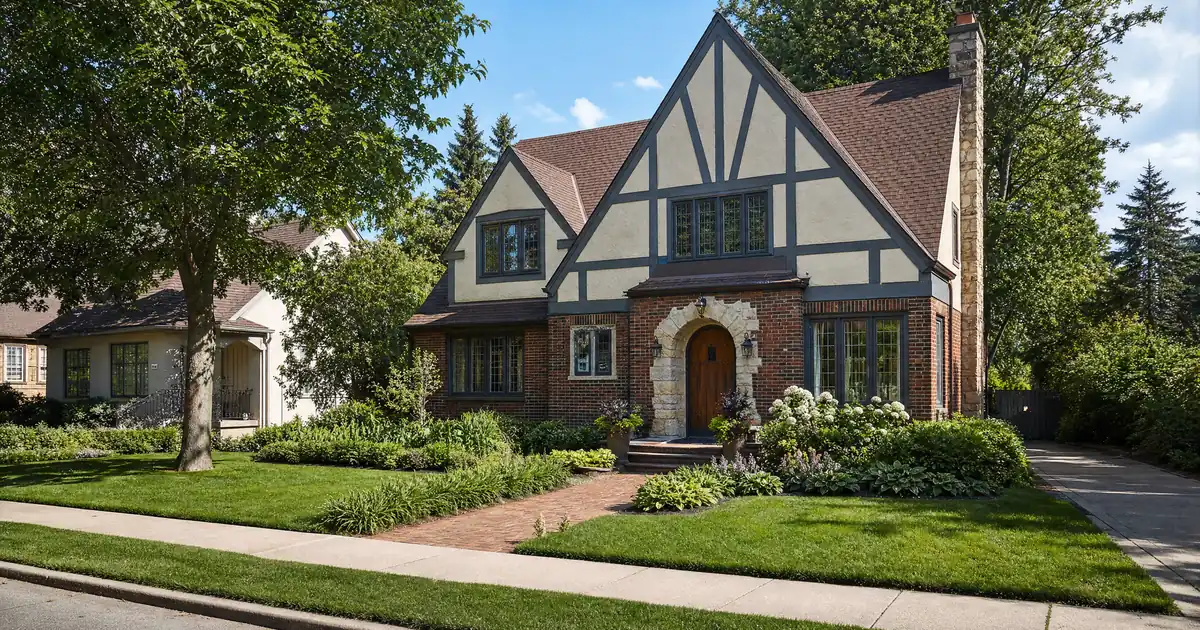
The Quick Read: Qualifying for a DSCR loan is usually easier than qualifying for a conventional investment-property mortgage. Why? The lender looks at the property’s rent instead of your personal income paperwork. But it’s not automatic. The rent still has to clear a coverage bar. Your credit still gets checked. You still need cash in reserve. Most files get denied because the rent doesn’t actually support the number the borrower expected — not because of some hidden rule.
DSCR Calculator
Run the numbers in your market
Rate source: Freddie Mac 30-yr average via FRED® — Federal Reserve Bank of St. Louis · effective Jul 30, 2026
Prefilled with starting assumptions — enter your own rent or nightly figures, taxes, insurance, and HOA for a more accurate picture.
Program parameters update from Lendmire’s centralized guideline source. Taxes and insurance are editable estimates.
As of Jul 30, 2026 · General Freddie Mac market benchmark, not a Lendmire loan offer. Rent, nightly rate, occupancy, taxes, and insurance are editable estimates. Short-term rental figures are estimates only and vary significantly by season, property type, management approach, and local short-term-rental rules — confirm local regulations before relying on them. Qualifying income for short-term rentals varies by program — some use appraisal market rent, others use documented STR history or projections — and is confirmed in underwriting. Not a Loan Estimate, approval, or commitment to lend. Program availability and eligibility are subject to lender guidelines, credit approval, property review, and underwriting.
There’s no federal minimum DSCR. There’s no government-set credit floor. There’s no agency down-payment rule for this loan type. DSCR loans are business-purpose loans. They go to an investor buying a rental, not a home to live in. That one fact explains why the requirements below come from lender program design, not from a regulation. It also explains why they vary more than most first-time investors expect. Terms vary by lender guidelines, property type, leverage, credit profile, and full file review.
What Does “DSCR” Actually Mean, and Why Does It Set the Bar?
DSCR stands for debt-service coverage ratio. It’s the property’s monthly rent divided by its monthly debt obligation — principal, interest, taxes, insurance, and HOA dues where they apply. People often shorten this to PITIA. A ratio of 1.00 means the rent covers the payment exactly. Above 1.00 means the rent covers it with room to spare.
Here’s the part that trips people up: clearing 1.00 doesn’t mean the property is profitable. DSCR only measures rent against the loan payment. It says nothing about repairs, vacancy, property management fees, utilities, or big capital expenses. Those sit entirely outside the ratio. A property can clear 1.15 on paper and still lose money in a rough year if the roof needs replacing. Investors who treat DSCR as the full cash-flow picture usually get an unpleasant surprise down the road.
Across the wholesale network Lendmire works with, 1.00 coverage is where a number of programs set their floor. It’s not a universal industry standard — just a common starting point. Clear that floor and you’re in qualifying territory. Come in stronger, and you typically unlock better leverage. Lendmire, NMLS# 2371349, works as a broker placing DSCR files with lenders across 41 markets, including Washington, D.C. The coverage math is usually the first thing any of those lenders check.
Key Terms Defined
DSCR (debt-service coverage ratio): monthly rental income divided by the monthly loan payment, including taxes and insurance — the core number that drives qualification.
PITIA: principal, interest, taxes, insurance, and association dues — the full monthly obligation a lender measures rent against.
LTV (loan-to-value): the loan amount shown as a percentage of the property’s value. A lower LTV means a bigger down payment — and usually an easier file to approve.
Non-QM (non-qualified mortgage): a loan that sits outside the standard consumer mortgage rules. DSCR loans fall into this category because they’re made for business purposes, not personal ones.
Business-purpose loan: a loan made to finance an investment or rental property, not a home the borrower will live in. DSCR loans are built for non-owner-occupied properties. Because lenders review them as business-purpose transactions, they underwrite them differently than a standard owner-occupied mortgage.
Seasoning: the amount of time a lender wants you to hold a property — usually before a refinance — before it will count rent or equity toward a new loan.
How Hard Is It for YOU, Specifically?
The honest answer depends on which investor profile fits you. The ratio math is the same for everyone. But the compensating factors around it change how hard the file is.
The strong-profile investor. Credit in the 700s. Down payment of 25%-30%. Six-plus months of reserves sitting in the bank. A property that rents for comfortably more than the payment. This file is close to the easiest thing a lender reviews. It often qualifies for the network’s higher-leverage tiers — sometimes up to 85% LTV with roughly a 700+ score — and pricing tends to reward the strength.
The first-time investor. No prior landlord history isn’t disqualifying on a DSCR loan the way it can be on some conventional investment programs. Why? Qualification runs on the property’s income, not your track record. What changes for a first-timer is emphasis. Lenders tend to lean harder on reserves and credit, since there’s no rental history to lean on instead.
The self-employed or heavy-write-off investor. This is where DSCR loans genuinely solve a real problem. A conventional lender looks at your income after deductions. Often that income looks too thin to qualify — even when your cash flow is healthy. A DSCR loan skips that calculation entirely. There’s no personal income documentation. Qualification runs on the property’s income instead. If your business write-offs have been quietly blocking conventional approval, this is usually the fastest fix — even if your write-off strategy never changes.
The thin-credit investor. A 620 score exists as a floor in parts of Lendmire’s network. But most programs prefer something closer to 660. And the leverage available at 620 is meaningfully lower than what a 700+ borrower gets. This file isn’t rejected outright. It just gets priced and leveraged more conservatively — usually with more money down and closer reserve scrutiny.
What’s the Actual DSCR Math, Step by Step?
The lender starts with the property’s income, not your income. That’s the entire premise of the loan. A licensed appraiser fills out Fannie Mae’s Form 1007 (single-family) or Form 1025 (two-to-four units). The appraiser researches comparable rentals in the area to arrive at a supported market-rent figure, adjusting for differences between the subject property and the comps (GetBlueprint). That appraised number — not your own estimate of what the unit could fetch — usually governs the file.
From there, the math is simple: rent divided by the full monthly payment, including taxes and insurance. Land at 1.00 or above, and the property is at least breaking even on its own carrying cost. Land below 1.00, and the file needs something to make up the shortfall — more cash down, stronger reserves, or a program built for it.
Short-term rentals add a documentation wrinkle worth knowing up front. Under current appraisal guidance, the lender decides whether to treat nightly-platform income as rental income (which requires the 1007/1025 comparable-rent process) or as business income. Either way, appraisers cannot just take a nightly rate, multiply it by 30, and call that the monthly rent (Fannie Mae). Investors who assume their Airbnb calendar converts cleanly into qualifying income are often surprised when the appraised figure lands lower than expected.
Across Lendmire’s wholesale network, most short-term rental files want a trailing 12 months of hosting history, credit in the 640+ range, purchase leverage up to roughly 75% LTV, and coverage clearing that same 1.00 floor. Refinance and cash-out on STR properties typically run tighter — closer to 70% LTV.
What Happens Below 1.00 Coverage?
A property that doesn’t quite cover its own payment on rent alone isn’t automatically dead. But it does move into a different tier of the market. A number of lenders in Lendmire’s network will still review sub-1.00 files. Leverage and terms adjust to make up for the shortfall, and pricing typically reflects the added risk. A no-ratio option is available for DSCR below 1.00 with stronger credit or higher down payment; qualification on that path rests on credit and equity rather than a rent-coverage calculation.
On a borderline file, the practical move is usually one of three things: put more down to shrink the payment, add reserves to show cushion, or check whether the property actually supports a stronger rent than the first appraisal showed. None of these guarantee approval. Every file gets reviewed on its own, against lender guidelines, credit, and the property itself. But they’re the honest levers you have.
DSCR vs. Conventional: Which Is Actually Harder?
It depends on what you’re optimizing for — easier paperwork or cheaper leverage. DSCR wins on paperwork and on flexibility around personal income. Conventional financing still wins on leverage and on portfolio caps for investors just starting out.
| Factor | DSCR Loan | Conventional Investment Loan |
|---|---|---|
| Income docs | Property rent vs. payment | traditional personal-income documentation, W-2s, DTI |
| Self-employed friction | Minimal — no personal DTI calc | Often significant |
| Portfolio property limit | No agency-style cap | Financed-property counting rules apply |
| Entity/LLC closing | Generally allowed, program-dependent | Typically restricted |
| Down payment (typical) | 20%-25%, higher leverage select programs | Often lower on a first or second property |
That last row matters more than most first-time investors realize. Conventional financing on an owner’s first rental can sometimes need less down than DSCR does. The tradeoff: Fannie Mae’s financed-property rules cap how many 1-4 unit properties one borrower can carry conventionally at a time — generally up to ten across all financed properties, counting multi-unit buildings as one property each and including a financed primary residence in that count (Fannie Mae Selling Guide). DSCR loans don’t carry that ceiling. That’s the real reason investors scaling past four, six, or ten properties migrate over — more than rate or paperwork convenience.
For a fuller side-by-side, Lendmire’s DSCR loans guide walks through the mechanics in more depth than fits here.
What Documents Does a DSCR File Actually Need?
“Low-doc” is the right description — not “no-doc.” A DSCR file skips traditional personal-income documentation and W-2s. But it still asks for bank statements to verify reserves, a lease or the appraisal-based rent schedule, proof of insurance, an entity operating agreement if you’re closing in an LLC (subject to lender program eligibility), and a signed business-purpose certification confirming the property is for investment, not personal use.
DSCR vs. conventional financing
Two common ways to finance an investment property in this market. They qualify you differently — here’s how investors weigh them.
Why investors choose it
- Qualifies on the property’s rental income — no personal tax returns, W-2s, or pay stubs needed to document income.
- No personal debt-to-income ceiling to clear, so existing mortgages and obligations don’t cap your borrowing the same way.
- Can be closed in an LLC, keeping the property inside a business entity.
- Built for scaling — not held to the limit on number of financed properties that conventional financing applies.
- Underwriting centers on the deal: generally qualifies when the rent covers the payment, a 1.00x coverage ratio being a common baseline (confirmed in underwriting).
- Designed specifically for investment property, including long-term and, where the program allows, short-term rentals.
Where it’s strong
- Often the lowest ongoing financing cost for a buyer who fully qualifies on personal income — a fit for a first property or a cost-first purchase.
Trade-offs for investors
- Requires full personal income documentation and must fit within a debt-to-income limit — salary, existing debts, and other mortgages all count.
- Typically held in your personal name rather than a business entity.
- Caps how many financed properties you can carry, which can become a ceiling as a portfolio grows.
- Evaluates you as a borrower as much as the property, which usually means more paperwork.
How investors usually choose: a first or single property often optimizes for the lowest financing cost; portfolio builders often optimize for leverage, vesting in an LLC, and scaling past conventional caps. The right answer depends on your goals, the property, and current guidelines — both paths run through select lenders in Lendmire’s wholesale network, with eligibility and terms confirmed in underwriting.
That certification matters more than borrowers assume. Federal rules exempt business-purpose lending from the consumer disclosure requirements that apply to a standard owner-occupied mortgage. But a signed form alone doesn’t settle the question. Regulators look at the substance of the transaction, not just the paperwork (Consumer Financial Protection Bureau). In practice, that just means the property has to actually be an investment, and the file has to reflect that honestly.
Because these are business-purpose loans, they’re also exempt from TRID. There’s no three-day waiting period or Closing Disclosure timeline the way there is on a consumer mortgage. If disclosure timing comes up at all in your file, that exemption is why.
Why Do DSCR Applications Actually Get Denied?
Overestimated rent is the single most common failure point, by a wide margin. Investors often price a unit based on what they’ve seen listed nearby — not what the appraiser’s comparable-rent analysis actually supports. That gap between the two numbers is often where a file that “should” clear 1.15 instead lands at 0.95.
The other repeat offenders: reserves that don’t survive scrutiny (funds sitting in a non-bank account, or borrowed shortly before application); property taxes or HOA dues that quietly eat into the coverage ratio; and property condition issues that surface at appraisal. A unit needing major rehab can complicate financing even when the rent math looks fine on paper. A small set of property types simply fall outside these programs entirely, regardless of the numbers: manufactured homes — both single- and double-wide — along with log homes and barndominiums are not offered through Lendmire’s DSCR network.
In practice, the files that come back clean tend to share one habit. The investor pulled a realistic rent comp before applying, not after the appraisal came back low. Files where the borrower’s rent guess and the appraiser’s number are close together move through review with far fewer surprises. Files where those two numbers are miles apart don’t. That gap is often the single biggest predictor of how smoothly a DSCR file goes from application to approval.
What Can You Do Before Applying to Strengthen the File?
Pull a realistic rent comp first. Use recently leased comparable units in the same immediate area — not aspirational listing prices. That single step prevents most of the surprises above.
Get your reserves seasoned in a bank account for at least a couple of months before applying. Lenders generally want to see funds that have been sitting, not funds that just arrived. Know your leverage target going in: standard purchase files across Lendmire’s network typically run 75%-80% LTV. A handful of high-leverage programs reach 85% for borrowers around 700+ credit. Cash-out refinances usually cap closer to 75% and expect roughly six months of ownership seasoning first. Investors pulling equity out of a rental to fund the next deal often start with Lendmire’s guide on refinancing out of a hard money loan into DSCR financing, which walks through how that transition typically works.
Loan sizes across the network generally run up to $3,000,000 on standard programs. Anything above roughly $2,500,000 typically gets structured as 30-year fixed rather than a shorter or adjustable term. Above $1,500,000, reserve expectations often step up from around six months of PITIA closer to nine. Overlay states — Connecticut, Florida, Illinois, and New Jersey among them — tend to cap purchase leverage closer to 75% LTV and cap loan size around $2,000,000. Investors in those markets should budget leverage expectations accordingly.
Loan approval is never guaranteed, and nothing here is a commitment to lend. Every scenario described here is general information, not financial, legal, or tax advice. Actual terms depend on lender approval and on borrower, property, and program guidelines, which can change. Tax treatment can also depend on how loan funds are used and how the property is held. Investors should keep clear records and speak with a qualified tax professional before relying on any deduction.
Investors coming out of a BRRRR project — buying with hard money, rehabbing, then refinancing into a permanent loan — often use DSCR financing as that exit. Lendmire’s BRRRR refinance guide and its companion piece on hard money exit strategies both walk through how the rehab-to-rent transition typically lines up with DSCR’s property-rent-based lender review.
If you’re buying or refinancing a rental property and want to see how the numbers actually work for your situation, Lendmire can help you compare DSCR loan options based on the property’s income, your credit profile, leverage, and your broader investing goals. Reach the team at 828-256-2183 or request a quote directly.
Frequently Asked Questions
How do I qualify for a DSCR loan?
Qualification centers on the property’s rent covering its monthly payment. Most programs want that coverage at 1.00 or above. You’ll also generally need a credit score in the 620-700+ range, a down payment typically in the 20%-25% range, and cash reserves on hand. There’s no personal income or tax-return review — the property carries the qualification, subject to lender guidelines and program eligibility.
How hard is it to get a DSCR loan?
Easier than a conventional investment mortgage on the paperwork side, since there’s no personal DTI calculation to clear. It’s not automatic, though. The rental income still has to hold up against the payment, and credit, reserves, and leverage all factor into what a given lender will actually offer.
How do I qualify for a DSCR loan with no rental history?
First-time investors can qualify. The loan runs on the property’s projected rent, not your landlord track record. What typically shifts for a first-timer is emphasis — lenders often lean harder on credit score and reserves since there’s no prior rental performance to point to.
Can I close a DSCR loan in an LLC?
Generally yes, subject to lender program eligibility. Many investors title DSCR properties in an LLC for liability and portfolio-management reasons. The entity typically needs its own operating agreement and documentation as part of the file, and specifics vary by lender and program.
What credit score do I need for a DSCR loan?
A 620 floor exists in parts of Lendmire’s wholesale network. But most programs want something closer to 660. And the strongest leverage tiers — up to roughly 85% LTV — generally require scores around 700 or higher. Where you land inside that range affects pricing and leverage more than it affects a flat yes-or-no.
This article is provided for general informational purposes and does not constitute a commitment to lend. Loan approval is never guaranteed. All scenarios described are subject to lender approval and to borrower, property, and program guidelines, which can change. Nothing here should be treated as financial, legal, or tax advice — consult a qualified professional for guidance specific to your situation.
About Lendmire
Lendmire (NMLS# 2371349) is a mortgage brokerage built around DSCR investor lending, with programs available in 41 markets, including Washington, D.C. DSCR lenders commonly evaluate rental-income coverage instead of personal income paperwork — a practical fit for LLC-owned and multi-property investors. Terms vary by lender, property, leverage, and program. Scotsman Guide named Lendmire a Top Mortgage Workplace in both 2025 and 2026.
Get Started
Ready to find the right loan for you?
In about 30 seconds you can review financing options available for your investment property. No commitment required.
Informational only. Not a Loan Estimate, approval, or commitment to lend. Program availability and eligibility are subject to lender guidelines, credit approval, property review, and underwriting.
References
1. GetBlueprint — What Is Form 1007?
2. Fannie Mae — Appraiser Update on Short-Term Rental Income
3. Fannie Mae Selling Guide — Multiple Financed Properties for the Same Borrower
This article is part of Lendmire’s DSCR loan program — full qualification details, guidelines, and scenarios live on the program page.
Related reading: What Credit Score Do You Need For A First Investment Property? · DSCR Loan Denied Because The Lender Used A Higher Qualifying Payment · BRRRR Refinance Denied Because The Appraisal Came In Too Low
Brandon Miller
Founder & CEO, Mortgage Loan Originator, Lendmire LLC
- Mortgage Loan Originator · NMLS# 1129696 · Verify on NMLS Consumer Access
- North Carolina Real Estate Broker · License# 343312 · Verify on NCREC
- North Carolina Insurance Producer · License# 19053198 · Property, Casualty, Life, Health · Verify on NAIC SBS
- Lendmire LLC · Firm NMLS# 2371349 · Verify firm licensure
Important disclosures. Lendmire (NMLS# 2371349) is a licensed mortgage brokerage. Lendmire is not a direct lender, depository institution, or financial advisor. All loan inquiries are subject to lender underwriting; this article does not constitute a commitment to lend. Rates, terms, and program guidelines are subject to change without notice and vary by borrower profile, property type, and state. Information in this article is general in nature and is not financial, legal, or tax advice. Equal Housing Opportunity. NMLS Consumer Access: nmlsconsumeraccess.org.