
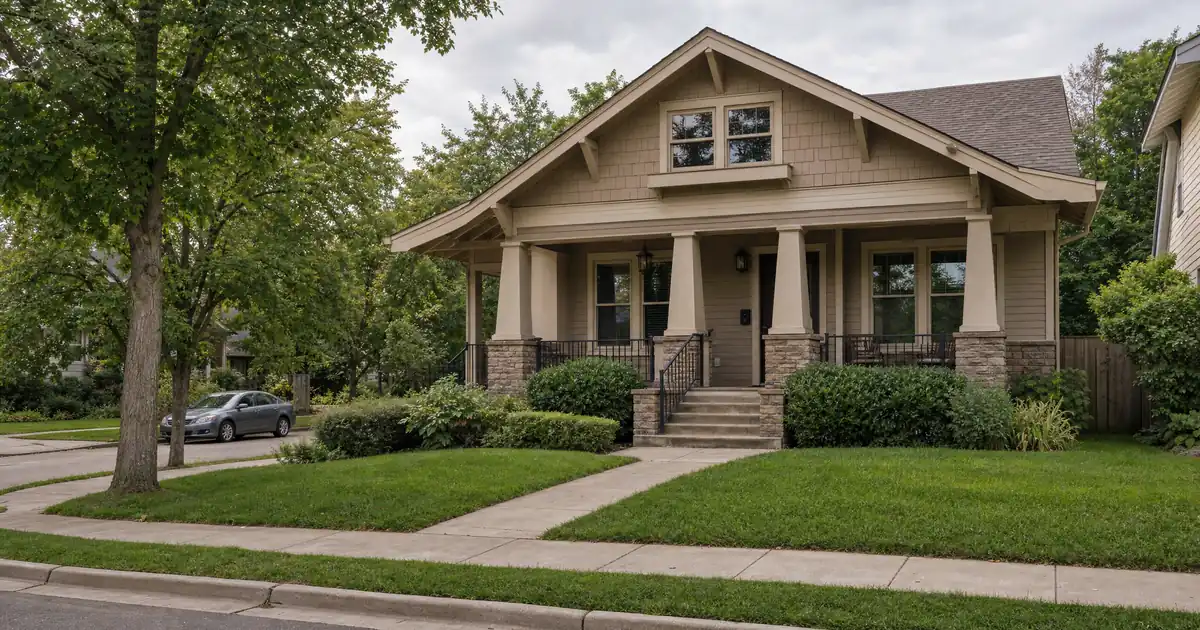
The Quick Read: No — traditional down payment assistance (grants, forgivable seconds, HFA programs) does not work with DSCR loans, because those programs require owner-occupancy and DSCR loans finance non-owner-occupied rental property. Investors buying rentals rely on different tools instead: gift funds with a minimum contribution, seller-paid closing costs, and cash-out equity recycled from an existing property. This article walks through why the mismatch exists and what actually replaces DPA for rental purchases.
DSCR Calculator
Run the numbers in your market
Rate source: Freddie Mac 30-yr average via FRED® — Federal Reserve Bank of St. Louis · effective Jul 30, 2026
Prefilled with starting assumptions — enter your own rent or nightly figures, taxes, insurance, and HOA for a more accurate picture.
Program parameters update from Lendmire’s centralized guideline source. Taxes and insurance are editable estimates.
As of Jul 30, 2026 · General Freddie Mac market benchmark, not a Lendmire loan offer. Rent, nightly rate, occupancy, taxes, and insurance are editable estimates. Short-term rental figures are estimates only and vary significantly by season, property type, management approach, and local short-term-rental rules — confirm local regulations before relying on them. Qualifying income for short-term rentals varies by program — some use appraisal market rent, others use documented STR history or projections — and is confirmed in underwriting. Not a Loan Estimate, approval, or commitment to lend. Program availability and eligibility are subject to lender guidelines, credit approval, property review, and underwriting.
Key Terms Defined
DSCR (debt-service coverage ratio): a number that compares a rental property’s monthly rent against its full monthly housing obligation — principal, interest, taxes, insurance, and any HOA dues, often called PITIA. A ratio at or above 1.00 means the rent covers that obligation; below 1.00 means it doesn’t cover it in full.
Down payment assistance (DPA): grants, forgivable loans, or deferred second mortgages — usually from a state housing agency, city, or nonprofit — that help a buyer cover part of the cash needed to purchase a home they will live in.
Business-purpose loan: a loan made for investment or income-producing reasons rather than personal, family, or household use. DSCR loans fall into this bucket because the property is a rental, not a primary residence.
LTV (loan-to-value): the loan amount expressed as a percentage of the property’s value. An 80% LTV purchase means the loan covers 80% of the price and the buyer brings the rest in cash. Actual leverage a lender allows depends on its guidelines, the property type, and the borrower’s credit profile, so figures shift from file to file.
Seasoning: the waiting period a lender wants before it will count certain funds, or before it will let an investor refinance a property they recently acquired.
Why DPA and DSCR Loans Don’t Mix
Down payment assistance is built around owner-occupied housing, full stop. DSCR loans exist to finance property nobody plans to live in. That’s the entire mismatch, and it’s structural, not a paperwork technicality.
Every DPA program surveyed — federal, state, and city-level — makes owner-occupancy a condition of eligibility. HUD’s HOME Investment Partnerships Program requires that assisted housing be the owner’s principal residence, with income capped at 80% of area median income for the household receiving help. New York City’s HomeFirst program goes further, tying the size of the assistance loan to how long the buyer must actually live there — ten years of residency for loans up to $40,000, fifteen years for larger amounts. Chicago’s housing authority requires a signed occupancy agreement before a homebuyer sees a dollar of assistance.
None of that connects to a rental purchase. A DSCR loan reviews the property on its rental income, not the buyer’s residency plans — because the buyer isn’t going to be a resident. Once a property is classified as a rental, it drops out of the eligibility window every DPA program above is written around.
DSCR loans are designed for non-owner-occupied investment properties. Because they are business-purpose investor loans, they are reviewed differently from a standard owner-occupied mortgage — which is also why the government assistance infrastructure sitting underneath FHA and conventional loans doesn’t sit underneath DSCR files at all.
Scale confirms the pattern rather than breaking it. Down Payment Resource’s data shows 2,679 homebuyer assistance programs active nationwide as of early this year, up from 2,619 the quarter before. That’s a lot of programs — and nearly every one surveyed here required primary-residence occupancy as a condition of use. Volume doesn’t change eligibility.
What Actually Replaces DPA on a Rental Purchase
Investors who can’t tap DPA still have real, documented ways to reduce cash needed at closing — they just come from private capital, not a government program. Across the DSCR files Lendmire places through its wholesale lending network, three sources come up again and again: gift funds, seller-paid closing costs, and equity recycled from an existing rental via cash-out refinance.
Gift funds work on most DSCR programs, and this is actually one place DSCR beats conventional investment financing rather than trailing it. Conventional loans on investment property typically don’t allow gift funds at all. Most DSCR lenders in the network will accept them, generally with a minimum borrower contribution — often cited around 10% of the funds coming from the borrower’s own pocket rather than 100% gifted. The full DSCR loan down payment requirements page breaks down how credit score and coverage ratio interact with the down payment tier.
Seller-paid closing costs are common where the lender allows them — these reduce the cash needed to close but don’t reduce the down payment itself, and the two shouldn’t be confused.
Cash-out equity recycling is the closest private-market substitute for DPA that exists in this space, and honestly it’s the tool most repeat investors end up using once they own one property. An investor pulls equity out of Property A through a cash-out refinance, receives the proceeds as cash, then uses that documented cash as the down payment source on Property B. Most programs in the network cap cash-out around 75% LTV, and about 6 months of seasoning on Property A is the common expectation before a lender will count that equity. The mechanics and eligible sources are covered in more depth on Lendmire’s page on DSCR loans with no down payment options.
What doesn’t work: seller-carried second mortgages and unsecured personal loans used as down payment funds. A seller second changes the combined LTV math a DSCR lender relies on to size risk, and underwriters catch it. Unsecured personal loans show up on bank statement review and get flagged the same way. Zero-down DSCR financing doesn’t exist in this market — any advertisement claiming otherwise is either misrepresenting the product or quietly layering in a second lien that violates the first mortgage’s terms.
The House-Hack Bridge (And Where It Ends)
House-hacking is the one real bridge between DPA and rental income — but it works through FHA, conventional, or VA financing, never through DSCR. An investor who buys a 2-4 unit property and occupies one unit can use owner-occupied financing, including DPA, while renting out the rest.
This lane is growing. Down Payment Resource counted 934 programs — 35% of the national total — now allowing multi-unit purchases, up from 923 the prior quarter. That’s a real path for a capital-constrained investor to get into a rental-producing property with less cash down.
But the bridge ends the moment the investor stops living there. Once the owner moves out and wants to refinance into a true rental-income-qualified loan, the property graduates into DSCR territory — and any DPA subordinate lien attached to it becomes a combined-LTV problem for the new lender to untangle. This is worth planning around before the purchase, not after.
Occupancy drift matters in the other direction too. Most DSCR lenders treat more than 14 days of personal occupancy in a given year as a signal that pulls a property out of non-owner-occupied treatment. An investor can’t quietly move into a DSCR-financed rental later to try to access DPA-style benefits — it conflicts with the terms the loan was underwritten under from day one.
The Down Payment Math That Actually Governs DSCR Files
On most files across Lendmire’s wholesale network, standard purchase leverage lands at 75-80% LTV — meaning 20-25% down — for investors with a 700 or higher credit score and a rental coverage ratio at or above 1.00. A handful of higher-leverage programs in the network reach 85% LTV, roughly 15% down, for the strongest borrower profiles.
Where coverage runs below that 1.00 benchmark, leverage typically tightens — investors should expect a larger down payment to compensate. Sub-1.00 coverage deals are available through select lenders in the network, though LTV and terms adjust accordingly. A no-ratio option is available for DSCR below 1.00 with stronger credit or higher down payment; qualification on that path rests on credit and equity rather than a rent-coverage calculation.
Credit plays into the same math. A 620 floor exists in parts of the network, most programs prefer something closer to 660, and 700+ is where the strongest leverage tiers open up. None of these thresholds are guarantees — they’re typical ranges from select wholesale-network guidelines, and every file gets underwritten on its own merits.
Reserves matter too, and they vary by lender, leverage, and loan size. Six months of PITIA is a common expectation; conservative rate-and-term refinances at modest leverage under $1,500,000 sometimes see reserves waived entirely, while loans above that threshold typically step up toward nine months. There’s no single universal number here — it depends on the file.
DSCR vs. conventional financing
Two common ways to finance an investment property in this market. They qualify you differently — here’s how investors weigh them.
Why investors choose it
- Qualifies on the property’s rental income — no personal tax returns, W-2s, or pay stubs needed to document income.
- No personal debt-to-income ceiling to clear, so existing mortgages and obligations don’t cap your borrowing the same way.
- Can be closed in an LLC, keeping the property inside a business entity.
- Built for scaling — not held to the limit on number of financed properties that conventional financing applies.
- Underwriting centers on the deal: generally qualifies when the rent covers the payment, a 1.00x coverage ratio being a common baseline (confirmed in underwriting).
- Designed specifically for investment property, including long-term and, where the program allows, short-term rentals.
Where it’s strong
- Often the lowest ongoing financing cost for a buyer who fully qualifies on personal income — a fit for a first property or a cost-first purchase.
Trade-offs for investors
- Requires full personal income documentation and must fit within a debt-to-income limit — salary, existing debts, and other mortgages all count.
- Typically held in your personal name rather than a business entity.
- Caps how many financed properties you can carry, which can become a ceiling as a portfolio grows.
- Evaluates you as a borrower as much as the property, which usually means more paperwork.
How investors usually choose: a first or single property often optimizes for the lowest financing cost; portfolio builders often optimize for leverage, vesting in an LLC, and scaling past conventional caps. The right answer depends on your goals, the property, and current guidelines — both paths run through select lenders in Lendmire’s wholesale network, with eligibility and terms confirmed in underwriting.
In practical terms, a larger down payment does two things at once: it shrinks the loan balance, which lifts the coverage ratio because the monthly obligation drops, and it satisfies the leverage side of underwriting independently. But more cash down never overrides a credit floor, a reserve requirement, or a property-eligibility rule. The strongest files clear both tests — enough equity in the deal and rent that comfortably covers the payment. Clearing 1.00 coverage isn’t the same as positive cash flow, either; repairs, vacancy, management fees, and capital expenses sit outside the DSCR calculation entirely. Terms vary by lender guidelines, property type, leverage, credit profile, and full file review.
A quick reality check on the numbers, worth naming directly since it trips up a lot of first-time DSCR investors: down payment percentage tells you nothing about total cash needed at closing. Closing costs, prepaid taxes and insurance, and reserve requirements stack on top of the down payment itself. Investors budgeting only the LTV-implied down payment percentage often get surprised at the closing table.
Short-Term Rentals and Down Payment Sourcing
Short-term rental purchases follow a slightly tighter leverage curve than standard long-term rentals — expect purchase leverage around 75% LTV, refinance closer to 70%, and cash-out around 70% as well. Lenders in the network generally want a 640+ credit score, roughly 12 months of hosting history to document income, and a 1.00 coverage floor built on that trailing rental data.
Down payment sourcing rules for STR purchases run the same as standard rentals — gift funds, seller-paid closing costs, and equity recycling all remain in play. Short-term rental rules can vary by city, county, HOA, and property type, so investors should confirm local rules before relying on projected rental income from platforms or hosting history.
What’s Not Financeable — Regardless of Down Payment
No amount of down payment fixes a property-type problem. Manufactured homes — both single- and double-wide — log homes, and barndominiums fall outside this network’s DSCR programs entirely. This isn’t a “harder to finance” situation; it’s simply not offered. An investor eyeing one of these property types needs a different loan category from the start, not a bigger down payment on a DSCR file.
Across our wholesale network, one pattern comes up on nearly every gift-fund file worth flagging: the funds have to season and source cleanly before the file goes to underwriting, not after. Investors who wire gift funds mid-application, without a clear paper trail showing where the money originated and that it actually landed in the borrower’s account, create delays that a well-documented file avoids entirely. The strongest files across the network get the gift letter, the donor’s bank statement, and the transfer confirmation lined up before the loan application even goes in.
For a broader walkthrough of how coverage, leverage, and documentation fit together across the whole loan, Lendmire’s complete DSCR loans guide covers the qualification framework from end to end.
Frequently Asked Questions
How do I get a down payment for a DSCR loan?
The most common paths are gift funds from a family member (with a minimum borrower contribution on most programs), seller-paid closing cost credits, and cash-out equity pulled from an existing rental property through a refinance. Traditional government or nonprofit down payment assistance doesn’t apply, since those programs require owner-occupancy.
What down payment is typically required for a DSCR loan?
Most files fall between 20-25% down, depending on credit score and the property’s rental coverage ratio. Stronger files — 700+ credit score, coverage at or above 1.00 — sometimes access leverage up to 85%, meaning around 15% down, through select programs in the network.
Can I use a cash-out refinance instead of down payment assistance?
Yes, and it’s the most common substitute investors actually use. Pulling equity from a property already owned through a DSCR cash-out refinance turns existing equity into documented cash that can fund a new purchase’s down payment, typically after around six months of seasoning on the original property.
Does an LLC-titled DSCR loan change how the down payment works?
The sourcing rules stay largely the same, though funds moving through an entity account need clear documentation showing the money’s origin and its path into the transaction, subject to program eligibility and lender guidelines. Gift funds, seller credits, and recycled equity all remain available whether the borrower closes personally or through an LLC.
About Lendmire
Lendmire (NMLS# 2371349) is a mortgage broker, not a lender — it arranges DSCR investor financing through select lenders across its wholesale network spanning 40 states plus Washington, D.C., or 41 markets total. For investors weighing whether their equity position and rental coverage line up for a purchase, the team can walk through options at 828-256-2183 or via a pricing quote request. Scotsman Guide named Lendmire a Top Mortgage Workplace in both 2025 and 2026.
Loan approval is never guaranteed, and nothing here is a commitment to lend. Every scenario described here is subject to lender approval and to borrower, property, and program guidelines, which vary by lender and change over time. This article is general information only, not financial, legal, or tax advice — investors should confirm current terms directly with a lender or broker before making a purchase decision.
Get Started
Ready to find the right loan for you?
In about 30 seconds you can review financing options available for your investment property. No commitment required.
Informational only. Not a Loan Estimate, approval, or commitment to lend. Program availability and eligibility are subject to lender guidelines, credit approval, property review, and underwriting.
References
1. HUD Exchange – HOME Homeownership Program
2. NYC HPD – HomeFirst Down Payment Assistance Program
3. Chicago Housing Authority – DPA Eligibility
4. Down Payment Resource – Q1 2026 Homeownership Program Index
This article is part of Lendmire’s DSCR loan program — full qualification details, guidelines, and scenarios live on the program page.
Related reading: DSCR Loan Guidelines: What Underwriters Actually Check · Can My First Property Be An Investment Property? · FHA Investment Property Loans Explained
Brandon Miller
Founder & CEO, Mortgage Loan Originator, Lendmire LLC
- Mortgage Loan Originator · NMLS# 1129696 · Verify on NMLS Consumer Access
- North Carolina Real Estate Broker · License# 343312 · Verify on NCREC
- North Carolina Insurance Producer · License# 19053198 · Property, Casualty, Life, Health · Verify on NAIC SBS
- Lendmire LLC · Firm NMLS# 2371349 · Verify firm licensure
Important disclosures. Lendmire (NMLS# 2371349) is a licensed mortgage brokerage. Lendmire is not a direct lender, depository institution, or financial advisor. All loan inquiries are subject to lender underwriting; this article does not constitute a commitment to lend. Rates, terms, and program guidelines are subject to change without notice and vary by borrower profile, property type, and state. Information in this article is general in nature and is not financial, legal, or tax advice. Equal Housing Opportunity. NMLS Consumer Access: nmlsconsumeraccess.org.