
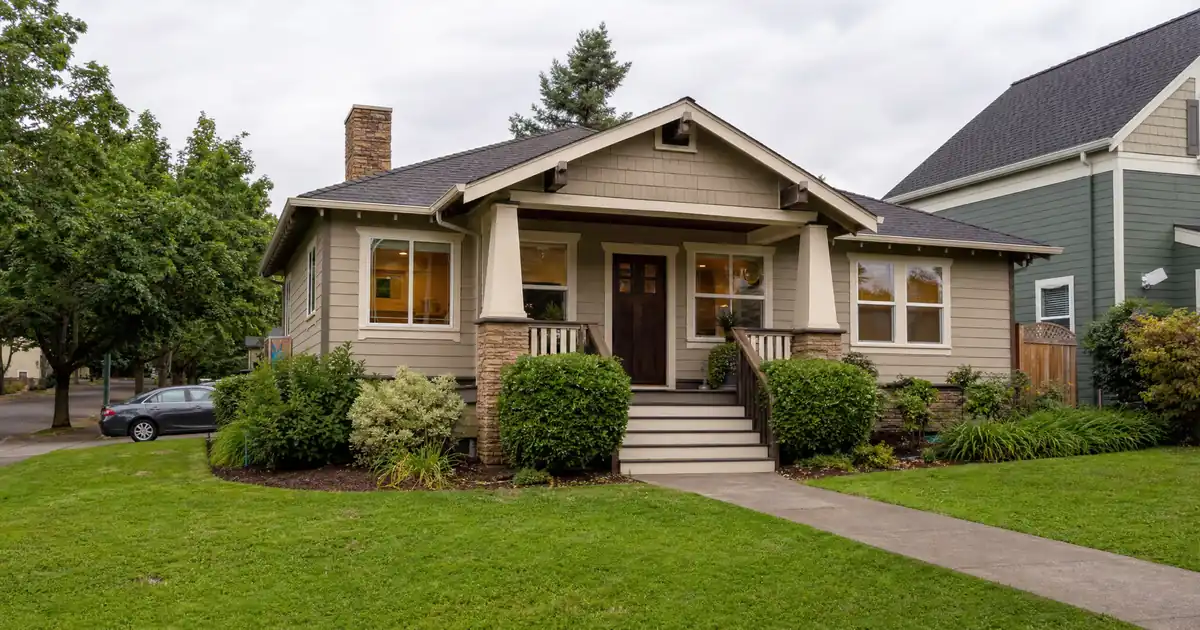
The Quick Read: A DSCR appraisal does two jobs. First, it sets the value of the property. Second, it sets the rent number a lender will use to qualify the loan. For a single-family rental, that rent number comes from Fannie Mae’s Form 1007. This form is a rent schedule built on three rental comps. For a 2-4 unit property, the lender uses Form 1025 instead. Underwriting almost always uses the lower number — either the appraiser’s market rent or the actual lease. It does not use whichever number helps the borrower more.
DSCR Calculator
Run the numbers in your market
Rate source: Freddie Mac 30-yr average via FRED® — Federal Reserve Bank of St. Louis · effective Jul 30, 2026
Prefilled with starting assumptions — enter your own rent or nightly figures, taxes, insurance, and HOA for a more accurate picture.
Program parameters update from Lendmire’s centralized guideline source. Taxes and insurance are editable estimates.
As of Jul 30, 2026 · General Freddie Mac market benchmark, not a Lendmire loan offer. Rent, nightly rate, occupancy, taxes, and insurance are editable estimates. Short-term rental figures are estimates only and vary significantly by season, property type, management approach, and local short-term-rental rules — confirm local regulations before relying on them. Qualifying income for short-term rentals varies by program — some use appraisal market rent, others use documented STR history or projections — and is confirmed in underwriting. Not a Loan Estimate, approval, or commitment to lend. Program availability and eligibility are subject to lender guidelines, credit approval, property review, and underwriting.
Key Takeaways
- A DSCR appraisal gives you two answers in one report: the property’s value and its market rent.
- The rent number comes from Form 1007 for single-family properties. For 2-4 unit buildings, it comes from Form 1025.
- Underwriting typically uses the lower of two numbers: the appraised market rent or the signed lease. An above-market lease does not automatically raise your number.
- Short-term rental income does not fit cleanly into the 1007’s monthly-rent format. Lenders decide separately how — or whether — to count it.
- The rent schedule itself is changing. A new appraisal format is coming. Under it, the standalone 1007 and 1025 forms retire for agency-delivered loans — a shift that also touches the same appraiser panels non-QM lenders use.
Key Terms Defined
DSCR (debt-service coverage ratio): Divide the property’s monthly rent by its full monthly housing cost. That full cost includes principal, interest, taxes, insurance, and any HOA dues. Together, these five items are called PITIA. A ratio above 1.00 means the rent covers the payment. A ratio below 1.00 means it doesn’t, at least on paper.
PITIA: Short for the full monthly cost a lender counts against rent. It stands for principal, interest, taxes, insurance, and association dues, where they apply.
Form 1007: This is the rent schedule an appraiser fills out for a single-unit investment property. It estimates market rent using three comparable rentals.
Form 1025: This is the appraisal report for small residential income properties with 2-4 units. It covers value and per-unit market rent in one document.
Comp (comparable): A similar property — either a recent sale or an active rental. The appraiser uses comps to support a value or rent conclusion.
Business-purpose loan: A loan made to a non-owner-occupant for investment purposes, not personal housing. This is why lenders review DSCR loans differently than a standard home mortgage. If you want to see how the ratio itself gets calculated, Lendmire’s DSCR loan explainer walks through the mechanics.
What Makes a DSCR Appraisal Different From a Standard Appraisal?
A DSCR appraisal does not need a special license or a different kind of appraiser. It’s a standard appraisal with a rent schedule attached to it. The value opinion works the same way it would on any purchase. The appraiser uses the sales-comparison approach, adjusts the comps, and reaches one final opinion of value. What’s different is the second piece that comes with it: a market rent conclusion. The lender needs this because the loan gets reviewed on the property’s income, not the borrower’s pay stubs.
DSCR loans are built for non-owner-occupied investment properties. They are business-purpose investor loans, so lenders review them differently than a standard owner-occupied mortgage. The appraisal has to answer two questions instead of one: what is this property worth, and what will it rent for? Rent makes up half of the qualifying math.
Here’s a quirk of the DSCR world. The forms that do the rent math were built for conventional, agency-eligible loans. But DSCR loans sit entirely outside agency eligibility. Appraisal vendor panels and management companies work in both worlds. So the same mechanics — three comps, adjustments, one final number — carry over into non-QM files. This happens even though Fannie Mae’s Selling Guide never governs the DSCR loan itself.
What Gets Ordered: A Quick Decision Guide
What the lender orders depends on three things: unit count, occupancy, and property type. Loan size and leverage don’t matter here.
| Scenario | Property Type | Typically Ordered |
|---|---|---|
| Vacant at closing | Single-family | Appraisal + Form 1007, market rent only |
| Leased at closing | Single-family | Appraisal + Form 1007, compared against the lease |
| Any occupancy | 2-4 unit | Form 1025 — value and per-unit rent together |
| Short-term rental | Single-family/condo | Standard appraisal; 1007 rarely drives the income figure |
| Manufactured, log home, or barndominium | Any | Not offered on DSCR programs in the network |
That last row matters more than it looks. Some property types fall outside DSCR eligibility before the appraisal even happens. Manufactured homes (both single-wide and double-wide), log homes, and barndominiums are not offered on the DSCR programs in Lendmire’s wholesale network. Full stop. That’s a property-eligibility issue, not an appraisal one.
Inside the 1007: How the Appraiser Builds the Rent Comp Grid
The rent conclusion isn’t a guess. The appraiser builds it the same way a value opinion gets built, just aimed at rent instead of price. The appraiser picks three comparable rental properties. Each one shares the subject property’s structure, location, and lease terms. Then the appraiser adjusts for any meaningful differences, following the official Form 1007 instructions.
The form also asks the appraiser to comment on the local rental market directly. That means the range of rents nearby, an estimate of area vacancy, and whether rents and vacancy are trending up or down. All of this context sits next to the three-comp grid. It feeds the appraiser’s final line, called “Indicated Monthly Market Rent.” That figure becomes the ceiling on rent underwriting will use.
Here’s something worth knowing before a file gets there. This comp-and-adjust process is subjective, within limits. Two competent appraisers can land on slightly different market rent numbers for the same property. Comp selection always involves some judgment about what counts as a “significant difference.” This is one reason it matters when an investor raises rent on a lease before closing. A real lease gives the appraiser an actual data point, instead of leaving the number entirely up to comp selection.
The Lower-of-Lease-or-Market Rule
Here’s the rule that trips up more investors than anything else in DSCR appraisal mechanics. Underwriting typically uses whichever number is lower — the appraiser’s market rent or the actual signed lease. It does not use whichever number is higher.
Say a property is leased below market. The lender generally reviews the file on the lease figure, and the DSCR takes the hit. If you sign a unit at a discount to get a tenant in fast, that discount follows the file straight into the ratio. Now say the lease sits at or above market. Underwriting typically caps the rent at the appraiser’s market conclusion instead. The above-market lease does not lift the number.
Vacant properties skip the lease comparison entirely. With no lease to check, the DSCR runs on the appraiser’s market rent opinion alone. That’s routine in DSCR files — not a red flag. But it does mean the whole ratio rides on one appraiser’s comp grid. There’s no lease to backstop a low conclusion.
Here’s something worth sitting with. Clearing a 1.00 ratio on the appraiser’s number is not the same thing as the deal actually cash-flowing. DSCR only measures rent against PITIA. It says nothing about vacancy stretches, repairs, property management fees, or capital expenses. A property can clear a clean coverage ratio on paper and still run thin once those real costs show up.
2-4 Unit Properties: Why the 1025 Carries More Risk
Small multifamily deals run on the 1025. The math there is less forgiving than it looks. Every unit needs its own rent conclusion that the appraiser can actually support. The appraiser can’t just support the strongest unit and assume the rest follow the same pattern. Say one unit sits vacant or under market inside an otherwise strong fourplex. That one weak unit pulls down the blended rent for the whole building — even if the other three units are performing well above average.
Mixed-use buildings add another wrinkle. Say a small multifamily property has ground-floor commercial space. That commercial income sits entirely outside the residential rent-schedule methodology. It does not get blended into the DSCR gross-rent figure the 1025 produces. Only the residential units count.
If you’re evaluating a small multifamily purchase, walk the property unit by unit before making an offer. Don’t just look at the trailing total. The number an appraiser can defend per unit is what ends up in the file — not what a rent roll spreadsheet says the building “should” produce.
Short-Term Rentals and the 1007 Problem
Airbnb and VRBO properties break the standard rent-schedule math. The 1007 was never built for nightly-rate income. The form asks specifically for an “Indicated Monthly Market Rent.” It would be wrong for an appraiser to take a nightly STR rate and just multiply it by 30 to fake a monthly figure. Fannie Mae’s own appraiser guidance rejects that shortcut directly. If an appraiser gets asked to force that math onto the 1007 grid, the guidance encourages them to decline the assignment instead of producing a misleading number.
Deciding whether STR income counts as rental income isn’t the appraiser’s call. It’s a lender decision. Some lenders treat STR income as business income instead of rental income. In that case, the 1007 may not drive the number at all. The lender instead reviews platform income and hosting history directly.
DSCR vs. conventional financing
Two common ways to finance an investment property in this market. They qualify you differently — here’s how investors weigh them.
Why investors choose it
- Qualifies on the property’s rental income — no personal tax returns, W-2s, or pay stubs needed to document income.
- No personal debt-to-income ceiling to clear, so existing mortgages and obligations don’t cap your borrowing the same way.
- Can be closed in an LLC, keeping the property inside a business entity.
- Built for scaling — not held to the limit on number of financed properties that conventional financing applies.
- Underwriting centers on the deal: generally qualifies when the rent covers the payment, a 1.00x coverage ratio being a common baseline (confirmed in underwriting).
- Designed specifically for investment property, including long-term and, where the program allows, short-term rentals.
Where it’s strong
- Often the lowest ongoing financing cost for a buyer who fully qualifies on personal income — a fit for a first property or a cost-first purchase.
Trade-offs for investors
- Requires full personal income documentation and must fit within a debt-to-income limit — salary, existing debts, and other mortgages all count.
- Typically held in your personal name rather than a business entity.
- Caps how many financed properties you can carry, which can become a ceiling as a portfolio grows.
- Evaluates you as a borrower as much as the property, which usually means more paperwork.
How investors usually choose: a first or single property often optimizes for the lowest financing cost; portfolio builders often optimize for leverage, vesting in an LLC, and scaling past conventional caps. The right answer depends on your goals, the property, and current guidelines — both paths run through select lenders in Lendmire’s wholesale network, with eligibility and terms confirmed in underwriting.
That’s roughly how it plays out across Lendmire’s wholesale network. STR purchases typically run up to 75% LTV. Refinances and cash-out typically run around 70% LTV. These usually pair with a 640+ credit score, about 12 months of hosting history, and a 1.00 coverage floor on select programs. A property with strong nightly-rate performance but thin monthly-rent comps can still qualify. It just gets underwritten on a different data set than a standard long-term rental would.
Property Condition: What Has to Be Rent-Ready
The condition standard for a DSCR appraisal isn’t complicated. The appraiser is checking that the property is livable and marketable at the rent level claimed. They are not flagging cosmetic wear. Say a property has a broken system, an unsafe structural issue, or an unfinished renovation. That property typically can’t support the market rent an appraiser would otherwise assign it, because a tenant couldn’t actually live there at that level. Finish the rehab before the appraisal gets ordered. At minimum, document it with permits and receipts. This avoids a rent conclusion built on work that hasn’t happened yet.
Who Orders the Appraisal, and What the Appraiser Actually Does
The lender orders the appraisal. It’s typically routed through an appraisal management company, which assigns it to a licensed appraiser from an approved panel. The borrower doesn’t pick who shows up. The appraiser inspects the property and photographs the interior and exterior condition. They pull sale comps for value and rental comps for the 1007 or 1025. Then they deliver one single report covering both conclusions.
That report feeds two separate calculations at once. The appraised value sets the ceiling on the loan amount, based on whatever leverage the program allows. The rent conclusion sets the ceiling on qualifying income. So one appraisal assignment can move both numbers on a file at the same time. That’s exactly why a soft appraisal can hurt a deal twice.
The Forms Are Changing: UAD 3.6
Most investors haven’t heard about this yet, but something structural is happening to these forms. Starting on a mandatory date in November 2026, agency-delivered appraisals move to a new format called UAD 3.6. On that date, the legacy 1004, 1073, 1025, and 1007 forms stop being accepted for new submissions to Fannie Mae and Freddie Mac, per Freddie Mac’s own guidance. Estimating market rent becomes part of one unified appraisal report, instead of a standalone rent-schedule attachment.
This is agency plumbing, and DSCR loans never touch agency eligibility. But appraiser panels, AMC software, and comp-grid formatting are shared across agency and non-agency lending. So the retirement of the standalone 1007 and 1025 will likely reshape how non-QM rent schedules get formatted and delivered too — even on loans that will never see a Fannie or Freddie file number.
What Happens If the Rent Schedule or Value Comes In Low
Start with the report itself. Request the full appraisal and read the comp grid line by line before assuming anything. A low rent conclusion or a soft value opinion is not automatically the end of a deal. But it changes the math on two fronts at once. A lower value can shrink the loan amount available at a given leverage tier. A lower rent conclusion pulls the DSCR down on its own, even if the value held up fine.
First, check for factual errors. Look for a wrong bedroom count, missed square footage, or a comp that doesn’t actually match the subject’s condition. You challenge those through a reconsideration of value request, not a fresh appraisal order. Say the comps were reasonable and the number simply lands lower than hoped. The practical paths are usually: bring more equity to lower the leverage and shift the ratio, restructure the loan, or check whether a sub-1.00 coverage program fits. Those programs exist through select lenders in the network. But they come with adjusted leverage and terms — not the same pricing or loan-to-value a standard file gets. None of this is guaranteed. Every path runs through program review of the specific file.
Say you recently raised rent on a property and you’re weighing a refinance. A related question comes up: will the appraiser’s updated market rent conclusion actually reflect that increase? Lendmire’s guide on refinancing after raising rent to improve DSCR walks through how that timing typically plays out.
The Vacancy Haircut: Agency Rule vs. Non-QM Reality
Conventional lending applies a specific discount to the appraiser’s rent figure before using it. Fannie Mae’s Selling Guide requires multiplying gross monthly rent by 75%. The remaining quarter gets treated as absorbed by vacancy and maintenance. DSCR loans aren’t agency products, so that specific factor doesn’t automatically apply. But that doesn’t mean every non-QM lender skips a haircut entirely. Treatment varies file to file across the network. Don’t assume a full, un-discounted rent figure drives the ratio on every program. Confirm it against that specific lender’s guidelines instead.
This is one of the clearest places where conventional lending and a given DSCR program genuinely treat things differently. It’s worth asking whoever is structuring the file directly, rather than assuming either way.
Lendmire (NMLS# 2371349) arranges DSCR financing through select lenders in a wholesale network spanning 40 states plus Washington, D.C. — 41 markets total. Lendmire can help an investor figure out how a specific lender’s appraisal and rent-schedule practices will apply to a given file. For a fuller walk-through of how the ratio itself gets built before the appraisal even happens, Lendmire’s complete DSCR loans guide covers the qualifying math end to end.
Tax treatment can depend on how loan funds are used and how the property is held. Investors should keep clear records. Speak with a qualified tax professional before relying on any deduction tied to a DSCR-financed property.
Nothing here is a commitment to lend. Loan approval is never guaranteed. Every scenario described is subject to lender approval. It depends on the specific borrower, property, and program guidelines in effect at the time of application. This article is general information only. It isn’t financial, legal, or tax advice.
Frequently Asked Questions
Does a DSCR loan require an appraisal?
Yes. Nearly every DSCR file needs a standard appraisal plus a rent-schedule component. That’s Form 1007 for a single-family property, or Form 1025 for a 2-4 unit building. The appraisal sets both the value the loan is sized against and the rent used to calculate the coverage ratio.
What’s the difference between Form 1007 and Form 1025?
Form 1007 covers single-unit rental properties. It produces one market rent number. Form 1025 covers 2-4 unit buildings. It produces a per-unit rent breakdown, then rolls those numbers up into one total figure for the building, alongside the value opinion.
Can an above-market lease increase my DSCR?
Not typically. Underwriting generally caps the rent used for eligibility review at the appraiser’s market conclusion. This holds even when a signed lease is priced higher. The standard rule uses the lower of the two figures, not the higher one.
How do appraisers handle Airbnb or short-term rental income?
They generally don’t force it through the 1007’s monthly-rent grid, since that form wasn’t built for nightly-rate comps. Instead, lenders typically review platform income and hosting history separately. This happens alongside a standard property appraisal for value.
Will Form 1007 still exist after the appraisal format changes in 2026?
For agency-delivered loans, no. The standalone 1007 and 1025 forms retire in favor of a rental-information section built into one unified appraisal report. DSCR loans sit outside agency eligibility. But shared appraiser panels and software mean this change will likely shape how non-QM rent schedules get formatted going forward too.
Program availability, loan terms, and eligibility are subject to lender guidelines, credit approval, property review, and full underwriting. This article is educational. It is not a loan offer or commitment to lend.
About Lendmire
Lendmire — NMLS# 2371349 — is a mortgage brokerage that specializes in DSCR investor loans. It helps arrange financing across 41 markets, including Washington, D.C., through wholesale and investor-lending channels. The model centers on property-level rental income, reviewed by the lender, rather than W-2 documentation, subject to lender guidelines. This suits entity-owned and multi-property investors. Lendmire holds Scotsman Guide Top Mortgage Workplace recognition for 2025 and 2026.
Scotsman Guide documents this recognition: Scotsman Guide 2025 Top Mortgage Workplace and Scotsman Guide 2026 Top Mortgage Workplace.
Get Started
Ready to find the right loan for you?
In about 30 seconds you can review financing options available for your investment property. No commitment required.
Informational only. Not a Loan Estimate, approval, or commitment to lend. Program availability and eligibility are subject to lender guidelines, credit approval, property review, and underwriting.
References
1. Fannie Mae Form 1007 — Single-Family Comparable Rent Schedule
2. Fannie Mae Selling Guide, B3-3.8-01 Rental Income
This article is part of Lendmire’s DSCR loan program — full qualification details, guidelines, and scenarios live on the program page.
Related reading: How To Order A Short-term Rental Rent Analysis On A DSCR Purchase Appraisal · DSCR Loan Denied Because The Appraisal Classified The Property Differently Than Expected · What Is A Market Data Report For Rental Income?
Brandon Miller
Founder & CEO, Mortgage Loan Originator, Lendmire LLC
- Mortgage Loan Originator · NMLS# 1129696 · Verify on NMLS Consumer Access
- North Carolina Real Estate Broker · License# 343312 · Verify on NCREC
- North Carolina Insurance Producer · License# 19053198 · Property, Casualty, Life, Health · Verify on NAIC SBS
- Lendmire LLC · Firm NMLS# 2371349 · Verify firm licensure
Required disclosures. Lendmire (NMLS# 2371349) operates as a licensed mortgage broker, not a direct lender or depository. The discussion in this article is general in nature and should not be relied upon as financial, legal, or tax advice — every investment scenario is unique and should be reviewed by a qualified professional. Any loan inquiry is subject to lender underwriting, and this article is not a commitment to lend or a guarantee of approval. Mortgage rates, loan terms, and program guidelines vary by borrower, property, and state, and may change without notice. Equal Housing Opportunity. Verify licensure at NMLS Consumer Access.