
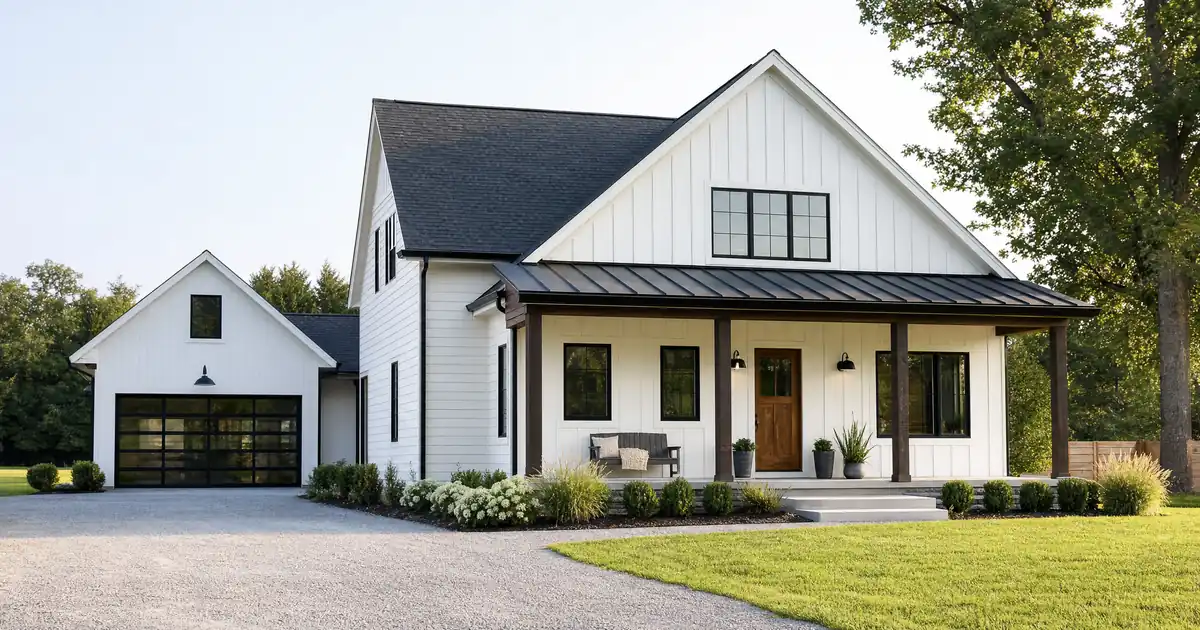
The Quick Read: Yes — most DSCR programs are built to qualify the property, not the person, so a first-time landlord is not automatically disqualified. What changes is how the file compensates for a blank rental résumé: credit score, down payment, and reserves usually do more work when there’s no landlord track record behind you. The property still has to clear its own coverage test on appraiser-verified rent, and a handful of property types and situations remain off-limits regardless of experience. The rest of this piece walks through exactly how that plays out, step by step.
DSCR Calculator
Run the numbers in your market
Rate source: Freddie Mac 30-yr average via FRED® — Federal Reserve Bank of St. Louis · effective Jul 30, 2026
Prefilled with starting assumptions — enter your own rent or nightly figures, taxes, insurance, and HOA for a more accurate picture.
Program parameters update from Lendmire’s centralized guideline source. Taxes and insurance are editable estimates.
As of Jul 30, 2026 · General Freddie Mac market benchmark, not a Lendmire loan offer. Rent, nightly rate, occupancy, taxes, and insurance are editable estimates. Short-term rental figures are estimates only and vary significantly by season, property type, management approach, and local short-term-rental rules — confirm local regulations before relying on them. Qualifying income for short-term rentals varies by program — some use appraisal market rent, others use documented STR history or projections — and is confirmed in underwriting. Not a Loan Estimate, approval, or commitment to lend. Program availability and eligibility are subject to lender guidelines, credit approval, property review, and underwriting.
Key Terms Defined
DSCR (debt-service coverage ratio): the number a lender gets by dividing the property’s monthly rent by its full monthly housing obligation — a ratio at or above 1.00 means the rent covers the payment.
PITIA: principal, interest, taxes, insurance, and association dues (if any) — the full monthly housing obligation used on the bottom half of the DSCR math.
Business-purpose loan: a loan made to acquire or hold a rental property rather than a home you live in — this classification is why DSCR underwriting can skip personal income documentation.
LTV (loan-to-value): the loan amount expressed as a percentage of the property’s value or purchase price — an 80% LTV purchase means 20% down. Actual thresholds shift depending on lender guidelines, property type, leverage, and borrower credit profile, which is why a full file review still matters.
Seasoning: the waiting period, usually measured in months, that a lender wants between buying a property and pulling cash out of it on a refinance.
Reserves: liquid funds a borrower has left over after closing, usually measured in months of PITIA, that serve as a cushion against vacancy or a slow month.
How the File Actually Gets Underwritten
The short version: an appraiser’s opinion of market rent stands in for your personal landlord biography. Most lenders don’t ask how many leases you’ve signed before — they ask what the property is worth renting for, and whether that figure clears the payment.
Here’s the sequence, in order:
1. The loan gets classified as business-purpose. DSCR loans are designed for non-owner-occupied investment properties. Because they are business-purpose investor loans, they are reviewed differently from a standard owner-occupied mortgage. Rental income is reviewed instead of personal-income documentation, with no personal debt-to-income math. That framing is what makes “first rental” and “no rental history” a non-issue for the loan category as a whole, even before any individual lender’s overlay gets applied. 2. An appraiser, not a lease, sets the rent figure. For a vacant property or a purchase with no existing tenant, appraisers use a rent schedule tied to comparable rentals nearby — the same appraisal approach GSE lenders use for rental-income review on conventional loans (Fannie Mae Selling Guide, B3-3.8-01). A DSCR underwriter takes that appraiser number and divides it by PITIA. That’s the whole calculation. 3. The ratio gets priced, not judged. A property that clears 1.00 covers its own payment on paper. A ratio comfortably above that — say, in the 1.15x-1.30x range — usually opens better leverage and pricing tiers. A ratio that lands below 1.00 doesn’t automatically kill the file, but it does change the leverage available. 4. Credit, down payment, and reserves fill the gap where a track record would normally sit. This is the part first-time investors underestimate. The property clearing its ratio gets you in the door; what you bring personally — score, cash to close, cash left over — decides how much leverage you’re offered.
Across Lendmire’s wholesale network, most standard purchase files land at 75%-80% LTV, meaning 20%-25% down. A handful of higher-leverage programs reach 85% LTV for borrowers around a 700 credit score or better. Credit floors run as low as 620 on select programs, though most lenders in the network prefer 660 and up, and 700-plus is where the strongest leverage tiers open. Reserve requirements vary by loan size and leverage: figure roughly six months of PITIA on a typical file, sometimes waived on conservative, lower-leverage rate-and-term deals under $1.5 million, and stepping up toward nine months on larger loans. Credit is where having no landlord history tends to show up: first-time investors are often pushed toward 660-700+, while borrowers with rental experience can find 620-660 acceptable on more programs. Terms vary by lender guidelines, property type, leverage, credit profile, and full file review.
For a broader walkthrough of how the ratio itself gets built, Lendmire’s complete DSCR loans guide covers the mechanics in full, and the DSCR loan for first-time rental property buyers page addresses the first-timer angle specifically.
What Changes for a First-Time Investor vs. an Experienced One
Nothing about the DSCR formula changes — rent still gets divided by PITIA the same way for a first purchase as a tenth. What shifts is which lever a lender leans on to feel comfortable with the file.
| Factor | First-Time Investor (Typical) | Experienced Investor (Typical) |
|---|---|---|
| Credit score expectation | Often pushed toward 660-700+ | 620-660 acceptable on more programs |
| Down payment / LTV | Frequently 25%+ down requested | 20%-25% down common; 15% possible at 700+ |
| Reserves | Full reserve requirement usually enforced | Waivers more common on conservative deals |
| Lender overlay risk | Some lenders decline first-timers outright | Rarely an issue |
| Ratio expectation | Same 1.00 floor applies | Same 1.00 floor applies |
That last row matters: the ratio math is identical either way. What differs is lender appetite — and that appetite is program-specific, not product-wide.
Where Lenders Actually Draw the Line
Some lenders in the DSCR space simply won’t work with a borrower who has never owned or managed a rental property, full stop — it’s a house policy, not a product rule. Others welcome first-timers on the exact same terms as a twenty-property portfolio owner. This is the single biggest source of confusion in the space: people assume “DSCR loans don’t require landlord history” is a universal fact, when it’s really a statement about the product category that individual lenders are free to narrow.
That’s why shopping the file matters more for a first-timer than for an established investor. A borrower rejected by one lender for lack of history can often get approved by another the same week, on the same property, at similar terms — the property and the ratio haven’t changed; the lender’s overlay has.
Practitioner-level knowledge, gathered from placing files across dozens of lenders: the strictest overlays tend to show up on higher-leverage, lower-credit combinations — a first-timer at 620 credit asking for 85% LTV is a much harder sell than the same first-timer at 700 credit asking for 75%. Bring one of those two numbers up, and a lot of overlay problems solve themselves.
Vacant Property, No Lease — Does That Change Anything?
No — a property with no tenant yet is underwritten the same way as one with a signed lease, because the appraiser’s rent opinion is doing the work either way. There’s no seasoning requirement to “prove” rent before a first purchase closes. The rent figure comes from comparable rentals nearby, not from your track record of collecting checks.
This is worth sitting with, because it’s the part first-time buyers worry about most and need to worry about least. Buying a vacant duplex as your very first real estate transaction is treated the same, mechanically, as buying it as your fifth. The property doesn’t know it’s your first rodeo.
Short-Term Rentals Run a Different Playbook
Short-term rental income gets treated differently than long-term lease income — an appraiser’s standard monthly rent form was built for month-to-month leases, not nightly stays, and Fannie Mae’s own appraiser guidance is blunt that a form built for monthly market rent shouldn’t be used to reverse-engineer a nightly rate into a monthly figure (Fannie Mae Appraiser Update, June 2024). DSCR lenders route around this by leaning on projected nightly-rate platforms instead, applying an expense haircut before running the ratio.
Across the network, STR purchase files commonly cap around 75% LTV, refinance and cash-out around 70%, with a 640-plus credit expectation and roughly 12 months of hosting history typically requested before a property’s actual STR income (rather than a projected figure) gets used. A first-time host without that 12-month track record isn’t shut out, but the file usually leans on projected income and a stronger credit and reserve profile to compensate. Short-term rental rules can also vary by city, county, HOA, and property type, so confirming local rules before relying on projected rental income matters regardless of financing path — this is a Lendmire product overview, not local regulation guidance.
DSCR vs. conventional financing
Two common ways to finance an investment property in this market. They qualify you differently — here’s how investors weigh them.
Why investors choose it
- Qualifies on the property’s rental income — no personal tax returns, W-2s, or pay stubs needed to document income.
- No personal debt-to-income ceiling to clear, so existing mortgages and obligations don’t cap your borrowing the same way.
- Can be closed in an LLC, keeping the property inside a business entity.
- Built for scaling — not held to the limit on number of financed properties that conventional financing applies.
- Underwriting centers on the deal: generally qualifies when the rent covers the payment, a 1.00x coverage ratio being a common baseline (confirmed in underwriting).
- Designed specifically for investment property, including long-term and, where the program allows, short-term rentals.
Where it’s strong
- Often the lowest ongoing financing cost for a buyer who fully qualifies on personal income — a fit for a first property or a cost-first purchase.
Trade-offs for investors
- Requires full personal income documentation and must fit within a debt-to-income limit — salary, existing debts, and other mortgages all count.
- Typically held in your personal name rather than a business entity.
- Caps how many financed properties you can carry, which can become a ceiling as a portfolio grows.
- Evaluates you as a borrower as much as the property, which usually means more paperwork.
How investors usually choose: a first or single property often optimizes for the lowest financing cost; portfolio builders often optimize for leverage, vesting in an LLC, and scaling past conventional caps. The right answer depends on your goals, the property, and current guidelines — both paths run through select lenders in Lendmire’s wholesale network, with eligibility and terms confirmed in underwriting.
Property Types and Overlays That Don’t Bend for Anyone
A first-timer with a perfect ratio and stellar credit can still get declined on the property itself, not the person. A few examples worth knowing up front:
- Condo warrantability. DSCR lenders generally want warrantable condo projects — ones meeting standard project-eligibility criteria. An unwarrantable project can sink a file regardless of the buyer’s credit score or experience.
- Manufactured, log, and barndominium construction. These property types aren’t offered through Lendmire’s DSCR network at all — they’re simply not available, no matter how strong the borrower’s file is.
- State overlays. There are none on this program. Purchases in Connecticut, Florida, Illinois, and New Jersey get the same standard limits as every other state, up to 80% LTV (85% by exception) with loan sizes up to $3,000,000. Again, these apply evenly whether it’s your first deal or your fifteenth.
- Occupancy intent. A property the owner plans to occupy for more than a couple weeks a year moves outside the business-purpose lane the DSCR product depends on — a detail first-time buyers testing the water with part-time use sometimes overlook.
What Actually Compensates for a Blank Track Record
Down payment, credit score, and reserves are the three levers a first-timer can pull — and pulling one hard enough often offsets the lack of a second. A borrower with 700-plus credit and 25% down rarely gets flagged for having no landlord history at all. A borrower at 620 credit asking for maximum leverage is the combination most likely to hit an overlay wall.
One nuance worth stating plainly: a bigger down payment lowers the monthly obligation and can lift the DSCR ratio, but it doesn’t erase a credit floor, a reserve requirement, or an ineligible property type. The strongest files clear both tests — enough equity in the deal and enough rent coverage on the property — rather than leaning on one to fully offset a weak spot in the other. And clearing 1.00 coverage is not the same as positive cash flow in your pocket; repairs, vacancy stretches, management fees, utilities, and capital expenses all sit outside the PITIA-based ratio. What a file ultimately looks like still comes down to the lender’s own guidelines, the property type, the leverage requested, the credit profile involved, and a full review of the whole package.
Reserves worth planning around: standard files typically want close to six months of PITIA in the bank after closing, sometimes waived on conservative rate-and-term refinances under $1.5 million at modest leverage, and stepping up closer to nine months on larger loans. A first-timer showing up with strong reserves on top of decent credit is usually a much easier conversation than one showing up thin on cash and thin on credit both.
A Practical First-Deal Path
1. Check credit and reserves before shopping property. Knowing whether you’re a 660 file or a 700-plus file changes which programs are realistic before you fall in love with a listing. 2. Pick a property where the rent comfortably clears the payment, not one that just scrapes past 1.00 — a first deal with margin gives you room if a lender’s overlay pushes leverage down slightly. 3. Order the appraisal with the rent schedule in mind. This document, not your résumé, is what the underwriter reads for income. 4. Ask every lender you talk to directly whether they have a first-time-investor overlay. Some do, some don’t — this single question saves weeks of back-and-forth. 5. Decide on entity vesting early if you’re closing in an LLC, subject to lender program eligibility, since that decision affects paperwork timing. 6. Submit the file with credit, reserves, and down payment already aligned to the program tier you’re targeting, rather than hoping a strong ratio alone carries a thin personal file.
A no-ratio option is available for DSCR below 1.00 with stronger credit or higher down payment; qualification on that path rests on credit and equity rather than a rent-coverage calculation. For investors weighing whether to hold, refinance, or sell down the line, it’s also worth understanding when refinancing a rental makes sense and how a refinance without a seasoning wait can work once there’s a track record to build on — and for investors comparing an exit against a refinance later, the tradeoff between refinancing and selling a rental property is worth weighing directly.
Frequently Asked Questions
Can a first-time investor get a DSCR loan?
Yes, on most programs — the property’s rent-to-payment ratio is what drives lender review, not the borrower’s rental history. Some individual lenders still prefer experienced landlords and decline first-timers outright, so shopping more than one lender matters more here than on almost any other DSCR scenario.
What is a DSCR loan for rental property?
It’s a loan that qualifies based on the property’s rent covering its own monthly obligation, rather than the borrower’s personal income or traditional personal-income documentation. The ratio is calculated by dividing monthly rent (usually appraiser-verified) by the full monthly housing payment, and a ratio at or above 1.00 means the rent covers the cost of carrying the loan.
How to get a DSCR loan with no down payment?
Zero-down DSCR financing isn’t part of standard programs in Lendmire’s network — most files run in the 20%-25% down range, with a handful of higher-leverage programs reaching down to around 15% for borrowers with stronger credit. Anyone advertising true zero-down DSCR financing is describing a structure outside how these investor loan programs are typically built.
What is a short-term rental loan?
It’s a DSCR loan structured specifically around nightly-rate income instead of a monthly lease, often using projected platform income rather than a signed lease to calculate the ratio. These loans typically carry somewhat tighter leverage than long-term rental DSCR loans, along with a higher credit expectation and a hosting-history preference, since the income pattern is less predictable than a fixed monthly lease.
How to get approved for a short-term rental loan with no down payment?
There isn’t a no-down-payment path in standard short-term rental DSCR programs — purchase leverage on STR properties commonly caps around 75% LTV, meaning a down payment is required either way. Investors hoping to minimize cash to close are usually better served comparing leverage tiers across lenders than searching for a zero-down structure that doesn’t exist in this product category.
If you’re buying or refinancing a rental property and want to see how the numbers actually work on your file, Lendmire can help compare DSCR loan options based on the property’s income, your credit profile, available leverage, and your investment goals — reach the team at 828-256-2183 or request a quote to get a read on where a first deal might land.
About Lendmire
Lendmire (NMLS# 2371349) is a mortgage broker that arranges DSCR investor loans through a wholesale network spanning 41 markets, including Washington, D.C. — it doesn’t underwrite or fund loans itself, but places files with the lenders in that network best suited to a borrower’s credit, leverage, and property profile. For a side-by-side on how this product differs structurally from a standard investment mortgage, Lendmire’s comparison of DSCR and conventional investment loans covers it in more depth. Scotsman Guide named Lendmire a Top Mortgage Workplace in both 2025 and 2026.
Loan approval is never guaranteed, and nothing here is a commitment to lend. Every scenario described here is subject to lender approval and to borrower, property, and program guidelines that vary by file. This article is general information, not financial, legal, or tax advice — investors should confirm current program terms directly with a lender or broker before relying on any figure here.
Get Started
Ready to find the right loan for you?
In about 30 seconds you can review financing options available for your investment property. No commitment required.
Informational only. Not a Loan Estimate, approval, or commitment to lend. Program availability and eligibility are subject to lender guidelines, credit approval, property review, and underwriting.
References
1. Fannie Mae Selling Guide — Rental Income (B3-3.8-01)
2. Fannie Mae Appraiser Update, June 2024
This article is part of Lendmire’s DSCR loan program — full qualification details, guidelines, and scenarios live on the program page.
Related reading: DSCR Loan With No Landlord Experience Explained · No Experience DSCR Loan Explained · How To Get A DSCR Loan With No Rental History
Brandon Miller
Founder & CEO, Mortgage Loan Originator, Lendmire LLC
- Mortgage Loan Originator · NMLS# 1129696 · Verify on NMLS Consumer Access
- North Carolina Real Estate Broker · License# 343312 · Verify on NCREC
- North Carolina Insurance Producer · License# 19053198 · Property, Casualty, Life, Health · Verify on NAIC SBS
- Lendmire LLC · Firm NMLS# 2371349 · Verify firm licensure
Compliance and disclosures. Lendmire (NMLS# 2371349) is a licensed mortgage broker and is not a direct lender, depository institution, financial advisor, or tax professional. Content in this article is general market analysis and educational information — not financial, legal, or tax advice for any specific situation. Lendmire does not guarantee loan approval; every transaction is subject to underwriting by the funding lender. Mortgage pricing and loan program guidelines are subject to change at any time without notice and vary by borrower characteristics, property type, and state regulations. Lendmire complies with Equal Housing Opportunity. Licensure verification: NMLS Consumer Access.