
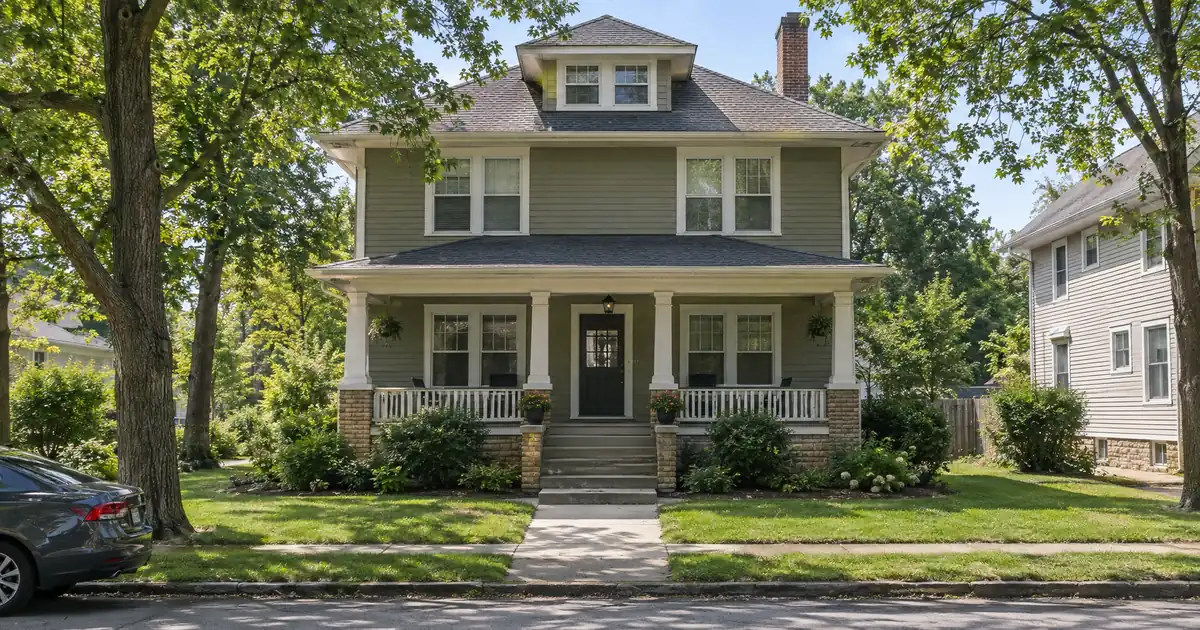
The Quick Read: Loan-to-value (LTV) is the loan amount divided by the property’s value. On most DSCR purchases across our wholesale network, it lands between 75% and 80%, meaning you put down roughly 20% to 25%. Select high-leverage programs reach 85% for strong files. Cash-out refinances top out around 75%. Every figure here is subject to lender guidelines, and nothing here is a commitment to lend.
What Is Loan-to-Value on a Rental?
LTV answers one question: how much of the property’s worth is the lender financing? Divide the loan by the value. An 80% LTV means the loan covers 80% of what the property is worth, and you cover the rest. These specifics are subject to lender guidelines and a full review of property, leverage, and credit.
DSCR Calculator
Run the numbers in your market
Rate source: Freddie Mac 30-yr average via FRED® — Federal Reserve Bank of St. Louis · effective Sep 24, 2026
Prefilled with starting assumptions — enter your own rent or nightly figures, taxes, insurance, and HOA for a more accurate picture.
Program parameters update from Lendmire’s centralized guideline source. Taxes and insurance are editable estimates.
As of Sep 24, 2026 · General Freddie Mac market benchmark, not a Lendmire loan offer. Rent, nightly rate, occupancy, taxes, and insurance are editable estimates. Short-term rental figures are estimates only and vary significantly by season, property type, management approach, and local short-term-rental rules — confirm local regulations before relying on them. Qualifying income for short-term rentals varies by program — some use appraisal market rent, others use documented STR history or projections — and is confirmed in underwriting. Not a Loan Estimate, approval, or commitment to lend. Program availability and eligibility are subject to lender guidelines, credit approval, property review, and underwriting.
“Value” is not always what you paid. Lenders usually use the appraised value, and on a purchase they often use the lower of the price or the appraisal. That detail decides a lot of files, and we come back to it below.
LTV is also not DSCR. LTV measures how much you borrow against the property. DSCR (debt service coverage ratio) measures whether the rent covers the monthly payment. A file has to pass both tests. Our complete DSCR loans guide walks through the coverage side in detail.
Key Terms Defined
- LTV (loan-to-value): The loan amount divided by the property’s value, shown as a percentage.
- DSCR: Monthly rent divided by the full monthly housing payment: principal, interest, taxes, insurance, and any HOA dues.
- PITIA: That full payment. It stands for principal, interest, taxes, insurance, and association dues.
- Seasoning: The waiting period a lender wants between buying a property and refinancing it at a new value.
- Cash-out refinance: A new loan that pays off the old one and hands you the extra equity as cash.
- Rate-and-term refinance: A refinance that changes the loan’s terms without pulling out meaningful cash.
- Non-QM: A loan type that falls outside the standard rules that agency-backed mortgages follow.
- Reserves: Liquid savings you must show after closing, usually counted in months of PITIA.
Who Sets the Limit?
No federal rule caps LTV on a DSCR loan. These are business-purpose investor loans, so each lender sets its own ceiling. DSCR loans are designed for non-owner-occupied investment properties. Because they are business-purpose investor loans, they are reviewed differently from a standard owner-occupied mortgage.
Scotsman Guide makes the same point: DSCR loans are highly individualized, each lender sets its own LTV and credit requirements, and some will make exceptions. It also notes that many lenders want a meaningful down payment on a purchase.
That variation is our daily view. Because we place files across many lenders, we see the same property get different leverage from different programs. Some programs are strict. Others stretch for a strong borrower. Shopping the structure matters as much as shopping the price.
What Leverage Should You Expect?
Here is where most files land across the programs we place with. Treat every number as typical, not promised.
| Scenario | Typical max LTV | Notes |
|---|---|---|
| Purchase, standard | 75%–80% | About 20%–25% down |
| Purchase, high leverage | Up to 85% | About 15% down; roughly 700+ score |
| Cash-out refinance | Around 75% | About 6 months of seasoning |
| STR purchase | Up to 75% | Expect 640+ score |
| STR refinance | Around 70% | About 12 months hosting history |
| STR cash-out | 70% | Short-term-rental collateral only |
| Investment HELOC | Program-specific | Lines cap at $500,000 total |
Credit shifts the ceiling. A 620 floor exists in parts of the network, most programs want around 660, and 700+ unlocks the strongest leverage tiers. Coverage matters too. Stronger ratios generally open better pricing and higher leverage.
Loan size also steps leverage down on bigger balances. Standard programs reach up to $3,000,000, with smaller balances available through select lenders, and above $2,500,000 the network generally holds to 30-year fixed structures. Reserves vary by lender, leverage, and loan size. About six months of PITIA is common. Conservative rate-and-term files at modest leverage under $1,500,000 can see reserves waived, while loans above that size typically step up to about nine months.
No state-specific LTV overlay is in force in our guideline set, so every state takes the same standard purchase tiers.
How Underwriting Treats LTV, Step by Step
Here is the sequence a lender follows. Knowing it helps you predict the outcome before you apply.
1. The file gets sorted by transaction type. A purchase, a rate-and-term refinance, and a cash-out refinance each carry their own limit. Cash-out usually sits several points below purchase leverage.
2. The lender picks a value. On a purchase, the basis is typically the lower of the contract price or the as-is appraised value. OfferMarket describes the same approach. On a refinance, appraised value counts only once seasoning is met. Before that, many programs fall back to the original purchase price.
3. The appraisal supplies two numbers. The as-is value comes from the appraisal itself. Market rent comes from a rent schedule, Form 1007. Small multifamily uses an operating income statement, Form 1025. A soft number on either side is a leading reason files stall.
4. The lender applies the cap. Loan amount equals the LTV cap times the value. A property valued at $400,000 with an 80% cap supports a loan of up to 80% of that value, and no more.
5. DSCR gets tested on that loan. If rent barely covers the payment at the maximum loan, the file may need a smaller loan to lift the coverage number. Lower leverage helps the ratio because the payment shrinks.
6. Other inputs adjust the cap. Credit tier, property type, and loan size can all pull the ceiling down.
On a cash-out, the cash you receive is the new loan, minus the payoff of the old loan, minus closing costs. Nothing fancier.
Why Both Tests Matter
Picture two investors buying similar duplexes. One puts down 25% and rents comfortably above the payment. The other puts down 15% on a file with a weaker score and thin rent. The first clears both the equity test and the coverage test. The second may hit a wall on either one. Terms vary by lender guidelines, property type, leverage, credit profile, and full file review.
A bigger down payment lowers the monthly payment and can lift the DSCR. It never erases leverage caps, credit floors, reserve rules, or property eligibility. Money down helps. It is not a master key.
Also, clearing 1.00 does not mean positive cash flow. DSCR compares rent to PITIA only. Repairs, vacancy, management, utilities, and capital expenses sit outside that math. Budget for them separately.
Where the General Rule Breaks
Every rule above has exceptions. These are the ones we see most.
Seasoning and BRRRR deals
Buy below market, renovate, then refinance is the BRRRR strategy (buy, rehab, rent, refinance, repeat). It runs straight into seasoning. If you have not owned the property long enough, the lender may size the cash-out on your purchase price rather than the new appraisal. Well-documented improvements can sometimes shorten the wait, per OfferMarket. Plan the refinance leg using the lower cash-out number, not the purchase number.
Coverage below 1.00
A 1.00 ratio is where select programs start. It is a floor for those programs, not a universal standard. Coverage below 1.00 is available through select lenders in the network, with leverage and terms adjusted. Expect lower LTV and stronger credit expectations in exchange.
No-ratio structures
No-ratio is a different animal from sub-1.00. Sub-1.00 programs still calculate the ratio. No-ratio programs skip it. It is available only through select lenders, generally for borrowers who already own a primary residence. The property is still fully appraised, and credit and assets are still verified. Only the rent-coverage calculation goes away. Leverage on these files typically runs lower than on standard purchases.
Property type
Condos and two-to-four unit properties often carry tighter caps, especially on refinances. Some property types are not offered at all. DSCR financing through the network does not cover manufactured homes (single- and double-wide), log homes, or barndominiums. No LTV adjustment fixes that.
Blanket loans
A blanket loan covers several properties under one note. Each property gets valued and tiered on its own, and then the results blend into one pool-wide figure. The weakest property often drags the blended number down.
Term structures
The spine of the market is the 30-year fixed. Extended terms such as 40-year and interest-only periods are available through select lenders in the network, and ARM structures exist for investors who want them. Interest-only options can come with their own leverage limits, so ask before you assume the same LTV applies.
A Note on Large Loans
Market surveys report that some lenders push purchase leverage as high as 85% on smaller balances and pull it much lower on large ones, per Scotsman Guide. Within our network, high leverage reaches up to 85% only on the strongest files, and larger balances step leverage and reserves up. If your loan is near the top of the range, budget for more equity and more cash in the bank.
Common Misconceptions
“There’s a national LTV cap.” There isn’t. Lenders set it program by program.
“LTV is based on what I paid.” Not always. The lower-of rule and seasoning decide which value counts.
“Higher LTV is always better.” More leverage means less cash down, but it can also mean tighter credit rules and a thinner cushion if the appraisal comes in soft.
“DSCR means no down payment.” A purchase still needs meaningful equity, usually 20% to 25%.
“Sub-1.00 and no-ratio are the same.” They aren’t. One calculates coverage. The other skips it.
The Investor Decision in Practice
Start with the exit. If you plan to refinance later, size your plan on the cash-out ceiling around 75%, not the purchase ceiling. If you plan to hold, weigh a bigger down payment against what else that cash could do.
Then stress-test the value. Ask what happens if the appraisal lands 5% lower than expected. At high leverage, a small miss can shrink the loan and force more cash to closing. A lower LTV buys you room.
Finally, test the rent. A soft rent figure hurts twice: it lowers the coverage number, and it can push the lender toward a smaller loan. If you are comparing refinance routes, our investment property loan-to-value page and the overview of streamline refinance options cover adjacent ground.
Tax treatment can depend on how the funds are used and how the property is held; investors should keep clear records and speak with a qualified tax professional before relying on any deduction.
If you are buying or refinancing a rental property and want to see how the numbers work, Lendmire, a mortgage broker arranging DSCR financing through select lenders in its wholesale network across 41 markets including Washington, D.C., can help you compare DSCR loan options based on the property income, credit profile, leverage, and investor goals.
Frequently Asked Questions
What LTV can I expect on a DSCR purchase?
Typically 75% to 80%, which means about 20% to 25% down. Select high-leverage programs reach 85% with roughly a 700+ score. Approval depends on credit, coverage, property type, and loan size, all subject to lender guidelines.
Is cash-out LTV lower than purchase LTV?
Yes. Cash-out tops out around 75% across most of the network, and about six months of seasoning is the common expectation. For short-term-rental collateral, the cash-out ceiling drops to 70%.
Does a bigger down payment guarantee approval?
No. It lowers the payment and can lift your DSCR, but it does not override credit floors, reserve rules, or property eligibility. The strongest files have enough equity and enough rental coverage.
Can I get a loan if rent doesn’t cover the payment?
In some cases, yes. No-ratio options are available only through select lenders, generally for borrowers who already own a primary residence.
Which properties are excluded?
Manufactured homes (single- and double-wide), log homes, and barndominiums are not offered in these programs. Condos and small multifamily are eligible but often carry tighter caps.
About Lendmire
A non-QM mortgage broker (NMLS# 2371349), Lendmire arranges DSCR financing for real estate investors in 41 markets — 40 states plus Washington, D.C. Because deals are underwritten primarily on property cash flow rather than personal income documentation, the structure suits self-employed buyers and entity-owned portfolios. Lendmire places loans through wholesale investor lenders; it is not a direct lender. Scotsman Guide named Lendmire a Top Mortgage Workplace in both 2025 and 2026.
Get Started
Ready to find the right loan for you?
In about 30 seconds you can review financing options available for your investment property. No commitment required.
Informational only. Not a Loan Estimate, approval, or commitment to lend. Program availability and eligibility are subject to lender guidelines, credit approval, property review, and underwriting.
References
1. Scotsman Guide — Reach Real Estate Investors by Becoming an Expert in These Loans
This article is part of Lendmire’s DSCR loan program — full qualification details, guidelines, and scenarios live on the program page.
Related reading: DSCR Loans For New Investors Explained · 20 Down On Investment Property Refinance · Refinance Investment Property Leverage Guide
Brandon Miller
Founder & CEO, Mortgage Loan Originator, Lendmire LLC
- Mortgage Loan Originator · NMLS# 1129696 · Verify on NMLS Consumer Access
- North Carolina Real Estate Broker · License# 343312 · Verify on NCREC
- North Carolina Insurance Producer · License# 19053198 · Property, Casualty, Life, Health · Verify on NAIC SBS
- Lendmire LLC · Firm NMLS# 2371349 · Verify firm licensure
Compliance and disclosures. Lendmire (NMLS# 2371349) is a licensed mortgage broker and is not a direct lender, depository institution, financial advisor, or tax professional. Content in this article is general market analysis and educational information — not financial, legal, or tax advice for any specific situation. Lendmire does not guarantee loan approval; every transaction is subject to underwriting by the funding lender. Mortgage pricing and loan program guidelines are subject to change at any time without notice and vary by borrower characteristics, property type, and state regulations. Lendmire complies with Equal Housing Opportunity. Licensure verification: NMLS Consumer Access.