
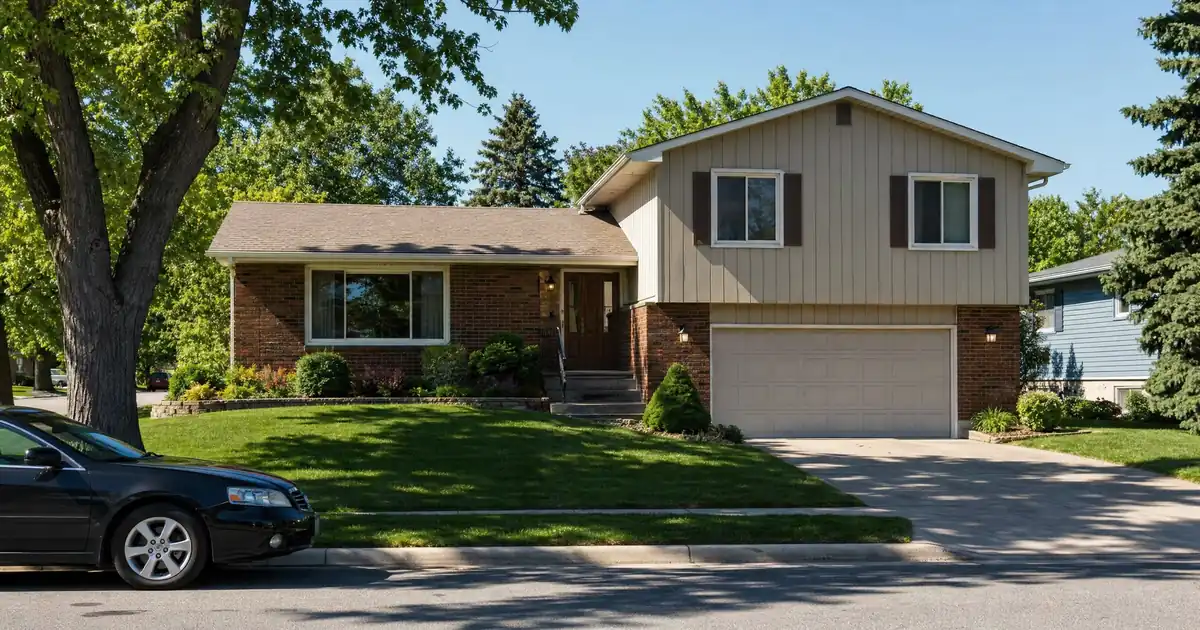
The Quick Read: DSCR lenders will close loans with title held several ways. You can vest in an LLC, your personal name, a revocable living trust, or — through select programs — a corporation or land trust. Most investors choose an LLC. But nearly every entity-vested file still needs a personal guaranty from a real person. Which one fits you depends on your liability goals and estate plans. It has nothing to do with getting approved.
DSCR Calculator
Run the numbers in your market
Rate source: Freddie Mac 30-yr average via FRED® — Federal Reserve Bank of St. Louis · effective Jul 30, 2026
Prefilled with starting assumptions — enter your own rent or nightly figures, taxes, insurance, and HOA for a more accurate picture.
Program parameters update from Lendmire’s centralized guideline source. Taxes and insurance are editable estimates.
As of Jul 30, 2026 · General Freddie Mac market benchmark, not a Lendmire loan offer. Rent, nightly rate, occupancy, taxes, and insurance are editable estimates. Short-term rental figures are estimates only and vary significantly by season, property type, management approach, and local short-term-rental rules — confirm local regulations before relying on them. Qualifying income for short-term rentals varies by program — some use appraisal market rent, others use documented STR history or projections — and is confirmed in underwriting. Not a Loan Estimate, approval, or commitment to lend. Program availability and eligibility are subject to lender guidelines, credit approval, property review, and underwriting.
Investors often think vesting is just a box to check on a closing form. It isn’t. It’s a real decision. It decides who gets sued if a tenant gets hurt. It decides who inherits the property without a fight in probate court. And it decides whether the deed matches the loan paperwork closely enough for a title company to insure the deal. Here’s how each option actually works.
Key Terms Defined
- DSCR (debt-service coverage ratio): Take the property’s monthly rent and divide it by the monthly mortgage payment. That payment includes principal, interest, taxes, insurance, and any HOA dues. A ratio of 1.00 means the rent covers the payment exactly. Many programs use 1.00 as their floor. But a few lenders in Lendmire’s wholesale network will still look at files below that line if the leverage gets adjusted. Read Lendmire’s guide on “What Is a DSCR Loan” for the full breakdown.
- Vesting: This is the legal name that ends up on the deed. It could be a person, an LLC, or a trust.
- LLC (limited liability company): A state-registered entity. It keeps the property’s liabilities separate from your personal assets.
- Personal guaranty: A signed promise from a real person. It says they’ll repay the loan personally if the entity holding title defaults.
- Trust: A legal setup where a trustee holds title for the benefit of named beneficiaries. People often use trusts for estate planning or in case they become incapacitated.
- Due-on-sale clause: A rule in your mortgage. It lets the lender demand the full loan balance if title transfers without permission.
- Business-purpose loan: A loan made for investment or business reasons — not to buy or refinance a home you live in. That’s what a DSCR loan is.
Why an LLC Is the Default Vesting Choice
Most DSCR loans close with the LLC named as the borrower. Then a managing member signs a personal guaranty. This combination gives the lender a real person’s credit to underwrite. At the same time, the property sits inside an entity that shields it from personal liability. That protection is the whole reason most investors form the LLC in the first place.
Across Lendmire’s wholesale network, most purchase loans land between 75% and 80% loan-to-value. Select high-leverage programs go up to 85% for borrowers with credit scores of 700 or better. Some of those higher-leverage tiers pair with lower down payment requirements. Lendmire breaks that down in its overview of DSCR loans with no down payment options. Credit floors can go as low as 620 in parts of the network. But most programs price better once you’re closer to 660.
DSCR lending has grown fast. Non-QM origination — the broader category DSCR loans fall under — rose to roughly 5% of all originations, up from about 3% a few years earlier. Scotsman Guide reports that DSCR volume alone grew more than 50% year over year. It has now passed bank statement loans as the largest slice of non-QM production. Much of that growth comes from investors closing directly into LLCs instead of fighting agency rules built for owner-occupants.
Can You Close a DSCR Loan in Your Personal Name?
Yes. Lenders fully accept personal-name vesting. It’s the simplest path if you’re not worried yet about liability separation. First-time investors buying their first rental often use this route before they’ve formed an entity. There’s nothing wrong with starting here.
But the tradeoff is simple: you get no liability shield. If something happens on the property, your personal assets sit in the same danger zone as the rental itself. Investors planning to grow past one or two properties usually switch to an LLC on their next purchase. Or they refinance the current loan into one later.
What About Trusts — Revocable, Irrevocable, and Land Trusts?
Most of the DSCR market accepts trusts. But the paperwork gets heavier. A revocable living trust works when the trustee has documented power to encumber the property and sign loan documents. The lender usually wants a trust certification, or the trust agreement itself. They’ll also want proof that a real person — usually the grantor or a beneficiary — is signing the personal guaranty.
Land trusts show up more for privacy than for liability protection. The trust’s name shows up on the public deed instead of the investor’s or the LLC’s name. Behind that, the investor or entity stays the real owner. Irrevocable trusts get more scrutiny. Grantors often aren’t beneficiaries of an irrevocable trust. This changes how a lender views control over the asset. It also changes how federal due-on-sale protections apply on any existing conventional loan tied to that property.
Corporations and Other Entities
Select programs in Lendmire’s network will vest title in a corporation or S-corp. It’s far less common than LLC vesting, though. The paperwork looks a lot like an LLC file — articles of incorporation, bylaws, proof of good standing. And the personal guaranty requirement doesn’t disappear just because the entity is a corporation instead of an LLC. If you already run rentals through a corporate structure for tax reasons, those select programs can work with that. It just adds a step to underwriting.
The Personal Guaranty: Why It Shows Up No Matter How You Vest
Nearly every entity-vested DSCR file requires a personal guaranty. And it does something that surprises some investors: it doesn’t cancel out the LLC’s liability shield. The guaranty makes one person liable to the lender for the loan itself. It has no effect on whether a tenant injury claim or contractor dispute can reach that same person’s personal assets outside the loan. That separation stays intact. The two protections run on completely different tracks.
For LLCs with multiple members, lenders usually want the guaranty from whoever holds majority ownership or manages the entity day to day. Minority partners who don’t run daily operations typically don’t need to sign. Single-member LLCs are simpler. The sole member signs, and the entity’s tax treatment defaults to a pass-through for reporting on most files.
Comparing Vesting Options Side by Side
| Vesting Type | Asset Protection | Documentation Load | Guaranty Required | Typical Acceptance |
|---|---|---|---|---|
| Personal name | None | Lightest | N/A (you’re the borrower) | Universal |
| Single-member LLC | Yes | Moderate | Yes, sole member | Dominant choice |
| Multi-member LLC | Yes | Higher | Yes, managing member(s) | Widely accepted |
| Revocable trust | Depends on structure | Higher (trust agreement/certification) | Yes, grantor or beneficiary | Common |
| Land trust | Privacy, not liability | Moderate | Yes, beneficial owner | Available on many programs |
| Corporation/S-corp | Yes | Higher | Yes, principal officer | Select programs |
Why the Due-on-Sale Clause Isn’t the Same Risk Here
DSCR loans get written for non-owner-occupied investment properties. They’re business-purpose loans, not consumer mortgages. That means different rules apply, per the business-purpose lending exemption in federal Regulation Z. This is part of why closing directly in an LLC at origination carries no due-on-sale exposure. There’s no existing consumer mortgage to trigger in the first place.
The real risk shows up in a different situation. Picture an investor who already has a conventional mortgage on a rental, and later deeds the property into an LLC. Federal protection for trust transfers on existing loans doesn’t cover LLCs. 12 U.S.C. § 1701j-3 protects certain trust transfers between living people, but has no matching protection for entity transfers. That’s the practical reason to originate a rental purchase as a DSCR loan closed directly into the LLC from day one — instead of buying personally and restructuring the vesting later.
The Exact-Name-Match Pitfall
Title companies will insure LLCs, trusts, and corporations as legitimate ownership types. But they insure the exact legal name — not something close to it. Industry title-insurance standards clearly define corporations, partnerships, and LLCs as insurable title holders. But the name on the recorded deed must match the name on the loan documents and the name registered with the state. Every letter has to match. A file that closes under “Riverside Holdings LLC” when the state has it registered as “Riverside Holdings, LLC” can stall at the title company before it ever reaches the lender.
The fix is simple, not complicated: pull the entity’s current state registration before closing. Use that exact name on every document. This matters more with newly formed LLCs. Sometimes the operating agreement and the state filing get drafted at different times with slightly different wording.
Which Vesting Choice Actually Fits Your Situation?
Buying your first rental while you’re still testing the strategy? Personal name often makes sense. It’s simple, costs nothing to form, and is easy to unwind if you sell fast. Planning to grow past two or three properties? You usually want the LLC from your very first purchase, not added later — this sidesteps the due-on-sale question entirely. Focused on estate planning or protecting yourself in case of incapacity? A trust tends to fit better. Sometimes investors hold an LLC’s membership interest inside a trust. That captures both the liability shield and the succession planning in one structure.
None of these choices change whether the property’s rent covers the payment. That’s a separate test entirely, and it’s the one Lendmire’s underwriting partners spend the most time on. For a full walkthrough of how coverage, leverage, and reserves fit together, check Lendmire’s complete DSCR loans guide for the qualification details.
DSCR vs. conventional financing
Two common ways to finance an investment property in this market. They qualify you differently — here’s how investors weigh them.
Why investors choose it
- Qualifies on the property’s rental income — no personal tax returns, W-2s, or pay stubs needed to document income.
- No personal debt-to-income ceiling to clear, so existing mortgages and obligations don’t cap your borrowing the same way.
- Can be closed in an LLC, keeping the property inside a business entity.
- Built for scaling — not held to the limit on number of financed properties that conventional financing applies.
- Underwriting centers on the deal: generally qualifies when the rent covers the payment, a 1.00x coverage ratio being a common baseline (confirmed in underwriting).
- Designed specifically for investment property, including long-term and, where the program allows, short-term rentals.
Where it’s strong
- Often the lowest ongoing financing cost for a buyer who fully qualifies on personal income — a fit for a first property or a cost-first purchase.
Trade-offs for investors
- Requires full personal income documentation and must fit within a debt-to-income limit — salary, existing debts, and other mortgages all count.
- Typically held in your personal name rather than a business entity.
- Caps how many financed properties you can carry, which can become a ceiling as a portfolio grows.
- Evaluates you as a borrower as much as the property, which usually means more paperwork.
How investors usually choose: a first or single property often optimizes for the lowest financing cost; portfolio builders often optimize for leverage, vesting in an LLC, and scaling past conventional caps. The right answer depends on your goals, the property, and current guidelines — both paths run through select lenders in Lendmire’s wholesale network, with eligibility and terms confirmed in underwriting.
Reserve requirements vary by lender, leverage, and loan size. Most commonly, you’ll need around six months of the monthly housing payment set aside. Conservative rate-and-term files at modest leverage sometimes get that waived. Loans above roughly $1.5 million typically step up toward nine months of reserves. Loan amounts across the network run from smaller balances through select lenders up to roughly $3 million on standard programs. None of these figures are guarantees. Every file gets underwritten on its own facts.
Weighing whether to close your next rental purchase or refinance in personal name, an LLC, or a trust? Lendmire (NMLS# 2371349) arranges DSCR loans through select lenders across 40 states plus Washington, D.C. — 41 markets total. Lendmire can walk through how vesting interacts with your leverage and credit profile. Call 828-256-2183 or request a quote directly to see how a specific vesting structure fits your specific file.
This article gives general information, not legal or tax advice. Vesting decisions can carry real consequences for liability and estate planning. Talk to an attorney or CPA about your own situation before choosing an entity structure. Loan approval is never guaranteed, and nothing here is a commitment to lend. Every scenario described is subject to lender approval and to borrower, property, and program guidelines that can change.
Frequently Asked Questions
Can I switch a property from personal name to an LLC after closing a DSCR loan?
In many cases, yes. But it’s cleaner to close directly in the LLC at origination. Post-closing transfers can trigger a due-on-sale review, depending on the loan and lender. And the property’s insurance and title policy both need updating to match the new vesting, or coverage gaps can open up.
Does a brand-new LLC need operating history to qualify for a DSCR loan?
Generally not. Qualification runs mainly on the property’s rental income and the guarantor’s personal credit profile — not the LLC’s age. A newly formed LLC with proper formation documents and an operating agreement that grants borrowing authority typically qualifies the same way as an established one.
Are there lenders specializing in financing short-term rental properties?
Yes. A portion of the DSCR market underwrites short-term rentals specifically. These lenders use trailing hosting income alongside or instead of long-term rent comps. Those programs generally run tighter leverage and want a longer hosting history than a standard long-term rental file. Short-term rental rules can vary by city, county, HOA, and property type. Confirm local rules before relying on projected rental income.
About Lendmire
As a DSCR and non-QM mortgage broker, Lendmire — NMLS# 2371349 — connects investors with wholesale lending channels across 41 markets, including Washington, D.C. The property’s rental income drives lender review, not the borrower’s tax returns. This works well for self-employed operators and for portfolios beyond four financed properties. Scotsman Guide named Lendmire a Top Mortgage Workplace in both 2025 and 2026.
Get Started
Ready to find the right loan for you?
In about 30 seconds you can review financing options available for your investment property. No commitment required.
Informational only. Not a Loan Estimate, approval, or commitment to lend. Program availability and eligibility are subject to lender guidelines, credit approval, property review, and underwriting.
References
1. Scotsman Guide — DSCR Lending Is Surging
2. eCFR — 12 CFR § 1026.3, Regulation Z Exempt Transactions
3. Cornell Law School LII — 12 U.S.C. § 1701j-3, Garn-St. Germain Depository Institutions Act
This article is part of Lendmire’s DSCR loan program — full qualification details, guidelines, and scenarios live on the program page.
Related reading: How To Vest A Jumbo DSCR Loan In A Trust · Can A Family Trust Add Properties Beyond The Ten-loan Cap With DSCR? · How To Vest A Luxury STR Portfolio Loan In An LLC
Brandon Miller
Founder & CEO, Mortgage Loan Originator, Lendmire LLC
- Mortgage Loan Originator · NMLS# 1129696 · Verify on NMLS Consumer Access
- North Carolina Real Estate Broker · License# 343312 · Verify on NCREC
- North Carolina Insurance Producer · License# 19053198 · Property, Casualty, Life, Health · Verify on NAIC SBS
- Lendmire LLC · Firm NMLS# 2371349 · Verify firm licensure
Legal disclosures. Lendmire (NMLS# 2371349) is a state-licensed mortgage brokerage that arranges financing through wholesale lender relationships. Lendmire is not a direct lender, depository institution, or registered financial advisor. The discussion above is general informational content about real estate financing — it is not financial, legal, or tax advice, and readers should consult licensed professionals for guidance on their individual circumstances. Loan inquiries are subject to lender underwriting; this article does not represent a commitment to lend. Loan terms, rates, and qualification standards vary by borrower, property, and state, and are subject to change at any time. Equal Housing Opportunity. NMLS Consumer Access: nmlsconsumeraccess.org.