
The Quick Read: Buying a rental property with cash and refinancing it soon after is a real, common strategy. But here’s the catch: the refinance is treated as a cash-out transaction the moment it closes. It’s not a special discount product. Conventional lending waives its normal ownership-seasoning clock through a documented exception. DSCR and non-QM lenders skip that framework entirely. They set their own seasoning windows instead, commonly landing near six months. Either way, the new loan is still capped by leverage limits, credit requirements, and whether the property’s rent covers the payment.
DSCR Calculator
Run the numbers in your market
Rate source: Freddie Mac 30-yr average via FRED® — Federal Reserve Bank of St. Louis · effective Jul 30, 2026
Prefilled with starting assumptions — enter your own rent or nightly figures, taxes, insurance, and HOA for a more accurate picture.
Program parameters update from Lendmire’s centralized guideline source. Taxes and insurance are editable estimates.
As of Jul 30, 2026 · General Freddie Mac market benchmark, not a Lendmire loan offer. Rent, nightly rate, occupancy, taxes, and insurance are editable estimates. Short-term rental figures are estimates only and vary significantly by season, property type, management approach, and local short-term-rental rules — confirm local regulations before relying on them. Qualifying income for short-term rentals varies by program — some use appraisal market rent, others use documented STR history or projections — and is confirmed in underwriting. Not a Loan Estimate, approval, or commitment to lend. Program availability and eligibility are subject to lender guidelines, credit approval, property review, and underwriting.
Here’s what matters most before an investor tries this:
- An all-cash purchase followed by a refinance is always underwritten as cash-out, never as purchase financing.
- Conventional and agency lending waive their standard title-seasoning requirement through what’s known as the delayed financing exception, but it requires airtight paperwork.
- DSCR lenders don’t follow that agency rule at all — each one sets its own seasoning window, commonly landing near six months across most of the wholesale network Lendmire places files with.
- The new loan amount is generally capped near the original purchase cost until seasoning clears — not the current appraised value.
- More cash into the deal helps the coverage ratio, but it never overrides a credit floor, a reserve requirement, or a leverage cap.
What “Buy Cash, Then Refinance” Actually Means
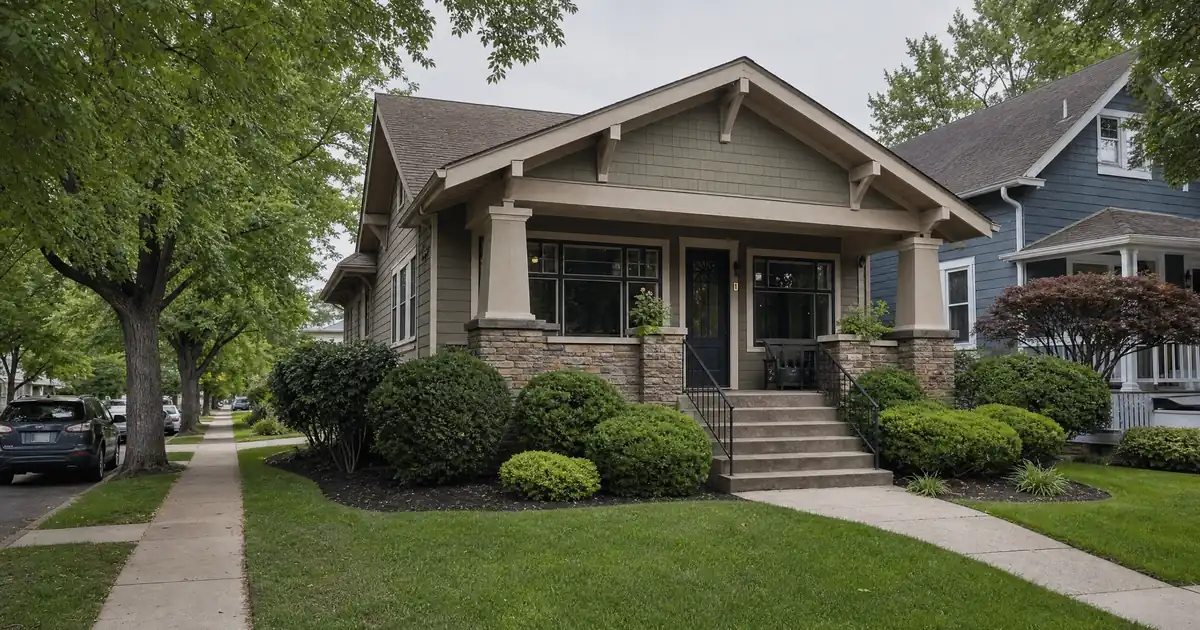
An investor pays cash for a rental. No mortgage shows up on the settlement statement. Then, a few months later, the investor applies for a loan against that same property. That second loan is not a purchase loan. It’s a cash-out refinance, because the investor is pulling equity out of a property they already own free and clear.
That distinction drives everything else — the leverage cap, the paperwork, the underwriting. A lender doesn’t care that the investor could have financed the purchase from the start. It only cares that money is now flowing back to the borrower against a property with no existing lien. That’s a cash-out event, plain and simple.
Investors use this play for a few reasons. Cash offers close cleaner. They also win more bidding situations, especially against financed buyers. Some investors are buying from a probate sale, an estate, or a distressed seller who wants speed over financing contingencies. Others simply had the money sitting in a brokerage account. They decided a rental was a better place for it — then wanted that capital back to put into the next deal.
How the Mechanics Work, Step by Step
The process runs in a set order. Skipping a step is a common reason a file stalls.
First, the purchase closes with clean, arm’s-length title. No seller financing. No purchase-money mortgage. No sale between related parties or business partners. Second, the investor gathers proof of the cash source: bank statements, wire confirmations, and the settlement statement from the original purchase. Third, once the lender’s seasoning window is satisfied, the deal moves to appraisal. If rental income will support the qualification, a market-rent opinion — often documented on a Form 1007 rent schedule — gets pulled alongside it.
Here’s the part that surprises first-timers: during the seasoning window, the new loan amount is typically capped at the documented cost basis. That’s the original purchase price plus eligible closing costs. It’s not the current appraised value, even if the property has gained value. Once full seasoning is met, appraised value generally takes over instead. That’s a meaningful gap for an investor who bought below market or fixed the property up before refinancing.
Fourth, the loan closes and proceeds reimburse the investor for the cash they put in originally, up to whatever leverage and coverage limits apply. For a full walkthrough of that final leverage decision, check Lendmire’s guide on “How to Cash-out Refinance an Investment Property”. It breaks down the paperwork and timing in more detail.
Key Terms Defined
DSCR (debt-service coverage ratio): a ratio that compares a property’s rent — as documented under guidelines like Fannie Mae’s rental income requirements — to its full monthly obligation. That obligation includes principal, interest, taxes, insurance, and any HOA dues. Lenders use this ratio to qualify the loan based on the property’s income, not the borrower’s personal income.
Seasoning: the length of time a lender wants between two events. Most often, that’s between the purchase closing and the refinance closing.
Delayed financing exception: the conventional/agency carve-out that lets a cash buyer skip the standard ownership-seasoning clock, as long as the source of funds and title are documented.
LTV (loan-to-value): the new loan amount expressed as a percentage of the property’s value or cost basis. This is the flip side of the investor’s equity position.
Cash-out refinance: any refinance where proceeds exceed what’s needed to pay off an existing lien and closing costs. That describes every refinance on a property bought outright in cash.
Business-purpose loan: a loan made to a non-owner-occupant for an investment property rather than a primary residence. It gets reviewed under different rules than a standard consumer mortgage.
The Agency Baseline vs. the DSCR World
Conventional lending has a documented rule for this exact strategy. It’s worth understanding even for investors who never touch agency financing. Fannie Mae’s Selling Guide requires at least one borrower to have been on title for six months before a standard cash-out refinance disburses. That clock gets waived if the delayed financing exception applies — meaning the purchase was documented as an all-cash deal. Separately, Fannie Mae also requires an existing first mortgage to be at least 12 months old before its payoff counts toward a standard cash-out refinance. That’s a different clock, and it trips up a lot of borrowers who confuse the two. The delayed financing exception itself carries enough paperwork nuance that even experienced underwriters can trip on it. This closer look at common delayed-financing underwriting mistakes lays out exactly where things go wrong.
DSCR loans don’t run on that framework at all. Unlike agency lending, there’s no single published rulebook governing DSCR seasoning. Each wholesale lender in the network sets its own window, and requirements can vary a lot from one lender to the next. Across the DSCR files Lendmire places, six months of ownership is the common expectation — though it varies by lender and by loan size. That’s shorter than a lot of investors assume. It’s one reason DSCR financing has become the more practical path for investors who buy in cash specifically to recycle capital fast.
What DSCR Lenders Actually Check
DSCR loans are built for non-owner-occupied investment properties. Because they’re business-purpose investor loans, they get reviewed differently than a standard owner-occupied mortgage. The property’s rent drives the lender’s review — not traditional personal-income paperwork.
On the purchase side, most files across the network land in the 75%-80% LTV range. Select high-leverage programs reach 85% for borrowers around a 700 credit score. On a cash-out refinance after an all-cash purchase, leverage tops out closer to 75% across most of the network. A handful of states run tighter overlays. Connecticut, Florida, Illinois, and New Jersey cap purchase leverage nearer 75% and hold loan size closer to $2 million. Exact terms depend on lender and investor guidelines, credit profile, reserves, and property review.
Coverage matters as much as leverage. A 1.00 DSCR — where rent equals the full payment — is where select programs start. It’s never a universal standard, though. Stronger ratios open better leverage and pricing tiers. And files that don’t clear 1.00 on rent alone aren’t automatically dead. Select lenders in the network will still review them, but leverage and terms adjust to make up for it. A no-ratio option is available for DSCR below 1.00 with stronger credit or higher down payment; qualification on that path rests on credit and equity rather than a rent-coverage calculation.
Credit floors run as low as 620 in parts of the network. Most programs want something closer to 660, though, and 700-plus unlocks the strongest leverage tiers. Reserve requirements vary by lender, leverage, and loan size. They commonly land around six months of the full monthly obligation. Loans above $1.5 million often step up closer to nine months. And some modest-leverage rate-term files under that threshold see reserves waived entirely.
If the investor holds title through an LLC, partial credit toward seasoning is possible, depending on how long the entity has held the property. This is subject to lender program eligibility and documentation showing the borrower’s controlling ownership. Property type matters too. Manufactured homes — single- or double-wide — along with log homes and barndominiums simply aren’t offered through DSCR programs in this network, regardless of equity or coverage. Lendmire’s complete DSCR loans guide walks through the full qualification picture in more depth, including how the ratio gets calculated property by property.
Comparing Your Refinance Options
An all-cash buyer recovering capital has more than one route. These routes don’t score the same on speed, cost, or repeatability.
| Option | Typical Ceiling | Seasoning | Best For |
|---|---|---|---|
| DSCR cash-out refinance | ~75% LTV | Commonly ~6 months, lender-dependent | Recycling capital into the next rental |
| Conventional cash-out (delayed financing) | Agency limits apply | Waived with documented cash purchase | Borrowers who qualify on personal income |
| HELOC on another property | Varies by lender | Depends on existing lien seasoning | Smaller, flexible draws |
| Bridge/hard money | Often 65%-75% of value | Little to none | Short holds, rehab-heavy deals |
DSCR financing sits in the middle. It’s not as fast to qualify for as a bridge loan. But it doesn’t require the borrower’s personal income paperwork the way conventional cash-out does. Investors weighing a straight cash-out refinance against buying the next property outright with recovered proceeds can read more in Lendmire’s guide on using a cash-out refinance to buy an investment property.
A Modeled Scenario: Recycling Capital
Picture an investor who buys a small rental in cash, using assumed figures for illustration only. The purchase price is set at a modeled $280,000. After a short hold, the property appraises higher. Market rent is strong enough to clear a coverage ratio in the 1.15x-1.25x range on a refinance at 75% LTV. That’s comfortably above the 1.00 floor select programs use as a baseline. Final terms depend on lender guidelines, property type, leverage, and the borrower’s complete credit picture.
Because the file is still inside the network’s typical seasoning window, the loan amount would generally be measured against the original cost basis, not the higher appraised value. That detail matters if the investor made improvements between purchase and refinance and expected the new value to drive the loan size. Once full seasoning is met, the appraised value takes over instead — and that can change the math a lot for a fix-and-hold buyer.
This is where the strategy either works cleanly or gets complicated. The investor needs the coverage ratio AND the leverage room to line up. A property with excellent rent but modest appreciation may not season into full appraised-value treatment fast enough to matter. A property that appreciated sharply but rents modestly may hit the DSCR floor sooner than the leverage ceiling. These specifics are subject to lender guidelines and a full review of property, leverage, and credit.
Who This Strategy Fits — and Who It Doesn’t
This strategy fits investors with real cash on hand who value negotiating leverage over immediate financing. Think of someone competing in a market where cash offers win, or buying from a seller who needs a fast, contingency-free close. It also fits investors building a repeatable system: buy in cash, refinance out, buy the next one.
It doesn’t fit an investor who needs the recovered capital before the seasoning window clears. The loan amount stays tied to cost basis until then. It also doesn’t work well if the property’s rent won’t clear a workable coverage ratio at the leverage the investor wants. Stretching for 80% LTV on a property that barely covers its payment usually means accepting a smaller loan, a lower ratio, or waiting for rents to catch up.
Run the numbers on a duplex bought in cash near $310,000 with modest but steady rents. If the coverage ratio only lands in the 0.90x-0.95x range at 75% LTV, that file might still move forward. Select lenders in the network review sub-1.00 files — but leverage and terms adjust downward to make up for it. That’s a different conversation than a file clearing 1.20x cleanly. Terms vary by lender guidelines, property type, leverage, credit profile, and full file review.
Scaling It: Buying the Next Property With Recovered Capital
The real appeal for a lot of investors isn’t the single transaction. It’s the loop. Buy property one in cash, refinance out once seasoning clears, use the recovered capital to buy property two in cash, and repeat. This buy-cash-refinance-repeat loop mirrors what real estate investors often call the BRRRR strategy — buy, rehab, rent, refinance, repeat — though DSCR investors don’t always rehab before refinancing. Each cycle gets gated by the same three checks: does the seasoning window allow it, does the leverage cap allow enough capital back, and does the rent clear a workable coverage ratio.
The system slows down anywhere those three don’t line up. Maybe a property seasons fast but doesn’t cash flow well. Or one that cash flows well but sits below the leverage the investor was counting on. Investors scaling this way often find that portfolio-wide DSCR strength matters more than any single property’s number. A strong file elsewhere in the portfolio can offset a tighter one. Lendmire’s team can run that comparison across multiple properties at once when structuring a refinance this way.
Tax treatment can depend on how the funds are used and how the property is held. Investors should keep clear records and speak with a qualified tax professional before relying on any deduction.
This article is general information, not legal or tax advice, and every investor’s situation differs. Anyone weighing a specific purchase-and-refinance plan should talk with a qualified attorney or CPA about their own facts. Nothing here is a commitment to lend, and loan approval is never guaranteed. Every scenario is subject to lender approval and to the borrower’s, property’s, and program’s underwriting guidelines.
If you’re buying or refinancing a rental property and want to see how the numbers work, Lendmire can help you compare DSCR loan options based on the property’s income, your credit profile, target leverage, and where you want the portfolio to go next.
Frequently Asked Questions
Can you do a cash-out refinance on an investment property?
Yes — it’s one of the more common DSCR transactions in the network. Leverage on a cash-out typically tops out around 75% LTV. Seasoning commonly runs near six months depending on the lender. And the property’s rent needs to clear a workable coverage ratio, generally starting near 1.00 on select programs.
How do you cash-out refinance an investment property bought with cash?
Document the purchase as clean and arm’s-length, gather proof of the cash source, wait out the lender’s seasoning window, and order an appraisal alongside a rent opinion if income will support the file. The loan is capped near cost basis until seasoning fully clears. Then appraised value takes over.
How do you qualify for a cash-out refinance on an investment property?
Qualification runs mostly on the property’s rental income covering the payment, subject to lender guidelines. You’ll also need a credit score generally in the 620-700-plus range and reserves that commonly land near six months of the full obligation. Stronger credit and coverage open better leverage tiers.
Which companies offer cash-out refinance loans for investment properties?
Program availability and terms vary widely by lender, loan size, and state, so there’s no single universal answer. Lendmire works as a broker across a wholesale network of DSCR lenders and can compare multiple programs side by side for a given property and credit profile.
Can you refinance an investment property loan that already has a mortgage on it?
Yes — refinancing an existing investment property loan works the same way, just without the all-cash purchase step. The file still runs on the property’s rent-to-payment coverage, current leverage position, and the lender’s seasoning rules if it’s been refinanced before.
About Lendmire
Lendmire (NMLS# 2371349) is a mortgage broker. It arranges these files through select lenders in its wholesale network, with DSCR programs available in 41 markets, including Washington, D.C. Investors weighing leverage against seasoning can also compare structures through Lendmire’s max LTV cash-out refinance breakdown. It lays out how leverage ceilings shift by loan size and property type. Scotsman Guide named Lendmire a Top Mortgage Workplace in both 2025 and 2026.
Get Started
Ready to find the right loan for you?
In about 30 seconds you can review financing options available for your investment property. No commitment required.
Informational only. Not a Loan Estimate, approval, or commitment to lend. Program availability and eligibility are subject to lender guidelines, credit approval, property review, and underwriting.
References
1. Blueprint — What Is Form 1007?
2. Fannie Mae Selling Guide — Rental Income Requirements
3. Fannie Mae Selling Guide — Cash-Out Refinance Transactions
4. Blueprint — The #1 Mistake in Delayed Financing Underwriting
5. REI Prime — The BRRRR Strategy Guide
This article is part of Lendmire’s DSCR loan program — full qualification details, guidelines, and scenarios live on the program page.
Related reading: Can You Do a Cash Out Refinance on an Investment Property? · How Investors Use DSCR Loans To Recycle Equity? · Best Cash Out Refinance for Investment Property
Brandon Miller
Founder & CEO, Mortgage Loan Originator, Lendmire LLC
- Mortgage Loan Originator · NMLS# 1129696 · Verify on NMLS Consumer Access
- North Carolina Real Estate Broker · License# 343312 · Verify on NCREC
- North Carolina Insurance Producer · License# 19053198 · Property, Casualty, Life, Health · Verify on NAIC SBS
- Lendmire LLC · Firm NMLS# 2371349 · Verify firm licensure
Legal disclosures. Lendmire (NMLS# 2371349) is a state-licensed mortgage brokerage that arranges financing through wholesale lender relationships. Lendmire is not a direct lender, depository institution, or registered financial advisor. The discussion above is general informational content about real estate financing — it is not financial, legal, or tax advice, and readers should consult licensed professionals for guidance on their individual circumstances. Loan inquiries are subject to lender underwriting; this article does not represent a commitment to lend. Loan terms, rates, and qualification standards vary by borrower, property, and state, and are subject to change at any time. Equal Housing Opportunity. NMLS Consumer Access: nmlsconsumeraccess.org.