
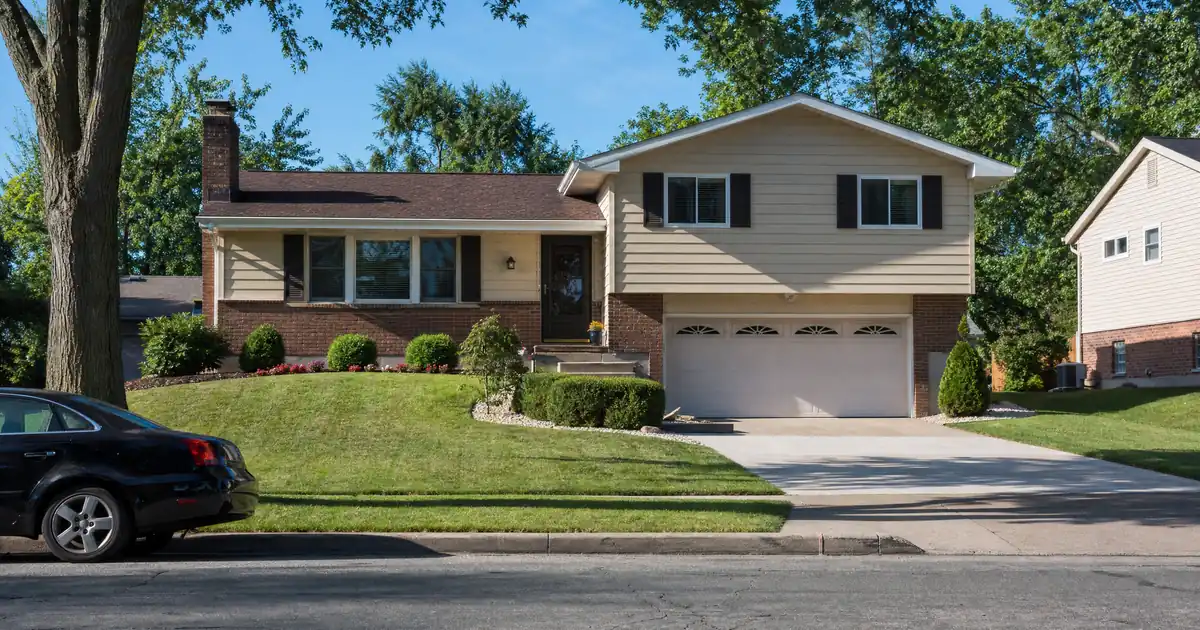
The Quick Read: The best cash-out refinance for an investment property depends on how you qualify. If the property carries strong rental income and personal income documentation is a hassle, a DSCR cash-out refinance — typically capped near 75% LTV after about 6 months of ownership seasoning — is usually the strongest fit. If you have clean W-2 or tax-return income and the property has been seasoned longer, a conventional cash-out refinance may offer more leverage flexibility on paper, but it comes with stricter income documentation and title-seasoning rules. There is no universal “best” — there’s a best fit for your credit profile, your documentation situation, and how fast you want to redeploy equity.
DSCR Cash-Out Calculator
Run the cash-out numbers in your market
Rate source: Freddie Mac 30-yr average via FRED® — Federal Reserve Bank of St. Louis · effective Jul 30, 2026
Prefilled with starting assumptions — enter your property’s value, balance, taxes, and insurance for a more accurate picture.
Program parameters update from Lendmire’s centralized guideline source. Taxes and insurance are editable estimates.
As of Jul 30, 2026 · General Freddie Mac market benchmark, not a Lendmire loan offer. Property value, balance, taxes, and insurance are editable estimates. Maximum loan-to-value varies by lender, program, property type, and seasoning. Not a Loan Estimate, approval, or commitment to lend. Program availability and eligibility are subject to lender guidelines, credit approval, property review, and underwriting.
DSCR loans are designed for non-owner-occupied investment properties. Because they are business-purpose investor loans, they are reviewed differently from a standard owner-occupied mortgage.
What Counts as a Cash-Out Refinance on an Investment Property?
A cash-out refinance replaces your current loan on a rental property with a new, larger loan, and you keep the difference between the new loan amount and what you owed on the old one (minus closing costs). It’s the same basic structure whether the property is a single-family rental, a duplex, or a small multifamily — the loan pays off the old lien, and the leftover proceeds go to you or your entity.
Two loan families dominate this transaction for investors: conventional cash-out refinancing underwritten to agency rules, and DSCR (debt-service-coverage ratio) cash-out refinancing underwritten to the property’s rental income instead of your traditional personal-income documentation. FHA and VA cash-out programs exist for owner-occupied homes, but they don’t apply to a pure investment property — that’s why conventional and DSCR are really the two paths investors compare.
Can You Do a Cash-Out Refinance on an Investment Property?
Yes — cash-out refinancing on non-owner-occupied rental property is a routine transaction across both conventional and DSCR lending channels. The property must carry enough equity to support the new loan under the applicable LTV ceiling, and the borrower (or the borrower’s LLC) must have held title long enough to satisfy the lender’s seasoning rule.
For conventional financing under Fannie Mae’s cash-out rule, at least one borrower must have been on title for at least six months prior to the new loan’s disbursement date, and if an existing first mortgage is being paid off, it generally needs to be at least 12 months old, measured note-date to note-date. That’s two separate clocks, not one — a detail that trips up a lot of investors who assume “seasoning” means a single number.
Across select lenders in Lendmire’s wholesale DSCR network, the more common expectation is roughly 6 months of ownership before cash-out is available — a shorter lock-up than the conventional 6-month/12-month structure, and one reason DSCR has become the practical choice for investors trying to recycle capital into the next acquisition.
How to Cash-Out Refinance an Investment Property, Step by Step
The mechanics run the same basic sequence whether the file is conventional or DSCR — what changes is which income gets underwritten.
1. Appraisal. An independent appraiser establishes current market value. For a one-unit rental where rent will be used in the file, lenders commonly request a Single-Family Comparable Rent Schedule (Form 1007) alongside the appraisal, or a Form 1025 for a two-to-four unit property. Form 1007 estimates monthly market rent — it does not determine whether that rent qualifies the borrower. That call belongs to the lender.
2. Income calculation. For DSCR files, the lender divides the rent used for lender review by the full monthly obligation — principal, interest, taxes, insurance, and any HOA dues — to arrive at the coverage ratio. Across most programs in Lendmire’s network, 1.00 is where select programs start as a floor, not a universal standard; stronger ratios tend to open better leverage and pricing tiers.
3. LTV and loan structuring. The appraised value and the maximum allowable leverage set the ceiling on the new loan. Payoff of the existing lien plus closing costs come out of that ceiling before any cash reaches the investor. On the DSCR side, cash-out tops out around 75% LTV across most of the network — a hard structural cap that doesn’t bend just because the coverage ratio is strong.
4. Underwriting. Title, insurance, entity documentation (if the property closes in an LLC), and reserves get reviewed here, along with the seasoning check described above.
5. Closing and disbursement. The old loan is paid off, the new loan funds, and the net proceeds go to the borrower or the titled entity, subject to program guidelines.
How to Qualify for a Cash-Out Refinance on an Investment Property
Qualification splits into two separate tests: enough equity to support the leverage, and enough rental coverage to clear the lender’s minimum ratio. Clearing one without the other doesn’t get a file approved.
On the DSCR side, credit tiers commonly run from a 620 floor in parts of the network up to 700+ for the strongest leverage tiers, with 660 as a common target most programs want to see. Reserve expectations vary by lender, leverage, and loan size — commonly around 6 months of PITIA on most files, with some conservative rate-term deals at modest leverage seeing reserves waived, and loans above roughly $1,500,000 typically stepping up to about 9 months. These are program ranges from select wholesale-network guidelines, not guarantees — every file is underwritten individually.
A borrower with a higher score and stronger reserves generally accesses better leverage and pricing tiers, but no amount of credit strength overrides the 75% cash-out LTV ceiling or the property’s own coverage math. The strongest files clear both tests at once: enough equity, and rents that comfortably cover the full monthly obligation.
It’s worth being precise about what “clearing 1.00” actually means. DSCR compares rent to the mortgage payment — principal, interest, taxes, insurance, HOA dues. It does not account for repairs, vacancy, property management, utilities, or capital expenditures. A property clearing 1.15 coverage isn’t automatically cash-flow positive once those real costs are factored in — the ratio measures debt-service coverage, not net investor cash flow.
Decision Framework: Which Cash-Out Path Fits Your Scenario?
The right path depends on documentation ability, property seasoning, and how much leverage you need — not on which product sounds more familiar.
| Your Situation | Likely Best Fit |
|---|---|
| Strong W-2/tax-return income, property seasoned 12+ months | Conventional cash-out (agency rules) |
| Rental income is strong but personal income is hard to document | DSCR cash-out refinance |
| Property owned under 12 months, bought with cash | Delayed financing exception (conventional) or DSCR, program-dependent |
| Multiple financed properties, portfolio-style investor | DSCR — underwriting isn’t tied to a personal DTI ceiling |
| Short-term rental with 12+ months of hosting history | STR-specific DSCR cash-out (around 70% LTV) |
| Property type is manufactured, log home, or barndominium | Not offered through DSCR programs — explore conventional or portfolio options |
The DSCR track and conventional track solve different problems. A complete DSCR loans guide walks through how the property-income qualification model works in more depth if the DSCR column above looks like the fit.
Delayed Financing: The Exception for All-Cash Buyers
If you bought a rental property with cash — at auction, in a bidding situation, or simply to move fast — the standard seasoning wait may not apply to you. Fannie Mae’s delayed financing exception waives the six-month title-seasoning requirement when its specific conditions are met, because the investor already has full equity in the deal; the transaction converts a cash position into leverage rather than extracting appreciation that hasn’t been earned yet. Many DSCR programs in Lendmire’s network mirror this concept, though the structure isn’t identical lender to lender — it’s worth confirming the specific documentation trail (proof of the cash purchase, source of funds) with whichever program you’re pursuing.
Short-Term Rentals: A Different Cash-Out Calculation
STR cash-out refinancing is a structurally different underwriting exercise, not just a documentation variant. Appraisers can’t use Form 1007 to show nightly income for a short-term rental — the income approach for STR valuation requires enough operating history to demonstrate real earnings, factoring in occupancy and operating efficiency, not a nightly-rate annualization.
Across the DSCR network, STR cash-out generally runs around 70% LTV, with expectations of roughly a 640+ credit score, about 12 months of hosting history, and a 1.00 coverage floor. Short-term rental rules can vary by city, county, HOA, and property type, so investors should confirm local rules before relying on projected rental income in an STR cash-out scenario.
An investor who bought a duplex two years ago and has been self-managing it as a long-term rental, then wants to convert it to nightly rentals and refinance against the new income stream, will hit this exact wall — the lender needs trailing operating history before the STR income counts, not a projection.
What Can Go Wrong on These Files
Across DSCR cash-out files, the most common derailment isn’t the coverage ratio — it’s a mismatch between the appraiser’s rent opinion and the lender’s qualifying income calculation. The appraiser documents market rent; the lender decides what portion of that rent actually counts. Files that assume the 1007 figure is automatically the coverage figure sometimes come back short, especially when HOA dues or a higher tax assessment shrink the coverage math after the fact.
Reserve documentation is another quiet failure point. Investors often assume the reserve requirement applies loan-by-loan, when in practice many lenders want to see reserves covering the new property plus other financed real estate. Confirming this upfront — rather than assuming — avoids a late-stage reserve shortfall.
Entity documentation on LLC-titled properties is worth flagging too: operating agreements, EIN documentation, and authorized-signer paperwork need to be current and consistent with how title is actually held, or the file stalls in underwriting review while that gets sorted out.
Who This Fits — and Who It Doesn’t
This structure tends to fit an investor who already owns rental property with real equity, wants to redeploy that equity into another acquisition or a renovation, and either can’t or doesn’t want to document personal income the way a conventional refinance requires. It also fits portfolio investors who are past the point where a personal DTI ceiling makes sense as the qualifying framework.
It fits less well for an investor who needs leverage above 75% on a cash-out (that ceiling doesn’t move regardless of coverage strength), an investor whose property type falls outside DSCR eligibility — manufactured homes, log homes, and barndominiums are not offered through these programs — or an investor in a hurry to extract equity from a property purchased only a month or two ago, before seasoning requirements are met.
No state overlay applies for investors in Connecticut, Florida, Illinois, or New Jersey: purchase transactions there follow the standard 80% LTV ceiling, and loan amounts run up to $3,000,000 — the same program limits as everywhere else, separate from the borrower’s credit or coverage profile.
Lendmire (NMLS# 2371349) arranges DSCR cash-out refinancing through select lenders across a wholesale network spanning 41 markets, including Washington, D.C. Investors weighing this path can review the maximum LTV rules that apply to a cash-out refinance on an investment property, compare them against how a conventional cash-out refinance treats investment property under Fannie Mae rules, or walk through the step-by-step process of a cash-out refinance on an investment property before deciding which track fits.
Tax treatment can depend on how the funds are used and how the property is held; investors should keep clear records and speak with a qualified tax professional before relying on any deduction tied to a cash-out refinance.
This article is general information, not legal or tax advice, and readers should consult a qualified attorney or CPA about their own situation before acting on anything discussed here. Loan approval is never guaranteed, and nothing here is a commitment to lend — every scenario described here is subject to lender approval and to borrower, property, and program guidelines that can change.
If you’re weighing a cash-out refinance on a rental property and want to see how the numbers actually stack up, Lendmire can help compare DSCR loan options based on the property’s income, your credit profile, target leverage, and what you’re trying to accomplish with the proceeds. Reach out at 828-256-2183 or request a quote directly.
Key Terms Defined
LTV (loan-to-value): the new loan amount expressed as a percentage of the property’s appraised value — the number that sets the ceiling on how much can be borrowed.
DSCR (debt-service-coverage ratio): qualifying monthly rent divided by the full monthly payment (principal, interest, taxes, insurance, HOA), used to measure whether the property’s income covers its own debt.
Seasoning: the minimum length of time a borrower must hold title (or a prior loan must exist) before a lender allows a cash-out refinance on that property.
Delayed financing: an exception that lets an investor who purchased with cash refinance sooner than the standard seasoning period would otherwise allow.
Reserves: liquid funds a borrower must show, typically expressed in months of PITIA, as a cushion beyond the down payment or existing equity.
Frequently Asked Questions
Can you do a cash-out refinance on an investment property?
Yes. Both conventional and DSCR lenders offer cash-out refinancing on non-owner-occupied rental property, provided the property has enough equity to meet the applicable LTV ceiling and the borrower has held title long enough to satisfy seasoning requirements. FHA and VA cash-out programs don’t apply here since those are owner-occupied products.
How do you cash-out refinance an investment property?
The process runs through appraisal, income calculation (personal income for conventional, rental income for DSCR), LTV structuring against the payoff of the existing loan, underwriting review of title and reserves, and finally closing and disbursement of net proceeds. The core steps are the same across loan types — the difference is which income gets qualified.
How do you qualify for a cash-out refinance on an investment property?
Qualification requires clearing two separate tests: enough equity to support the leverage ceiling, and enough income (personal for conventional, rental for DSCR) to clear the lender’s minimum coverage or debt-to-income threshold. On DSCR files, that typically means a coverage ratio around 1.00 or better, a credit score commonly in the 660+ range, and reserves that scale with loan size and leverage — all subject to lender guidelines.
Which companies offer cash-out refinance for investment properties?
Cash-out refinancing on investment property is offered through a range of channels — retail banks, credit unions, and non-QM/DSCR wholesale lenders that work through mortgage brokers. Lendmire arranges DSCR cash-out refinancing by placing files with select lenders across its wholesale network rather than originating loans directly, giving investors access to multiple program guidelines through one point of contact.
Can I cash-out refinance a DSCR loan?
Yes. An existing DSCR loan can be refinanced into a new DSCR cash-out loan once the ownership-seasoning requirement is met, typically around 6 months, and the property’s current rent still supports the new loan under the lender’s coverage floor and the roughly 75% cash-out LTV ceiling common across the network.
For how equity extraction works on an investment property, see cash-out refinance on an investment property.
About Lendmire
Lendmire (NMLS# 2371349), a non-QM mortgage broker serving investors in 41 markets including Washington, D.C., helps structure DSCR scenarios commonly evaluated around a property’s rental income rather than personal income paperwork, subject to lender guidelines. A Scotsman Guide Top Mortgage Workplace in 2025 and 2026, Lendmire places loans through wholesale investor lenders and is not a direct lender.
Get Started
Ready to find the right loan for you?
In about 30 seconds you can review financing options available for your investment property. No commitment required.
Informational only. Not a Loan Estimate, approval, or commitment to lend. Program availability and eligibility are subject to lender guidelines, credit approval, property review, and underwriting.
References
1. Fannie Mae Selling Guide – B2-1.3-03, Cash-Out Refinance Transactions
2. McKissock Learning – Form 1007 & Its Impact on Short-Term Rental Appraisals
This article is part of Lendmire’s investment property cash-out refinance program — full qualification details, guidelines, and scenarios live on the program page.
Related reading: Cash Out Refinance After Renovation on Investment Property · Cash Out Refinance Investment Property Without Tax Returns · Best Refinance Banks For Investment Property
Brandon Miller
Founder & CEO, Mortgage Loan Originator, Lendmire LLC
- Mortgage Loan Originator · NMLS# 1129696 · Verify on NMLS Consumer Access
- North Carolina Real Estate Broker · License# 343312 · Verify on NCREC
- North Carolina Insurance Producer · License# 19053198 · Property, Casualty, Life, Health · Verify on NAIC SBS
- Lendmire LLC · Firm NMLS# 2371349 · Verify firm licensure
Disclosures. The information presented in this article is general market commentary, not financial, legal, or tax advice. Lendmire is a mortgage brokerage (NMLS# 2371349) — not a direct lender or depository institution — and loan placement is subject to lender underwriting. Nothing in this content represents a commitment to lend. Loan terms, pricing, and program availability vary based on borrower qualifications, property characteristics, and state of subject property, and are subject to change at any time. Lendmire complies with Equal Housing Opportunity requirements. Consumer access: nmlsconsumeraccess.org.