
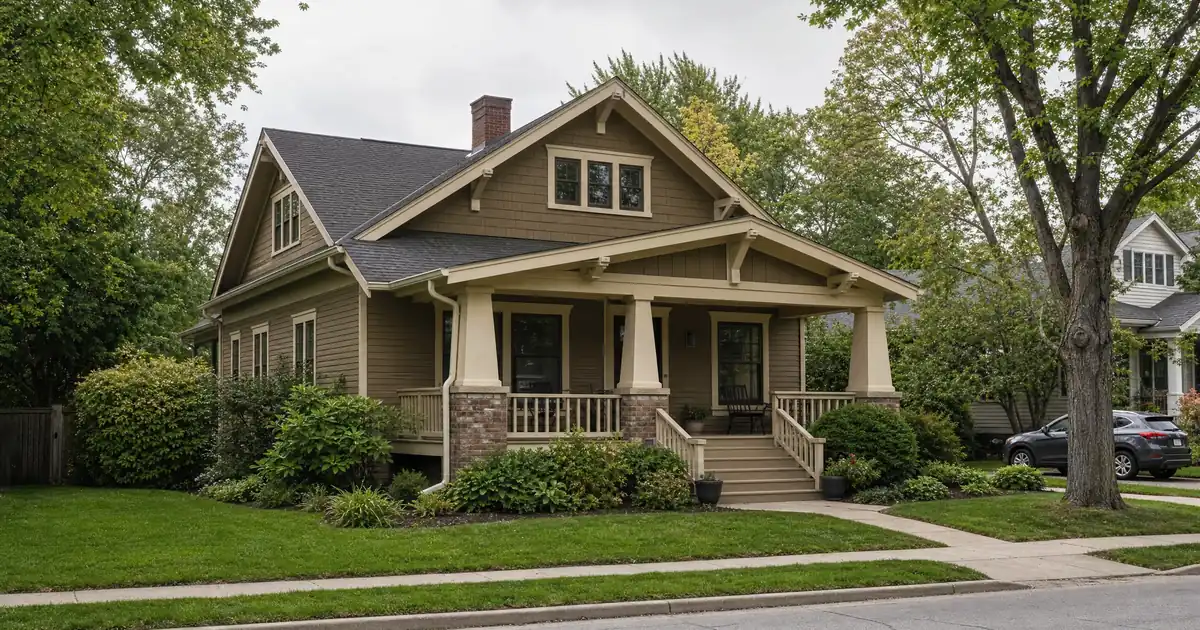
This article explains how a cash out refinance after renovation works for investment property owners using DSCR financing. The Quick Read: Yes — investors can cash-out refinance a renovated rental. But the appraisal sets the value the lender uses, not the receipts. Most programs want to see roughly six months of ownership before they release equity. DSCR programs typically get there faster than conventional financing. Conventional loans generally hold to a 12-month seasoning rule. That gap between the two timelines is often the whole reason investors pick one path over the other.
DSCR Cash-Out Calculator
Run the cash-out numbers in your market
Rate source: Freddie Mac 30-yr average via FRED® — Federal Reserve Bank of St. Louis · effective Jul 30, 2026
Prefilled with starting assumptions — enter your property’s value, balance, taxes, and insurance for a more accurate picture.
Program parameters update from Lendmire’s centralized guideline source. Taxes and insurance are editable estimates.
As of Jul 30, 2026 · General Freddie Mac market benchmark, not a Lendmire loan offer. Property value, balance, taxes, and insurance are editable estimates. Maximum loan-to-value varies by lender, program, property type, and seasoning. Not a Loan Estimate, approval, or commitment to lend. Program availability and eligibility are subject to lender guidelines, credit approval, property review, and underwriting.
How Does a Cash-Out Refinance Work After a Renovation?
A cash-out refinance after renovation replaces the existing loan (or the cash used to buy the property) with a new loan. The new loan is sized against the post-renovation value. The lender pays the investor the difference. Three things drive this: the new appraisal, the seasoning clock, and the leverage cap the lender applies to that appraised value.
Here’s how it plays out. An investor buys a distressed property and funds the rehab, often with hard money, a private loan, or cash. The investor stabilizes the property at market rent, then orders a refinance once the work is done. The lender sends an appraiser to set the current value. On most cash-out programs in Lendmire’s network, that new appraised value gets capped at 75% loan-to-value. That’s a hard ceiling, not a target. The new loan pays off whatever debt sits on the property. The investor keeps the rest, subject to lender approval and reserve requirements.
Here’s what investors miss most often: the seasoning clock doesn’t start when the renovation finishes. It starts when title is recorded. Say a rehab takes four months and lease-up takes two more. That doesn’t reset anything. The six-month mark (or twelve, on the conventional side) is measured from the date the investor took ownership. Full stop.
Key Terms Defined
Seasoning period — the minimum time a lender requires an investor to hold title before allowing a cash-out refinance based on new value.
ARV (after-repair value) — the market value of a property once renovation work is done. An appraiser sets this using comparable sales, not the investor’s renovation receipts.
Cost basis — what the investor actually put into the deal. This is purchase price plus documented, receipted renovation spend. Lenders sometimes use this instead of full appraised value during early seasoning windows.
PITIA — the combined monthly cost of principal, interest, taxes, insurance, and association dues. This is the denominator in the DSCR calculation.
DSCR (debt service coverage ratio) — a comparison of gross monthly rent to PITIA. Non-QM lenders use this to qualify a rental property on its income, not the borrower’s traditional personal-income documents.
Key Takeaways
- Most cash-out refinances on investment property cap out around 75% LTV, whether the loan is conventional or DSCR.
- DSCR programs in Lendmire’s network typically require about six months of ownership before a cash-out refinance is allowed. Conventional financing generally requires the existing first mortgage to be at least 12 months old, per Fannie Mae’s updated cash-out refinance eligibility policy.
- The appraisal decides usable value, not the renovation invoice total. Refinance early in the seasoning window, and the lender may cap proceeds near actual cost instead of the new market value.
- Delayed financing is a separate, narrower exception for all-cash buyers. It does not let an investor capture forced appreciation from the renovation itself.
- A vacant or not-yet-leased property at refinance time shifts the file toward an appraiser’s opinion of market rent instead of a signed lease.
Why Seasoning Exists — and Why DSCR Timelines Differ From Conventional
Seasoning exists because lenders want proof that value is real before they lend against it. DSCR programs get there faster because they underwrite the rental income stream, not the borrower’s personal finances. Conventional lenders answer to agency rules. DSCR lenders set their own.
No single federal regulator governs DSCR seasoning. DSCR loans are non-agency, business-purpose products. That means Fannie Mae and Freddie Mac rules don’t directly apply. But Fannie Mae’s own Selling Guide is worth understanding anyway. It’s the benchmark most non-QM programs get measured against. The agency standard requires at least one borrower to have been on title for six months before a cash-out refinance disburses. Separately, it requires any existing first mortgage being paid off to be at least 12 months old, measured note-date to note-date. That rule took effect for cash-out refinances closed on or after April 1, 2023, per Fannie Mae’s capital markets announcement. That 12-month rule is exactly why a lot of BRRRR investors moved toward DSCR cash-out products in the first place.
Across Lendmire’s wholesale network, DSCR cash-out refinances typically expect about six months of ownership rather than twelve. That six-month gap isn’t cosmetic. Picture an investor cycling capital through repeated renovation-and-refinance rounds. That gap can mean pulling equity six months earlier on every single property. Across a whole portfolio, that adds up in a way a single comparison doesn’t show.
None of this means zero seasoning. A true no-wait DSCR cash-out doesn’t exist anywhere in the market. Every cash-out program requires some minimum hold period before equity comes out. Full stop. What varies by lender is how that minimum interacts with the appraisal.
What Happens if You Refinance Before the Seasoning Window Closes?
Refinance too early, and the usable value often gets capped at documented cost, meaning purchase price plus receipted renovation spend, rather than the new appraised value. That’s the tradeoff: speed against leverage. Model it deal by deal. Don’t assume it.
This is the single biggest factor in how much cash actually comes back out. Two investors can renovate identical properties to identical rent-ready condition. They can walk away with very different proceeds, purely based on where they sit in the seasoning clock when they refinance. The investor who waits the full window is more likely to get valued on the new appraisal. The investor who pushes early may find the lender leaning toward cost basis instead. That protects the lender against inflated renovation claims that haven’t yet proven out in comparable sales.
The appraisal itself follows comparables, not receipts. Appraisers pulling comparable sales and comparable rents for a renovated one-unit rental typically use Fannie Mae’s Form 1007 single-family comparable rent schedule as the framework, even on non-agency files. It’s the industry-standard method for documenting market rent. As appraisal trade press explains, the appraiser is “analyzing comparable rental properties and making adjustments based on differences.” That means a renovation that isn’t reflected in nearby comparable sales may not appraise for what was actually spent, no matter how thorough the receipts are, per McKissock Learning’s coverage of Form 1007.
Here’s a myth worth killing early: the appraisal does not simply reflect what an investor spent. It reflects what the local market will bear, measured against comparable properties. Documented renovation costs support the file. They don’t override comps.
The Delayed Financing Exception
Delayed financing lets an all-cash buyer refinance sooner than the standard seasoning window. But it caps proceeds at the original cash outlay, not the post-renovation appraised value. So it doesn’t let an investor capture forced appreciation created by the renovation itself.
Fannie Mae lists the delayed financing exception as one of only three ways around its standard six-month title-hold rule, alongside inheritance and property awarded through divorce or dissolution. A landlord trade group summed up the practical effect plainly. Fannie Mae’s standard requires roughly six months to pass before a cash-out refinance. Delayed financing exists specifically to give cash buyers faster access to their own capital.
Here’s the catch: delayed financing is built to return original capital, not to cash in on the value the renovation created. Say an investor paid $180,000 cash for a property and put another $60,000 into rehab. Under delayed financing, that investor can generally only recover proceeds up against that $180,000 original cash outlay, even if the property now appraises for a lot more. Capturing that forced-appreciation gap requires either waiting through standard seasoning or working within a program’s separate cost basis to appraised value structure. Fannie Mae’s guide is also clear that delayed financing only applies to arm’s-length purchases. A non-arm’s-length transaction, like buying from a relative or business affiliate, is specifically excluded from the exception, per the Selling Guide’s purchase transactions section.
Vacant Property, LLC Transfers, and Other Edge Cases
A vacant or not-yet-leased property at refinance time shifts the rent used for lender review from a signed lease to the appraiser’s own opinion of market rent. This is a common situation for a BRRRR investor refinancing before lease-up wraps up.
Fannie Mae’s rental income framework allows exactly this. When a property isn’t currently rented, the lender may rely on the appraiser’s market-rent opinion instead of a lease. Non-QM lenders mirror this same approach on DSCR files. It’s not a workaround. It’s the standard path for a property that’s finished renovation but hasn’t found a tenant yet.
Two other wrinkles are worth knowing. First, moving a property from personal name into an LLC (or the reverse) can reset the seasoning clock with some lenders. A change in vesting may read as a new chain of title, depending on the specific program’s overlay. This varies lender to lender and isn’t a uniform rule. Second, short-term rental income treatment differs sharply from long-term lease treatment at the appraisal level. Appraisers using Form 1007 are barred from building a value opinion off nightly rates, since business income sits outside the scope of that form, per McKissock’s analysis. Usage doesn’t change real-property value in the appraiser’s eyes, even though it changes how a specific DSCR program calculates qualifying income separately.
Where This Fits: DSCR vs. Conventional vs. Delayed Financing
The right seasoning path depends on how the property was bought and how much of the renovation’s forced appreciation the investor wants to capture right now.
| Path | Typical seasoning | Value used | Best fit |
|---|---|---|---|
| Conventional cash-out | ~12 months on existing mortgage | New appraisal | Buy-and-hold, not time-sensitive |
| DSCR cash-out | ~6 months of ownership | New appraisal, subject to lender review | Active BRRRR/rehab cycle |
| Delayed financing | Immediate for cash buyers | Original cash outlay only | Recovering capital fast, not chasing appreciation |
Lendmire’s complete DSCR loans guide walks through how the qualifying math works property by property. Investors comparing structures side by side may also want to read up on max LTV on a cash-out refinance for investment property and on the general mechanics of cash-out refinancing an investment property.
Where the Numbers Actually Land
A rehab-and-refinance file typically clears DSCR review once rent used for lender review covers the new PITIA at something at or above roughly 1.00x. That’s a select-program floor, not a universal standard, and stronger ratios generally open up better leverage. Across Lendmire’s wholesale network, cash-out refinances on investment property typically top out around 75% LTV. Credit profiles in the 660-700 range unlock the tiers, with a 620 floor on parts of the network. Reserves commonly run around six months of PITIA, sometimes waived on conservative, lower-leverage rate-and-term files under $1,500,000, and stepping up toward nine months on larger balances. None of this is a guarantee. These are typical ranges, subject to lender approval, borrower profile, and property review.
Files in Lendmire’s network that come through after a rehab tend to hinge on one recurring issue: the gap between what the investor expected the ARV to be and what the appraisal actually supports. The stronger files walk in with a documented paper trail: contractor invoices, permits, paid receipts, a current title report. That paperwork doesn’t change the appraised value. But it does speed up the underwriter’s confidence in the file, and it can matter when a lender is deciding between cost-basis and appraised-value treatment during early seasoning.
DSCR loans are business-purpose products built for non-owner-occupied investment property. They get reviewed differently than a standard owner-occupied mortgage. They qualify mainly on the property’s rental income covering the payment, not on personal income documents, subject to lender guidelines in every case. It’s also worth knowing DSCR loans are exempt from TRID. That means the consumer-mortgage disclosure timeline that applies to owner-occupied refinancing simply doesn’t apply here.
Not every property type clears the door, either. Manufactured homes (single- and double-wide), log homes, and barndominiums fall outside these DSCR programs entirely. That’s a hard eligibility line, not a “harder to finance” situation.
This is general information, not legal or tax advice, and it isn’t a commitment to lend. Tax treatment of cash-out proceeds can depend on how the funds get used and how the property is held. Seasoning rules, delayed-financing eligibility, and how an LLC transfer interacts with title can also carry legal implications that vary by state and by the specific facts of a transaction. Investors should keep clear records and talk with a qualified attorney or CPA about their own situation before relying on any of this information, before structuring a renovation-and-refinance plan, or before assuming a particular tax outcome. Every scenario described here is subject to lender approval and current borrower, property, and program guidelines, and loan approval is never guaranteed.
Frequently Asked Questions
Can you do a cash-out refinance on an investment property?
Yes. Both conventional and DSCR lenders offer cash-out refinancing on non-owner-occupied rental property. DSCR programs qualify the file on the property’s rental income rather than the borrower’s traditional personal-income documents. Leverage on most cash-out files in Lendmire’s network tops out around 75% LTV, subject to seasoning, reserves, and lender approval.
How do you cash-out refinance an investment property after a renovation?
The process starts with a new appraisal that reflects the post-renovation value. Next comes a program review of ownership seasoning, commonly around six months on DSCR programs, along with documented rehab costs and current rent (or an appraiser’s market-rent opinion if the unit is still vacant). Proceeds equal the difference between the new loan and whatever gets paid off, capped by the lender’s LTV ceiling and DSCR coverage requirement. See Lendmire’s guide on “How to Cash-out Refinance an Investment Property” for the fuller walkthrough.
How do you qualify for a cash-out refinance on an investment property?
Qualification generally runs through credit score, ownership seasoning, DSCR coverage, and cash reserves rather than personal income documents on a DSCR file. Most programs in Lendmire’s network look for credit in the 660-700 range for the stronger leverage tiers (with a 620 floor in parts of the network), roughly six months of ownership before cash-out, and reserves commonly around six months of PITIA. All of this is subject to lender guidelines and property review.
Which companies offer cash-out refinance for investment properties?
Availability varies widely by lender, and program terms change often. That’s why this question is better answered by a broker who can shop across a wholesale network, rather than by a single list. Lendmire (NMLS# 2371349) works with select lenders across a 41-market DSCR footprint spanning 40 states and Washington, D.C. It compares leverage, seasoning, and coverage requirements across multiple programs for a given file.
Can I cash-out refinance a DSCR loan?
Yes. Refinancing an existing DSCR loan into a new DSCR cash-out loan is common, and it follows the same mechanics as any other DSCR cash-out: roughly six months of seasoning, rent used for eligibility review covering PITIA at or above the program’s coverage floor, and leverage capped near 75% LTV, subject to lender approval. Investors comparing this against rate-and-term structure may find Lendmire’s investment property refinance page useful for weighing the two. Terms vary by lender guidelines, property type, leverage, credit profile, and full file review.
If you are buying or refinancing a rental property and want to see how the numbers work, Lendmire can help you compare DSCR loan options based on the property’s income, credit profile, leverage, and investor goals. Reach the team at 828-256-2183 or request a quote directly online.
The seasoning clock and the appraisal are two separate risks. Treating them as one is where most renovation-refinance plans go sideways. Model both before committing capital to the rehab in the first place.
This article is for general informational purposes only and does not constitute financial, legal, or tax advice. Loan approval is never guaranteed, and nothing here is a commitment to lend. All financing scenarios described are subject to lender approval and current borrower, property, and program guidelines. Investors should consult a qualified attorney or CPA regarding their own legal and tax circumstances before acting on anything discussed here.
For how equity extraction works on an investment property, see cash-out refinance on an investment property.
About Lendmire
Lendmire is a DSCR-focused mortgage brokerage, NMLS# 2371349, placing investor loans across 41 markets, including Washington, D.C. The lender generally reviews DSCR eligibility around a property’s rental income rather than personal income documents. That fits LLC-held rentals, self-employed investors, and portfolios scaling past conventional financed-property limits. Scotsman Guide named Lendmire a Top Mortgage Workplace in both 2025 and 2026.
Get Started
Ready to find the right loan for you?
In about 30 seconds you can review financing options available for your investment property. No commitment required.
Informational only. Not a Loan Estimate, approval, or commitment to lend. Program availability and eligibility are subject to lender guidelines, credit approval, property review, and underwriting.
References
1. Fannie Mae Capital Markets: Updates to Cash-Out Refinance Eligibility
2. Fannie Mae Selling Guide, B2-1.3-03: Cash-Out Refinance Transactions
3. McKissock Learning: Form 1007 & Its Impact on Short-Term Rental Appraisals
This article is part of Lendmire’s investment property cash-out refinance program — full qualification details, guidelines, and scenarios live on the program page.
Related reading: Best Cash Out Refinance for Investment Property · How To Invest My Cash Out Refinance Money · Investment Property Loan Options
Brandon Miller
Founder & CEO, Mortgage Loan Originator, Lendmire LLC
- Mortgage Loan Originator · NMLS# 1129696 · Verify on NMLS Consumer Access
- North Carolina Real Estate Broker · License# 343312 · Verify on NCREC
- North Carolina Insurance Producer · License# 19053198 · Property, Casualty, Life, Health · Verify on NAIC SBS
- Lendmire LLC · Firm NMLS# 2371349 · Verify firm licensure
Compliance and disclosures. Lendmire (NMLS# 2371349) is a licensed mortgage broker and is not a direct lender, depository institution, financial advisor, or tax professional. Content in this article is general market analysis and educational information — not financial, legal, or tax advice for any specific situation. Lendmire does not guarantee loan approval; every transaction is subject to underwriting by the funding lender. Mortgage pricing and loan program guidelines are subject to change at any time without notice and vary by borrower characteristics, property type, and state regulations. Lendmire complies with Equal Housing Opportunity. Licensure verification: NMLS Consumer Access.