
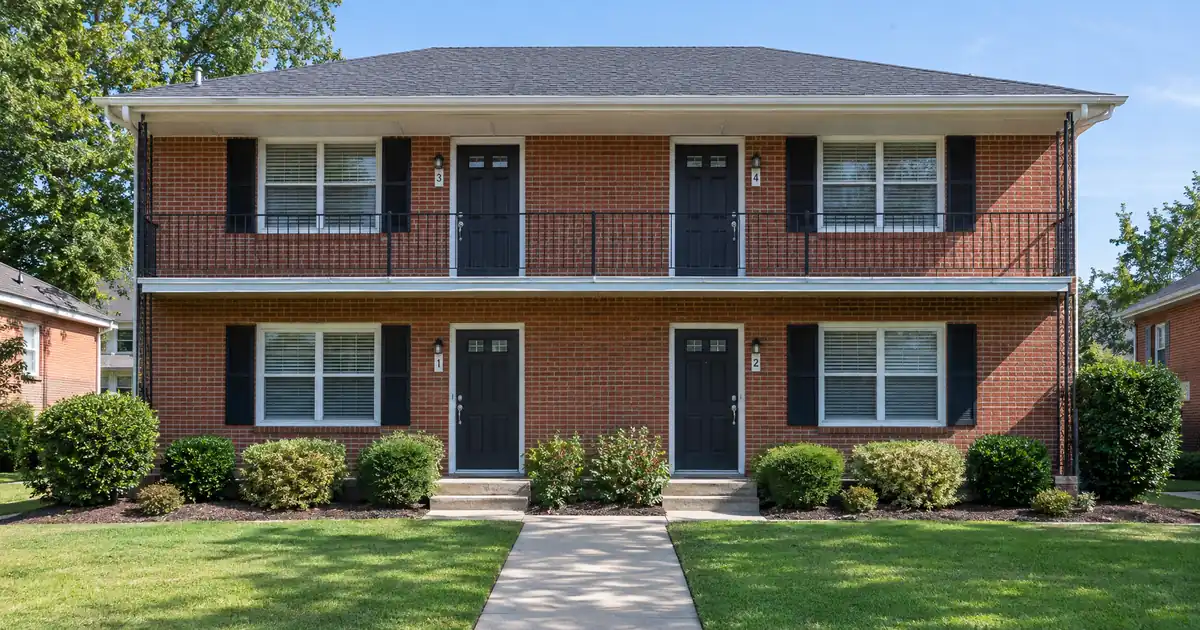
Investment property loans in Westerly draw on rental income qualification paths that this article covers for duplex and coastal submarket buyers. If you’re pricing a rental purchase in Westerly, Rhode Island, the address matters less than the deed. A single-family house at the town’s median sale price won’t clear standard rent-to-payment math on its own. A two-family three streets away, priced in roughly the same range, often will. That’s not a hunch — it’s what the town’s own rent and price data show when you run the numbers side by side.
The Short Version: A DSCR investment property loan in Westerly, Rhode Island is underwritten primarily on a property’s monthly rental income measured against its full monthly housing obligation, rather than the borrower’s traditional personal-income documentation, with pricing benchmarked against the town’s median sale price of $505,000 as of the most recent Redfin data.
DSCR Calculator
Run the numbers in your market
Rate source: Freddie Mac 30-yr average via FRED® — Federal Reserve Bank of St. Louis · effective Jul 30, 2026
Prefilled with starting assumptions — enter your own rent or nightly figures, taxes, insurance, and HOA for a more accurate picture.
Program parameters update from Lendmire’s centralized guideline source. Taxes and insurance are editable estimates.
As of Jul 30, 2026 · General Freddie Mac market benchmark, not a Lendmire loan offer. Rent, nightly rate, occupancy, taxes, and insurance are editable estimates. Short-term rental figures are estimates only and vary significantly by season, property type, management approach, and local short-term-rental rules — confirm local regulations before relying on them. Qualifying income for short-term rentals varies by program — some use appraisal market rent, others use documented STR history or projections — and is confirmed in underwriting. Not a Loan Estimate, approval, or commitment to lend. Program availability and eligibility are subject to lender guidelines, credit approval, property review, and underwriting.
- North End two-to-three-family conversions price in the $575,000–$765,000 band, per Homes.com listings.
- Citywide median rent runs near $2,000/month across all property types, per Zumper.
- Misquamicut/Weekapaug carries a 64.1% real estate vacancy rate — unsuited to a 12-month lease underwrite.
- Electric Boat’s hiring push targets 8,000 new workers by year-end 2026, feeding rental demand along the I-95 corridor.
- Westerly’s population roughly doubles every summer, which distorts citywide rent and vacancy averages.
Westerly Market Snapshot
A quick read on the Westerly investor landscape — figures come from the cited sources below. Confirm current property-level numbers before underwriting.
| Metric | Detail |
|---|---|
| Home prices | $505K median (Redfin – Westerly Housing Market) |
| Recent appreciation | 103.63% cumulative/7.37% annual (NeighborhoodScout Westerly Real) |
| Population | 23,333 population (Census Reporter – Westerly town) |
| Employment | 600+ staff (Yale New Haven Health) |
| Vacancy | 64.1% (NeighborhoodScout) |
A Town That Doubles Every Summer
Westerly’s year-round population sits at 23,333 across 29.5 square miles, according to Census Reporter’s ACS five-year estimate — a density of about 792 people per square mile. That number is misleading for anyone underwriting a rental. Westerly is a notable tourist destination from May through October, and the population nearly doubles during that stretch. A vacancy rate calculated in February means almost nothing in July.
Median household income runs $98,875, roughly 10% above the Rhode Island figure of $87,796, and per capita income of $59,151 sits about 25% above the state average, per the U.S. Census Bureau’s QuickFacts data. Median age is 50.4 — about 25% older than the Providence-Warwick metro’s 40.7. This is not a young renter’s town in the way a college city is. It’s a town where the largest employment sectors are educational services (1,284 workers), health care and social assistance (1,237), and accommodation and food services (1,131) — a mix of stable institutional employment and tourism-cyclical work.
That combination shapes tenant demand more than most marketing copy admits. Long-term renters here skew toward hospital staff, defense-manufacturing trainees, and municipal or educational workers. Seasonal renters skew toward beach-house money that has nothing to do with a 12-month lease. Underwriting the wrong tenant type against the wrong property is the single most common mistake an out-of-state investor makes in this market.
The Electric Boat Effect
Westerly’s most distinctive economic feature isn’t tourism — it’s a defense-manufacturing pipeline most South County towns simply don’t have. General Dynamics Electric Boat employs more than 23,000 people across its Groton, Connecticut shipyard and Quonset Point, Rhode Island hull-fabrication facility, and the company is executing a hiring surge backed by a $15.38 billion Navy contract running through 2035, according to a Turn to 10 (WJAR) report. The company is targeting 8,000 new hires across its Rhode Island and Connecticut operations by the end of 2026.
The Westerly Education Center feeds that pipeline directly. It has trained more than 6,000 people for Electric Boat work since program launch, and recent facility upgrades allow it to increase trainee capacity by 40%, according to The Westerly Sun. The Community College of Rhode Island delivers curriculum on-site as part of that partnership.
Here’s the part investors keep missing: this hiring cycle isn’t new, and it isn’t hypothetical. A 2018 report from The Day documented that when EB hired 3,000 workers in a single year, roughly 15%, or about 450 people, required relocation into the Groton-to-Westerly commuting zone — and local realtors saw listings draw multiple bids for the first time in years. That’s a documented, repeating pattern, not a one-time news cycle. An 8,000-worker hiring wave carries more relocation pressure than that 2018 wave did, and it lands directly on the rental stock in Westerly’s inland and downtown villages.
Where the Duplex Math Beats the Beach House
Run the numbers, and the North End tells the story better than any narrative could. Multi-family listings there and elsewhere in Westerly currently price in the $575,000–$765,000 range, with a median around $649,000, according to Homes.com data. Downtown Westerly and Pawcatuck — the two-state municipal core straddling the Connecticut border along the Pawcatuck River — carries the town’s oldest mill-village housing stock, much of it originally built as multi-unit worker housing. Bradford, a distinct postal village upriver, shares that same triplex-and-fourplex bone structure.
The North End specifically has become an identifiable conversion market. Listings there include structurally sound early-20th-century two-family homes with a documented path to a third unit, per current Redfin inventory. That unit-count upside is the whole thesis: a two-family bought at the low end of the multi-family band and stabilized at two rents clears standard coverage math in a way a single-family purchase at the town’s median price cannot.
Here’s the comparison, modeled on the town’s own numbers:
| Property Type | Price | Modeled Rent | Coverage Ratio |
|---|---|---|---|
| Single-family, citywide median | $505,000 | $2,000/mo | roughly 0.6x |
| Two-family, North End/Bradford | $575,000 | $4,000/mo | roughly 1.1x |
Both scenarios assume 75% financing and a rent-vs-payment calculation that includes taxes and insurance, using the town’s citywide median rent of $2,000 per month, per Zumper data, as the modeled input. The single-family purchase, at the citywide median sale price of $505,000 reported by Redfin, lands well under 1.00x on long-term rent alone. The two-family, priced near the low end of the multi-family band and stacking two comparable rents, models to roughly 1.10x, including taxes and insurance.
That gap isn’t small. Some DSCR programs use a 1.00x figure as a select-tier floor because that’s the point where rent covers the full monthly obligation. A property that lands below that line doesn’t automatically fall out of consideration — some lenders will review lower-coverage or no-ratio scenarios with stronger compensating factors, lower leverage, or more cash down, subject to lender guidelines, credit approval, and property review — but it’s a different conversation than a file that clears 1.00x on rent alone. In Westerly, the property type decides which conversation you’re having before the loan officer even opens the file.
Down payment expectations here run typical for the program: generally 20%–25% down (75%–80% LTV) on most files, with higher-leverage tiers up to 85% reserved for the strongest borrower profiles, per Lendmire’s DSCR network guidelines. Credit floors generally start near 620, with reserve requirements running around six months of the full monthly obligation on standard loan sizes. None of that is a guarantee of approval — every file is reviewed on its own credit, property, and reserve profile — but it frames what a duplex purchase in this price band is actually competing against.
DSCR files in small coastal New England towns like Westerly tend to follow a pattern: the single-family purchase clears an appraisal fine but comes in tight on rent-to-payment coverage, while a two- or three-family conversion a few streets over produces cushion the single-family simply can’t match. Lenders reviewing these files typically want a unit-by-unit rent breakdown rather than one blended monthly figure, since older mill-village conversions often carry mixed lease terms across units bought at different times. Sorting that documentation out before submitting the file on a North End property saves a round trip later.
Investors can see how the math pencils on a specific address before committing to an offer, and Lendmire’s team can be reached at 828-256-2183 to walk through a purchase scenario against current program parameters.
Why Doesn’t Watch Hill Pencil on a 12-Month Lease?
Because the tenant base isn’t there. Watch Hill is a census-designated place at Rhode Island’s southwestern tip with a 2020 population of just 212 — an exclusive summer-cottage enclave built in the late 19th and early 20th centuries, home to trophy assets rather than workforce rentals. Misquamicut and Weekapaug, the neighboring beach submarket, average rents of $2,933 per month — higher than 78.1% of Rhode Island neighborhoods — but that rent figure reflects seasonal and executive tenancy, not a stabilized annual lease.
The vacancy data confirms it. Real estate vacancy in Misquamicut/Weekapaug sits far above typical U.S. neighborhood norms, with a large share of housing classified as seasonally occupied, according to NeighborhoodScout data. That’s a strong signal that a lender’s rent schedule built on year-round occupancy assumptions could be unrealistic here. A DSCR file on a Watch Hill or Misquamicut property typically has to lean on appraised market rent analysis or a documented short-term rental income history rather than a standard 12-month lease comparable — a different underwriting path, worth understanding through Lendmire’s DSCR for Airbnb program overview before assuming a coastal purchase would qualify the same way a Downtown duplex might.
Not ideal for a buy-and-hold workforce thesis. Skip it if that’s your goal. But for an investor specifically underwriting seasonal or short-term income — and willing to document it — the coastal submarket is a different asset class entirely, not a lesser version of the inland one.
Dunn’s Corners, Bradford, and Avondale: The Workforce Backup
Dunn’s Corners is Westerly’s inland, family-oriented residential village — more affordable than the beachfront, with villages including Avondale, Potter Hill, and Shelter Harbor clustered around it. Housing stock leans toward antique colonial and Queen Anne-style single-family homes on larger lots, which makes the area a candidate for both standard workforce single-family rentals and, on the bigger parcels, accessory dwelling unit potential — though zoning specifics need local verification before underwriting an ADU into a rent roll.
The tenant logic here tracks the Electric Boat pipeline directly. Dunn’s Corners sits along the I-95 corridor with commuting access to both Quonset Point and Groton, putting it squarely inside the relocation zone that absorbed EB’s hiring surges historically. Rents in the one- and two-bedroom range across Westerly run $1,850 and up for one-bedrooms, and roughly $1,898 and up for two-bedrooms, per ApartmentList data cited in local rental research — directionally useful, though the town’s overall rental inventory is thin, averaging only about 12 listings per month.
Bradford, a historic mill village along the Pawcatuck River, shares the same older-housing-stock advantage as the North End: converted mill-worker triplexes and fourplexes at a lower acquisition basis than coastal property, with rent-stacking potential that single-family workforce housing in Dunn’s Corners or Avondale can’t replicate unit-for-unit. The trade-off is obvious. Bradford and the North End win on coverage math; Dunn’s Corners and Avondale win on tenant stability and lower turnover risk tied to owner-occupant-adjacent neighborhoods. An investor chasing the highest coverage ratio probably ends up in Bradford. An investor chasing the lowest-maintenance single-family hold probably ends up in Dunn’s Corners.
Appreciation Is Real. The Refi Rush Isn’t.
Westerly has posted 103.63% cumulative home price appreciation over the past ten years — a 7.37% annualized rate that ranks in the top 40% of U.S. markets, per NeighborhoodScout data. That’s a genuine long-run equity story. It’s also not the same story as the town’s most recent 12-month trend, which ranks only in the middle of the pack among Rhode Island municipalities. The long-run trend argues for a seasoning-and-cash-out strategy over a five-to-ten-year hold. The recent deceleration argues against underwriting Westerly on near-term appreciation alone.
The pricing data itself is inconsistent enough to flag directly rather than paper over. Redfin puts the median sale price at $505,000 as of July 2025, up 12.2% year-over-year, with homes selling after a median of 28 days on market — up from 20 days the year before, on roughly half as many closed sales (14 versus 27). Zillow’s Home Value Index puts the average home value considerably higher, at $623,538, up 8.2% over the past year. DataUSA’s 2024 figure lands lower still, at a $448,800 median property value. Three legitimate sources, three different numbers — which is less a data problem than a reflection of a small, seasonally thin sales pool where a handful of closings can swing the median hard in either direction.
For an investor buying now, that thinning inventory — fewer sales, longer time on market, wider price dispersion — cuts two ways. It means less competition on any given listing, but it also means fewer comparables to lean on when a lender’s appraiser scopes value. Anyone planning a future cash-out refinance off forced appreciation should build in some cushion, since a thin comp set makes appraisals less predictable than in a deeper market. That’s a refinance-timing question for another day; the purchase-side takeaway is simpler: buy on today’s rent, not tomorrow’s equity.
Investors comparing DSCR structuring against a conventional investment mortgage in this price range can review conventional vs DSCR on investor loans directly — the short version is that DSCR skips the personal income documentation entirely, which matters in a town where median household income runs high but self-employed and LLC-structured buyers are common among out-of-state purchasers. Rhode Island-specific program details, including current DSCR loan options for Rhode Island investors, are worth reviewing before making an offer, since state overlays can affect leverage and reserve requirements depending on program guidelines. Terms vary by lender guidelines, property type, leverage, credit profile, and full file review.
DSCR vs. conventional financing
Two common ways to finance an investment property in Westerly, RI. They qualify you differently — here’s how investors weigh them.
Why investors choose it
- Qualifies on the property’s rental income — no personal tax returns, W-2s, or pay stubs needed to document income.
- No personal debt-to-income ceiling to clear, so existing mortgages and obligations don’t cap your borrowing the same way.
- Can be closed in an LLC, keeping the property inside a business entity.
- Built for scaling — not held to the limit on number of financed properties that conventional financing applies.
- Underwriting centers on the deal: generally qualifies when the rent covers the payment, a 1.00x coverage ratio being a common baseline (confirmed in underwriting).
- Designed specifically for investment property, including long-term and, where the program allows, short-term rentals.
Where it’s strong
- Often the lowest ongoing financing cost for a buyer who fully qualifies on personal income — a fit for a first property or a cost-first purchase.
Trade-offs for investors
- Requires full personal income documentation and must fit within a debt-to-income limit — salary, existing debts, and other mortgages all count.
- Typically held in your personal name rather than a business entity.
- Caps how many financed properties you can carry, which can become a ceiling as a portfolio grows.
- Evaluates you as a borrower as much as the property, which usually means more paperwork.
How investors usually choose: a first or single property often optimizes for the lowest financing cost; portfolio builders often optimize for leverage, vesting in an LLC, and scaling past conventional caps. The right answer depends on your goals, the property, and current guidelines — both paths run through select lenders in Lendmire’s wholesale network, with eligibility and terms confirmed in underwriting.
Ask a local appraiser what they think of Westerly’s rental stock, and the answer is usually some version of the same thing: the beach towns sell on emotion, the mill villages sell on math, and right now the math is winning. A two-family in Bradford or the North End at today’s price levels covers its own debt on documented rent. A cottage on the water covers its own mortgage only if the buyer is comfortable calling it a lifestyle purchase, not an investment.
For broader investor-financing rules and property-type coverage across the state, see Rhode Island DSCR loans.
Frequently Asked Questions
How do you qualify for a DSCR loan in Westerly, Rhode Island?
Qualification centers on the subject property’s monthly rental income measured against its full monthly housing obligation — taxes, insurance, and the mortgage payment — rather than the borrower’s personal income documentation. Lenders typically want a rent schedule or lease supporting that income, and files are reviewed individually, subject to lender guidelines and credit approval.
What are the credit and down payment requirements for a DSCR loan in Westerly?
Program parameters generally call for a credit score near 620 or higher, with down payments typically running 20%–25% (75%–80% LTV) on most files and select higher-leverage tiers available to the strongest borrower profiles. Reserve requirements commonly run around six months of the full monthly housing obligation. These figures are program guidelines, not guarantees, and every file is reviewed on its own merits.
Does a single-family home in Westerly qualify for a DSCR loan, or does it need to be a multi-family?
Single-family homes can qualify, but at the town’s current price levels many single-family purchases underwrite tighter on a rent-to-payment basis than multi-family conversions in areas like the North End or Bradford. A property that lands below full coverage isn’t automatically disqualified — some lenders will consider lower-coverage files with stronger compensating factors, lower leverage, or additional reserves, subject to guidelines — but multi-family stock in Westerly’s mill villages tends to clear the math more comfortably.
Can seasonal or short-term rental income in areas like Watch Hill or Misquamicut be used to qualify for a DSCR loan?
It can, but typically through a different underwriting path than a standard 12-month lease comparable. Given the seasonal occupancy patterns in that submarket, lenders generally lean on appraised market rent analysis or documented short-term rental income history rather than a conventional annual lease, which is a separate program track worth reviewing before assuming a coastal property will underwrite the same way an inland duplex would.
How many markets does Lendmire operate in, and is Rhode Island included?
Lendmire arranges DSCR investor loans across 40 states plus Washington, D.C. — 41 markets total — and Rhode Island is included. Program availability, leverage, and terms still depend on lender guidelines and are confirmed on a per-file basis.
For current guidelines and terms, see Lendmire’s DSCR loan programs page.
About Lendmire
Lendmire is a non-QM mortgage brokerage (NMLS# 2371349) arranging DSCR investor loans in 41 markets, including Washington, D.C., through wholesale and investor-lending channels. DSCR loans are evaluated by the lender on rental income rather than personal income, subject to lender guidelines — a fit for LLC-owned portfolios, self-employed investors, and operators scaling beyond conventional loan caps. Recognized as a Scotsman Guide Top Mortgage Workplace in 2025 and 2026.
Get Started
Ready to find the right loan for you?
In about 30 seconds you can review financing options available for your investment property. No commitment required.
Informational only. Not a Loan Estimate, approval, or commitment to lend. Program availability and eligibility are subject to lender guidelines, credit approval, property review, and underwriting.
References
1. Homes.com — Westerly Multi-Family Listings
2. Zumper Rent Research — Westerly
3. Redfin — Westerly Housing Market
4. NeighborhoodScout — Westerly Real Estate
5. Census Reporter – Westerly town
7. NeighborhoodScout — Misquamicut
8. U.S. Census Bureau QuickFacts — Westerly town
9. General Dynamics Electric Boat Careers
10. Turn to 10 (WJAR) — Electric Boat hiring
11. The Westerly Sun — WEC expansion
12. Community College of Rhode Island — Electric Boat Maritime Trades
13. The Day — Electric Boat hiring strains housing market
14. Redfin
15. recognized by Scotsman Guide in 2025
16. a 2026 Scotsman Guide Top Workplace
This article is part of Lendmire’s DSCR loan program — full qualification details, guidelines, and scenarios live on the program page.
Related reading: DSCR Cash Out Refinance Rhode Island · DSCR Loans Rhode Island: Investor Financing for Providence, Newport, Block Island, and Real Estate Investors · Cash Out Refinance Investment Property Rhode Island
Guides: DSCR Loans in Westerly, RI · DSCR Loans in Rhode Island
Brandon Miller
Founder & CEO, Mortgage Loan Originator, Lendmire LLC
- Mortgage Loan Originator · NMLS# 1129696 · Verify on NMLS Consumer Access
- North Carolina Real Estate Broker · License# 343312 · Verify on NCREC
- North Carolina Insurance Producer · License# 19053198 · Property, Casualty, Life, Health · Verify on NAIC SBS
- Lendmire LLC · Firm NMLS# 2371349 · Verify firm licensure
Disclosure information. Lendmire is a state-licensed mortgage brokerage under NMLS# 2371349. Lendmire is not a depository institution, direct lender, or financial advisor — all loans referenced are placed through wholesale lender partners and are subject to each lender's underwriting standards. This article is provided for general informational purposes and is not a commitment to lend, nor does it constitute financial, legal, or tax advice. Loan programs, terms, rates, and qualification standards change without notice and depend on borrower profile, property type, and the state in which the subject property is located. Equal Housing Opportunity provider. NMLS Consumer Access: nmlsconsumeraccess.org.