
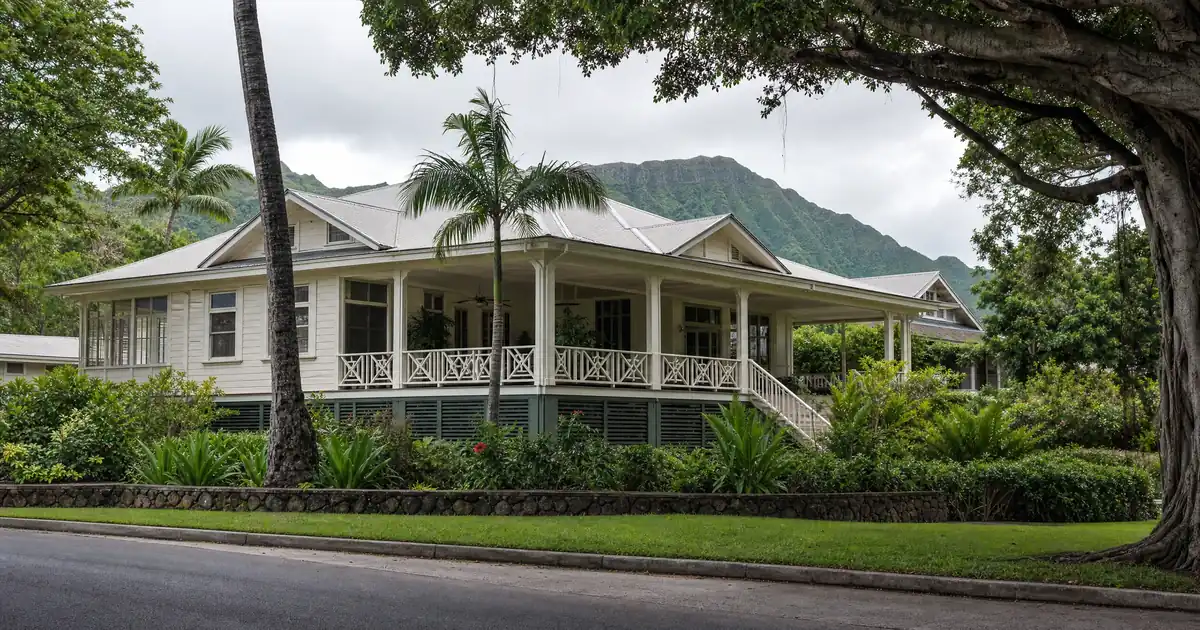
Investment property loans in Honolulu are increasingly popular as Honolulu County’s population has trended modestly lower in recent years, according to the State of Hawaii census portal — even as average apartment rent in the city has continued climbing, per RentCafe/Yardi Matrix data. Fewer households, higher rent. That’s not the story most mainland investors expect walking into a market this expensive, and it’s the first thing worth interrogating before writing an offer on an Oʻahu rental property.
Lendmire (NMLS# 2371349) arranges DSCR investor loans that Honolulu buyers use to qualify primarily on a property’s rental income rather than traditional personal-income documentation — a platform spanning 40 states plus Washington, D.C., 41 markets total. The math on this island splits sharply depending on which side of a genuine price gap a property sits, and that gap is the whole story here.
DSCR Calculator
Run the numbers in your market
Rate source: Freddie Mac 30-yr average via FRED® — Federal Reserve Bank of St. Louis · effective Jul 30, 2026
Prefilled with starting assumptions — enter your own rent or nightly figures, taxes, insurance, and HOA for a more accurate picture.
Program parameters update from Lendmire’s centralized guideline source. Taxes and insurance are editable estimates.
As of Jul 30, 2026 · General Freddie Mac market benchmark, not a Lendmire loan offer. Rent, nightly rate, occupancy, taxes, and insurance are editable estimates. Short-term rental figures are estimates only and vary significantly by season, property type, management approach, and local short-term-rental rules — confirm local regulations before relying on them. Qualifying income for short-term rentals varies by program — some use appraisal market rent, others use documented STR history or projections — and is confirmed in underwriting. Not a Loan Estimate, approval, or commitment to lend. Program availability and eligibility are subject to lender guidelines, credit approval, property review, and underwriting.
At a Glance: A Honolulu DSCR file gets underwritten primarily on the subject property’s monthly rental income measured against its full monthly carry — principal, interest, taxes, and insurance — rather than the borrower’s W-2s, with fee-simple land-tenure status and current rent comps typically confirmed before the file reaches a lender for underwriting review.
- Kalihi-Palama’s home prices sit well below Honolulu’s broader citywide blended figures, per Homes.com and Redfin.
- Oʻahu’s single-family median has continued climbing at a notable pace, per Locations Hawaii
- UH Mānoa’s enrollment continues to significantly outpace its on-campus dorm capacity, per UH Mānoa Student Housing
- Leasehold land tenure runs through many older Waikīkī and Kakaʻako condo towers — a screening step few mainland DSCR files ever need
- Honolulu County BAH rates scale meaningfully with military pay grade, providing a rent floor, per an Agency Hawaii rental forecast
Honolulu Market Snapshot
A quick read on the Honolulu investor landscape — figures come from the cited sources below. Confirm current property-level numbers before underwriting.
| Metric | Detail |
|---|---|
| Home prices | $605K median price (+7.1% yoy) (Redfin Housing Market) |
| Typical rents | $1,711 avg (Apartments.com / CoStar) |
| University enrollment | 4,921 students (2024) (Data USA) |
| Vacancy | 14.8% (2023) (Hawaii DBEDT) |
Why the Citywide Median Doesn’t Mean What It Looks Like It Means
Honolulu’s home-price data is genuinely split, and treating any single figure as “the market” will lead an investor to underwrite the wrong deal. The Zillow Home Value Index puts average Honolulu home values in the high six figures, with only modest appreciation over the past year. Redfin shows more transaction-side momentum: a median sale price that has moved up meaningfully year over year, alongside a buyer-friendlier Compete Score and a longer average time-on-market than the price alone would suggest — a signal that doesn’t feel buyer-friendly on price alone.
Then there’s the Oʻahu-wide figure. Locations Hawaii, a leading local brokerage, reports the island’s single-family median running well above the citywide figure, with strong year-over-year appreciation, while condo prices have moved up more modestly. The spread exists because Honolulu’s city-level numbers get pulled down by condo and leasehold stock, while Oʻahu’s single-family figure captures the premium ocean-view and Kailua-side product that skews the island average upward. For a DSCR investor, this isn’t academic. It means “median home price in Honolulu” is close to meaningless as an underwriting anchor — the number that actually matters is the price of the specific submarket and property type being considered.
Where the Duplex Math Beats the Single-Family Math
Kalihi-Palama looks like the obvious DSCR play at first glance — it’s a more affordable submarket in the urban core, with home prices running well below the citywide figure. But run the actual coverage math and the story gets more complicated, which is exactly the kind of assumption worth questioning before committing capital.
Modeling a single-family purchase in Kalihi-Palama at a lower entry price point, financed at 75% loan-to-value, against the neighborhood’s rents as reported by RentHop — layering in a typical amortization structure plus Hawaii’s typical property tax and insurance load — coverage models to a ratio below the baseline most DSCR programs are built around. Cheap doesn’t automatically mean it clears that threshold, because Kalihi-Palama’s rent is proportionally low relative to even its low price.
Compare that to a duplex-style purchase in Kaimukī or Makiki near the entry point Commercial Investment Strategies cites for Honolulu’s duplex/triplex product. With two units renting near Zumper’s reported Kaimukī average, the same modeled math at 75% LTV lands coverage comfortably above that baseline, including taxes and insurance. The headline price is meaningfully higher, but the rent-to-price efficiency is meaningfully better, because Kaimukī’s rent premium outruns its per-unit valuation in a way Kalihi-Palama’s single-family stock doesn’t. That’s the real lesson: a more affordable submarket and the best DSCR submarket aren’t always the same submarket. Terms vary by lender guidelines, property type, leverage, credit profile, and full file review.
This is also where multi-unit stacking earns its reputation. A separately-metered 8-unit Honolulu multifamily listing generates a substantial combined monthly rent roll — individually unremarkable on a per-door basis, but stacked across eight doors against one acquisition basis, that gross rent load clears coverage ratios that a comparably priced single-family purchase at Honolulu’s blended median simply can’t touch on its own. Investors chasing DSCR coverage on Oʻahu are, more often than not, chasing unit count more than they’re chasing discount.
The Military Anchor: Kāneʻohe, Pearl City, and BAH-Backed Rent
Kāneʻohe, Pearl City, ʻAiea, and Waipahu draw their tenant base from a source most mainland markets don’t have: a government-guaranteed housing allowance that moves with military pay grade. All installations on Oʻahu — Joint Base Pearl Harbor-Hickam, Schofield Barracks, Marine Corps Base Hawaii Kāneʻohe Bay — use the same Honolulu County Basic Allowance for Housing schedule. Current rates scale up meaningfully from mid-level enlisted grades through junior officer ranks, per an Agency Hawaii rental forecast.
That matters for underwriting because Zumper’s reported average house rent in Kāneʻohe sits comfortably inside the typical BAH band for mid-grade enlisted service members — meaning the rent a landlord can reasonably ask is already backed by a federal housing allowance before a tenant ever signs a lease. Pearl City, ʻAiea, and Waipahu don’t have a verified precise rent figure in current research, but their proximity to Joint Base Pearl Harbor-Hickam and the shipyard’s long-term dry-dock expansion supporting the Pacific submarine fleet points toward a similar durable, if unglamorous, workforce and Navy-civilian tenant base. Honolulu is also home to U.S. Indo-Pacific Command, America’s oldest and largest combatant command, headquartered here — a demand anchor genuinely unique among U.S. cities Honolulu’s size, and one Tripler Army Medical Center, the largest joint-services military treatment facility in the Pacific Basin, reinforces on the healthcare side.
Working DSCR brokers see a recurring pattern in leasehold-heavy island markets like Honolulu’s: files that look strong on rent-to-price paper stall out at the title stage because a fee-simple/leasehold split surfaces on the preliminary title report that nobody flagged at the purchase-contract stage. The stronger files get that determination confirmed in writing before the DSCR application moves to a lender, not after.
Fee-Simple vs. Leasehold — The Screening Step Honolulu Uniquely Requires
That title issue is worth its own explanation because it’s a genuinely Honolulu-specific underwriting variable. Hawaii’s leasehold land-tenure system — particularly common in older condo towers across Waikīkī and parts of Kakaʻako — means the buyer owns the structure but leases the underlying land from a separate landowner, often for a term with escalating ground rent. Most DSCR programs favor fee-simple ownership, and condo HOA warrantability adds a second screening layer on top of tenure. Investors comparing structures across the islands can review DSCR loans in Hawaii directly to see how a lender network handles that distinction before assuming a condotel unit would qualify the same way a fee-simple duplex might.
That said, a DSCR loan itself works the same way it does anywhere: the guide “What Is a DSCR Loan” covers the underlying mechanics, and the comparison against conventional financing is worth a read for investors weighing whether property-income qualification or personal-income qualification fits their file better. On program parameters, Lendmire’s DSCR network typically works with purchase leverage in the 75%–80% loan-to-value range, occasionally up to 85% on the strongest files, a DSCR floor as low as 1.00 on select programs — with many standard programs requiring somewhat higher coverage — credit tiers generally starting around 620 and stepping up toward 700 for higher-leverage scenarios, and reserve requirements around six months of PITIA — nine months above larger loan amounts. These are guideline ranges, not guarantees, and review details remain subject to lender overlays, credit approval, and property-level review. Investors underwriting deals in Honolulu, Hawaii can use DSCR programs Lendmire arranges; loans closing under an LLC remain available on many of these programs, subject to lender program eligibility.
For an investor asking whether a Waikīkī condotel unit’s nightly income counts toward qualification: it can factor in on certain programs, and Lendmire’s Airbnb-focused DSCR page walks through how short-term income gets treated — but the leasehold-versus-fee-simple determination has to clear first, before nightly-rate income even becomes the second question. Note that outside designated resort zones, Oʻahu’s Ordinance 22-7 (Bill 41) sets a 90-day minimum rental period, so short-term-rental eligibility should be verified against current county rules before underwriting nightly income.
Student Demand Near UH Mānoa — And Where It Doesn’t Hold Up
Mānoa carries rents that sit well above many surrounding neighborhoods, per Zumper, and that price tag exists because of a structural shortage rather than neighborhood prestige. UH Mānoa enrollment climbed again this fall, per the Hawaii Tribune-Herald, continuing a multi-year upward trend, while on-campus housing capacity across UH Mānoa Student Housing Services has not kept pace. Only a small share of students can live on campus. That shortfall pushes durable rental demand into Mānoa, McCully-Mōʻiliʻili, and neighboring Kaimukī, where small multi-unit and room-rental configurations tend to lease up consistently regardless of what the broader market is doing.
Where this thesis breaks down is anywhere the price tag outpaces what a rent-controlled academic-calendar tenant can plausibly pay. A luxury single-family purchase near campus at Oʻahu single-family median pricing won’t cash-flow the way a smaller multi-unit configuration will, even with a captive student renter base nearby — enrollment growth supports occupancy, not price tolerance.
Where the Math Doesn’t Work: Kailua, Hawaii Kai, and the Kakaʻako Supply Wave
Kailua and Hawaiʻi Kai are the neighborhoods where the DSCR math breaks down fastest, and any investor drawn there by the rent figures alone should run the numbers before assuming they clear. Zumper reports Kailua house rents running well above the citywide average — a genuinely large number on its face. But even modeling a conservative acquisition at the current Oʻahu single-family median rather than Kailua’s typically higher price tag, financed at 75% LTV against that elevated rent, coverage lands meaningfully under the baseline most standard DSCR programs are built around. Hawaiʻi Kai’s similarly elevated average rent faces a comparable gap against East Honolulu’s higher-end single-family pricing. High rent in isolation is not the same thing as a coverage ratio that clears.
Ala Moana and Kakaʻako present a different flavor of risk. Rents there have climbed sharply per Zumper — strong on its face — but Oʻahu-wide condo listings have surged over the same period, per an Agency Hawaii market outlook, concentrated heavily in exactly this high-rise corridor. New supply flooding into a submarket that just posted some of its strongest rent growth in years is a combination worth watching rather than assuming will simply continue. Duplex and triplex product in established low-rise neighborhoods like Kalihi, Kaimukī, and Makiki sits outside that construction pipeline entirely, which is one more reason those submarkets look more durable on a multi-year hold than the high-rise corridor does right now.
Kalihi Valley deserves a mention for the opposite reason. Average home prices there have climbed at a notable pace year over year according to Redfin’s neighborhood data, even as the underlying rental stock remains modest workforce housing. An investor buying primarily for coverage today in a submarket like this may also be sitting on real equity growth heading into a future refinance decision — rate-and-term or cash-out options become relevant once a file seasons, though that’s a separate conversation from the purchase decision itself.
What to Track Before Moving on a Deal
Three things are worth watching over the next quarter before committing capital on Oʻahu. First, UH Mānoa’s enrollment trajectory — the system just hit a multi-year enrollment high system-wide, and whether that momentum holds directly affects Mānoa-area lease-up durability. Second, Skyline rail’s Segment 2 ridership, which reportedly climbed sharply after opening — early transit-oriented rent premiums are being reported in previously overlooked corridors like Kalihi, Moanalua, and Salt Lake, and whether comps in those areas catch up to that catalyst is worth tracking before assuming today’s pricing reflects tomorrow’s value. Third, Oʻahu condo inventory levels — the sizable year-over-year listing surge concentrated in Kakaʻako and Ala Moana needs to show signs of absorption before that submarket’s rent growth can be trusted as durable rather than a temporary spike ahead of a supply glut.
Questions on how any of this applies to a specific property can go to Lendmire’s team at 828-256-2183.
Frequently Asked Questions
How do you qualify for a DSCR loan in Honolulu, Hawaii?
Qualification centers on the property’s projected or in-place rental income measured against its full monthly obligation, rather than the borrower’s personal income documentation. A lender will typically want current rent comps, confirmation of fee-simple (versus leasehold) title status, and a coverage ratio near the applicable program’s minimum threshold — which can be as low as 1.00x on select programs — though exact thresholds vary by program, credit profile, and reserves.
DSCR vs. conventional financing
Two common ways to finance an investment property in Honolulu, HI. They qualify you differently — here’s how investors weigh them.
Why investors choose it
- Qualifies on the property’s rental income — no personal tax returns, W-2s, or pay stubs needed to document income.
- No personal debt-to-income ceiling to clear, so existing mortgages and obligations don’t cap your borrowing the same way.
- Can be closed in an LLC, keeping the property inside a business entity.
- Built for scaling — not held to the limit on number of financed properties that conventional financing applies.
- Underwriting centers on the deal: generally qualifies when the rent covers the payment, a 1.00x coverage ratio being a common baseline (confirmed in underwriting).
- Designed specifically for investment property, including long-term and, where the program allows, short-term rentals.
Where it’s strong
- Often the lowest ongoing financing cost for a buyer who fully qualifies on personal income — a fit for a first property or a cost-first purchase.
Trade-offs for investors
- Requires full personal income documentation and must fit within a debt-to-income limit — salary, existing debts, and other mortgages all count.
- Typically held in your personal name rather than a business entity.
- Caps how many financed properties you can carry, which can become a ceiling as a portfolio grows.
- Evaluates you as a borrower as much as the property, which usually means more paperwork.
How investors usually choose: a first or single property often optimizes for the lowest financing cost; portfolio builders often optimize for leverage, vesting in an LLC, and scaling past conventional caps. The right answer depends on your goals, the property, and current guidelines — both paths run through select lenders in Lendmire’s wholesale network, with eligibility and terms confirmed in underwriting.
What are the requirements for an investment property loan in Honolulu, Hawaii?
Most programs in Lendmire’s network look for 75%–80% loan-to-value on a purchase (occasionally up to 85% on the strongest files), a credit score generally starting around 620 and stepping up for higher leverage, and roughly six months of PITIA in reserves — nine months above larger loan amounts. Honolulu files carry the added step of confirming land tenure, since leasehold condos need separate screening most mainland properties never require.
Can a DSCR loan be used on a leasehold Honolulu condo?
It depends on the specific lender program and the terms of the underlying ground lease; many standard DSCR products require fee-simple ownership, though some lenders may still consider a leasehold property on a case-by-case basis. Investors eyeing older Waikīkī or Kakaʻako towers should confirm tenure status before assuming a unit would qualify the same way a fee-simple property might.
How does military BAH affect DSCR underwriting in neighborhoods like Kāneʻohe or Pearl City?
BAH functions as a government-backed rent floor for military tenants, which some lenders view favorably when a property sits near Joint Base Pearl Harbor-Hickam, Schofield Barracks, or Marine Corps Base Hawaii. It doesn’t replace standard rent-comp verification, but it does support the case that a unit’s asking rent is realistic and durable in those submarkets.
How do DSCR lenders review rental income instead of traditional tax-return income in Hawaii?
Lendmire works with a network of DSCR lenders that structure qualification primarily around a property’s rental income rather than a borrower’s traditional personal-income documentation or W-2s. One common program feature allows investors to close purchases in an LLC, subject to lender program eligibility, which many Hawaii buyers use for liability separation across multiple island holdings.
Honolulu’s next real test isn’t whether rents keep rising — the data already says they are. It’s whether the island’s leasehold stock, new condo supply, and transit-driven neighborhoods reprice fast enough to close the gap between what a property costs and what it can plausibly rent for.
About Lendmire
Lendmire (NMLS# 2371349), a non-QM mortgage broker serving investors in 41 markets including Washington, D.C., helps structure DSCR scenarios commonly evaluated around a property’s rental income rather than personal income paperwork, subject to lender guidelines. A Scotsman Guide Top Mortgage Workplace in 2025 and 2026, Lendmire places loans through wholesale investor lenders and is not a direct lender.
Get Started
Ready to find the right loan for you?
In about 30 seconds you can review financing options available for your investment property. No commitment required.
Informational only. Not a Loan Estimate, approval, or commitment to lend. Program availability and eligibility are subject to lender guidelines, credit approval, property review, and underwriting.
References
1. County Population Estimates
2. RentCafe / Yardi Matrix — Honolulu Rent Trends
3. Homes.com — Kalihi-Palama Multifamily Listings
4. Redfin Housing Market — Honolulu
5. Locations Hawaii — Oahu Real Estate Report
7. Data USA
8. Hawaii DBEDT
9. Zillow Home Value Index — Honolulu
10. RentHop — Kalihi-Palama Rent Data
11. Zumper — Urban Honolulu Rent Research
12. Agency Hawaii — 2026 Oahu Rental Market Forecast
13. Hawaii Tribune-Herald — UH Enrollment Hits 8-Year High
14. Agency Hawaii — 2025 Oahu Rental Market Outlook
15. Redfin — Kalihi Valley Housing Market
16. Scotsman Guide as a 2026 Top Workplace
17. a 2025 Scotsman Guide Top Mortgage Workplace
This article is part of Lendmire’s DSCR loan program — full qualification details, guidelines, and scenarios live on the program page.
Related reading: DSCR Loans Oahu: Investor Financing for Waikiki, North Shore, Ko Olina, Kailua, Pearl Harbor Military & Real Estate Investors · DSCR Portfolio Loans In Hawaii: Several Rentals, One Note · Military Renters Buying Investment Property
Guides: DSCR Loans in Honolulu, HI · DSCR Loans in Hawaii
Brandon Miller
Founder & CEO, Mortgage Loan Originator, Lendmire LLC
- Mortgage Loan Originator · NMLS# 1129696 · Verify on NMLS Consumer Access
- North Carolina Real Estate Broker · License# 343312 · Verify on NCREC
- North Carolina Insurance Producer · License# 19053198 · Property, Casualty, Life, Health · Verify on NAIC SBS
- Lendmire LLC · Firm NMLS# 2371349 · Verify firm licensure
Compliance and disclosures. Lendmire (NMLS# 2371349) is a licensed mortgage broker and is not a direct lender, depository institution, financial advisor, or tax professional. Content in this article is general market analysis and educational information — not financial, legal, or tax advice for any specific situation. Lendmire does not guarantee loan approval; every transaction is subject to underwriting by the funding lender. Mortgage pricing and loan program guidelines are subject to change at any time without notice and vary by borrower characteristics, property type, and state regulations. Lendmire complies with Equal Housing Opportunity. Licensure verification: NMLS Consumer Access.