
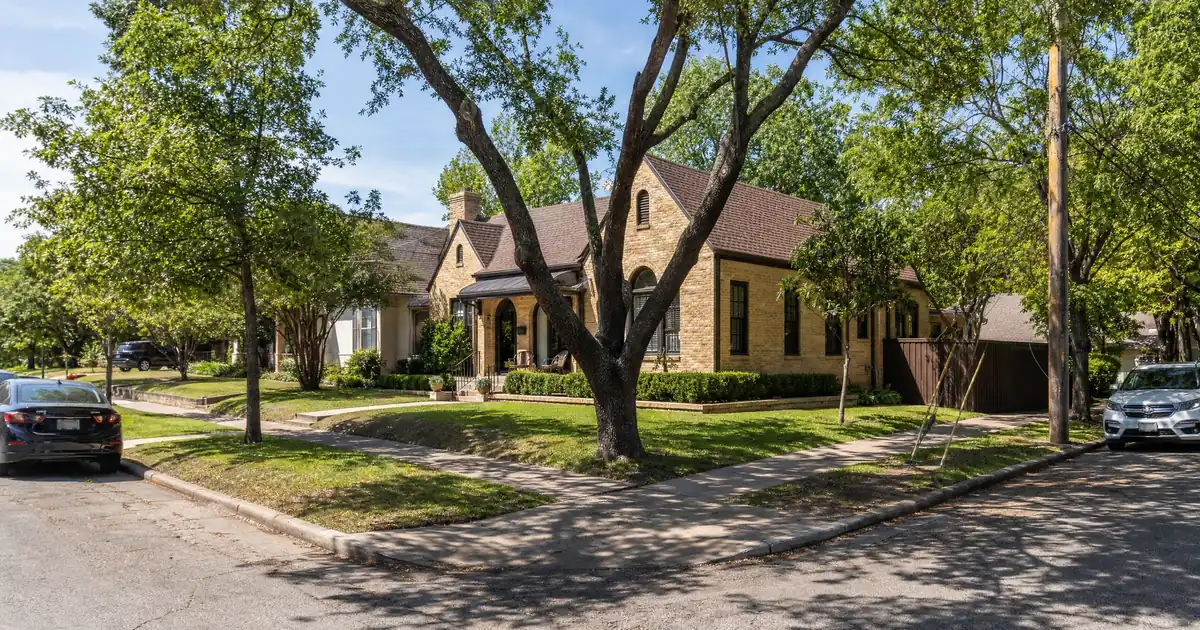
Investment property loans in Dallas reveal a clear pattern: two properties, same metro, wildly different outcomes on paper. A duplex in Oak Cliff runs a far tighter, more disciplined rent-to-price ratio than a comparably priced condo in Uptown, where rent lags well behind value (Dustin Pitts Realtor). Same city. Comparable price bracket. Completely different math. That gap is most of the Dallas investment story right now, and it’s why picking the right zip code matters more here than in most Texas metros.
Dallas DSCR files run the full range from single-family in Mesquite to small multifamily in Oak Cliff, and the submarket a property sits in usually determines whether the deal clears a lender’s coverage floor.
DSCR Calculator
Run the numbers in your market
Rate source: Freddie Mac 30-yr average via FRED® — Federal Reserve Bank of St. Louis · effective Jul 30, 2026
Prefilled with starting assumptions — enter your own rent or nightly figures, taxes, insurance, and HOA for a more accurate picture.
Program parameters update from Lendmire’s centralized guideline source. Taxes and insurance are editable estimates.
As of Jul 30, 2026 · General Freddie Mac market benchmark, not a Lendmire loan offer. Rent, nightly rate, occupancy, taxes, and insurance are editable estimates. Short-term rental figures are estimates only and vary significantly by season, property type, management approach, and local short-term-rental rules — confirm local regulations before relying on them. Qualifying income for short-term rentals varies by program — some use appraisal market rent, others use documented STR history or projections — and is confirmed in underwriting. Not a Loan Estimate, approval, or commitment to lend. Program availability and eligibility are subject to lender guidelines, credit approval, property review, and underwriting.
The Quick Read: A Dallas rental property loan is underwritten primarily on the property’s rent measured against its full monthly obligation — principal, interest, taxes, insurance, and any HOA dues — rather than the borrower’s personal income, with a 1.00x coverage ratio serving as the minimum floor on select programs rather than a universal standard.
- Mesquite and Garland single-family rentals model to roughly 1.10x-1.40x coverage at accessible price-to-rent levels (RealEstateStackHub)
- An Oak Cliff duplex runs meaningfully more efficient on a rent-to-price basis than a comparably priced Uptown condo
- Zillow’s citywide average home value has softened over the past year (Zillow)
- Texas housing inventory has climbed back above 2019 pre-pandemic levels — one of only nine states to get there
Dallas Market Snapshot
A quick read on the Dallas investor landscape — directional context drawn from the cited sources below. Confirm current property-level numbers before underwriting.
| Metric | Detail |
|---|---|
| Home prices | Sitting in the metro’s mid-to-upper range on a trailing-quarter basis (Redfin Dallas Housing Market) |
| Typical rents | Crossing into the metro’s higher-demand rent tier (RealEstateStackHub Dallas) |
| Recent appreciation | Running at a solid clip in the metro’s stronger-performing pockets (RealEstateStackHub Dallas) |
| Cap rates | Comfortably attractive in the metro’s working-class submarkets (RealEstateStackHub Dallas) |
| University enrollment | A large, steady student population anchoring nearby rental demand (UT Dallas Fast Facts) |
| Population | Adding residents at a strong year-over-year pace (Dallas Fed) |
Dallas Is a Know-Your-Zip-Code Market
The headline price for Dallas depends entirely on which dataset you trust, and that’s not a data error — it’s geography. Zillow’s all-homes model shows Dallas values pulling back over the past year (Zillow). Redfin’s figures for the three months ending May point to a solid year-over-year gain (Redfin). Broaden the lens to Dallas County and the three-month median sale price reads meaningfully lower, also down from a year earlier. Three legitimate sources, three different signals, and the S&P Cotality Case-Shiller index places Dallas among the weaker performers of the twenty tracked metros over the trailing twelve months.
None of that is a reason to skip Dallas. It’s a reason to stop reading the metro headline and start reading the zip code. Texas is one of only nine states where housing inventory now sits above 2019 pre-pandemic levels, which means more listings, more price flexibility, and sellers who negotiate rather than counter over asking. For a DSCR investor, a softening headline market paired with elevated inventory is closer to an opportunity than a warning sign.
Rent tells a similarly split story. One dataset shows the Dallas citywide average pulling back from a year earlier. Another lands lower still. Metro-wide, DFW median rent has also eased as new supply gets absorbed. Break rent out by product type, though, and single-family rentals have actually climbed while multifamily units have sat flat — a divergence that matters a lot for anyone deciding between a house and an apartment unit as the collateral.
Where the Cash Flow Actually Lives: Mesquite, Garland, and the I-30 Corridor
Mesquite, Garland, Rowlett, and Balch Springs are where DFW’s DSCR math clears its strongest margins on acquisition. Single-family homes at accessible price points in this corridor generate rents strong enough to produce modeled coverage ratios in the 1.10x-1.40x range — a spread wide enough to absorb a soft appraisal or a vacancy month without blowing the deal (RealEstateStackHub).
The tenant base here is workforce, not white-collar — logistics, distribution, light manufacturing, and service-economy employment tied to the I-635 and I-30 corridors. That’s not glamorous, but it’s durable, and it isn’t tied to any single office tower’s leasing cycle. Grand Prairie’s multicultural workforce housing market has held rental demand and price stability through multiple economic cycles, which is a useful hedge for an investor buying for hold rather than flip.
Run the numbers on a modeled Mesquite SFR priced at a typical corridor entry point, financed at 75 percent LTV. At a rent level consistent with the corridor’s going rate, the property models to right around the low end of that 1.10x-1.40x range once taxes and insurance are folded into the full monthly obligation, using standard financing-cost assumptions and Texas-typical tax and insurance loads. That’s still the kind of file a lender can actually work with.
DSCR files in workforce corridors like Mesquite and Garland typically come in cleaner than files from higher-price, lower-yield submarkets — the rent-to-price ratio does most of the heavy lifting before the file ever reaches underwriting. The cleanest version of that file has a signed lease or rent-ready comparable, entity documents if the property is titled to an LLC, and a current insurance quote, so the coverage number the lender calculates matches what the investor is expecting rather than surprising them at the last step.
A second corridor worth flagging: the mid-cities stretch connecting Dallas to Fort Worth along Highway 183 and the Airport Freeway. Purchase prices there run below the citywide average with rents to match, and the tenant pool leans on DFW Airport-adjacent employment — airline staff, logistics contractors, and manufacturing workers. Modeled coverage there runs 1.05x-1.30x, tighter than Mesquite but still workable at standard leverage.
Oak Cliff’s Duplex Math (And Why Bishop Arts Skews the Averages)
Oak Cliff carries the widest range of any Dallas submarket, from workforce duplexes to pockets that have appreciated sharply over the past decade. The broader neighborhood’s median real estate price sits well below the citywide average, with rent to match, and vacancy runs tight — tighter than most neighborhoods nationally, according to local rental data. That vacancy number alone tells you demand isn’t the problem here; price discipline is.
Zoom into the 75208 zip code, in the northwest quadrant of Oak Cliff, and median home values run notably higher than the broader neighborhood and have climbed sharply over the past decade. That’s an appreciation story layered on top of a cash-flow neighborhood, and it’s part of why Bishop Arts, the entertainment district anchoring that zip code, commands rent above the surrounding area. Realtor.com puts Bishop Arts rent above the broader Oak Cliff figure in the same dataset — though other neighborhood surveys peg overall Oak Cliff rent lower still, a reminder that even inside one named neighborhood, the block matters.
The property-type story in Oak Cliff is where the math gets interesting. Oak Cliff carries an active mix of single-family homes, duplexes, and small multifamily buildings — a housing stock other Dallas submarkets don’t offer at this density. Modeling both a duplex and a condo the same way — 75 percent LTV, standard financing-cost assumptions, Texas-typical tax and insurance loads — an Oak Cliff duplex with solid rental income clears roughly 1.35x-1.40x coverage. A comparably priced Uptown condo lands closer to 0.90x — below the 1.00x floor some select DSCR programs use as a minimum, and below where most standard programs are comfortable underwriting.
That sub-1.00 Uptown scenario isn’t automatically dead. Some lenders review sub-1.00 or no-ratio files with compensating factors — lower leverage, stronger reserves, or a blended short-term rental income figure where the property and market support it — but that’s a case a lender reviews on its own merits, not a guaranteed path to approval. The duplex, by contrast, doesn’t need any of those workarounds. It clears the bar on rent alone.
RealWealth’s DFW-specific data backs the same conclusion from a different angle: single-family homes at lower price points target solid cash-on-cash performance, while duplexes at a higher price band renting for proportionally more target stronger cash-on-cash performance still. Stepping up to a two-unit property, despite the higher purchase price, tends to outperform single-family on a per-dollar basis in this metro.
Pleasant Grove and the Bet on the Green Line
Pleasant Grove is the cleanest low-entry-price play in Dallas proper right now, and it’s not a pure cash-flow story anymore. Apartments.com data shows one-bedroom rent there running well below citywide averages against a median list price that’s similarly discounted. What changes the calculus is the $100 million Palladium Buckner Station project, a transit-oriented redevelopment turning underused lots into mixed-income housing and retail directly on the DART Green Line (Dallas Observer). That’s a fixed-rail catalyst, not a speculative rezoning rumor, and it gives an investor both a current-day coverage number and a forward appreciation case for a future refinance.
South Dallas broadly — Fair Park, South Boulevard-Park Row — carries the metro’s lowest entry prices, running far below the metro’s highest-priced submarkets such as Frisco (Ark7). Days on market there stretch well past the metro average, which tells you traditional owner-occupant buyers aren’t the primary demand driver — investors are. That’s not a red flag by itself. It’s a market where an all-cash or DSCR investor has real negotiating leverage, provided the underwriting on expenses and vacancy is conservative rather than optimistic.
What About Las Colinas and the Mid-Cities Corridor?
Irving’s Las Colinas Urban Center offers a renter profile Dallas proper doesn’t really have: dozens of Fortune 500 and Fortune 1000 corporate campuses, including Celanese, Kimberly-Clark, and Fluor Corporation, generating a steady stream of professional tenants (Roddy Properties). The demographic behind that demand skews younger and higher-income than most DFW rental submarkets, with the majority of the area renting rather than owning. For an investor prioritizing low turnover and rent stability over top-line yield, that’s a meaningfully different tenant pool than the workforce corridors east of downtown, and it’s worth weighing against a pure cash-flow play like Mesquite or Garland.
East Dallas — Lakewood, Lake Highlands, and Casa View — offers a middle path. Median home prices and rents there sit comfortably between the workforce corridors and the premium urban core, drawing a stable professional tenant base near White Rock Lake. Lakewood proper, though, has priced its way out of DSCR territory, with values well into seven figures — investors chasing this corridor’s workforce cash flow should target Casa View and Lake Highlands, not Lakewood’s core.
Skip These for Cash Flow
Uptown, Knox-Henderson, and the Arts District are beautiful properties at unfortunate coverage ratios. The rent-to-price math above isn’t unique to one condo listing — it’s structural. Rent doesn’t scale with price at the same rate once you cross into Dallas’s premium urban core, and that gap shows up directly in DSCR files. North Dallas and Preston Hollow both carry values well above the citywide median — neither is a cash-flow play, and neither should be underwritten as one. These neighborhoods can still work for an investor prioritizing long-term appreciation over monthly coverage, but that’s a different strategy requiring more cash down, and it deserves to be modeled honestly rather than forced into a coverage ratio it can’t hit organically. Anyone weighing that trade should see how the math pencils before writing an offer, and the comparison between DSCR and conventional financing is worth a look for buyers still deciding which qualification path fits a higher-price purchase.
The Supply Story: Apartment Glut, Single-Family Shortage
DFW’s multifamily sector delivered a large wave of new units in the current development cycle, and that supply wave shows up everywhere — concession activity has risen sharply, and occupancy across the metro’s apartment stock has slipped even as the market absorbed one of the largest unit totals nationally (Starcore Capital). The pipeline is moderating fast — deliveries have fallen well off their peak, with the remaining pipeline projected to shrink substantially by year-end, setting up something closer to balance.
Here’s the part that matters for a single-family or small multifamily buyer: that oversupply is almost entirely an apartment-sector phenomenon. New construction starts across DFW have fallen sharply year-over-year, and permit activity for new single-family rental product has dropped to levels not seen in roughly a decade (SolMidas). That’s a genuine divergence — apartment glut on one side, single-family shortage on the other — and it means the headline vacancy numbers scaring off casual buyers apply far less to the Mesquite SFR or the Oak Cliff duplex than they do to a garden-style apartment complex in Frisco. Job growth is still backing all of this up: the metro continues to add jobs at a healthy clip, and the region continues to draw a steady stream of relocators annually, with a long track record of corporate headquarters relocations since 2018.
The Employers and Institutions Behind the Renter Base
Dallas’s tenant demand doesn’t rest on one industry, which is part of why the metro keeps landing at the top of national rankings. DFW has been named the number one U.S. market to watch by the Urban Land Institute and PwC’s Emerging Trends in Real Estate report for two consecutive years — not a one-year fluke, a repeat ranking. The population base supporting that demand is growing quickly, and per the Dallas Fed, the metro continues to add residents at a strong pace, with a meaningful share of that growth coming from both domestic migration and international arrivals.
The medical district anchoring the Harry Hines corridor is arguably Dallas’s single most distinct demand driver, and it doesn’t exist at this scale in Austin, San Antonio, or Houston. UT Southwestern Medical Center employs a large workforce and runs one of the largest medical residency programs in the country, sitting on a sizable campus alongside Parkland Memorial Hospital, a major acute care facility, and Children’s Medical Center Dallas. That cluster of residents, fellows, nurses, and permanent staff creates a renter base that doesn’t disappear in a recession the way office-sector tenants can. Add in Southern Methodist University and UT Dallas, both carrying substantial student enrollments in their own right, and the corridor running from the medical district through West Dallas and into Oak Cliff has layered institutional demand most Texas metros don’t concentrate this tightly.
Corporate employment adds a third leg: Texas Instruments, AT&T, which runs its headquarters out of downtown, and Southwest Airlines all maintain a substantial presence in DFW. That’s a genuinely diversified employment base — healthcare, higher education, aviation, telecom, and tech — which matters more to a long-term DSCR hold than any single-quarter price swing.
Investors deciding between financing structures should understand how the qualification works before shopping neighborhoods — the property’s income, not the borrower’s traditional personal-income documentation, drives the file. Loan sizing on standard programs runs up to roughly $3,000,000, with typical purchase leverage in the 75-80 percent range and reserve expectations around six months of the full monthly payment, subject to lender guidelines and property review. Anyone building an LLC-owned portfolio across Mesquite, Oak Cliff, and the mid-cities corridor should also confirm entity vesting is supported on the specific program under consideration, subject to program eligibility.
DSCR vs. conventional financing
Two common ways to finance an investment property in Dallas, TX. They qualify you differently — here’s how investors weigh them.
Why investors choose it
- Qualifies on the property’s rental income — no personal tax returns, W-2s, or pay stubs needed to document income.
- No personal debt-to-income ceiling to clear, so existing mortgages and obligations don’t cap your borrowing the same way.
- Can be closed in an LLC, keeping the property inside a business entity.
- Built for scaling — not held to the limit on number of financed properties that conventional financing applies.
- Underwriting centers on the deal: generally qualifies when the rent covers the payment, a 1.00x coverage ratio being a common baseline (confirmed in underwriting).
- Designed specifically for investment property, including long-term and, where the program allows, short-term rentals.
Where it’s strong
- Often the lowest ongoing financing cost for a buyer who fully qualifies on personal income — a fit for a first property or a cost-first purchase.
Trade-offs for investors
- Requires full personal income documentation and must fit within a debt-to-income limit — salary, existing debts, and other mortgages all count.
- Typically held in your personal name rather than a business entity.
- Caps how many financed properties you can carry, which can become a ceiling as a portfolio grows.
- Evaluates you as a borrower as much as the property, which usually means more paperwork.
How investors usually choose: a first or single property often optimizes for the lowest financing cost; portfolio builders often optimize for leverage, vesting in an LLC, and scaling past conventional caps. The right answer depends on your goals, the property, and current guidelines — both paths run through select lenders in Lendmire’s wholesale network, with eligibility and terms confirmed in underwriting.
Frequently Asked Questions
How do you qualify for a DSCR loan in Dallas, Texas?
Qualification centers on the property’s rent measured against its full monthly obligation rather than personal income or traditional personal-income documentation. A Mesquite SFR renting at a level consistent with the corridor’s going rate, for example, is evaluated on whether that rent clears the property’s principal, interest, taxes, and insurance — not on the borrower’s W-2 history, subject to lender guidelines and credit approval.
What are the requirements for an investment property loan in Dallas, Texas?
Typical purchase leverage runs 75-80 percent, with credit tiers generally starting near 620 and higher-leverage files sometimes requiring stronger scores. Reserve requirements usually run around six months of the full payment, and select programs use a 1.00x coverage ratio as a minimum floor rather than a universal standard, though exact terms depend on lender guidelines, property type, and the borrower’s file.
Why do Zillow, Redfin, and Dallas County show different median prices for Dallas?
Each source measures a different geography and methodology. Zillow’s all-homes value estimate covers city-proper Dallas, Redfin’s figure reflects closed transactions over a rolling three-month window, and Dallas County’s median spans a broader area that dilutes the city’s higher-priced pockets. None is wrong — they’re answering slightly different questions.
Does the Dallas apartment oversupply affect single-family rental financing?
Not directly, based on current construction data. The oversupply concentrated in DFW’s apartment sector — driven by a large wave of multifamily deliveries this cycle — is a distinct dynamic from single-family and small multifamily rentals, where new construction starts have fallen sharply year-over-year, tightening rather than loosening supply.
What loan-amount ranges may DSCR lenders review for Dallas rental properties?
Standard program sizing can run up to roughly $3,000,000 through wholesale channels, with smaller balances routed through select lenders in the network, subject to lender guidelines and property review.
Investors researching Mesquite, Oak Cliff, or the mid-cities corridor can call Lendmire at 828-256-2183 or see how the math pencils on a specific property. For state-level program details, Texas DSCR investor loans covers eligibility across the broader Texas footprint, and Lendmire’s rental income–based financing across 41 markets outlines the underwriting model in full.
Zoom out far enough and the number that matters most isn’t a median price or a rent figure — it’s the pace of population growth. DFW continues to add residents daily at a rate few metros can match, and it’s the reason a metro with elevated apartment vacancy and an inventory surplus well above pre-pandemic norms still isn’t a market anyone should bet against long-term.
About Lendmire
Lendmire — NMLS# 2371349 — is a mortgage brokerage specializing in DSCR investor loans, helping arrange financing across 41 markets, including Washington, D.C., through wholesale and investor-lending channels. The model centers on property-level rental income reviewed by the lender rather than W-2 documentation, subject to lender guidelines, suiting entity-owned and multi-property investors. Lendmire holds Scotsman Guide’s Top Mortgage Workplace recognition for 2025 and 2026.
This recognition is documented by Scotsman Guide 2025 Top Mortgage Workplace.
Get Started
Ready to find the right loan for you?
In about 30 seconds you can review financing options available for your investment property. No commitment required.
Informational only. Not a Loan Estimate, approval, or commitment to lend. Program availability and eligibility are subject to lender guidelines, credit approval, property review, and underwriting.
References
1. Dustin Pitts Realtor — GRM Explainer
2. RealEstateStackHub Dallas Market Data
3. Zillow Home Values: Dallas, TX
4. Redfin Dallas Housing Market
6. Dallas Fed – DFW Economic Indicators
7. Dallas Observer — Best Value Neighborhoods
8. Ark7 Dallas Investment Neighborhoods Guide
9. Roddy Real Estate Group — Irving Property Management Guide
10. Starcore Capital — DFW Multifamily Supply Analysis
11. SolMidas — 2027 DFW Supply Cliff
12. UT Southwestern Medical Center Facts and Figures
13. Southern Methodist University (Wikipedia)
14. Top Mortgage Workplace recognition
15. Scotsman Guide 2025 Top Mortgage Workplace
This article is part of Lendmire’s DSCR loan program — full qualification details, guidelines, and scenarios live on the program page.
Related reading: DSCR Loans Dallas: Investor Financing for Uptown, Deep Ellum, Frisco, Plano, McKinney & Real Estate Investor · DSCR Cash Out Refinance in Irving, Texas: Stacked Rents in the South Irving Core · DSCR Cash Out Refinance in Mesquite, Texas: Pulling Equity From Workforce Rentals
Guides: DSCR Loans in Dallas, TX · DSCR Loans in Texas
Brandon Miller
Founder & CEO, Mortgage Loan Originator, Lendmire LLC
- Mortgage Loan Originator · NMLS# 1129696 · Verify on NMLS Consumer Access
- North Carolina Real Estate Broker · License# 343312 · Verify on NCREC
- North Carolina Insurance Producer · License# 19053198 · Property, Casualty, Life, Health · Verify on NAIC SBS
- Lendmire LLC · Firm NMLS# 2371349 · Verify firm licensure
Legal disclosures. Lendmire (NMLS# 2371349) is a state-licensed mortgage brokerage that arranges financing through wholesale lender relationships. Lendmire is not a direct lender, depository institution, or registered financial advisor. The discussion above is general informational content about real estate financing — it is not financial, legal, or tax advice, and readers should consult licensed professionals for guidance on their individual circumstances. Loan inquiries are subject to lender underwriting; this article does not represent a commitment to lend. Loan terms, rates, and qualification standards vary by borrower, property, and state, and are subject to change at any time. Equal Housing Opportunity. NMLS Consumer Access: nmlsconsumeraccess.org.