
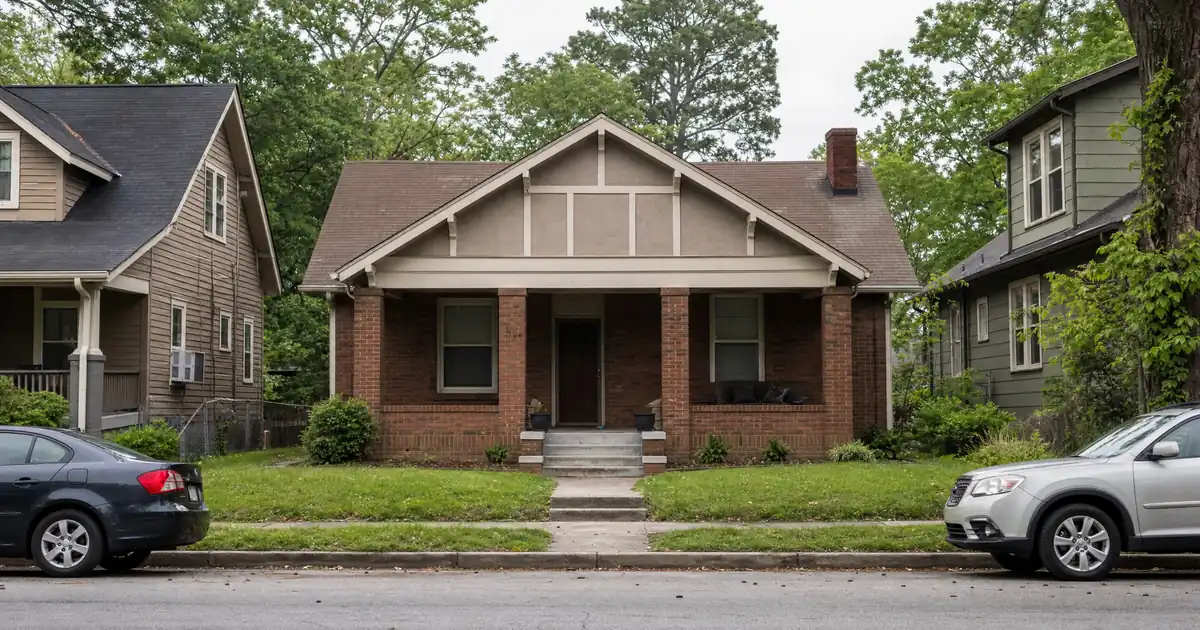
Birmingham’s rental market is sitting through an odd stretch right now. Multifamily vacancy hit 13.0 percent in the third quarter — among the highest readings the metro has seen in 25-plus years — while the construction pipeline that caused it has already contracted by more than half, from over 3,000 units under construction at the end of 2022 down to roughly 1,400 by January 2025, according to Matthews’ Q3 2025 Birmingham multifamily report and MMG Real Estate Advisors’ 2025 forecast. That combination — current oversupply, shrinking future supply — is exactly the setup that tends to precede a rent-growth cycle. Investors using investment property loans in Birmingham, Alabama to buy over the next 12 to 18 months are effectively buying ahead of that catch-up, not chasing a market that’s already run.
At a Glance: DSCR qualification in Birmingham is underwritten primarily on a property’s monthly rent measured against its full mortgage obligation, and because HUD fair-market rents span from $793 in Center Point to $1,567 in Cahaba Heights, coverage depends heavily on which exact submarket a rent comp is pulled from, not a blended citywide figure.
DSCR Calculator
Run the numbers in your market
Rate source: Freddie Mac 30-yr average via FRED® — Federal Reserve Bank of St. Louis · effective Jul 30, 2026
Prefilled with starting assumptions — enter your own rent or nightly figures, taxes, insurance, and HOA for a more accurate picture.
Program parameters update from Lendmire’s centralized guideline source. Taxes and insurance are editable estimates.
As of Jul 30, 2026 · General Freddie Mac market benchmark, not a Lendmire loan offer. Rent, nightly rate, occupancy, taxes, and insurance are editable estimates. Short-term rental figures are estimates only and vary significantly by season, property type, management approach, and local short-term-rental rules — confirm local regulations before relying on them. Qualifying income for short-term rentals varies by program — some use appraisal market rent, others use documented STR history or projections — and is confirmed in underwriting. Not a Loan Estimate, approval, or commitment to lend. Program availability and eligibility are subject to lender guidelines, credit approval, property review, and underwriting.
- Citywide median sale price runs $210,000, up 15.6 percent year-over-year (Redfin)
- Multi-family listings carry a median price of $176,000, a meaningful discount to single-family stock (Redfin)
- Q3 2025 multifamily vacancy hit 13.0 percent, with Class A running 18.2 percent (Matthews)
- UAB alone employs more than 28,000 people and enrolled 20,905 students in the most recent fall term (UAB News)
- Rents range nearly double from Center Point to Cahaba Heights per HUD fair-market-rent data
Birmingham isn’t one rental market, it’s a dozen small ones stacked next to each other, and DSCR underwriting that leans on a blended citywide average is going to misprice a lot of files. Investors evaluating investment property loans here need comps anchored to the exact submarket a property sits in, not a citywide blend.
Birmingham Market Snapshot
A quick read on the Birmingham investor landscape — figures come from the cited sources below. Confirm current property-level numbers before underwriting.
| Metric | Detail |
|---|---|
| Home prices | $210K median sale price (Redfin Birmingham Housing Market) |
| Typical rents | $1,200-1,500 rent for the $120-160K price tier (RealWealth) |
| Recent appreciation | 83% appreciation since 2014 (RealWealth) |
| Cap rates | 4.4% cap rate (REI Lense Birmingham LTR) |
| University enrollment | 23,000+ students (UAB News) |
| Population | 198,477 population (Census Reporter) |
The Supply Wave Is Cresting
Birmingham’s apartment sector overbuilt into a demand base that couldn’t absorb it fast enough — and the correction is already underway. Net absorption hit 987 units in 2024, well above the 10-year average of 570, yet new deliveries outpaced even that (Evernest). The result was Q1 2025 vacancy of 11.8 percent climbing to 13.0 percent by Q3, with Class A product bearing the brunt at 18.2 percent vacancy. Rent growth actually went negative in a couple of specific pockets — Bessemer/Fairfield and, notably, Homewood — down 2.6 to 3.8 percent year-over-year as new supply leased up around them.
Here’s the part investors should be watching: as of Q4 2024, Birmingham’s overall occupancy still ranked 6th nationally among major markets at 95.9 percent, and the pipeline that caused the recent softness has already shrunk back to roughly average annual construction activity. Underwriting should stress-test flat rents through the near term, with moderate 2 to 3 percent annual growth expected to resume as the market normalizes. That’s not a reason to avoid Birmingham — it’s a reason to buy the right property type now, before the supply overhang clears and comps catch up.
One anchor worth flagging on the demand side: UAB currently has roughly $872 million in campus construction projects in its pipeline, a forward-looking signal that the region’s single largest employer is still expanding physical capacity, not just headcount. Meanwhile a smaller, quieter shift is happening around Bush Hills, Druid Hills, College Hills and Smithfield, where Birmingham-Southern College closed in 2024 and removed a small student-renter base — only for its 192-acre campus to be selected in 2026 for a U.S. Coast Guard training facility, per Bhamwiki. That’s a tenant-demand pivot worth tracking rather than a red flag; a federal training presence is generally a more stable, income-verifiable renter base than a shrinking liberal arts college ever was.
The Cash-Flow Corridor: Avondale, Crestwood and East Lake
This is where Birmingham’s purchase math actually pencils, and it’s not the neighborhoods most out-of-state investors default to first. One analysis singles out Avondale, Crestwood and East Lake — alongside Woodlawn — as producing single-family rental yields of 8 to 12 percent on purchase prices between $80,000 and $150,000 (Evernest). That’s a wide spread of neighborhoods, but the common thread is low entry basis relative to durable rent demand.
Contrast that with the citywide characterization from a separate investor-analytics read: Birmingham overall behaves as an appreciation-driven market, with cap rates averaging 4.4 percent and cash flow running negative on median-priced purchases at prevailing asking rents near $2,050 a month (REI Lense). Both things are true at once. The citywide blended number is pulled up by higher-priced appreciation product; the actual cash-flow deals sit in a specific handful of lower-price, named submarkets. An investor underwriting off the citywide average alone would miss the deals that actually work.
UAB and Southside: Premium Rent, Premium Price
Highland Park and Southside/Five Points South are the UAB-driven demand engine, and they price like it. Highland Park’s median sale price sits at $301,450, up a sharp 44 percent year-over-year, with renter occupancy at 65 percent — a mix of B-class historic homes and newer apartment product sitting directly against the university and hospital campus (Ark7). Southside/Five Points South runs among the priciest rental submarkets in the metro per Apartments.com/CoStar data, drawing UAB students, medical residents and young professionals who want walkability over yard space.
This is the trade-off: strong, durable demand anchored by an employer that isn’t going anywhere — UAB plus its hospital system handle nearly 2 million patient visits a year — but a purchase basis high enough that coverage ratios run tighter than the cash-flow corridor described above. These work better as stabilized, longer-hold assets than as day-one cash-flow plays.
Skip the Premium Suburbs for Cash Flow — Right Now
Homewood, Mountain Brook and Vestavia Hills are strong long-term holds for A-class stability, but they’re the wrong place to chase cash flow at today’s prices, and Homewood specifically just proved it. Rents there fell 2.6 to 3.8 percent year-over-year as new supply leased up nearby, per the Matthews Q3 2025 data cited above. These inner suburbs earn their reputation on school-district demand and appreciation, not on coverage ratios — an investor buying here should be underwriting for a long hold and modest yield, not a purchase-day DSCR win.
The suburban workforce ring further out tells a better cash-flow story. Leeds, an eastern I-20 corridor suburb anchored by Vulcan Industries and a UAB Medicine facility, carries a median home price of $281,500, up 10.6 percent year-over-year (Spartan Invest). Fultondale and Gardendale, the northern sister suburbs roughly 9 to 14 miles out, combine for a population over 26,000, a homeownership rate near 80 percent, and median household income above $69,000 — the kind of workforce-stability profile that keeps a rental occupied year after year without drama.
Multi-Family Beats Single-Family on the Math
Birmingham’s small multifamily stock — duplex, triplex, fourplex — trades at a real discount to single-family pricing, and that discount is where a lot of the city’s best DSCR math lives. Redfin’s transaction data puts the citywide single-family median at $210,000 over the trailing three months, up 15.6 percent year-over-year. A separate listings-aggregator comparison, pulling from active listings rather than closed sales, puts the equivalent single-family figure closer to $328,375 — and measured against that number, Birmingham’s median multi-family listing price of $176,000 runs at roughly half of single-family pricing rather than a modest discount. South Eastlake is a clean local example: the neighborhood’s single-family median sits around $135,000, while comparable 4-unit properties there have listed in the $265,000 to $399,900 range — collecting four separate rent streams against a higher purchase basis than a single house nearby. (Worth a caveat: one such listing was marketed showing only about $1,500 in combined gross monthly income across all four units, which looks well below achievable market rent for that unit count and should be treated as an outlier listing, not a market baseline.)
Run the numbers on Birmingham’s two named single-family price tiers instead. Modeling the workforce-renovation band — $120,000 to $160,000 purchase prices carrying $1,200 to $1,500 in monthly rent, per a RealWealth market analysis — using standard purchase leverage and typical Alabama tax-and-insurance assumptions, coverage lands around 1.5x to 1.6x including taxes and insurance. Compare that to the new-construction tier, priced $240,000 to $270,000 with $1,600 to $1,800 in monthly rent: the higher rent doesn’t offset the higher basis, and coverage on that tier runs closer to 1.1x including taxes and insurance. The workforce-tier house rents for less in absolute terms but clears its payment with real room to spare, while the new-construction house barely clears the standard 1.00 baseline lenders typically build programs around. This is the appreciation-versus-cash-flow tension in miniature, priced into two property types sitting a few miles apart.
DSCR files coming out of markets with this much rent-to-price variance tend to follow a pattern: the ones that clear underwriting cleanly usually pull rent comps at the ZIP-code level rather than a citywide blended figure, and the small multifamily files generally show tighter, more predictable coverage than comparable single-family purchases at a similar basis — simply because four rent checks against one mortgage payment is a more forgiving ratio than one rent check against one payment. That pattern holds in Birmingham as much as anywhere.
Most purchase files here land in the 75 to 80 percent loan-to-value range, with the strongest files occasionally reaching higher leverage when guidelines allow. Standard DSCR programs are built around a 1.00x coverage baseline, credit tiers commonly stepping from 620 up toward 700 for the most aggressive leverage, and reserve expectations around six months of PITIA — all subject to lender guidelines and property-level review. LLC-titled purchases are common in this market and generally workable, subject to lender program eligibility. For a fuller breakdown, see the guide “What Is a DSCR Loan”, or the guide “Where DSCR and Conventional Diverge”. That holds regardless of which Birmingham submarket a buyer targets.
Don’t Underwrite Off the Citywide Rent Average
Birmingham’s average rent sits around $1,178 a month per CoStar/Apartments.com data — a two-bedroom running roughly $1,304 — and Zillow’s separate rental-manager read shows a comparable $1,150 average, 43 percent below the national figure. Neither number is wrong, and neither number should anchor a DSCR file. HUD’s Birmingham-Hoover fair-market-rent breakdown shows the real spread: $793 a month in Center Point against $1,567 in Cahaba Heights — nearly double, submarket to submarket. Plug a blended citywide figure into a coverage calculation for a Cahaba Heights property and the file looks worse than it is; do the same for a Center Point property and it looks better than it will actually perform. Either mistake is a swing in the coverage ratio, which is the difference between a file that clears and one that doesn’t.
Frequently Asked Questions
How do you qualify for a DSCR loan on a Birmingham investment property?
Qualification centers on the property’s monthly rent measured against its full monthly obligation rather than the borrower’s personal income or traditional personal-income documentation. Most standard programs are built around a 1.00x baseline, meaning rent needs to cover the payment at that level, though stronger files with deeper reserves or lower leverage may be reviewed even below that threshold. Exact eligibility depends on lender guidelines, credit profile, reserves and property review.
What are the requirements for an investment property loan in Birmingham, Alabama?
Typical purchase leverage runs 75 to 80 percent loan-to-value, meaning 20 to 25 percent down for most borrowers, with credit tiers commonly stepping from 620 up toward 700 depending on the file’s leverage and coverage. Reserve expectations generally run around six months of PITIA, and LLC-titled purchases are common in this market subject to lender program eligibility. Requirements vary by lender and property type, so confirming specifics before making an offer is worthwhile.
Why do Birmingham’s citywide rent averages understate what a Highland Park or Cahaba Heights rental can actually collect?
Because the citywide average blends low-rent submarkets like Center Point with high-rent pockets like Cahaba Heights, and HUD data shows nearly a two-to-one spread between them. A property in a premium submarket underwritten off the citywide $1,178 average will show weaker coverage than it will actually achieve, while a property in a lower-rent corridor could look stronger on paper than the real rent supports.
DSCR vs. conventional financing
Two common ways to finance an investment property in Birmingham, AL. They qualify you differently — here’s how investors weigh them.
Why investors choose it
- Qualifies on the property’s rental income — no personal tax returns, W-2s, or pay stubs needed to document income.
- No personal debt-to-income ceiling to clear, so existing mortgages and obligations don’t cap your borrowing the same way.
- Can be closed in an LLC, keeping the property inside a business entity.
- Built for scaling — not held to the limit on number of financed properties that conventional financing applies.
- Underwriting centers on the deal: generally qualifies when the rent covers the payment, a 1.00x coverage ratio being a common baseline (confirmed in underwriting).
- Designed specifically for investment property, including long-term and, where the program allows, short-term rentals.
Where it’s strong
- Often the lowest ongoing financing cost for a buyer who fully qualifies on personal income — a fit for a first property or a cost-first purchase.
Trade-offs for investors
- Requires full personal income documentation and must fit within a debt-to-income limit — salary, existing debts, and other mortgages all count.
- Typically held in your personal name rather than a business entity.
- Caps how many financed properties you can carry, which can become a ceiling as a portfolio grows.
- Evaluates you as a borrower as much as the property, which usually means more paperwork.
How investors usually choose: a first or single property often optimizes for the lowest financing cost; portfolio builders often optimize for leverage, vesting in an LLC, and scaling past conventional caps. The right answer depends on your goals, the property, and current guidelines — both paths run through select lenders in Lendmire’s wholesale network, with eligibility and terms confirmed in underwriting.
Does a fourplex or duplex qualify differently than a single-family rental in Birmingham?
The qualification framework is the same — rent against payment — but small multifamily properties often produce stronger coverage because they collect multiple rent streams against one loan. Birmingham’s median multi-family listing price runs meaningfully below comparable single-family pricing, which structurally improves the rent-to-basis ratio on these deals. Property condition, unit mix and local occupancy history all factor into the lender’s review.
How do DSCR lenders review rental income instead of traditional tax-return income in Alabama?
DSCR scenarios are commonly evaluated primarily on a property’s rental income rather than personal income documentation like traditional tax returns, subject to lender guidelines. This is the core feature that lets self-employed investors, out-of-state buyers and portfolio landlords qualify Birmingham purchases on the deal’s cash flow rather than personal income complexity. Reaching out at 828-256-2183 or requesting a DSCR quote is the fastest way to get specifics for a given file.
Is Birmingham’s current multifamily vacancy a red flag for single-family DSCR investors?
Not directly — the 13.0 percent vacancy figure reflects new large-scale apartment supply, not the single-family or small-multifamily rental pool most DSCR investors target. Single-family and duplex-to-fourplex product in workforce corridors has generally kept tighter occupancy than new Class A apartment stock, which has absorbed the bulk of the recent softness. It’s still worth stress-testing rent assumptions conservatively given the broader supply wave working through the market.
Birmingham’s DSCR-fit stock skews toward workforce single-family and small multifamily in the cash-flow corridor and suburban workforce ring, with the premium submarkets and university-adjacent product serving a different, longer-hold thesis. Details on Lendmire’s DSCR platform overview, or Lendmire’s Alabama DSCR loan programs specifically, cover how these files typically get structured.
The investors who buy the cash-flow corridor and the small multifamily stock now — ahead of the pipeline contraction working its way through the vacancy numbers — are the ones who’ll be holding assets priced under the coming rent catch-up, not chasing it.
About Lendmire
Lendmire (NMLS# 2371349), a non-QM mortgage broker serving investors in 41 markets including Washington, D.C., helps structure DSCR scenarios commonly evaluated around a property’s rental income rather than personal income paperwork, subject to lender guidelines. Recognized by Scotsman Guide as a 2026 Top Workplace and a 2025 Scotsman Guide Top Workplace, Lendmire places loans through wholesale investor lenders and is not a direct lender.
Get Started
Ready to find the right loan for you?
In about 30 seconds you can review financing options available for your investment property. No commitment required.
Informational only. Not a Loan Estimate, approval, or commitment to lend. Program availability and eligibility are subject to lender guidelines, credit approval, property review, and underwriting.
References
1. Matthews’ Q3 2025 Birmingham multifamily report
2. Redfin
3. Redfin
4. UAB News
5. RealWealth
6. REI Lense
8. Evernest
9. Bhamwiki
10. Evernest
11. Ark7
12. Spartan Invest
13. Scotsman Guide as a 2026 Top Workplace
14. a 2025 Scotsman Guide Top Workplace
This article is part of Lendmire’s DSCR loan program — full qualification details, guidelines, and scenarios live on the program page.
Related reading: DSCR Cash Out Refinance in Birmingham, Alabama: The 2026 DSCR Financing Guide to Southside Rentals · Cash Out Refinance Investment Property in Vestavia Hills, Alabama: Equity Over Yield · DSCR Cash Out Refinance in Cullman, Alabama: How DSCR Coverage Works on a Cullman Refi
Guides: DSCR Loans in Birmingham, AL · DSCR Loans in Alabama
Brandon Miller
Founder & CEO, Mortgage Loan Originator, Lendmire LLC
- Mortgage Loan Originator · NMLS# 1129696 · Verify on NMLS Consumer Access
- North Carolina Real Estate Broker · License# 343312 · Verify on NCREC
- North Carolina Insurance Producer · License# 19053198 · Property, Casualty, Life, Health · Verify on NAIC SBS
- Lendmire LLC · Firm NMLS# 2371349 · Verify firm licensure
Disclosure information. Lendmire is a state-licensed mortgage brokerage under NMLS# 2371349. Lendmire is not a depository institution, direct lender, or financial advisor — all loans referenced are placed through wholesale lender partners and are subject to each lender's underwriting standards. This article is provided for general informational purposes and is not a commitment to lend, nor does it constitute financial, legal, or tax advice. Loan programs, terms, rates, and qualification standards change without notice and depend on borrower profile, property type, and the state in which the subject property is located. Equal Housing Opportunity provider. NMLS Consumer Access: nmlsconsumeraccess.org.