
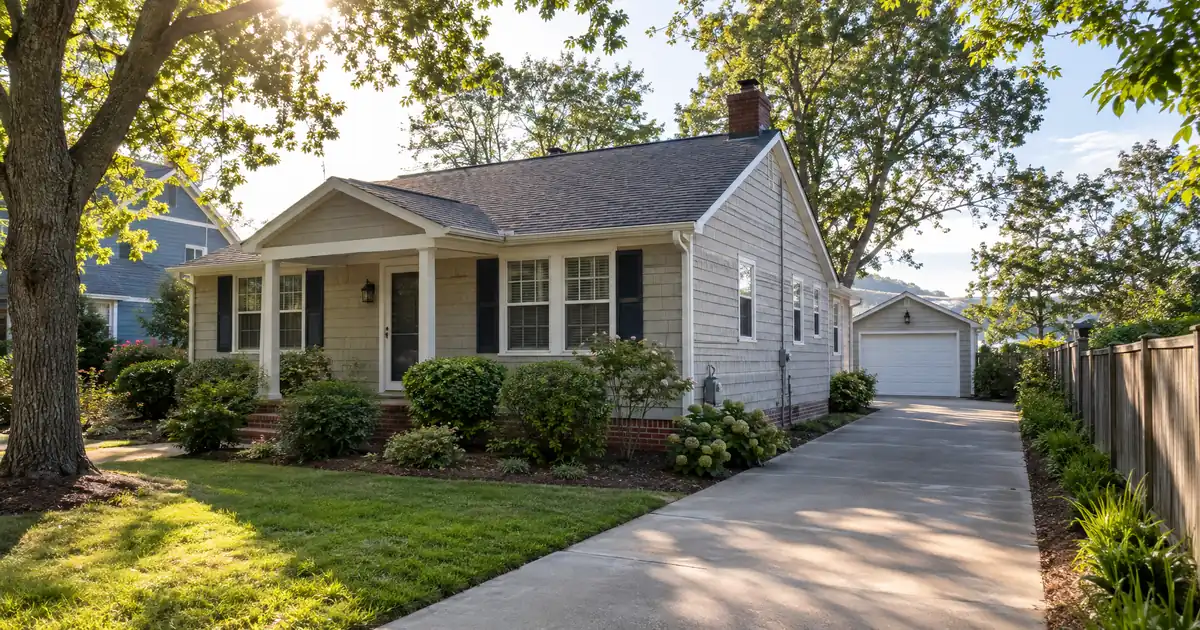
An out-of-state investor scrolling listings for Kill Devil Hills usually lands on the same photo: an oceanfront mega-home with a pool, an elevator, and a rental projection north of $600,000 a year. It’s a real number — one Beach Road listing description cited gross rental income “consistently over $600,000 per year… With potential to exceed $730,000.” It’s also the wrong property for most DSCR investors, and missing that distinction is the single most common mistake investors make before they’ve even opened a purchase contract here.
The Quick Read: DSCR financing in Kill Devil Hills, North Carolina is underwritten primarily on the property’s rental income measured against its full monthly obligation, and the strongest purchase-side math shows up on workforce single-family homes and small multifamily — not the oceanfront vacation stock that dominates search results.
DSCR Calculator
Run the numbers in Kill Devil Hills, NC
Rate source: Freddie Mac 30-yr average via FRED® — Federal Reserve Bank of St. Louis · effective Sep 17, 2026
Prefilled with starting assumptions — enter your own rent or nightly figures, taxes, insurance, and HOA for a more accurate picture.
Program parameters update from Lendmire’s centralized guideline source. Taxes and insurance are editable estimates.
As of Sep 17, 2026 · General Freddie Mac market benchmark, not a Lendmire loan offer. Rent, nightly rate, occupancy, taxes, and insurance are editable estimates. Short-term rental figures are estimates only and vary significantly by season, property type, management approach, and local short-term-rental rules — confirm local regulations before relying on them. Qualifying income for short-term rentals varies by program — some use appraisal market rent, others use documented STR history or projections — and is confirmed in underwriting. Not a Loan Estimate, approval, or commitment to lend. Program availability and eligibility are subject to lender guidelines, credit approval, property review, and underwriting.
- Median gross rent in town runs $1,771 against a median home value near $442,200 to $509,701, per Data USA and City-Data — thin for a median-priced SFR on long-term rent alone.
- Colington Harbour 3-bedroom single-family LTR listings run around $2,600/month, well above the town-wide blended average.
- 3-to-4-unit structures carry a mean value of $706,302, higher than detached houses at $624,858 — multifamily prices at a premium here, not a discount.
- Interior/Westside lots start around $200,000, a materially cheaper entry point than oceanfront or soundfront parcels.
- Dare County has committed $35 million toward workforce housing because year-round rental supply has been squeezed by the weekly-vacation-rental economy.
Kill Devil Hills Market Snapshot
A quick read on the Kill Devil Hills investor landscape — figures come from the cited sources below. Confirm current property-level numbers before underwriting.
| Metric | Detail |
|---|---|
| Home prices | $442,200 median property value (Data USA) |
| Typical rents | $1,771 median gross (City-Data.com) |
| Population | 7.76K population (Data USA) |
| Employment | 4.21K employees (2024) (Data USA) |
The Town’s Split Personality — And Why It Matters for Underwriting
Kill Devil Hills isn’t one rental market. It’s two, sitting on top of each other. Local real estate guides break the town into submarkets with genuinely different tenant profiles: KillDevilHills.com describes “Oceanside” listings as almost entirely vacation-rental product, “Between the Highways” as smaller beach cottages still oriented toward short-term guests, and “Westside” and “Colington” as “primarily residential homes… Situated in year-round neighborhoods.”
That distinction drives everything on a DSCR file. Coastal appraisers increasingly reconcile documented short-term rental income against the appraiser’s long-term market-rent estimate — the 1007 form — and which figure counts depends on property type, municipality, and the borrower’s documentation set. Translation: a Beach Road mega-home might gross six figures on Airbnb, but a DSCR lender sizing the loan off long-term rent alone will use a far more conservative number unless the borrower brings seasoned STR revenue history. A Westside or Colington single-family home never has that ambiguity — the rent roll is the rent roll, twelve months a year.
This is where the appreciation-versus-cash-flow tension gets real. Oceanside and Between-the-Highways product carries the marketing appeal and the STR upside, but it’s a different underwriting conversation entirely — one built on trailing revenue statements, not a straight rent-to-PITIA calculation. Westside and Colington are the cash-flow-native submarkets. Anyone buying with a DSCR loan and planning to lease long-term should be looking there first, not at the beach-strip inventory that shows up first in a Zillow search.
Where the Purchase Math Actually Clears
The town-wide rent-to-value picture looks tight on paper. A median-priced single-family home at roughly $442,200 to $509,701 against median gross rent of $1,771 works out to something like a 0.35-0.40% monthly rent-to-value ratio — thin territory for a standard DSCR purchase at 75-80% loan-to-value unless the property is bought below median or carries more than one unit.
But that town-wide median is dragged down by studio and one-bedroom condo product. Apartments.com shows KDH’s blended average rent at $1,455 against a national average of $1,663 — below national, which sounds discouraging until you separate it from the single-family segment. Three-bedroom houses in year-round neighborhoods like Colington Harbour list around $2,600/month on 12-month leases. That’s the number that matters for a DSCR file on a Westside or Colington acquisition, and it’s a meaningfully better ratio than the generic city-wide rent trackers suggest.
Run a modeled scenario: an investor buys a three-bedroom single-family home in Colington priced at $380,000, puts 25% down (75% LTV, within Lendmire’s typical 75-80% purchase range), and rents it long-term at $2,600/month based on the comparable listing data above. Using a modeled 30-year principal-and-interest calculation in the high-6s plus North Carolina-typical property tax and insurance costs applied qualitatively, full PITIA lands in a range that produces coverage in the neighborhood of 1.10x to 1.20x — comfortably above the 1.00 DSCR floor some programs use as a minimum. That’s not a guarantee of approval; it’s a modeled illustration, and actual eligibility review depends on lender guidelines, reserves, credit tier, and property review. But it shows why the rent-to-value gap between condo product and single-family workforce housing is the real story here, not the town-wide average.
Small multifamily tells an even stronger story on paper. Because 3-to-4-unit structures carry a higher mean value than detached houses in this market ($706,302 versus $624,858), each additional unit stacking rent against a single loan is exactly the dynamic that improves DSCR math. A duplex priced in the mid-$300,000s to low-$400,000s with two units each renting in the $1,500-$2,000 range can produce a materially better coverage ratio than a comparably priced single-family home, simply because two rent checks are covering one loan payment.
Working DSCR brokers see a recurring pattern in vacation-economy coastal markets like this one: files built on long-term rent alone tend to size conservatively relative to the marketed STR revenue figures, while files on small multifamily or workforce single-family in the non-tourist submarkets often come in with cleaner, more defensible coverage because the rent comp is a signed 12-month lease rather than a projected nightly-rate calendar. That gap between marketing material and underwriting reality is the single biggest adjustment out-of-state buyers have to make here.
The Workforce Housing Shortage Isn’t a Talking Point — It’s Balance-Sheet Support
Dare County government has allocated $35 million in state funding toward workforce and essential housing development, and state legislation (HB 259) was specifically drafted to let projects using that funding bypass certain local zoning regulations, according to Dare County’s Essential Housing program page. That’s not incidental — it’s the county acknowledging, in an official capacity, that the weekly-rental economy has crowded out year-round housing stock.
The county’s own housing page goes further, tying a regional staffing crisis directly to this dynamic: teachers, healthcare workers, police, firefighters, servers, and retail staff are all competing for a shrinking pool of units not converted to vacation rentals, per Dare County’s Housing in Dare County page. For a DSCR investor, this is about as close to a government-documented demand floor as this kind of market produces. It’s not a growth story built on population projections — it’s a captive-tenant story built on the fact that the workforce literally has nowhere else to go.
The Outer Banks Hospital, the region’s only hospital and the sole institutional health anchor for the area, illustrates the point concretely. It carries 21 general hospital beds and has been named one of the top 100 community hospitals nationally by Becker’s Hospital Review, per Wikipedia’s entry on The Outer Banks Hospital and Outer Banks Health’s own careers page. A small, accredited hospital with documented recruitment friction tied to housing scarcity is exactly the kind of durable, non-tourism renter base — nurses, techs, administrative staff — that supports a 12-month lease thesis rather than a speculative one.
Colington and Westside: The Cash-Flow Submarkets
Colington Harbour sits west of the main strip, soundside, canal-front — and almost entirely year-round residential. Local guides describe it as “quieter than the bypass and beach neighborhoods, with an inherent sense of community,” which reads like marketing language but tracks with the underwriting reality: this is where boaters and long-term residents actually sign leases, not where vacationers book a week. The $2,600/month three-bedroom rent comp cited above comes from this submarket, and it’s the clearest evidence that Colington rent-to-value outperforms the town-wide blended figures.
Westside carries a similar profile with a lower entry price. Interior lots start around $200,000, and most homes in the broader $200,000-$700,000 range skew toward the affordable end inland, away from oceanfront and soundfront pricing that runs into the millions. For an investor trying to make a purchase-side DSCR number work at a lower loan amount, Westside is the more approachable entry point — smaller loan, smaller down payment in dollar terms even at the same percentage, and a tenant pool built on the same workforce-housing shortage described above.
First Flight Village and Virginia Dare Shores round out the non-tourist-strip inventory. First Flight is marketed for its cul-de-sac quiet and owner-occupant appeal; Virginia Dare Shores has tree-lined lots and, on some parcels, no HOA fees — a detail that matters for build-to-rent or workforce housing plays where HOA rental restrictions can otherwise kill a leasing plan.
Avalon Beach and the Oceanfront/Beach Road corridor sit on the other side of the line. Avalon markets itself on walkability to the beach and the Avalon Pier, and it draws a mix of second-home buyers and STR investors rather than 12-month tenants. None of this makes those neighborhoods bad investments — it makes them a different loan conversation, one built around documented short-term rental history rather than a straightforward DSCR purchase calculation.
What a Duplex Purchase Looks Like on Paper
Consider a scenario: an investor targets a duplex near the US-158 corridor, priced around $360,000, with each unit renting near $1,700/month based on comparable multifamily rent data from Redfin’s Dare County apartment listings, which show unit rents in the area spanning roughly $845 to $2,350 depending on vintage and condition. Combined monthly rent of $3,400 against a purchase at 75% LTV, using the same modeled PITIA approach (high-6s P&I plus NC-typical tax and insurance percentages), produces coverage that can push well past 1.20x — a stronger cushion than the single-family scenario above, because two units are stacking rent against one loan balance. Final terms depend on lender guidelines, property type, leverage, and the borrower’s complete credit picture.
That Redfin data point also carries a separate lesson: the same market shows 1-bedroom units near $845 in an older complex and roughly $2,350 for a comparable 2-bedroom in newer product. Condition and vintage — not just location — drive achievable rent here. A value-add duplex bought off older comps and renovated toward newer-product condition has real room to capture a higher rent tier before it ever refinances.
None of these figures should be mistaken for a promise. Actual coverage depends on the specific rent achieved, the exact rate and cost structure at closing, reserves on hand, and the borrower’s credit tier — Lendmire’s DSCR network typically works with credit tiers starting near 620 and requires roughly six months of PITIA in reserves on standard files, more above $1,500,000 in loan amount. These are guideline ranges, not guarantees, and every file is subject to lender review.
The Liquidity Check: Comps Are There, Just Not Rushing
Redfin’s Kill Devil Hills market data shows a median sale price of $547,000, up 3.0% year over year, with homes selling after roughly 82 days on market and 21 homes sold in the most recent November period, up from 18 the year before. That’s a reasonably liquid comp pool for appraisal purposes — enough transaction volume that a lender’s appraiser isn’t guessing — but it’s not a market where equity builds fast enough to justify buying purely on appreciation. The case for any acquisition here has to be made on rent coverage at purchase, not on a bet that prices will run.
That $547,000 figure sits above both the Data USA-cited $442,200 and the City-Data $509,701 median value estimates, a reminder that these sources use different methodologies and vintages. Investors comparing listings to any published “median” should treat the number as directional, not precise, and confirm current comps against the specific property under contract.
Skip the Studio Comps
Here’s a mistake worth naming directly: pulling a “Kill Devil Hills average rent” figure off a generic aggregator and applying it to a single-family purchase decision. The blended $1,455 town-wide average cited by Apartments.com includes condo and studio product that has nothing to do with a three-bedroom workforce rental in Colington. Using that blended figure to evaluate a single-family DSCR purchase will understate the achievable rent and could talk an investor out of a deal that actually pencils. The right comp set is bedroom-count and neighborhood-specific, not town-wide.
The Regional Economy Behind the Rental Demand
Kill Devil Hills carries a year-round population of 7,633 as of the 2020 census, per Wikipedia, making it the most populous settlement in Dare County and on the Outer Banks. Dare County itself counted 36,915 residents at the same census. Against that small resident base, the region absorbs an estimated five million visitors a year — a ratio that explains both the STR-dominant housing stock along the beach road and the acute shortage of year-round rental units everywhere else.
Employment for town residents concentrates in construction (747 people), retail trade (488 people), and professional/scientific/technical services (465 people), according to Data USA — though total local employment slipped from 4.41k to 4.21k between the two most recent measured years. Regional employers skew toward Dare County government, described as one of the area’s largest employers across its school system and county departments, and the Outer Banks Hospital, which carries somewhere between 197 and 500 employees depending on the source. College of The Albemarle’s Dare County campus adds a modest but steady student population — more than 600 in traditional classes and another 1,100 or so in continuing education, per local reporting — though it’s a satellite campus, not a four-year draw. None of these anchors rival a major university or corporate employer, but together they support the workforce-tenant thesis that underlies the Westside and Colington investment case.
Real estate investors buying in Kill Devil Hills, North Carolina can work with Lendmire to access DSCR programs across a 41-market footprint that includes D.C., a scale that matters for anyone comparing this coastal North Carolina submarket against opportunities elsewhere. For a broader look at how DSCR structures work relative to a standard investment loan, the conventional-vs-DSCR tradeoffs breaks down the documentation differences, and Lendmire’s primer on DSCR loans covers how the qualifying ratio gets calculated in the first place. Investors focused specifically on state-level program availability can also review DSCR loans in North Carolina for a fuller picture of coverage across the state.
Frequently Asked Questions
Is a Beach Road oceanfront home a good DSCR purchase in Kill Devil Hills?
It depends entirely on how the file is documented. These homes carry the highest gross rental potential in town, but DSCR underwriting on that income typically requires seasoned short-term rental documentation reconciled against the appraiser’s long-term rent estimate — a different, often more complex process than a straightforward long-term-lease purchase in Colington or Westside.
DSCR vs. conventional financing
Two common ways to finance an investment property in Kill Devil Hills, NC. They qualify you differently — here’s how investors weigh them.
Why investors choose it
- Qualifies on the property’s rental income — no personal tax returns, W-2s, or pay stubs needed to document income.
- No personal debt-to-income ceiling to clear, so existing mortgages and obligations don’t cap your borrowing the same way.
- Can be closed in an LLC, keeping the property inside a business entity.
- Built for scaling — not held to the limit on number of financed properties that conventional financing applies.
- Underwriting centers on the deal: generally qualifies when the rent covers the payment, a 1.00x coverage ratio being a common baseline (confirmed in underwriting).
- Designed specifically for investment property, including long-term and, where the program allows, short-term rentals.
Where it’s strong
- Often the lowest ongoing financing cost for a buyer who fully qualifies on personal income — a fit for a first property or a cost-first purchase.
Trade-offs for investors
- Requires full personal income documentation and must fit within a debt-to-income limit — salary, existing debts, and other mortgages all count.
- Typically held in your personal name rather than a business entity.
- Caps how many financed properties you can carry, which can become a ceiling as a portfolio grows.
- Evaluates you as a borrower as much as the property, which usually means more paperwork.
How investors usually choose: a first or single property often optimizes for the lowest financing cost; portfolio builders often optimize for leverage, vesting in an LLC, and scaling past conventional caps. The right answer depends on your goals, the property, and current guidelines — both paths run through select lenders in Lendmire’s wholesale network, with eligibility and terms confirmed in underwriting.
Why does the town-wide median rent look low compared to what three-bedroom houses actually rent for?
The blended town-wide figure includes studio and one-bedroom condo product, which pulls the average down. Three-bedroom single-family homes in year-round neighborhoods like Colington Harbour rent well above that blended average, so investors should compare against bedroom-specific and neighborhood-specific data, not the citywide figure.
Does the Dare County workforce housing funding actually affect financing?
Not directly on the loan side — it doesn’t change LTV or DSCR requirements. But the $35 million in state funding and the documented workforce housing shortage support the durability of long-term rental demand, which is a factor a lender’s overall risk read may weigh favorably on a workforce-rental purchase.
Are duplexes or small multifamily easier to finance than single-family homes here?
Not necessarily easier from a documentation standpoint, but the coverage math often comes in stronger. Because two or more units are stacking rent against one loan, and 3-to-4-unit structures carry a value premium in this market, the resulting DSCR often runs higher than a comparably priced single-family purchase — though loan amount, reserves, and credit tier still apply per program guidelines.
Can an investor use projected Airbnb income to qualify for a DSCR purchase loan in Kill Devil Hills?
Some programs allow short-term rental income to be considered, but it typically requires documented, seasoned revenue history rather than a projected calendar, and the appraiser’s long-term market-rent estimate often serves as the conservative benchmark unless that documentation is strong. This varies by lender and property type, so it’s worth discussing the specific file before assuming STR income will carry the qualification.
What credit score does an investor need for a DSCR loan in this market?
Lendmire’s DSCR network typically works with borrowers starting near a 620 credit floor, with better leverage available at higher tiers (660, 680, 700), subject to lender guidelines and property review. Reserve requirements and the strength of the rental comp also factor into final terms.
Investors weighing a purchase here can call 828-256-2183 or request a scenario review to walk through how a specific Colington, Westside, or small-multifamily property might size.
About Lendmire
Lendmire — NMLS# 2371349 — operates as a DSCR and non-QM mortgage broker, connecting investors with wholesale lending channels across 41 markets, including Washington, D.C. Underwriting on these programs centers on the property’s rental income rather than the borrower’s traditional personal-income documentation, an approach that tends to work well for self-employed buyers and investors holding portfolios beyond four financed properties, subject to program terms. Lendmire has been recognized by Scotsman Guide as a 2026 Top Workplace, following recognition as a 2025 Scotsman Guide Top Mortgage Workplace the year prior — details covered in Lendmire’s 2026 Top Workplace announcement. Scotsman Guide named Lendmire a Top Mortgage Workplace in both 2025 and 2026.
Loans made to LLC-titled entities remain subject to program eligibility, and all DSCR ratios, credit tiers, and reserve figures cited above are general guidelines rather than commitments — review details are subject to lender overlays, credit approval, and property-level review.
Get Started
Ready to find the right loan for you?
In about 30 seconds you can review financing options available for your investment property. No commitment required.
Informational only. Not a Loan Estimate, approval, or commitment to lend. Program availability and eligibility are subject to lender guidelines, credit approval, property review, and underwriting.
References
1. Data USA — Kill Devil Hills, NC Profile
2. City-Data.com — Kill Devil Hills, NC Profile
5. Dare County Essential Housing — Current Projects
6. Dare County Essential Housing — Housing in Dare County
7. Wikipedia — The Outer Banks Hospital
8. Outer Banks Health Careers page
9. Redfin — Dare County Apartments for Rent
10. Wikipedia — Kill Devil Hills, North Carolina
12. Lendmire’s 2026 Top Workplace announcement
13. 2025
14. 2026
This article is part of Lendmire’s DSCR loan program — full qualification details, guidelines, and scenarios live on the program page.
Related reading: DSCR Cash Out Refinance in Kill Devil Hills, North Carolina: The 2026 DSCR Guide to Beach Road · Cash Out Refinance Investment Property in Kill Devil Hills · Investment Property Loans in Nags Head, NC: Can the Rent Carry the Loan on a Beach Cottage?
Guides: DSCR Loans in Kill Devil Hills, NC · DSCR Loans in North Carolina
Brandon Miller
Founder & CEO, Mortgage Loan Originator, Lendmire LLC
- Mortgage Loan Originator · NMLS# 1129696 · Verify on NMLS Consumer Access
- North Carolina Real Estate Broker · License# 343312 · Verify on NCREC
- North Carolina Insurance Producer · License# 19053198 · Property, Casualty, Life, Health · Verify on NAIC SBS
- Lendmire LLC · Firm NMLS# 2371349 · Verify firm licensure
Legal disclosures. Lendmire (NMLS# 2371349) is a state-licensed mortgage brokerage that arranges financing through wholesale lender relationships. Lendmire is not a direct lender, depository institution, or registered financial advisor. The discussion above is general informational content about real estate financing — it is not financial, legal, or tax advice, and readers should consult licensed professionals for guidance on their individual circumstances. Loan inquiries are subject to lender underwriting; this article does not represent a commitment to lend. Loan terms, rates, and qualification standards vary by borrower, property, and state, and are subject to change at any time. Equal Housing Opportunity. NMLS Consumer Access: nmlsconsumeraccess.org.