
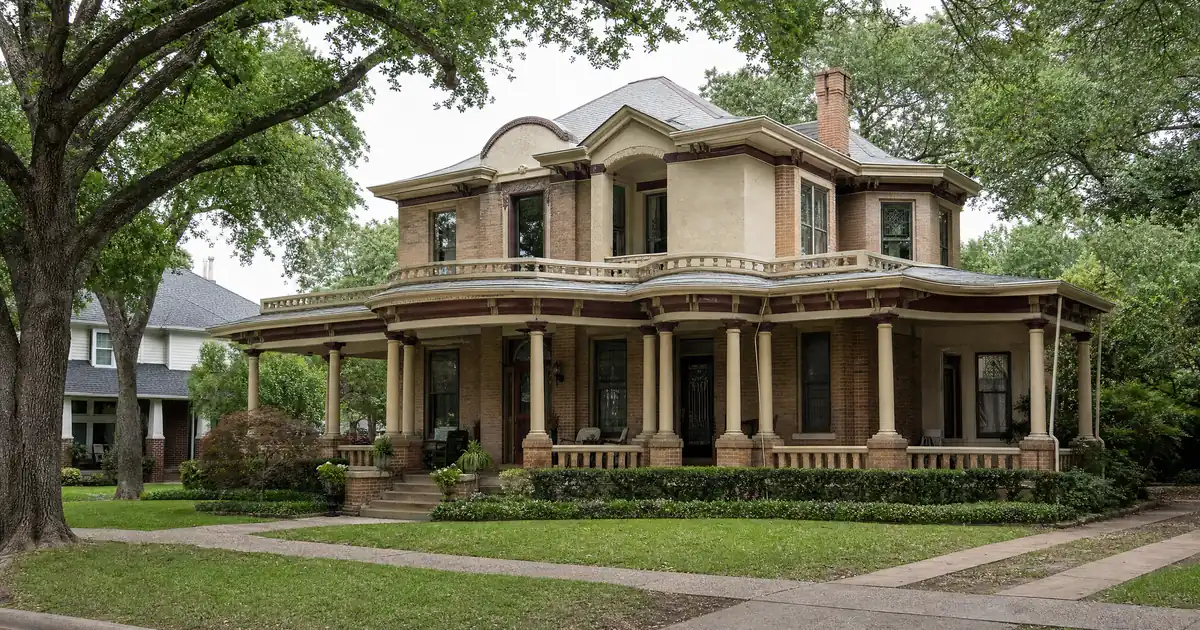
Investment property loans in Plano cover how DSCR qualification works across east and west side neighborhoods with different cash-flow profiles. If you’re pricing a rental purchase in Plano right now, the zip code map probably matters more than the school district map — and most people shopping this market haven’t caught up to that yet. Plano’s home prices have corrected from recent peaks while its corporate employer base keeps adding stable, well-paid renters. That combination doesn’t happen in every suburb, and it changes where the DSCR math actually clears.
That’s the setup this analysis walks through — the neighborhoods where DSCR coverage clears, the ones where it doesn’t, and what a Plano investor needs to know before running numbers on a specific address.
DSCR Calculator
Run the numbers in your market
Rate source: Freddie Mac 30-yr average via FRED® — Federal Reserve Bank of St. Louis · effective Jul 30, 2026
Prefilled with starting assumptions — enter your own rent or nightly figures, taxes, insurance, and HOA for a more accurate picture.
Program parameters update from Lendmire’s centralized guideline source. Taxes and insurance are editable estimates.
As of Jul 30, 2026 · General Freddie Mac market benchmark, not a Lendmire loan offer. Rent, nightly rate, occupancy, taxes, and insurance are editable estimates. Short-term rental figures are estimates only and vary significantly by season, property type, management approach, and local short-term-rental rules — confirm local regulations before relying on them. Qualifying income for short-term rentals varies by program — some use appraisal market rent, others use documented STR history or projections — and is confirmed in underwriting. Not a Loan Estimate, approval, or commitment to lend. Program availability and eligibility are subject to lender guidelines, credit approval, property review, and underwriting.
At a Glance: In Plano, Texas, a DSCR purchase file typically moves from an accepted offer to underwriting once a lender orders a rent estimate, weighs that projected rent against the property’s full monthly obligation, and confirms coverage clears the program’s qualifying threshold — the process runs on the asset’s income rather than the borrower’s traditional personal-income documentation.
- East Plano’s 3-bedroom single-family rents track close to the $2,498 citywide three-bedroom figure, per Zumper’s Plano rent research
- Citywide median sale price has corrected meaningfully from recent peaks, per Redfin
- Zip 75074 (East Plano) carries a list price well below the citywide median — one of the more affordable pockets left in Plano ISD
- Legacy West apartments command the city’s strongest single rent pocket, per RentCafe
- Active listings have pulled back notably in a recent local read, tightening supply fast
Plano Market Snapshot
A quick read on the Plano investor landscape — figures come from the cited sources below. Confirm current property-level numbers before underwriting.
| Metric | Detail |
|---|---|
| Home prices | $520K median (3-mo) (Redfin) |
| Typical rents | $1,687 average (RentCafe) |
| School district enrollment | ~45,000 current enrollment (WFAA – PISD Enrollment Shifts) |
| Population | 292,615 population (Census Reporter (ACS 2024 1-yr)) |
The Corporate Corridor That Feeds Plano’s Renter Pool
Plano’s tenant base looks nothing like a typical Texas suburb, and that’s not marketing language — it’s an employer roster most cities of Plano’s size simply don’t have. Per Census Reporter’s ACS data, Plano’s median household income runs well above the Dallas-Fort Worth metro figure.
The reason is Legacy Drive. Toyota Motor North America moved its U.S. headquarters here, and JPMorgan Chase’s regional operations center anchors a sizable share of Plano’s workforce, according to the City of Plano’s Leading Employers data. Capital One, Frito-Lay’s R&D facility, Ericsson, Liberty Mutual, and JCPenney’s corporate headquarters round out a deep bench of large employers, all clustered within roughly the same two-mile radius — well before counting NTT DATA, AT&T’s innovation center, or the smaller regional offices scattered through the same corridor.
This matters for DSCR underwriting because rental coverage lives or dies on rent durability, and rent durability lives or dies on tenant income stability. A renter pool stacked with corporate relocations from Fortune 500 employers turns over less erratically than a market dependent on hourly retail or seasonal tourism work. How DSCR coverage is calculated comes down to rent against the full monthly obligation — principal, interest, taxes, insurance, and any HOA — and Plano’s employer concentration is what makes that rent number more trustworthy than in most peer suburbs.
Where the Purchase Math Clears — And Where It Doesn’t
The short version: East Plano and the value-tier neighborhoods around it are where DSCR coverage gets closest to workable at today’s prices. West Plano and Willow Bend are appreciation plays dressed up as rental property — the rent simply doesn’t scale with the acquisition cost.
Willow Bend runs well into seven-figure territory for its estate-style homes, with household income in the neighborhood sitting well above the citywide figure. Rents there don’t come close to justifying that basis for a cash-flow buyer. Legacy West is the opposite problem in a different shape — rents there are genuinely strong, but the mixed-use condo and townhome product commands a per-unit price that eats the advantage. Legacy West works better as a smaller-footprint condo play for an investor prioritizing tenant quality and low vacancy over yield than as a straightforward SFR cash-flow deal.
East Plano is different math entirely. It’s Plano’s oldest neighborhood stock — brick mid-century homes on tree-lined streets dating to the 1960s and ’70s — priced meaningfully below the citywide median, with direct DART Red Line access into downtown Dallas. Hunters Glen, Cross Creek, and Ridgeview Ranch sit in the same value tier, with Hunters Glen’s one-bedroom apartment rent among the most affordable rental product in the city.
Run the numbers on the citywide picture first. Modeled at Plano’s trailing 3-month citywide median price (Redfin), at typical program leverage, against the citywide median rent for 3-bedroom single-family rentals, coverage lands well below breakeven once property tax and insurance layer onto principal and interest. That’s the citywide picture, and it’s not a workable DSCR file without a stronger down payment structure or a different property type.
Move the same math to zip 75074 in East Plano, where the median list price runs meaningfully below the citywide figure. Same rent assumption, same leverage, and coverage climbs closer to breakeven — still short of the 1.00 baseline that many standard DSCR programs are built around, but the gap between an unworkable file and a workable one shrinks fast as the entry price drops. That’s the tension in Plano right now: even the cheaper east Plano zips are barely knocking on breakeven at current pricing on single-family alone.
The Duplex Play Nobody’s Talking About
Small multifamily is where Plano’s coverage math actually opens up, and almost none of the generic city content on this market mentions it. A locally-focused brokerage identifies Downtown Plano, Legacy, and East Plano specifically as the target corridors for duplex acquisition, noting that limited inventory makes off-market deals particularly rewarding for the investors who find them.
A real East Plano duplex listing showed a combined gross rent roll well above what a comparably priced single-family home in the same corridor could generate. Modeled at typical program leverage against that combined rent, coverage clears comfortably above the 1.00 baseline once taxes and insurance are added to principal and interest — with real cushion. The mechanic is simple: a duplex priced in the same range as a single-family home in Plano can roughly double the monthly rent roll, which is exactly the lever that lets small multifamily clear coverage where a comparably priced single-family often can’t.
A separate multifamily offering in Downtown Plano adds a second layer to this thesis. It’s marketed in what the listing calls one of the most supply-constrained submarkets in North Texas, with long average tenant stays and current rents described as below market. Below-market in-place rent on a stabilized asset in a tight submarket is precisely the setup that lets an investor season the property, mark rents to market at renewal, and requalify for stronger coverage down the line — a conversation covered in more depth in the investor refinance breakdown, though that’s a separate discussion from the purchase decision itself.
Working DSCR brokers see a recurring pattern in employer-anchored suburban markets like this one: single-family purchase files at the citywide median price frequently come in tight or below the 1.00 baseline on long-term rent alone, while comparably priced duplex and small multifamily files in the same submarket clear coverage with real margin — the rent-per-dollar-of-acquisition-cost gap between property types is often the difference between a file that needs a sub-1.00 structure and one that qualifies cleanly.
The School Enrollment Story Investors Are Missing
Plano’s reputation runs on its schools, but the demand story underneath that reputation is shifting in a way most breadth-level market content skips entirely. Plano ISD’s enrollment peaked in the early 2010s and has declined every year since, dropping meaningfully in a single recent year and forcing the closure of several schools, according to Community Impact’s reporting. District enrollment now sits well below that peak.
That decline traces to declining birth rates and high housing values pricing out the family buyers who’d otherwise fill single-family rentals with school-age kids. A district planning official was quoted noting that new multi-family development in Plano tends to yield relatively few school-age children, since apartment renters skew transient. That’s a real signal for a single-family workforce rental investor: don’t assume “great schools” alone guarantees long tenant stays, because the underlying pool of family renters chasing those schools is shrinking even as rental stock grows.
The counterweight is Plano’s non-family anchors, and they’re substantial. Medical City Plano is a large acute-care facility with a sizeable physician staff and Collin County’s only American Burn Association-verified burn center, currently undergoing a major expansion that includes new emergency helipads. That’s a durable, largely recession-resistant base of nursing and clinical staff renters, independent of the corporate layoff cycle that could touch Legacy-corridor employers. Collin College’s Spring Creek campus in Plano is the district’s largest by enrollment, within a system serving a substantial body of credit and continuing-education students — a commuter-college renter segment that fills lower-cost one- and two-bedroom units near campus, distinct from both the corporate-employee tenant pool and the shrinking family-renter pool.
What the Silver Line Changes Over the Next Two Years
DART’s Silver Line opened service connecting Plano, Richardson, Addison, and Carrollton to DFW Airport’s Terminal B — a rail-to-airport connection most peer suburbs like Frisco, McKinney, and Allen simply don’t have. Combined with the existing Red Line, which opened Downtown Plano and Parker Road stations, Plano now has two DART lines running through its rental stock.
Parker Road station in East Plano already carries the highest weekday ridership of any Red Line station outside downtown Dallas, per Wikipedia’s DART station data. City planning staff have said publicly they want new Silver Line station areas to shift from their current almost-entirely-commercial land use toward more intensive residential development, according to reporting in Plano Magazine.
Here’s the forward-looking read: if that upzoning intent turns into actual approvals over the next 18 to 24 months, East Plano’s rental demand base could broaden past car-dependent commuters into a denser, transit-oriented renter pool — the kind of shift that tends to firm up rents in exactly the submarket where DSCR coverage is already closest to workable. That’s a dynamic worth tracking, not a guarantee. Zoning changes near transit stations move on city-council timelines, not investor timelines, and the “TOD potential” thesis has been floated in plenty of suburbs that never delivered the density.
Financing the Purchase: What Plano Files Actually Need
Investors evaluating DSCR financing in Plano, Texas can connect with Lendmire to explore program options for a specific property. Most standard DSCR purchase programs run 75 to 80 percent loan-to-value, with the strongest files sometimes qualifying up to 85 percent LTV when guidelines allow, and typical reserve requirements landing around six months of PITIA. Credit tiers generally range from a 620 floor up toward 700 for the highest-leverage scenarios — all subject to lender guidelines and property-level review, never guaranteed by price or rent alone.
A 1.00 coverage ratio functions as a floor for certain select DSCR programs, since at that level rent covers the full payment. Sub-1.00 scenarios — which, as the East Plano math above shows, describe a real slice of Plano’s single-family stock right now — may still be reviewed by select lenders through reduced leverage, an interest-only structure, or additional compensating factors, but the file gets harder and terms shift accordingly. The comparison against conventional financing matters here too: DSCR underwriting is reviewed around the property’s income rather than the borrower’s traditional personal-income documentation, which is often the deciding factor for investors holding title in an LLC, subject to program eligibility.
For state-level context on how these programs apply across Texas more broadly, DSCR loans in Texas covers the wider framework this Plano analysis sits inside. Investors weighing a specific East Plano or Downtown Plano opportunity can reach Lendmire at 828-256-2183 or talk through the file directly.
DSCR vs. conventional financing
Two common ways to finance an investment property in Plano, TX. They qualify you differently — here’s how investors weigh them.
Why investors choose it
- Qualifies on the property’s rental income — no personal tax returns, W-2s, or pay stubs needed to document income.
- No personal debt-to-income ceiling to clear, so existing mortgages and obligations don’t cap your borrowing the same way.
- Can be closed in an LLC, keeping the property inside a business entity.
- Built for scaling — not held to the limit on number of financed properties that conventional financing applies.
- Underwriting centers on the deal: generally qualifies when the rent covers the payment, a 1.00x coverage ratio being a common baseline (confirmed in underwriting).
- Designed specifically for investment property, including long-term and, where the program allows, short-term rentals.
Where it’s strong
- Often the lowest ongoing financing cost for a buyer who fully qualifies on personal income — a fit for a first property or a cost-first purchase.
Trade-offs for investors
- Requires full personal income documentation and must fit within a debt-to-income limit — salary, existing debts, and other mortgages all count.
- Typically held in your personal name rather than a business entity.
- Caps how many financed properties you can carry, which can become a ceiling as a portfolio grows.
- Evaluates you as a borrower as much as the property, which usually means more paperwork.
How investors usually choose: a first or single property often optimizes for the lowest financing cost; portfolio builders often optimize for leverage, vesting in an LLC, and scaling past conventional caps. The right answer depends on your goals, the property, and current guidelines — both paths run through select lenders in Lendmire’s wholesale network, with eligibility and terms confirmed in underwriting.
Frequently Asked Questions
How do you qualify for a DSCR loan in Plano, Texas?
Qualification runs primarily on the property’s projected rent relative to its full monthly payment rather than the borrower’s personal income or traditional personal-income documentation. Lenders typically order a rent estimate, weigh it against principal, interest, taxes, insurance, and any HOA, and compare the result to the program’s qualifying coverage threshold — with credit tier, reserves, and leverage all factoring into the final terms, subject to lender guidelines.
What’s the minimum down payment for a DSCR purchase in Plano?
Most standard programs run 20 to 25 percent down, corresponding to 75 to 80 percent LTV, with some of the strongest files qualifying for 15 percent down at up to 85 percent LTV. Exact terms depend on credit tier, reserves, and the property’s coverage ratio, subject to lender guidelines.
Does Plano’s declining school enrollment actually hurt rental demand?
It hurts the family-tenant thesis specifically, not the overall renter pool. PISD enrollment has fallen well off its early-2010s peak, driven by declining birth rates and high housing costs pricing out young families — but Plano’s corporate, medical, and commuter-college tenant bases remain strong, so the demand shift is about tenant type, not tenant volume.
Which Plano zip code has the best DSCR coverage for investors right now?
East Plano’s 75074 zip, priced well below the citywide median, currently pencils closer to breakeven than the rest of the city. It still falls short of the 1.00 baseline on single-family alone at current pricing, which is part of why duplex and small multifamily product in the same corridor deserves a serious look.
Can an investor buy Plano rental property through an LLC?
Yes, DSCR programs are commonly used for LLC-held title since qualification runs on the property’s rental income rather than personal income documentation, subject to program eligibility and lender-specific requirements.
How does the new DART Silver Line affect long-term rental demand near Downtown Plano?
It adds a rail connection to DFW Airport that most competing suburbs lack, and city planning staff have signaled intent to upzone station areas toward residential density. That’s a multi-year dynamic to track rather than an immediate rent driver, but it’s a real long-term tailwind for East Plano’s transit-adjacent rental stock.
Is a duplex or single-family home the better DSCR play in Plano?
Duplex product currently shows stronger coverage math in East Plano and Downtown Plano corridors, where a real listing’s combined rent roll, modeled against a comparable purchase price, clears the 1.00 baseline with real margin — meaningfully stronger than a single-family home at the citywide median price working against the same leverage and program terms.
About Lendmire
Lendmire (NMLS# 2371349) is a mortgage brokerage focused on investor financing, arranging DSCR loans across 41 markets. Qualification runs primarily on the property’s rental income rather than personal income documentation, subject to lender guidelines, which is a common fit for LLC-held rentals and investors scaling a portfolio.
Set Plano against its neighbor McKinney and the contrast is stark: McKinney’s lower entry prices tend to clear DSCR coverage more comfortably on single-family alone, while Plano’s edge is the corporate tenant base and the possibility that today’s softened pricing firms back up as the current inventory squeeze plays out. The math favors McKinney for pure cash flow right now — Plano is the market where an investor is betting on tenant durability and a price floor, not on day-one yield.
The firm has been recognized by Scotsman Guide as a 2025 Top Mortgage Workplace and a 2026 Top Mortgage Workplace.
Get Started
Ready to find the right loan for you?
In about 30 seconds you can review financing options available for your investment property. No commitment required.
Informational only. Not a Loan Estimate, approval, or commitment to lend. Program availability and eligibility are subject to lender guidelines, credit approval, property review, and underwriting.
References
1. Redfin – Plano Housing Market
2. RentCafe – Plano Average Rent
3. WFAA – PISD Enrollment Shifts
4. Census Reporter (ACS 2024 1-yr)
5. Census Reporter – Plano, TX Profile
6. Community Impact – PISD Enrollment Decline
7. Wikipedia – Parker Road Station
8. Plano Magazine – How New DART Stations Could Affect Our City
9. Scotsman Guide – 2026 Top Mortgage Workplace
This article is part of Lendmire’s DSCR loan program — full qualification details, guidelines, and scenarios live on the program page.
Related reading: Cash Out Refinance Investment Property Plano Texas · DSCR Cash Out Refinance Plano Texas · Investment Property Loans in McKinney, TX: East McKinney Cash Flow Over West Side Hype
Guides: DSCR Loans in Plano, TX · DSCR Loans in Texas
Brandon Miller
Founder & CEO, Mortgage Loan Originator, Lendmire LLC
- Mortgage Loan Originator · NMLS# 1129696 · Verify on NMLS Consumer Access
- North Carolina Real Estate Broker · License# 343312 · Verify on NCREC
- North Carolina Insurance Producer · License# 19053198 · Property, Casualty, Life, Health · Verify on NAIC SBS
- Lendmire LLC · Firm NMLS# 2371349 · Verify firm licensure
Disclosures. The information presented in this article is general market commentary, not financial, legal, or tax advice. Lendmire is a mortgage brokerage (NMLS# 2371349) — not a direct lender or depository institution — and loan placement is subject to lender underwriting. Nothing in this content represents a commitment to lend. Loan terms, pricing, and program availability vary based on borrower qualifications, property characteristics, and state of subject property, and are subject to change at any time. Lendmire complies with Equal Housing Opportunity requirements. Consumer access: nmlsconsumeraccess.org.