
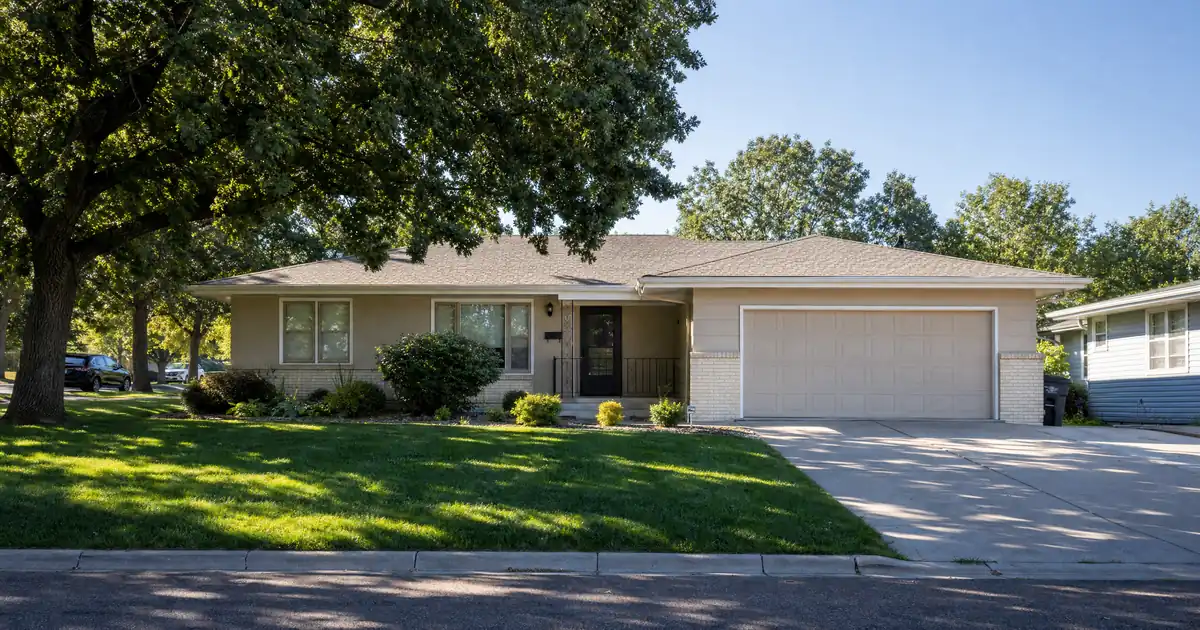
The Quick Read: A hard money cash-out refinance in Pennsylvania works in two steps. First, a short-term loan pays for the purchase or rehab. Then a new loan, sized against the property’s current value, pays off that short-term loan. Whatever equity is left goes back to the investor as cash. Many take-out loans here are DSCR loans. They qualify based on the property’s rent, not the borrower’s pay stubs. These loans typically cap around 65% loan-to-value. They also expect roughly six months of ownership before you refinance. Pennsylvania law does not make this harder than in any other state. Most of the confusion out there is just noise. The real variables are seasoning, how the property gets valued, and whether the rent covers the payment.
Investors using the BRRRR model — buy, rehab, rent, refinance, repeat — hit this moment all the time. Say you’ve got a hard money balance on a rehabbed duplex in Allentown, or a rowhome conversion in Philadelphia. The tenant is in place. Now you need a long-term loan to pay off the short-term one and pull your capital back out. That’s the whole transaction. Here’s how it actually works, where it can break down, and what underwriting really looks at.
Key Terms Defined
Hard money loan — a short-term loan secured by the property itself. Lenders size it mainly on loan-to-value, not on the borrower’s income.
Cash-out refinance — a new loan that pays off an old balance. Any leftover equity goes back to the borrower as cash.
DSCR (debt-service-coverage ratio) — this compares a property’s monthly rent to its full monthly housing payment. That payment is called PITIA: principal, interest, taxes, insurance, and association dues. A ratio above 1.00 means the rent covers the payment. Below 1.00 means it doesn’t, at least on paper.
Seasoning — the minimum time a lender wants you to own a property before refinancing it.
LTV (loan-to-value) — the new loan amount, shown as a percentage of the property’s appraised value. A 75% LTV cap means the new loan can’t go above three-quarters of what the property is worth. Exact terms depend on the lender’s guidelines, the property type, the leverage requested, and a full review of the borrower’s file.
Business-purpose loan — a loan made to an investor for a property they don’t live in. Lenders underwrite it differently than a loan on your own home.
What Actually Happens in This Transaction
A hard money cash-out refinance isn’t really one loan. It’s a handoff between two loans. The first loan — hard money, private capital, or a bridge product — funds the purchase and rehab fast. Lenders price it against the property’s value, not the borrower’s income. The second loan, usually a DSCR loan, pays off that first balance once the property is rented and stabilized. This second loan qualifies based on the rent the property now generates.
Most of the real decisions happen at that second loan. It’s worth walking through step by step.
Step 1: Acquisition and rehab on short-term capital. The investor buys the property and pays for renovations using hard money instead of a long-term mortgage. Loan-to-value, not income, drives how much a hard money lender will fund. Across the wholesale network Lendmire places files through, fix-and-flip leverage on the current program runs up to 93% of project cost for investors with five or more completed projects and up to 90% with two or more, with every tier capped at 75% of after-repair value; bridge purchases without rehab run up to 80% of purchase price, and cash-out or refinance files top out at 65% of value.
Step 2: Stabilization. The unit gets rented. The take-out lender then uses either the signed lease, or, if the unit is vacant, the appraiser’s estimated market rent, as the income figure.
Step 3: The take-out refinance is reviewed on the property. This is where DSCR underwriting takes over. Lenders compare the property’s gross monthly rent against its PITIA payment to get the coverage ratio. Across the wholesale network Lendmire places files through, most standard programs want that ratio at 1.00 or better. That’s a floor for select programs, not a rule across the whole industry. A few lenders will still review a file with weaker coverage if the borrower brings compensating factors, like extra reserves or lower requested leverage. Stronger ratios open up better leverage and pricing tiers. That part scales in a predictable way.
Step 4: The appraisal does double duty. It sets the property’s current value for the loan-to-value math. When rental income is used to qualify, a separate rent-schedule exhibit documents the rent figure too. On single-unit properties, this usually runs through the Single-Family Comparable Rent Schedule, Form 1007. On two-to-four-unit properties, it runs through Form 1025. These are agency-originated form names. The loans themselves are never sold to Fannie Mae or Freddie Mac. But non-QM and DSCR lenders widely use the same rent-schedule format, because appraiser panels are already trained on it. One thing worth flagging: appraisers aren’t supposed to fold rental income into the property’s value estimate on the 1007 itself. The rent schedule and the value opinion stay as two separate documents, doing two separate jobs.
Step 5: Payoff and proceeds. The new loan pays off the hard money balance, plus closing costs and fees. Whatever is left goes to the investor as cash-out proceeds. Investors typically put that capital back into their next acquisition.
Does Pennsylvania Law Make This Harder?
No. No Pennsylvania statute singles out cash-out refinancing on investment property for extra restriction. The “it’s harder here” chatter that shows up in investor forums doesn’t hold up. One Pennsylvania-based investor-agent put it well, and it’s worth repeating: there’s no state law creating a legal barrier here. The practical wrinkle for LLC-titled properties is that they often route through local or community commercial lending instead. That lending typically comes with longer amortization schedules and leverage in the mid-70s to 80% range. The confusion isn’t a legal obstacle. It’s just a different lending channel.
Pennsylvania law does show up on pricing, though, and it works in the investor’s favor. The state’s Loan Interest and Protection Law — Act 6 of 1974, administered by the Pennsylvania Department of Banking — sets a default 6% cap on loans of $50,000 or less. But Act 6 exempts business loans over $10,000. It also exempts loans above a statutory base figure that the department adjusts each year for inflation. Hard money and DSCR loans to investors are structured as business-purpose loans. They almost always clear both thresholds. That’s exactly why private lenders can price these products the way they do. They don’t run into the residential usury ceiling that was built for owner-occupied mortgages.
Licensing is the other state-specific layer. The Pennsylvania Department of Banking and Securities currently licenses 28,450 non-bank entities under the state’s Mortgage Licensing Act. That includes brokers, originators, lenders, and servicers. A de minimis exception excuses anyone who originates fewer than four mortgage loans a year from licensing requirements. This matters mainly to very small private lenders. It doesn’t affect institutional DSCR programs.
Why do these loans skip standard consumer mortgage paperwork in the first place? The reason is Regulation Z’s business-purpose exemption. DSCR loans are business-purpose investor loans, not owner-occupied mortgages. So lenders review them differently. They’re exempt from the standard consumer disclosure timeline, known as TRID, that applies to a home loan. That’s the trade an investor makes. You get property-based underwriting and skip the paperwork proving your personal income can repay the loan. In exchange, you give up the consumer protections built for owner-occupied borrowers. It’s a deliberate structure, not a loophole.
Key Takeaways
- Pennsylvania has no law that makes cash-out refinancing an investment property legally harder. The wrinkle for LLC-titled deals is usually about which lending channel fits, not a legal barrier.
- The take-out loan, usually DSCR, is reviewed on the property’s rent versus its full payment, not the borrower’s income documents.
- Most cash-out refinance programs across the wholesale network cap around 65% LTV. They expect roughly six months of ownership seasoning before refinancing.
- A 1.00 coverage ratio is a floor for select programs, not a universal minimum. Stronger ratios unlock better leverage.
- Clearing 1.00 on the DSCR math is not the same as positive cash flow. Repairs, vacancy, management, and capital expenditures sit outside that ratio entirely.
Hard Money Cash-Out vs. DSCR Cash-Out vs. Conventional Cash-Out
These aren’t competing products. They’re sequential tools. The differences in how they qualify and price are the whole reason an investor moves from one to the next.
| Factor | Hard Money | DSCR Cash-Out | Conventional Cash-Out |
|---|---|---|---|
| Is reviewed on | Property value / LTV | Property rent vs. payment | Borrower income, W-2s, traditional personal-income documentation |
| Typical use | Acquisition, rehab | Long-term take-out refinance | Owner-occupied or light rental |
| Seasoning | Minimal (asset-based) | Roughly 6 months typical | Often 6–18 months, agency-set |
| Documentation | Light, asset-focused | Lease or market rent, minimal income docs | Full income/employment file |
| Ideal use case | Short rehab window | Stabilized rental exiting hard money | Owner-occupant refinancing |
The point of the table isn’t to declare a winner. Hard money and DSCR are two stages of the same strategy. Conventional cash-out is built for a different borrower entirely. Confusing hard money with DSCR is a common mistake. They’re sequential tools in the same play, but priced and underwritten on completely different logic.
Where the Seasoning Clock Actually Starts
Six months of ownership is the seasoning window most cash-out refinance programs in the wholesale network expect before they’ll refinance a property. But no single government-set number governs this for DSCR loans. Variation from lender to lender is real.
On the agency side, Fannie Mae updated its cash-out eligibility policy. Now the existing first mortgage being paid off must be at least 12 months old, measured note-date to note-date, per its own selling guide update. That rule sits alongside an older, separate rule requiring at least six months of title seasoning. Neither rule applies directly to DSCR or hard money loans. These are non-QM, business-purpose products that never get sold to Fannie Mae or Freddie Mac. But the 12-month figure gets cited across the non-QM industry as an informal reference point. That causes a lot of unnecessary confusion. Don’t assume it applies to your file. Ask about the specific program instead.
Delayed financing is the real exception worth knowing. This path lets an investor who bought with all cash refinance sooner, without waiting out the standard seasoning clock. But the new loan amount typically gets capped at the lower of appraised value or documented purchase cost, not full current market value. It’s a distinct structural exception, not a shortcut around seasoning entirely. Non-QM programs commonly mirror this shape for BRRRR investors exiting all-cash deals.
What Underwriting Actually Weighs
Beyond seasoning, three things drive whether a cash-out refinance clears underwriting: the coverage ratio, the credit profile, and the loan size.
Credit tiers across the network typically run from a 620 floor in parts of the network, up through 660 as a common target for most programs. A 700+ score unlocks the strongest leverage tiers. Reserve requirements vary by lender, leverage, and loan size. Lenders commonly want around six months of PITIA held in reserve. Conservative rate-term files at modest leverage under $1,500,000 sometimes see reserves waived. Loans above that threshold typically step up toward nine months of reserves. None of these numbers are universal. They’re guidelines that shift by lender and file.
Loan sizes on standard cash-out programs generally run up to $3,000,000. Smaller balances route through select lenders that specialize in them. Above $2,500,000, the network generally holds to 30-year fixed structures instead of shorter or adjustable terms. Term structures do have some flexibility. The 30-year fixed is the spine of the market, but extended 40-year terms and interest-only periods show up through select lenders. Adjustable-rate structures exist too, for investors who specifically want that.
One thing worth being direct about: a bigger down payment lowers the payment and can lift the coverage ratio. In refinance terms, that means requesting less cash out and keeping more equity in the deal. But it never overrides the 65% LTV ceiling, the credit floor, the reserve requirement, or property eligibility rules. The strongest files clear two tests at the same time: enough equity retained in the deal, and rent that actually covers the payment. One without the other makes a weaker file, even if the math looks fine on paper. Every figure here varies by lender and program. Guidelines, property type, leverage, and credit profile all apply.
It’s also worth being blunt about what DSCR measures, and what it doesn’t. A 1.00 ratio means rent equals PITIA. It does not mean the property is cash-flow positive. Vacancy, maintenance, property management fees, utilities, and capital expenditures all sit outside that calculation. An investor clearing 1.05 on paper can still lose money in a real month with a vacancy and a roof repair. Treat the ratio as a lending threshold, not a profitability score.
Files with heavy rehab-and-hold histories tend to share a pattern. Rent-ready condition photos and a signed lease clear underwriting faster than an appraiser’s estimated market rent on a vacant unit. That’s because the file isn’t leaning on a projection. It’s a small thing, but it saves friction on plenty of BRRRR exits.
Property type matters too. Manufactured homes, whether single- or double-wide, along with log homes and barndominiums, fall outside DSCR programs across the network entirely. They aren’t harder to finance. They’re just not offered. Worth knowing before you tie up capital rehabbing one and expecting a DSCR take-out at the end.
What If the Refinance Doesn’t Happen in Time?
This is the scenario nobody wants to plan for, and everybody should. Hard money loans carry a maturity date. If the take-out refinance isn’t in place by then, the options narrow fast. You could get an extension, usually at additional cost. You could work something out with the current lender. Worst case, you face default risk. None of that is Pennsylvania-specific. It’s a structural risk built into any short-term acquisition loan anywhere. The fix happens upstream. Line up the take-out refinance conversation well before the rehab is finished. Get the property rent-ready. Confirm the coverage math before you’re staring at a maturity date with no plan.
Want to understand this transition in more depth, including how the hard money-to-DSCR handoff is typically structured for Pennsylvania properties specifically? Lendmire’s guides to residential hard money cash-out refinancing in Pennsylvania and in Philadelphia both walk through market-specific mechanics in more detail. There’s also a broader look at “Refinance Out of Hard Money Loans”, which covers the exit-planning piece directly.
Deciding If This Is the Right Move
The decision usually comes down to timing and math, not preference. Say the property is rented, has some seasoning behind it, and the rent clears — or comes close to clearing — a 1.00 coverage ratio under the select program. In that case, a cash-out refinance into a DSCR loan is typically the strongest next move. It pays off the more expensive short-term balance and frees up equity for the next deal. But if the property is still short on seasoning, or the rent doesn’t yet support the payment, the smarter play is often to wait. Adjust the rent roll, or look into a program with lower requested leverage that clears easier on coverage.
Want a deeper walkthrough of how DSCR loans work generally, including the qualification logic, the leverage bands, and how it compares across property types? Lendmire’s complete DSCR loans guide is the fuller resource. And for investors weighing hard money against DSCR as a broader strategy question beyond Pennsylvania, the hard money cash-out refinance overview lays out the national mechanics side by side.
Frequently Asked Questions
Is it legally harder to do a cash-out refinance on an investment property in Pennsylvania?
No. No Pennsylvania statute makes cash-out refinancing an investment property more restrictive than in other states. The friction some investors report usually comes from LLC-titled properties routing through community commercial lending instead of a residential DSCR channel. That’s a structural choice, not a legal barrier.
How long do I need to own a property before a hard money cash-out refinance?
Roughly six months of ownership is a common expectation across cash-out refinance programs in the wholesale network, though it varies by lender and file. Delayed financing is a separate path for investors who bought with all cash and want to refinance sooner. But the new loan typically gets capped at the lower of appraised value or documented purchase cost, rather than full current value.
Do I need a certain DSCR to qualify for the take-out refinance?
Most standard programs use 1.00 as a floor. That means rent needs to roughly cover the full monthly payment. This is a select-program threshold, not a rule across the whole industry. A few lenders in the network will still review files below that, with compensating factors like extra reserves. Leverage and terms typically adjust when coverage runs thin.
What credit score do I need for a DSCR cash-out refinance in Pennsylvania?
Credit floors run around 620 in parts of the network. 660 is a more common target for most standard programs, and 700+ unlocks the strongest leverage tiers. The exact score needed depends on the loan size, the leverage requested, and the property’s coverage ratio.
Can an LLC do a hard money cash-out refinance in Pennsylvania?
Yes. LLC-titled properties are commonly refinanced this way, subject to program eligibility and the specific lender’s guidelines. Some LLC-owned deals route through community or commercial lending channels with different amortization structures, instead of a standard residential DSCR product. It’s worth confirming which channel fits the property before assuming terms.
Program availability, loan terms, and eligibility are subject to lender guidelines, credit approval, property review, and full underwriting. This article is educational, and it is not a loan offer or commitment to lend.
For how equity extraction works on an investment property, see cash-out refinance on an investment property.
About Lendmire
Lendmire (NMLS# 2371349) is a mortgage broker that arranges DSCR investor loans through select lenders in its wholesale network. That network covers 40 states plus Washington, D.C. — 41 markets total. Sitting on a hard money balance in Pennsylvania and want to see how the refinance math pencils out on your property? Reach Lendmire at 828-256-2183, or request a quote to compare options based on the property’s income, your credit profile, and how much leverage you’re targeting. Scotsman Guide named Lendmire a Top Mortgage Workplace in both 2025 and 2026.
Tax treatment can depend on how the funds are used and how the property is held. Investors should keep clear records and speak with a qualified tax professional before relying on any deduction.
Loan approval is never guaranteed, and nothing here is a commitment to lend. Every scenario described here is subject to lender approval, and to borrower, property, and program guidelines, which can change. This article is general information only. It is not financial, legal, or tax advice.
Get Started
Ready to find the right loan for you?
In about 30 seconds you can review financing options available for your investment property. No commitment required.
Informational only. Not a Loan Estimate, approval, or commitment to lend. Program availability and eligibility are subject to lender guidelines, credit approval, property review, and underwriting.
References
1. Fannie Mae Selling Guide — B3-3.8-01 Rental Income (Form 1007/1025 reference)
2. Consumer Financial Protection Bureau — Regulation Z, § 1026.3 Exempt Transactions
This article is part of Lendmire’s hard money loan program — full qualification details, guidelines, and scenarios live on the program page.
Related reading: Residential Hard Money Cash Out Refinance Pennsylvania · Philadelphia Hard Money Cash Out Refinance Non Owner Occupied · DSCR Investment Property Loans in Gettysburg, PA: Thin Comps and Light Rent Rolls
Guides: Hard Money Loans in Pennsylvania
Brandon Miller
Founder & CEO, Mortgage Loan Originator, Lendmire LLC
- Mortgage Loan Originator · NMLS# 1129696 · Verify on NMLS Consumer Access
- North Carolina Real Estate Broker · License# 343312 · Verify on NCREC
- North Carolina Insurance Producer · License# 19053198 · Property, Casualty, Life, Health · Verify on NAIC SBS
- Lendmire LLC · Firm NMLS# 2371349 · Verify firm licensure
Disclosure information. Lendmire is a state-licensed mortgage brokerage under NMLS# 2371349. Lendmire is not a depository institution, direct lender, or financial advisor — all loans referenced are placed through wholesale lender partners and are subject to each lender's underwriting standards. This article is provided for general informational purposes and is not a commitment to lend, nor does it constitute financial, legal, or tax advice. Loan programs, terms, rates, and qualification standards change without notice and depend on borrower profile, property type, and the state in which the subject property is located. Equal Housing Opportunity provider. NMLS Consumer Access: nmlsconsumeraccess.org.