
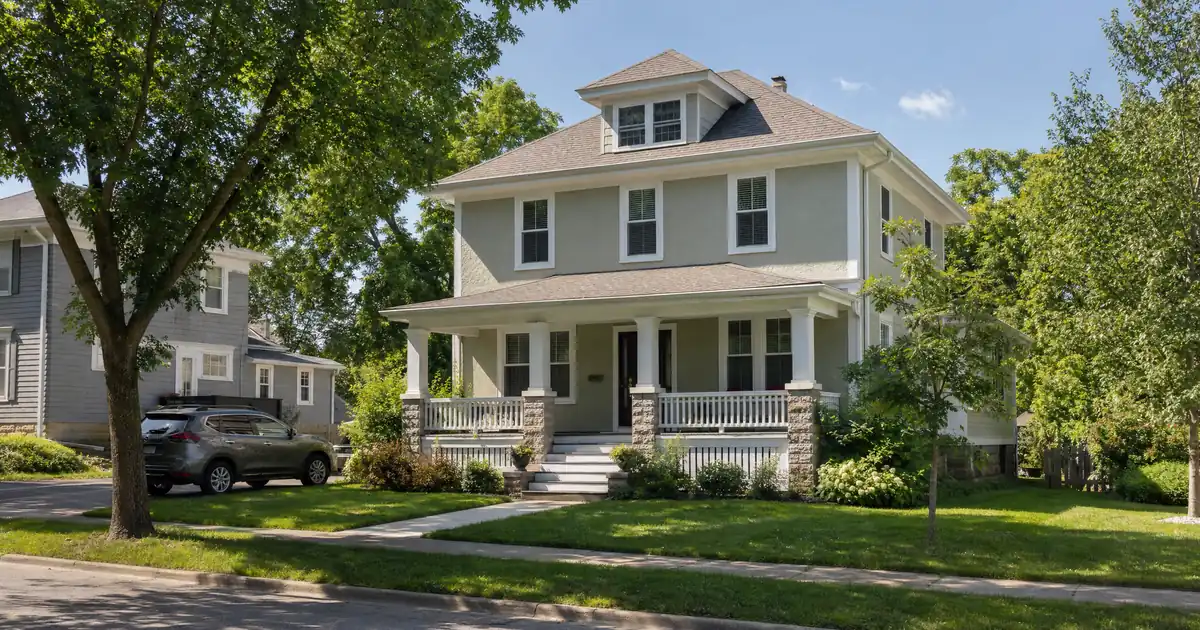
This article walks through cash out refinance on an investment property, calculating the fees that reduce your net proceeds at closing. The Quick Read: A cash-out refinance calculator for investment property tells you how much equity you can pull out of a rental. It looks at three things: the appraised value, the lender’s loan-to-value ceiling (usually capped around 75% for cash-out on a rental), and the payoff amount on your current loan. Then it subtracts closing costs and any prepayment penalty. What’s left is your net proceeds. But the number is only as good as what you feed it. DSCR coverage, seasoning, credit tier, and fee assumptions all move the final number — sometimes by a lot.
DSCR Cash-Out Calculator
Run the cash-out numbers in your market
Rate source: Freddie Mac 30-yr average via FRED® — Federal Reserve Bank of St. Louis · effective Jul 30, 2026
Prefilled with starting assumptions — enter your property’s value, balance, taxes, and insurance for a more accurate picture.
Program parameters update from Lendmire’s centralized guideline source. Taxes and insurance are editable estimates.
As of Jul 30, 2026 · General Freddie Mac market benchmark, not a Lendmire loan offer. Property value, balance, taxes, and insurance are editable estimates. Maximum loan-to-value varies by lender, program, property type, and seasoning. Not a Loan Estimate, approval, or commitment to lend. Program availability and eligibility are subject to lender guidelines, credit approval, property review, and underwriting.
Key Takeaways
- Cash-out refinance LTV on investment property typically tops out around 75%, well below the 80–85% ceiling available on a purchase loan for the same property type.
- Qualification runs primarily on the property’s rental income covering the payment (DSCR), not personal income documentation, subject to lender guidelines.
- Roughly six months of ownership is the common seasoning expectation before a lender will use current appraised value instead of original cost basis.
- Fees — origination, appraisal, title, underwriting, recording — and any existing prepayment penalty come out of gross proceeds before the investor sees a dollar.
- Delayed financing, inherited property, and co-owner buyouts each change the seasoning and LTV math in different directions.
Key Terms Defined
DSCR (Debt Service Coverage Ratio): This compares a property’s monthly rent to its full monthly obligation. That obligation includes principal, interest, taxes, insurance, and HOA dues — together known as PITIA. Lenders use this ratio to qualify the loan instead of looking at your personal income.
LTV (Loan-to-Value): This is your new loan amount shown as a percentage of the property’s appraised value. A lower LTV means more of your equity stays in the deal after closing.
Seasoning: This is how long you must own a property before a lender will size your cash-out loan against its current appraised value instead of what you originally paid.
Delayed Financing: This structure lets you skip the normal seasoning wait if you bought the property in cash. But there’s a catch: the loan is usually capped at your documented cost basis, not current value, until standard seasoning has passed.
Prepayment Penalty (Step-Down): This is a declining fee that shrinks the longer you hold the loan before refinancing it away. A common version follows a 5-4-3-2-1 schedule over five years.
How Does a Cash-Out Refinance Calculator Work for Investment Property?
The calculator answers one question: after you pay off what you owe and cover closing costs, how much cash do you actually walk away with? It runs your deal through four checkpoints in order. First comes transaction classification. Then seasoning. Then appraised value against the LTV ceiling. Then DSCR.
Step one: the file gets classified. Any refinance that puts meaningful cash back in your pocket — beyond payoff and closing costs — counts as cash-out. Smaller amounts often fall under a rate-and-term structure instead. That structure carries different leverage rules and skips the seasoning clock entirely. This classification happens first, and it decides which LTV ceiling applies to your deal.
Step two: seasoning gets checked. On most files in Lendmire’s wholesale network, you need roughly six months of ownership before a lender will use current appraised value as the LTV denominator. This varies by lender and by how you acquired the property.
Step three: the appraisal sets the value side of the equation. For one-unit rentals, this typically means a Single-Family Comparable Rent Schedule. Fannie Mae’s Form 1007 is the industry-standard version appraisers use — even though a DSCR loan never touches an agency desk. Two- to four-unit properties use a different but similar small residential income form.
Step four: DSCR and credit work together to set your leverage. A property can appraise well and still fail the coverage floor — if that happens, you don’t get full leverage no matter how much equity sits in the deal. And a strong DSCR ratio doesn’t override a leverage cap either. Both tests have to pass.
What Fees Come Out of the Payout?
Any cash-out calculator that ignores fees will show you a number that’s too good to be true. Origination, appraisal, title, underwriting, and recording costs all come out of your gross proceeds before you see a dollar. An existing prepayment penalty can take another bite. None of these fees run at a fixed dollar amount — they scale with loan size, property type, and each lender’s fee schedule.
| Fee Category | What It Covers |
|---|---|
| Origination | Lender’s cost to process and price the loan |
| Appraisal / rent schedule | Value opinion plus Form 1007/1025 rent analysis |
| Title & escrow | Lien search, title insurance, closing agent |
| Underwriting | File review, DSCR and reserve verification |
| Recording | County filing of the new deed of trust or mortgage |
A calculator that skips these line items will always overstate your net cash. The gap between the “gross cash-out available” figure and the actual wire you receive at closing is made up almost entirely of these fees, plus any prepayment penalty on the loan you’re paying off.
A Worked Example: Appraised Value to Net Proceeds
Picture an investor who bought a rental for $300,000 about two years ago. It now appraises at $400,000, and the loan balance has been paid down since purchase. At a 75% cash-out LTV ceiling, the new loan on this property caps well below what an 80% purchase LTV would allow on the same asset. That gap — between the cash-out ceiling and the purchase ceiling — is the single most important number to check before you assume purchase-style leverage applies here. Every figure varies by lender and program, so guidelines, property type, leverage, and credit profile all matter.
The gross proceeds a calculator produces sit between that LTV-capped loan amount and the existing balance being paid off. From there, several things reduce that gross figure: origination fees, appraisal costs, title charges, underwriting fees, and recording costs. If the old loan carries a step-down prepayment penalty, that comes out too. The net number — what actually lands in your account — is consistently smaller than the headline “75% of appraised value” figure most calculators lead with.
Where Does DSCR Fit Into the Calculator?
DSCR is a separate gate from the LTV and fee math. Your property has to clear both the leverage test and the coverage test to get full proceeds. Select programs in Lendmire’s wholesale network start their coverage threshold around 1.00, meaning rent needs to roughly match your full monthly obligation. Stronger coverage ratios tend to open better leverage and pricing tiers — not just easier approval.
It helps to be precise about what 1.00 actually means. Clearing that threshold covers principal, interest, taxes, insurance, and HOA. It says nothing about vacancy, repairs, management fees, or capital expenditures — those sit outside the ratio entirely. A property clearing 1.00 on paper isn’t automatically cash-flowing once you add back real operating costs.
Credit and coverage move together on most files. A 620 floor exists in parts of the network, but most standard cash-out programs look closer to 660. A 700-plus score generally unlocks the strongest leverage tier available. If you compare a dedicated cash-out refinance calculator for investment property against a generic homeowner tool, you’ll notice this is exactly where the two diverge — the homeowner version has no coverage-ratio input at all. For a fuller walkthrough of how coverage ratios, credit, and leverage interact across program tiers, Lendmire’s complete DSCR loans guide breaks down the qualification model in more depth.
DSCR loans are built for non-owner-occupied investment properties. Because they’re business-purpose investor loans, lenders review them differently than a standard owner-occupied mortgage. That’s exactly why the fee and disclosure experience feels different from a consumer refinance calculator. DSCR files are structured around property income and lender guidelines, not the standard consumer mortgage disclosure timeline.
Why Does the Seasoning Clock Matter to the Calculator?
Seasoning controls whether a calculator can even use current appraised value in the first place. Until roughly six months of ownership pass on most files, the loan often gets sized against the original cost basis instead. That can produce a much smaller cash-out figure than a calculator using post-appreciation value would suggest.
This matters most if you’re running a buy-rehab-rent-refinance strategy. Every month a stabilized, rented property sits un-refinanced costs you carrying costs on whatever acquisition financing got it there. It’s also a month your capital can’t recycle into the next deal. Delayed financing exists to shorten that wait for all-cash buyers. But it comes with a catch that trips up more investors than any other rule in this space: it generally requires that you used no mortgage financing at all — including a bridge or hard-money loan — to acquire the property. Use any acquisition debt, and the deal typically falls back into a standard seasoned cash-out refinance, full ownership clock included.
Edge Cases That Change the Calculator’s Answer
Several ownership scenarios change which inputs the calculator should even be using.
Free-and-clear properties. Owning a rental outright doesn’t unlock a higher LTV ceiling. It just changes where all the proceeds go, since there’s no existing balance to pay off. The 75% cap still applies no matter how much equity you already have in the deal.
Inherited or legally-awarded property. If you got the property through inheritance or a legal award — like a divorce settlement — you generally skip the standard seasoning clock. You didn’t buy your way into the property, so the equity-stripping concern the seasoning rule guards against doesn’t apply the same way.
Co-owner buyouts. These run the opposite direction. Jointly-owned property typically needs a longer holding period — commonly around 12 months — before a buyout counts as a lower-cash-out-style transaction instead of a full cash-out.
Short-term rentals. STR cash-out on select programs caps tighter — around 70% LTV, with roughly 12 months of hosting history expected, a 640-plus credit score, and a coverage floor still near 1.00. Appraisal treatment differs too. Form 1007 isn’t designed for short-term rental income, and appraisers can’t just multiply a nightly rate by 30 to get a monthly rent figure. Whether STR income even counts as rental income for qualifying purposes — versus business income requiring no 1007 at all — is a decision the lender makes, not the appraiser, according to a Nevada Real Estate Division briefing on the same form. Short-term rental rules can also vary by city, county, HOA, and property type. Confirm local rules before you rely on projected rental income. Final terms depend on lender guidelines, property type, leverage, and your complete credit picture.
Multifamily and condo tiering. Two-to-four unit properties and condos often carry a different — usually lower — maximum cash-out LTV than a comparable single-family rental. Property-type risk tiering is standard architecture across non-QM programs.
Investment Property vs. Primary Residence: How the Ceiling Differs
The gap between what a rental can borrow against and what a primary residence or purchase transaction can reach is the single biggest number to check before you trust any calculator’s output.
| Transaction Type | Typical LTV Ceiling | Seasoning Expectation |
|---|---|---|
| Investment property purchase | Up to 80% (85% select programs) | None |
| Investment property cash-out | Around 75% | ~6 months ownership |
| STR cash-out refinance | Around 70% | ~12 months hosting history |
A generic homeowner-refinance calculator built for primary residences will overstate what you can pull as an investor, because it typically models a higher LTV ceiling than a rental cash-out actually allows.
Prepayment Penalties and Why the Calculator Needs to Know About Them
Almost every DSCR loan carries a prepayment penalty. Any cash-out calculator that ignores the one already attached to your current loan will overstate your net proceeds. The most common format is a declining step-down — 5-4-3-2-1 across five years is typical. Under this structure, paying off the loan in year one costs more than paying it off in year four. Fixed 3-2-1 schedules over three years show up too. Some larger institutional-style DSCR loans use yield maintenance instead — a formula tied to the gap between the loan’s rate and a market benchmark rate, discounted across the remaining term. This is a structurally different, and often larger, cost.
Before running a calculator on a property with an existing DSCR loan, confirm exactly which prepayment structure applies and where the loan sits in its schedule. That single input can swing your net proceeds by a meaningful amount, and it’s the item generic calculators skip most often.
Common Mistakes Investors Make With These Calculators
Investors reaching for a cash-out calculator on a rental tend to trip on the same handful of assumptions. A property owned free and clear doesn’t get a higher LTV — the ceiling is a leverage limit, not a reward for equity. A cash purchase doesn’t automatically mean waiting out full seasoning either; delayed financing exists specifically to close that gap, as long as you used no acquisition debt. And a 1.00 DSCR doesn’t mean the property cash-flows. It means rent roughly covers PITIA, with vacancy, repairs, and management still sitting outside that number entirely.
One pattern shows up often on files that come through a DSCR cash-out refinance loan. Investors size their expected proceeds off appraised value alone, without accounting for the existing loan’s prepayment penalty. They also skip the roughly six months of PITIA reserves most programs expect on a cash-out, and reserve requirements step up to nine months for larger loan balances above $1,500,000. The number a calculator produces before reserves get verified is an estimate, not a commitment.
Loan approval is never guaranteed, and nothing here is a commitment to lend. Every cash-out scenario is subject to lender approval and to borrower, property, and program guidelines that can change. This content is general information, not financial, legal, or tax advice. Confirm figures here directly against current lender terms before you rely on them.
Frequently Asked Questions
How much can I get from a cash-out refinance on a rental property?
It depends on appraised value, the loan’s LTV ceiling (typically around 75% for cash-out), the existing balance being paid off, and DSCR coverage — not a flat percentage of value alone. Fees and any prepayment penalty on the loan being refinanced further reduce the net figure a calculator should show.
Why is the cash-out LTV lower than the purchase LTV on the same property?
Cash-out transactions carry more risk for a lender because the loan balance grows instead of simply getting restructured. That’s why cash-out typically caps around 75%, while a purchase on the same property type can reach 80% or, on select high-leverage programs, 85%.
Does owning the property free and clear help me get a bigger loan?
No. A lower starting balance changes where the proceeds go, not the maximum LTV a lender will allow. The ceiling is a leverage limit tied to risk, not a benefit tied to how much equity is already in the deal.
Can I skip the seasoning period if I bought the property with cash?
Possibly, through a delayed financing structure — as long as you used no mortgage or bridge financing to acquire the property. That structure is typically capped by your documented cost basis rather than current appraised value, until standard seasoning would otherwise be satisfied.
Does a 1.00 DSCR mean the property is cash-flowing?
Not necessarily. A 1.00 ratio means rent roughly covers principal, interest, taxes, insurance, and HOA. It doesn’t account for vacancy, repairs, management fees, or capital expenditures — those all sit outside the calculation entirely.
If you’re trying to size how much a rental could realistically pull out — and want those fees, seasoning, and coverage inputs run correctly rather than guessed at — Lendmire (NMLS# 2371349) arranges DSCR investor loans through select lenders in its wholesale network. Call Lendmire at 828-256-2183 or request a quote to see how your property’s numbers actually run.
About Lendmire
Lendmire, NMLS# 2371349, works as a non-QM mortgage broker serving real estate investors in 41 markets, including Washington, D.C., through DSCR investor loan programs. Lenders generally review qualification around the subject property’s rental income, not your W-2 history — a practical fit for LLC-titled portfolios and self-employed investors. All scenarios remain subject to lender review and program guidelines. Scotsman Guide named Lendmire a Top Mortgage Workplace two years running (2025, 2026).
For how equity extraction works on an investment property, see cash-out refinance on an investment property.
You can verify Lendmire’s Top Mortgage Workplace recognition through Scotsman Guide 2025 Top Mortgage Workplace and Scotsman Guide 2026 Top Mortgage Workplace.
Get Started
Ready to find the right loan for you?
In about 30 seconds you can review financing options available for your investment property. No commitment required.
Informational only. Not a Loan Estimate, approval, or commitment to lend. Program availability and eligibility are subject to lender guidelines, credit approval, property review, and underwriting.
References
1. Fannie Mae Selling Guide — Rental Income (B3-3.8-01)
2. McKissock Learning — Form 1007 and Its Impact on Short-Term Rental Appraisals
3. Nevada Real Estate Division — Fannie Mae Short-Term Rentals and Form 1007 Briefing
This article is part of Lendmire’s investment property cash-out refinance program — full qualification details, guidelines, and scenarios live on the program page.
Related reading: Cash Out Refinance Calculator For Investment Property · Cash Out Refinance an Investment Property Calculator · Best Refinance Mortgage for Investment Property in Minnesota
Brandon Miller
Founder & CEO, Mortgage Loan Originator, Lendmire LLC
- Mortgage Loan Originator · NMLS# 1129696 · Verify on NMLS Consumer Access
- North Carolina Real Estate Broker · License# 343312 · Verify on NCREC
- North Carolina Insurance Producer · License# 19053198 · Property, Casualty, Life, Health · Verify on NAIC SBS
- Lendmire LLC · Firm NMLS# 2371349 · Verify firm licensure
Legal disclosures. Lendmire (NMLS# 2371349) is a state-licensed mortgage brokerage that arranges financing through wholesale lender relationships. Lendmire is not a direct lender, depository institution, or registered financial advisor. The discussion above is general informational content about real estate financing — it is not financial, legal, or tax advice, and readers should consult licensed professionals for guidance on their individual circumstances. Loan inquiries are subject to lender underwriting; this article does not represent a commitment to lend. Loan terms, rates, and qualification standards vary by borrower, property, and state, and are subject to change at any time. Equal Housing Opportunity. NMLS Consumer Access: nmlsconsumeraccess.org.