
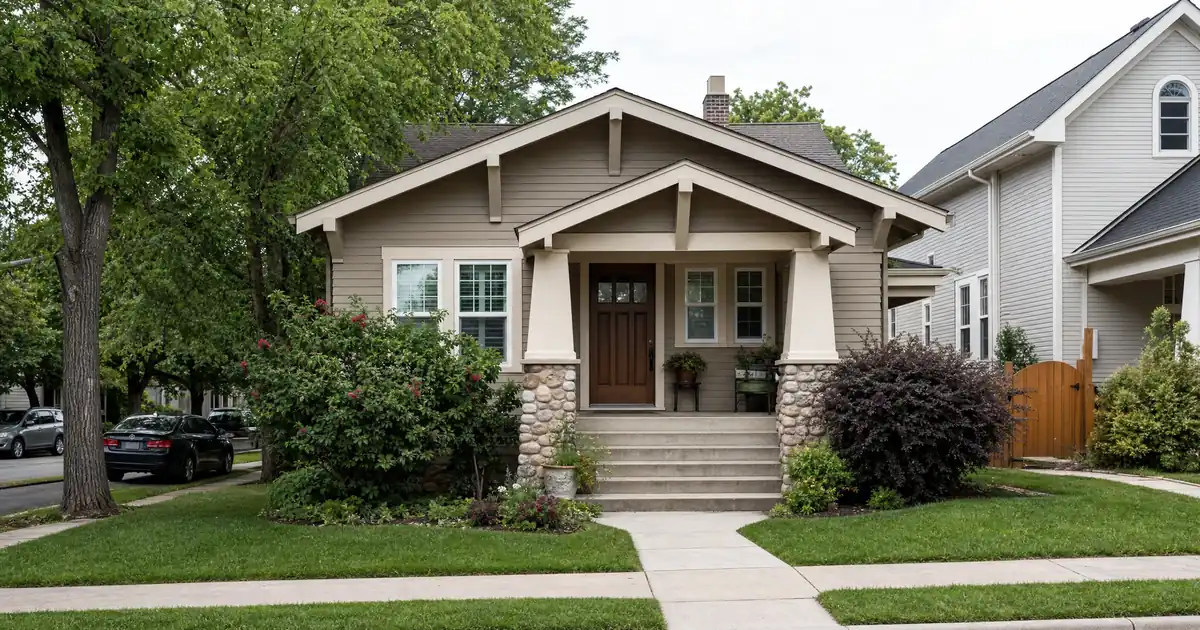
The Quick Read: A cash-out refinance on a rental property replaces the existing loan with a larger one and sends you the difference, using the property’s current value instead of your original purchase price. On DSCR programs, that new loan typically tops out around 75% loan-to-value, and most lenders want to see roughly six months of ownership before they’ll size the deal off a fresh appraisal. The math that decides whether it works isn’t your income — it’s whether the property’s rent still covers the new, bigger payment.
DSCR Cash-Out Calculator
Run the cash-out numbers in your market
Rate source: Freddie Mac 30-yr average via FRED® — Federal Reserve Bank of St. Louis · effective Jul 30, 2026
Prefilled with starting assumptions — enter your property’s value, balance, taxes, and insurance for a more accurate picture.
Program parameters update from Lendmire’s centralized guideline source. Taxes and insurance are editable estimates.
As of Jul 30, 2026 · General Freddie Mac market benchmark, not a Lendmire loan offer. Property value, balance, taxes, and insurance are editable estimates. Maximum loan-to-value varies by lender, program, property type, and seasoning. Not a Loan Estimate, approval, or commitment to lend. Program availability and eligibility are subject to lender guidelines, credit approval, property review, and underwriting.
What Counts as a Cash-Out Refinance on a Rental?
Any refinance that hands you money beyond payoff and closing costs is a cash-out refinance — a rate-and-term refinance, by contrast, just replaces the old loan with a new one at the same or lower balance. The distinction matters because cash-out deals get priced and capped differently than simple refinances, and every lender in Lendmire’s network draws that line the same way: new money out the door means a lower leverage ceiling and a closer look at reserves.
The mechanism is straightforward. An appraiser values the property today. The new loan gets sized against that value, up to the program’s leverage cap. Whatever is left after paying off the existing mortgage and closing costs goes to you. The property doesn’t need to be vacant, and it doesn’t need to be paid off — it just needs enough equity and enough rent to support a bigger loan.
Key Terms Defined
DSCR (debt-service coverage ratio): the number you get when you divide the property’s monthly rent by its monthly PITIA — the payment covering principal, interest, taxes, insurance, and association dues. A ratio of 1.00 means rent and payment are equal.
LTV (loan-to-value): the new loan balance expressed as a percentage of the appraised value. On cash-out refinances, this percentage sets the leverage ceiling and directly limits how much equity you can pull.
PITIA: shorthand for the full monthly housing obligation — principal, interest, taxes, insurance, and any HOA dues — used as the denominator in the DSCR calculation.
Seasoning: the minimum length of time a lender wants you to have held title before it will refinance against today’s value rather than your original cost.
Non-QM / business-purpose loan: a loan made to an investor for a rental or business property rather than a primary residence, underwritten outside the conventional agency rulebook.
How Underwriting Actually Treats the File, Step by Step
Every rental cash-out file moves through the same sequence, whether it’s a duplex or a ten-unit building.
Step one — the file gets classified. Intake sorts the loan as rate-and-term or cash-out the moment it’s clear money is coming back to you. That single call sets the leverage ceiling for everything downstream.
Step two — seasoning gets checked. DSCR programs treat seasoning as a lender-set guideline, not a fixed regulation. Across Lendmire’s wholesale network, roughly six months of ownership is the common baseline for full cash-out treatment at appraised value — though the exact figure varies lender to lender, which is different from how conventional financing handles this. On the agency side, Fannie Mae’s Selling Guide requires at least six months on title plus twelve months of age on any existing first mortgage being paid off — a rule that got tighter under Fannie Mae Announcement SEL-2023-01. That’s not the rule that governs DSCR loans, since DSCR loans are never sold to Fannie Mae, but it explains why so many BRRRR-style investors moved toward non-QM in the first place — the conventional clock simply doesn’t fit their timeline.
Step three — the appraisal does two jobs. A licensed appraiser values the property and estimates market rent in the same report. Fannie Mae’s rental income guidance describes the standard rent-schedule forms used for this purpose — a documentation habit DSCR underwriting borrows even though the loan never touches an agency desk. One real mechanical difference is worth knowing: agency guidelines count only 75% of reported market rent when qualifying, assuming the rest gets absorbed by vacancy and maintenance. Most DSCR programs Lendmire places files with run the coverage ratio off the full gross rent instead — a meaningful gap when you’re comparing how much “coverage” two different quotes are actually crediting.
Step four — the ratio gets recalculated on the new balance. This is the step investors miss most often. Your DSCR isn’t based on the payment history the property has carried for years — it’s based on the new, larger payment created by the cash-out. A property that’s cash-flowed comfortably at its old balance can slide toward or below 1.00 once the loan grows.
Step five — the loan gets sized against the leverage ceiling. Cash-out programs across the network generally cap around 75% LTV, tighter than purchase leverage, which can run 80% and occasionally 85% on select high-leverage programs for stronger-credit borrowers. The gap reflects the added risk of sending new money out versus simply re-papering an existing loan.
Step six — everything else gets reconciled together. Credit tier, reserves, entity documentation if the property sits in an LLC (subject to lender program eligibility), and property-type eligibility all get checked at once. A file can clear on equity and coverage and still get pended over reserves or an ineligible property type.
Because this is a business-purpose loan, income documentation looks different from a standard mortgage. DSCR loans are designed for non-owner-occupied investment properties, and because they’re business-purpose investor loans, they’re reviewed differently than an owner-occupied refinance — including sitting outside the disclosure timelines (like the Truth in Lending three-day rule) that apply to consumer mortgages. Qualification runs primarily on the property’s rental income covering the payment, subject to lender guidelines — not on your traditional personal-income documentation.
Structures and Variations Worth Knowing
DSCR isn’t the only path, and it isn’t one-size-fits-all internally either. Credit tiers in the network commonly run from a 620 floor up through 660, 680, and 700-plus, with the strongest leverage tiers reserved for borrowers clearing 700. Reserve requirements — typically around six months of PITIA — can flex; conservative rate-term files at modest leverage under $1.5 million sometimes see reserves waived, while loans above that size often step up to roughly nine months. Loan sizes generally run up to $3 million on standard programs, and above $2.5 million the network generally holds to 30-year fixed structures rather than shorter or adjustable terms.
The 30-year fixed is the spine of the space, but extended 40-year terms and interest-only periods are available through select lenders, and adjustable-rate structures exist for investors who want them. Short-term rentals get their own track entirely: purchase generally caps at 75% LTV, refinance and cash-out around 70%, with a 640-plus score, roughly twelve months of hosting history, and a 1.00 coverage floor typically expected. Short-term rental rules can also vary by city, county, HOA, and property type, so confirming local rules before relying on projected income matters as much as the loan structure itself.
A few property types simply aren’t offered through DSCR programs in the network at all: manufactured homes, both single- and double-wide, log homes, and barndominiums. That’s not “harder to finance” — it’s outside the box these programs are built to underwrite.
For a full walkthrough of how the ratio itself gets built and priced, Lendmire’s complete DSCR loans guide goes deeper than any single cash-out article can.
Where the General Rule Breaks
Six general edge cases come up often enough to name specifically.
Cash purchases and delayed financing. If you bought the property in cash — no mortgage, no seller financing — you may be able to refinance and pull funds back out without waiting through standard seasoning. This runs on a distinct underwriting path, typically capped at the lower of appraised value or documented purchase price, not a blank check against a fresh appraisal.
Value seasoning versus title seasoning. These are two separate tests, and clearing one doesn’t clear the other. You can hold title long enough to satisfy the ownership clock and still get sized off your original cost basis if you can’t document a rehab. Permits, itemized scopes of work, and before/after photos are typically what moves a lender from cost-basis to appraised-value treatment.
Multifamily leverage runs tighter than single-family. Two-to-four-unit cash-out ceilings tend to sit below single-family caps on the same platform, reflecting different loss-severity assumptions across property classes.
Short-term rental income isn’t standardized. Even on the agency side, Fannie Mae’s guidance is explicit that appraisers analyze rent on a monthly basis — you can’t simply multiply a nightly rate by thirty. DSCR lenders that accept STR income for qualification generally layer on booking-history seasoning as an additional condition, separate from ownership seasoning.
Ineligible property types don’t have a workaround. Manufactured housing, log homes, and barndominiums fall outside these programs entirely, regardless of equity position or coverage.
A stress-tested file is a stronger file. Files in markets with heavier short-term-rental concentration often come in showing tight coverage on long-term rent assumptions but clear comfortably on trailing twelve-month STR income — the stronger submissions run both scenarios side by side rather than betting the file on one number.
Is DSCR the Right Path — or Something Else?
| Path | Cash-out LTV ceiling | Is reviewed on | Occupancy |
|---|---|---|---|
| Conventional (agency) | Higher, but strict seasoning/DTI rules apply | Personal income, traditional documentation | Primary or investment |
| DSCR / non-QM | Typically up to 75% LTV | Property rent vs. PITIA | Non-owner-occupied only |
| HELOC / home equity loan | Varies by lender, often smaller draw | Personal income/credit | Either |
FHA and VA cash-out refinances generally aren’t available on pure rental property — those programs are built around owner-occupancy. Investors comparing a straight rental refinance against a HELOC or a conventional rental cash-out refinance usually land on DSCR once they’re self-employed, hold title in an LLC, or have already run into agency limits on the number of financed properties they can carry.
The real decision isn’t whether you qualify — it’s whether pulling equity out now still leaves the property with rent that comfortably covers the new obligation. A property clearing 1.00 comfortably at its old balance can land right at that line, or below it, once the payment grows with the cash-out. Clearing 1.00 also isn’t the same as positive cash flow — repairs, vacancy, management fees, utilities, and capital expenses all sit outside the DSCR math, so a file that clears on paper can still run tight in practice. A larger equity cushion lowers the new payment and can lift the ratio, but it never overrides a leverage cap, a credit floor, a reserve requirement, or a property-type exclusion. The strongest files clear both tests at once: enough equity, and enough rent. Terms vary by lender guidelines, property type, leverage, credit profile, and full file review.
Tax treatment can depend on how the funds are used and how the property is held; investors should keep clear records and talk with a qualified tax professional before relying on any deduction — Lendmire’s notes on tax treatment of cash-out proceeds is a useful starting point for that conversation.
Investor purchasing activity has stayed well above historical norms — real estate investors accounted for roughly 18% of all U.S. home purchases in 2025, up from about 15% in 2015 and just 7% in 2000, according to Redfin’s 2025 Year in Review. Much of today’s cash-out demand comes from that same investor base pulling equity built during earlier, lower-priced acquisitions rather than selling outright. Trade coverage of the space backs up the general shape of these rules: Scotsman Guide notes that many DSCR lenders won’t exceed 75% LTV on a cash-out, and that credit score still shapes terms even on a property-first product. Exact terms depend on the lender’s guidelines, property type, leverage, and a full review of the borrower’s file.
Frequently Asked Questions
Does a rental property need to be vacant to cash-out refinance?
No. The property can be occupied by a tenant on a current lease; the appraiser uses the lease or market rent to establish the DSCR input either way. A vacant unit typically gets qualified off the appraiser’s opinion of market rent instead of an actual lease.
Can I cash-out refinance a rental I hold in an LLC?
Many DSCR programs do lend to LLC-titled entities, subject to lender program eligibility and the entity’s documentation. Seasoning is usually measured from when the entity (or you personally, before a title transfer) took ownership — confirm this with the specific lender before assuming the clock resets.
Does a bigger down payment or more equity guarantee approval?
No. More equity can lower the loan amount and lift your coverage ratio, but it never overrides a leverage cap, credit floor, reserve requirement, or property-type exclusion. The strongest files clear equity and rental coverage together. Every figure here varies by lender and program — guidelines, property type, leverage, and credit profile all apply.
What happens if my DSCR falls below 1.00 after cash-out?
Select lenders in the network do offer sub-1.00 coverage structures, but leverage and terms adjust to reflect the added risk — these aren’t the same product as a standard 1.00-and-above file. A no-ratio option is available for DSCR below 1.00 with stronger credit or higher down payment; qualification on that path rests on credit and equity rather than a rent-coverage calculation.
Is a short-term rental treated the same as a long-term lease for cash-out purposes?
No. STR cash-out generally caps lower, around 70% LTV, and typically expects roughly twelve months of hosting history plus a stronger credit profile before the trailing income gets used to qualify.
For how equity extraction works, see cash-out refinance on an investment property.
About Lendmire
Lendmire (NMLS# 2371349) is a mortgage broker that arranges DSCR investor loans across 40 states plus Washington, D.C. — 41 markets total — placing files with lenders across its wholesale network rather than lending directly. Reaching someone at 828-256-2183 or requesting a quote is a reasonable next step once you know your equity position and rent numbers.
Loan approval is never guaranteed, and nothing here is a commitment to lend. Every scenario described here is subject to lender approval and to borrower, property, and program guidelines that can change. This article is general information, not financial, legal, or tax advice.
Scotsman Guide’s Top Mortgage Workplace list for 2025 documents Lendmire’s recognition.
Get Started
Ready to find the right loan for you?
In about 30 seconds you can review financing options available for your investment property. No commitment required.
Informational only. Not a Loan Estimate, approval, or commitment to lend. Program availability and eligibility are subject to lender guidelines, credit approval, property review, and underwriting.
References
1. Fannie Mae Selling Guide — B2-1.3-03, Cash-Out Refinance Transactions
2. Fannie Mae Announcement SEL-2023-01
3. Redfin — 2025 Housing Market Year in Review
4. Scotsman Guide — Reach Real Estate Investors by Becoming an Expert in These Loans
This article is part of Lendmire’s investment property cash-out refinance program — full qualification details, guidelines, and scenarios live on the program page.
Related reading: Cash Out Refinance Of Rental Property · Should I Cash Out Refinance To Invest · All Cash Rental Then Cash Out Refinance
Brandon Miller
Founder & CEO, Mortgage Loan Originator, Lendmire LLC
- Mortgage Loan Originator · NMLS# 1129696 · Verify on NMLS Consumer Access
- North Carolina Real Estate Broker · License# 343312 · Verify on NCREC
- North Carolina Insurance Producer · License# 19053198 · Property, Casualty, Life, Health · Verify on NAIC SBS
- Lendmire LLC · Firm NMLS# 2371349 · Verify firm licensure
Legal disclosures. Lendmire (NMLS# 2371349) is a state-licensed mortgage brokerage that arranges financing through wholesale lender relationships. Lendmire is not a direct lender, depository institution, or registered financial advisor. The discussion above is general informational content about real estate financing — it is not financial, legal, or tax advice, and readers should consult licensed professionals for guidance on their individual circumstances. Loan inquiries are subject to lender underwriting; this article does not represent a commitment to lend. Loan terms, rates, and qualification standards vary by borrower, property, and state, and are subject to change at any time. Equal Housing Opportunity. NMLS Consumer Access: nmlsconsumeraccess.org.