
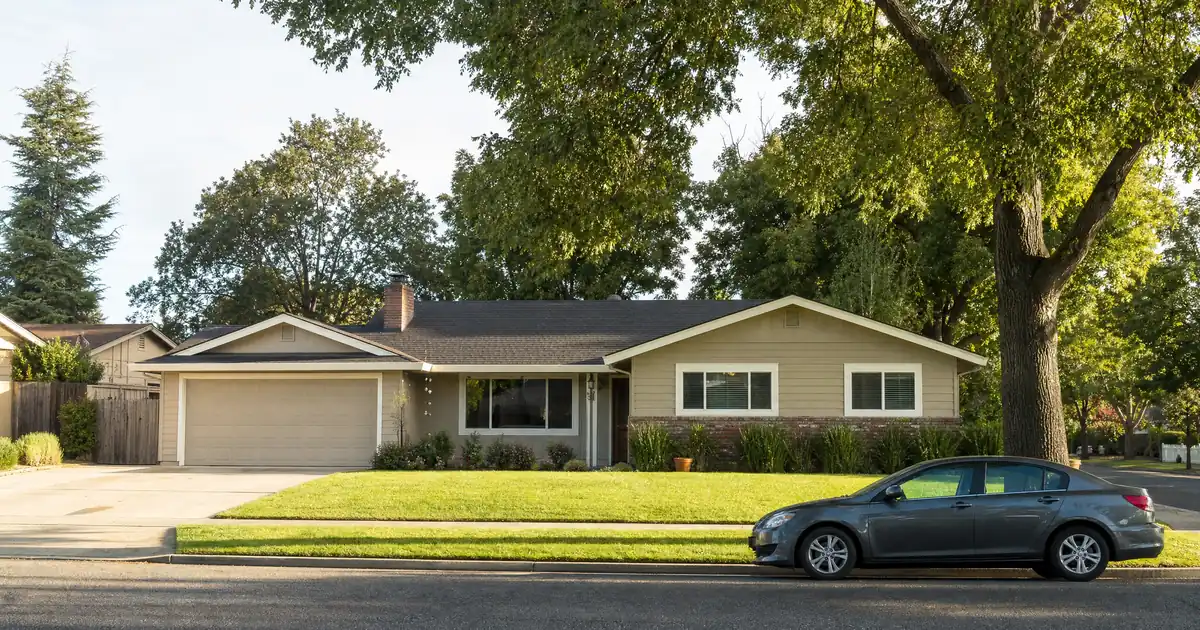
The Quick Read: Yes, investors can get a cash-out refinance on a rental property. But the mechanics work differently than a primary-residence refinance. The lender reviews the property’s rental income instead of the owner’s personal debt-to-income. Most DSCR cash-out programs cap leverage at 75% loan-to-value. They also expect roughly six months of ownership seasoning. And they want the market rent to cover the new payment at a ratio of at least 1.00x — though the strongest files clear well past that floor. The tricky parts aren’t the concept. They’re the seasoning clock, the appraisal form the rent gets pulled from, and the property types that don’t qualify at all. Every figure here varies by lender and program. Guidelines, property type, leverage, and credit profile all play a role.
Key Takeaways
- A rental-property cash-out refinance pays off the existing loan, adds new debt against the appraised value, and delivers the difference in cash at closing.
- DSCR-based cash-out refinances qualify primarily on the property’s rent-to-payment coverage, not the owner’s traditional personal-income documentation or traditional employment income, subject to lender guidelines.
- Leverage tops out around 75% LTV on most cash-out files, with roughly six months of ownership seasoning expected before the file can proceed.
- Coverage ratios below 1.00 aren’t automatically disqualifying — select programs in the network will still review them, but leverage and terms adjust accordingly.
- Manufactured homes, log homes, and barndominiums fall outside DSCR cash-out eligibility across the network — that’s a hard line, not a soft preference.
What a Cash-Out Refinance on a Rental Property Actually Does
A cash-out refinance replaces your existing mortgage with a new, bigger loan. The new loan is sized against the property’s current appraised value. You get the difference between the old payoff and the new loan amount at closing, in cash. That’s different from a rate-and-term refinance. A rate-and-term refinance just replaces the existing balance — it doesn’t pull out extra cash.
DSCR Cash-Out Calculator
Run the cash-out numbers in your market
Rate source: Freddie Mac 30-yr average via FRED® — Federal Reserve Bank of St. Louis · effective Jul 30, 2026
Prefilled with starting assumptions — enter your property’s value, balance, taxes, and insurance for a more accurate picture.
Program parameters update from Lendmire’s centralized guideline source. Taxes and insurance are editable estimates.
As of Jul 30, 2026 · General Freddie Mac market benchmark, not a Lendmire loan offer. Property value, balance, taxes, and insurance are editable estimates. Maximum loan-to-value varies by lender, program, property type, and seasoning. Not a Loan Estimate, approval, or commitment to lend. Program availability and eligibility are subject to lender guidelines, credit approval, property review, and underwriting.
The property is non-owner-occupied, so the loan counts as business-purpose credit. It’s not treated like a consumer mortgage. Here’s the plain version: DSCR loans are built for non-owner-occupied investment properties. Because they’re business-purpose investor loans, lenders review them differently than a standard owner-occupied mortgage. One legal analysis explains it this way: credit used to acquire, improve, or maintain a rental property that isn’t owner-occupied falls under the business-purpose exemption. It doesn’t fall under standard consumer-mortgage disclosure rules. That’s the only regulatory detail you need here. The rest of this article focuses on how the loan actually gets built.
Key Terms Defined
DSCR (debt-service coverage ratio): the property’s market rent divided by the full monthly obligation — principal, interest, taxes, insurance, and any HOA dues — expressed as a ratio like 1.15x.
LTV (loan-to-value): the new loan amount as a percentage of the property’s appraised value; cash-out refinances run lower LTV ceilings than purchase loans.
Seasoning: the minimum length of time an owner must hold title before a cash-out refinance is available, measured from the title recording date.
PITIA: principal, interest, taxes, insurance, and association dues combined — the denominator in the DSCR calculation.
Delayed financing: an exception that lets an investor who purchased a property with cash access a refinance without waiting out the standard seasoning period.
Business-purpose loan: a loan made for investment or commercial purposes rather than personal, family, or household use — the classification that allows property-rent-based lender review.
How Underwriting Actually Treats the File, Step by Step
Every DSCR cash-out file moves through the same sequence. This holds true no matter which lender you use, though exact thresholds shift by program.
1. Purpose classification. The lender confirms the file as business-purpose, secured by a non-owner-occupied rental. This is what lets qualification run on rent instead of personal income.
2. Seasoning check. Underwriting checks how long the current owner has held title. Most files in the network need roughly six months of ownership before a cash-out refinance is available. Investors who bought with cash often skip this step through delayed financing instead — more on that below.
3. Appraisal and rent determination. A licensed appraiser sets two numbers: the current market value (which caps the loan) and the market rent (which feeds the coverage ratio). For a single-unit property, that rent typically comes from the Single-Family Comparable Rent Schedule. This is the same rent-schedule format the broader mortgage industry uses to estimate market rent for one-unit investment properties. Two-to-four-unit properties use a different operating-income form entirely. This distinction matters because comparable selection and reserve expectations often differ between a single-family rental and a small multifamily file.
4. Coverage calculation. The rent used for lender review gets divided by the new fully-loaded payment. That produces the DSCR. A 1.00x floor is where select programs in Lendmire’s wholesale network start. It’s a program-specific baseline, never a universal industry standard. Stronger ratios open better leverage and pricing tiers.
5. Documentation. Because the loan is business-purpose, the file skips the personal income and employment verification a conventional refinance would require. The weight instead sits on the appraisal, the rent schedule, title, and — if the property closes in an LLC — entity documentation, subject to program eligibility.
6. Reserves and closing. Reserve requirements vary by lender, leverage, and loan size. Most files land around six months of PITIA. Loans above roughly $1,500,000 often step up toward nine months. Conservative rate-term refinances at modest leverage under that threshold sometimes see reserves waived entirely. None of this is fixed across the board. It’s lender-by-lender, which is exactly why working across multiple programs matters on a file that’s close to the edge.
Lendmire (NMLS# 2371349) arranges these files through select lenders in its wholesale network — it doesn’t underwrite them directly. The DSCR programs referenced here run across 41 markets, including Washington, D.C. Investors wanting a fuller walkthrough of how the ratio gets built can start with Lendmire’s complete DSCR loans guide.
The Structures and Variations That Exist
The 30-year fixed is the backbone of DSCR cash-out lending. But it isn’t the only structure available.
Extended 40-year terms and interest-only periods show up through select lenders in the network. These typically fit investors trying to stretch coverage on a tighter-margin property. ARM structures exist too, for investors who want them specifically. They usually free up short-term coverage room in exchange for rate variability down the line. Above roughly $2,500,000, the network generally holds to 30-year fixed structures only. The bigger the loan, the less room lenders give for exotic terms.
Credit tiers matter more here than most investors expect. A 620 floor exists in parts of the network. But most cash-out programs want something closer to 660. And 700-plus is where the strongest leverage tiers open up. That’s a meaningfully different qualification path than a conventional non-owner-occupied refinance. On a conventional refinance, personal debt-to-income and tax-return income carry the file. Here, a rental property whose owner’s traditional personal-income documentation understates real cash flow — heavy depreciation, multiple entities — can often still qualify a refinance on the property’s own rent, subject to lender guidelines.
Short-term rentals get their own lane entirely. Cash-out on an STR generally caps around 70% LTV. Lenders want roughly 12 months of hosting history, a 640-plus credit score, and a 1.00x coverage floor. That’s tighter than the standard long-term-rental cash-out ceiling of 75%. It reflects a real appraisal limitation covered below. Investors weighing a rental refinance for property-specific goals, including STR conversions, can compare structures through Lendmire’s page on rental property cash-out refinance.
A larger down payment or a smaller cash-out draw lowers the new payment. That can lift the coverage ratio. But it never overrides the leverage ceiling, the credit floor, the reserve rule, or property eligibility. The strongest files clear both tests at once: enough equity stays in the deal and enough rent covers the payment comfortably. One without the other still gets declined.
Where the General Rule Breaks: Edge Cases
The 75% LTV, six-month seasoning, 1.00x floor framework above is the general rule. Several real situations sit outside it. Final terms depend on lender guidelines, property type, leverage, and the borrower’s complete credit picture.
Delayed financing for cash purchasers. An investor who bought a rental with cash — no mortgage at all — typically doesn’t have to wait out the standard seasoning period a financed buyer does. Investor forums covering repeat-acquisition strategies note that the seasoning wait is the single biggest friction point in a buy-renovate-refinance cycle. A short-term loan running shorter than the seasoning period is where investors get stuck (BiggerPockets). Delayed financing exists specifically to let a cash buyer pull equity out sooner. The exact terms are set lender-by-lender, since no single regulator dictates a uniform non-agency rule here.
Short-term-rental appraisal limits. A standard rent-schedule appraisal form is built around long-term lease comparables, not nightly-rate income. Appraiser-education guidance is clear on this point: furniture, fixtures, and equipment must be excluded from the value estimate. Business income — meaning nightly rental revenue — cannot be folded into the property’s appraised value through that form (McKissock). That’s a big part of why STR cash-out programs run their own methodology and their own, tighter leverage ceiling instead of just borrowing the long-term-rental number.
Seasoning isn’t uniform across the industry. The agency side of the mortgage market runs a fixed, codified rule. It requires a minimum six months of title seasoning. It also requires that any existing first mortgage being paid off be at least twelve months old, measured note-date to note-date (Fannie Mae Selling Guide). DSCR loans are non-agency business-purpose products. They’re never sold to Fannie Mae or Freddie Mac, so that agency rule doesn’t bind them directly. But it’s the reference point the rest of the non-QM market measures itself against. That’s why seasoning policy on a DSCR file is set by the individual lender rather than a single federal standard.
Property type ineligibility. Manufactured homes — single- or double-wide — log homes, and barndominiums are not offered through DSCR cash-out programs across the network. That’s not a “harder to finance” situation. Those property types simply fall outside these programs, full stop.
State overlays. The program carries no state overlay. Connecticut, Florida, Illinois, and New Jersey follow the same limits as every other state: purchase leverage up to 80% LTV (85% by exception), cash-out up to 75% LTV, and loan amounts up to $3,000,000. Investors holding rentals in those states should expect the standard limits to shape the refinance conversation from the start. A state-specific cap shouldn’t surface as a surprise mid-file.
Tax treatment of cash-out proceeds can depend on how the funds are used and how the property is titled. Investors should keep clear records and talk to a qualified tax professional before relying on any deduction. Lendmire’s page on tax implications of a cash-out refinance is a reasonable starting point for that conversation.
Cash-Out Refi vs. HELOC vs. Home Equity Loan vs. Delayed Financing
| Feature | DSCR Cash-Out Refi | HELOC | Home Equity Loan | Delayed Financing |
|---|---|---|---|---|
| Replaces existing mortgage | Yes, single new loan | No, sits behind first mortgage | No, sits behind first mortgage | Yes, first-lien position |
| Review basis | Property rental income (DSCR) | Often personal income/equity | Often personal income/equity | Property rental income (DSCR) |
| Typical LTV ceiling | ~75% | Varies by lender | Varies by lender | Set at purchase-price basis |
| Seasoning required | ~6 months typical | Varies by lender | Varies by lender | None — for cash purchases |
| Best fit | Recycling equity for the next acquisition | Ongoing access to a credit line | One-time lump-sum need | Cash buyers wanting leverage sooner |
What the Investor Decision Looks Like in Practice
Picture a rental that has gone up in value. Say its balance has also been paid down enough to sit well under a common leverage ceiling, relative to its current appraised value. Now say the market rent — as set by the appraiser’s rent schedule — clears somewhere around 1.20x against the new fully-loaded payment. That file has real room. The coverage is strong enough to support drawing meaningful cash out while staying inside the leverage ceiling.
Now picture the same property, but with rent that lands closer to 0.95x on the new payment. That doesn’t automatically kill the file. Select lenders in the network will still review sub-1.00x scenarios. But leverage typically pulls back, pricing adjusts, and the borrower may need to bring more cash to the closing table — or accept a smaller draw — to get the file structured. A no-ratio option is available for DSCR below 1.00 with stronger credit or higher down payment; qualification on that path rests on credit and equity rather than a rent-coverage calculation.
Across files like these, one pattern keeps showing up: investors underestimate how independently value and rent move. A property can appraise strong and still produce a rent figure that barely clears coverage. Or the reverse can happen — modest appraised value with rent that clears comfortably. Both numbers come from the same appraisal. But neither one predicts the other. Treating a strong appraised value as proof the rent will also be strong is one of the more common ways a file gets re-underwritten mid-process.
Investors weighing whether to refinance or simply sell and redeploy capital elsewhere face a decision that goes beyond the loan mechanics. Lendmire’s page comparing selling a rental property versus a cash-out refinance walks through that trade-off in more depth. For most portfolio-building investors, though, the refinance path wins. It keeps the asset, keeps the tenant in place, and turns built-up equity into the down payment on the next acquisition — subject to program eligibility for LLC-titled transactions.
Loan approval is never guaranteed, and nothing here is a commitment to lend. Every scenario described here is subject to lender approval and to borrower, property, and program guidelines, and program terms can change. This article is general information, not financial, legal, or tax advice — investors should confirm current program details directly before relying on any figure or structure discussed above.
Frequently Asked Questions
Can I get a cash-out refinance on a rental property I bought with cash?
Yes — this is exactly what delayed financing is built for. Investors who purchased with cash typically don’t have to wait out the standard seasoning period a financed buyer does. But the exact terms are set lender-by-lender rather than by a single uniform rule.
Does a rental-property cash-out refinance require my traditional personal-income documentation and W-2s?
Not on a DSCR-based file. Qualification runs primarily on whether the property’s rental income covers the payment, not on personal income documentation, subject to lender guidelines. That’s a very different path than a conventional non-owner-occupied refinance, which does rely on personal debt-to-income.
What credit score do I need for a rental cash-out refinance?
A 620 floor exists in parts of the network. But most programs want something closer to 660, and 700-plus typically unlocks the strongest leverage tiers. The exact threshold depends on the lender, the loan size, and how strong the property’s coverage ratio comes in.
Can I cash-out refinance a barndominium or manufactured home rental?
No. Manufactured homes (single- or double-wide), log homes, and barndominiums fall outside DSCR cash-out programs across the network. That’s a firm eligibility line, not a stricter overlay.
How is a short-term rental treated differently in a cash-out refinance?
STR cash-out typically caps around 70% LTV instead of 75%. Lenders generally want about 12 months of hosting history plus a 640-plus credit score. Part of the reason is appraisal-related: the standard rent-schedule form used for long-term rentals can’t capture nightly-rate income, so STR files lean on a different income methodology. Short-term rental rules can also vary by city, county, HOA, and property type. Investors should confirm local rules before relying on projected rental income.
If you are buying or refinancing a rental property and want to see how the numbers work, Lendmire can help compare DSCR loan options based on the property’s income, credit profile, leverage, and investor goals — reach the team at 828-256-2183 or request a quote directly through Lendmire’s mortgage quote page.
For how equity extraction works on an investment property, see cash-out refinance on an investment property.
About Lendmire
Lendmire — NMLS# 2371349 — is a mortgage brokerage specializing in DSCR investor loans. It helps arrange financing across 41 markets, including Washington, D.C., through wholesale and investor-lending channels. The model centers on property-level rental income reviewed by the lender rather than W-2 documentation, subject to lender guidelines, which suits entity-owned and multi-property investors. Lendmire holds Scotsman Guide Top Mortgage Workplace recognition for 2025 and 2026.
Get Started
Ready to find the right loan for you?
In about 30 seconds you can review financing options available for your investment property. No commitment required.
Informational only. Not a Loan Estimate, approval, or commitment to lend. Program availability and eligibility are subject to lender guidelines, credit approval, property review, and underwriting.
References
1. Doss Law, PC — Business Purpose Exemption Simplified
2. Fannie Mae Selling Guide, B3-3.8-01 Rental Income
3. BiggerPockets — How to Invest in Real Estate With the BRRRR Method
4. McKissock Learning — Form 1007 & Its Impact on Short-Term Rental Appraisals
5. Fannie Mae Selling Guide, B2-1.3-03 Cash-Out Refinance Transactions
This article is part of Lendmire’s investment property cash-out refinance program — full qualification details, guidelines, and scenarios live on the program page.
Related reading: Complete Guide For An Investment Property Cash-out Refinance · How Cash Out Refinance Works · Bank To Refinance Investment Property Cash Out
Brandon Miller
Founder & CEO, Mortgage Loan Originator, Lendmire LLC
- Mortgage Loan Originator · NMLS# 1129696 · Verify on NMLS Consumer Access
- North Carolina Real Estate Broker · License# 343312 · Verify on NCREC
- North Carolina Insurance Producer · License# 19053198 · Property, Casualty, Life, Health · Verify on NAIC SBS
- Lendmire LLC · Firm NMLS# 2371349 · Verify firm licensure
Required disclosures. Lendmire (NMLS# 2371349) operates as a licensed mortgage broker, not a direct lender or depository. The discussion in this article is general in nature and should not be relied upon as financial, legal, or tax advice — every investment scenario is unique and should be reviewed by a qualified professional. Any loan inquiry is subject to lender underwriting, and this article is not a commitment to lend or a guarantee of approval. Mortgage rates, loan terms, and program guidelines vary by borrower, property, and state, and may change without notice. Equal Housing Opportunity. Verify licensure at NMLS Consumer Access.