
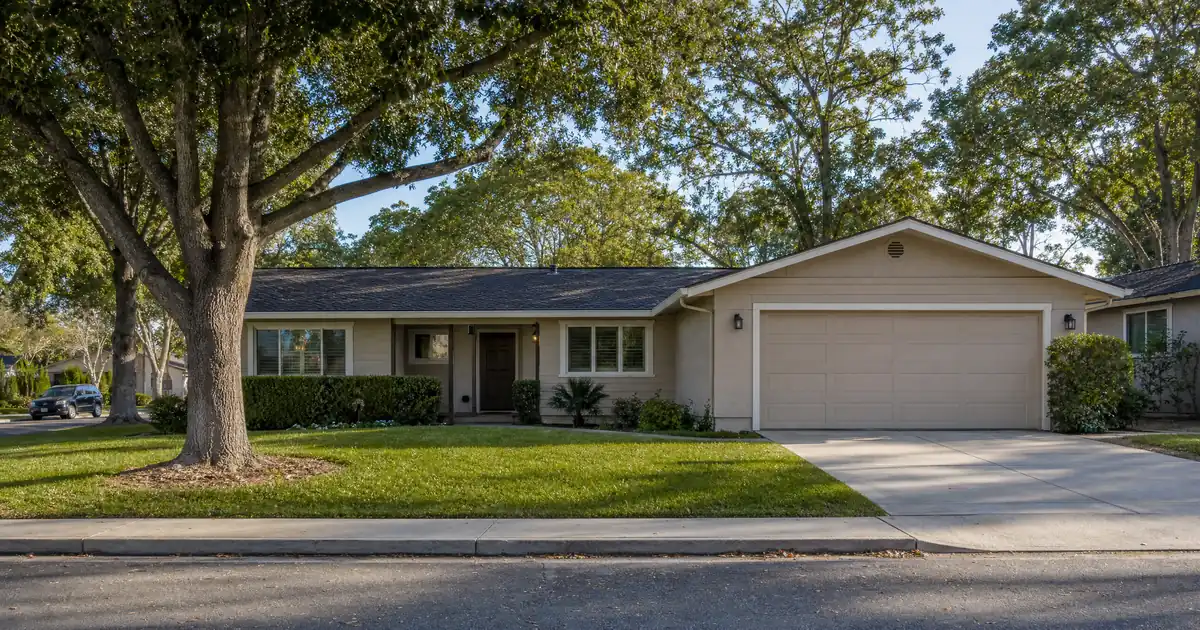
This article explains how a cash out refinance works for income property owners, from equity access to DSCR qualification. The Quick Read: A cash-out refinance on an income property swaps your current loan for a bigger one. You get the difference in cash, based on the property’s current appraised value. On DSCR-style investor loans, that new loan usually tops out around 75% of value. You’ll need roughly six months of ownership first. And qualification runs mostly off the property’s rent, not your personal income. The mechanics are simple. The underwriting order of steps is where most investors get caught off guard.
DSCR Cash-Out Calculator
Run the cash-out numbers in your market
Rate source: Freddie Mac 30-yr average via FRED® — Federal Reserve Bank of St. Louis · effective Jul 30, 2026
Prefilled with starting assumptions — enter your property’s value, balance, taxes, and insurance for a more accurate picture.
Program parameters update from Lendmire’s centralized guideline source. Taxes and insurance are editable estimates.
As of Jul 30, 2026 · General Freddie Mac market benchmark, not a Lendmire loan offer. Property value, balance, taxes, and insurance are editable estimates. Maximum loan-to-value varies by lender, program, property type, and seasoning. Not a Loan Estimate, approval, or commitment to lend. Program availability and eligibility are subject to lender guidelines, credit approval, property review, and underwriting.
Key takeaways:
- Any refinance where the new loan exceeds payoff-plus-costs is classified as cash-out — there’s no partial-credit middle ground.
- Most DSCR cash-out programs cap leverage around 75% loan-to-value (LTV), a notch below purchase leverage on the same programs.
- A roughly six-month title-seasoning period is the common expectation before a lender will refinance off current appraised value.
- Rent-versus-payment coverage — the debt-service-coverage ratio, or DSCR — drives qualification more than your traditional personal-income documentation does.
- All-cash buyers have a real workaround: delayed financing waives the waiting period, not the leverage cap. These specifics are subject to lender guidelines and a full review of property, leverage, and credit.
What Counts as a Cash-Out Refinance on a Rental Property?
Any new loan amount that beats what you need to pay off the old mortgage and closing costs gets labeled cash-out. Even a small excess counts. Almost every program treats this as a yes-or-no call, not a sliding scale.
Rate-and-term refinancing works differently. It just swaps the old loan for a new one at close to the same balance. No cash leaves the closing table. Cash-out refinancing does the opposite job on purpose. It’s how landlords and investors pull equity out of a property that’s gone up in value, been paid down, or been fixed up. That cash gets put back to work — a down payment on the next rental, a renovation on the current one, or just a cushion in the bank.
For income property, this is usually a business-purpose loan. That means the lender underwrites the property and its rent, not your paycheck. That distinction matters. It opens the door to DSCR financing — loans that qualify mainly on whether the property’s rent covers the payment, subject to lender guidelines, instead of on W-2s and personal-income paperwork. Lendmire’s complete DSCR loans guide walks through how that qualification model works from the ground up.
Key Terms Defined
DSCR (debt-service-coverage ratio): the property’s monthly rent divided by its full monthly housing obligation — principal, interest, taxes, insurance, and any HOA dues (PITIA). A ratio of 1.00 means the rent exactly covers the payment.
LTV (loan-to-value): the loan amount as a percentage of the property’s appraised value. Lower LTV means more equity cushion. It usually means better terms, too.
Seasoning: the waiting period a lender wants between one event and another. Most often, it’s how long you’ve held title before a cash-out refinance can be priced off current value.
PITIA: principal, interest, taxes, insurance, and association dues. This is the full monthly obligation used to calculate DSCR — not just principal and interest.
Business-purpose loan: a loan made for an investment or business reason, not to buy a home you’ll live in. These loans get reviewed differently from a standard owner-occupied mortgage. They follow a different underwriting path — one built around the property’s income rather than your personal financial disclosures.
How Underwriting Actually Treats a Cash-Out Refinance, Step by Step
The process runs in a fixed order. Skip ahead in your head, and you’ll likely misjudge your own timeline.
Step 1 — Classification. The lender flags the file as cash-out the moment the requested loan amount exceeds payoff-plus-costs. This triggers the lower leverage ceiling automatically.
Step 2 — Seasoning check. The lender confirms how long you’ve held recorded title. Across the DSCR and non-QM space, roughly six months from the recorded deed date is the common baseline. Each lender sets this on its own, though — it’s not one agency-mandated rule, since these loans aren’t sold to Fannie Mae or Freddie Mac.
Step 3 — Appraisal. A third-party appraiser sets the current market value. That number becomes the LTV denominator once seasoning clears. For a one-unit rental, the appraisal typically comes with a rent schedule (Fannie Mae’s Form 1007). For a two-to-four-unit property, a small residential income property report (Form 1025) documents market rent, per Fannie Mae’s Selling Guide — a format the industry still leans on for rent documentation even on non-agency files. Underwriting convention across the market takes the lower of the appraiser’s market-rent opinion or the actual signed lease. It never takes whichever number is higher.
Step 4 — DSCR calculation. Gross monthly rent gets weighed against full PITIA. A ratio at or above 1.00 is where select DSCR programs start — a floor for those specific programs, never a universal industry standard. Stronger ratios, comfortably above 1.00, typically unlock better leverage and pricing.
Step 5 — File-wide review. DSCR, LTV, credit, and reserves all get checked together. A strong coverage ratio doesn’t make up for thin reserves. A high credit score doesn’t override a leverage cap. The file has to clear every test, not just its best one.
Step 6 — Closing. Once approved, the old loan gets paid off. The remaining proceeds wire to you.
Short-term rentals get handled differently at the appraisal stage. An appraiser shouldn’t take a nightly rate and multiply it by 30 to guess monthly rent. That method ignores vacancy, furnishing costs, and the operating expenses baked into a short-term rental business, according to Marketwise Valuation’s guidance on Form 1007 and STRs. Appraisers should lean on comparable long-term lease rates instead, even on files that never touch agency eligibility.
The Structures and Variations That Exist
Not every cash-out file looks the same. The differences matter more than most investors expect going in. Across select lenders in Lendmire’s wholesale network, purchase leverage on rentals typically lands around 75-80% LTV. A handful of high-leverage programs reach 85% for borrowers around a 700 credit score. Cash-out leverage sits lower — typically capped near 75% LTV across most of the network. That lower cap reflects the added risk of new money actually leaving the deal, rather than simply re-papering an existing balance.
Credit tiers vary by lender and program. A 620 floor exists in parts of the network. Most programs want something closer to 660. And 700-plus is generally what unlocks the strongest leverage tiers. Reserve requirements — the liquid cash a lender wants left over after closing — commonly run around six months of PITIA. Conservative rate-term refinances at modest leverage under roughly $1.5 million sometimes see reserves waived entirely. Loans above that size typically step up toward nine months. Loan sizes on standard programs generally run up to about $3 million. The network generally holds to 30-year fixed structures above roughly $2.5 million.
Term structures beyond the standard 30-year fixed do exist. Extended 40-year terms and interest-only periods are available through select lenders. Adjustable-rate structures exist too, for investors who specifically want them.
Short-term rentals run their own track entirely. Purchase financing on an Airbnb-style property typically tops out around 75% LTV. Cash-out sits closer to 70%. You’ll typically need a roughly 640 credit score, about 12 months of hosting history on record, and a 1.00 DSCR floor.
Here’s something worth saying plainly: coverage below 1.00 does exist through select lenders in the network. But it comes paired with adjusted leverage and terms. It isn’t a like-for-like substitute for a fully covering file. A no-ratio option is available for DSCR below 1.00 with stronger credit or higher down payment; qualification on that path rests on credit and equity rather than a rent-coverage calculation. If your rent doesn’t clear 1.00 on paper, the conversation shifts to leverage and structure. It doesn’t shift to whether the file gets reviewed at all.
Where the General Rule Breaks: The Edge Cases
Delayed financing (all-cash buyers). The seasoning clock exists to stop an inflated recent appraisal from being used to pull cash right after closing. But there’s a real carve-out for buyers who paid cash outright. Under Fannie Mae’s delayed-financing framework, an investor can refinance within days of closing if the purchase was arm’s-length, title shows no liens, and the settlement statement documents the cash source (Fannie Mae Selling Guide, B2-1.3-03). Many DSCR programs mirror that same logic, even though they aren’t bound by the agency rule that created it. The exception waives the wait. It doesn’t waive the leverage cap or underwriting standards.
Inheritance or legal award. Agency guidance waives the title-seasoning clock entirely when a property came through inheritance, or was legally awarded in a divorce or dissolution. Non-QM programs commonly extend similar treatment, though it’s lender-specific rather than mandated.
Two seasoning clocks get confused. Title seasoning (how long you’ve owned it) and loan-age seasoning (how old the existing mortgage is) are separate tests on the agency side. DSCR lenders generally aren’t bound by that dual-test structure. That’s one reason non-QM cash-out has become a faster path for investors running buy-rehab-refinance cycles.
Owner-occupied government programs don’t apply at all. FHA and VA cash-out channels are reserved for owner-occupied borrowers. An investor can’t access either one on a rental, regardless of equity position.
Ineligible property types. Manufactured homes — single- or double-wide — along with log homes and barndominiums fall outside these DSCR programs entirely. That’s not a “harder to finance” situation. It’s simply not offered.
Regulatory disclosures work differently, too. Because DSCR loans are business-purpose loans, they generally sit outside TRID’s consumer mortgage-disclosure timeline. Borrowers typically won’t see a Loan Estimate or the standard three-day waiting period that applies to an owner-occupied refinance.
Rising prices have pushed more transactions into all-cash territory. That’s making this delayed-financing conversation more common than it used to be. From January through October of last year, 57% of vacation-home buyers and 56% of investment buyers paid entirely in cash, according to NAR’s Realtors Confidence Index. That means a growing share of investors enter the cash-out conversation from day one, not after a traditionally financed hold.
One more structural shift worth flagging: the standalone rent-schedule attachment appraisers have used for decades is being retired industry-wide on the agency side. Legacy forms get phased out on a hard mandate date, according to McKissock’s coverage of the UAD 3.6 rollout. DSCR files never touch agency eligibility directly. But appraiser panels and AMC software get shared across both worlds. Expect rent documentation formats to shift, even where the underlying rent-versus-lease underwriting logic doesn’t.
What the Decision Actually Looks Like
Picture an investor holding a duplex, modeled at a value consistent with typical duplex pricing in the area. She bought it all-cash roughly eight months ago. It’s now stabilized with two signed leases. The property clears seasoning either way, so the appraisal drives everything. Current value sets the LTV ceiling. The lower of appraised rent or actual lease rent sets the DSCR math. Say that math lands the file comfortably above 1.00x coverage at the network’s standard 75% cash-out ceiling — that’s a file with room to work with. Say instead it lands closer to 0.95x — that’s not a dead end. But it likely means adjusted leverage, not a straight pass at full LTV. Terms vary by lender guidelines, property type, leverage, credit profile, and full file review.
Here’s the honest tension: a bigger down payment on the front end, or holding for a stronger lease before refinancing, both lift the DSCR. But neither one erases the 75% cap, the credit floor, or the reserve requirement. The strongest files clear both tests at once: enough equity cushion, and enough rent coverage. One without the other usually means a smaller check at closing — not a declined file outright.
It’s also worth being blunt: a DSCR at or above 1.00 is not the same thing as positive cash flow. The ratio only measures rent against PITIA. It says nothing about vacancy, repairs, management fees, utilities, or capital expenses sitting outside that calculation. A file that clears 1.15x on paper can still run tight in practice if those other costs aren’t budgeted separately.
| Factor | Cash-Out Refinance | HELOC | Home Equity Loan |
|---|---|---|---|
| Access to funds | Lump sum at closing | Revolving draw line | Lump sum at closing |
| Underlying loan | Replaces existing mortgage | Sits behind existing mortgage | Sits behind existing mortgage |
| Review basis | Property rent (DSCR) or income | Often income/DTI-based | Often income/DTI-based |
| Typical rental use | Acquisition, renovation, reserves | Ongoing renovation draws | One-time capital project |
Where the funds get used matters for taxes, too. Deductibility can turn on how proceeds are actually spent and how the property is titled. Lendmire’s breakdown of how a cash-out refinance can affect a new income property’s tax basis digs into those mechanics. Tax treatment can depend on how the funds are used and how the property is held. Investors should keep clear records and talk with a qualified tax professional before relying on any deduction.
Investors scaling a portfolio often use the cash pulled from one refinance as the down payment on the next acquisition — a strategy Lendmire’s guide to buying another investment property with cash-out refinance proceeds covers in more depth. DSCR lender review runs off the property’s income rather than personal debt-to-income limits. Because of that, this cycle can keep working even after conventional lending would have capped an investor out.
Loan approval is never guaranteed, and nothing here is a commitment to lend. Every scenario here is subject to lender approval and to borrower, property, and program guidelines, which change and get underwritten file by file. This article is general information, not financial, legal, or tax advice.
Frequently Asked Questions
Does my rental need to be free and clear to qualify for cash-out?
No. Seasoning is about how long you’ve held title, not whether there’s an existing mortgage. A property owned for years with an active loan is fully seasoned. A property bought all-cash six weeks ago typically isn’t, absent a delayed-financing-style exception.
Can I use FHA or VA financing to cash-out refinance a rental?
No. Both programs are reserved for owner-occupied borrowers. Neither applies to non-owner-occupied investment property, regardless of your equity position. Investors typically move through conventional or DSCR channels instead.
What if my DSCR comes in just under 1.00?
Coverage below 1.00 is reviewed through select lenders in the network. But expect adjusted leverage and terms rather than the full 75% ceiling.
How is my rent actually determined for underwriting?
The lender uses the lower of the appraiser’s market-rent opinion (from Form 1007 or 1025) or your actual signed lease. It never uses whichever figure is higher, and never a nightly short-term-rental rate multiplied out to a monthly number.
Does buying through an LLC change the cash-out rules?
Continuous ownership held through an entity you majority-own or control is generally treated differently than a from-scratch entity purchase. But this varies by lender rather than following one uniform rule. Program eligibility depends on the specific lender’s guidelines.
For how equity extraction works on an investment property, see cash-out refinance on an investment property.
About Lendmire
Lendmire (NMLS# 2371349) is a mortgage broker that arranges DSCR investor loans through select lenders across a footprint of 41 markets, including Washington, D.C. Weighing a cash-out refinance against a purchase? Trying to figure out where your rent-coverage ratio actually lands? Lendmire can help you compare DSCR loan options based on the property’s income, your credit profile, available leverage, and where you’re trying to take the portfolio next. Reach the team at 828-256-2183 or request a quote to see how a specific property pencils out. Scotsman Guide named Lendmire a Top Mortgage Workplace in both 2025 and 2026.
Get Started
Ready to find the right loan for you?
In about 30 seconds you can review financing options available for your investment property. No commitment required.
Informational only. Not a Loan Estimate, approval, or commitment to lend. Program availability and eligibility are subject to lender guidelines, credit approval, property review, and underwriting.
References
1. Fannie Mae Selling Guide — Rental Income (B3-3.8-01)
2. Marketwise Valuation — Short-Term Rentals and Form 1007
3. Fannie Mae Selling Guide — Cash-Out Refinance Transactions (B2-1.3-03)
4. NAR — The Cash Buyer and the Waltz of the Rising Rates
5. McKissock — UAD 3.6 Implementation Timeline
This article is part of Lendmire’s investment property cash-out refinance program — full qualification details, guidelines, and scenarios live on the program page.
Related reading: Cash Out Refinance Of Rental Property · All Cash Rental Then Cash Out Refinance · Mistakes First Time Rental Property Buyers Make
Brandon Miller
Founder & CEO, Mortgage Loan Originator, Lendmire LLC
- Mortgage Loan Originator · NMLS# 1129696 · Verify on NMLS Consumer Access
- North Carolina Real Estate Broker · License# 343312 · Verify on NCREC
- North Carolina Insurance Producer · License# 19053198 · Property, Casualty, Life, Health · Verify on NAIC SBS
- Lendmire LLC · Firm NMLS# 2371349 · Verify firm licensure
Compliance and disclosures. Lendmire (NMLS# 2371349) is a licensed mortgage broker and is not a direct lender, depository institution, financial advisor, or tax professional. Content in this article is general market analysis and educational information — not financial, legal, or tax advice for any specific situation. Lendmire does not guarantee loan approval; every transaction is subject to underwriting by the funding lender. Mortgage pricing and loan program guidelines are subject to change at any time without notice and vary by borrower characteristics, property type, and state regulations. Lendmire complies with Equal Housing Opportunity. Licensure verification: NMLS Consumer Access.