
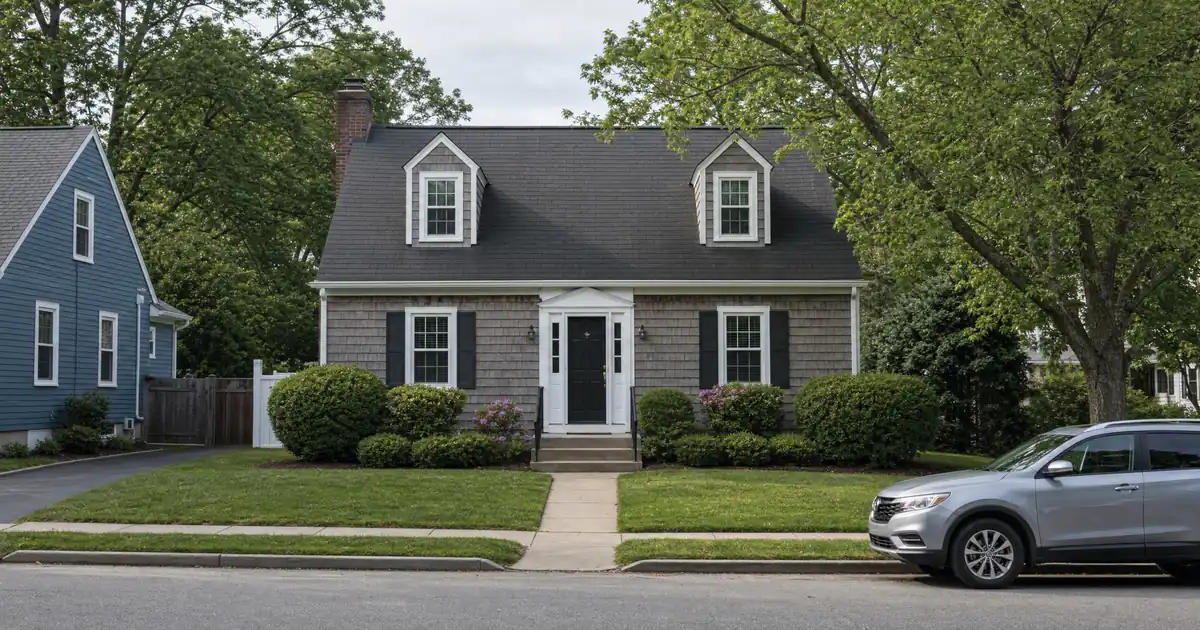
The Quick Read: Yes, investors can get a revolving equity line against a rental property. But this product looks different from a HELOC on a primary home. Credit floors are higher. The combined loan-to-value ceiling is tighter. The line size caps lower, too. Title has to sit in an individual’s name or a revocable living trust — not an LLC. Draws typically run on a five-year interest-only period. After that, the line rolls into a longer amortizing repayment term.
Before getting into mechanics, here’s what actually matters on a file like this:
How large a line the equity supports in your market.
An equity line is sized by combined loan-to-value, occupancy, and credit — not by rental coverage. Switch the occupancy or the credit band and the ceiling moves with it.
Investment-property lines require a 700 minimum credit score. Second-home tiers reach 640; primary-residence tiers reach 600.
A debt-to-income ratio above 45% requires 680+ credit. Profiles under 640 are limited to single-family homes. At least 75% of the approved line is drawn at closing. Ceilings, floors, and caps update from Lendmire’s centralized guideline source.
Line estimate
Illustrative estimate only — not a quote, Loan Estimate, approval, or commitment to lend. The rate is an editable assumption; equity-line pricing is variable through both the draw and repayment periods and never converts to fixed. Occupancy and credit drive the ceiling together: investment property runs to 70% combined LTV with a 700 credit floor and a $500,000 cap; a second home runs to 70% at a 640 floor with a $500,000 cap; a primary residence reaches up to 80% at a 600 floor, and its $750,000 maximum line applies only at 75% combined LTV or below with 720+ credit and a full appraisal. Lines above $500,000 require a full appraisal. Credit, debt-to-income, property type, and full underwriting review all affect the final line.
- Investment-property equity lines commonly max out around 70% combined loan-to-value (CLTV). The credit floor is 700, with no tier beneath it.
- Line sizes on investment property typically run up to $500,000 total. Most of that line has to be drawn at closing — not left sitting unused.
- Title has to be held by an individual or a revocable living trust. LLCs, corporations, and irrevocable trusts don’t qualify for this specific product.
- A handful of states — Texas, New Mexico, Ohio, and a cluster of others — carry their own overlays. These change the math or the eligibility rules entirely.
What Is an Equity Line on an Investment Property?
An equity line on an investment property is a revolving credit facility. It’s secured by a lien on a non-owner-occupied 1-4 unit rental. The borrower draws against available equity as needed. You pay interest only on what’s actually drawn, rather than taking a lump sum all at once. It can sit in first lien position on a free-and-clear property. Or it can sit in second position, behind an existing mortgage.
That distinction — revolving versus lump sum — matters because it changes how the debt behaves against the property over time. Picture a borrower who draws $40,000 today and $10,000 next year. That borrower owes interest on a growing balance, not on a number fixed at closing. That flexibility is the whole appeal for an investor who wants capital available for the next acquisition, a renovation, or a reserve cushion. It lets them do that without resetting the entire first mortgage.
Key Terms Defined
Combined loan-to-value (CLTV): the sum of every lien against the property — the existing first mortgage plus the new line — divided by the property’s value. This is the single biggest constraint on how much line an investor can get.
Draw period: the window during which the borrower can pull funds. On this product, that window is commonly five years. The borrower typically pays interest-only on the outstanding balance during this time.
Repayment period: the phase after the draw period ends. The line converts to a fully amortizing schedule — 25 years in most of this product’s states, 10 years in Tennessee specifically.
Junior lien / second-position lien: this is when the equity line sits behind an existing first mortgage in payoff priority. It means the first lienholder gets paid before the equity line in a foreclosure or sale.
Vesting: the legal form in which title is held — an individual, a trust, or an entity. Vesting determines who’s actually on the hook for the debt, and who can legally hold the line.
How Underwriting Actually Treats an Investment-Property Line
Underwriting on this product runs almost entirely on equity, credit, and debt-to-income. It does not run on property cash flow. That’s the sharpest contrast with a DSCR loan, where the property’s rent covering the payment does most of the qualifying work. On an equity line, the borrower’s personal debt-to-income ratio is the binding constraint. It’s calculated against the interest-only payment on the maximum available draw, not just the amount pulled at closing.
Across the wholesale network Lendmire places these files with, the DTI ceiling sits around 50% on most files. That ceiling tightens to roughly 45% for credit profiles between 600 and 679. Push past that 45% mark, and the file needs a credit score in the 680 range to clear. Investment property borrowers rarely bump into this ceiling anyway. The 700 credit floor on investment lines already screens out the weaker files that would otherwise need the tighter DTI treatment.
Valuation is the other piece that surprises investors coming from a purchase-money DSCR loan. Investment lines cap at $500,000 total, and a full appraisal only gets triggered above that threshold. Lines at or below $500,000 ordinarily run automated valuation, though a higher CLTV may require a secondary valuation — many investment lines still close without a traditional appraisal. That’s a real operational advantage — no appraiser access issues, no waiting on comps, no reconsideration-of-value fight. A borrower can still request a full appraisal if they think the automated number is undervaluing the property. But most files never need one.
The Credit and Leverage Math
Investment-property equity lines run a flatter credit-tier structure than most non-QM products. 700 is the floor, and 720 doesn’t buy extra leverage — both tiers land at the same 70% CLTV ceiling on most files. That’s worth sitting with for a second. On a purchase-money DSCR loan, a stronger score usually opens a better leverage tier. Here, credit above 700 buys nothing structural. It’s simply the price of entry.
Credit history also has to be clean in a specific way. Most programs in this space want two tradelines seasoned 12 months, or one seasoned 24 months. No rescores are allowed, and the credit report on file needs to be reasonably current. Housing payment history matters too. For scores 640 and above, the file can have no more than one 30-day late in the trailing 12 months. That tightens to a clean 0x30x12 for scores between 600 and 639 — a bar that mostly applies to primary-residence borrowers under this product, since investment properties need a higher credit floor anyway. Foreclosure-family history now splits the network: one program seasons a foreclosure in seven years and a deed-in-lieu or short sale in four, while the higher-leverage program declines the history outright — bankruptcy seasons in four years on both.
How the Draw and Repayment Structure Works
Two draw structures exist across the wholesale network: a 3-year interest-only draw with a 17-year repayment on the higher-leverage path, and a 5-year interest-only draw with a 25-year repayment on the longer-runway path — a quoted CLTV always carries its own structure. Tennessee shortens the runway on both network structures: a 3-year draw with a 12-year repayment on the higher-leverage program, and a 5-year draw with a 10-year repayment on the longer-runway program. At least 75% of the approved line typically has to be drawn at closing. That’s a meaningful difference from a consumer HELOC, where a borrower might open a line and never touch it. Draws made after closing generally need to clear a $1,000 minimum, except in Texas, where the minimum jumps to $4,000.
Pricing floats across both the draw period and the repayment period on this product. It never converts to a fixed rate. That’s a structural fact worth knowing going in, separate from any rate discussion. The line behaves like a variable-rate instrument for its entire life, not just during the draw phase.
A Worked Example: Sizing the Line
Here’s a modeled example. Picture a hypothetical rental valued at $600,000 with an existing first mortgage balance of $340,000. At a 70% CLTV ceiling, the property supports total liens up to $420,000. Subtract the existing $340,000 balance, and there’s roughly $80,000 of room for a new line. That’s comfortably inside the $500,000 investment-property cap. It’s also small enough that the loan sits squarely in the automated-valuation lane, with no appraisal delay.
Since at least 75% of an approved line has to be drawn at closing, this borrower would be drawing something in the neighborhood of $60,000 the day the line funds. The remaining room stays available for later draws, subject to that $1,000 minimum draw floor. This is a modeled scenario built purely to show how CLTV math constrains line size — not a quote, not a specific program offer. Every number here is subject to full underwriting and current lender guidelines.
Equity Line vs. Cash-Out Refinance vs. Home Equity Loan
| Factor | Investment-Property HELOC | DSCR Cash-Out Refinance | Home Equity Loan |
|---|---|---|---|
| Underwriting basis | Borrower credit, equity, DTI | Property rent vs. payment (DSCR) | Borrower credit, equity, DTI |
| Funds disbursed | Drawn as needed, revolving | Full amount at closing | Full amount at closing |
| Typical LTV/CLTV ceiling | ~70% on most files | Up to 75% on most files | Varies by lender |
| Title / vesting | Individual or revocable trust only | Individual, trust, or LLC (subject to lender program eligibility) | Varies by lender |
| First-lien impact | Existing first mortgage stays untouched | Existing first mortgage is paid off and replaced | Existing first mortgage stays untouched |
| Best fit | Draw-as-needed capital, preserving an existing low-payment first mortgage | Larger lump-sum equity pull, entity titling needed | One-time known expense with a fixed repayment schedule |
The detail that trips up most investors moving from a DSCR purchase or refinance into this product is title. A DSCR loan can typically close in an LLC name, subject to program eligibility. This equity line cannot — it has to sit with an individual borrower or a revocable living trust. A property already deeded to an LLC needs a vesting change before this product works. Or the investor needs to look at a DSCR cash-out refinance instead, which does accommodate entity-titled properties.
Where the General Rule Breaks — State and Structural Edge Cases
The 70% CLTV / 700-credit / $500,000-cap framework above is the general rule. It doesn’t hold everywhere. Knowing where it bends is most of what separates a clean file from a stalled one.
Texas runs its own rulebook — but not the one investors expect. Texas law sets a 12-day waiting period, a one-lien-at-a-time restriction, and a 12-month seasoning requirement. But these rules apply to primary residences — homestead transactions — under Texas law. Investment properties and second homes in Texas are treated as non-homestead transactions. They’re eligible without those restrictions — though Texas properties are capped at 10 acres, and the minimum subsequent draw jumps to $4,000 instead of the standard $1,000.
New Mexico and Ohio scale the CLTV cap to the credit profile, rather than applying one flat ceiling across every borrower. That means the 70% figure quoted above isn’t universal in those two states.
Six states won’t take a property that’s actively listed, or was listed within the last 60 days: Indiana, North Carolina, Pennsylvania, Tennessee, Texas, and Washington all carry that overlay. An investor testing the market on a property, while trying to pull equity from it, needs to know this before ordering the file.
Title restriction is the single biggest structural break from DSCR lending. No LLCs, no corporations, no partnerships, no irrevocable or blind trusts. Fee simple or leasehold held by an individual or a revocable living trust is the only path. Investors who’ve built a portfolio in LLC vesting for liability and tax reasons will find this product simply doesn’t reach them — not without unwinding that structure first.
Property type also breaks in predictable ways. Single-family, 2-4 unit, PUD, townhome, and condominium properties (including non-warrantable condos) are eligible, along with modular factory-built homes. Manufactured homes, co-ops, condotels, timeshares, barndominiums, log homes, commercial and mixed-use property, agriculturally zoned parcels, and raw land are not offered under this product — full stop, not “harder to finance,” just outside the box.
Exposure caps close the door on larger portfolios. A borrower can hold up to three lines, with combined exposure to $2,000,000 on the higher-leverage program ($750,000 on the longer-runway program) and a 15-financed-property limit on both. Anyone owning more than 15 financed properties isn’t eligible for this product at all. Investors scaling past that point are usually better served by a portfolio-style DSCR loan, or a straightforward cash-out refinance on individual assets.
Geography narrows the field further. This equity line product is currently available through Lendmire (NMLS# 2371349)’s 16 full-service states — Alabama, California, Colorado, Florida, Georgia, Indiana, Michigan, Montana, New Mexico, North Carolina, Ohio, Pennsylvania, Tennessee, Texas, Virginia, and Washington. That’s a considerably narrower footprint than Lendmire’s DSCR investor loan programs, available across 39 states plus Washington, D.C. An investor outside those 16 states, looking to pull equity from a rental, is almost always better routed toward a DSCR cash-out refinance instead.
What This Product Won’t Do
This equity line doesn’t qualify off rental income, and it doesn’t accept entity-titled property. DSCR loans work differently. They qualify primarily on property-level rental income covering the payment, subject to lender guidelines. That’s exactly why an investor with a portfolio held in LLCs, or a property whose rent comfortably covers its payment but whose owner’s personal DTI is stretched thin, usually gets a cleaner outcome from a DSCR loan than from this product. DSCR loans are designed for non-owner-occupied investment properties. Because they’re business-purpose investor loans, they’re reviewed differently from a standard owner-occupied mortgage.
There’s also a mechanical detail worth knowing on the consumer-protection side. Because this is a non-owner-occupied property, and not the borrower’s principal dwelling, the three-day right of rescission that applies to a primary-residence home equity transaction doesn’t attach here. That’s per Consumer Financial Protection Bureau guidance on how that right is scoped. Funds can be disbursed at closing without that waiting window — a small but real operational difference from a HELOC on the borrower’s own home.
Is a DSCR Cash-Out Refinance the Better Move?
It depends entirely on what’s blocking the file. If the obstacle is entity titling, portfolio size past 15 properties, or a state where this equity-line product isn’t offered, a DSCR cash-out refinance is almost always the cleaner path. It’s reviewed on the property’s rent covering the payment rather than personal DTI, and it works with LLC vesting, subject to lender program eligibility. If the goal is smaller, incremental access to capital while leaving an existing low-payment first mortgage untouched, the revolving line is the better fit — assuming the investor’s personal credit and title situation clear the bar described above. Reviewing Lendmire’s complete DSCR loans guide alongside this product side by side is usually the fastest way to see which structure actually matches the file in hand.
Market conditions add some context to that decision. Equity-rich mortgaged properties nationally sit at 43.3% as of Q1 2026, per ATTOM. That means there’s real equity out there, but it’s not universal. Rental yields have been compressing in more than half of tracked counties, too, as acquisition costs outrun rent growth, per HousingWire’s coverage of ATTOM data. Second-lien borrowing has become a common way investors and homeowners are tapping equity, precisely because it avoids disturbing an existing first mortgage’s balance — a pattern documented in ICE Mortgage Monitor reporting.
Tax treatment can depend on how the funds are used and how the property is held. Investors should keep clear records and speak with a qualified tax professional before relying on any deduction.
Lendmire is a mortgage broker, not a lender. It arranges and structures financing through select lenders in its wholesale network, and every scenario described above is a modeled illustration, not a loan offer. Loan approval is never guaranteed, and nothing here is a commitment to lend. All figures are subject to lender approval and to borrower, property, and program guidelines current at the time of underwriting. This article is general information only, not financial, legal, or tax advice.
If an investor is weighing whether to pull equity through a revolving line or restructure through a DSCR cash-out refinance, Lendmire can help compare both options based on the property, the borrower’s credit profile, and the investor’s goals. Reach the team at 828-256-2183 or request a quote.
Frequently Asked Questions
Can an LLC hold title on an investment-property equity line?
No. This product requires title in an individual borrower’s name or a revocable living trust. LLCs, corporations, partnerships, and irrevocable trusts are excluded. A property already deeded to an LLC would need a vesting change, or the investor would need to look at a DSCR cash-out refinance instead, which does allow entity titling subject to lender program eligibility.
What credit score is needed to qualify?
700 is the floor on investment-property lines, with no leverage advantage above it. Both the 700 and 720 tiers land at the same roughly 70% CLTV ceiling on most files. That’s different from second-home or primary-residence versions of this product, which can go lower on credit.
How big can the line get?
Investment-property lines typically cap at $500,000 total. That’s sized against a roughly 70% combined loan-to-value ceiling, minus whatever’s already owed on the property.
Does this product require a full appraisal?
Usually not. Investment lines stay at or under the $500,000 cap, and full appraisals only trigger above that threshold. So most files close off an automated valuation model instead. A borrower can still request a full appraisal if they believe the property is undervalued.
What happens if the investor owns more than 15 properties?
They’re not eligible for this specific product. At that portfolio size, a DSCR cash-out refinance or a portfolio-style DSCR structure is typically the more workable path for pulling equity across multiple assets.
About Lendmire
Lendmire, NMLS# 2371349, is a non-QM mortgage broker serving real estate investors in 40 markets, including Washington, D.C., through DSCR investor loan programs. Qualification is generally reviewed around the subject property’s rental income, not the borrower’s W-2 history — a practical fit for LLC-titled portfolios and self-employed investors. All scenarios remain subject to lender review and program guidelines. Lendmire has earned two consecutive Scotsman Guide Top Mortgage Workplace recognitions, in 2025 and 2026.
Lendmire’s Top Mortgage Workplace recognition is documented by Scotsman Guide 2025 Top Mortgage Workplace and Scotsman Guide 2026 Top Mortgage Workplace.
Get Started
Ready to find the right loan for you?
In about 30 seconds you can review financing options available for your home or investment property. No commitment required.
Informational only. Not a Loan Estimate, approval, or commitment to lend. Program availability and eligibility are subject to lender guidelines, credit approval, property review, and underwriting.
References
1. Consumer Financial Protection Bureau — Right of Rescission
2. ATTOM — Q1 2026 U.S. Home Equity & Underwater Report
3. HousingWire — ATTOM Rental Yields Falling in 2026
Brandon Miller
Founder & CEO, Mortgage Loan Originator, Lendmire LLC
- Mortgage Loan Originator · NMLS# 1129696 · Verify on NMLS Consumer Access
- North Carolina Real Estate Broker · License# 343312 · Verify on NCREC
- North Carolina Insurance Producer · License# 19053198 · Property, Casualty, Life, Health · Verify on NAIC SBS
- Lendmire LLC · Firm NMLS# 2371349 · Verify firm licensure
Important disclosures. Lendmire (NMLS# 2371349) is a licensed mortgage brokerage. Lendmire is not a direct lender, depository institution, or financial advisor. All loan inquiries are subject to lender underwriting; this article does not constitute a commitment to lend. Rates, terms, and program guidelines are subject to change without notice and vary by borrower profile, property type, and state. Information in this article is general in nature and is not financial, legal, or tax advice. Equal Housing Opportunity. NMLS Consumer Access: nmlsconsumeraccess.org.


