
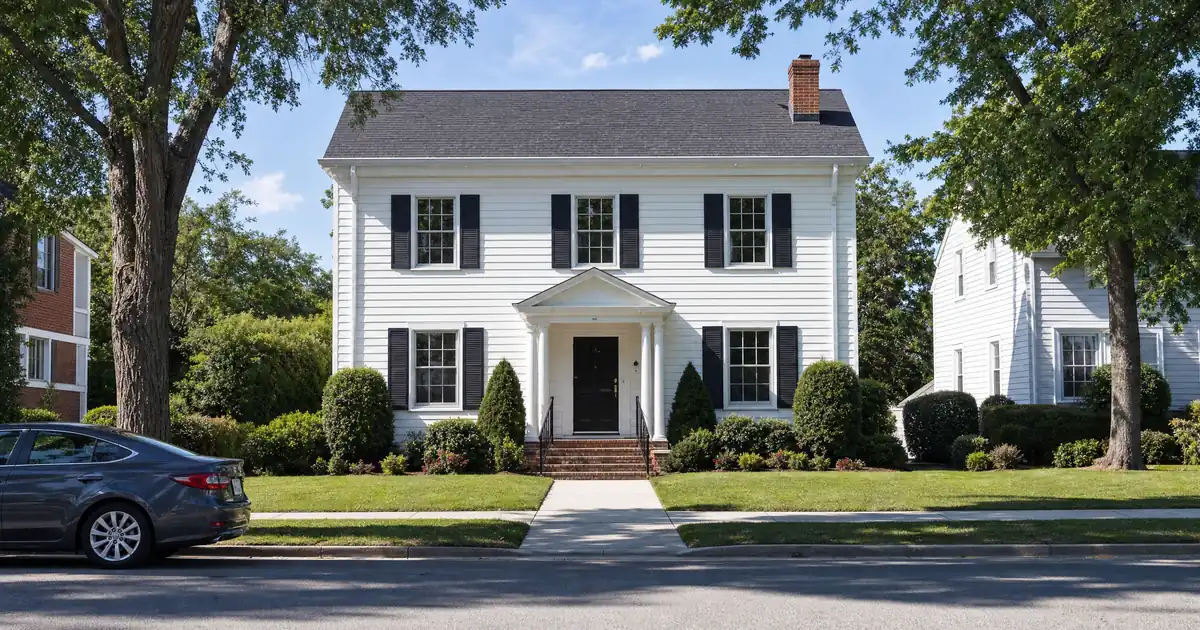
The Quick Read: You can get a home equity loan or HELOC secured by a rental property. But this path is narrower and stricter than borrowing against a home you live in. Most retail lenders want owner-occupied collateral. The programs that do work for investment property require higher credit. They also cap leverage lower and cap the line size well below what a primary-residence borrower could get. Many rental owners find that a DSCR cash-out refinance reaches more equity with fewer occupancy restrictions. Which one fits depends on your credit tier, how the property is titled, and whether you want a lump sum or a revolving line.
Key Terms Defined
HELOC stands for home equity line of credit. It’s a revolving credit line secured by a property. You draw funds as needed instead of taking one lump sum.
How large a line the equity supports in your market.
An equity line is sized by combined loan-to-value, occupancy, and credit — not by rental coverage. Switch the occupancy or the credit band and the ceiling moves with it.
Investment-property lines require a 700 minimum credit score. Second-home tiers reach 640; primary-residence tiers reach 600.
A debt-to-income ratio above 45% requires 680+ credit. Profiles under 640 are limited to single-family homes. At least 75% of the approved line is drawn at closing. Ceilings, floors, and caps update from Lendmire’s centralized guideline source.
Line estimate
Illustrative estimate only — not a quote, Loan Estimate, approval, or commitment to lend. The rate is an editable assumption; equity-line pricing is variable through both the draw and repayment periods and never converts to fixed. Occupancy and credit drive the ceiling together: investment property runs to 70% combined LTV with a 700 credit floor and a $500,000 cap; a second home runs to 70% at a 640 floor with a $500,000 cap; a primary residence reaches up to 80% at a 600 floor, and its $750,000 maximum line applies only at 75% combined LTV or below with 720+ credit and a full appraisal. Lines above $500,000 require a full appraisal. Credit, debt-to-income, property type, and full underwriting review all affect the final line.
Home equity loan is a lump-sum loan secured by a property’s equity. You typically repay it on a fixed schedule.
CLTV, or combined loan-to-value, adds up everything owed against a property — the existing mortgage plus the new line or loan. Then it divides that total by the property’s value.
DSCR, or debt-service coverage ratio, compares a rental property’s monthly rent to its own monthly housing payment. This is how non-owner-occupied investor loans qualify, instead of using personal income.
Lien position shows where a loan sits in repayment priority if a property is sold or foreclosed. A first mortgage gets paid before a second lien. Most HELOCs sit in that second spot.
Can You Actually Get a Home Equity Loan on a Rental Property?
Yes, but the market for it is much thinner than the market for primary-residence equity products. Most bank and credit union HELOC programs are built around owner-occupied collateral. Plenty of them exclude non-owner-occupied property outright in their published eligibility terms. This isn’t a rumor. It’s a structural fact of how most retail home equity products get underwritten.
Within Lendmire’s wholesale network, investment property HELOC lines are available. But they sit on a tighter table than owner-occupied lines. Typical guidelines call for a 700 minimum credit score just to qualify at all. Leverage caps around 70% CLTV, and line sizes run up to $500,000 total. Compare that to a primary residence, where lines can run higher and reach further. The gap in accessibility becomes clear. Credit above 700 doesn’t buy more leverage on the investment tier — it buys eligibility. There’s no lower rung underneath 700 for a rental property line. That’s a hard floor, not a soft target.
The Two Paths: Your Home’s Equity vs. the Rental’s Own Equity
Investors reach rental-property equity one of two ways. You can tap the paid-down equity in the home you live in, or you can tap equity sitting inside the rental itself. Each path runs through a completely different underwriting lane.
Pulling equity from a primary residence to fund a rental purchase is the more common and more accessible route. It plays inside standard owner-occupied HELOC and home equity loan underwriting. The property being pledged is the home you live in, not the rental. So the occupancy restrictions that keep so many investment-property HELOCs off the table simply don’t apply.
Pulling equity directly from a rental you already own is the harder path. The collateral itself is non-owner-occupied. That’s exactly the profile many retail lenders won’t touch. The ones who will typically apply the higher credit floor and lower leverage cap described above. This is also where the rental property home equity loan route and a DSCR cash-out refinance start to compete for the same equity. The decision usually comes down to whether you want a revolving line or a new first mortgage.
What an Investment Property HELOC Actually Looks Like
An investment HELOC through Lendmire’s network is structured as a standalone line. It sits in either first or second lien position. Two draw structures exist across the wholesale network: a 3-year interest-only draw with a 17-year repayment on the higher-leverage path, and a 5-year interest-only draw with a 25-year repayment on the longer-runway path — a quoted CLTV always carries its own structure. At least 75% of the approved line typically has to be drawn at closing. Pricing floats through both the draw and repayment periods — it never converts to a fixed structure.
The investment tier caps at $500,000, and full appraisals only come into play above that threshold on the broader line-size table. So most investment property lines close using an automated valuation model rather than a traditional walk-through appraisal. A borrower can still request a full appraisal if they want one. But structurally, the investment lane rarely needs it.
Exposure limits matter here too. A borrower can hold up to three lines, with combined exposure to $2,000,000 on the higher-leverage program ($750,000 on the longer-runway program) and a 15-financed-property limit on both. An investor who already owns more than 15 financed properties generally falls outside program eligibility. Debt-to-income also plays a role. Most files run comfortably under a 50% ceiling. But a 600-679 credit profile gets held to a tighter 45% cap. That cap is calculated against the interest-only payment on the full approved line amount, not just what’s drawn.
Property type matters as much as credit here. Single-family homes, two-to-four-unit properties, PUDs, townhomes, and both warrantable and non-warrantable condos are generally eligible. Manufactured homes, co-ops, condotels, timeshares, barndominiums, log homes, and anything zoned commercial, mixed-use, or agricultural fall outside the program entirely. They’re not harder to finance — they’re just not offered.
Where the LLC Question Breaks the HELOC Path
This is the sharpest structural difference between a rental-property HELOC and a DSCR loan. It trips up more experienced investors than beginners. Investment property HELOCs in Lendmire’s network require title to sit with an individual borrower or an inter vivos revocable living trust. LLCs, corporations, partnerships, and irrevocable, blind, or land trusts cannot hold title on these lines.
That’s a real problem for anyone who’s already deeded a rental into an LLC for liability protection — and that describes a large share of serious rental investors. In that situation, the options are limited. You can change the vesting back to personal name, which has its own tax and liability tradeoffs worth discussing with an attorney. Or you can move to a DSCR cash-out refinance instead, since DSCR programs are generally built to accommodate LLC-held title, subject to lender program eligibility. For anyone weighing which door to walk through, this single titling rule often decides things before leverage or credit ever enters the conversation. It’s worth checking the home equity loan on rental property mechanics against how your property is currently titled before applying anywhere.
The DSCR Cash-Out Alternative
For investors who don’t clear the HELOC credit floor, want more than $500,000 out, or hold title in an LLC, a DSCR cash-out refinance is usually the more practical door. It qualifies primarily on the property’s rental income covering the payment, subject to lender guidelines. It doesn’t look at personal DTI or the strict occupancy assumptions built into retail home equity underwriting.
Across the DSCR files Lendmire places, cash-out refinances typically top out around 75% LTV. Investors should expect roughly six months of ownership seasoning before the equity becomes available. Coverage matters here in a way it doesn’t for a HELOC. Select programs allow a floor as low as 1.00 DSCR, though that’s a program floor for certain lenders, never a universal standard. Stronger coverage ratios generally unlock better leverage and terms. Credit floors run lower too. Some programs in the network go as low as 620, though most want closer to 660. A score of 700 or higher opens the strongest leverage tiers. Loan sizes on these deals generally run from around $100,000 up to $3 million. Anything above $2.5 million typically lands on a 30-year fixed structure rather than an adjustable one.
It’s worth being honest about what clearing 1.00 DSCR actually means. It shows rent covers the mortgage payment. It does not mean the property is cash-flow positive after repairs, vacancy, management fees, utilities, or capital expenses — those all sit outside that ratio entirely.
For short-term rentals, the math runs similarly but tighter. Purchase leverage tops out around 75% LTV. Refinance and cash-out generally land closer to 70%. Lenders typically want a 640-plus score, along with roughly 12 months of hosting history and a 1.00 coverage floor. Appraisers can’t simply multiply a nightly rate by 30 to manufacture a monthly rent figure for these files. Those forms measure real estate value only, not projected business income (McKissock). Anyone weighing whether to take equity out of a rental to buy another property should run both the HELOC math and the DSCR math side by side before picking a lane. Lendmire’s complete DSCR loans guide walks through how the coverage ratio is calculated in more depth.
HELOC vs. DSCR Cash-Out: A Side-by-Side Look
| Feature | Investment HELOC | DSCR Cash-Out Refinance |
|---|---|---|
| Funds structure | Revolving line, interest-only draw | Lump sum, new first mortgage |
| Reviewed on | Credit and equity (CLTV) | Rent vs. payment (DSCR ratio) |
| Typical leverage | Up to 70% CLTV, $500K line cap | Up to roughly 70% LTV |
| Credit floor | 700 typical | Around 620-660 typical |
| LLC-held title | Not eligible — individual or trust only | Common, subject to lender program eligibility |
| Existing mortgage | Stays in place (junior lien option) | Fully replaced |
What Lenders Actually Look At
Both paths check similar things, just weighted differently. Credit history matters for a HELOC in a hard way. Reports need to be recent, and tradelines need seasoning. Foreclosure-family history now splits the network: one program seasons a foreclosure in seven years and a deed-in-lieu or short sale in four, while the higher-leverage program declines the history outright — bankruptcy seasons in four years on both. DSCR underwriting cares about credit too, but it leans harder on the property’s own rent-to-payment math and on reserves. Reserves commonly run around six months of the property’s housing payment, more on larger or higher-leverage loans. Some conservative rate-and-term files under certain thresholds skip this requirement entirely.
Appraisal documentation looks similar across both worlds, even outside agency lending. One-unit rentals typically get valued through a Single-Family Comparable Rent Schedule paired with the appraisal report. Two-to-four-unit properties use a Small Residential Income Property Appraisal Report. This naming convention carries over into non-agency lending even though these loans aren’t sold to Fannie Mae or Freddie Mac (Fannie Mae Selling Guide).
One thing surprises a lot of investors: simply labeling a loan “investment” or “business purpose” doesn’t automatically remove it from consumer lending rules on its own. Classification comes down to occupancy, unit count, and documented intended use, not the label stamped on the file, as compliance trade publications have pointed out for years (Compliance Alliance). DSCR loans, by contrast, are built from the ground up as business-purpose loans for non-owner-occupied property. That’s why they get reviewed outside the disclosure timelines and forms designed for consumer mortgages.
Making the Call
Say the property is titled to you personally, or to an eligible trust. Your credit clears 700, and you want a revolving line you can redraw rather than a full refinance. In that case, the HELOC path is worth pricing out first — it typically leaves your existing first mortgage untouched. Now say the property sits in an LLC, or you need more than $500,000, or your credit sits in the 620-660 range, or the rent itself is strong enough to carry the payment on its own. In any of those cases, a DSCR cash-out refinance usually opens more doors.
Lendmire (NMLS# 2371349) arranges DSCR investor loans across 39 states plus Washington, D.C. Its HELOC programs run through a narrower footprint of 16 full-service states. Investors can call 828-256-2183 or request a quote to compare both paths against a specific property and credit profile before committing to either one.
Tax treatment can depend on how the funds are used and how the property is held. Investors should keep clear records and speak with a qualified tax professional before relying on any deduction.
Loan approval is never guaranteed, and nothing here is a commitment to lend. Every scenario described is subject to lender approval, borrower qualification, property review, and program guidelines that vary by lender and change over time. This article is general information, not financial, legal, or tax advice.
Frequently Asked Questions
Can I get a HELOC on a rental property I already own outright?
Yes, through select lenders that offer investment property lines, though the terms are stricter than a primary-residence HELOC. Expect a 700 credit floor, leverage capped around 70% CLTV, and a total line size capped at $500,000 across the program.
Does a HELOC on my primary home work the same way as one on my rental?
No. A HELOC pulled from the home you live in gets underwritten under standard owner-occupied guidelines, which are more accessible than the investment property table. The property being pledged as collateral — not what the funds are used for — determines which set of rules applies.
Can an LLC-owned rental get a home equity loan or HELOC?
Generally no. Investment property HELOC programs in Lendmire’s network require title in an individual’s name or an eligible revocable living trust. LLCs, corporations, and irrevocable trusts don’t qualify. A DSCR cash-out refinance is typically the better route for LLC-held property, subject to lender program eligibility.
Is a DSCR cash-out refinance better than a HELOC for pulling equity from a rental?
It depends on the property and the investor. A DSCR cash-out refinance often reaches further — up to roughly 70% CLTV, versus a lower ceiling and a $500,000 cap on the HELOC side — and it works with LLC-held title. But it replaces the entire first mortgage rather than leaving it in place.
What credit score do I need for an investment property home equity line?
Most programs in Lendmire’s network set a 700 minimum for investment property HELOCs specifically. There’s no lower tier beneath that floor. DSCR cash-out programs run more flexibly. Some lenders go as low as 620, though 660 and above is more typical.
About Lendmire
A DSCR-focused mortgage broker, Lendmire (NMLS# 2371349) places investor financing across 40 markets — 39 states plus Washington, D.C. DSCR eligibility is generally reviewed by the lender on property cash flow instead of tax returns, subject to lender guidelines. Scotsman Guide named Lendmire a Top Mortgage Workplace in 2025 and 2026.
Lendmire’s Top Mortgage Workplace recognition is documented by Scotsman Guide 2025 Top Mortgage Workplace and Scotsman Guide 2026 Top Mortgage Workplace.
Get Started
Ready to find the right loan for you?
In about 30 seconds you can review financing options available for your home or investment property. No commitment required.
Informational only. Not a Loan Estimate, approval, or commitment to lend. Program availability and eligibility are subject to lender guidelines, credit approval, property review, and underwriting.
References
1. McKissock Learning — Form 1007 and Its Impact on Short-Term Rental Appraisals
2. Fannie Mae Selling Guide B3-3.8-01, Rental Income
3. Compliance Alliance — Regulation Z and LMQ2 Properties
Brandon Miller
Founder & CEO, Mortgage Loan Originator, Lendmire LLC
- Mortgage Loan Originator · NMLS# 1129696 · Verify on NMLS Consumer Access
- North Carolina Real Estate Broker · License# 343312 · Verify on NCREC
- North Carolina Insurance Producer · License# 19053198 · Property, Casualty, Life, Health · Verify on NAIC SBS
- Lendmire LLC · Firm NMLS# 2371349 · Verify firm licensure
Disclosure information. Lendmire is a state-licensed mortgage brokerage under NMLS# 2371349. Lendmire is not a depository institution, direct lender, or financial advisor — all loans referenced are placed through wholesale lender partners and are subject to each lender's underwriting standards. This article is provided for general informational purposes and is not a commitment to lend, nor does it constitute financial, legal, or tax advice. Loan programs, terms, rates, and qualification standards change without notice and depend on borrower profile, property type, and the state in which the subject property is located. Equal Housing Opportunity provider. NMLS Consumer Access: nmlsconsumeraccess.org.


