
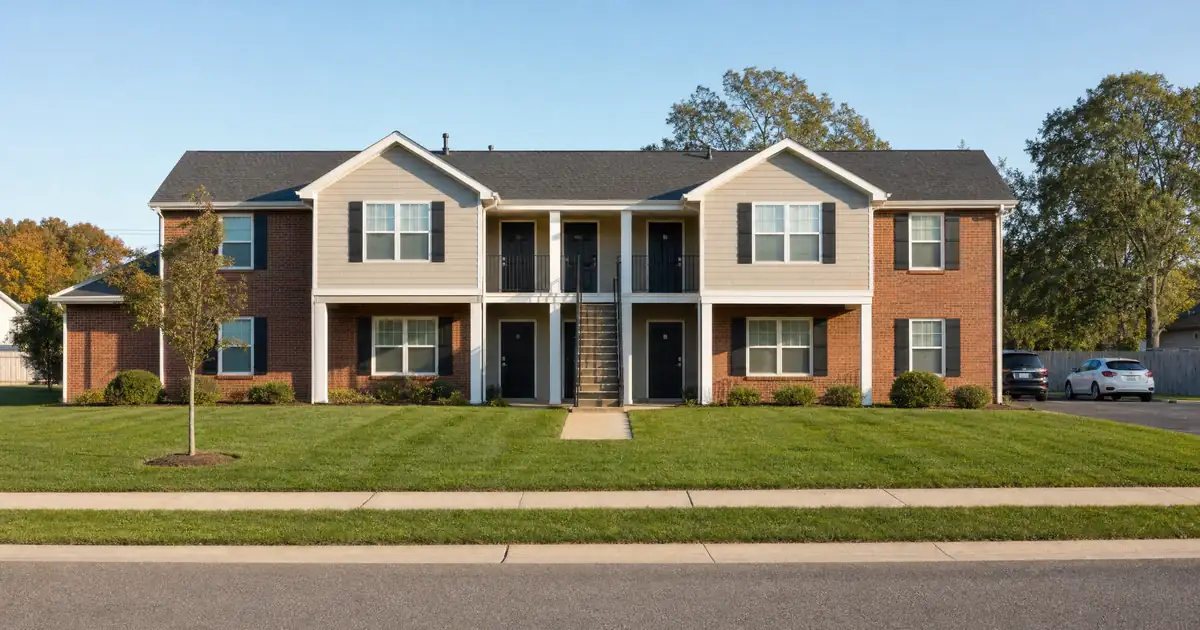
The Quick Read: Multifamily hard money lenders look at the property, not the borrower’s traditional personal-income documents. Value, equity, and the exit plan drive the decision. Across the wholesale network Lendmire places files through, fix-and-flip leverage on the current program runs up to 93% of project cost for investors with five or more completed projects and up to 90% with two or more, with every tier capped at 75% of after-repair value; bridge purchases without rehab run up to 80% of purchase price, and cash-out or refinance files top out at 65% of value. On a fix-and-flip, a lender can also add financing for up to 100% of the rehab budget on top of that acquisition number. Unit count is the one thing that changes how a file gets built the most. A 2-4 unit property and a 5+ unit building can sit on the same block. But they still get underwritten in completely different ways. Below is the mechanics, the structures, and the places where the general rule bends.
What this loan actually costs to carry in your market.
Hard money is sized against the project and priced by time. Enter the deal and see how much the program will lend, the cash required at closing, the carry while you hold it, and what is left at the exit.
Leverage tiers on the current program: up to 85% of project cost with fewer than two completed projects, 90% with two or more, 93% with five or more — every tier capped at 75% of after-repair value. Loan amounts up to $5,000,000, larger by exception; terms of 6 to 18 months, interest-only, no prepayment penalty. The rehab portion funds in draws against completed work, not at closing.
Program parameters shown update from Lendmire’s centralized guideline source. Rate, points, and months are editable assumptions, not quoted terms.
Cost cap sets the loan · positive spread
Illustrative estimate only — not a quote, Loan Estimate, approval, or commitment to lend. Rate, points, and months are editable assumptions. Hard money is business-purpose financing for real estate investors, not a consumer mortgage. Leverage on the current program tops out at 93% of project cost for investors with a documented track record, capped at 75% of after-repair value, with rehab funding up to 100% of the documented budget released in draws; actual terms vary by lender, borrower experience, property, and exit. Lendmire is a mortgage broker, not a lender.
What a Multifamily Hard Money Loan Actually Is
A multifamily hard money loan is a short-term, business-purpose loan. It’s secured by an income-producing rental building. Lenders price and structure it around the property’s value, not the borrower’s personal income documents. Investors reach for this tool when a bank’s timeline or paperwork doesn’t fit the deal. Think of a distressed acquisition, a value-add renovation, or a building that needs work before it can support a normal bank loan.
A few things worth knowing before going any further:
- Underwriting centers on the property’s value, equity position, and rent-producing potential — not traditional personal-income documentation.
- Up to 93% of project cost for investors with 5+ completed projects (90% at 2+), capped at 75% of after-repair value.
- Fix-and-flip and rehab deals can layer in financing for up to 100% of the rehab budget separately from the acquisition number — that’s a rehab-budget figure, not a purchase-price LTV.
- Up to $5,000,000, larger by exception.
- Once a building crosses five units, the whole file changes shape — different appraisal, different income analysis, different underwriting logic.
That last point is where most confusion starts. It’s worth unpacking before getting into structure.
Key Terms Defined
Hard money loan — a short-term, asset-based loan secured by real estate. Lenders underwrite it mainly on the property’s value and equity, not the borrower’s income documents.
Business-purpose loan — a loan made for an investment or business reason, not to buy or improve a primary residence. This label is what opens the door to a faster, less document-heavy underwriting path than a normal consumer mortgage.
LTV (loan-to-value) — the loan amount shown as a percentage of the property’s value. An 80% LTV loan means the lender covers 80% of the value, and the investor brings the rest. Exact terms depend on the wholesale lender’s guidelines, property type, leverage, and a full review of the borrower’s file.
NOI (net operating income) — a commercial property’s rental income after operating expenses, but before debt payments. It’s the number lenders use to size a loan on 5+ unit buildings.
DSCR (debt service coverage ratio) — a ratio comparing a property’s income to its debt payment. A ratio of 1.00 means the income matches the payment exactly. Anything above 1.00 means there’s cushion.
Bridge loan — a temporary loan. It’s meant to carry a property from purchase or renovation to a stabilized, refinanceable state.
Seasoning — the length of time a lender wants a property owned (or a loan in place) before it will allow a refinance. Lenders usually measure this in months.
How Underwriting Actually Works, Step by Step
Multifamily hard money underwriting starts with the asset. The lender protects its money by pricing the collateral accurately first. Then it layers in the sponsor’s experience and the exit plan. It does not build the file around personal income documents the way a bank would. That’s the core mechanical difference, and it shows up at every step. As a broker, Lendmire packages the file and places it with a wholesale lender. The funding lender makes the credit decision.
Step 1 — Purpose classification. Before anything else gets underwritten, the file needs one thing documented: this is business-purpose lending on a non-owner-occupied investment property. Because it’s written for an investment rather than a primary residence, it gets reviewed under different rules than a standard consumer mortgage. That’s a big part of why the process can move without the same paperwork a bank would require.
Step 2 — Collateral valuation. The funding lender orders a valuation on the property. For a stabilized deal, that means as-is value. For a renovation deal, it means as-is value plus projected value once stabilized. This is where hard money underwriting looks most different from bank underwriting: Scotsman Guide’s practitioner coverage notes that hard money lenders are experts in underwriting the asset itself to determine its value. A depository lender, by contrast, focuses on the borrower’s personal risk profile.
Step 3 — Income analysis (property size dependent). For a 2-4 unit deal, this looks close to a residential rent analysis. For a 5+ unit building, the file shifts to a full income approach. That means a current rent roll, trailing operating statements, expense ratios, and often a comparable rent analysis for the surrounding submarket. This is also where a value-add renovation gets underwritten to a projected, stabilized rent roll — not the current, pre-renovation one.
Step 4 — Leverage, credit, and reserves. Credit minimums vary by program. The current program carries a 620 minimum credit score, with additional conditions under 660; credit is one input among several in an asset-based review that centers on the property, the plan, and the exit. But stronger credit and more sponsor experience open the door to the higher end of the leverage range. Reserve expectations also vary by lender, leverage, and loan size. There’s no single universal number here. The funding lender sizes reserves to the specific file.
Step 5 — Exit review. Hard money is bridge capital, not permanent debt. So the lender wants a clear plan for paying the loan off. That could be a sale, seasoning into a long-term refinance, or another exit the sponsor has already lined up before closing.
Where the Unit Count Splits the File: 2-4 vs. 5+
The line at five units isn’t a soft guideline. It’s a structural boundary built directly into how appraisals get ordered, how income gets analyzed, and which documents a lender pulls. A fourplex and a five-unit building can look nearly identical from the street. Yet they still get underwritten in two completely different ways.
| Factor | 2–4 Unit Property | 5+ Unit Property |
|---|---|---|
| Appraisal type | Standardized residential income form | Commercial narrative, income-approach appraisal |
| Income analysis | Rent comparables, simpler rent schedule | Full rent roll, trailing operating statements, NOI |
| Underwriting logic | Closer to residential investment underwriting | True commercial multifamily underwriting |
| Typical exit path | DSCR refinance, conventional investor refi | Commercial DSCR or agency multifamily refinance |
Fannie Mae’s own Multifamily Guide sets the line for eligible multifamily collateral at five units. HUD’s knowledge base confirms this too — the standardized small-income-property appraisal form is built specifically for two-to-four-unit properties. Cross that five-unit line, and the appraiser switches to a full narrative report. That report is built on capitalization rates and multifamily comparables, not a fill-in-the-blank grid. If you’re comparing a smaller 2-4 unit acquisition to a true commercial deal, Lendmire’s residential hard money coverage is a useful companion read on where that smaller end of the spectrum sits.
Leverage, Loan Size, and Terms at a Glance
Leverage on the current program tops out at 93% of project cost for investors with five or more completed projects, capped at 75% of after-repair value, with cash-out and refinance files limited to 65% of value. The top tier is reserved for sponsors who can show a track record on comparable deals. That’s on top of the ability to finance up to 100% of a rehab budget separately on a fix-and-flip or value-add structure.
| Parameter | Typical Range |
|---|---|
| Purchase / bridge leverage | Up to 93% of project cost for investors with 5+ completed projects (90% at 2+), capped at 75% of after-repair value |
| Rehab budget financing | Up to 100% of the rehab budget, separate from purchase LTV |
| Loan size | Up to $5,000,000, larger by exception |
| Term structure | 6–18 months, interest-only, no prepayment penalty |
| Interest-only | Available on select programs |
| Collateral types | Non-owner-occupied residential, 1–4 units; ground-up construction to 10 units |
None of this is a promise of approval. Every one of these figures varies by wholesale lender, property type, sponsor experience, and program. Review details stay subject to lender overlays on any specific file. There’s no true 100% purchase-LTV multifamily hard money program in this space. On the current program the ceiling is cost-based — 90% of project cost with two or more completed projects, 93% with five or more — and every tier is capped at 75% of after-repair value. For a broader look at how this category works across property types generally, Lendmire’s hard money lending overview covers the mechanics in more depth.
Where the General Rule Breaks: Edge Cases
The 2-4 vs. 5+ unit line is the biggest structural fork in this business. But it’s not the only place the general rule bends. A few situations change the playbook entirely.
Mixed-use and specialty asset classes don’t inherit multifamily’s rules automatically. A building that looks residential on the surface — senior or independent-living housing is the clearest example — often gets priced and underwritten as a business with real estate as collateral. It doesn’t get treated as a straight multifamily asset. Scotsman Guide’s coverage of the independent-living underwriting gap makes this point directly. Multifamily underwrites like a real estate deal. Adjacent specialty housing underwrites like an operating business. Investors who assume a senior-housing acquisition will price like a standard apartment deal are usually surprised.
“Hard money” and “private lending” aren’t interchangeable, and that matters for what a lender will actually offer. Scotsman Guide’s practitioner explainer draws the distinction plainly. Hard money is a subset of the broader private-lending category. Non-QM loans are a separate product entirely — not a synonym for either. An investor who asks a “private lender” for hard-money-style bridge terms and gets a non-QM term sheet instead runs into a common mismatch. It usually starts with terminology.
A borderline acquisition can require closer purpose-testing than an obvious institutional deal. Business-purpose classification isn’t purely a unit-count question. Factors like the size of the transaction and how much of the borrower’s income the deal represents can push a small or ambiguous acquisition into a more careful review. A straightforward, larger multifamily purchase usually moves through more easily.
Not every income-producing property is offered on these programs. Manufactured housing (single- or double-wide), log homes, and barndominiums fall outside these DSCR and hard money structures entirely. That’s a program design decision, not a workaround waiting to be found.
A Worked Scenario: Value-Add Multifamily
Picture an investor underwriting a 12-unit value-add acquisition. The purchase price sits in the low seven figures, with a separate rehab budget carried alongside it for unit turns and common-area work. A wholesale lender in this space would typically size the acquisition near the upper end of the leverage range for an experienced sponsor. It would finance a meaningful share of the rehab budget on top of that. And it would require the rent roll — post-renovation, once units are turned and re-leased — to clear a coverage ratio comfortably above 1.00 before releasing any refinance exit. Treat this modeled math as illustration only. None of it is a quoted term or a specific lender commitment. Every number gets re-underwritten to the actual property and sponsor at application.
The stronger files in this category clear two tests at once, not just one. A sponsor with plenty of equity but a rent roll that barely covers debt service still has a problem. A sponsor with a strong rent roll but too little cash in the deal has a different one. Lendmire’s brokerage team sees this pattern repeat across value-add multifamily files it places. The deals that move cleanest through underwriting are the ones where the equity cushion and the projected coverage ratio both land comfortably inside guidelines at the same time — not just one or the other.
Hard Money vs. Bank or Agency Financing: The Tradeoffs
Hard money exists because bank and agency underwriting is built around a narrow credit box. That box wants clean income documentation, seasoned properties, and a straightforward story. Non-bank, asset-based capital has taken on a larger share of multifamily financing over recent years. Part of the reason is that it can serve deals that fall outside that box. Reporting on recent MBA-sourced lending data shows commercial and multifamily loan originations climbing sharply year over year, with multifamily itself a significant driver of that growth. That’s part of why private capital keeps expanding into deals banks pass on for documentation or timeline reasons.
The tradeoff is straightforward: hard money trades bank-style pricing for flexibility on documentation, property condition, and story. It’s not permanent debt. It’s a bridge, meant to carry a property from acquisition or renovation to a stabilized state where it can support long-term financing. Investors who treat it as a forever loan usually end up refinancing under pressure instead of on their own schedule.
How to Vet a Multifamily Hard Money Lender
The quality of the lender matters as much as the leverage they’ll offer. A lender that drags out underwriting or moves the goalposts mid-file can cost an investor the deal itself.
- Who is actually funding the loan? Know whether the terms in front of you come from the funding source or from a broker placing the file. Lendmire, for instance, is a mortgage broker: it structures files and places them with select wholesale lenders rather than funding loans itself. That widens the set of programs available for a given deal.
- Track record on comparable unit counts. A lender comfortable with 4-unit deals isn’t automatically comfortable underwriting a 40-unit commercial acquisition — ask specifically about experience at the property’s actual unit count.
- Clarity on rehab-budget financing. Confirm exactly how the rehab dollars get disbursed (draw schedule, inspections) before assuming the full budget is available upfront.
- Reserve and seasoning expectations spelled out early, not discovered during underwriting.
- A defined exit product. A lender or broker who can also talk through the refinance exit — not just the bridge — usually has a more complete picture of the deal. Lendmire’s ranked look at hard money lenders is a useful reference point for comparing how different lenders structure these variables, with Lendmire itself working the deal from the broker side rather than funding it.
The Exit: Refinancing Into Long-Term Financing
Most multifamily hard money loans are designed to end in a refinance, not a sale. Once the property is stabilized — units leased, renovation complete — the investor typically refinances into a long-term loan sized off the property’s own rental income. That’s where DSCR financing usually enters the picture. Qualification runs primarily on the property’s rental income covering the monthly payment, subject to lender guidelines, rather than on the borrower’s personal income documentation.
Cash-out refinances generally top out near 75% LTV, with roughly six months of seasoning expected on the property. Coverage requirements start around 1.00 on select programs — a program floor, not a universal standard — and stronger ratios tend to open better leverage and pricing. Credit floors run as low as 620 in parts of the network, though most programs look closer to 660. The strongest leverage tiers are reserved for 700-plus scores. Standard loan sizes run roughly up to $3,000,000 on standard programs, with smaller balances available through select lenders. Deals above $2,500,000 are generally structured as 30-year fixed loans. For the full picture on how this refinance product is reviewed and prices, Lendmire’s complete DSCR loans guide walks through the mechanics in depth.
Many loans in this space close in the name of an LLC or other business entity, subject to lender program eligibility. That’s part of why the underwriting stays business-purpose from the bridge loan straight through the refinance exit. Lendmire (NMLS# 2371349) arranges these DSCR investor loan placements across 39 states plus Washington, D.C. — working through select wholesale lenders rather than funding loans directly. Investors comparing bridge-to-DSCR structures on a specific deal can reach Lendmire at 828-256-2183 or request a quote directly through the site.
Tax treatment can depend on how loan proceeds are used and how the property is held. Investors should keep clear records and speak with a qualified tax professional before relying on any deduction.
Nothing above is a commitment to lend, and no loan outcome or approval is guaranteed. Every scenario is subject to lender approval and to borrower, property, and program guidelines, which can change without notice. This article is general information only and is not financial, legal, or tax advice.
Frequently Asked Questions
Do multifamily hard money lenders require personal income documentation?
No — underwriting centers on the property’s value, equity position, and rent-producing potential rather than traditional personal-income documentation, subject to lender and program guidelines. That’s the defining feature of asset-based lending. Lenders still review the sponsor’s experience and the deal’s exit plan before approving a file.
What’s the minimum credit score for a multifamily hard money loan?
It varies by wholesale lender and program. Stronger credit generally still helps on pricing and leverage even when it isn’t a hard requirement.
Can I get 100% financing on a multifamily hard money deal?
Not on the purchase itself. What gets described as “100% financing” is usually the rehab budget — a lender can finance up to 100% of the renovation scope separately from the purchase-price leverage.
How is DSCR calculated differently for 5+ unit multifamily versus a small residential rental?
On 5+ unit commercial multifamily, coverage is typically built from net operating income against debt service. Operating expenses, taxes, and insurance all factor into that NOI calculation. On 2-4 unit residential-scale DSCR loans, the ratio compares rent directly against the property’s full monthly payment. Confusing the two formulas is one of the more common ways investors misjudge what coverage ratio a given lender is actually requiring.
What happens after the hard money loan matures?
Most sponsors either sell the stabilized asset or refinance into a longer-term loan sized off the property’s rental income. That’s commonly a DSCR-style commercial or residential refinance, depending on unit count. Planning that exit before closing the bridge loan — not after — is what keeps the timeline in the investor’s control rather than the lender’s.
Many investors treat hard money as the acquisition tool and plan the exit up front – see refinancing out of a hard money loan with a DSCR loan.
Many investors treat hard money as the acquisition tool and plan the exit up front – see how DSCR loans work as the long-term exit.
About Lendmire
Lendmire is a non-QM DSCR mortgage broker (NMLS# 2371349) serving 40 markets, including 39 states plus Washington, D.C. Lendmire does not lend its own funds and is not a bank. It structures investor files and places them with select wholesale lenders, then supports the borrower through underwriting to closing. Investors can reach the team at 828-256-2183 or request a quote through the site. All terms, leverage tiers, and coverage ratios described here belong to the wholesale lenders behind the programs. They stay subject to those lenders’ guidelines, credit approval, and full underwriting. Scotsman Guide named Lendmire a Top Mortgage Workplace in both 2025 and 2026.
Get Started
Ready to find the right loan for you?
In about 30 seconds you can review financing options available for your home or investment property. No commitment required.
Informational only. Not a Loan Estimate, approval, or commitment to lend. Program availability and eligibility are subject to lender guidelines, credit approval, property review, and underwriting.
References
2. Scotsman Guide — Independent Living Underwriting Gap
Brandon Miller
Founder & CEO, Mortgage Loan Originator, Lendmire LLC
- Mortgage Loan Originator · NMLS# 1129696 · Verify on NMLS Consumer Access
- North Carolina Real Estate Broker · License# 343312 · Verify on NCREC
- North Carolina Insurance Producer · License# 19053198 · Property, Casualty, Life, Health · Verify on NAIC SBS
- Lendmire LLC · Firm NMLS# 2371349 · Verify firm licensure
Disclosure information. Lendmire is a state-licensed mortgage brokerage under NMLS# 2371349. Lendmire is not a depository institution, direct lender, or financial advisor — all loans referenced are placed through wholesale lender partners and are subject to each lender's underwriting standards. This article is provided for general informational purposes and is not a commitment to lend, nor does it constitute financial, legal, or tax advice. Loan programs, terms, rates, and qualification standards change without notice and depend on borrower profile, property type, and the state in which the subject property is located. Equal Housing Opportunity provider. NMLS Consumer Access: nmlsconsumeraccess.org.


