
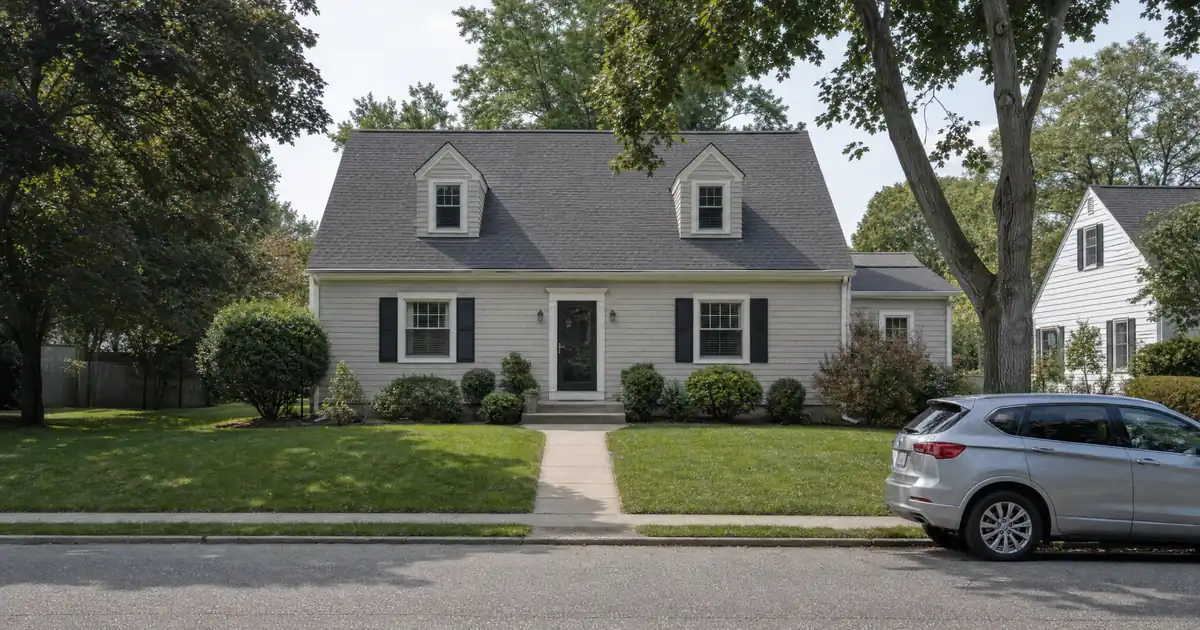
Best DSCR Refinance Lenders — The Quick Read: There’s no single “best” DSCR refinance lender. There’s a best-fit lender for your specific file. Coverage ratio, loan-to-value, seasoning on title, property type, and how much cash you’re pulling out all point toward different corners of the non-QM market. The strongest approach isn’t picking a name off a list. It’s understanding how DSCR refinance underwriting actually works, then matching your deal to a lender whose guidelines fit it. This piece walks through that process start to finish, plus the edge cases where the general rule doesn’t hold.
Key Takeaways
- DSCR refinance lenders qualify the loan on the property’s rent, not your personal income or traditional personal-income documentation. But “best” depends on your leverage need, credit tier, and property type.
- Cash-out refinances carry seasoning requirements (commonly around six months of ownership) and a lower loan-to-value ceiling than rate-and-term refinances.
- Coverage of 1.00 — rent equal to the full monthly obligation — is a floor on select programs, not a universal industry standard. Stronger ratios open better leverage.
- Short-term rental refinances, condotels, and sub-1.00 coverage files all get underwritten differently than a standard long-term-rental refinance.
- Some property types — manufactured homes, log homes, barndominiums — sit outside DSCR programs entirely, regardless of how strong the rental income looks.
Key Terms Defined
DSCR (Debt Service Coverage Ratio): Divide the monthly rent by the full monthly housing payment. That payment includes principal, interest, taxes, insurance, and any association dues, often shortened to PITIA. A ratio of 1.00 means rent exactly covers that payment.
DSCR Calculator
Run the numbers in your market
Rate source: Freddie Mac 30-yr average via FRED® — Federal Reserve Bank of St. Louis · effective Jul 30, 2026
Prefilled with local estimates — enter your own rent or nightly figures, taxes, insurance, and HOA for a more accurate picture.
Program parameters update from Lendmire’s centralized guideline source. Taxes and insurance are editable estimates.
As of Jul 30, 2026 · General Freddie Mac market benchmark, not a Lendmire loan offer. Rent, nightly rate, occupancy, taxes, and insurance are editable estimates. Short-term rental figures are estimates only and vary significantly by season, property type, management approach, and local short-term-rental rules — confirm local regulations before relying on them. Qualifying income for short-term rentals varies by program — some use appraisal market rent, others use documented STR history or projections — and is confirmed in underwriting. Not a Loan Estimate, approval, or commitment to lend. Program availability and eligibility are subject to lender guidelines, credit approval, property review, and underwriting.
PITIA: Principal, interest, taxes, insurance, and association dues. This is the full monthly obligation used in the DSCR calculation, not just principal and interest.
Cash-out refinance: A refinance where the new loan amount is bigger than the payoff on the existing mortgage. The difference goes to the borrower as cash, pulled out of the property’s equity.
Rate-and-term refinance: A refinance that replaces the existing loan without pulling out equity. Investors often use this to adjust the loan structure rather than access cash.
Seasoning: The length of time a property has been owned. Lenders usually count it from the recorded deed date. They require a minimum ownership period before allowing a refinance, especially a cash-out refinance.
LTV (loan-to-value): The loan amount as a percentage of the property’s appraised value. It’s the inverse of your equity position in the deal.
What “Best” Actually Means for a DSCR Refinance
There’s no ranked list that answers this honestly. The right lender changes based on what your file actually looks like. A cash-out refinance on a stabilized single-family rental with strong coverage is a completely different underwriting conversation than a rate-and-term refinance on a short-term rental with six months of hosting history.
What actually separates lenders in this space isn’t marketing. It’s guideline fit. Does the program’s seasoning rule match how long you’ve owned the property? Does its coverage floor match your rent-to-payment math? Does it recognize the property type at all? A lender that’s excellent for a portfolio investor refinancing ten stabilized doors may be the wrong fit for someone pulling cash out of a property they bought eight months ago.
That’s the practical case for working through a broker instead of shopping one lender at a time. Lendmire (NMLS# 2371349) arranges DSCR financing by placing files across a wholesale network of lenders, with DSCR programs available in 40 markets, including Washington, D.C. Rather than one institution’s overlay deciding whether a deal works, the file gets matched to whichever program in the network actually fits the property, the seasoning, and the coverage. For a deeper walkthrough of how the product works from the ground up, Lendmire’s complete DSCR loans guide covers qualification mechanics in full.
How a DSCR Refinance Actually Gets Underwritten
Every DSCR refinance moves through the same sequence. The numbers that come out of each step vary by lender, but the steps stay the same.
Step one: the file gets classified. DSCR loans are written for non-owner-occupied investment properties. Because they’re business-purpose investor loans, they get reviewed differently than a standard owner-occupied mortgage. Qualification runs on what the property earns, not on W-2s or a debt-to-income calculation.
Step two: the appraisal does double duty. A DSCR refinance appraisal doesn’t just establish value. It also has to establish market rent. The industry-standard forms for this are borrowed from the Fannie Mae Selling Guide’s naming conventions, even though agency guidelines don’t govern DSCR paper directly. They are the Single-Family Comparable Rent Schedule for one-unit properties and the Small Residential Income Property Appraisal Report for two-to-four-unit properties, per Fannie Mae’s Selling Guide. DSCR lenders across the non-QM channel use these same forms as their standard way to pin down rent for lender review.
Step three: the ratio gets calculated. On an occupied property with a signed lease, most programs in the network use whichever number is lower: the actual lease rent or the appraiser’s market-rent opinion. They don’t use whichever number produces the better ratio. That conservative approach is standard across the industry, not a quirk of any one lender.
Step four: seasoning gets checked. This is where cash-out and rate-and-term refinances split apart. Rate-and-term refinances don’t extract equity, so they tend to move through with fewer restrictions. Cash-out refinances are a different story. Across the wholesale network Lendmire works with, roughly six months of ownership is the common seasoning expectation before a cash-out refinance can proceed. But the exact window and any exceptions for a strong file vary by lender.
Step five: leverage and coverage get weighed against each other. Coverage and loan-to-value move in opposite directions on most programs. The stronger the rent-to-payment ratio, the more leverage a lender is willing to extend. The weaker the ratio, the lower the LTV ceiling drops to compensate. A 1.00 ratio is where select programs in the network set their floor. It’s not an industry-wide standard, and it’s typically paired with more conservative leverage than a file clearing 1.20 or 1.30.
Step six: prepayment structure gets negotiated. DSCR loans sit outside the standard conforming prepayment-penalty limitations, so structures vary lender to lender. The most common formats in the market are step-down schedules — a five-year decline or a shorter three-year version. These apply to the outstanding balance if the loan is paid off early through sale, refinance, or a large curtailment. Review this carefully before signing. It directly affects how soon you can refinance again without a penalty.
Step seven: entity vesting runs alongside income underwriting. Closing in an LLC is routine on a business-purpose loan. The review of entity paperwork — articles of organization, operating agreement, EIN, standing certificate — happens at the same time as the DSCR and credit review of the individual guarantor, subject to lender program eligibility.
One structural point worth understanding: adding your next rental doesn’t run into the same wall a conventional refinance does. Qualification runs through the property’s cash flow, not personal debt-to-income. So portfolio scale isn’t mechanically capped by how many mortgages already show up on a personal credit report, the way agency underwriting constrains it. That’s a meaningful difference for anyone refinancing multiple properties as part of a portfolio strategy, rather than a single-property refinance.
Cash-Out vs. Rate-and-Term: Why the Distinction Changes Everything
Here’s the core difference. Cash-out refinances pull equity out. They carry seasoning restrictions and a lower LTV ceiling. Rate-and-term refinances restructure the existing loan without extracting cash. They generally move through with fewer restrictions. Treating these two as interchangeable is the single most common mistake investors make when shopping DSCR refinance options.
Across the wholesale network, most cash-out refinances top out around 75% LTV, no matter how strong the coverage ratio is. Purchase-money loans can reach higher — 75% to 80% LTV on standard files, with select high-leverage programs stretching to 85% LTV for borrowers with roughly a 700-plus credit score. But cash-out is a separate ceiling, and 75% is generally the network’s outer limit. A rate-and-term refinance, by contrast, is often evaluated more like a purchase in terms of leverage tolerance, since no equity is leaving the property.
Credit tiering matters here too. A 620 floor exists on parts of the network, but most programs want something closer to 660. And 700-plus is generally what unlocks the strongest leverage tiers. On a cash-out file specifically, weaker credit and thinner seasoning tend to compound. A program that’s short on one is less likely to flex on the other.
For investors weighing whether pulling equity out through refinance beats simply selling and redeploying capital elsewhere, it’s worth comparing the two paths directly. Lendmire’s refinance vs. selling comparison walks through that decision in more detail.
Which DSCR Refinance Path Fits Your Situation?
The scenario below reflects general patterns across the network’s guidelines, not any single lender’s exact terms. Every figure is subject to lender approval and current program guidelines.
| Scenario | Typical Leverage Ceiling | What Drives the Underwriting |
|---|---|---|
| Rate-and-term refinance, stabilized SFR | Higher tolerance, purchase-like | Coverage ratio, credit tier |
| Cash-out refinance, standard long-term rental | Around 75% LTV | Seasoning (commonly ~6 months), coverage |
| Short-term rental cash-out | Around 70% LTV | 12-month hosting history, 640+ credit, 1.00 coverage floor |
| Coverage below 1.00 | Reduced leverage vs. standard tiers | Compensating factors, lender-specific exceptions |
| Loan size above $2,500,000 | Standard network cap near $3,000,000 | Generally 30-year fixed structure required |
STR refinances follow their own track. Short-term rental purchases can reach up to 75% LTV, but refinance and cash-out on STR properties generally cap closer to 70% LTV across the network. Add to that a roughly 640-plus credit score expectation, about 12 months of documented hosting history, and a 1.00 coverage floor. That’s a meaningfully different profile than a standard long-term-rental refinance. It’s one reason STR files often need a lender in the network that specifically underwrites platform income, rather than relying solely on the appraiser’s long-term market-rent opinion. For deeper detail on that specific process, Lendmire’s guide on the DSCR refinance landscape breaks down how coverage and leverage interact for investor-owned properties broadly.
Where the General Rule Breaks: Edge Cases
Vacant properties. With no lease in place, there’s nothing to compare against the appraiser’s rent opinion. The Form 1007 or 1025 figure typically becomes the sole rent input, rather than one of two competing numbers.
Coverage below 1.00. Programs are available through select lenders in the network for files that don’t clear a 1.00 ratio. But leverage and terms adjust downward to compensate. This is never a path to the same LTV or pricing as a file with stronger coverage. A no-ratio option is available for DSCR below 1.00 with stronger credit or higher down payment; qualification on that path rests on credit and equity rather than a rent-coverage calculation.
Delayed financing after an all-cash purchase. Investors who buy in cash and want to refinance shortly after often run into seasoning from the opposite direction. Strong compensating factors — solid credit, investor experience, a conservative resulting LTV — can sometimes support an earlier refinance. But this gets evaluated file by file, not on a fixed clock.
State overlays. A handful of states — Connecticut, Florida, Illinois, and New Jersey among them — see purchase LTV generally cap near 75%. Overlay-state deals typically top out around $2,000,000 in loan size, no matter how strong the file otherwise looks.
DSCR vs. conventional financing
Two common ways to finance an investment property in this market. They qualify you differently — here’s how investors weigh them.
Why investors choose it
- Qualifies on the property’s rental income — no personal tax returns, W-2s, or pay stubs needed to document income.
- No personal debt-to-income ceiling to clear, so existing mortgages and obligations don’t cap your borrowing the same way.
- Can be closed in an LLC, keeping the property inside a business entity.
- Built for scaling — not held to the limit on number of financed properties that conventional financing applies.
- Underwriting centers on the deal: generally qualifies when the rent covers the payment, a 1.00x coverage ratio being a common baseline (confirmed in underwriting).
- Designed specifically for investment property, including long-term and, where the program allows, short-term rentals.
Where it’s strong
- Often the lowest ongoing financing cost for a buyer who fully qualifies on personal income — a fit for a first property or a cost-first purchase.
Trade-offs for investors
- Requires full personal income documentation and must fit within a debt-to-income limit — salary, existing debts, and other mortgages all count.
- Typically held in your personal name rather than a business entity.
- Caps how many financed properties you can carry, which can become a ceiling as a portfolio grows.
- Evaluates you as a borrower as much as the property, which usually means more paperwork.
How investors usually choose: a first or single property often optimizes for the lowest financing cost; portfolio builders often optimize for leverage, vesting in an LLC, and scaling past conventional caps. The right answer depends on your goals, the property, and current guidelines — both paths run through select lenders in Lendmire’s wholesale network, with eligibility and terms confirmed in underwriting.
Larger loan amounts. Standard DSCR programs across the network run up to roughly $3,000,000. But loans above $2,500,000 generally get held to 30-year fixed structures. Extended-term and interest-only options, available through select lenders on smaller balances, tend to fall away at the top of that range.
Investment-property HELOCs. These are capped at $500,000 total on the investment side of the network. There’s no tier above that for a pure equity line on a rental. Larger equity pulls run through a cash-out refinance instead, not a HELOC.
The reserve picture bends around loan size and leverage too. This is worth understanding before you shop lenders. Reserves commonly land around six months of PITIA. But conservative rate-and-term files at modest leverage under $1,500,000 can sometimes see reserves waived entirely. Loans above that threshold typically step up to closer to nine months. None of this is fixed. It moves with the lender, the leverage, and the transaction type. That’s exactly why matching a file to the right program in the network matters more than chasing a single advertised number.
Files with heavy documentation questions — vacant units, thin STR history, or coverage sitting right at the edge of 1.00 — tend to move more smoothly when the rent inputs are buttoned up before submission. Have a signed lease in hand, or twelve full months of platform payout history rather than a partial season. Across comparable DSCR refinance files in the network, the ones that stall aren’t usually the ones with borderline coverage. They’re the ones where the rent documentation itself is incomplete or doesn’t match what the appraiser’s rent schedule shows.
There’s also a legal boundary worth understanding on the classification side, since it explains why DSCR underwriting looks the way it does. Whether a rental refinance counts as a consumer loan or a business-purpose loan hinges on a multi-factor test. That test includes the borrower’s occupation, how directly they’ll manage the property, and how the income compares to their total income, as laid out in Regulation Z’s official commentary. Business-purpose classification isn’t a compliance loophole either. A common misconception in the space is that these loans skip federal and state consumer-lending rules entirely. In practice, the exemption applies to specific disclosure and underwriting rules, not to every applicable law, according to Lexology’s analysis of business-purpose lending.
What a DSCR Refinance Lender Won’t Touch
Not every rental property qualifies for this product, no matter how strong the rent looks on paper. Manufactured homes — both single- and double-wide — along with log homes and barndominiums, fall outside DSCR programs across the network. These aren’t harder-to-place files. They’re simply not offered. That’s worth knowing before an investor spends time collecting rent documentation on a property type that was never going to clear.
This gap is worth taking seriously if you’re comparing property types for a first rental purchase with an eye toward refinancing later. Steering toward a conventional single-family or small multifamily structure keeps the refinance door open down the road. For a broader look at how to evaluate lenders once a refinance is on the table, Lendmire’s guide to cash-out refinance lenders for investment property walks through the comparison criteria in more depth.
Non-QM has grown into a substantial and fast-expanding slice of the mortgage market. That matters for execution. Deeper secondary-market demand generally means more program variety and more lender willingness to work through edge cases, rather than decline them outright. Non-QM origination is projected to reach $175 billion, up from $108 billion the prior year, with DSCR and investor loans driving much of that growth, according to HousingWire. Separate HMDA-based research puts total non-QM origination volume at $239 billion across nearly 700,000 loans. It pushes back directly on the idea that non-QM equals subprime, describing it instead as a growing segment of creditworthy self-employed professionals, investors, and high-net-worth borrowers who don’t fit conventional guidelines, per Polygon Research.
Tax treatment on a cash-out refinance can depend on how the funds are used and how the property is titled. Investors should keep clear records and talk to a qualified tax professional before relying on any deduction.
Loan approval on any DSCR refinance is never guaranteed, and nothing here is a commitment to lend. Every scenario described here is subject to lender approval, current program guidelines, and a full review of the borrower, the property, and the credit file. This article is general information only, not financial, legal, or tax advice.
Frequently Asked Questions
Is a DSCR refinance harder to qualify for than a purchase loan?
Not inherently. The underwriting logic is the same, but cash-out refinances add a seasoning requirement that purchases don’t have. A rate-and-term refinance on a stabilized rental often underwrites similarly to a purchase. A cash-out refinance needs the property owned long enough — commonly around six months — before the lender will consider it.
Can I refinance a property I bought with cash a few months ago?
It depends on the file. Seasoning rules generally apply from the recorded deed date, no matter how the original purchase was funded. Strong compensating factors — solid credit, investor experience, conservative resulting leverage — can sometimes support an earlier refinance on a case-by-case basis.
Does a higher rent always mean better refinance terms?
Not automatically. Underwriting typically uses the lower of the actual signed lease or the appraiser’s market-rent opinion, not whichever figure produces the best-looking ratio. A property with a below-market lease may qualify on the appraiser’s number instead, but only once that lease expires or is documented as below-market.
Can I refinance a short-term rental using Airbnb income?
Yes, through select lenders in the network, but the requirements differ from a standard long-term rental refinance. Expect a roughly 640-plus credit score, about 12 months of documented hosting history, and a 1.00 coverage floor. Leverage typically caps closer to 70% LTV, rather than the higher ceilings available on long-term rental refinances.
What if my DSCR comes in below 1.00 on the refinance?
Some programs in the network will still consider it, but leverage and terms adjust to compensate for the weaker coverage. Eligibility review depends on the specific lender’s guidelines, the credit profile, and the resulting loan-to-value.
If you’re comparing DSCR refinance options for a rental property and want to see how the numbers actually line up, Lendmire can help match the property income, credit profile, and leverage goals to the right program in its wholesale network. Reach the team at 828-256-2183 or request a pricing quote to get started.
For current guidelines and terms, see Lendmire’s DSCR loan programs page.
About Lendmire
Lendmire is a non-QM mortgage brokerage (NMLS# 2371349) arranging DSCR investor loans in 40 markets, including Washington, D.C., through wholesale and investor-lending channels. DSCR loans are evaluated by the lender on rental income rather than personal income, subject to lender guidelines. That makes them a fit for LLC-owned portfolios, self-employed investors, and operators scaling beyond conventional loan caps. Lendmire has been recognized as a Scotsman Guide Top Mortgage Workplace in 2025 and 2026.
Lendmire’s Top Mortgage Workplace recognition is documented by Scotsman Guide 2025 Top Mortgage Workplace and Scotsman Guide 2026 Top Mortgage Workplace.
Get Started
Ready to find the right loan for you?
In about 30 seconds you can review financing options available for your home or investment property. No commitment required.
Informational only. Not a Loan Estimate, approval, or commitment to lend. Program availability and eligibility are subject to lender guidelines, credit approval, property review, and underwriting.
References
1. Fannie Mae Selling Guide — Rental Income and Appraisal Forms
2. Consumer Financial Protection Bureau — Regulation Z Official Interpretations
3. Lexology — Beware of Hard Money Loans
4. HousingWire — Non-QM originations projected to reach $175B in 2026
5. Polygon Research — Non-QM Market Data
Brandon Miller
Founder & CEO, Mortgage Loan Originator, Lendmire LLC
- Mortgage Loan Originator · NMLS# 1129696 · Verify on NMLS Consumer Access
- North Carolina Real Estate Broker · License# 343312 · Verify on NCREC
- North Carolina Insurance Producer · License# 19053198 · Property, Casualty, Life, Health · Verify on NAIC SBS
- Lendmire LLC · Firm NMLS# 2371349 · Verify firm licensure
Compliance and disclosures. Lendmire (NMLS# 2371349) is a licensed mortgage broker and is not a direct lender, depository institution, financial advisor, or tax professional. Content in this article is general market analysis and educational information — not financial, legal, or tax advice for any specific situation. Lendmire does not guarantee loan approval; every transaction is subject to underwriting by the funding lender. Mortgage pricing and loan program guidelines are subject to change at any time without notice and vary by borrower characteristics, property type, and state regulations. Lendmire complies with Equal Housing Opportunity. Licensure verification: NMLS Consumer Access.


