
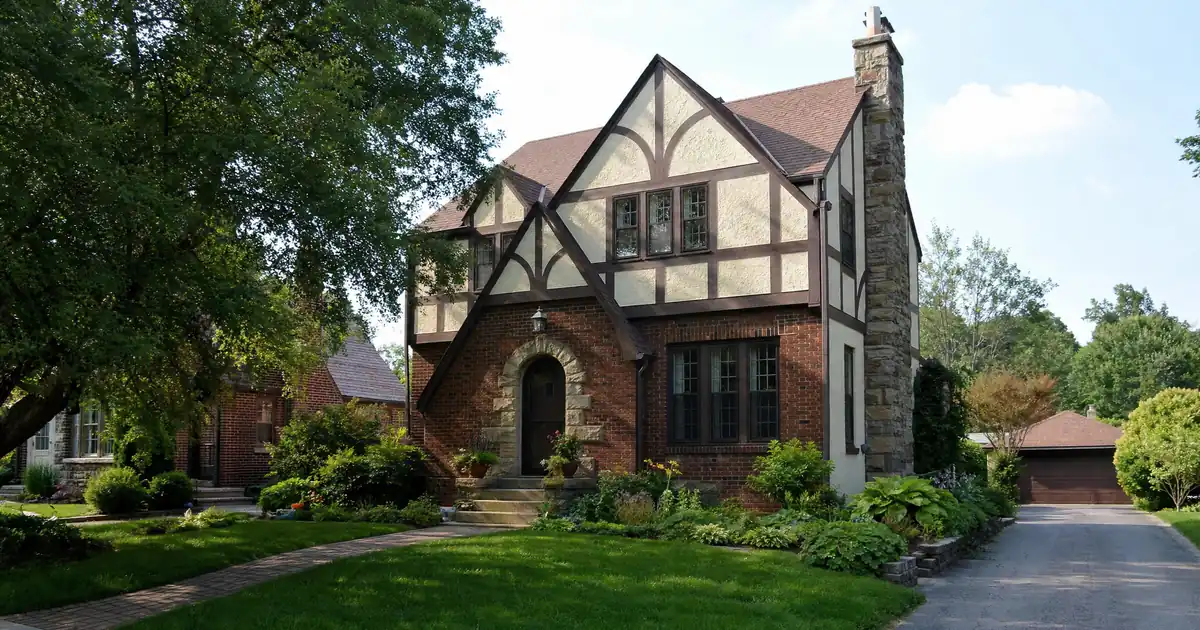
Home Equity Loans Florence AL Investment Property — The Quick Read: Yes, you can get a home equity loan or HELOC on a rental property. But it’s a narrower product with lower leverage than the same loan on your own home. Far fewer lenders offer it, too. Most investors who want to pull equity out of a rental choose a different path: a DSCR cash-out refinance. That loan gets reviewed based on the property’s rent, not your personal income. Which path fits you depends on three things: how the title is held, how much equity sits in the property, and whether the rent alone covers the payment.
Key Takeaways
- A standalone equity line on an investment property comes with tighter combined loan-to-value limits and a higher credit floor than the same product on a primary home.
- Title matters more than most investors expect. Some equity-line programs only accept individual or trust ownership. That rules out properties already deeded to an LLC.
- The more common route for tapping rental equity isn’t a second lien at all. It’s a cash-out refinance of the existing mortgage, often underwritten as a DSCR loan.
- DSCR loans qualify primarily on property-level rental income covering the payment, subject to lender guidelines, rather than personal income documentation.
- Loan structure, line size, and state rules all shift the math. Texas, Michigan, New Mexico, and Ohio each carry their own wrinkles.
Key Terms Defined
HELOC (home equity line of credit): a revolving credit line secured by a property’s equity. You draw from it as needed, instead of getting one lump sum upfront.
How large a line the equity supports in your market.
An equity line is sized by combined loan-to-value, occupancy, and credit — not by rental coverage. Switch the occupancy or the credit band and the ceiling moves with it.
Investment-property lines require a 700 minimum credit score. Second-home tiers reach 640; primary-residence tiers reach 600.
A debt-to-income ratio above 45% requires 680+ credit. Profiles under 640 are limited to single-family homes. At least 75% of the approved line is drawn at closing. Ceilings, floors, and caps update from Lendmire’s centralized guideline source.
Line estimate
Illustrative estimate only — not a quote, Loan Estimate, approval, or commitment to lend. The rate is an editable assumption; equity-line pricing is variable through both the draw and repayment periods and never converts to fixed. Occupancy and credit drive the ceiling together: investment property runs to 70% combined LTV with a 700 credit floor and a $500,000 cap; a second home runs to 70% at a 640 floor with a $500,000 cap; a primary residence reaches up to 80% at a 600 floor, and its $750,000 maximum line applies only at 75% combined LTV or below with 720+ credit and a full appraisal. Lines above $500,000 require a full appraisal. Credit, debt-to-income, property type, and full underwriting review all affect the final line.
Home equity loan: a lump-sum loan secured by a property’s equity, repaid on a fixed schedule. It’s the opposite structure of a HELOC.
CLTV (combined loan-to-value): add up every loan balance secured by a property, then divide by the property’s value. This includes the first mortgage plus any new equity line.
DSCR (debt-service coverage ratio): a comparison of a property’s rent to its full monthly housing obligation. That obligation covers principal, interest, taxes, insurance, and HOA dues where applicable.
Cash-out refinance: you replace an existing mortgage with a new, larger one. You take the difference between the old balance and the new loan in cash.
Business-purpose loan: a loan made for an investment or rental use, not personal occupancy. Federal lending rules treat these loans differently than a loan on the home you live in.
Can You Actually Get a Home Equity Loan on an Investment Property?
Technically, yes. Practically, it’s a small, tightly underwritten corner of the lending market. NerdWallet notes that the maximum loan-to-value ratio on an investment-property HELOC or home equity loan runs lower than on a primary residence. Home equity loans on rentals, in particular, “aren’t widely available,” according to the site. That matches what shows up across a wholesale lending network. Investment-property equity lines exist. But they sit behind a stricter credit floor, a lower leverage ceiling, and a narrower list of participating lenders than the retail HELOC market most homeowners know.
The structural difference between a HELOC and a home equity loan is simple. A home equity loan provides funds all at once with a fixed schedule, while a HELOC works as a revolving line borrowers draw from as needed. On an investment property, the equity-line version shows up more often in wholesale programs. It’s structured as a standalone line, not a lump-sum second mortgage.
| Product | Funds delivered | Rate structure | Typical use case |
|---|---|---|---|
| HELOC (investment) | Revolving draw | Floats through draw and repayment | Ongoing renovation or reserve access |
| Home equity loan | Lump sum | Fixed | One-time capital need |
| DSCR cash-out refinance | Lump sum, replaces 1st lien | Fixed or ARM | Pulling equity while resetting the whole loan |
For most investors chasing equity out of a rental, the cash-out refinance wins out in practice. It isn’t a second lien at all. It’s a full replacement of the existing mortgage, sized larger, with the difference paid out in cash.
How Underwriting Actually Treats an Investment-Property Equity Line
Underwriting on an investment-property equity line runs through five checkpoints: credit, combined loan-to-value, valuation method, debt-to-income, and title. Miss any one of them, and the file stops. It doesn’t matter how much equity sits in the property.
Credit and combined LTV move together. Across the wholesale network, investment-property equity lines carry a 700 minimum credit score. There’s no tier below it. The program ceiling on these lines runs 70% CLTV, and both the 700 and 720 credit bands land at that same 70% ceiling. Sit with that for a second: a stronger score doesn’t buy more leverage on an investment property equity line the way it might elsewhere. It buys eligibility, not extra borrowing power. The line size itself tops out at $500,000 total on an investment property. There’s no higher tier above that number for non-owner-occupied collateral, no matter how much equity exists.
Valuation usually skips the traditional appraisal. Investment lines cap at $500,000, and full appraisals in this network only kick in above that threshold. That means an investment-property equity line is almost always valued through an automated model instead of a traditional appraisal. A borrower can still request a full appraisal. But most files simply don’t need one.
Debt-to-income has its own ceiling. The network generally caps DTI at 50%. Credit profiles between 600 and 679 face a tighter 45% ceiling. Since investment property already floors at 700, that tighter band mostly applies to owner-occupied and second-home borrowers on the same platform. The DTI math gets calculated off the interest-only payment on the maximum available draw, not a smaller starting balance.
Documentation runs through the file, not the borrower’s paycheck. Business bank accounts used for income analysis need a 680 minimum score to qualify. Investment-property borrowers clear that threshold automatically, since 700 is already the floor. Bank-statement income essentially never becomes the binding constraint on an investment-property line.
Title has to be an individual or a trust. This is the sharpest structural difference from a DSCR loan. Equity-line programs in this network only accept vesting in an individual borrower’s name or an inter vivos revocable living trust. LLCs, corporations, partnerships, and irrevocable or land trusts can’t hold title. A rental already deeded to an LLC needs either a vesting change back to an individual or trust, or a completely different financing path. That’s usually where a DSCR cash-out refinance becomes the more practical option, since DSCR loans commonly accommodate LLC-titled entities depending on program guidelines.
The Structures Lenders Actually Use
Two draw structures exist across the wholesale network: a 3-year interest-only draw with a 17-year repayment on the higher-leverage path, and a 5-year interest-only draw with a 25-year repayment on the longer-runway path — a quoted CLTV always carries its own structure. Tennessee shortens the runway on both network structures: a 3-year draw with a 12-year repayment on the higher-leverage program, and a 5-year draw with a 10-year repayment on the longer-runway program. Pricing floats through both stretches; it never converts to a fixed structure. Most lenders require at least 75% of the approved line to be drawn at closing. So this isn’t an “open it and forget it” product. It works closer to a term loan with a floating rate than a true stand-by credit line.
Line sizes run from $25,000 up to a program ceiling on the larger end (Michigan carries a lower $10,000 floor). Investment property specifically stops at $500,000 total, regardless of equity available. After closing, subsequent draws need to clear a $1,000 minimum — Texas requires $4,000. A borrower can hold up to three lines, with combined exposure to $2,000,000 on the higher-leverage program ($750,000 on the longer-runway program) and a 15-financed-property limit on both. Ownership of more than 15 financed properties takes a borrower out of eligibility entirely.
Credit seasoning rules apply across the board. Credit reports must be current at closing. The file needs either two tradelines seasoned 12 months or one seasoned 24 months, with no rescoring after the fact. Housing-payment history matters across every financed property the borrower owns. Scores of 640 and up need a clean 0x30x6 and 1x30x12 record. The 600–639 band needs a tighter clean 0x30x12 record. Past bankruptcies need four years of seasoning from discharge or dismissal. Foreclosures need seven years. Pre-foreclosures, deeds-in-lieu, and short sales need four.
Property eligibility covers single-family homes, 2-4 units, PUDs, townhomes, and condos — including non-warrantable condos — plus modular factory-built housing. Manufactured homes, co-ops, condotels, timeshares, log homes, and barndominiums fall outside these programs entirely, along with commercial, mixed-use, agricultural-zoned, and raw land.
Where the Rule Breaks: Edge Cases That Change the Math
A handful of scenarios shift the standard framework. Knowing them up front saves a lot of wasted underwriting time.
Sub-640 credit shrinks the property pool. Borrowers below a 640 score are limited to single-family residences with a clean 12-month housing history. But since second homes already floor at 640 and investment property floors at 700, this restriction really only reaches primary-residence borrowers in practice.
Texas plays by different rules for investment property. The state’s well-known 12-day waiting period, one-lien-at-a-time rule, and 12-month refinance seasoning bind primary residences only. Second homes and investment properties in Texas qualify as non-homestead transactions, sidestepping those restrictions. Texas properties are still capped at 10 acres, regardless of occupancy.
Some states cap CLTV by credit tier. New Mexico and Ohio apply a combined-loan-to-value ceiling that shifts depending on the borrower’s credit profile, rather than a flat number across all tiers.
A pending sale kills eligibility in several states. A property listed for sale — or listed within the last 60 days — is ineligible for one of these equity lines in Indiana, North Carolina, Pennsylvania, Tennessee, Texas, and Washington.
Geography itself is a limiting factor. This equity-line program runs through Lendmire (NMLS# 2371349)’s 16 full-service states — Alabama, California, Colorado, Florida, Georgia, Indiana, Michigan, Montana, New Mexico, North Carolina, Ohio, Pennsylvania, Tennessee, Texas, Virginia, and Washington. That’s a noticeably narrower footprint than the DSCR investor-loan platform, which reaches 39 states plus Washington, D.C., 40 markets total. An investor sitting outside those 16 states won’t have access to the equity-line product at all, regardless of how strong the file looks.
Every extension of credit made for these business purposes — buying, improving, or maintaining a non-owner-occupied rental — sits outside the consumer-lending disclosure timelines that apply to a HELOC on someone’s own home. A special rule for non-owner-occupied rental property treats these loans as business-purpose by default, which is exempt from the Truth in Lending Act under Regulation Z. Practically, that means no three-day rescission period and no consumer-style Closing Disclosure timeline. The deal works on a business-purpose track from the start.
HELOC or DSCR Cash-Out — Which Fits Your Situation?
The honest answer? Most investors who think they want a HELOC on a rental actually end up better served by a DSCR cash-out refinance. The leverage runs higher and the lender pool runs wider. That said, an investor who wants to keep an existing low-balance first mortgage intact — and just needs supplemental access to a portion of the equity above it — is exactly who the standalone equity line was built for.
DSCR cash-out refinancing in this network typically tops out around 75% loan-to-value, with roughly six months of seasoning on title expected before the refinance can close. Credit floors run as low as 620 in parts of the network, though most programs want something closer to 660. A 700+ score tends to unlock the strongest leverage tiers. Coverage gets measured on rent divided by the full monthly obligation. A 1.00 ratio is where select programs start — not a universal standard — and stronger ratios generally open better leverage. Loan sizes typically run from around $100,000 up to $3,000,000. Amounts above $2,500,000 generally get structured as 30-year fixed loans rather than shorter or adjustable terms.
Reserve requirements vary by lender, leverage, and loan size. A conservative rate-and-term refinance at modest leverage under $1,500,000 can sometimes see reserves waived. Loans above that size typically step up toward nine months of PITIA. None of this is guaranteed — every file gets reviewed on its own merits. And clearing a 1.00 coverage ratio isn’t the same thing as positive cash flow. Repairs, vacancy, management fees, and capital expenditures all sit outside that ratio and still have to come out of pocket.
| Factor | Investment-Property HELOC/Home Equity Loan | DSCR Cash-Out Refinance |
|---|---|---|
| Leverage ceiling | 70% CLTV | ~75% LTV |
| Max loan/line size | $500,000 | ~$3,000,000 |
| Credit floor | 700 | 620 in parts of the network |
| Title/vesting | Individual or revocable trust only | LLC often eligible, depending on program guidelines |
| Reviewed on | Borrower credit + equity | Property rent covering the payment |
Picture an investor holding a rental with meaningful built-up equity and a modest existing mortgage balance well under the 70% ceiling. That investor might genuinely be a fit for the standalone equity line — as long as title sits in their own name and the property is in one of the 16 eligible states. Now picture that same equity sitting in a property titled to an LLC. Or picture an investor who wants to reset the entire loan and pull a larger sum than $500,000 allows. That’s a DSCR cash-out conversation, not a HELOC conversation. It’s worth exploring what DSCR loans are and how they qualify before assuming the equity-line path is the only door available.
Rental income below the coverage threshold on paper doesn’t automatically close the door, either. Select lenders in the network work with sub-1.00 coverage scenarios, though leverage and terms adjust to compensate. A no-ratio option is available for DSCR below 1.00 with stronger credit or higher down payment; qualification on that path rests on credit and equity rather than a rent-coverage calculation.
Tax treatment can depend on how the funds are used and how the property is held. Investors should keep clear records and speak with a qualified tax professional before relying on any deduction.
What This Actually Means for Your Next Move
Start by checking title. If the rental is held individually or in a revocable trust, an equity line is worth exploring. If it’s in an LLC, a DSCR cash-out refinance is almost certainly the better conversation to have, since equity-line programs won’t touch entity-held title. From there, the math comes down to how much equity actually sits above the existing balance. Check whether that number clears a 70% combined ceiling on $500,000 or less.
Anyone comparing using home equity to buy an investment property against a straight cash-out refinance on the rental itself should also understand who actually offers home equity loans on investment property in the first place. The lender pool here is genuinely smaller than the retail HELOC market most people are used to.
Lendmire arranges both paths — investment-property equity lines and DSCR cash-out refinances — through select lenders in its wholesale network. Investors can call 828-256-2183 or request a quote to see which structure actually fits a specific property, credit profile, and equity position.
Loan approval is never guaranteed, and nothing here is a commitment to lend. Every scenario described here is subject to lender approval and to borrower, property, and program guidelines, which can change. This article is general information only, not financial, legal, or tax advice.
Frequently Asked Questions
Can an LLC-owned rental get a home equity line of credit?
Not through the equity-line programs described here. Title has to sit with an individual borrower or a revocable living trust. An LLC-titled rental generally needs a vesting change back to an individual, or a DSCR cash-out refinance instead, since DSCR loans commonly accommodate LLC ownership depending on program guidelines.
Why is the credit floor on investment-property equity lines so much higher than on a primary home?
Non-owner-occupied collateral carries more risk to a lender. So the network sets a 700 minimum on investment property versus lower floors elsewhere on the platform. Since 700 is already required, there’s no tier below it. A borrower either clears that bar or looks at a different financing structure.
Does a stronger credit score increase how much I can borrow on an investment-property line?
Not on leverage. Both the 700 and 720 credit tiers land at the same 70% combined loan-to-value ceiling on investment property. A stronger score buys eligibility and consistency in the file, not a higher CLTV number.
What happens if my rental’s equity exceeds the $500,000 line cap?
The equity-line program simply won’t reach the full amount. Investment property has no tier above $500,000, no matter how much equity sits in the home. Larger equity positions typically get addressed through a DSCR cash-out refinance instead, which can size loans well beyond that ceiling.
Do I need a full appraisal to get an investment-property equity line?
Usually not. These lines cap at $500,000, and full appraisals in this network only apply above that threshold. So most investment-property files close on an automated valuation model. A borrower can still request a traditional appraisal if they want one.
About Lendmire
As a non-QM mortgage broker (NMLS# 2371349), Lendmire facilitates DSCR investor loans across 40 markets, including Washington, D.C. DSCR eligibility is generally reviewed around property-level rental income instead of personal income documentation, subject to lender guidelines. The company serves LLC-structured portfolios and self-employed borrowers who don’t fit conventional boxes. Lendmire is a two-time Scotsman Guide Top Mortgage Workplace (2025, 2026).
Lendmire’s Top Mortgage Workplace recognition is documented by Scotsman Guide 2025 Top Mortgage Workplace and Scotsman Guide 2026 Top Mortgage Workplace.
Get Started
Ready to find the right loan for you?
In about 30 seconds you can review financing options available for your home or investment property. No commitment required.
Informational only. Not a Loan Estimate, approval, or commitment to lend. Program availability and eligibility are subject to lender guidelines, credit approval, property review, and underwriting.
References
1. NerdWallet – Can You Get a HELOC on an Investment Property?
2. Chase – HELOC to Buy Investment Property
3. Hunton Andrews Kurth – Business-Purpose Regulatory Implications of Investment Mortgage Lending
4. Consumer Financial Protection Bureau – Regulation Z business-purpose exemption
Brandon Miller
Founder & CEO, Mortgage Loan Originator, Lendmire LLC
- Mortgage Loan Originator · NMLS# 1129696 · Verify on NMLS Consumer Access
- North Carolina Real Estate Broker · License# 343312 · Verify on NCREC
- North Carolina Insurance Producer · License# 19053198 · Property, Casualty, Life, Health · Verify on NAIC SBS
- Lendmire LLC · Firm NMLS# 2371349 · Verify firm licensure
Important disclosures. Lendmire (NMLS# 2371349) is a licensed mortgage brokerage. Lendmire is not a direct lender, depository institution, or financial advisor. All loan inquiries are subject to lender underwriting; this article does not constitute a commitment to lend. Rates, terms, and program guidelines are subject to change without notice and vary by borrower profile, property type, and state. Information in this article is general in nature and is not financial, legal, or tax advice. Equal Housing Opportunity. NMLS Consumer Access: nmlsconsumeraccess.org.


