
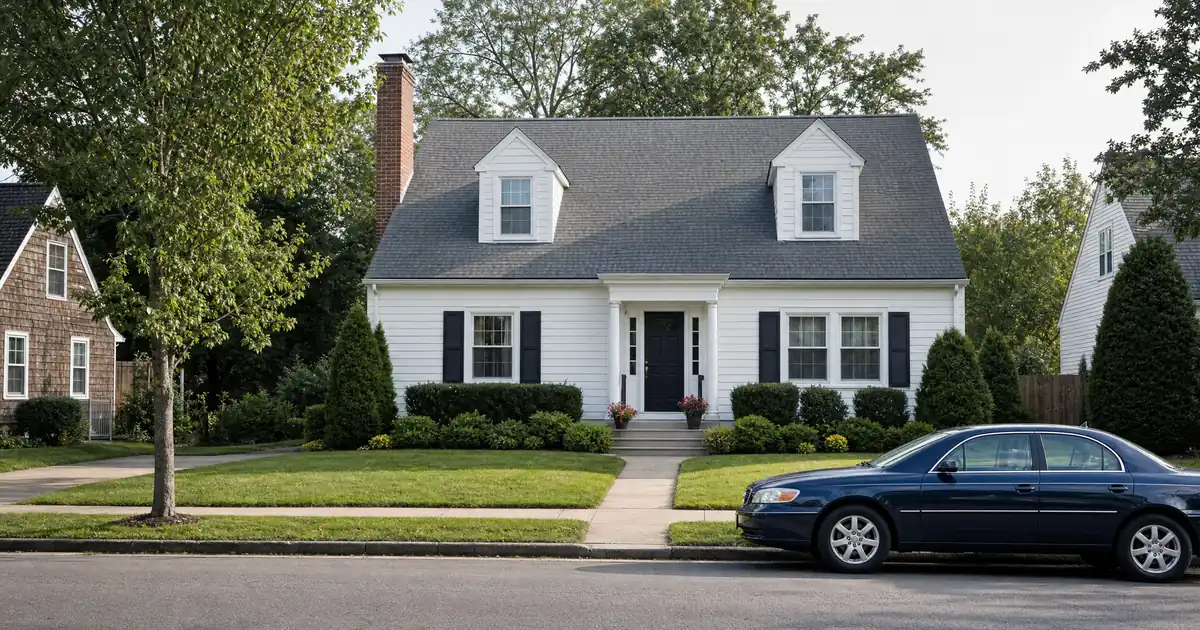
Mortgage Refinance Cash Out — The Quick Read: Yes, a cash-out refinance is a real and common way to turn built-up equity into usable cash. The new loan pays off the old one. The difference gets paid to the borrower at closing. On an investment property, most DSCR-based cash-out refinances cap near 75% loan-to-value. They expect roughly six months of ownership seasoning. And they size the new payment against the property’s rent, not the owner’s personal income. The tradeoff is real too: a bigger loan balance, a reset amortization clock, and equity that no longer sits in the property.
That’s the short version. The mechanics, the exceptions, and the specific version of this that applies to rental property investors — as opposed to a homeowner refinancing a primary residence — are worth walking through before anyone pulls the trigger.
What Is a Cash-Out Refinance, Exactly?
A cash-out refinance replaces an existing mortgage with a new, larger one. The lender sends the borrower the difference in cash. This is different from a rate-and-term refinance, where the goal is usually adjusting the loan’s terms, not pulling out cash. Little or no money changes hands in that case. The Fannie Mae Selling Guide draws that same line for agency loans. It’s a useful comparison, even though DSCR investor loans aren’t underwritten to that guide at all.
For an investor, the real question is simpler than the rulebook makes it sound. How much of the property’s current value can turn into cash without breaking the rental income test that makes the new loan payable in the first place? That’s the true ceiling. It’s not just a leverage number. It’s a leverage number that still has to clear a coverage test.
Key Terms Defined
Cash-out refinance — a new loan that pays off the existing mortgage and pays out the remaining equity (up to a leverage limit) to the borrower or, on an LLC-titled property, to the entity.
Loan-to-value (LTV) — the new loan amount shown as a percentage of the property’s current appraised value; on investor cash-out refinances this typically caps around 75%.
DSCR (Debt-Service Coverage Ratio) — the property’s monthly rent divided by its full monthly housing payment (principal, interest, taxes, insurance, and any HOA dues); a ratio of 1.00 means rent and payment are roughly equal.
Seasoning — the minimum time a borrower must own the property before a lender will consider a cash-out refinance; on most DSCR programs this runs around six months.
Rate-and-term refinance — a refinance that adjusts the loan’s rate or term without pulling meaningful cash out.
Reserves — liquid funds a lender wants on hand after closing, usually measured in months of PITIA rather than a dollar figure.
How Does the Cash Amount Actually Get Calculated?
The math starts with a current appraisal. It does not start with the price paid years ago, and it doesn’t start with a guess about what the property “should” be worth now. A third-party appraiser sets the present market value. The lender then applies its LTV ceiling to that value. Whatever sits between the new loan amount and the payoff of the existing lien — plus closing costs — becomes the cash paid out at closing.
For rental income to count toward qualification, the appraisal usually pairs with a rent-verification form. That’s the Single-Family Comparable Rent Schedule (Form 1007) for a one-unit property, or the Small Residential Income Property Appraisal Report (Form 1025) for a two-to-four-unit property, per Fannie Mae’s rental income guidelines. These form names show up across the non-QM and DSCR world too, even outside agency financing. That’s because they’re the accepted way to document market rent, instead of just asking a borrower to self-report it.
Here’s how a scenario might run. Say a rental property is now appraised well above its original purchase price. The owner has been paying down the existing loan for a couple of years. At a 75% LTV ceiling, the new loan sizes to that percentage of the appraised value — no more. Whatever cushion sits between that new loan amount and the current payoff, minus closing costs, is what lands as cash. If projected rent on that same property, run against the new (larger) payment, still clears somewhere around 1.0x to 1.2x, the file has room to work. If it drops meaningfully below that, the file may need a smaller cash-out amount, more reserves, or a different structure entirely. Pulling every available dollar of equity isn’t always the move that keeps the deal reviewable. Exact terms depend on the lender’s guidelines, property type, leverage, and a full review of the borrower’s file.
Cash-Out Refinance vs. Rate-and-Term vs. HELOC vs. Home Equity Loan
Investors weighing a cash-out refinance often haven’t ruled out the alternatives. They should rule them out first, before committing to resetting a first mortgage.
| Feature | Cash-Out Refinance | Rate-and-Term Refinance | HELOC | Home Equity Loan |
|---|---|---|---|---|
| Loan structure | New first mortgage, larger balance | New first mortgage, similar balance | Revolving second lien | Fixed second lien, lump sum |
| Cash to borrower | Yes, lump sum at closing | Little to none | Draw as needed | Yes, lump sum at closing |
| Effect on first mortgage | Replaces it entirely | Replaces it entirely | Leaves it in place | Leaves it in place |
| Best fit | Large, one-time capital need | Term/structure adjustment, no cash need | Flexible, ongoing access to capital | One-time need with a fixed payment |
On investment property specifically, Lendmire’s wholesale network prices HELOC-style lines for rental properties up to $500,000 total exposure. There’s no tier above that for investor-owned real estate through this channel. That matters for anyone assuming a larger equity line is available the way it sometimes is on a primary residence. Investors comparing the two structures on a rental can look at Lendmire’s DSCR cash-out refinance page and its walkthrough of what a cash-out refinance loan actually is, side by side, before deciding which fits the goal.
Is a Cash-Out Refinance Different on a Rental Property?
Yes. The entire review basis changes. DSCR loans are business-purpose products built for non-owner-occupied investment property. Because they’re business-purpose rather than consumer credit, lenders review them differently than a standard owner-occupied mortgage. Instead of looking at personal debt-to-income, the file qualifies mainly on whether property-level rental income covers the payment, subject to lender guidelines.
Across the wholesale network Lendmire (NMLS# 2371349) works with in 40 markets, including Washington, D.C., investor cash-out refinances typically top out near 75% LTV. Lenders usually expect around six months of ownership seasoning before they’ll consider the file. Coverage matters as much as leverage: 1.00 DSCR is where select programs start. Treat that as a floor for those specific programs, not as an industry-wide standard. Stronger coverage — well above 1.00 — tends to unlock better pricing and leverage, not just clear a minimum bar. A bigger down payment (or, in a refinance, a smaller cash-out request) lowers the payment and can lift that ratio. But it never overrides a hard leverage cap, a credit floor, or a reserve requirement. The strongest files clear both the equity test and the coverage test, not just one.
Credit requirements move on a sliding scale too. Some programs in the network will go as low as a 620 floor. Most want somewhere around 660. And 700-plus is generally where the strongest leverage tiers open up. Reserve expectations vary by lender, leverage, loan size, and transaction type. But they commonly land around six months of PITIA on a standard cash-out file, stepping up toward nine months on larger loans — generally above $1,500,000 — where the lender wants a thicker cushion given the size of the exposure. Loan sizes on most programs run from roughly $100,000 up through $3,000,000. Loans above roughly $2,500,000 generally get structured as 30-year fixed rather than an adjustable-rate option.
What Lenders Actually Look At on an Investor Cash-Out File
Beyond LTV and DSCR, a handful of factors decide whether a rental cash-out refinance moves forward smoothly or stalls. Property type is the first filter. Manufactured homes (single- and double-wide), log homes, and barndominiums fall outside these DSCR programs entirely. They aren’t harder to finance — they’re simply not offered through this channel. An investor holding one of those should plan a different exit or financing path from the start.
State overlays are the second filter worth knowing about ahead of time. In Connecticut, Florida, Illinois, and New Jersey, purchase-side leverage generally caps closer to 75% rather than the higher tiers available elsewhere. Overlay-state deals often cap loan size near $2,000,000 regardless of what the property might otherwise support. None of that is unique to cash-out refinancing specifically. But it shapes what the follow-on refinance looks like for a property originally purchased under one of those overlays.
Sub-1.00 coverage is a real, working structure through select lenders in the network. But it comes paired with adjusted leverage and terms. It isn’t the same product at the same pricing, just with a lower bar. A no-ratio option is available for DSCR below 1.00 with stronger credit or higher down payment; qualification on that path rests on credit and equity rather than a rent-coverage calculation. Anyone assuming a property with weak rent can simply skip the coverage test altogether is working from a misconception. That misconception costs time in underwriting.
DSCR files in markets with a heavy short-term rental mix follow a fairly consistent pattern across the network. They often come in tight on long-term rent assumptions but comfortably clear coverage once trailing twelve-month STR income is layered in. That’s why the stronger files usually run both a long-term and a short-term rent scenario before submission, rather than betting the file on one number.
The Short-Term Rental Wrinkle on a Cash-Out Refinance
An investor refinancing a property that’s been running as an Airbnb often expects the appraisal to reflect that above-market nightly income. It won’t. Form 1007 values the real estate itself. Personal property or furniture-fixtures-and-equipment gets excluded from that value. Appraisers “cannot include business income (rents) as part of the value of the 1007.” That means, per McKissock Learning’s analysis of Form 1007 and short-term rentals, a short-term rental carries the same appraised value as an otherwise identical property that isn’t run as an STR.
Practically, that means the underlying equity cushion for a cash-out refinance is set by the property’s market value, not its Airbnb track record. That same track record can still help the property clear the coverage test on the lending side, though. On these files, purchase leverage tops out around 75%. Refinance and cash-out both generally sit closer to 70%. Lenders typically want a 640-plus score, along with about twelve months of hosting history and coverage clearing roughly 1.00x before moving forward. Short-term rental regulations can also vary by city, county, HOA, and property type. Confirming local rules before relying on projected nightly income matters as much as the appraisal issue does.
Common Mistakes Investors Make With Cash-Out Refinancing
The most persistent one is assuming any dollar pulled out is available, no matter what rent supports. It isn’t. The 75% leverage ceiling and the coverage test both have to clear. Pulling the maximum equity a lender’s LTV cap technically allows can push the DSCR below what the file needs. Every figure here varies by lender and program — guidelines, property type, leverage, and credit profile all apply.
A related mistake is treating the six-month seasoning window as a hard rule that applies everywhere. It’s an agency policy for conventional loans, not a law. And it comes with named carve-outs — delayed financing for a cash purchase, inheritance, or a legal award through divorce — that waive the clock but not the leverage cap. Non-QM and DSCR lenders each set their own seasoning expectations independently. That’s exactly why shopping across a wholesale network, rather than assuming one lender’s policy is universal, can change the timeline meaningfully.
A third mistake, common among investors running the BRRRR strategy (buy, rehab, rent, refinance, repeat), is underestimating how much of the deployed capital actually comes back. The strategy depends on the refinance recycling most — not necessarily all — of the original cash into the next acquisition. And non-QM production overall is expected to keep growing as the vehicle of choice for that recycling. Bank of America’s own projections put non-QM origination climbing toward $175 billion, up from $108 billion, with DSCR and other investor products making up roughly half of that collateral, according to Scotsman Guide’s reporting on non-QM performance data. That same dv01-sourced dataset — covering roughly 125,000 active DSCR loans with an average FICO near 741 and an average LTV around 67.4% — is a useful reality check. Actual leverage carried across seasoned DSCR portfolios sits well below what the maximum caps technically allow. That tells you plenty of investors and lenders behave more conservatively in practice than the program limits suggest.
Tax treatment can depend on how the funds are used and how the property is held. Investors should keep clear records and speak with a qualified tax professional before relying on any deduction.
Is a Cash-Out Refinance the Right Move Right Now?
It depends less on the calendar and more on what the cash gets used for, and whether the property’s rent can absorb a larger payment. A cash-out refinance tends to make sense when the proceeds go toward another income-producing acquisition, a value-add renovation on the same property, or paying down higher-cost debt elsewhere in a portfolio. These are uses where the new obligation gets offset by either more income or lower total carrying cost. It tends to make less sense when the property’s rent is already tight against its current payment, when the investor doesn’t have a specific plan for the cash, or when a smaller, second-lien line — where the network’s investment-property HELOC option, capped at $500,000 total, might fit better — would leave the first mortgage’s existing terms intact.
Loan approval is never guaranteed, and nothing here is a commitment to lend. Every scenario described here is general information, not financial, legal, or tax advice. Actual outcomes depend on lender approval and the specific borrower’s credit, the property’s rental income, and current program guidelines, which are subject to change. For a deeper walkthrough of how these loans are structured across the network, Lendmire’s complete DSCR loans guide and its breakdown of how a cash-out refinance works on a rental property are good starting points before running specific numbers.
Frequently Asked Questions
Does a cash-out refinance hurt my credit score?
Applying triggers a hard credit inquiry, which can cause a small, temporary dip. The larger loan balance also affects the utilization side of a credit profile briefly. Most of that impact fades within a few months as on-time payments build up on the new loan.
Can I do a cash-out refinance on a property I just bought?
Not right away, in most cases. DSCR programs generally expect around six months of ownership seasoning before considering a cash-out request. An all-cash purchase may qualify for a delayed-financing exception on the conventional side that waives that seasoning clock. Even then, the loan amount stays capped at the documented cash actually invested or the standard cash-out leverage limit, whichever is lower. The exception removes the wait, not the ceiling.
Is the cash from a refinance taxed as income?
No. Because the money is borrowed, not earned, it isn’t treated as taxable income. Deductibility questions apply only to the interest paid on the loan. Those rules differ depending on how the property is held and how the funds are used, which is why speaking with a tax professional before assuming any deduction is worthwhile.
Will an Airbnb history increase my cash-out amount?
Not through the appraisal. Form 1007 values the real estate itself and excludes business income, so a short-term rental appraises the same as a comparable long-term rental. Strong short-term rental income can still help the file clear the DSCR coverage test at qualification, even though it won’t move the appraised value.
What’s the difference between a cash-out refinance and just taking a HELOC on a rental?
A cash-out refinance replaces the entire first mortgage with a new, larger one and pays out the difference as a lump sum. A HELOC leaves the existing first mortgage untouched and adds a separate, typically variable-draw second lien. On investment property, HELOC-style lines through the network cap at $500,000 total exposure, so a larger capital need generally has to go through the refinance route instead.
If you’re deciding whether to pull equity out of a rental through a cash-out refinance, Lendmire can help compare DSCR loan options based on the property’s income, your credit profile, target leverage, and what you’re actually trying to accomplish with the proceeds. Reach out at 828-256-2183 or request a quote directly through Lendmire’s mortgage quote form.
For how equity extraction works on an investment property, see cash-out refinance on an investment property.
About Lendmire
Lendmire is a DSCR-focused mortgage brokerage, NMLS# 2371349, placing investor loans across 40 markets, including Washington, D.C. Lenders generally review DSCR eligibility around a property’s rental income rather than personal income documentation. That fits LLC-held rentals, self-employed investors, and portfolios scaling past conventional financed-property limits. Scotsman Guide named Lendmire a Top Mortgage Workplace in both 2025 and 2026.
Get Started
Ready to find the right loan for you?
In about 30 seconds you can review financing options available for your home or investment property. No commitment required.
Informational only. Not a Loan Estimate, approval, or commitment to lend. Program availability and eligibility are subject to lender guidelines, credit approval, property review, and underwriting.
References
1. Fannie Mae Selling Guide — Cash-Out Refinance Transactions
2. Fannie Mae Selling Guide — Rental Income (Form 1007/1025)
3. McKissock Learning — Form 1007’s Impact on Short-Term Rental Appraisals
4. Scotsman Guide — Non-QM Gaps Widen Between Full-Doc and Alt-Doc Loans
Brandon Miller
Founder & CEO, Mortgage Loan Originator, Lendmire LLC
- Mortgage Loan Originator · NMLS# 1129696 · Verify on NMLS Consumer Access
- North Carolina Real Estate Broker · License# 343312 · Verify on NCREC
- North Carolina Insurance Producer · License# 19053198 · Property, Casualty, Life, Health · Verify on NAIC SBS
- Lendmire LLC · Firm NMLS# 2371349 · Verify firm licensure
Compliance and disclosures. Lendmire (NMLS# 2371349) is a licensed mortgage broker and is not a direct lender, depository institution, financial advisor, or tax professional. Content in this article is general market analysis and educational information — not financial, legal, or tax advice for any specific situation. Lendmire does not guarantee loan approval; every transaction is subject to underwriting by the funding lender. Mortgage pricing and loan program guidelines are subject to change at any time without notice and vary by borrower characteristics, property type, and state regulations. Lendmire complies with Equal Housing Opportunity. Licensure verification: NMLS Consumer Access.


