
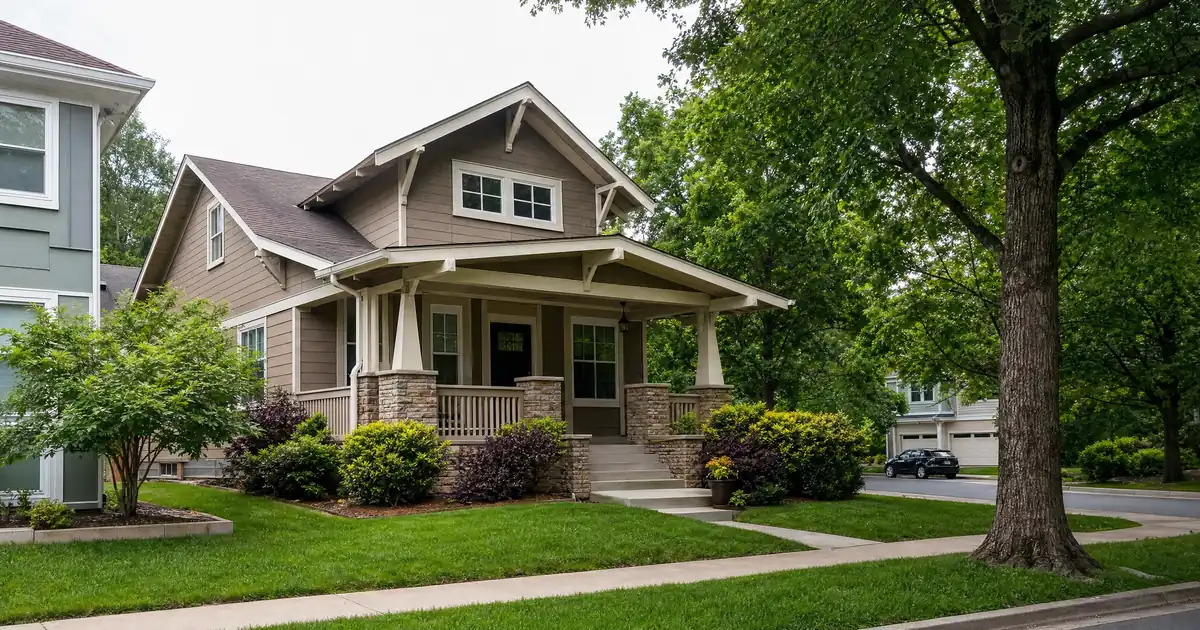
Can You Get a Mortgage with 1099 Income — The Quick Read: Yes. 1099 income is real, documentable income. Lenders work with it every day. But it gets treated differently than a W-2 paycheck almost everywhere in the file. How it’s counted depends a lot on one thing: are you financing a home you’ll live in, or a rental property? For rental purchases, a DSCR loan can skip the whole 1099-versus-W2 debate. It qualifies the property’s rent instead of your personal earnings.
That’s the short version. The longer version covers how the mechanics actually work, where the friction shows up, and when the property-income route beats the personal-income route. It’s worth understanding before you start filling out documents.
What your deposits qualify you for in your market.
Alt-doc programs read 12 months of business or personal bank deposits instead of tax returns. Enter your average monthly deposits and see the income a lender would credit you.
The expense factor is set by the lender from your business type and profit-and-loss statement; it is not a number you choose. This widget quotes no rate and no payment.
Program parameters shown update from Lendmire’s centralized guideline source.
Estimate
Illustrative estimate only — not a quote, Loan Estimate, approval, or commitment to lend. Deposit average, expense factor, and housing ratio are editable assumptions; the expense factor a lender applies is set from your business type and documentation. No interest rate or monthly payment is quoted here. Purchase capacity is a simplified illustration and does not account for taxes, insurance, HOA dues, or other debts. Alt-doc income documentation is available on consumer mortgages in the states where Lendmire is licensed for consumer lending; actual terms vary by lender, borrower, and property.
Key Terms Defined
1099 income is money paid to a contractor, freelancer, or gig worker. This worker isn’t classified as an employee. It gets reported on IRS Form 1099-NEC instead of a W-2.
Schedule C is the tax form self-employed people use to report business profit or loss. This is where write-offs shrink taxable income below what a contractor actually earned.
Non-QM (non-qualified mortgage) is a loan that doesn’t fit the standard federal underwriting box. It still has to prove the borrower can repay it. It just does this through different documentation.
DSCR stands for debt-service coverage ratio. It compares a rental property’s monthly rent to its full housing payment. That payment includes principal, interest, taxes, insurance, and any HOA dues. The ratio shows whether the rent covers the bill.
PITIA is that full monthly housing payment. It stands for principal, interest, taxes, insurance, and association dues, if any.
LTV (loan-to-value) is the loan amount shown as a percentage of the property’s value or purchase price. It’s the flip side of your down payment.
Business-purpose loan is a loan made to an investor buying a non-owner-occupied property for rental income. It’s not a home to live in. This distinction matters because business-purpose loans get reviewed differently than a standard owner-occupied mortgage.
Why 1099 Income Trips Up a Standard Mortgage
The problem isn’t that 1099 income is risky. The problem is that the number underwriters see is often much smaller than the number you actually earned. The IRS says an independent contractor is someone whose client controls only the result of the work, not the day-to-day how. That’s the legal test that puts you in 1099 territory in the first place. Once you’re classified that way, you report that income on Schedule C, Profit or Loss From Business. That’s exactly where the friction starts.
Every mileage deduction, home-office write-off, and business expense lowers your tax bill. It also lowers the income figure a conventional underwriter is allowed to count. A contractor who grossed six figures can show taxable income that looks thin on paper. Standard mortgage underwriting is built around W-2 pay stubs. It hasn’t fully caught up to how large the self-employed workforce has become. Recent Bureau of Labor Statistics data, compiled by the SBE Council, shows fulltime self-employment climbed from 16.74 million in one year to 16.77 million the next. That’s a record high for that stretch. This isn’t a fringe group of borrowers. It’s a meaningful share of the workforce, and a meaningful share of real estate investors too.
Non-QM lending exists to serve exactly this gap. Non-QM just means the documentation path looks different. For 1099 earners, that difference usually works in their favor.
Two Very Different Paths: 1099-Income Loans vs. DSCR Loans
There isn’t one “1099 loan.” There are two different products. Confusing them is the most common mistake investors make. A 1099-income mortgage still looks at your earnings, just with more flexibility than a conventional lender allows. A DSCR loan looks at the property’s rent instead. Your 1099s barely come up.
| Factor | 1099-Income Mortgage | DSCR Rental Loan | Conventional W-2 Mortgage |
|---|---|---|---|
| Qualifying income | Contractor’s gross/net earnings | Property’s market rent | Employer wages |
| Property use | Primary or second home | Non-owner-occupied rental | Primary or second home |
| Personal DTI counted? | Yes | Not the same way | Yes |
| Coverage or debt test | Debt-to-income | Rent vs. full monthly payment | Debt-to-income |
| Best fit for | Self-employed homebuyer | Rental investor, any income type | W-2 employee |
If you’re buying or refinancing a home to live in, the 1099-income path still matters. Lendmire has covered whether a 1099 alone counts as proof of income for a mortgage in more depth elsewhere. But if you’re buying a rental property, the DSCR path is usually the more direct route. It’s worth understanding in detail if you’re building an investment portfolio.
How a DSCR Loan Sidesteps the 1099 Question Entirely
Here’s the shift that matters most. A DSCR loan is reviewed mainly on one thing: does the property’s rental income cover the monthly payment, subject to lender guidelines? It’s not reviewed on how your business reports profit to the IRS. The underwriter isn’t parsing your Schedule C write-offs. They’re not averaging two years of 1099s either. Instead, they compare the property’s market rent, usually documented through a standard rent-schedule appraisal exhibit, against its full monthly obligation. This doesn’t mean the loan skips underwriting. Federal ability-to-repay rules still apply. Lenders working outside the standard qualified-mortgage box still have to make a good-faith determination that the borrower can repay the loan. This framework came from the Consumer Financial Protection Bureau after the housing crisis.
That single shift explains why so many self-employed and 1099-earning investors turn to DSCR financing once they scale past one or two properties. Conventional financing folds every new mortgage payment into your personal debt-to-income ratio. For someone whose 1099 income is already discounted by write-offs, that ceiling arrives fast. DSCR underwriting doesn’t run each new rental through that same personal-DTI math. That’s precisely why 1099 income and DSCR financing show up together so often once an investor moves past a starter portfolio. Lendmire has broken down how much net income a self-employed borrower actually needs to qualify for a mortgage. The honest answer for a rental purchase is often: it depends far less than you’d think, because the property is doing the heavy lifting.
Across the wholesale network Lendmire places files through, most standard DSCR purchases land at 75%–80% loan-to-value. Select high-leverage programs reach 85% LTV for borrowers around a 700 credit score. A cash-out refinance typically tops out closer to 75% LTV. Most lenders in the network want to see roughly six months of ownership seasoning before that refinance closes. Coverage of 1.00 means rent matches the payment dollar-for-dollar. That’s where select programs start their range, not a universal industry standard. Stronger ratios generally open better pricing and leverage tiers. A handful of lenders will still review files that fall short of 1.00 on a case-by-case basis. But expect the leverage and terms to adjust to match the added risk. No version of this network’s programs skips the coverage test altogether.
Here’s a real distinction that often gets lost. DSCR is not the same thing as a “no income verification” loan. The property’s rental income is still verified. It’s still documented. It’s still underwritten. Only the type of income being verified changes, not the fact that it’s verified at all. Lendmire’s comparison of DSCR loans against true no-income-verification mortgages walks through that difference if you want the full breakdown.
What Lenders Actually Want to See
The documentation stack differs by loan type. Mixing up which documents go with which program wastes time.
| Loan Type | What Gets Verified | Typical Documents Requested |
|---|---|---|
| 1099-income (personal) | Contractor’s own earnings history | 1099s, YTD income statement, CPA or business letter |
| Bank-statement | Deposits into business or personal accounts | 12–24 months of bank statements |
| DSCR (rental property) | Property’s rental income vs. its payment | Lease or rent-schedule appraisal, insurance, title, entity docs |
For a DSCR file, credit still matters, but the bar is set differently than a conventional purchase. A 620 floor exists in parts of the network. Most programs prefer something closer to 660. A 700-plus score is generally what unlocks the strongest leverage tiers. Reserve requirements vary by lender, leverage, and loan size. They commonly land around six months of PITIA. Some lenders waive this on conservative rate-and-term refinances under roughly $1.5 million at modest leverage. Larger loans can step up to about nine months. Loan sizes on standard programs commonly run up to $3,000,000. Smaller balances get routed through select lenders in the network. Above roughly $2,500,000, most of the network holds to 30-year fixed structures rather than shorter or adjustable terms. Extended 40-year terms and interest-only periods exist through select lenders for investors who want lower scheduled payments. ARM structures are available too, for those who prefer them.
Many rental investors also title the property in an LLC for liability reasons. That’s workable on most DSCR files, subject to program terms. It’s one more reason the borrower’s personal 1099 documentation matters less here than it would on a primary-home purchase.
A Quick Example: Running the Numbers
Say an investor earns 1099 income as a consultant and is buying a small rental. On a conventional path, an underwriter would average two years of Schedule C net income. They’d subtract business write-offs. Then they’d fold the new payment into that borrower’s personal debt-to-income ratio. This process can shrink qualifying income substantially, even for a genuinely profitable business.
Now run the same purchase through a DSCR structure instead. The borrower’s consulting income doesn’t enter the equation at all. Using a modeled coverage figure rather than a specific market data point, picture a property where market rent clears the full monthly payment by roughly 1.20x. That ratio, not the investor’s 1099 history, is what the underwriter is testing. A stronger ratio, say closer to 1.35x, generally supports better leverage and pricing. A ratio hovering near 1.00x still clears most programs’ baseline, but with less room to work with. Either way, the consultant’s traditional personal-income documentation stays in the drawer.
Clearing 1.00 coverage is not the same thing as positive cash flow. This trips up a lot of first-time DSCR borrowers. The ratio only measures rent against the payment. It doesn’t account for vacancy, repairs, property management, utilities, or capital expenses. Those costs sit outside the calculation. A property that clears 1.05x on paper can still run tight once those real-world costs get factored in.
If you want the fuller mechanics of how this ratio gets built and underwritten, Lendmire’s complete DSCR loans guide covers the calculation in more depth.
The Edge Cases Worth Knowing
Short-term rentals complicate the appraisal. A standard rent-schedule appraisal is built to estimate long-term market rent. It’s not built to project nightly Airbnb-style income. Appraisal-industry guidance notes that assessing business income from short-term rentals is generally out of scope for that exhibit. In practice, this means a property’s projected short-term rental revenue and its appraised long-term rent comparable can diverge. That gap has to get reconciled deal by deal. Short-term rental purchases in the network typically run up to 75% LTV, refinances closer to 70%, and cash-out around 70%. These need a 640-plus credit score, roughly 12 months of hosting history, and a 1.00 coverage floor. Short-term rental rules can also vary by city, county, HOA, and property type. Confirm local rules before relying on projected income.
Recent switchers from W-2 to 1099 status. Someone who just left a salaried job for full-time contracting hasn’t built up a long earnings history. That matters more on a personal-income mortgage than on a rental purchase. On a DSCR file, that history gap is close to irrelevant. The property’s rent, not the borrower’s employment timeline, drives the file.
Mixed W-2 and 1099 income. Plenty of borrowers earn both, like a day job plus a side consulting gig. This blend still needs sorting out on a personal-income mortgage. But it mostly disappears on the DSCR side of a rental purchase, since the property’s cash flow is what’s being measured.
Not every property type qualifies. Regardless of income type, manufactured homes (single- and double-wide), log homes, and barndominiums fall outside this network’s DSCR programs entirely. That’s a property-eligibility limit, not an income-documentation issue.
Common Misconceptions About 1099 Income and Mortgages
“1099 income disqualifies you” is simply wrong. Nothing about the IRS classification carries any lending prohibition. It just changes which documents an underwriter relies on. “Non-QM means no rules” is also wrong. Ability-to-repay requirements still apply regardless of documentation type. “1099-income loans and DSCR loans are the same product” is a mix-up worth avoiding. One still evaluates your personal earnings. The other evaluates the property’s rent, full stop. And “only net income after write-offs counts” is the conventional default, not a universal rule. Alternative-documentation and DSCR programs exist precisely to work around that assumption. If refinance mechanics around 1099 documentation come up later in ownership, Lendmire has also covered how refinancing works when mortgage points aren’t listed on a 1099.
Tax treatment can depend on how loan proceeds are used and how the property is held. Keep clear records and talk to a qualified tax professional before relying on any deduction.
This article is general information, not legal or tax advice. Talk with a qualified attorney or CPA about how any of this applies to your own situation.
Lendmire (NMLS# 2371349) is a mortgage broker that arranges DSCR investor financing through select lenders in its wholesale network, spanning 39 states plus Washington, D.C. If you’re buying or refinancing a rental property, Lendmire can help you compare DSCR loan options that fit the property’s income, your credit profile, and your leverage goals. Reach the team at 828-256-2183 or request a pricing quote online. Loan approval is never guaranteed, and nothing here is a commitment to lend. Every scenario is subject to lender approval and to borrower, property, and program guidelines.
Frequently Asked Questions
Can I get a mortgage if all my income is 1099?
Yes — lenders work with 1099-only income routinely, though the documentation looks different than a W-2 file. For a primary residence, expect gross-earnings or bank-statement-style underwriting rather than straight pay-stub verification. For a rental purchase, a DSCR loan can qualify the property’s rent instead, sidestepping the 1099 income question almost entirely, subject to lender guidelines.
Do I need two years of 1099s to qualify?
It depends on the program and loan type. Personal-income mortgages often want an earnings history to establish a trend. DSCR rental loans qualify the property’s income instead of the borrower’s earnings timeline. That’s why recent switchers from W-2 to 1099 status often find the rental path more forgiving.
Does a DSCR loan really ignore my 1099 income completely?
Largely, yes — the loan is qualified mainly on the property’s rental income covering the payment, subject to lender guidelines, not on your personal earnings documentation. Your credit and reserves still matter, but your 1099 traditional personal-income documentation generally aren’t the driver of approval the way they would be on a personal-income mortgage.
What credit score do I need for a 1099 or DSCR rental loan?
On the DSCR side, a 620 floor exists in parts of the wholesale network, most programs prefer around 660, and scores of 700 or higher typically unlock the strongest leverage tiers. Credit requirements vary by lender, loan size, and property type, so treat these as typical ranges rather than guarantees.
Can I use 1099 income and DSCR financing together as I scale a portfolio?
Yes, and many investors do exactly that. A 1099-income mortgage might finance the home you live in, while DSCR loans finance the rentals you’re acquiring. DSCR underwriting doesn’t fold each new rental payment into your personal debt-to-income ratio the way conventional financing does, so self-employed investors often hit fewer DTI ceilings as their portfolio grows.
About Lendmire
Lendmire — NMLS# 2371349 — is a DSCR and non-QM mortgage brokerage with investor loan programs in 40 markets, including Washington, D.C. DSCR eligibility is commonly reviewed by the lender around property-level rent rather than personal income documentation, subject to lender guidelines. The brokerage helps arrange financing for LLC-owned portfolios beyond conventional financed-property limits. Recognized by Scotsman Guide as a Top Mortgage Workplace in 2025 and 2026.
Lendmire’s Top Mortgage Workplace recognition is documented by Scotsman Guide 2025 Top Mortgage Workplace and Scotsman Guide 2026 Top Mortgage Workplace.
Get Started
Ready to find the right loan for you?
In about 30 seconds you can review financing options available for your home or investment property. No commitment required.
Informational only. Not a Loan Estimate, approval, or commitment to lend. Program availability and eligibility are subject to lender guidelines, credit approval, property review, and underwriting.
References
1. IRS – Independent Contractor Defined
2. IRS – Form 1099-NEC & Independent Contractors FAQ
3. SBE Council – Fulltime Self-Employment Reaches Highest Level on Record in 2025
4. McKissock Learning – Form 1007 & Its Impact on Short-Term Rental Appraisals
Brandon Miller
Founder & CEO, Mortgage Loan Originator, Lendmire LLC
- Mortgage Loan Originator · NMLS# 1129696 · Verify on NMLS Consumer Access
- North Carolina Real Estate Broker · License# 343312 · Verify on NCREC
- North Carolina Insurance Producer · License# 19053198 · Property, Casualty, Life, Health · Verify on NAIC SBS
- Lendmire LLC · Firm NMLS# 2371349 · Verify firm licensure
Disclosure information. Lendmire is a state-licensed mortgage brokerage under NMLS# 2371349. Lendmire is not a depository institution, direct lender, or financial advisor — all loans referenced are placed through wholesale lender partners and are subject to each lender's underwriting standards. This article is provided for general informational purposes and is not a commitment to lend, nor does it constitute financial, legal, or tax advice. Loan programs, terms, rates, and qualification standards change without notice and depend on borrower profile, property type, and the state in which the subject property is located. Equal Housing Opportunity provider. NMLS Consumer Access: nmlsconsumeraccess.org.


