
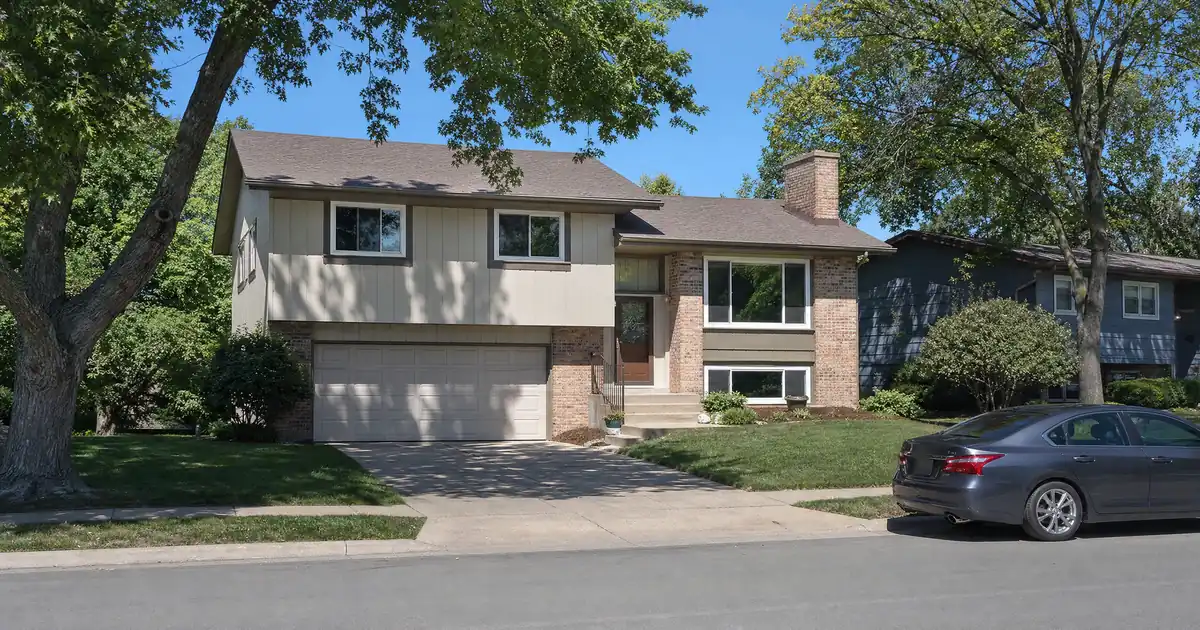
How To Use Equity In Your Home For Real Estate Investment — The Quick Read: Homeowners can tap equity three ways. They can use a home equity loan, a HELOC, or a cash-out refinance. Then they put that money toward a down payment on a rental. The financing decision on the source side is separate from the underwriting decision on the destination side. The new investment property usually gets qualified on a DSCR loan. That means the property’s rent carries the file — not the borrower’s paystub. Both steps have their own rules. Mixing them up is where investors get tripped up.
What Home Equity Actually Is (And How to Calculate It)
Equity is simple math. It’s current market value minus what’s owed on the mortgage. Say a home appraises at $500,000 and the loan balance is $310,000. Equity is $190,000. But not all of that is available to borrow against. Most lenders want a cushion left in the home. That cushion is commonly around 20% of value. They want that cushion in place before they’ll let a homeowner draw against the rest. So on that same $500,000 home, roughly $100,000 stays untouched. That’s 20% of value. The remainder is the tappable pool a lender will consider.
DSCR Calculator
Run the numbers in your market
Rate source: Freddie Mac 30-yr average via FRED® — Federal Reserve Bank of St. Louis · effective Jul 30, 2026
Prefilled with local estimates — enter your own rent or nightly figures, taxes, insurance, and HOA for a more accurate picture.
Program parameters update from Lendmire’s centralized guideline source. Taxes and insurance are editable estimates.
As of Jul 30, 2026 · General Freddie Mac market benchmark, not a Lendmire loan offer. Rent, nightly rate, occupancy, taxes, and insurance are editable estimates. Short-term rental figures are estimates only and vary significantly by season, property type, management approach, and local short-term-rental rules — confirm local regulations before relying on them. Qualifying income for short-term rentals varies by program — some use appraisal market rent, others use documented STR history or projections — and is confirmed in underwriting. Not a Loan Estimate, approval, or commitment to lend. Program availability and eligibility are subject to lender guidelines, credit approval, property review, and underwriting.
That cushion isn’t random. It protects the lender if home values drop. It also gives the homeowner breathing room if they need to sell. The math itself is simple. But the number that matters for planning a rental purchase is the tappable figure — not the total equity figure. A lot of first-time equity borrowers miss that distinction.
Key Terms Defined
Home equity loan — a lump-sum second mortgage secured by the home. It pays out once. You repay it on a fixed schedule alongside your existing first mortgage.
HELOC (Home Equity Line of Credit) — a revolving credit line secured by the home. It works like a credit card. You can draw against it repeatedly during a set draw period.
Cash-out refinance — this replaces your entire existing first mortgage with a larger new loan. You keep the difference in cash. This resets the loan’s amortization and note terms entirely.
DSCR (Debt Service Coverage Ratio) — this ratio compares a rental property’s monthly rent to its full monthly housing payment. That payment includes principal, interest, taxes, insurance, and any HOA dues. It’s the core underwriting metric for a non-owner-occupied investor loan.
Tappable equity — the portion of total home equity a lender will actually let you borrow against, after the required equity cushion stays in place.
PITIA — principal, interest, taxes, insurance, and association dues combined into one monthly housing number. This is the figure used in DSCR math.
Home Equity Loan vs. HELOC vs. Cash-Out Refinance
| Factor | Home Equity Loan | HELOC | Cash-Out Refinance |
|---|---|---|---|
| Structure | Lump-sum second lien | Revolving credit line, second lien | Replaces entire first mortgage |
| Payout | One-time disbursement | Draw as needed during draw period | One-time disbursement |
| First mortgage | Stays untouched | Stays untouched | Paid off and replaced |
| Best fit | One-time down payment need | Staged draws (renovation, phased purchases) | Investor wanting to reset the whole loan |
| Repayment | Fixed schedule from day one | Interest-only draw period, then repayment | Fixed schedule on new, larger balance |
A home equity loan and a HELOC both sit behind your existing first mortgage. They’re second liens. That means you end up with two payments. A cash-out refinance skips that stacking problem. It replaces the first mortgage outright. But that also means your entire balance gets re-amortized under new terms — not just the new money. Investors funding a single acquisition often like the simplicity of a home equity loan or cash-out refi. Investors planning a renovation-heavy purchase, or drawing capital in phases, tend to lean toward a HELOC instead.
Step by Step: From Tappable Equity to a Closed Investment Purchase
1. Confirm tappable equity. Get a realistic value estimate on your source property. Subtract the loan balance and the lender’s required cushion. This number funds the deal — not the full equity figure.
2. Choose the extraction vehicle. A lump-sum need points to a home equity loan or cash-out refinance. Staged draws — common in a rehab-and-hold strategy — point to a HELOC.
3. Understand the rescission timing, if it applies. If the source loan is secured by a primary residence, federal law gives you a short cancellation window before funds disburse. That window doesn’t exist on a loan secured by a rental or investment property. And it doesn’t apply to the purchase-money loan on the new acquisition itself.
4. Deploy the proceeds as the down payment. Once funds land, they become capital for the new property’s purchase. That covers the down payment, closing costs, or in some cases the full price on a lower-balance deal.
5. Move to underwriting on the destination loan. Here’s where the file shifts from a consumer-lending conversation to a DSCR conversation. The new loan gets qualified against the rental property’s income — not your traditional personal-income documentation.
6. Source and season the funds. DSCR underwriting skips personal income verification. But a lender will still want the down payment funds sourced and seasoned in your account. That’s the same “large deposit” documentation habit carried over from conventional files.
7. Clear the coverage ratio. Rent divided by the full monthly payment (PITIA) determines whether — and how much — the file qualifies for.
How the Destination Loan Actually Rates the Property
The new rental doesn’t get evaluated on your income at all. It gets evaluated on its own numbers. Across the wholesale network Lendmire works with, most purchase files land at 75%-80% loan-to-value. That means 20%-25% down. A handful of high-leverage programs go to 85% LTV for borrowers with roughly 700+ credit, subject to lender guidelines. Coverage clears on a 1.00 debt-service ratio at the low end on select programs. That’s a floor for specific products — never a universal standard. Stronger ratios above that open better leverage and pricing tiers.
That distinction matters. A larger equity-funded down payment lowers the new loan’s monthly payment. It can also lift the DSCR ratio, which helps. But it never overrides a credit floor, a reserve requirement, or a property-eligibility rule. The strongest files clear two separate tests at once: enough equity to fund the purchase, and enough rental income to cover the payment. Exact terms depend on the lender’s guidelines, property type, leverage, and a full review of your file.
Credit tiers across the network commonly start around a 620 floor on some programs. Most products want closer to 660. The strongest leverage is reserved for 700+ borrowers. Reserve requirements vary by lender, loan size, and leverage. They commonly land around six months of PITIA. Conservative rate-term files under $1,500,000 sometimes see reserves waived. Loans above that threshold often step up toward nine months. Loan sizes on standard programs run up to roughly $3,000,000. Loans above $2,500,000 are generally structured as 30-year fixed only across the network.
One clarification is worth sitting with: clearing 1.00 DSCR is not the same thing as positive cash flow. The ratio only compares rent to the PITIA payment. It says nothing about vacancy, repairs, property management fees, utilities, or capital expenditures. A property clearing 1.05 on paper can still run negative once those costs get factored in. Investors should model the full expense picture separately from the coverage ratio Lendmire’s team runs on the loan file.
For a fuller walkthrough of how these ratios get built and priced, Lendmire’s complete DSCR loans guide breaks down the qualification mechanics in more depth.
Where the Appraisal Actually Comes From
The rent figure feeding the DSCR ratio on a single-family rental typically comes from a standardized rent schedule. An appraiser completes this alongside the appraisal. It’s the same form-based approach used industry-wide for one-unit comparable rent estimates. A parallel form exists for two-to-four-unit properties. That form has a known limitation: it wasn’t built to estimate short-term rental income. So appraisers working an STR file often lean on separate short-term rental data sources to build a defensible income number.
Speaking of short-term rentals — a different set of parameters applies there. Purchase leverage on STR-qualified DSCR loans tops out around 75% LTV. Refinances run closer to 70%. Cash-out refis land around 70% as well. Expect a 640+ credit requirement, roughly twelve months of hosting history documented, and a 1.00 coverage floor on qualifying files, subject to lender guidelines.
Common Mistakes That Derail an Equity-Funded Purchase
Assuming the cash-out proceeds count as taxable income. They don’t. It’s loan proceeds, not earnings.
Assuming rescission protections travel with the collateral type. They don’t. The federal cancellation window is tied to whether the source property is a primary residence — not whether the eventual purchase is a rental.
Confusing a HELOC with a cash-out refinance. One stacks a second payment behind your existing mortgage. The other replaces the first mortgage entirely and resets the whole balance.
Treating 1.00 DSCR as “the standard.” It’s a floor on select programs only. Most files benefit from stronger coverage. Coverage below 1.00 is available only through select lenders in the network with adjusted leverage and terms — never as a no-ratio product.
Because these loans are non-owner-occupied, lenders review them differently from a standard owner-occupied mortgage. Each program in the wholesale network sets its own overlays on leverage, seasoning, and reserves.
Assuming every property type qualifies. Manufactured homes — single- or double-wide — log homes, and barndominiums fall outside DSCR programs across the network. That’s a hard eligibility line, not a pricing adjustment.
Scaling: Recycling Equity Across a Portfolio
Once an investor’s conventional financed-property count is maxed out, DSCR financing becomes the way to keep growing. Why? Non-QM investor loans don’t carry the same financed-property caps that agency lending does. The playbook repeats itself. Build equity in a rental over time through gradual value gains or value-add improvements. Pull a cash-out refinance capped around 75% LTV, with roughly six months of seasoning expected across most of the network. Then redeploy that capital as the down payment on the next acquisition. Lendmire’s piece on using DSCR loans to scale real estate investing walks through that loop in more detail. The investment property refinance breakdown covers how the refinance side of that cycle is structured. Every figure here varies by lender and program — guidelines, property type, leverage, and credit profile all apply.
Investors weighing whether to pull equity from a primary home versus an existing rental should also check out who does home equity loans on investment property and should I use home equity to buy an investment property. Both cover the sourcing side of this decision in more depth than fits here.
Investment-property HELOC lines have their own ceiling worth knowing before you plan a multi-property strategy. They cap at $500,000 total across the network. There’s no tier above that for investment-secured lines. So investors planning a larger pull typically look to a cash-out refinance instead.
A Few Overlay Notes Worth Knowing
Some states carry additional restrictions across the network. Purchases in Connecticut, Florida, Illinois, and New Jersey generally cap near 75% LTV. Overlay-state deals in those markets typically max out around $2,000,000 in loan amount, subject to program guidelines. Term structures are otherwise flexible. The 30-year fixed is the backbone product. But extended 40-year terms and interest-only periods are available through select lenders. Adjustable-rate structures exist too, for investors who want them.
Tax treatment can depend on how the funds are used and how the property is held. Investors should keep clear records and speak with a qualified tax professional before relying on any deduction.
DSCR loans are business-purpose investor products. Lendmire (NMLS# 2371349) arranges this financing through select lenders across its wholesale network spanning 39 states plus Washington, D.C. Because these are non-owner-occupied loans, they get reviewed differently from a standard owner-occupied mortgage. Every file is subject to lender guidelines, credit approval, and property review, per program terms for LLC-titled entities where applicable.
This article is general information, not legal or tax advice. Readers should consult a qualified attorney or CPA about their specific situation before acting on anything above. Loan approval is never guaranteed. Nothing here is a commitment to lend. Every scenario described is subject to lender approval and to borrower, property, and program guidelines.
For deeper background on the mechanics discussed here, see eCFR – 26 CFR 1.163-8T and IRS – About Publication 936.
Frequently Asked Questions
Can I use equity from an existing rental to buy another rental, not just my primary home?
Yes. The extraction mechanics work the same way on an investment property as they do on a primary residence. But the federal three-day rescission protection doesn’t apply when the source property is a rental or investment property rather than a primary home. The cash-out ceiling on that source property typically runs around 75% LTV across most of the network, with roughly six months of seasoning expected.
Does a HELOC on my primary home count against me when I apply for the new investment property loan?
The new DSCR loan gets qualified primarily on the rental property’s income covering the payment, subject to lender guidelines. It isn’t a personal-income or DTI-driven approval the way a HELOC application is. The HELOC payment itself is a separate obligation on your side. But it doesn’t change how the destination property’s rent-to-payment ratio gets calculated.
What happens if I sell the property I pulled equity from?
The equity loan or HELOC on that property gets paid off at closing from sale proceeds, same as any lien. It doesn’t affect the separate DSCR loan already in place on the property you bought with those funds. That loan stands on its own, secured by the new property.
Is clearing 1.00 DSCR the same as the property being profitable?
No. A 1.00 ratio means rent covers the mortgage payment (PITIA). It says nothing about vacancy, repairs, management fees, or capital expenses sitting outside that calculation. Investors should model total operating costs separately from the coverage ratio.
Can I use equity to buy a short-term rental instead of a long-term rental?
Yes. STR-qualified DSCR loans carry their own parameters, though. Purchase leverage tops out around 75% LTV. Cash-out and refinance land closer to 70%. Lenders typically want a 640+ credit score along with roughly twelve months of hosting history and a 1.00 coverage floor, subject to lender guidelines. Short-term rental rules can also vary by city, county, HOA, and property type. So investors should confirm local rules before relying on projected rental income.
About Lendmire
Lendmire — NMLS# 2371349 — is a mortgage brokerage specializing in DSCR investor loans. It helps arrange financing across 40 markets, including Washington, D.C., through wholesale and investor-lending channels. The model centers on property-level rental income reviewed by the lender rather than W-2 documentation, subject to lender guidelines. That suits entity-owned and multi-property investors. Lendmire holds Scotsman Guide Top Mortgage Workplace recognition for 2025 and 2026.
Lendmire’s Top Mortgage Workplace recognition is documented by Scotsman Guide 2025 Top Mortgage Workplace and Scotsman Guide 2026 Top Mortgage Workplace.
Get Started
Ready to find the right loan for you?
In about 30 seconds you can review financing options available for your home or investment property. No commitment required.
Informational only. Not a Loan Estimate, approval, or commitment to lend. Program availability and eligibility are subject to lender guidelines, credit approval, property review, and underwriting.
References
2. IRS – About Publication 936
Brandon Miller
Founder & CEO, Mortgage Loan Originator, Lendmire LLC
- Mortgage Loan Originator · NMLS# 1129696 · Verify on NMLS Consumer Access
- North Carolina Real Estate Broker · License# 343312 · Verify on NCREC
- North Carolina Insurance Producer · License# 19053198 · Property, Casualty, Life, Health · Verify on NAIC SBS
- Lendmire LLC · Firm NMLS# 2371349 · Verify firm licensure
Disclosure information. Lendmire is a state-licensed mortgage brokerage under NMLS# 2371349. Lendmire is not a depository institution, direct lender, or financial advisor — all loans referenced are placed through wholesale lender partners and are subject to each lender's underwriting standards. This article is provided for general informational purposes and is not a commitment to lend, nor does it constitute financial, legal, or tax advice. Loan programs, terms, rates, and qualification standards change without notice and depend on borrower profile, property type, and the state in which the subject property is located. Equal Housing Opportunity provider. NMLS Consumer Access: nmlsconsumeraccess.org.


