
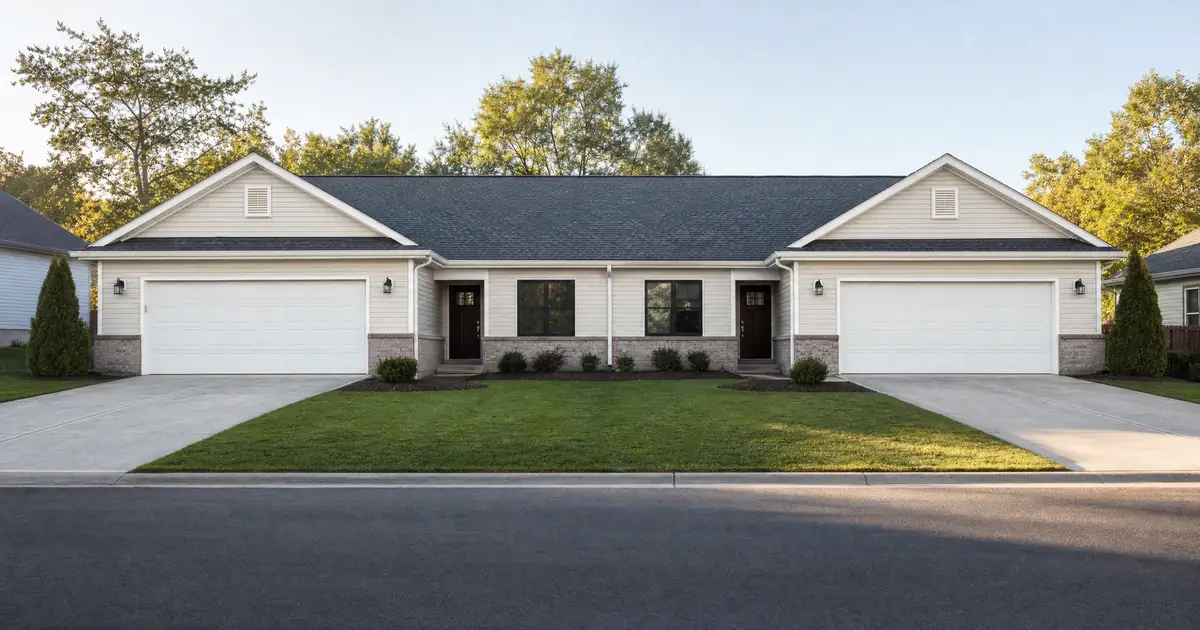
Fannie Mae Cash Out Refinance Duplex Max LTV — The Quick Read: Fannie Mae’s own framework treats a duplex as a 2-unit property, and its cash-out ceiling on that property type sits below the number most people assume from headline conventional cash-out talk. That agency ceiling almost never governs the file for a rental-owning investor, though — the loan simply isn’t sold to Fannie Mae. Most duplex investors pulling cash out of a rental refinance through DSCR financing instead, where leverage runs up to roughly 75% LTV, and the qualifying math looks at the property’s rent rather than the owner’s paycheck. Exact terms depend on the lender’s guidelines, property type, leverage, and a full review of the borrower’s file.
Here’s where the confusion usually starts. People see “80% cash-out” quoted somewhere for a single-family primary home, then assume the same ceiling applies to their duplex. It doesn’t — and the gap between what Fannie Mae’s Selling Guide actually says about 2-unit cash-out and what a working non-QM lender will actually do on that same duplex is wide enough to change an investor’s entire refinance math.
DSCR Cash-Out Calculator
Run the cash-out numbers in your market
Rate source: Freddie Mac 30-yr average via FRED® — Federal Reserve Bank of St. Louis · effective Jul 30, 2026
Prefilled with local estimates — enter your property’s value, balance, taxes, and insurance for a more accurate picture.
Program parameters update from Lendmire’s centralized guideline source. Taxes and insurance are editable estimates.
As of Jul 30, 2026 · General Freddie Mac market benchmark, not a Lendmire loan offer. Property value, balance, taxes, and insurance are editable estimates. Maximum loan-to-value varies by lender, program, property type, and seasoning. Not a Loan Estimate, approval, or commitment to lend. Program availability and eligibility are subject to lender guidelines, credit approval, property review, and underwriting.
Key Terms Defined
LTV (loan-to-value): the loan amount divided by the property’s appraised value, expressed as a percentage — a lower LTV means more equity stays in the deal.
Cash-out refinance: replacing an existing mortgage with a new, larger loan and taking the difference in cash, as opposed to a rate-and-term refinance that just swaps the existing balance for new terms.
DSCR (debt-service coverage ratio): rent divided by the full monthly housing payment — principal, interest, taxes, insurance, and any HOA dues (PITIA) — used to size a loan off the property’s income instead of the borrower’s income.
Seasoning: the minimum time a borrower must hold title to a property before a lender will approve a cash-out refinance on it.
Business-purpose loan: a loan made to a legal entity or an individual for an investment property rather than a home the borrower lives in — this is the category DSCR loans fall into, and it’s why they’re underwritten differently from a normal owner-occupied mortgage.
What Does Fannie Mae Actually Allow on a Duplex?
Fannie Mae’s rulebook splits leverage by both occupancy and unit count, and a duplex cash-out refinance lands in a materially tighter bracket than a single-family primary home. The agency’s Eligibility Matrix is the controlling document, and its cash-out refinance guidance draws a hard line between a straight cash-out transaction and a limited cash-out (“rate-and-term-plus”) deal — two products investors routinely conflate.
Three variables set the ceiling on the agency side: occupancy type, unit count, and whether the transaction is full cash-out or limited cash-out. Fannie Mae’s occupancy rules sort every loan into principal residence, second home, or investment property — and an investment property carries a loan-level price adjustment on top of a lower LTV ceiling than either of the other two categories. A duplex bought as a rental, then, is never underwritten to the same number as a duplex someone lives in and rents out the other side of.
Fannie Mae also requires title seasoning before it will consider a cash-out refinance at all: a borrower generally needs to have been on title for at least six months, with narrow exceptions for inheritance or a legal award through divorce or separation. Layered on top of that is a separate 12-month note-age rule counted from the prior mortgage’s note date. None of this changes the LTV ceiling itself — it just determines whether the file is even eligible to apply for one.
Why This Rulebook Barely Matters to Rental Investors
Almost no working rental-property investor actually closes a duplex cash-out refinance through the agency channel, and that’s the practical reality that makes the Fannie Mae numbers above mostly academic. DSCR loans are never sold to Fannie Mae or Freddie Mac — they’re business-purpose, non-QM loans, and each lender in the wholesale channel that funds them sets its own leverage and seasoning rules from scratch.
That shift isn’t a fringe trend anymore. Investor mortgage loans made up roughly 28.5% of nonconforming loan originations tracked in a recent month, according to Scotsman Guide’s reporting on Optimal Blue data — a substantial share of the entire non-QM market, driven largely by investors who’d rather qualify off a property’s rent roll than dig up two years of traditional personal-income documentation. DSCR loans are designed for non-owner-occupied investment properties. Because they are business-purpose investor loans, they are reviewed differently from a standard owner-occupied mortgage.
Across Lendmire’s wholesale network, DSCR cash-out refinances on a duplex typically top out around 75% LTV, with most files landing somewhere in that same neighborhood regardless of the exact lender. That’s the number that actually governs the refinance math for most rental investors reading this — not the agency table above.
How the Duplex Cash-Out Ceiling Actually Works, Step by Step
The mechanics run in a fixed order, and each step can cap the loan before the next one even gets applied.
Step 1 — Classify the deal. Cash-out is priced and capped tighter than a purchase or a rate-and-term refinance on the same duplex, because the lender is handing back equity rather than simply replacing existing debt.
Step 2 — Confirm seasoning. Most DSCR programs in Lendmire’s network expect roughly six months of ownership before a cash-out refinance is eligible — a rough echo of the agency framework, though each lender’s exact clock is set independently.
Step 3 — Order the appraisal and rent documentation. The appraiser sets market value (the LTV denominator), and for a 2-unit property, market rent typically gets documented on the small residential income property form — Fannie Mae Form 1025 — a standardized rent-documentation convention the non-QM industry borrowed even though the loan itself never touches Fannie Mae’s balance sheet. A single-unit rental uses a different form (the 1007 rent schedule), which is part of why 2-4 unit leverage tends to run a notch below single-family leverage even on comparable credit files.
Step 4 — Run the coverage math. Both units’ gross rents typically get combined into one number and divided by the full monthly payment. A ratio at or above roughly 1.00 means rent covers the payment exactly — worth repeating clearly: that only means rent covers principal, interest, taxes, insurance, and HOA. It says nothing about vacancy, repairs, management fees, or capital expenditures, all of which sit outside the ratio and can turn a “breakeven” duplex into a cash-flow drag in the real world.
Step 5 — Size the loan. The final amount gets set to whichever is lower: the 75% LTV ceiling against appraised value, or whatever the DSCR math actually supports. On a duplex where the coverage ratio comes in soft, the loan amount can land well below the leverage cap even if the appraisal would otherwise support it. Every figure here varies by lender and program — guidelines, property type, leverage, and credit profile all apply.
Step 6 — Layer on credit and reserves. Credit tiers across the network generally start around a 620 floor, though most programs prefer something closer to 660, and 700-plus tends to unlock the strongest leverage tiers available on a given lender’s matrix. Reserves — typically expressed in months of PITIA — commonly land around six months; loans above roughly $1.5 million often step up to about nine months, though conservative rate-term files at modest leverage can sometimes see reserves waived entirely. None of these are fixed universal numbers; they vary by lender, loan size, and the overall strength of the file.
Where the Duplex Number Actually Diverges from the Agency Table
The single biggest misconception in this space is assuming a duplex gets the same ceiling as a single-family cash-out refinance — it never does, on either side of the market. On the agency side, occupancy type and unit count are separate variables that stack, and an investment property carries a price adjustment on top of a lower ceiling than a primary residence in the same unit-count bracket.
On the DSCR side, the divergence shows up differently: 2-4 unit cash-out leverage across Lendmire’s network generally sits a step below single-unit DSCR cash-out leverage on comparable credit and coverage profiles. A duplex doesn’t automatically inherit the same ceiling as a single-family rental two doors down, even with an identical borrower profile and an identical coverage ratio. It’s a subtle distinction, and it’s the one most generic “cash-out LTV” explainers skip entirely.
Limited cash-out and full cash-out also get conflated constantly, and they shouldn’t be. Fannie Mae’s limited cash-out provisions apply additional requirements once leverage climbs into the higher end of its allowable range, and follow a different, generally higher leverage table than true cash-out. On the DSCR side, this distinction mostly evaporates — nearly every DSCR duplex refinance an investor runs is a straight cash-out transaction, sized against the same 75% ceiling regardless of how much cash actually comes back.
What a Realistic Duplex Cash-Out Scenario Looks Like
Say an investor owns a duplex that’s appraised meaningfully above the existing loan balance, and both units carry leases that comfortably support the property’s monthly obligation — the coverage ratio clears comfortably above 1.00, closer to 1.2x. On a file like that, the lender is generally sizing the new loan against the 75% LTV ceiling first, then checking whether the rent still supports that loan amount at the new, larger balance.
Run the same scenario with a duplex where rents are thinner relative to the property’s value — coverage lands closer to breakeven, in the 1.00-1.05x range. There, the DSCR math becomes the binding constraint before the LTV ceiling ever gets tested; the loan amount that pencils out under the coverage requirement comes in below what 75% of appraised value would otherwise allow. That’s the practical lesson: a strong appraisal doesn’t guarantee a strong cash-out number if the rent roll can’t carry it.
DSCR files on 2-4 unit properties in Lendmire’s network tend to come in with a specific pattern worth flagging: investors often underwrite the combined rent roll optimistically, forgetting that one soft unit can drag the whole ratio down even when the other unit rents strong. The stronger files pull actual lease documentation for both units up front rather than relying on a market-rent estimate for one side — it tends to move the file through underwriting with fewer conditions.
A bigger down payment lowers the payment and can lift the coverage ratio, but it never overrides the 75% leverage cap, the credit floor, or reserve requirements on its own. The strongest cash-out files clear both tests at once — enough equity to satisfy the LTV ceiling, and enough rent to satisfy the coverage math. Final terms depend on lender guidelines, property type, leverage, and the borrower’s complete credit picture.
Lendmire’s DSCR loans guide walks through how the coverage-ratio math interacts with leverage across property types in more depth, and the max LTV cash-out refinance breakdown covers how that 75% ceiling compares across single-family, 2-unit, and larger multifamily deals.
Edge Cases That Change the Math
A few scenarios pull the standard leverage picture in different directions.
- Owner-occupied duplex house-hacking. An owner living in one unit and renting the other typically stays inside the conventional/agency channel rather than DSCR, since DSCR programs are business-purpose products built for non-owner-occupied properties. Once that owner moves out and the duplex becomes a pure rental, refinancing again generally shifts the file toward DSCR — at which point the 75% ceiling and coverage math above take over.
- Multiple financed properties. Fannie Mae layers credit-score and reserve overlays on top of its standard LTV table once a borrower’s financed-property count grows past certain thresholds — a constraint largely absent from the DSCR channel, where portfolio size generally isn’t treated as a hard cap the same way.
- Short-term rental duplexes. A duplex operated as two short-term-rental units runs on a different set of numbers entirely — purchase leverage tops out around 75% LTV, cash-out closer to 70%, typically paired with a 640-plus credit score and roughly 12 months of hosting history behind it. Short-term rental rules can vary by city, county, HOA, and property type, so investors should confirm local rules before relying on projected rental income. Lendmire’s DSCR loan for Airbnb guide covers that structure directly.
- State overlays. A handful of states — Connecticut, Florida, Illinois, and New Jersey among them — generally see purchase leverage capped closer to 75% LTV and overlay-state loan sizes capped around $2 million, regardless of property type.
- Loan size. Standard DSCR programs across the network generally run up to about $3 million; above roughly $2.5 million, most lenders hold to 30-year fixed structures rather than adjustable terms.
- Ineligible property types. Manufactured homes (single- and double-wide), log homes, and barndominiums fall outside DSCR programs across Lendmire’s network entirely — they’re not offered, on a duplex or any other unit count.
Anyone comparing this against Fannie Mae’s own conventional cash-out treatment can see the full breakdown on Lendmire’s Fannie Mae cash-out refinance for investment property page, and the cash-out refinance calculator runs the LTV-to-dollar math for a specific property scenario.
DSCR loans qualify primarily on property-level rental income covering the payment, subject to lender guidelines — they don’t replace or bypass underwriting entirely; they simply shift the primary income test from the borrower’s paycheck to the property’s rent roll. And because DSCR loans are business-purpose products, they’re exempt from TRID’s consumer-mortgage disclosure timelines — no Loan Estimate or three-business-day waiting period applies the way it would on an owner-occupied purchase.
Tax treatment can depend on how the funds are used and how the property is held; investors should keep clear records and speak with a qualified tax professional before relying on any deduction.
Loan approval is never guaranteed, and nothing here is a commitment to lend. Every scenario described here is subject to lender approval and to borrower, property, and program guidelines, which can change. This article is general information, not financial, legal, or tax advice.
If a duplex refinance is on the table and the numbers need a second look, investors can compare options by calling Lendmire (NMLS# 2371349) at 828-256-2183 or requesting a pricing quote — Lendmire arranges DSCR financing through select lenders across a 40-market footprint spanning 39 states and Washington, D.C., matching the property’s income, the borrower’s credit profile, and the leverage the deal actually needs.
Frequently Asked Questions
Does a duplex get the same cash-out LTV as a single-family rental?
No. Across most DSCR programs, 2-4 unit cash-out leverage sits a step below single-unit cash-out leverage on comparable credit and coverage profiles, even though both property types generally cap around 75% LTV on paper. The gap shows up more in how tightly the coverage ratio gets enforced than in the headline percentage itself.
Can I use rental income from both duplex units to qualify?
Yes — DSCR underwriting typically combines gross rent from both units into one number and compares it against the full monthly payment. Lenders generally want documented leases or a market-rent appraisal, Form 1025 in the conventional world, rather than a borrower’s estimate of what each side “should” rent for.
Does Fannie Mae’s cash-out LTV rule even apply if I use a DSCR loan?
No. DSCR loans are never sold to Fannie Mae or Freddie Mac, so the agency’s Eligibility Matrix numbers don’t govern them directly. Each wholesale lender in the DSCR space sets its own leverage, seasoning, and coverage-ratio rules independently of the agency framework.
What credit score do I need for a duplex cash-out refinance?
Programs across the network generally start around a 620 floor, though most want something closer to 660 for a straightforward approval. Scores of 700 or higher tend to unlock the strongest available leverage tiers, subject to lender guidelines and the rest of the file.
Is there a waiting period before I can cash-out refinance a duplex I just bought?
Generally yes — most DSCR programs expect around six months of ownership before considering a cash-out refinance eligible, echoing the seasoning period Fannie Mae applies on the agency side. Exceptions can exist depending on how the property was acquired, but they’re handled case by case rather than as a blanket rule.
For the mechanics of pulling equity out of a rental property, see cash-out refinance on an investment property.
About Lendmire
Lendmire — NMLS# 2371349 — is a mortgage brokerage specializing in DSCR investor loans, helping arrange financing across 40 markets, including Washington, D.C., through wholesale and investor-lending channels. The model centers on property-level rental income reviewed by the lender rather than W-2 documentation, subject to lender guidelines, suiting entity-owned and multi-property investors. Lendmire holds Scotsman Guide Top Mortgage Workplace recognition for 2025 and 2026.
For how equity extraction works on an investment property, see cash-out refinance on an investment property.
Lendmire’s Top Mortgage Workplace recognition is documented by Scotsman Guide 2025 Top Mortgage Workplace and Scotsman Guide 2026 Top Mortgage Workplace.
Get Started
Ready to find the right loan for you?
In about 30 seconds you can review financing options available for your home or investment property. No commitment required.
Informational only. Not a Loan Estimate, approval, or commitment to lend. Program availability and eligibility are subject to lender guidelines, credit approval, property review, and underwriting.
References
1. Fannie Mae Eligibility & Pricing Matrix
2. Fannie Mae Selling Guide — Cash-Out Refinance Transactions (B2-1.3-03)
3. Scotsman Guide — Investors Anchor Housing Market as Non-QM Loans Surge
Brandon Miller
Founder & CEO, Mortgage Loan Originator, Lendmire LLC
- Mortgage Loan Originator · NMLS# 1129696 · Verify on NMLS Consumer Access
- North Carolina Real Estate Broker · License# 343312 · Verify on NCREC
- North Carolina Insurance Producer · License# 19053198 · Property, Casualty, Life, Health · Verify on NAIC SBS
- Lendmire LLC · Firm NMLS# 2371349 · Verify firm licensure
Legal disclosures. Lendmire (NMLS# 2371349) is a state-licensed mortgage brokerage that arranges financing through wholesale lender relationships. Lendmire is not a direct lender, depository institution, or registered financial advisor. The discussion above is general informational content about real estate financing — it is not financial, legal, or tax advice, and readers should consult licensed professionals for guidance on their individual circumstances. Loan inquiries are subject to lender underwriting; this article does not represent a commitment to lend. Loan terms, rates, and qualification standards vary by borrower, property, and state, and are subject to change at any time. Equal Housing Opportunity. NMLS Consumer Access: nmlsconsumeraccess.org.


