
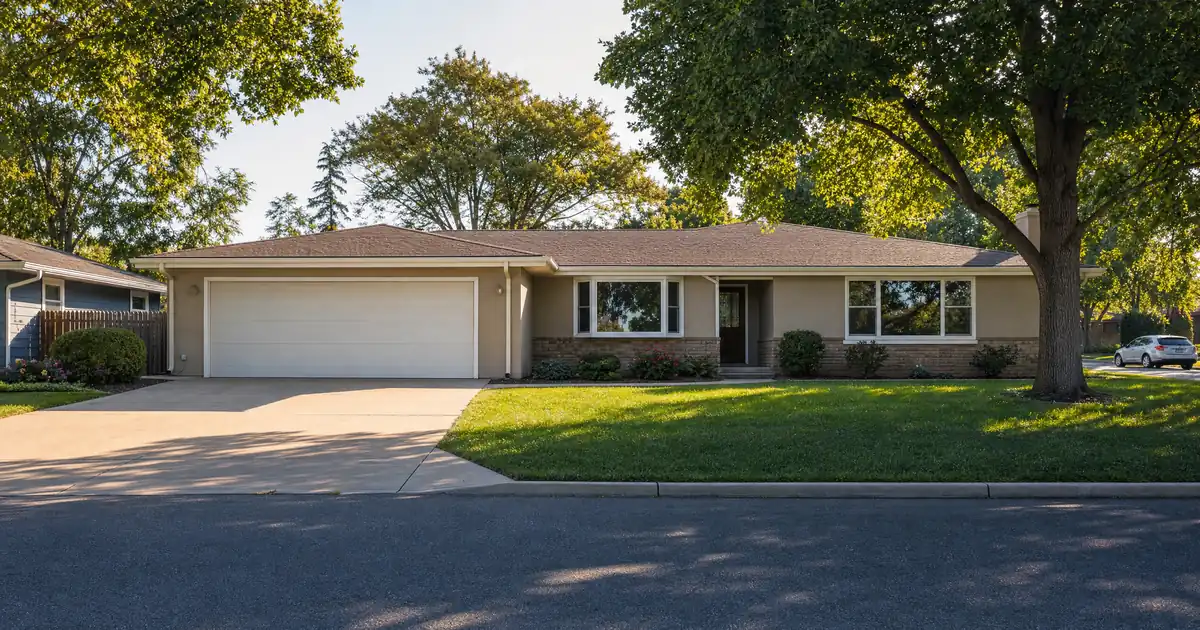
Best Refinance For Investment Property — The Quick Read: Most landlords get the best deal from a business-purpose loan. This kind of loan looks at the property’s rent, not the owner’s personal income. People call it a DSCR loan. A rate-and-term refinance frees up cash flow or gets you out of a bridge loan. A cash-out refinance pulls equity for your next purchase, usually capped near 75% loan-to-value. Conventional bank refinances still work if your income is simple and you own fewer than ten financed properties. But these loans carry personal debt-to-income limits and a cap on financed properties. Active investors eventually outgrow both limits.
What Makes an Investment-Property Refinance Different
Refinancing a rental is not like refinancing your own home. The lender doesn’t care if your paycheck covers the payment. It cares whether the property does.
DSCR Calculator
Run the numbers in your market
Rate source: Freddie Mac 30-yr average via FRED® — Federal Reserve Bank of St. Louis · effective Jul 30, 2026
Prefilled with local estimates — enter your own rent or nightly figures, taxes, insurance, and HOA for a more accurate picture.
Program parameters update from Lendmire’s centralized guideline source. Taxes and insurance are editable estimates.
As of Jul 30, 2026 · General Freddie Mac market benchmark, not a Lendmire loan offer. Rent, nightly rate, occupancy, taxes, and insurance are editable estimates. Short-term rental figures are estimates only and vary significantly by season, property type, management approach, and local short-term-rental rules — confirm local regulations before relying on them. Qualifying income for short-term rentals varies by program — some use appraisal market rent, others use documented STR history or projections — and is confirmed in underwriting. Not a Loan Estimate, approval, or commitment to lend. Program availability and eligibility are subject to lender guidelines, credit approval, property review, and underwriting.
This matters because a loan on a rental you don’t live in counts as business-purpose credit, not a regular consumer mortgage. In plain terms: DSCR loans are built for non-owner-occupied investment properties. Because they’re business-purpose investor loans, lenders review them differently than a standard owner-occupied mortgage.
This difference shows up in three places. First, the paperwork. A DSCR file skips your W-2s and personal income documents. It looks at the lease or the market rent instead. Second, the entity on title. Investment refinances often close in an LLC. A conventional owner-occupied refinance usually won’t allow that. Third, the portfolio math. Agency lenders limit how many financed properties one borrower can hold. DSCR programs don’t share that limit.
Key takeaways:
- Rate-and-term refinances replace the existing loan without pulling cash out; cash-out refinances do pull cash, usually at lower leverage.
- Rental-property refinances qualify primarily on the property’s rent covering the payment, subject to lender guidelines — not personal income alone.
- Cash-out leverage on most DSCR programs tops out around 75% LTV, while some rate-and-term files reach 80%, and select high-leverage purchase programs stretch to 85% for stronger credit profiles.
- Conventional refinances still work for landlords under the agency property-count ceiling — but that ceiling is exactly why serial investors eventually shift toward property-income lending.
- Not every property type qualifies. Manufactured homes, log homes, and barndominiums fall outside DSCR programs entirely.
Before picking a refinance type, it helps to ask a bigger question first: should you refinance at all right now? Lendmire’s can you refinance an investment property breakdown covers that question.
Rate-and-Term or Cash-Out: Which One Actually Fits?
The choice comes down to one question. Do you need cash, or do you just need a better loan structure? A rate-and-term refinance replaces your loan and doesn’t hand you any funds. A cash-out refinance pulls equity out as usable cash, but usually at tighter leverage.
| Factor | Rate-and-Term Refinance | Cash-Out Refinance |
|---|---|---|
| Purpose | Replace existing loan, no funds disbursed | Pull equity out as cash |
| Typical leverage | Can run higher on most files | Generally capped around 75% LTV |
| Underwriting view | Collateral value more certain, more “skin in the game” | Value and reserves get closer scrutiny |
| Common trigger | Exiting a bridge/hard-money loan, tightening the monthly obligation | Funding the next purchase, renovations, or paying down other debt |
A rate-and-term refinance usually prices and underwrites better than a cash-out. Why? The lender’s collateral value is more certain when you’re not walking away with cash. That’s one reason an investor exiting a short-term bridge loan into a rate-and-term DSCR refinance often clears underwriting with less friction. Compare that to someone pulling maximum equity for a down payment on property number four — that file gets more scrutiny.
Investors who want to pull equity out should check Lendmire’s investment-property-refinance page. It walks through the cash-out mechanics in more depth.
Key Terms Defined
- DSCR (debt-service coverage ratio): divide the property’s monthly rent by its full monthly housing payment. If the rent covers the payment fully, you land at 1.00.
- PITIA: principal, interest, taxes, insurance, and any association dues. This is the full monthly housing bill the rent gets measured against.
- LTV (loan-to-value): the new loan amount as a percentage of the property’s appraised value. A lower LTV means you keep more equity in the deal.
- Non-QM (non-Qualified Mortgage): a loan that skips the consumer Ability-to-Repay/Qualified Mortgage rule. Most DSCR loans fall into this group because they’re business-purpose credit, not consumer credit.
- Seasoning: the waiting period a lender wants between buying a property (or closing an existing loan) and refinancing it.
- Delayed financing: a rule that lets a cash buyer get funds back without waiting out full seasoning. But it only covers what they actually invested, not the appraised value.
- Reserves: liquid funds a borrower must show beyond the down payment or equity, usually counted in months of PITIA.
How Underwriting Actually Treats the File
Refinancing a rental runs through a different filter than refinancing your own home. It usually follows a set order.
Classification comes first. The lender confirms the loan sits on a non-owner-occupied property and treats it as business-purpose credit. That’s why an investor loan on a rental doesn’t fall under the same consumer Ability-to-Repay rule as an owner-occupied refinance (12 CFR 1026.3).
The income test looks at the property, not the person. The file skips your personal income documents and your personal debt-to-income number. Instead, it compares the property’s rent to its PITIA. Clear that ratio and you clear the core income test — subject to lender guidelines on credit, reserves, and property eligibility.
Rent gets documented, not guessed. An appraiser estimates market rent using standard industry rent-schedule tools. The file gets priced off that comparable-rent figure, not a landlord’s hopeful guess.
Leverage and loan size interact. The loan amount is capped as a percentage of appraised value, and that percentage changes by transaction type. Purchase leverage on most programs runs 75%-80% LTV. Select high-leverage programs reach 85% for stronger credit files. Cash-out refinances generally hold near 75% LTV across the network. Loan size matters too. Standard programs commonly reach up to $3,000,000. Above roughly $2,500,000, the network generally sticks to 30-year fixed structures instead of adjustable terms.
Reserves get checked. Requirements vary by lender, leverage, loan size, and transaction type. But 6 months of PITIA is common on most files. Conservative rate-and-term refinances at modest leverage under $1,500,000 sometimes skip reserves entirely. Loans above that size typically step up toward 9 months. On a cash-out refinance, the proceeds themselves can sometimes count toward the reserve requirement.
Vesting flexibility closes the file. Most DSCR programs let the loan close under an LLC’s name instead of your personal name. This is a real advantage for investors building a portfolio for liability separation, subject to program eligibility.
Here’s a pattern worth flagging from the file-review side. A bigger down payment lowers your monthly obligation and can lift your coverage ratio. But it never overrides a leverage cap, a credit floor, a reserve rule, or property eligibility on its own. The strongest files clear both tests: enough equity and enough rental coverage. Neither test props up the other.
Big Bank, Portfolio Lender, or Property-Income Lender?
Three lender types show up in refinance conversations, and they don’t play by the same rules. A big bank wants your traditional income paperwork and a debt-to-income ratio under its ceiling. A portfolio lender keeps its own in-house rules, but often still wants full income documentation. A property-income (DSCR) lender skips personal income entirely and underwrites the rent instead.
| Factor | Big Bank / Retail Lender | Portfolio Lender | Property-Income (DSCR) Lender |
|---|---|---|---|
| Income documentation | Full traditional income documentation, W-2s, personal DTI | Usually full income docs, in-house rules | Property rent vs. PITIA — no personal income documentation |
| Financed-property limits | Agency cap generally applies | Lender-specific, often more flexible | No agency-style property-count cap |
| Entity (LLC) vesting | Personal name only, generally | Sometimes allowed | Commonly allowed, subject to program eligibility |
| Best fit | W-2 borrowers with few rentals | Local relationship investors | Portfolio investors, self-employed owners, LLC holders |
Here’s where a lot of investors get surprised. A landlord can do just fine on conventional loans for two or three properties. Then income gets complicated by self-employment write-offs, or the property count climbs. That’s exactly the wall the property-income lane exists to route around.
Can FHA or VA Refinance a Rental Property?
Short answer: no, not for a true non-owner-occupied investment property. FHA and VA programs exist for owner-occupied housing. A straight cash-out refinance on a rental you don’t live in doesn’t qualify under either program.
There’s a practical exception worth knowing. Say you own a 2-4 unit property and live in one unit yourself. You can sometimes use owner-occupied financing on the whole building, with the other units’ rent counted toward the file. But once you move out — or the property was never owner-occupied to begin with — the refinance conversation shifts to conventional investor financing or a property-income refinance instead.
For pure rental purchases and refinances, this is exactly why most active investors land in a DSCR loan long before they hit any agency limit. The underwriting fits the asset, not your occupancy status. Lendmire’s complete DSCR loans guide walks through how that qualification actually works end to end.
Seasoning: The Waiting Period Everyone Confuses
How soon can you refinance a rental after buying it? On most DSCR programs, roughly 6 months of ownership is the common expectation for a cash-out refinance. But each lender in the network sets its own seasoning window on its own, since DSCR loans don’t get sold to Fannie Mae or Freddie Mac.
Conventional cash-out refinancing runs on two separate clocks worth knowing, just for contrast. Fannie Mae’s own guide says at least one borrower must be on title for at least six months before a cash-out refinance can disburse (Fannie Mae Selling Guide). On top of that sits a second, newer rule: the first lien getting paid off must itself be at least 12 months old, counted from note date to note date. This is a separate rule from the six-month title clock, and investors often mix the two up (Black, Mann & Graham).
There’s a narrow shortcut for all-cash buyers called delayed financing. It lets a cash purchaser skip the standard wait, but only to recover what they actually spent — not to cash out appreciation on top of it. If you want to pull out forced or market appreciation above your original cost, you still need the full seasoning period. DSCR programs generally don’t tie their own seasoning rules to this agency framework at all. That’s one reason property-income refinances move faster through file review for BRRRR-style investors trying to recycle capital.
Where the General Rule Breaks
A few edge cases change the math in a big way. This is where most refinance planning mistakes happen.
The ten-property ceiling. Conventional financing caps a borrower at up to 10 financed properties, counted across all properties financed — not just mortgages sold to any one agency (homebuyer.com). DSCR programs carry no equivalent cap. That’s exactly why investors scaling past a handful of doors eventually route every refinance through property-income lending, no matter what leverage they prefer.
Prepayment penalties are genuinely lender-specific. There’s no single standard term across the market. Some programs run shorter structures, others longer, and you can sometimes buy the term down with pricing adjustments. If you’re refinancing out of an existing DSCR loan, check that loan’s specific prepayment structure first. Don’t assume it behaves like a standard consumer mortgage — DSCR loans are business-purpose credit and, as such, are exempt from the consumer disclosure rules under Regulation Z’s TRID framework that apply to owner-occupied refinances.
Short-term rentals run a different leverage set entirely. Purchase leverage on an Airbnb-style property tops out around 75% LTV. Refinance and cash-out generally sit closer to 70%. Lenders typically want a 640+ credit score, about 12 months of hosting history, and a coverage ratio clearing 1.00. Short-term rental rules can vary by city, county, HOA, and property type, so check local rules before counting on projected nightly income. Lendmire’s DSCR loan for Airbnb page covers that program in more depth.
Coverage below 1.00 isn’t a dead end — it’s just a different structure. Select lenders in the network do work with files where the rent doesn’t fully cover the payment. But leverage and terms adjust to match. A no-ratio option is available for DSCR below 1.00 with stronger credit or higher down payment; qualification on that path rests on credit and equity rather than a rent-coverage calculation. And clearing 1.00 coverage isn’t the same thing as positive cash flow. The ratio only measures rent against PITIA. Repairs, vacancy, management, utilities, and capital expenses sit outside that math entirely.
Certain property types and states carry overlays. Manufactured homes (single- and double-wide), log homes, and barndominiums fall outside DSCR programs across the network. They’re simply not offered — not a “harder” case to work around. A handful of states — Connecticut, Florida, Illinois, and New Jersey — generally see purchase leverage capped nearer 75% LTV, with overlay-state loan amounts often capped around $2,000,000. And investment-property HELOC lines cap at $500,000 total. There’s no higher tier above that for investment properties in this network.
The Practical Decision
Picture four different investors facing the same refinance question. Each one needs a different path.
A self-employed landlord whose conventional income paperwork doesn’t show their real cash flow — because of legitimate write-offs — usually does better with a property-income refinance from day one. A conventional lender’s debt-to-income math will fight that file every time.
An investor closing in on the ten-property agency ceiling doesn’t have much of a decision to make. The next refinance almost has to route through a DSCR program, because the agency count rule doesn’t bend for even a strong credit profile.
An LLC owner holding title through an entity for liability protection will find that most conventional retail lenders won’t refinance an LLC-held property at all. DSCR programs are built to handle that vesting, subject to program eligibility.
And an investor exiting a short-term bridge or hard-money loan into permanent financing is usually chasing a rate-and-term refinance, not a cash-out. Why? The underwriting view on collateral value is friendlier when no funds leave the closing table.
None of these paths guarantee approval. Every file still runs through credit review, reserve checks, and property underwriting on its own facts. But knowing which lane fits your profile before you shop saves a lot of wasted applications.
If you’re comparing this against other refinance strategies for the year ahead, check Lendmire’s best way to refinance an investment property in 2026 breakdown and its best-company-to-refinance-investment-property comparison. Both look at lender selection from a slightly different angle.
Tax treatment can depend on how you use the refinance funds and how you hold the property. Keep clear records and talk with a qualified tax professional before you rely on any deduction.
Lendmire, NMLS# 2371349, arranges DSCR investor loans through select lenders across 39 states plus Washington, D.C. Lendmire matches each file to the program that fits the investor’s credit profile, leverage need, and property. If you’re buying or refinancing a rental and want to see how the numbers line up, Lendmire can help compare DSCR loan options based on the property’s income, your credit profile, target leverage, and overall goals. Reach the team at 828-256-2183 or request a quote directly.
Loan approval is never guaranteed, and nothing here is a commitment to lend. Every scenario described here is general information, subject to lender approval and to borrower, property, and program guidelines that can change — not financial, legal, or tax advice.
Frequently Asked Questions
Can you refinance an investment property that’s currently tenant-occupied?
Yes. A tenant living there doesn’t block a refinance — it’s actually the norm for a rental property refinance. The lender documents the existing lease or uses appraiser-estimated market rent to support the file. Qualification runs mainly on that rental income covering the payment, subject to lender guidelines.
How does a lender count rental income if there’s no signed lease yet?
An appraiser estimates market rent using standard comparable-rent tools, and the lender uses that appraised figure instead of a lease. This matters most on a purchase-to-refinance transition, or when a property has sat vacant between tenants.
What happens once an investor hits the ten-financed-property limit on conventional loans?
That ceiling doesn’t end their financing — it just moves the next refinance into property-income lending. DSCR programs don’t count against the agency property-count rule at all. That’s exactly why serial buy-and-hold and BRRRR investors migrate toward them as their portfolio grows.
Do DSCR refinance loans carry prepayment penalties?
Most do, and the structure varies a lot by lender rather than following one industry standard. If you plan to refinance again soon, or sell within a few years, confirm the specific prepayment terms on your current loan first. Don’t assume it behaves like a standard mortgage.
Can a short-term rental (Airbnb-style) property be refinanced the same way as a long-term rental?
It can, but the leverage and qualification bar run tighter. Refinance and cash-out leverage on short-term rentals generally sit closer to 70% LTV, versus roughly 75% on many long-term rental refinances. Lenders typically want a stronger credit profile plus a documented hosting history.
About Lendmire
Lendmire is a non-QM mortgage broker (NMLS# 2371349) that arranges DSCR financing for real estate investors in 40 markets — 39 states plus Washington, D.C. Because deals get underwritten mainly on property cash flow rather than personal income documents, this structure suits self-employed buyers and entity-owned portfolios well. Lendmire places loans through wholesale investor lenders; it is not a direct lender. Scotsman Guide named Lendmire a Top Mortgage Workplace in both 2025 and 2026.
Get Started
Ready to find the right loan for you?
In about 30 seconds you can review financing options available for your home or investment property. No commitment required.
Informational only. Not a Loan Estimate, approval, or commitment to lend. Program availability and eligibility are subject to lender guidelines, credit approval, property review, and underwriting.
References
1. eCFR — 12 CFR 1026.3, Exempt Transactions
2. Fannie Mae Selling Guide — Cash-Out Refinance Transactions (B2-1.3-03)
3. Black, Mann & Graham — Fannie Mae 12-Month Seasoning Requirement Announcement
4. Homebuyer.com — Multiple Financed Properties Guideline Explainer
Brandon Miller
Founder & CEO, Mortgage Loan Originator, Lendmire LLC
- Mortgage Loan Originator · NMLS# 1129696 · Verify on NMLS Consumer Access
- North Carolina Real Estate Broker · License# 343312 · Verify on NCREC
- North Carolina Insurance Producer · License# 19053198 · Property, Casualty, Life, Health · Verify on NAIC SBS
- Lendmire LLC · Firm NMLS# 2371349 · Verify firm licensure
Disclosures. The information presented in this article is general market commentary, not financial, legal, or tax advice. Lendmire is a mortgage brokerage (NMLS# 2371349) — not a direct lender or depository institution — and loan placement is subject to lender underwriting. Nothing in this content represents a commitment to lend. Loan terms, pricing, and program availability vary based on borrower qualifications, property characteristics, and state of subject property, and are subject to change at any time. Lendmire complies with Equal Housing Opportunity requirements. Consumer access: nmlsconsumeraccess.org.


