
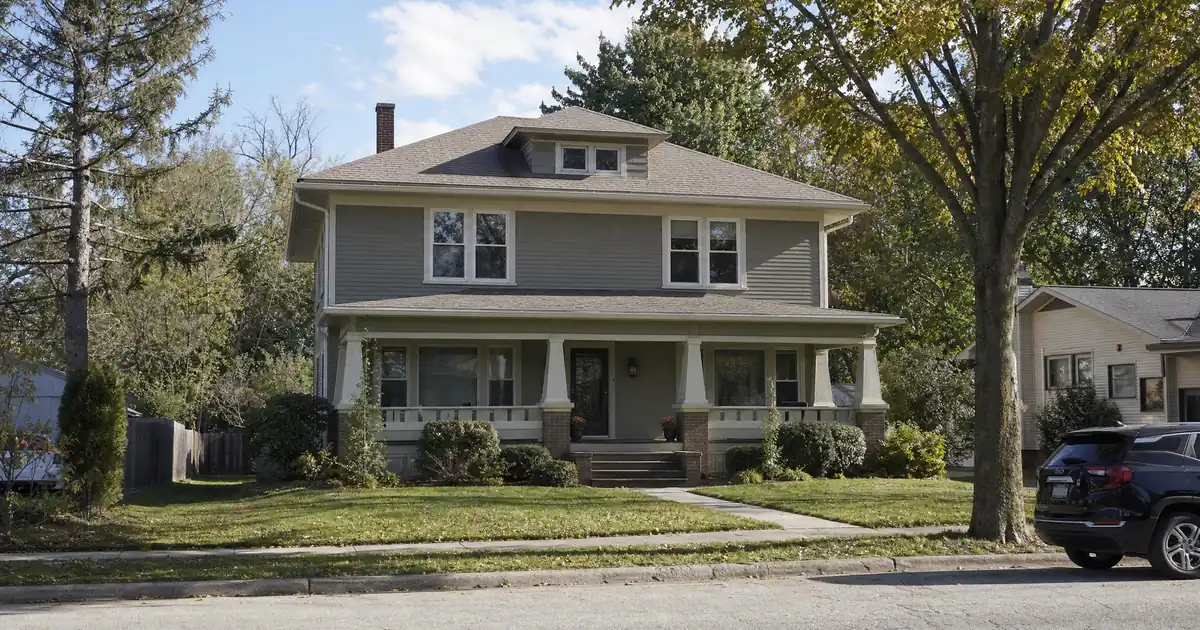
Refinance On Rental Property — The Quick Read: Refinancing a rental property means you replace the current loan on a non-owner-occupied home with a new one. You do this either to adjust the rate and term, or to pull cash out of built-up equity. Underwriters look at four things for a rental refinance: the property’s rent, the appraised value, the payoff balance, and your credit profile. But they don’t treat this file the same way they treat a primary-residence refinance. DSCR-based investor loans have become one of the most common paths through this process. They qualify mainly on the property’s income, not on your pay stubs or tax returns. The paperwork, the mechanics, and how much seasoning you need all shift depending on whether cash is coming out and how the loan gets underwritten.
Key Takeaways
- A rental refinance is either rate-and-term (no meaningful cash out) or cash-out (new loan exceeds payoff plus costs) — and that split drives everything downstream.
- Lenders compare rent to your full monthly obligation using a coverage ratio. They don’t just take the lease at face value.
- Cash-out proceeds on a rental are borrowed money, not earned income — that has tax implications worth understanding before you assume a cash-out check changes your return.
- Vacant units, short-term rentals, and above-market leases all create documented seams in how lenders underwrite income.
- DSCR-based refinancing generally caps cash-out around 75% loan-to-value across most lender networks, with roughly six months of ownership seasoning as a common expectation.
What Refinancing a Rental Property Actually Means
Refinancing a rental replaces the note on a non-owner-occupied property. Before anything else happens, the loan gets sorted into one of two buckets. Rate-and-term refinancing pays off the existing loan and adjusts the structure. Maybe you get a different amortization schedule, a different term, or you switch from an adjustable rate to a fixed one. You don’t walk away with meaningful cash in this scenario. Cash-out refinancing does the opposite. The new loan amount exceeds what you owe plus closing costs, and you get the difference.
DSCR Calculator
Run the numbers in your market
Rate source: Freddie Mac 30-yr average via FRED® — Federal Reserve Bank of St. Louis · effective Jul 30, 2026
Prefilled with local estimates — enter your own rent or nightly figures, taxes, insurance, and HOA for a more accurate picture.
Program parameters update from Lendmire’s centralized guideline source. Taxes and insurance are editable estimates.
As of Jul 30, 2026 · General Freddie Mac market benchmark, not a Lendmire loan offer. Rent, nightly rate, occupancy, taxes, and insurance are editable estimates. Short-term rental figures are estimates only and vary significantly by season, property type, management approach, and local short-term-rental rules — confirm local regulations before relying on them. Qualifying income for short-term rentals varies by program — some use appraisal market rent, others use documented STR history or projections — and is confirmed in underwriting. Not a Loan Estimate, approval, or commitment to lend. Program availability and eligibility are subject to lender guidelines, credit approval, property review, and underwriting.
That one classification decision shapes almost everything that follows. It changes how much paperwork the lender wants. It changes how the file gets priced. It changes how much seasoning — the time since you bought the property or took title — the lender expects. It also changes how conservatively the lender treats the rent. A rate-and-term file on a rental with a long-term tenant is often the simplest transaction on this list. A cash-out file on a property you bought eight months ago, with a short-term rental history, is a much more complicated conversation. Not impossible — just different.
Investors sometimes assume refinancing a rental works the same way as refinancing a primary home. It doesn’t. Owner-occupied refinancing runs through a consumer-mortgage framework built around your personal income and debt-to-income ratios. Investment-property refinancing, especially through DSCR programs, runs through the property’s own economics instead. DSCR loans are built for non-owner-occupied investment properties. Because they’re business-purpose loans made to an investor rather than a homeowner, lenders review them on a different basis than a standard owner-occupied mortgage.
How Underwriting Actually Treats It — Step by Step
Step 1: Classify the transaction. Before a lender looks at anything else, the file gets sorted into rate-and-term or cash-out. This isn’t a formality. It’s the fork in the road that decides your seasoning requirement, how deep the paperwork goes, and how much of the property’s equity you can actually reach.
Step 2: Order the appraisal and the rent conclusion. A single-family rental appraisal produces two things in one report. First, a standard opinion of value, which drives the loan-to-value math. Second, a separate rent conclusion. For one-unit properties, that rent conclusion comes from Fannie Mae’s Single-Family Comparable Rent Schedule, commonly called Form 1007. The lender uses this form to get a market-rent figure directly from the appraiser, instead of relying only on your stated lease. Two-to-four-unit properties use a comparable operating-income form.
Step 3: Reconcile the rent against the loan payment. This is where the lender actually builds the coverage ratio. A widely used underwriting rule takes the lower of two numbers — the actual lease rent, or the appraiser’s market-rent conclusion — instead of the higher one. So if your property is leased slightly above the going market rate, the lender typically underwrites it at the lower, sustainable figure, not the outperforming one. This normalization practice is documented in rental-underwriting guidance from MMCG Invest. That gap between what your lease says and what the lender actually credits can matter a lot.
Step 4: Size the loan. Loan-to-value, your credit profile, and the coverage ratio work together to set the maximum proceeds you can get. Across the wholesale lenders Lendmire (NMLS# 2371349) places DSCR files with in its network — spanning 39 states plus Washington, D.C. — most cash-out refinance files land at or below roughly 75% loan-to-value. About six months of ownership seasoning is a common expectation before cash-out proceeds get released. Credit floors run as low as 620 on select programs, though most lenders in the network want something closer to 660. Scores of 700 or above tend to unlock the strongest leverage tiers and pricing.
Step 5: Close. Rate-and-term refinancing simply swaps the old note for the new one. Cash-out refinancing releases proceeds to your account after the lender settles the payoff and closing costs. Either way, the tax treatment is identical to any other loan closing — which matters for what happens next.
Key Terms Defined
- DSCR (Debt Service Coverage Ratio): the ratio of a property’s monthly rent to its full monthly payment, including principal, interest, taxes, insurance, and any HOA dues. A ratio above 1.00 means rent covers that payment. It says nothing about repairs, vacancy, or other costs sitting outside the calculation.
- LTV (Loan-to-Value): the new loan amount expressed as a percentage of the property’s appraised value. Lower LTV generally means you keep more equity, and often get stronger pricing.
- Rate-and-term refinance: a refinance that adjusts the loan’s structure without you receiving meaningful cash back.
- Cash-out refinance: a refinance where the new loan exceeds the existing payoff and closing costs, and you receive the difference in cash.
- Seasoning: the length of time you must own or hold title to a property before a lender will consider it eligible for a cash-out transaction.
- Lower-of-rent rule: the underwriting convention of using the lesser of the actual lease rent or the appraiser’s market-rent conclusion when calculating coverage.
The Structures and Variations
Cash-out refinancing isn’t the only way to pull equity out of a rental. And rate-and-term isn’t the only reason to refinance one. A few structural variations show up often enough across the wholesale network to matter.
Extended amortization and interest-only periods are available through select lenders. These help investors who want to improve monthly cash flow rather than shorten the payoff timeline. Adjustable-rate structures exist too, for investors who specifically want that trade-off. On loan size, most DSCR refinances fall comfortably under the $3,000,000 ceiling that standard programs support. Above roughly $2,500,000, the network generally holds to 30-year fixed structures instead of offering the full menu of term options.
Reserve requirements vary by lender, leverage, and loan size. They commonly land around six months of PITIA (principal, interest, taxes, insurance, and dues) on most files. Conservative rate-and-term refinances at modest leverage under $1,500,000 sometimes see reserves waived entirely. Loans above that size typically step up toward nine months. None of this is universal — every lender in the network sets its own combination of these levers.
For investors who don’t want to touch their first mortgage at all, an investment-property HELOC is a genuine alternative to a full cash-out refinance. But those lines cap at $500,000 total across the network, and there’s no higher-balance tier above that for investment property. That ceiling matters if you’re sitting on substantial equity in a single higher-value property. In that case, a full cash-out refinance may reach further than a HELOC line ever could.
| Structure | What it changes | Typical cash-out ceiling |
|---|---|---|
| Rate-and-term refinance | Loan structure only, no meaningful cash out | N/A |
| Cash-out refinance | Pulls equity as a lump sum at closing | Around 75% LTV on most files |
| Investment-property HELOC | Draws equity as a revolving line | Capped at $500,000 total |
If you’re weighing a full cash-out refinance specifically, Lendmire’s rental property cash-out refinance resource walks through how lenders size proceeds once they set the coverage ratio and LTV.
Where the General Rule Breaks — Edge Cases
Vacant or newly-acquired properties. With no lease in place, the rent used for lender review comes entirely from the appraiser’s market-rent conclusion, not from any projection you might make. This is a structural feature of how the rent-schedule form works, not a policy choice one lender makes on its own. It applies whether the property sat vacant for a month or you acquired it last week.
Short-term rentals. The standard single-family rent schedule is built around monthly leases. Appraisers are specifically barred from taking a nightly rate and multiplying it by 30 to get a monthly figure, according to appraisal-education guidance from McKissock Learning. That creates a real documentation gap if you’re refinancing a short-term rental property that’s never had a traditional tenant. Across the network, short-term rental refinances generally call for more conservative leverage than a typical long-term rental loan, a stronger credit profile, and a real track record of hosting history. The coverage requirement can start as low as 1.00 on select programs. Short-term rental rules can also vary by city, county, HOA, and property type. Confirm local rules before relying on projected nightly income.
Above-market leases. Signing a tenant above the going rate doesn’t automatically get you a higher qualifying figure. The lower-of convention exists specifically to prevent an outperforming lease from inflating the number a lender relies on. The lease and the number that actually drives the loan can diverge more than you’d expect.
Delayed financing on agency loans, as contrast. Fannie Mae’s own Selling Guide requires at least one borrower to have been on title for six months before a cash-out disbursement. It does carve out an exception — the Delayed Financing Exception — for investors who paid cash and want to refinance sooner. That’s documented agency policy, not a DSCR program feature, and non-agency lenders don’t automatically mirror it on the same terms. Lenders set seasoning on DSCR cash-out files one by one, which is why the roughly six-month expectation noted earlier is described as common, not fixed.
Property type limits. Manufactured homes — single- and double-wide — along with log homes and barndominiums, simply aren’t offered through the network’s DSCR programs. Not harder to finance. Not offered.
Coverage below 1.00. Select lenders in the network offer sub-1.00 DSCR structures, but leverage and terms adjust to compensate. Expect lower LTV, stronger credit, or larger reserves layered in. A no-ratio option is available for DSCR below 1.00 with stronger credit or higher down payment; qualification on that path rests on credit and equity rather than a rent-coverage calculation.
Practitioners who place a high volume of DSCR refinance files across many lenders — rather than working one bank’s guideline sheet — tend to see the same pattern repeat. Files that clear coverage comfortably on paper still stall when the appraiser’s rent conclusion lands meaningfully below the signed lease. This happens especially in markets where rents have flattened after a run of increases. The fix usually isn’t a different lender. It’s setting expectations on the rent number before the appraisal gets ordered, not after.
A Worked Example: Two Ways to Refinance the Same Property
Picture an investor holding a single-family rental with roughly $260,000 owed on the current loan, against a property appraised near $410,000. That’s a modeled scenario, not a specific transaction. It’s built purely to show the fork between the two paths.
Take the rate-and-term route. The new loan simply replaces the $260,000 payoff. Leverage stays well under the network’s typical 75%–80% purchase-style ceiling, and the coverage ratio lands essentially wherever the existing rent already puts it. That’s often comfortably above 1.00, if the loan has been in place a while and rents have risen since origination.
Take the cash-out route instead, at a 75% LTV ceiling. The new loan reaches further toward that value, and the investor pulls the difference between the new balance and the existing payoff in cash. Here’s the trade-off: a larger loan balance means a higher payment, which pulls the coverage ratio down from wherever it sat on the rate-and-term path. Sometimes it drops into borderline territory, depending on the rent. This is the exact tension DSCR underwriting is built to surface. Having enough equity to size the loan doesn’t automatically mean you have enough rent to comfortably clear coverage at the new balance. The strongest files clear both tests, not just one. If you’re weighing which direction fits your situation, you can also look at 70k Refinance Loan for Rental Property to see how smaller-balance refinances get sized differently than large cash-out transactions. These specifics are subject to lender guidelines and a full review of property, leverage, and credit.
What the Investor Decision Looks Like in Practice
The real question isn’t “should I refinance.” It’s “which structure fits what I’m about to do with the money.” If you’re redeploying cash-out proceeds into another acquisition where coverage ratios still pencil at current pricing, you have a straightforward case. But if you’re pulling equity with no clear next deal, or the target market’s rents don’t support the math, you’re making a different bet. That’s worth stress-testing before you commit to closing costs and a higher loan balance.
Cash from a cash-out refinance is borrowed money, not earned income, and generally isn’t a taxable event in the year you receive it. That’s a real advantage for redeploying capital without a current-year tax hit on the withdrawal itself. Tax treatment can still depend on how you use the funds and how you hold the property, so keep clear records and talk with a qualified tax professional before relying on any deduction assumption. Refinancing also doesn’t reset or increase a property’s depreciable basis. Depreciation continues on its original schedule unless the proceeds fund qualifying capital improvements.
There’s a portfolio-level piece too. Pulling cash out of one property to fund a down payment on the next changes the debt profile a lender sees on your future files. Coverage on the refinanced property itself becomes part of how a lender views your overall exposure across multiple loans. If you’re deciding between refinancing and simply exiting a position entirely, weigh both paths side by side. Lendmire’s sell rental property or cash-out refinance breakdown covers that comparison directly.
The non-QM space this sits inside has grown considerably. DSCR loans made up roughly 28% to 29% of all non-QM originations recently, and represented an outsized 52% of non-QM securitization volume, according to Polygon Research’s HMDA-based analysis. Non-QM overall totaled over $239 billion across nearly 700,000 loans. That growth matters in a practical way: DSCR refinance execution has gotten more standardized and more liquid across lenders than it was a few years ago, not less.
Common Misconceptions
“My signed lease is what the lender will use.” Not necessarily. The lower-of convention frequently caps the rent used for lender review at the appraiser’s market-rent conclusion, even when your actual lease pays more.
“Cash out of a rental is taxable income.” It generally isn’t. Loan proceeds are borrowed funds with a repayment obligation, not earned income.
“Refinancing resets my depreciation clock.” It doesn’t. Depreciation continues under the original schedule regardless of a refinance, unless you make qualifying capital improvements.
“A short-term rental’s nightly rate just gets annualized for the appraisal.” It doesn’t work that way. The standard rent-schedule form isn’t built for nightly-to-monthly conversion, and appraisers are specifically barred from doing that math.
If you want to see how the numbers work for your own property — the coverage ratio, the leverage available, and how credit and reserves factor in — review the complete DSCR loans guide or reach Lendmire directly at 828-256-2183 to compare options based on the property’s income, your credit profile, and your goals.
Nothing here is a commitment to lend, and loan approval is never guaranteed. Every scenario described is subject to lender approval and to the specific borrower, property, and program guidelines in place at the time of application. This article is general information only, not financial, legal, or tax advice, and investors should confirm current program terms directly with a lender before making a refinancing decision.
Frequently Asked Questions
Can I refinance a rental property if I have tenants in place?
Yes — an existing tenant doesn’t block a refinance and often helps it, since a signed lease gives the appraiser a real data point for the rent conclusion. The lender will still typically compare that lease against the appraiser’s market-rent figure and use the lower of the two under the standard normalization convention.
Does refinancing restart my ownership clock for future cash-out transactions?
Refinancing itself doesn’t reset your ownership history, but it does create a new note with its own seasoning clock for that specific loan. If you refinance again later — especially for another cash-out — the lender will generally look at time since your most recent transaction, not just your original acquisition date.
How soon after buying a rental with cash can I refinance it?
This depends heavily on the lender and the program. Agency guidelines carve out a specific delayed-financing exception for all-cash buyers, but DSCR programs set their own seasoning policies lender by lender. They commonly expect around six months of ownership before releasing cash-out proceeds — sometimes shorter, sometimes longer, depending on the file.
Will refinancing one rental affect my ability to finance another property?
It can. A refinance changes the debt and payment profile a future lender will see, and coverage on the refinanced property becomes part of your overall portfolio picture when you go to qualify for the next acquisition. Stronger coverage on your existing properties generally supports easier qualification down the line.
Can I refinance a short-term rental the same way as a long-term rental?
Not identically. Long-term rentals qualify off a standard rent schedule. Short-term rentals generally require roughly 12 months of hosting history, a stronger credit profile, and typically cap leverage a bit lower than a comparable long-term rental refinance. That’s because the appraisal form itself isn’t built to convert nightly income into a monthly figure.
About Lendmire
Lendmire is a DSCR-focused mortgage brokerage, NMLS# 2371349, placing investor loans across 40 markets, including Washington, D.C. Lenders generally review DSCR eligibility around a property’s rental income rather than your personal income documentation. That fits LLC-held rentals, self-employed investors, and portfolios scaling past conventional financed-property limits. Scotsman Guide named Lendmire a Top Mortgage Workplace in both 2025 and 2026.
Get Started
Ready to find the right loan for you?
In about 30 seconds you can review financing options available for your home or investment property. No commitment required.
Informational only. Not a Loan Estimate, approval, or commitment to lend. Program availability and eligibility are subject to lender guidelines, credit approval, property review, and underwriting.
References
1. Fannie Mae – Single-Family Comparable Rent Schedule (Form 1007)
2. MMCG Invest – Market Rent vs. Contract Rent
3. McKissock Learning – Form 1007 & Its Impact on Short-Term Rental Appraisals
4. Fannie Mae Selling Guide – Cash-Out Refinance Transactions
5. Polygon Research – Non-QM Market Data
Brandon Miller
Founder & CEO, Mortgage Loan Originator, Lendmire LLC
- Mortgage Loan Originator · NMLS# 1129696 · Verify on NMLS Consumer Access
- North Carolina Real Estate Broker · License# 343312 · Verify on NCREC
- North Carolina Insurance Producer · License# 19053198 · Property, Casualty, Life, Health · Verify on NAIC SBS
- Lendmire LLC · Firm NMLS# 2371349 · Verify firm licensure
Required disclosures. Lendmire (NMLS# 2371349) operates as a licensed mortgage broker, not a direct lender or depository. The discussion in this article is general in nature and should not be relied upon as financial, legal, or tax advice — every investment scenario is unique and should be reviewed by a qualified professional. Any loan inquiry is subject to lender underwriting, and this article is not a commitment to lend or a guarantee of approval. Mortgage rates, loan terms, and program guidelines vary by borrower, property, and state, and may change without notice. Equal Housing Opportunity. Verify licensure at NMLS Consumer Access.


