
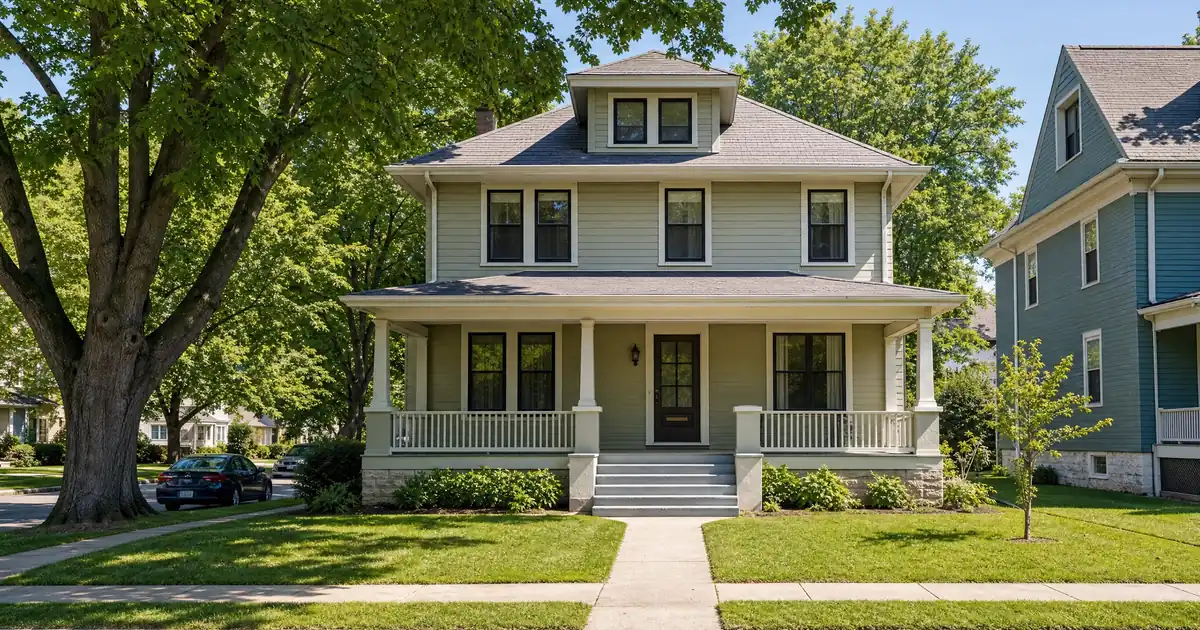
Hard Money Lenders REO Properties — The Quick Read: Bank-owned properties often fail to meet the condition standards that conventional and FHA loans require. That leaves two real paths to closing: cash, or asset-based private capital. Hard money lenders step in to fill that gap. Underwriting on these deals focuses on the property’s current value, its after-repair value, and the lender’s ability to get its money back. It does not focus on the borrower’s income or standard income paperwork. Most investors who buy an REO with hard money plan to refinance into a long-term rental loan once repairs are done and a tenant has moved in. That refinance timeline runs on seasoning rules. Those rules start counting from the date the deed gets recorded, not the day the repair work wraps up.
Key Takeaways
- Condition is usually the reason conventional and FHA financing can’t reach an REO purchase; hard money fills that gap through asset-based underwriting.
- REO contracts run on the seller’s own addendum, and deed or title restrictions can block a fast resale to another investor.
- An occupied REO carries federal tenant-protection timelines that can stretch a hard money loan’s expected holding period.
- The standard exit is a refinance into a long-term rental loan once repairs and lease-up are complete, and the clock on that refinance usually starts at the REO’s own deed-recording date, not the renovation finish date.
Key Terms Defined
Real estate owned (REO): A property a lender takes back after a foreclosure auction gets no qualifying bid, or after the borrower signs a deed in lieu of foreclosure instead of going through an auction.
What this loan actually costs to carry in your market.
Hard money is sized against the project and priced by time. Enter the deal and see how much the program will lend, the cash required at closing, the carry while you hold it, and what is left at the exit.
Leverage tiers on the current program: up to 85% of project cost with fewer than two completed projects, 90% with two or more, 93% with five or more — every tier capped at 75% of after-repair value. Loan amounts up to $5,000,000, larger by exception; terms of 6 to 18 months, interest-only, no prepayment penalty. The rehab portion funds in draws against completed work, not at closing.
Program parameters shown update from Lendmire’s centralized guideline source. Rate, points, and months are editable assumptions, not quoted terms.
Cost cap sets the loan · positive spread
Illustrative estimate only — not a quote, Loan Estimate, approval, or commitment to lend. Rate, points, and months are editable assumptions. Hard money is business-purpose financing for real estate investors, not a consumer mortgage. Leverage on the current program tops out at 93% of project cost for investors with a documented track record, capped at 75% of after-repair value, with rehab funding up to 100% of the documented budget released in draws; actual terms vary by lender, borrower experience, property, and exit. Lendmire is a mortgage broker, not a lender.
Deed in lieu of foreclosure: A voluntary handoff. The borrower gives the property back to the lender to skip a formal foreclosure auction. The end result is the same REO status as a failed auction.
Asset-based underwriting: A lending approach that prices and approves a loan mainly on the property’s value, condition, and after-repair value — not on the borrower’s income paperwork.
As-is addendum: A seller-drafted contract rider attached to most REO sales. It removes the bank’s duty to fix anything or tell the buyer what it learned about the property while it owned it.
Seasoning (title, rent, refinance): Three separate clocks a lender may use before a refinance. They track how long the deed has been recorded, how long the rental income has existed, and how long it’s been since the last loan closed.
How a Property Becomes an REO
A house doesn’t turn into an REO overnight. It follows a set legal path. The owner misses payments. The lender starts foreclosure. If nothing gets resolved, the property goes to auction. Nolo’s legal encyclopedia lays out the rule clearly: if no outside buyer meets the opening bid and the lender wins the auction by default, the property becomes real estate owned. The same source points out that failed auctions aren’t the only path. A deed in lieu of foreclosure, where the borrower simply hands over the keys, leads to the same result.
By the time a file reaches REO status, the servicer usually already knows the property’s condition. Drive-by inspections start once the loan goes into default. Once foreclosure is final, the servicer secures the property. It re-keys the locks if the home is empty and handles emergency repairs. Holding this inventory costs the lender money every month — upkeep, taxes, and HOA dues all add up. So speed to resale matters to the seller just as much as it matters to the buyer.
Why Conventional and FHA Loans Usually Can’t Reach These Deals
Condition is the wall that blocks these loans. A conventional or FHA loan requires the property to meet minimum property standards. A large share of REO inventory doesn’t clear that bar. Deferred maintenance, missing fixtures, and unresolved code issues are common after a property sits empty through a foreclosure. That leaves an investor with two real options: pay all cash, or use financing from a private, asset-based lender who doesn’t carry the same condition rules a retail mortgage does.
This is exactly where hard money earns its place in the deal. The industry itself has started to rebrand around this role. Wikipedia’s entry on commercial hard money notes that the National Private Lenders Association passed a resolution urging members to drop the term “hard money.” They prefer “private lending,” “bridge lending,” or “transitional lending” instead — arguing the old label no longer fit how professional the space had become. The name is changing, but the job hasn’t. This is still business-purpose, asset-backed capital built for exactly the condition gap an REO purchase creates.
How Hard Money Underwriting Actually Treats an REO Purchase
Property first, borrower second — that’s the flip. A bank’s retail mortgage underwriting starts with the applicant: income, debt-to-income ratio, standard income paperwork. Hard money underwriting starts somewhere else. As Scotsman Guide’s interview with a National Private Lenders Association representative puts it, private lenders act like commercial mortgage lenders whose collateral just happens to be a residential property. They underwrite to commercial mortgage standards, for business purposes — not for a consumer buying a home to live in.
In practice, the file gets judged on:
- Current as-is value. What the property is worth today, in its current condition.
- After-repair value (ARV). What it will be worth once the planned rehab is complete.
- Exit strategy. Whether the plan is a resale, a refinance into a rental loan, or a hold.
- Cash reserves and experience. Not the center of the file, but part of the picture.
- Market stability. How liquid the surrounding submarket is if the exit strategy has to change.
Credit and income still get a look. They just don’t drive the decision the way they would at a bank.
The Paperwork Is Different on a Bank-Owned Deal
An REO purchase doesn’t run on a standard offer form. The seller’s REO addendum controls the deal. Where it conflicts with the buyer’s standard purchase agreement, the addendum wins. Practitioner commentary on REO disclosure describes the typical as-is clause as running nearly half a page or more. It effectively removes the bank’s duty to say what it may have learned about the property while it owned it. This matters directly for a hard money lender — the addendum shifts all condition risk onto the buyer. That’s the same risk the lender is separately pricing through its own inspection and valuation work. An investor who leans only on the bank’s silence, instead of doing a personal inspection, is carrying risk nobody else in the deal is covering for them.
Occupied REOs: What the 90-Day Rule Means for a Timeline
Not every REO sits empty. Some foreclosed rentals still have tenants living in them when the bank takes title, and federal law controls what happens next. Under the Protecting Tenants at Foreclosure Act, Nolo’s summary explains that a new owner must give real tenants at least 90 days’ notice before eviction. In many cases, the owner must let a tenant with an existing lease finish out that lease. One exception applies: a buyer who plans to live in the property can still use a 90-day termination. This law covers a wide range of cases — single-family and multi-unit properties, and both judicial and non-judicial foreclosures.
For a hard money loan, this isn’t a small detail. It’s a real variable in how the lender prices the exit timeline. A vacant REO can move straight into rehab on a predictable schedule. An occupied one can’t be touched for renovation until the notice period runs out. That stretches the expected holding period and the interest carry that comes with it. Investors looking at an occupied REO should build that delay into their own numbers before assuming a hard money term will cover it.
Financing an REO Purchase: The Options Side by Side
| Financing Path | Condition Tolerance | Best Fit |
|---|---|---|
| Cash | Any condition | Investors with capital on hand, no financing contingency |
| Hard money / private lending | Poor to fair condition acceptable | Investors rehabbing for resale or rental |
| FHA (203k or similar) | Requires meeting property standards, or a rehab-specific program | Owner-occupants able to bring the property up to code |
| Conventional | Requires meeting minimum property standards | Turnkey REOs already in livable condition |
The lesson from this table is simple. The worse the condition, the fewer financing choices exist. Once a property has real deferred maintenance, hard money is usually the only lane left standing.
What Hard Money Actually Offers on an REO Deal
Across the wholesale network Lendmire places files through, fix-and-flip leverage on the current program runs up to 93% of project cost for investors with five or more completed projects and up to 90% with two or more, with every tier capped at 75% of after-repair value; bridge purchases without rehab run up to 80% of purchase price, and cash-out or refinance files top out at 65% of value. The top of that range is generally reserved for investors with a track record. On a fix-and-flip loan specifically, a lender can also finance up to 100% of the rehab budget on top of the purchase advance. That 100% figure covers rehab costs only — it’s not a second layer of purchase leverage. There’s no true 100% purchase-LTV program in this space, no matter how a listing or ad might describe it.
Loan sizes on the current program run up to $5,000,000, with larger amounts considered by exception. Terms vary by lender and by file. Terms are short by design — 6 to 18 months on the current program, interest-only, with no prepayment penalty — and investors who need longer runway refinance into a DSCR loan once the property qualifies. Interest-only structures are common. Underwriting stays asset-based — value, equity position, and exit strategy carry the file. The current program carries a 620 minimum credit score, with additional conditions under 660; credit is one input among several in an asset-based review that centers on the property, the plan, and the exit. That flexibility never guarantees approval, though. Every file still goes through property review and lender sign-off, and approval may follow if the deal checks out. Eligible collateral on the current program is non-owner-occupied residential property of one to four units, with ground-up construction up to ten units. For a look at how these same programs apply to ordinary buy-and-hold rentals instead of distressed purchases, see Lendmire’s coverage of hard money for rental properties. For details on how these loans work on residential collateral specifically, Lendmire’s residential hard money page breaks down which property types qualify.
The Exit: Refinancing an REO Rehab Into a Long-Term Rental Loan
The hard money loan is a bridge — not the final destination. Once repairs are done and the property is rented, most buy-and-hold investors refinance into a long-term rental loan. This is often a DSCR loan, which qualifies mainly on the property’s own rental income covering the payment, not on personal income paperwork, subject to lender guidelines. DSCR loans are built for non-owner-occupied investment properties. Because they’re structured as business-purpose loans, they get reviewed differently than a standard owner-occupied mortgage. They also fall outside consumer disclosure rules like TRID, which apply to owner-occupied purchases.
That refinance runs on three separate clocks, and they don’t always move together: title seasoning (time since the deed recorded), rent seasoning (time the lease has existed), and refinance seasoning (time between loans). Take a cash-out refinance — the type that recovers rehab money above the original purchase price. Most programs in Lendmire’s wholesale network expect around 6 months of ownership before they’ll use the current appraised value. That clock starts on the deed-recording date of the original REO purchase, not the day rehab finished or a tenant signed a lease. Buy before that window closes, and a lender is more likely to size the loan off the lower of two numbers: appraised value, or cost basis (purchase price plus documented renovation costs). That caps how much equity gets recovered, short of any post-rehab appreciation. Investors who bought the REO with their own cash instead of hard money have another path worth knowing about — a delayed-financing exception that can waive standard seasoning. The catch: the cash-out amount is limited to documented purchase price, closing costs, and receipted renovation costs. It gives back what was put in, not the appreciation on top of it.
Coverage ratios on these refinances typically start where select programs set a 1.00 floor. That’s not a universal standard — just a starting point for certain programs. Stronger ratios open up better leverage and pricing. On a straight rental purchase, DSCR leverage generally runs 75-80% LTV, with select high-leverage programs reaching 85% for borrowers around a 700 credit score. Cash-out refinances typically top out closer to 75% LTV across most of the network. Credit floors vary too. Some programs go as low as 620, most want something closer to 660, and 700+ tends to unlock the strongest leverage tiers. Reserve requirements move with leverage, loan size, and transaction type. A conservative rate-and-term refinance under $1.5 million at modest leverage can sometimes skip reserves entirely, while larger loans above that threshold commonly step up toward 9 months of PITIA. Loan sizes across the DSCR side of the network generally run up to $3,000,000 on standard programs, with smaller balances available through select lenders. Files above $2.5 million tend to hold to 30-year fixed structures rather than shorter or adjustable terms. A handful of states — Connecticut, Florida, Illinois, and New Jersey — carry overlay caps that generally hold purchase leverage near 75% LTV and loan size near $2,000,000. That matters if the REO sits in one of those markets.
Here’s a quick sketch of how the sequence plays out. Leverage on the current program tops out at 93% of project cost for investors with five or more completed projects, capped at 75% of after-repair value, with cash-out and refinance files limited to 65% of value. Once repairs are complete and a tenant is in place, the exit refinance gets modeled against the new, higher appraised value at roughly 75% LTV. Rents are projected to clear coverage somewhere in the low-1.1x to 1.2x range, depending on final lease terms. These figures are illustrative modeling assumptions, not a quote. The actual numbers depend entirely on the property, the lease, and the lender’s own guidelines at the time of application. Anyone wanting the fuller mechanics of how DSCR mortgage broker review works can start with Lendmire’s complete DSCR loans guide. Exact terms depend on the lender’s guidelines, property type, leverage, and a full review of the borrower’s file.
Files that come through this sequence tend to share one trait: the coverage math on paper looks fine, but the file that actually clears underwriting smoothly is the one with a clean rehab budget, dated receipts, and comps that back up the post-repair value — not just a strong credit score. Lenders reviewing an REO-to-rental refinance are really re-underwriting the investor’s execution, not just the property.
Where the General Rule Breaks: Edge Cases
Deed and title restrictions. Many REO sellers write resale restrictions right into the deed, not just the contract. They do this specifically to stop a buyer from going under contract and assigning it to another investor before closing — a pattern practitioner guidance flags as increasingly common. A hard money lender financing this purchase needs to know the restriction exists before assuming a quick resale is even an available exit strategy.
Occupied vs. vacant changes everything. A vacant REO moves on a predictable rehab schedule. An occupied one is bound by the 90-day PTFA notice covered above, which can meaningfully stretch the loan’s expected term and the interest carry that comes with holding it longer.
Buying a HUD-owned home specifically requires going through a registered HUD broker and the HUD Home Store bid process. A private bank’s REO typically runs a more conventional offer-and-negotiate process instead. Anyone comparing hard money offers against these two paths should understand this procedural difference before assuming both timelines behave the same way. Lendmire’s overview of top hard money lenders covers how programs differ across lender types more broadly.
BRRRR-specific seasoning nuance. Title, rent, and refinance seasoning apply differently depending on how the acquisition loan was structured. An investor who bought an REO using a fix-and-flip loan can often refinance into a DSCR loan once renovations are complete and the property is rent-ready. The milestone that matters here is hitting rent-ready status inside the lender’s window — not simply how long ago the deed recorded. Lendmire’s guide to refinancing a hard money loan after a BRRRR strategy walks through that sequencing in more depth.
What the Decision Looks Like in Practice
The negotiating leverage on an REO purchase comes from documentation discipline, not personal financial strength. Because the lender underwrites the asset first, a clean rehab budget, current comps, and receipted repair invoices carry more weight in getting a hard money file approved than a strong income statement would. And because the eventual DSCR refinance gets sized off the property’s current value and rental income, not the old purchase price, the size of the eventual cash-out really depends on how well the rehab and lease-up were executed during the hard money term — not just how cheap the REO was at purchase.
Tax treatment can depend on how the funds are used and how the property is held. Investors should keep clear records and speak with a qualified tax professional before relying on any deduction.
Loan approval is never guaranteed, and nothing here is a commitment to lend. Every scenario described here is subject to lender approval and to borrower, property, and program guidelines that can change. This article is general information, not financial, legal, or tax advice.
Investors weighing an REO purchase who aren’t sure which financing path fits the property’s condition and their own exit plan can reach Lendmire (NMLS# 2371349) at 828-256-2183 or request a quote to review the file against DSCR programs available in 41 markets, including Washington, D.C.
Frequently Asked Questions
Can hard money finance an REO that needs major repairs?
Generally, yes — this is exactly the scenario hard money is built for. Because underwriting is asset-based and centers on current value plus after-repair value rather than a fixed property-condition standard, deferred maintenance that would disqualify a conventional or FHA loan doesn’t automatically disqualify a hard money file. The property still gets reviewed, and the rehab budget still needs documentation, but condition alone isn’t the wall it is with retail financing.
Does a hard money lender require the property to pass FHA minimum property standards?
No. Those standards apply to FHA-insured retail mortgages, not to asset-based private lending. A hard money lender’s own inspection and valuation process replaces that condition checklist, focused instead on current value, after-repair value, and exit strategy.
How much of the rehab budget can be financed alongside the REO purchase?
Up to 100% of the rehab budget can be financed on top of the purchase-side advance. On the current program the ceiling is cost-based — 90% of project cost with two or more completed projects, 93% with five or more — and every tier is capped at 75% of after-repair value. There’s no true 100% purchase-LTV program, despite how it sometimes gets marketed.
Can I assign or wholesale a contract on an REO purchase?
It depends on the deed and the addendum, and many can’t be assigned. A number of REO sellers write anti-assignment language directly into the deed or contract, specifically to stop a buyer from going under contract and flipping it to another investor before closing. Confirm this on the specific property before assuming a wholesale exit is available.
What happens if the REO I want to buy still has a tenant living in it?
Federal law requires at least 90 days’ notice before the tenant can be required to vacate. In many cases, the tenant’s existing lease must be honored through its term. That timeline needs to be built into the hard money loan’s expected holding period before closing, since renovation typically can’t start until the unit is vacant.
The exit plan matters as much as the purchase price on short-term financing – see refinancing out of a hard money loan with a DSCR loan.
Many investors treat hard money as the acquisition tool and plan the exit up front – see refinancing out of a hard money loan with a DSCR loan.
About Lendmire
Lendmire, NMLS# 2371349, is a non-QM mortgage broker serving real estate investors in 41 markets, including Washington, D.C., through DSCR investor loan programs. Qualification is generally reviewed around the subject property’s rental income, not the borrower’s W-2 history — a practical fit for LLC-titled portfolios and self-employed investors. All scenarios remain subject to lender review and program guidelines. Two consecutive Scotsman Guide Top Mortgage Workplace recognitions (2025, 2026).
Short-term financing tends to work best when the long-term plan is decided early – see how DSCR loans work as the long-term exit.
Lendmire’s Top Mortgage Workplace recognition is documented by Scotsman Guide 2025 Top Mortgage Workplace and Scotsman Guide 2026 Top Mortgage Workplace.
Get Started
Ready to find the right loan for you?
In about 30 seconds you can review financing options available for your home or investment property. No commitment required.
Informational only. Not a Loan Estimate, approval, or commitment to lend. Program availability and eligibility are subject to lender guidelines, credit approval, property review, and underwriting.
References
1. Nolo – Understanding Real Estate Owned (REO) Properties
2. Wikipedia – Commercial Hard Money
3. Scotsman Guide – Jeff Tennyson, National Private Lenders Association
4. Nolo – Protecting Tenants at Foreclosure Act (PTFA)
5. The Investor’s Edge – How Do You Buy REO Properties?
This article is part of Lendmire’s hard money loan program — full qualification details, guidelines, and scenarios live on the program page.
Related reading: Cash Out Refinance Out Of Hard Money · Hard Money Loan Denied Because The Deal Is A Wholesale Transaction · FHA Underwriting Guidelines For Cash Out Refinance Investment Property
Brandon Miller
Founder & CEO, Mortgage Loan Originator, Lendmire LLC
- Mortgage Loan Originator · NMLS# 1129696 · Verify on NMLS Consumer Access
- North Carolina Real Estate Broker · License# 343312 · Verify on NCREC
- North Carolina Insurance Producer · License# 19053198 · Property, Casualty, Life, Health · Verify on NAIC SBS
- Lendmire LLC · Firm NMLS# 2371349 · Verify firm licensure
Legal disclosures. Lendmire (NMLS# 2371349) is a state-licensed mortgage brokerage that arranges financing through wholesale lender relationships. Lendmire is not a direct lender, depository institution, or registered financial advisor. The discussion above is general informational content about real estate financing — it is not financial, legal, or tax advice, and readers should consult licensed professionals for guidance on their individual circumstances. Loan inquiries are subject to lender underwriting; this article does not represent a commitment to lend. Loan terms, rates, and qualification standards vary by borrower, property, and state, and are subject to change at any time. Equal Housing Opportunity. NMLS Consumer Access: nmlsconsumeraccess.org.