
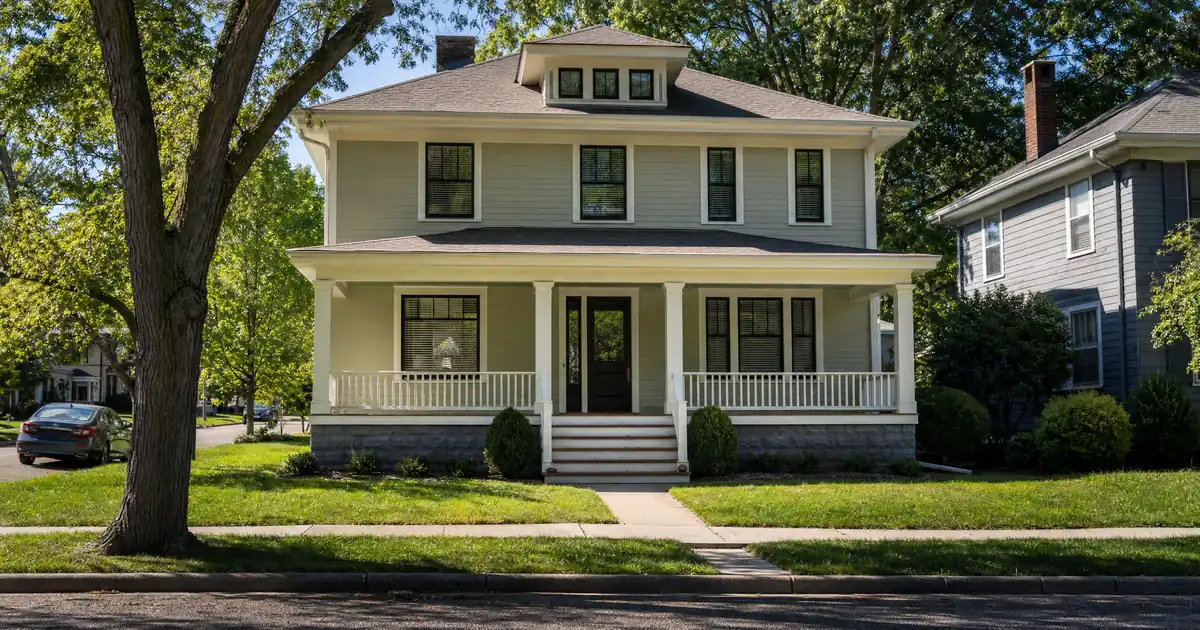
Hard Money Lender Requirements — The Quick Read: Hard money lenders look at the property first. The borrower comes second. So the numbers that really decide a deal are loan-to-value (LTV) or loan-to-cost, after-repair value (ARV), and how much experience and cash the investor brings. Most lenders also want a clear exit plan. They want cash left over after closing. And they want a paperwork package that’s lighter than a bank loan, but still real. Credit score matters, but a weak score rarely kills a deal. A low appraisal or a shaky exit plan will kill it faster. What follows shows how this underwriting actually works, where lenders bend the rules, and how the loan usually gets replaced once the property stabilizes.
Key Takeaways
- Underwriting centers on the property’s value and equity cushion, not the borrower’s income or traditional personal-income documentation.
- What exists is a loan sized against total project cost — up to 93% of purchase plus rehab for investors with five or more completed projects, capped at 75% of after-repair value — with up to 100% of the rehab budget funded in draws against completed work, not at closing.
- Credit minimums vary by lender and program; asset-based underwriting means a soft score is a pricing factor, not an automatic denial.
- Documentation stays lean but real: purchase agreements, scope of work, insurance, financial statements, and entity paperwork are standard asks.
- Once a property stabilizes, most investors refinance out of hard money into long-term DSCR financing rather than sitting in a short-term bridge loan.
What Lenders Are Actually Called Now (and Why That Matters)
Lenders are starting to drop the term “hard money.” The name is losing favor across the industry, and that shift shows up in how lenders market their requirements. The American Association of Private Lenders (AAPL) and the National Private Lenders Association both passed resolutions asking members to stop using “hard money” in their marketing. Scotsman Guide followed suit. It renamed its own hard money lender listings to “private money.”
What this loan actually costs to carry in your market.
Hard money is sized against the project and priced by time. Enter the deal and see how much the program will lend, the cash required at closing, the carry while you hold it, and what is left at the exit.
Leverage tiers on the current program: up to 85% of project cost with fewer than two completed projects, 90% with two or more, 93% with five or more — every tier capped at 75% of after-repair value. Loan amounts up to $5,000,000, larger by exception; terms of 6 to 18 months, interest-only, no prepayment penalty. The rehab portion funds in draws against completed work, not at closing.
Program parameters shown update from Lendmire’s centralized guideline source. Rate, points, and months are editable assumptions, not quoted terms.
Cost cap sets the loan · positive spread
Illustrative estimate only — not a quote, Loan Estimate, approval, or commitment to lend. Rate, points, and months are editable assumptions. Hard money is business-purpose financing for real estate investors, not a consumer mortgage. Leverage on the current program tops out at 93% of project cost for investors with a documented track record, capped at 75% of after-repair value, with rehab funding up to 100% of the documented budget released in draws; actual terms vary by lender, borrower experience, property, and exit. Lendmire is a mortgage broker, not a lender.
Investors will still hear “hard money” all the time. That includes lenders in Lendmire’s own network. But “private money lender” and “hard money lender” now mean the same thing in most conversations. And the actual requirements don’t change based on which label a lender picks.
How Hard Money Underwriting Actually Works, Step by Step
Hard money underwriting flips the usual mortgage order. The collateral gets checked before the borrower’s credit file does. Here’s the order most files follow.
Step 1: Property evaluation. As-is value usually drives bridge loans and rental-purchase deals. After-repair value (ARV) drives most fix-and-flip and construction files instead.
Step 2: The valuation itself. For rehab deals, lenders usually order a broker price opinion or an independent appraisal. That appraisal projects ARV using sales of already-renovated properties nearby, per Nav. That projected value sets the ceiling on how much the lender advances — not the property’s current condition.
Step 3: The leverage decision. This is where the loan amount actually gets set. Across the wholesale network Lendmire places files through, fix-and-flip leverage on the current program runs up to 93% of project cost for investors with five or more completed projects and up to 90% with two or more, with every tier capped at 75% of after-repair value; bridge purchases without rehab run up to 80% of purchase price, and cash-out or refinance files top out at 65% of value. That top tier goes to the most experienced investors only. On fix-and-flip deals, some lenders will separately finance up to 100% of the rehab budget on top of the acquisition loan. That’s a rehab-cost figure — not a 100%-LTV purchase program. People confuse the two constantly. There is no true 100%-LTV purchase structure in this space. When a lender’s marketing implies one, it usually means high acquisition leverage paired with full rehab financing.
Step 4: Documentation. The package stays lean by mortgage standards. Most lenders collect a purchase agreement, a scope of work or rehab budget, proof of insurance, financial statements, and entity formation documents if the borrower is closing in an LLC or corporation, subject to program eligibility. Personal income documentation stays minimal. No W-2 stack. No debt-to-income stress test. The underwriting weight sits on the property and the exit plan, not the borrower’s paycheck.
Step 5: Draws on rehab funds. Rehab money almost never shows up as one lump-sum check. Not ideal for investors who expect it, but that’s how it works. Funds get held back and released in stages — usually four to six draws. Each release happens after the lender verifies the work through inspections, invoices, an updated percent-complete schedule, and lien waivers. Many lenders also hold back a small contingency reserve. That reserve gets released only when the project closes out.
Step 6: Term sheet and close. Once the file clears underwriting, the lender issues a term sheet. It spells out the loan amount, fees, the draw schedule, and the loan term.
Key Terms Defined
After-repair value (ARV): what an appraiser or broker price opinion estimates the property will be worth once renovations are finished. This estimate is based on sales of already-renovated homes nearby.
Loan-to-value / loan-to-cost (LTV/LTC): the percentage of the property’s value or total project cost the lender agrees to finance. The gap between that percentage and 100% is the lender’s cushion if the borrower defaults.
Draw / construction holdback: the part of a rehab loan set aside and released in stages as work gets done and checked, instead of handed over as one check at closing.
Exit strategy: the borrower’s plan for paying off the loan. That might mean selling the renovated property, refinancing into long-term financing, or paying it off from another source. Lenders underwrite this almost as closely as they underwrite the property itself.
Business-purpose loan: a loan made to fund an investment or business activity, not a personal, family, or household need. This classification is what puts hard money and DSCR loans outside most consumer-mortgage regulation.
What Lenders Weigh: A Quick-Reference Table
| Factor | What Gets Evaluated | Why It Matters |
|---|---|---|
| Property value / ARV | As-is value or projected post-rehab value | Sets the ceiling on loan size |
| Leverage (LTV/LTC) | Loan size against value or cost | Determines cash needed to close |
| Experience / track record | Completed projects, prior defaults | Moves leverage more than pricing |
| Exit strategy | Sale, refinance, or payoff plan | Underwritten almost like a second borrower |
| Credit score | 620 minimum credit score; additional conditions under 660 | Affects pricing and reserve requirements |
| Reserves | Cash left over after closing | Covers overruns and carrying costs |
The Structures You’ll Actually See
Hard money isn’t one product. It’s a family of asset-based loans. They share the same underwriting logic, but the terms differ. Terms are short by design — 6 to 18 months on the current program, interest-only, with no prepayment penalty — and investors who need longer runway refinance into a DSCR loan once the property qualifies. Interest-only structures are common across the space. That keeps monthly obligations lower during a hold or rehab period.
Loan sizes on the current program run up to $5,000,000, with larger amounts considered by exception. That covers everything from a single-family flip to a ground-up multifamily or commercial construction deal. Eligible collateral on the current program is non-owner-occupied residential property of one to four units, with ground-up construction up to ten units. That’s a wider net than a conventional rental-property loan casts.
Cash-out is available on the hard money side too. An investor can pull equity out of a stabilized property instead of selling it. The mechanics are covered in Will a Hard Money Lender Cash-Out Refinance?. And since “hard money” and “private money” now largely mean the same thing, it’s worth reading the real structural differences laid out in Hard Money Lender vs. Private Lender.
Where the General Rule Breaks: Five Edge Cases
Every rule above has a real exception that shows up in practice.
A low appraisal doesn’t automatically kill the deal. When the ARV or as-is value comes in below expectations, lenders usually resize the loan instead of walking away. Not fatal, usually. The fallback is a smaller loan amount, more cash to close, or a formal challenge to the valuation.
“Business purpose” isn’t self-declared, and misclassifying it carries real liability. Business-purpose loans aren’t exempt from consumer-lending law just because someone labels them that way. Under the Truth in Lending Act and Regulation Z, a loan escapes consumer protections only if it’s made to a non-natural person — an LLC or corporation — or is mainly for a business or commercial purpose. Getting that classification wrong can expose a lender, and sometimes the investor, to real liability, because “business purpose does not mean compliance exempt.” A common trap: a borrower converts an owner-occupied home into a rental and finances the conversion with a business-purpose loan. But Regulation Z only treats owner-occupied rental property as business-purpose once it holds more than two housing units. A duplex conversion by an owner-occupant doesn’t automatically clear that bar.
State licensing is a patchwork, not one federal rule. People often assume mortgage licensing runs through a single federal standard. It doesn’t. A large share of states don’t require a mortgage lender license to make business-purpose loans, no matter the collateral. A smaller group of states do apply real licensing requirements — Arizona, California, Nevada, North Dakota, South Dakota, Utah, and Vermont among the most cited. Some of those states require a minimum net worth or an in-state office. Different states, different rules. An investor scaling across several states should expect different documentation and disclosure requirements, based purely on where the collateral sits.
Experience and recent defaults move leverage more than pricing. A completed track record — successful flips, stabilized rentals, finished construction — tends to open the highest leverage tiers. A recent foreclosure or default, on the other hand, works as close to a hard stop at most lenders, no matter how strong the rest of the file looks.
Even “non-recourse” loans usually carry some personal liability. A personal guaranty is the default structure across most hard money and commercial lending. Loans marketed as non-recourse are rarely as clean as the label suggests. They typically still carry a carveout that brings back personal liability for fraud, waste, or misapplication of loan funds. Asset-based doesn’t mean liability-free.
A Worked Scenario: Putting the Pieces Together
None of these factors work alone. A real file blends leverage, rehab cost, reserves, and experience all at once. Picture a modeled acquisition: a $300,000 purchase price, a $60,000 rehab budget, and a projected ARV of $420,000 once the work is done. An experienced investor with a completed track record and reserves left over after closing sits closest to the top leverage tier — up to 93% of project cost, capped at 75% of that ARV figure, with the rehab portion released in draws against completed work. A first-time investor with the same numbers, but no completed projects and thin reserves, will typically see a lower leverage cap. That investor needs more cash to close, and might get a smaller draw percentage released at each stage.
Same property, same ARV, same rehab scope — different terms. The borrower side of the file moved, even though the collateral didn’t. The stronger play for a first-timer is often accepting the lower leverage tier and keeping reserves in reach. But an investor confident in the exit could reasonably argue for stretching leverage anyway.
Document Checklist — and Why Files Get Denied
The lean documentation stack still has real components. Most files call for:
- A signed purchase agreement or current property title
- A scope of work or rehab budget, itemized by trade
- Proof of insurance, or a binder ready to bind at closing
- Personal or entity financial statements showing liquidity
- Entity formation documents if closing in an LLC or corporation, depending on program guidelines
- A track record summary of prior projects completed, with outcomes
Right next to that list sits the flip side: what actually gets a file declined. The most common reasons include a property value that doesn’t support the requested loan amount, an exit strategy that doesn’t hold up under scrutiny, a recent foreclosure or default in the trailing two years, reserves too thin to carry the project through delays, and a first-time borrower asking for top-tier leverage without the experience to back it. None of these are permanent disqualifiers on their own. Usually they’re reasons a file gets restructured with lower leverage or more cash down, rather than declined outright. But stack two or three together, and that’s typically where deals actually die.
Questions to Ask Before You Sign
Comparison shopping matters more in hard money than in almost any other financing niche, since terms vary widely lender to lender. Worth asking upfront:
- What LTV or LTC cap applies to this specific property type and loan purpose?
- How many draws will the rehab holdback release in, and what triggers each one?
- Is the loan interest-only, and what’s the actual term length?
- What reserve requirement applies at this loan size and leverage?
- Is there a personal guaranty, and if the loan is marketed as non-recourse, what carveouts apply?
- What happens if the appraisal comes in below the target ARV? Exact terms depend on the lender’s guidelines, property type, leverage, and a full review of the borrower’s file.
When Hard Money Hands Off to DSCR
Most investors don’t stay in a hard money loan any longer than they have to. It’s built to be temporary. Once a property is renovated, leased, and stabilized, the common move is refinancing into a long-term DSCR loan, instead of carrying short-term financing forever. DSCR loans are built for non-owner-occupied investment properties. Because they’re business-purpose investor loans, they get reviewed differently than a standard owner-occupied mortgage. The property is expected to qualify mainly on its rental income covering the payment, subject to lender guidelines, rather than the borrower’s personal income documentation.
That sequence — hard money to fund the acquisition and rehab, DSCR to hold long-term — is common enough to have its own playbook. Lendmire’s guide on how to refinance a hard money loan after a BRRRR strategy walks through the mechanics in more depth. And the complete DSCR loans guide covers how the ratio, the paperwork, and eligible property types work once a file moves from bridge financing to a permanent hold.
Lendmire (NMLS# 2371349) arranges both sides of that sequence — hard money-style bridge financing and long-term DSCR refinances — through select lenders in a wholesale network spanning 40 states plus Washington, D.C., 41 markets total. Investors can call 828-256-2183 or request a quote to see how a specific purchase price and rehab scope pencils out before committing to either structure.
Tax treatment can depend on how loan funds are used and how the property is held. Investors should keep clear records and speak with a qualified tax professional before relying on any deduction.
Before moving into specifics, a note on scope: nothing here is a commitment to lend, and loan approval is never guaranteed. Every scenario described is subject to lender approval and to underwriting on the borrower, the property, and the specific program’s guidelines. This article is general information, not financial, legal, or tax advice.
Frequently Asked Questions
Is there a minimum credit score for a hard money loan?
Not a fixed one across the board. A weaker score usually shows up in pricing, leverage, or reserve requirements, rather than an outright decline.
How much cash do I need to close on a hard money deal?
It depends on the leverage a lender approves and the size of any rehab budget. Leverage on the current program tops out at 93% of project cost for investors with five or more completed projects, capped at 75% of after-repair value, with cash-out and refinance files limited to 65% of value. The remainder comes from the borrower’s cash. Separate rehab-budget financing, up to 100% on select programs, covers renovation costs on top of the acquisition loan.
Do hard money lenders check income or traditional personal-income documentation?
Not the way a bank does. Documentation stays lean — purchase agreements, insurance, financial statements, entity paperwork — with minimal personal income verification and no debt-to-income stress test. The property and the exit plan carry the underwriting weight instead.
What happens if the appraisal comes in lower than expected?
It typically resizes the loan rather than killing the deal. The common paths are a smaller loan amount, more cash brought to closing, or a formal challenge to the valuation with updated comparables.
Can a first-time investor qualify for a hard money loan?
Yes, though usually not at the top leverage tier. Lenders lean more heavily on the property’s value and equity cushion when a borrower has no completed track record. That often means a lower LTV, more reserves, or more cash to close than an experienced investor would need on the same deal.
Hard money often opens the deal, and a refinance typically closes the chapter – see refinancing out of a hard money loan with a DSCR loan.
About Lendmire
Lendmire is a non-QM mortgage brokerage (NMLS# 2371349) arranging DSCR investor loans in 41 markets, including Washington, D.C., through wholesale and investor-lending channels. DSCR loans are evaluated by the lender on rental income rather than personal income, subject to lender guidelines — a fit for LLC-owned portfolios, self-employed investors, and operators scaling beyond conventional loan caps. Recognized as a Scotsman Guide Top Mortgage Workplace in 2025 and 2026.
Many investors treat hard money as the acquisition tool and plan the exit up front – see refinancing out of a hard money loan with a DSCR loan.
Lendmire’s Top Mortgage Workplace recognition is documented by Scotsman Guide 2025 Top Mortgage Workplace and Scotsman Guide 2026 Top Mortgage Workplace.
Get Started
Ready to find the right loan for you?
In about 30 seconds you can review financing options available for your home or investment property. No commitment required.
Informational only. Not a Loan Estimate, approval, or commitment to lend. Program availability and eligibility are subject to lender guidelines, credit approval, property review, and underwriting.
References
1. Scotsman Guide — Discern All the Flavors of Private Lending
2. Nav.com — Hard Money Loans and 100% Financing
This article is part of Lendmire’s hard money loan program — full qualification details, guidelines, and scenarios live on the program page.
Related reading: Direct Hard Money Asset Loan · Best Hard Money Lenders · Hard Money Loan Denied Because Of A Recent Foreclosure
Brandon Miller
Founder & CEO, Mortgage Loan Originator, Lendmire LLC
- Mortgage Loan Originator · NMLS# 1129696 · Verify on NMLS Consumer Access
- North Carolina Real Estate Broker · License# 343312 · Verify on NCREC
- North Carolina Insurance Producer · License# 19053198 · Property, Casualty, Life, Health · Verify on NAIC SBS
- Lendmire LLC · Firm NMLS# 2371349 · Verify firm licensure
Legal disclosures. Lendmire (NMLS# 2371349) is a state-licensed mortgage brokerage that arranges financing through wholesale lender relationships. Lendmire is not a direct lender, depository institution, or registered financial advisor. The discussion above is general informational content about real estate financing — it is not financial, legal, or tax advice, and readers should consult licensed professionals for guidance on their individual circumstances. Loan inquiries are subject to lender underwriting; this article does not represent a commitment to lend. Loan terms, rates, and qualification standards vary by borrower, property, and state, and are subject to change at any time. Equal Housing Opportunity. NMLS Consumer Access: nmlsconsumeraccess.org.