
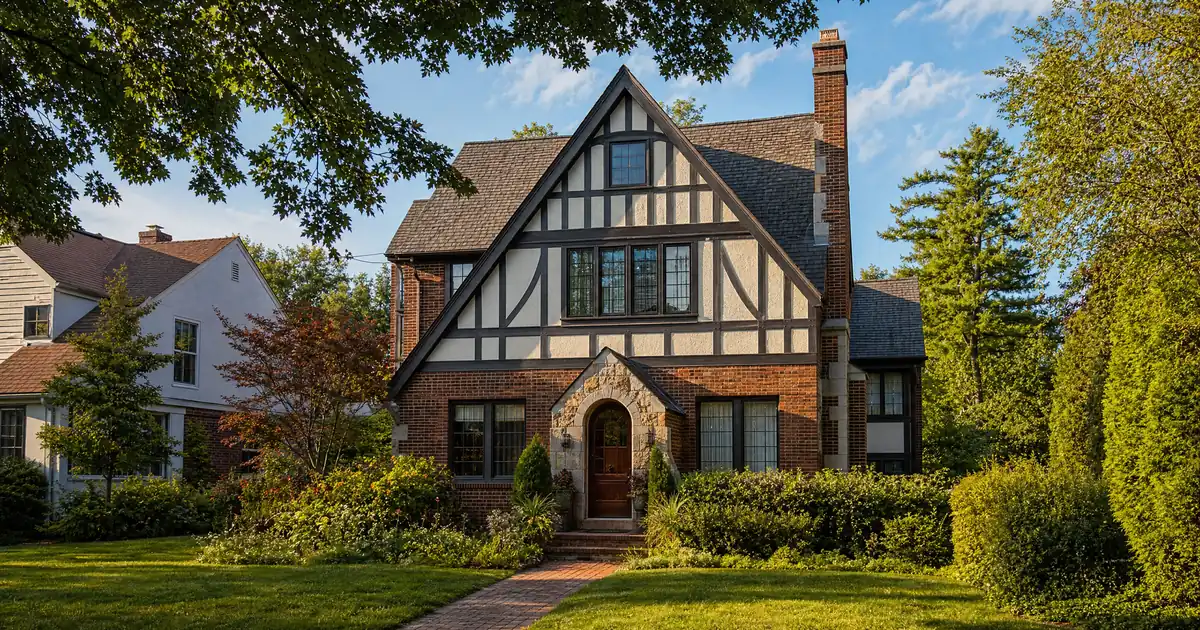
Hard Money Second Home Equity Loan — The Quick Read: A hard money second home equity loan is a private, asset-based loan. It sits in second lien position, behind whatever mortgage already exists on an investment or business-purpose property. It lets an investor pull out equity without refinancing the first mortgage. The first loan stays untouched. But this only works the way most people expect if the property is truly business-purpose. A real second home with real personal use doesn’t automatically qualify for this no-income-doc treatment. Most investors use this loan as a bridge. Then they move into long-term DSCR financing once rents and occupancy have settled.
Key Takeaways
- A second lien sits behind the first mortgage — the existing loan and its terms stay exactly as they were.
- Occupancy, not the word “second home” on a listing, decides whether business-purpose underwriting even applies.
- Underwriting runs on combined loan-to-value (CLTV) across both liens together, not just the size of the new piece.
- Coverage below a 1.00 ratio is available through select lenders in the network, but leverage and terms shift when it is.
- Cross-collateralizing more than one property raises the stakes — a default on one can put every pledged property at risk.
Key Terms Defined
- Second lien: a loan secured by a property that already carries a first mortgage; it gets repaid only after the first lien if the property is sold or foreclosed.
- Combined loan-to-value (CLTV): every loan against a property added together, divided by the property’s value — the number a second-lien underwriter actually cares about.
- Business-purpose loan: financing extended for a rental or investment use rather than personal occupancy, which changes which lending rules govern the file.
- DSCR (debt service coverage ratio): monthly rental income divided by the full monthly payment — principal, interest, taxes, insurance, and dues. It’s the main qualification tool on cash-flow-based second liens.
- Cross-collateralization: pledging more than one property to secure a single loan, so trouble on one property can put the others at risk too.
What a Hard Money Second Home Equity Loan Actually Is
Forget banks for a moment. This product doesn’t come from one. A hard money second lien is private capital. Asset-based lenders fund it, and they mostly care about equity, property value, and a clear exit. They don’t focus on personal income documents. This loan sits in second position. That means it’s layered behind whatever mortgage already exists on the property. Nobody touches the first loan. It doesn’t get refinanced, re-priced, or paid off. The new loan is simply secured by the same collateral, one step back in the payout line.
What this loan actually costs to carry in your market.
Hard money is sized against the project and priced by time. Enter the deal and see how much the program will lend, the cash required at closing, the carry while you hold it, and what is left at the exit.
Leverage tiers on the current program: up to 85% of project cost with fewer than two completed projects, 90% with two or more, 93% with five or more — every tier capped at 75% of after-repair value. Loan amounts up to $5,000,000, larger by exception; terms of 6 to 18 months, interest-only, no prepayment penalty. The rehab portion funds in draws against completed work, not at closing.
Program parameters shown update from Lendmire’s centralized guideline source. Rate, points, and months are editable assumptions, not quoted terms.
Cost cap sets the loan · positive spread
Illustrative estimate only — not a quote, Loan Estimate, approval, or commitment to lend. Rate, points, and months are editable assumptions. Hard money is business-purpose financing for real estate investors, not a consumer mortgage. Leverage on the current program tops out at 93% of project cost for investors with a documented track record, capped at 75% of after-repair value, with rehab funding up to 100% of the documented budget released in draws; actual terms vary by lender, borrower experience, property, and exit. Lendmire is a mortgage broker, not a lender.
That structure only works because the underlying loan is classified as business-purpose. Financing used to buy, improve, or maintain rental property gets pulled out of the consumer mortgage rulebook almost entirely. That’s what allows underwriting to focus on the property instead of the person. Lendmire is a multi-state mortgage broker (NMLS# 2371349). It arranges both hard money bridge loans and DSCR investor financing through select lenders in its wholesale network. Its DSCR programs reach 41 markets, including Washington, D.C. Investors who want the broader mechanics of pulling equity this way can look at Lendmire’s hard money loan home equity breakdown for more detail.
Two things separate this from a bank-issued home equity loan or a plain HELOC. First, underwriting looks at equity and exit strategy. It doesn’t run a personal debt-to-income calculation. Second, the loan is sized and priced around that same equity cushion. It’s not built around a credit score alone, though credit still matters more than some marketing suggests.
Second Home vs. Investment Property: Why Occupancy Decides Everything
One factor decides whether this loan can be structured this way at all: how much the owner personally uses the property. It doesn’t matter what the listing or the deed calls it. Say a vacation property gets occupied for more than a couple of weeks a year. Lenders treat it as owner-occupied for classification purposes. This holds true even if it sits vacant and earns rent the rest of the year. In plain terms, an investor eyeing this kind of second lien needs to be honest. How often do they, or family, actually stay at the property? That answer decides whether a no-income-doc, business-purpose file is even possible. Lenders will ask about intended use directly. That answer — more than the deed language or the marketing description — sets which underwriting path the file follows from the start.
Regulation Z’s own commentary uses a beach house example to show this. If the owner expects to occupy the property for more than 14 days in the coming year, it’s owner-occupied. Full stop. It doesn’t matter how much rental income it produces the rest of the time. That single detail pulls the loan back into consumer-purpose territory. Most hard money and DSCR shops aren’t built to originate consumer-purpose loans. Their entire underwriting stack assumes a business-purpose, non-owner-occupied file from the start. That includes cash-flow qualification, no personal income documentation, and no standard mortgage disclosure timeline.
There’s a second wrinkle buried in the same commentary. It’s easy to miss. Even for property the owner genuinely does occupy, unit count can flip the classification. Acquisition financing on rental property counts as business-purpose once it has more than two units. Financing to improve or maintain that property gets the same treatment once it has more than four units. So a duplex the owner lives in half the year gets underwritten differently than a fourplex the owner lives in for the same amount of time. The unit count alone changes the answer.
Hard money and DSCR second liens are built for non-owner-occupied, business-purpose property. Because lenders review them as business-purpose files, these loans skip the disclosure and personal-income-verification steps that a standard owner-occupied mortgage requires. That’s the trade-off: less paperwork and faster qualification logic. But only if the occupancy math actually lines up. Investors who genuinely plan meaningful personal use of a property should read Lendmire’s piece on using home equity to purchase a second home. It covers the consumer-purpose side of this decision more directly.
How Does Underwriting Actually Work, Step by Step?
Four checkpoints decide how a second lien gets structured and sized: purpose classification, income method, lien position, and combined leverage. Get any one wrong, and the file either can’t be built as a second lien, or it prices and sizes differently than the investor expected.
Step 1 — Purpose classification. Covered above: business-purpose or consumer-purpose. Expected occupancy and unit count decide this, not intent alone.
Step 2 — Income method. Two paths exist here, and they lead to different products. An asset-based hard money bridge qualifies mainly on equity, property value, and exit strategy — refinance, sale, or stabilization. A DSCR-qualified second lien qualifies mainly on property-level rental income covering the combined payment, subject to lender guidelines. It doesn’t require personal income documentation the way a bank mortgage does. The appraiser typically produces a market-rent comparison exhibit to back up whatever rent figure the file uses. So the number isn’t just the investor’s word.
Step 3 — Lien position and CLTV. A second lien stacks on top of existing debt. That’s why lenders underwrite to combined exposure across both loans, not just the new piece. Scotsman Guide describes the payout mechanics plainly. The borrower has two distinct loans secured by the same property. If payments stop, the second lien gets paid only after the first is satisfied. That payout order is exactly why CLTV — not standalone LTV — drives sizing.
Step 4 — Documents. The stack mirrors a first-lien business-purpose file. It includes an appraisal (with a rent comparison when rental income is the qualifying factor), a title report confirming lien position and subordination, entity or personal vesting documents, a signed business-purpose statement, and a recorded note and security instrument in second position.
Open-End vs. Closed-End: Two Very Different Draws
Second liens come in two shapes. They behave nothing alike once the money’s in hand. An open-end second lien is a revolving line. You draw it, pay it down, and draw it again — closer to how a HELOC works. A closed-end second lien pays out the full amount upfront in a single disbursement. There’s no redraw once it closes.
On the investment-property side of the network, open-end lines cap at $500,000 total. There’s no higher revolving tier above that, regardless of equity or property value. Closed-end structures don’t share that ceiling. That’s why most larger equity pulls on rental or investment property get built as lump-sum second liens rather than lines of credit.
Where Leverage, Credit, and Loan Size Actually Land
The two structures pull from two different sets of guidelines in the network. It’s worth seeing them side by side.
| Factor | Asset-Based Hard Money 2nd | DSCR-Qualified 2nd |
|---|---|---|
| Combined LTV ceiling | Generally up to 75%, varying by lender and borrower experience | Generally ~75%, in line with cash-out ceilings |
| Review basis | Equity, property value, exit strategy | Property rent vs. combined debt service |
| Typical credit floor | 620 minimum credit score; additional conditions under 660 | 620 in parts of the network, 660 more common, 700+ for top leverage |
| Loan size range | Roughly $100K into eight figures | $100K–$3M standard; above $2.5M holds to 30-year fixed |
| Term structure | 6–18 months, interest-only, no prepayment penalty | 30-year fixed spine; 40-year and interest-only through select lenders |
A few nuances sit underneath that table. Reserve requirements on the DSCR side vary by lender, leverage, and loan size. Most commonly, lenders want around six months of PITIA in reserve. A conservative rate-term file at modest leverage under $1,500,000 can sometimes see reserves waived. Files above that size often step up to closer to nine months. A handful of overlay states — Connecticut, Florida, Illinois, and New Jersey — cap purchase leverage on the DSCR side near 75% LTV. Loan sizes in those states typically cap around $2,000,000 as well. Property type matters too. Manufactured housing (single- or double-wide), log homes, and barndominiums simply aren’t offered on the DSCR side of the network, regardless of equity position.
If the collateral is a short-term rental rather than a standard lease, the numbers shift again. Across the wholesale network Lendmire places files through, fix-and-flip leverage on the current program runs up to 93% of project cost for investors with five or more completed projects and up to 90% with two or more, with every tier capped at 75% of after-repair value; bridge purchases without rehab run up to 80% of purchase price, and cash-out or refinance files top out at 65% of value. Refinance and cash-out both land closer to 70%. Lenders typically want a 640-plus credit score, roughly 12 months of hosting history, and a 1.00 coverage floor. Short-term rental rules can vary by city, county, HOA, and property type. Investors should confirm local rules before relying on projected rental income to size the loan.
A 1.00 DSCR is where select programs in the network start. It’s a floor for specific programs, never a universal standard. Some lenders will go below it with strong compensating factors, but leverage and terms adjust when they do. A 1.00-or-better ratio isn’t a guarantee of approval, and neither is anything above it. Every file still runs through credit, reserves, and property review.
Picture an investor holding a rental with a first mortgage sitting at roughly 45% of today’s value. A hard money second lien that pushes combined leverage toward the network’s 75% ceiling could theoretically unlock close to 30 percentage points of additional leverage. Real files rarely reach the ceiling once reserves, credit, and property type get factored in, though. That’s the gap between the program cap and what an actual file clears. It’s usually smaller than investors expect going in.
Private lending as a category isn’t shrinking. DSCR origination volume grew roughly 43% year over year in the most recent reported quarter. That’s well ahead of the broader private-lending market’s roughly 13% growth over the same period. This is a sign that cash-flow-qualified deals, including second liens built on the same logic, are capturing a bigger share of a growing pool of capital.
Exact eligibility for any of this — leverage, ratio, credit tier — depends on lender guidelines, credit profile, reserves, and property review. Review details are always subject to lender overlays.
Where the General Rule Breaks: Edge Cases Worth Knowing
A weak coverage ratio isn’t always a hard stop. Scotsman Guide notes that some non-QM lenders will still fund a deal with a ratio below 1.0. This happens if the borrower has other assets to cover the shortfall. In other words, the ratio is one input into a broader risk picture, not a single pass-or-fail line. In the network, that flexibility exists through select lenders only. It comes paired with adjusted leverage and terms, not the same pricing a stronger-ratio file would get.
LLC vesting fills a gap the agencies created. Borrowers applying through an LLC are generally ineligible for loans offered by Fannie Mae and Freddie Mac. But that same borrower can often qualify for a non-QM mortgage based on the property’s DSCR cash flow instead, without extra personal income documentation. This is per Scotsman Guide’s reporting on the trend. The same property, titled to an individual versus an LLC, can face a completely different loan menu. That’s worth knowing before deciding how to hold title, subject to program eligibility.
Cross-collateralization changes the foreclosure math. When a second lien secures more than one property — common in portfolio deals — a blanket-lien structure applies. Nav describes the risk plainly. If the borrower defaults on the business loan, the lender may be able to foreclose on a property even if that property’s own payments are current. This holds true even if the crossed lender doesn’t hold first position on it. A single missed payment on one property in the pool can put every crossed property at risk, not just the one that defaulted.
Seasoning is set independently, not borrowed from agency rules. Agency guidelines for a conforming cash-out refinance require title seasoning before eligibility. But that rule doesn’t bind hard money or DSCR lenders directly. Most lenders set their own seasoning and documentation requirements case by case.
Many investors treat hard money as the acquisition tool and plan the exit up front – see refinancing out of a hard money loan with a DSCR loan.
For the end-to-end picture of how these loans work — qualification, structures, and the full process — see Lendmire’s complete DSCR loans guide.
Frequently Asked Questions
How do you qualify for a hard money second home equity loan?
Qualification centers on equity, property value, and a credible exit strategy rather than personal income. Lenders review combined loan-to-value across both liens, the property’s business-purpose classification, and — for DSCR-qualified structures — whether projected rental income covers the combined payment, subject to lender guidelines.
What credit score do you need to qualify for a DSCR loan?
Credit floors vary across the network. The current program carries a 620 minimum credit score, with additional conditions under 660; credit is one input among several in an asset-based review that centers on the property, the plan, and the exit. Others look for scores in the 620–660 range. The strongest leverage tiers typically want 700 or higher. Actual eligibility depends on lender overlays, reserves, and property review.
How do you qualify for a second lien if the property isn’t a full-time rental?
Occupancy decides classification, not the listing description. A property the owner expects to occupy more than roughly two weeks a year is generally treated as owner-occupied. That pulls it out of business-purpose underwriting, no matter how much rent it earns the rest of the year.
Can you get a second lien without disturbing the first mortgage?
Yes — that’s the core structure. The first mortgage stays exactly as it is. The second lien is a separate loan secured by the same collateral. It gets repaid only after the first, if the property is sold or foreclosed.
Does a DSCR below 1.00 disqualify a file automatically?
Not always. A 1.00 ratio is a floor for select programs in the network, not a universal requirement. Some lenders will consider files below that threshold with strong compensating factors, though leverage and terms typically adjust when they do.
About Lendmire
Lendmire is a mortgage broker, not a direct lender. It specializes in non-QM DSCR financing and asset-based hard money loans for investment and business-purpose properties. Working through a network of wholesale lenders, Lendmire arranges financing across 40 markets, including Washington, D.C. NMLS# 2371349. Scotsman Guide named Lendmire a Top Mortgage Workplace in both 2025 and 2026.
The exit plan matters as much as the purchase price on short-term financing – see refinancing out of a hard money loan with a DSCR loan.
Get Started
Ready to find the right loan for you?
In about 30 seconds you can review financing options available for your home or investment property. No commitment required.
Informational only. Not a Loan Estimate, approval, or commitment to lend. Program availability and eligibility are subject to lender guidelines, credit approval, property review, and underwriting.
References
This article is part of Lendmire’s hard money loan program — full qualification details, guidelines, and scenarios live on the program page.
Related reading: Hard Money Lenders 2nd Position · Hard Money Equity Line Of Credit · Hard Money Lenders For Debt
Brandon Miller
Founder & CEO, Mortgage Loan Originator, Lendmire LLC
- Mortgage Loan Originator · NMLS# 1129696 · Verify on NMLS Consumer Access
- North Carolina Real Estate Broker · License# 343312 · Verify on NCREC
- North Carolina Insurance Producer · License# 19053198 · Property, Casualty, Life, Health · Verify on NAIC SBS
- Lendmire LLC · Firm NMLS# 2371349 · Verify firm licensure
Legal disclosures. Lendmire (NMLS# 2371349) is a state-licensed mortgage brokerage that arranges financing through wholesale lender relationships. Lendmire is not a direct lender, depository institution, or registered financial advisor. The discussion above is general informational content about real estate financing — it is not financial, legal, or tax advice, and readers should consult licensed professionals for guidance on their individual circumstances. Loan inquiries are subject to lender underwriting; this article does not represent a commitment to lend. Loan terms, rates, and qualification standards vary by borrower, property, and state, and are subject to change at any time. Equal Housing Opportunity. NMLS Consumer Access: nmlsconsumeraccess.org.