
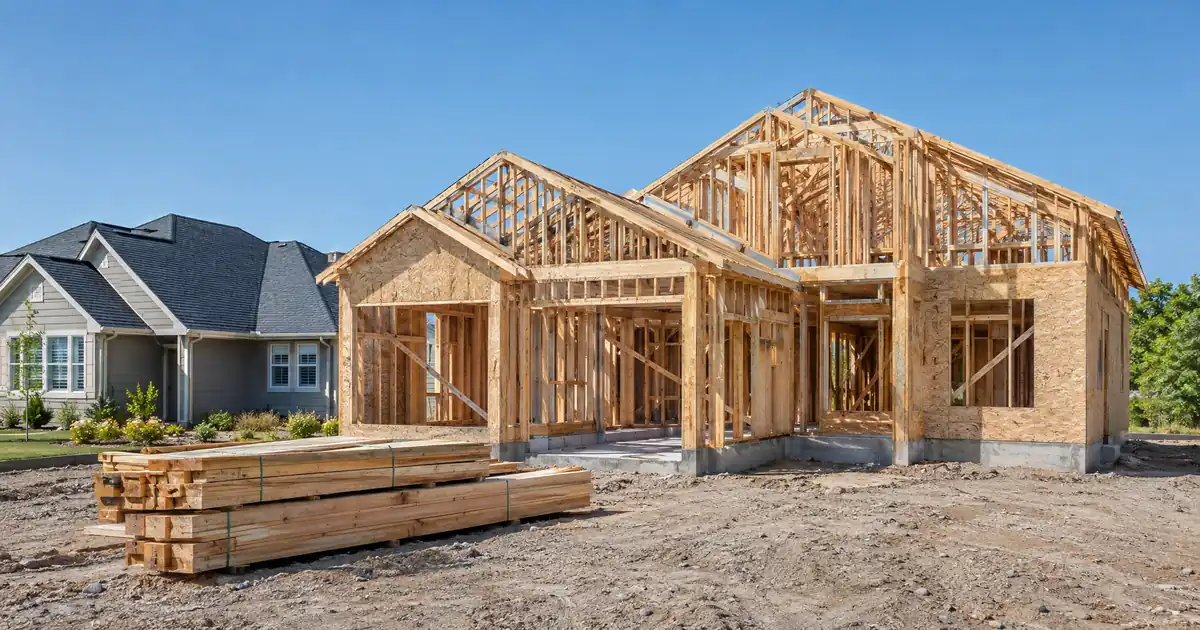
The Quick Read: Buyers have more room to push on price and concessions this month, as of September 28, 2026. Inventory is up, August existing-home sales slowed, and 38% of builders cut prices in September. The catch is financing. Freddie Mac’s survey has now risen four weeks running, so every dollar you win at the table competes with a more expensive loan.
What Changed
The leverage is real, but it comes from several places at once. Start with the dated facts.
- Sales slowed. NAR’s existing-home sales report, updated September 10, 2026, showed August sales down 2.0% from July.
- Inventory grew. Supply reached 4.9 months in that same report.
- Builders are discounting. NAHB’s September survey found 38% of builders cut prices and 66% used incentives.
- Borrowing costs climbed. Freddie Mac’s survey has risen four straight weeks.
That is the whole story in four lines. The rest of this column is what I make of it.
What Did the Housing Data Show for August?
Existing-home sales fell 2.0% in August to a seasonally adjusted annual pace of 3.98 million, per NAR’s report on September 10, 2026. Sales were down 1.2% from a year earlier. HousingWire’s coverage of the same release put inventory at 1.62 million homes, and the median sale price at $429,100, up 1.6% from a year ago.
Two things in that paragraph pull against each other. Sales are slower and supply is bigger, which is what a buyer wants. But the median sale price still rose. Falling volume does not mean falling prices. Anyone telling you otherwise is selling a story.
NAR’s Lawrence Yun said months’ supply is the highest in more than ten years. That matters for negotiation. More homes chasing fewer buyers means sellers sit longer, and sellers who sit get flexible.
July tells the same story. NAR’s July report, dated August 11, 2026, showed a 1.7% monthly drop. Two straight monthly declines make a trend, not a blip.
The listing side agrees. Realtor.com’s August report, released September 2, 2026, put the median list price at $424,500, down 1.0% from July and 1.3% from a year earlier. That was the tenth straight annual decline. It also found 20.4% of active listings carried a price cut, which only matches last year’s share. Delistings fell 12.6% from a year earlier, so fewer sellers are giving up and pulling their homes.
My read: this is not a collapse. It is a market where sellers have lost some of their certainty.
What Happened to Rates?
Freddie Mac’s survey put the 30-year fixed at 7.03% for the week of September 24, 2026, up from 6.95% the week before, per the Freddie Mac PMMS. A year earlier the figure was 6.30%. That is the fourth straight weekly increase.
The path matters. The survey read 6.71% on September 3 and 6.76% on September 10. Then came a 19 basis point jump in the week of September 17. From August 27 to September 24 the survey is up 37 basis points.
Two cautions belong here. First, Freddie’s number is a survey average for conventional, conforming purchase loans with 20% down and excellent credit. It is not what every buyer sees. Second, other measures run higher. Mortgage News Daily’s index was at 7.43% on September 25. The MBA’s weekly survey, published September 23, 2026, showed its 30-year conforming contract rate at 7.12%. Different surveys, different methods, different answers. Final terms depend on lender guidelines, property type, leverage, and the borrower’s complete credit picture.
Behind all this sits the Fed. On September 16, 2026, the FOMC voted 12–0 to raise its target range by 25 basis points, to 3¾–4%. The statement says inflation “remains elevated.” That reverses the December 2025 cuts. CNBC reported that 16 of 18 participants project another hike.
One correction I make often. The Fed does not set mortgage rates. Mortgage rates track the 10-year Treasury more closely than the overnight rate. The 10-year crossed 5% on September 14, per WRE News, for the first time since October 2023. That is secondary reporting, so check Treasury or FRED for the official close.
What It Means for Home Buyers
Buyers now have two negotiations, not one. The first is with the seller over price and terms. The second is with the bond market, and you lose that one.
Demand is cooling. A published survey for the week ending September 18 showed the seasonally adjusted Purchase Index down 1%. The unadjusted index sat 11% below a year earlier. Fewer buyers in the field means less competition for any one listing. That helps you. These specifics are subject to lender guidelines and a full review of property, leverage, and credit.
But the same rate climb that thins the crowd raises your cost of carrying a loan. So the price you negotiate is only half the picture. If a rate moves from 6.75% to 7.75%, the difference is a full point on the whole balance, every year. A seller who knocks off a few thousand dollars may not offset that. A concession aimed at the financing might.
This is where concessions start to matter as much as price. Sellers often prefer to give credits than to cut the headline price, because a lower price resets comparable sales for the whole street. A credit is invisible to the next appraiser. You can use that.
Why Builders Give You the Clearest Opening
Builders are the most motivated sellers in this data. NAHB’s September index, published September 16, 2026, fell 3 points to 32, the lowest since September 2025. The NAHB release found 38% of builders cut prices, up from 35% in August. The average cut was 6% for the sixth straight month. And 66% used incentives, up from 63%.
Look at the trend. NAHB’s August release, dated August 17, 2026, had 35% cutting prices, against 37% in July and 35% in June. August was the sixteenth straight month with at least 30% of builders cutting. Builders have been discounting for well over a year. They are not panicking. They are managing inventory.
HousingWire reports that builders lean on rate buydowns and closing-cost help. They can do this more flexibly than most resale sellers. A buydown is a payment from the seller that lowers your interest cost for some period. A builder can often fund one from margin. An individual homeowner with a mortgage balance usually cannot.
The same reporting says these discounts are not fully unlocking demand. Buyers are still hesitant. So a builder with unsold homes and a buyer in the room has every reason to deal. My take: if you are touching new construction, ask for the financing help first and the price cut second.
Don’t read builder behavior onto resale sellers. Builders have cash-flow reasons to move inventory. A retiree selling a paid-off house has none. Realtor.com shows resale price-cut shares level with last year, with wide regional variation.
Is Your Market a Buyer’s Market?
National numbers hide local reality. Realtor.com’s August report, per Stock Titan’s summary, put active listings at about 1.14 million, up 3.6% from a year earlier. That is a secondary summary, so lean on the primary release where you can.
The regional split is wide. Active listings grew 10.5% in the Midwest and 9.1% in the Northeast, against 3.2% in the West and 1.1% in the South. Price cuts were 14.1% of listings in the Northeast and 22.0% in the West.
Read those together and you get a puzzle. Listings grew fastest in the Midwest and Northeast, but price cuts are least common in the Northeast. More supply does not automatically mean more discounting. The West has the most price cuts but modest listing growth.
I am not going to tell you which region favors you. These are regional figures, not local ones, and your street can differ from your region. What I can say is that national headlines overstate leverage in some places and understate it in others. Check the listings on the block you want.
My Take
I think this is a concessions market, not a price-collapse market. The data says so. The price-cut share is only level with last year. NAR’s median sale price is still up. The leverage you have is modest and uneven.
I also think rates are the bigger story than price. Four straight weekly increases, a Fed that hiked and projects more, and a 10-year above 5%. Buyers who wait for a bargain may be waiting while their financing gets worse. Buyers who rush in because they fear rates rising further may overpay. Neither instinct is good.
Here is a genuine toss-up: a price cut against a financing credit. If you expect to hold the home a long time and refinance later, the price is permanent and the credit is temporary, so price may win. If you plan to stay a few years, the credit may be worth more. I can’t settle that for you without your numbers.
One thing I’d push back on: the idea that rates will drop soon. The Fed’s own projections point up, not down. Waiting for relief is a bet, not a plan.
What I’d Do Now
Negotiate the whole deal, not just the price. Price, closing-cost credits, a rate buydown, repairs, and the closing date are all on the table. Ask for the ones that cost the seller the least and help you the most.
Read the seller before you write the number. Look at how long the home has sat and whether it has already been cut. A listing with a price cut and long exposure signals a seller who is ready to talk. A fresh listing priced right signals the opposite. Use comparable sales, not a hunch, to back your offer.
Treat the inspection as a second negotiation. Get contractor estimates for anything significant. Separate safety and major systems from cosmetic items. Sellers accept documented requests more readily than vague ones. Don’t nickel-and-dime over small things, because that burns goodwill you may need for the big ones.
Don’t confuse a survey with a quote. Freddie Mac’s 7.03% is a national weekly average for a specific kind of borrower. Your file could price higher or lower. Quotes gathered on different days are not comparable, because the market moved between them. If you want to compare offers, gather them the same day.
If you like it, lock it. A rate lock is an agreement that holds your loan terms for a set period while you move toward closing. The length of that period and the terms attached to it vary by file and lender. When the market has been trending upward, floating is a bet that the trend reverses, and the Fed’s projections lean the other way. Decide how much risk you want to carry, and don’t float out of hope.
Know what you’re financing. Buyers with standard traditional employment income have one set of options. Self-employed buyers, investors, and others may fit different products. Our loan options page carries the current guidelines, and eligibility is subject to lender guidelines and review. For buyers purchasing a rental or a vacation property, how the home will be used changes how it is financed. Our piece on “How A Short-term Rental DSCR Loan Treats A Beach House As Business Purpose?” explains that distinction.
If you’re weighing a purchase or a refinance this fall, Lendmire can walk you through how the current programs fit your file.
Where the Data Has Gaps
The brief I worked from has holes, and you should know them. I found no dated data on HELOCs, home equity, non-QM, or DSCR markets in this window. I found no current Fannie Mae sentiment reading. There is no Redfin, Zillow, ICE, or CoreLogic primary source here. So I won’t pretend to know how refinancers, equity owners, or investors are faring beyond what the MBA’s refinance figures show.
Those figures are stark. The MBA’s Refinance Index fell 3% for the week ending September 18 and was 62% below a year earlier. Refinancing has nearly gone dormant. Anyone hoping to refinance into a lower rate has watched that window close, at least for now.
Sellers, meanwhile, are less panicked than in 2025. Realtor.com’s delisting data, released September 2, 2026, shows fewer sellers pulling homes than a year ago. They are staying in the market. Expect them to hold firm on price, even as they bend on terms.
For the end-to-end picture of how DSCR loans work — qualification, structures, and the full process — see Lendmire’s complete DSCR loans guide.
Frequently Asked Questions
Is this a buyer’s market right now?
It is partly a buyer’s market. Supply has climbed to its highest level in over a decade per NAR’s September 10, 2026 report, and sales are slowing. But prices are still up from a year ago, and the share of listings with price cuts only matches last year. Leverage is real but uneven, and it depends on your local market.
Should I negotiate price or concessions?
Often both, but weigh concessions more than you used to. With rates up four weeks running, help with closing costs or a rate buydown can matter as much as a lower price. Sellers also tend to resist price cuts more than credits. Ask for what costs them least and helps you most.
Will mortgage rates fall soon?
I wouldn’t count on it. The Fed raised its target range on September 16, 2026, and 16 of 18 participants project another hike. The 10-year Treasury is above 5%. Nothing in the dated data points to near-term relief, so plan around today’s market.
Is Freddie Mac’s weekly number what I’ll pay?
No. The survey covers conventional, conforming purchase loans for borrowers with 20% down and excellent credit. Other measures, like Mortgage News Daily’s index and the MBA’s contract rate, ran higher in the same period. Your own quote depends on your file and the day it is priced. Terms vary by lender guidelines, property type, leverage, credit profile, and full file review.
Do builder discounts mean resale sellers will cut too?
Not necessarily. Builders can fund buydowns and closing-cost help more flexibly than most individual sellers. NAHB’s September survey shows 38% of builders cutting prices, but Realtor.com’s resale price-cut share was only level with last year. Expect more flexibility from builders than from a typical homeowner.
About Lendmire
As a mortgage broker (NMLS# 2371349), Lendmire arranges DSCR investor loans in 40 states plus Washington, D.C. — 41 markets — and, on its consumer platform, bank statement, home equity and down payment assistance financing in 16 states, through wholesale lenders. Lendmire never underwrites or funds a loan itself. Scotsman Guide named Lendmire a Top Mortgage Workplace in both 2025 and 2026.
Get Started
Ready to find the right loan for you?
In about 30 seconds you can review financing options available for your home or investment property. No commitment required.
Informational only. Not a Loan Estimate, approval, or commitment to lend. Program availability and eligibility are subject to lender guidelines, credit approval, property review, and underwriting.
References
3. July report
4. Freddie Mac Primary Mortgage Market Survey
5. Federal Reserve FOMC statement, September 16, 2026
7. WRE News
8. NAHB builder sentiment release, September 16, 2026
This article is part of Lendmire’s Mortgage News series — every loan program’s qualification details, guidelines, and scenarios live on the loan options page.
Related reading: Why A Local Real Estate Broker Matters As Buyers Gain Leverage, September 2026? · September 2026: Buyers Need A Real Estate Agent As Supply Grows, Rates Climb · Listing Your Home For Sale This Fall As Inventory Climbs And Rates Rise
Brandon Miller
Founder & CEO, Mortgage Loan Originator, Lendmire LLC
- Mortgage Loan Originator · NMLS# 1129696 · Verify on NMLS Consumer Access
- North Carolina Real Estate Broker · License# 343312 · Verify on NCREC
- North Carolina Insurance Producer · License# 19053198 · Property, Casualty, Life, Health · Verify on NAIC SBS
- Lendmire LLC · Firm NMLS# 2371349 · Verify firm licensure
Disclosures. The information presented in this article is general market commentary, not financial, legal, or tax advice. Lendmire is a mortgage brokerage (NMLS# 2371349) — not a direct lender or depository institution — and loan placement is subject to lender underwriting. Nothing in this content represents a commitment to lend. Loan terms, pricing, and program availability vary based on borrower qualifications, property characteristics, and state of subject property, and are subject to change at any time. Lendmire complies with Equal Housing Opportunity requirements. Consumer access: nmlsconsumeraccess.org.