
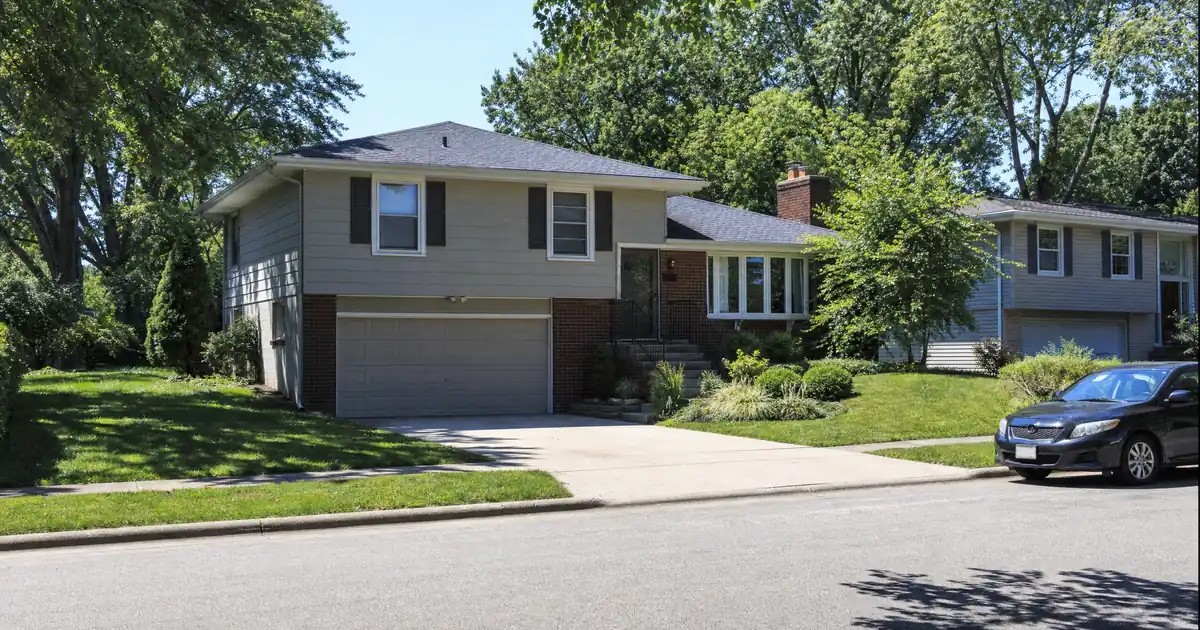
First Investment Property Mortgage — The Quick Read: A first investment property mortgage today most often means a DSCR loan — a business-purpose product that qualifies the deal on the rent the property can generate rather than the borrower’s paycheck. It’s not a fringe product anymore; it’s become one of the standard paths investors take once they want a rental that a conventional loan won’t easily finance. The rules are different from a home loan in almost every meaningful way — how income gets counted, how much down payment matters, what documents get pulled, and what happens if the ratio comes in under 1.00. This piece walks through the mechanics step by step, the variations that exist across the market, and where the general rule breaks down.
Key Takeaways
- Most first-time rental purchases today get financed with a DSCR loan, which measures the property’s rent against its own payment obligation instead of the borrower’s income.
- Leverage on a purchase typically runs 75%–80% LTV, with select high-leverage programs reaching 85% for borrowers around a 700+ credit score. That standard envelope applies to borrowers who already own a primary residence. Investment-property CLTV caps at 70% across the network with a $500,000 maximum line and a hard 700 credit floor — second homes carry the same 70% ceiling from a 640 floor. Investment-property CLTV caps at 70% across the network with a $500,000 maximum line and a hard 700 credit floor — second homes carry the same 70% ceiling from a 640 floor.
- A DSCR of 1.00 means rent matches the payment obligation — it is not the same thing as positive cash flow, because repairs, vacancy, and management sit outside the ratio.
- Conventional financing caps out at 10 financed properties per borrower, which is a big part of why growing investors move to non-QM financing even if they didn’t start there.
- Some property types — manufactured homes, log homes, barndominiums — are not offered through DSCR programs, full stop.
How a First Investment Property Mortgage Works, Step by Step
A first investment property mortgage built as a DSCR loan runs on a completely different qualification engine than the mortgage most people used to buy their own home. Instead of asking “can this borrower afford this payment based on their W-2s,” the lender asks “does this property’s rent cover its own payment.” That single shift changes almost every downstream requirement.
DSCR Calculator
Run the numbers in your market
Rate source: Freddie Mac 30-yr average via FRED® — Federal Reserve Bank of St. Louis · effective Aug 13, 2026
Prefilled with local estimates — enter your own rent or nightly figures, taxes, insurance, and HOA for a more accurate picture.
Program parameters update from Lendmire’s centralized guideline source. Taxes and insurance are editable estimates.
As of Aug 13, 2026 · General Freddie Mac market benchmark, not a Lendmire loan offer. Rent, nightly rate, occupancy, taxes, and insurance are editable estimates. Short-term rental figures are estimates only and vary significantly by season, property type, management approach, and local short-term-rental rules — confirm local regulations before relying on them. Qualifying income for short-term rentals varies by program — some use appraisal market rent, others use documented STR history or projections — and is confirmed in underwriting. Not a Loan Estimate, approval, or commitment to lend. Program availability and eligibility are subject to lender guidelines, credit approval, property review, and underwriting.
Step 1: The ratio gets calculated. Debt-service coverage ratio, or DSCR, is the property’s monthly rent divided by its full monthly payment obligation — principal, interest, taxes, insurance, and any HOA dues, often shorthanded as PITIA. A ratio at or above 1.00 means the rent, on paper, covers the full obligation. Most standard programs across the network Lendmire works with are built around a 1.00x benchmark for that reason, though it’s a floor for specific programs — not a universal industry rule, and stronger ratios open up better pricing and leverage.
Step 2: The rent number gets verified, not guessed. The borrower doesn’t get to pick the rent figure. On a single-unit property, an appraiser produces a market-rent opinion using Fannie Mae’s Form 1007 comparable rent schedule; on a two-to-four-unit property, the appraiser uses Form 1025. Fannie Mae’s own documentation describes the purpose directly — the form exists so “the lender uses this form to obtain the market rent for a conventional single-family investment property from the appraiser.” Non-QM underwriters lean on that same comparable-rent methodology even on files that never touch an agency investor, because it’s the industry-standard way to pin down what a property should rent for.
Step 3: An existing lease can override the appraisal opinion. If the property already has a tenant in place, the signed lease can sometimes be used instead of, or alongside, the appraiser’s market-rent conclusion — worth knowing if you’re buying a property mid-lease rather than a vacant unit you’ll need to fill yourself.
Step 4: Credit, assets, and reserves replace income documents. There’s no W-2 pull, no tax-return stack, no personal debt-to-income calculation the way a conventional loan runs it. That doesn’t mean underwriting disappears — it means the emphasis moves to credit history, liquid reserves, and the strength of the coverage ratio itself. Qualification runs primarily on the property’s rental income covering the payment, subject to lender guidelines — not a bypass of underwriting altogether.
Step 5: Reserves sit in a separate bucket from the down payment. This trips up a lot of first-timers. Reserves are liquid funds that have to remain in an account after closing — money on top of the down payment and closing costs, not carved out of them. Across the wholesale lenders Lendmire places files with, reserve expectations commonly land around 6 months of PITIA, though loans above roughly $1,500,000 typically step up to about 9 months, and conservative rate-term refinances at modest leverage under that threshold sometimes see reserves waived entirely. It varies by lender, leverage, and transaction type — never assume one number applies everywhere.
Step 6: The property can close into an entity. Because the loan is a business-purpose product, most DSCR programs allow the property to vest directly in an LLC rather than the investor’s personal name — a real structural advantage over agency financing, subject to program eligibility and the individual lender’s guidelines.
Step 7: The loan terms look different than a home mortgage. Prepayment penalties and interest-only structures show up commonly on DSCR loans and rarely on today’s owner-occupied mortgages. DSCR loans are designed for non-owner-occupied investment properties. Because they are business-purpose investor loans, they are reviewed differently from a standard owner-occupied mortgage — which is part of why step-down prepayment structures and extended interest-only periods are available options here that a conventional home loan simply doesn’t offer.
Investors who want the full mechanics of how the ratio, the appraisal, and the underwriting fit together can walk through Lendmire’s complete DSCR loans guide for the longer version.
Key Terms Defined
DSCR (Debt Service Coverage Ratio): the property’s monthly rent divided by its monthly payment obligation — the core number a DSCR lender qualifies the deal on.
PITIA: principal, interest, taxes, insurance, and association dues combined into a single monthly obligation figure — the denominator in the DSCR calculation.
LTV (Loan-to-Value): the loan amount expressed as a percentage of the property’s value or purchase price — a purchase LTV of 80% means 20% down. Final terms depend on lender guidelines, property type, leverage, and the borrower’s complete credit picture.
Non-QM (non-qualified mortgage): a mortgage that doesn’t meet the specific documentation and structure rules that define a “qualified mortgage” under federal guidelines — DSCR loans fall in this category.
Business-purpose loan: a loan made for an investment or income-producing purpose rather than to buy a personal residence — this classification is what allows DSCR loans to skip personal income documentation.
Seasoning: the minimum amount of time a lender wants a borrower to hold a property, or a lender wants since a credit event, before certain transactions — like a cash-out refinance — are allowed.
Reserves: liquid funds a borrower must have left over after closing, separate from the down payment and closing costs, sized to cover several months of the property’s payment obligation.
The Structures and Variations That Exist
Not every DSCR file looks the same, and the leverage, credit, and documentation expectations shift depending on the transaction type and the property itself.
Purchase leverage. Most purchase files land at 75%–80% LTV, meaning 20%–25% down on most transactions. Select high-leverage programs reach 85% LTV for borrowers around a 700+ credit score — the trade-off for less money down is a stronger credit file and usually a stronger ratio too.
Cash-out refinancing. Pulling equity out of a rental generally tops out around 75% LTV across most of the wholesale network, with about 6 months of ownership seasoning being the common expectation before a lender will consider it. Investors who own a rental free and clear, or close to it, often use this route to fund the next purchase — Lendmire’s breakdown of refinancing a rental with no existing mortgage covers that scenario directly.
Credit tiers. A 620 floor exists in parts of the network, but most programs want something closer to 660, and 700+ is where the strongest leverage tiers open up. There isn’t one universal minimum — it’s program-dependent, and it’s worth confirming against the specific deal rather than assuming a single number applies.
Loan sizing. Standard programs generally run up to $3,000,000, with smaller balances available through select lenders in the network. Above roughly $2,500,000, the network generally holds to 30-year fixed structures rather than adjustable or interest-only variations — bigger loans get simpler terms, not more exotic ones.
Term structures. The 30-year fixed is the backbone across the network. Extended 40-year terms and interest-only periods are available through select lenders for investors who want lower scheduled principal reduction early on, and adjustable-rate structures exist too for investors who prefer them. None of these are universal — they’re program-specific, and eligibility depends on the lender, the file, and the property.
Investment-property HELOCs. A line of credit against a rental property caps at $500,000 total across the network — there’s no higher tier above that figure, regardless of the property’s value or equity position.
Short-term rentals. STR-financed properties run on a different rent methodology entirely — instead of an appraiser’s market-rent opinion, the lender typically uses a trailing 12-month average of actual short-term rental income. Short-term rentals qualify at a 1.00 coverage threshold on purchase and refinance at reduced maximum leverage, and require a 12-month income history or market data report at most lenders. Short-term rental rules can also vary by city, county, HOA, and property type, so investors should confirm local rules before relying on projected rental income. Investors weighing this path can review Lendmire’s dedicated coverage on STR-specific DSCR structuring for more detail.
Loan-Type Comparison at a Glance
| Loan Type | Reviewed on | Best Fit |
|---|---|---|
| Conventional/agency investor loan | Borrower income and credit, personal DTI | First rental, strong W-2 or tax-return income |
| DSCR / non-QM | Property’s rental income vs. payment | Scaling past agency limits, self-employed income |
| Government-backed (FHA/VA) multi-unit | Owner-occupancy on one unit + household income | House-hacking a 2-4 unit property, not pure rentals |
| Portfolio loan | Lender-specific blend of credit and cash flow | Complex files a lender chooses to hold in-house |
| HELOC / cash-out on existing home | Equity and the existing property’s income | Funding a down payment on the next purchase |
Where the General Rule Breaks Down
The rent-covers-the-payment logic isn’t absolute, and there are several documented places where DSCR programs deviate from the 1.00 baseline or from the standard property-type menu entirely.
Coverage below 1.00. Sub-1.00 structures are available through select lenders in the network, but leverage and terms adjust to compensate — expect lower LTV, stronger credit requirements, or additional reserves layered on. There’s no fixed numeric floor to point to here; every lender in the market draws that line differently, and it’s a conversation to have directly against a specific property and borrower file.Select lenders in the network do offer a no-ratio structure — no coverage ratio is calculated — though it generally requires existing primary-residence ownership, and leverage and terms adjust to match, subject to lender guidelines.
Non-warrantable condos and other agency-declined collateral. Agency guidelines have tightened over the years — Scotsman Guide reports that Fannie Mae and Freddie Mac now disallow condos in communities with timeshares and require at least half the development’s units to be owner-occupied to keep warrantable status. Properties that fall outside those lines — a condo in a heavy short-term-rental building, for instance — are exactly the collateral non-QM programs were built to handle.
Property types that aren’t offered at all. Manufactured homes, both single- and double-wide, along with log homes and barndominiums, are not reviewable through DSCR programs in the network. That’s not a “harder to place” situation — it’s simply outside the menu, and it’s worth knowing before shopping a property that falls into one of those categories.
1031 exchange timing. Investors running a like-kind exchange work against IRS statutory deadlines — a 45-day identification window and a 180-day exchange period. Because a DSCR file is reviewed on the property rather than a personal tax-return stack, there’s less paperwork friction to navigate inside those windows, which is part of why DSCR financing shows up so often in exchange transactions.
State-level prepayment penalty rules. Prepayment penalty enforceability isn’t the same everywhere. Several states restrict or prohibit prepayment penalties on investment-property loans outright, and because DSCR loans close to LLCs and other entities, they fall under a mix of state lending law and lender-specific program matrices rather than one national rule. Penalty-free structures exist in the market too, typically priced differently than penalty-bearing ones — the tradeoff is negotiable, not fixed.
Credit-event seasoning. How long after a bankruptcy, foreclosure, or short sale a borrower becomes DSCR-eligible again varies enormously by program — from fairly quick eligibility in some structures to multi-year waits in others. There’s no single standardized number across the sector; this is a question to bring directly to the specific lender being considered.
State overlays on leverage and size. A handful of states — Connecticut, Florida, Illinois, and New Jersey among them — generally cap purchase leverage near 75% LTV rather than the 80% ceiling available elsewhere, and overlay-state deals commonly cap around $2,000,000 in loan size. Geography changes the math more than most first-time investors expect.
Why the Financing Decision on Loan One Matters Later
Conventional financing isn’t unlimited, and that ceiling shapes how an investor should think about their very first purchase. Scotsman Guide notes that the agency loan limit on financed investment properties sits at 10 — once an investor crosses that line, or gets close to it, conventional financing simply isn’t an option anymore, deal or not. An investor who starts with agency financing on property one and property two will eventually need a non-agency path once the portfolio grows, so understanding DSCR mechanics on the first deal has real relevance to the fifth or tenth.
It also helps to know who else is in this market. The Harvard Joint Center for Housing Studies documents that corporate ownership of small (one-to-four unit) rental properties has grown from around 3% in 1990 to roughly 18% more recently — a real shift, but one that still leaves the majority of small rental properties in the hands of individual owner-operators, not institutional buyers. A first-time investor using a DSCR loan isn’t entering some fringe corner of the market; they’re joining a category of ownership that’s been building momentum for decades.
DSCR files also don’t carry the stigma some investors expect walking in. Scotsman Guide reports the average non-QM borrower carried a 776 FICO score in a recent year — essentially on par with conventional conforming borrowers — and the sector’s growth outlook remains one of the strongest in the broader mortgage market. This isn’t a last-resort product; it’s become a mainstream tool for a specific kind of borrower and a specific kind of transaction. These specifics are subject to lender guidelines and a full review of property, leverage, and credit.
Files in markets where rental vacancy runs higher than usual tend to show it in the appraiser’s rent conclusion before anything else. The U.S. Census Bureau reported a national rental vacancy rate of 7.3% in its most recent release, not statistically different from the prior year’s 7.0% — a reminder that the rent figure feeding the DSCR calculation reflects real market conditions, not the investor’s optimism about future demand. In practice, files with tighter coverage ratios in softer rental submarkets often need a stronger credit profile or lower leverage to compensate, since the property side of the equation has less cushion to give.
Common Mistakes First-Time Investors Make
A few misconceptions show up on almost every first-timer’s file, and clearing them up early saves time.
Treating a 1.00 DSCR as “the loan pays for itself with cash left over” is the biggest one. A ratio of 1.00 means rent equals the full PITIA obligation — nothing more. Repairs, vacancy periods, property management, utilities, and capital expenditures all sit outside that number. A property clearing 1.00 can still run a negative cash-flow month if the roof needs work.
Assuming reserves and down payment come from the same pool is another common error — they’re two separate requirements, and reserves have to remain liquid after the down payment and closing costs are already spent.
Believing the borrower’s own rent estimate, or a listing agent’s optimistic number, will hold up in underwriting is a third. It won’t. The appraiser’s comparable-rent conclusion controls the DSCR calculation, full stop.
And assuming every DSCR loan comes with a prepayment penalty and no way around it misses the actual market — penalty-free structures exist, pricing differently, and several states restrict penalties on investment loans altogether.
First-time investors specifically — meaning someone who’s never held a rental before — sometimes get treated with a slightly different overlay than someone with an existing rental track record, though the exact adjustments are lender- and program-specific rather than a fixed industry rule. Anyone weighing a first rental purchase with zero landlord history can find more on how that gets underwritten in Lendmire’s coverage of investment property loans for buyers with no experience.
What the Decision Looks Like in Practice
Run a quick example through the framework: a $340,000 rental purchase at 80% LTV, where the appraiser’s market rent conclusion clears roughly 1.15x coverage against the resulting PITIA. That’s a workable file on paper for most standard programs — strong enough coverage, standard leverage, nothing unusual about the property type. Now shift the same purchase to 85% LTV, and the file likely needs a 700+ credit score and a stronger ratio to compensate for the added leverage, since the strongest files clear both tests at once: enough equity and enough rental coverage. Neither number alone carries the deal.
Investors who already own a rental with meaningful equity sometimes use a streamlined refinance approach to reset terms or free up cash for the next purchase, rather than starting a brand-new purchase transaction from scratch. That’s a separate conversation from a first purchase, but it’s often the next step once the first property is seasoned.
Lendmire (NMLS# 2371349), a mortgage broker specializing in DSCR loans, arranges investment-property financing through select lenders across a wholesale network spanning 40 states plus Washington, D.C. Investors weighing a first rental purchase can call 828-256-2183 or request a quote to see how a specific property, credit profile, and leverage target line up against current program guidelines.
Tax treatment can depend on how the funds are used and how the property is held; investors should keep clear records and speak with a qualified tax professional before relying on any deduction.
Loan approval is never guaranteed, and nothing here is a commitment to lend. Every scenario described here is subject to lender approval and to the specific borrower, property, and program guidelines in place at the time of application. This article is general information, not financial, legal, or tax advice.
Frequently Asked Questions
Do I need landlord experience to qualify for a first investment property mortgage? No — DSCR programs are built to qualify the property, not the borrower’s résumé as a landlord. First-time investors can and do get approved, though some lenders apply slightly different overlays to a borrower with zero rental history versus one with an existing track record. The specifics vary by program, so it’s worth discussing directly against the file.
Can I buy my first rental property with less than 20% down? Select high-leverage programs reach 85% LTV, which puts the down payment closer to 15%, generally for borrowers around a 700+ credit score. Most files still land in the 20%–25% down range at 75%–80% LTV, and the exact number depends on credit, the property, and the strength of the rental coverage.
What happens if the rent doesn’t quite cover the payment? Sub-1.00 coverage is available through select lenders in the network, but expect the leverage and terms to adjust — lower LTV, a stronger credit score, or additional reserves usually offset the weaker ratio.Select lenders in the network do offer a no-ratio structure — no coverage ratio is calculated — though it generally requires existing primary-residence ownership, and leverage and terms adjust to match, subject to lender guidelines.
Can I close my first investment property in an LLC? Generally, yes — DSCR loans are business-purpose products, and most programs allow the property to vest directly in an LLC or similar entity rather than the borrower’s personal name, subject to lender program eligibility. Not every program handles entity vesting identically, so confirm it against the specific lender before assuming it’s automatic.
Is a DSCR loan often a strong option for a first investment property? No. Conventional/agency financing, government-backed multi-unit loans for house-hacking, portfolio loans, and HELOCs against an existing home are all in play depending on the borrower’s income situation and the property type. DSCR financing tends to become the practical choice once a borrower’s income is harder to document conventionally, once they’ve hit the agency’s 10-property financing limit, or once the property type itself — a non-warrantable condo, for instance — falls outside conventional guidelines.
About Lendmire
Lendmire, NMLS# 2371349, is a non-QM mortgage broker serving real estate investors in 41 markets, including Washington, D.C., through DSCR investor loan programs. Qualification is generally reviewed around the subject property’s rental income, not the borrower’s W-2 history — a practical fit for LLC-titled portfolios and self-employed investors. All scenarios remain subject to lender review and program guidelines. Two consecutive Scotsman Guide Top Mortgage Workplace recognitions (2025, 2026).
Lendmire’s Top Mortgage Workplace recognition is documented by Scotsman Guide 2025 Top Mortgage Workplace and Scotsman Guide 2026 Top Mortgage Workplace.
Get Started
Ready to find the right loan for you?
In about 30 seconds you can review financing options available for your home or investment property. No commitment required.
Informational only. Not a Loan Estimate, approval, or commitment to lend. Program availability and eligibility are subject to lender guidelines, credit approval, property review, and underwriting.
References
1. Fannie Mae Selling Guide — Rental Income (B3-3.8-01)
2. Scotsman Guide — To the Rescue With the Right Loan at the Right Time
4. Scotsman Guide — Which Groups Are Driving Non-QM Lending?
5. U.S. Census Bureau — Housing Vacancies and Homeownership
This article is part of Lendmire’s DSCR loan program — full qualification details, guidelines, and scenarios live on the program page.
Related reading: How To Buy Your First Investment Property Without Owning A Home · How Much Down For A DSCR Loan First Time Buyer? · How To Qualify For A DSCR Loan As A First Time Investor
Brandon Miller
Founder & CEO, Mortgage Loan Originator, Lendmire LLC
- Mortgage Loan Originator · NMLS# 1129696 · Verify on NMLS Consumer Access
- North Carolina Real Estate Broker · License# 343312 · Verify on NCREC
- North Carolina Insurance Producer · License# 19053198 · Property, Casualty, Life, Health · Verify on NAIC SBS
- Lendmire LLC · Firm NMLS# 2371349 · Verify firm licensure
Important disclosures. Lendmire (NMLS# 2371349) is a licensed mortgage brokerage. Lendmire is not a direct lender, depository institution, or financial advisor. All loan inquiries are subject to lender underwriting; this article does not constitute a commitment to lend. Rates, terms, and program guidelines are subject to change without notice and vary by borrower profile, property type, and state. Information in this article is general in nature and is not financial, legal, or tax advice. Equal Housing Opportunity. NMLS Consumer Access: nmlsconsumeraccess.org.