
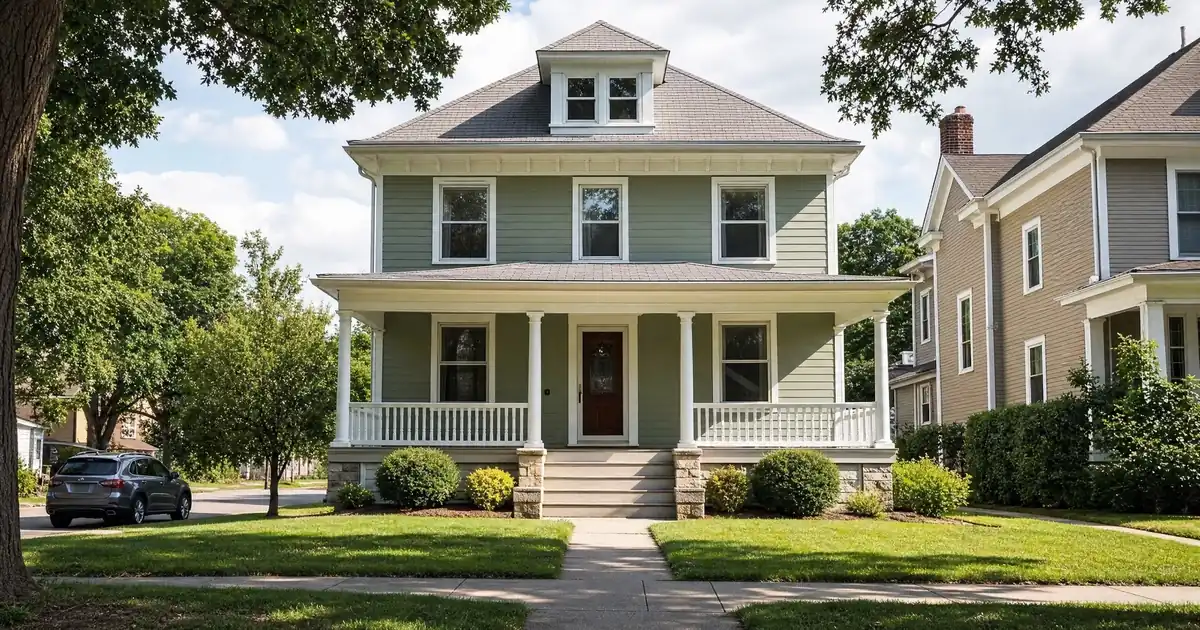
Priced Out Of Your Market Buy A Rental Somewhere Else — The Quick Read: If home prices where you live have outrun what your income can support, the answer isn’t always to wait longer or settle for less house. A growing number of investors buy rental property in a different, more affordable market instead — while staying put where they live. DSCR loans make this workable because they qualify the property’s rent, not your local paycheck or your local price tag. The tradeoff is real: you take on a market, a set of landlord-tenant rules, and a management relationship you’ve probably never handled in person. Nothing below is legal or tax advice.
Here’s what that actually means in practice, and where it breaks down.
DSCR Calculator
Run the numbers in your market
Rate source: Freddie Mac 30-yr average via FRED® — Federal Reserve Bank of St. Louis · effective Aug 13, 2026
Prefilled with local estimates — enter your own rent or nightly figures, taxes, insurance, and HOA for a more accurate picture.
Program parameters update from Lendmire’s centralized guideline source. Taxes and insurance are editable estimates.
As of Aug 13, 2026 · General Freddie Mac market benchmark, not a Lendmire loan offer. Rent, nightly rate, occupancy, taxes, and insurance are editable estimates. Short-term rental figures are estimates only and vary significantly by season, property type, management approach, and local short-term-rental rules — confirm local regulations before relying on them. Qualifying income for short-term rentals varies by program — some use appraisal market rent, others use documented STR history or projections — and is confirmed in underwriting. Not a Loan Estimate, approval, or commitment to lend. Program availability and eligibility are subject to lender guidelines, credit approval, property review, and underwriting.
Key Takeaways
- Being priced out at home doesn’t mean priced out everywhere — a stronger rent-to-price ratio somewhere else changes the math entirely.
- DSCR loans qualify primarily on property-level rental income covering the payment, subject to lender guidelines — not on your W-2, your traditional personal-income documentation, or your home city’s price level.
- Out-of-state buyers made up 6.53% of U.S. single-family purchases in the first quarter of 2026, concentrated at the affordable end of local markets rather than the middle, according to SFR Analytics.
- Buying elsewhere adds real exposure: different landlord-tenant law, distance from the property, and a management fee that eats into cash flow the DSCR ratio never sees.
- This fits some investors well and fits others poorly. The framework below walks through both, as general education only — not legal or tax advice.
Key Terms Defined
DSCR (Debt Service Coverage Ratio): the property’s monthly rent divided by its full monthly obligation — principal, interest, taxes, insurance, and any HOA dues (PITIA). A ratio above 1.00 means the rent covers that obligation with something left over.
PITIA: shorthand for the four or five pieces that make up a property’s monthly housing obligation — principal, interest, taxes, insurance, and association dues, if any.
LTV (Loan-to-Value): the loan amount expressed as a percentage of the property’s price or appraised value. Higher LTV means less money down.
Non-QM: short for “non-qualified mortgage” — a category of loans, including DSCR loans, that don’t follow the standard rules built for owner-occupied home loans. Non-QM programs set their own underwriting standards instead.
Business-purpose loan: a loan made to a property held for investment rather than as a primary home. DSCR loans fall into this category, which is why they’re often closed under an LLC rather than an individual’s name. How you title or structure ownership is a legal and tax question for your own attorney and CPA, not something a lender or broker can advise on.
Seasoning: the length of time a lender wants a property owned (or a document dated) before it counts toward a new transaction — commonly measured in months.
Reserves: liquid cash a lender wants available after closing, expressed in months of PITIA, as a cushion against a vacancy or a rough month.
Why “Priced Out” Isn’t the End of the Road
The national affordability picture is more forgiving on paper than it feels in a high-cost city. The National Association of REALTORS® Housing Affordability Index sat at 113.7 as of early 2026, meaning the typical family earned roughly 14% more than what’s needed to qualify for a median-priced home nationally, per NAR. That national number hides enormous regional spread — the Midwest and South generally run more affordable than the Northeast and West, according to the same NAR data as reported by CNBC.
That spread is exactly what makes buying somewhere else a real strategy rather than a consolation prize. The affordability problem you’re facing locally is a rent-to-price problem, not a nationwide problem. A market where rent runs proportionally high against price produces a stronger DSCR at the same leverage than a market where rent barely dents the price. Buy where that ratio works, live where you want.
Investors aren’t hesitant about doing this — out-of-state buyers accounted for 6.53% of U.S. single-family purchases in the first quarter of 2026, up from 6.28% a year earlier, per SFR Analytics. That share runs well above the pre-pandemic norm, and it isn’t evenly spread across price tiers. The lowest-priced decile of homes in a given metro sees a 6.72% out-of-state purchase rate, versus just 4.6%-5.0% in the middle of the market — with the top luxury and vacation tier separately running 8.71%. In other words: local buyers dominate the middle-of-the-road home, while outside capital fills the value end and the vacation end. That’s a U-shaped pattern, and it tells you something useful — the strategy is proven at the affordable end of the market, which is precisely where a priced-out buyer is shopping.
The Mechanism: How DSCR Financing Makes This Practical
This is the part most “move to a cheaper city” advice skips entirely. A DSCR loan qualifies the property, not the borrower’s income statement, which is exactly what breaks the geography constraint. Here’s how a file actually gets built.
Step 1 — The ratio. DSCR is calculated by dividing the property’s rent by its full monthly obligation. A ratio of 1.20 means the property brings in roughly 20% more than it needs to cover PITIA. Across the wholesale network Lendmire places files through, 1.00 is the floor on select programs — never the universal standard — with stronger ratios opening better leverage tiers. Lendmire’s complete DSCR loans guide walks through the calculation in more depth.
Step 2 — Establishing the rent number. Since your income doesn’t matter, the property’s market rent becomes the single most important figure in the file. Most programs lean on the same rent-verification forms used across the industry: Form 1007, the Single-Family Comparable Rent Schedule, for a one-unit property, or Form 1025 for a two-to-four-unit deal. An appraiser pulls comparable rentals and adjusts for differences to land on a defensible monthly figure — this is the number underwriting actually uses, not whatever number a listing site quoted you.
Step 3 — Leverage and credit. Most purchase files in the network land at 75%-80% LTV, meaning 20%-25% down on most files. A handful of high-leverage programs reach 85% LTV for borrowers running a 700+ credit score. On the credit side, a 620 floor exists in parts of the network, but most programs want something closer to 660, and 700+ is what unlocks the strongest leverage tiers. Loan sizes on standard programs typically run up to $3,000,000; above roughly $2,500,000, the network generally holds to 30-year fixed structures rather than shorter or adjustable terms.
Step 4 — Reserves and seasoning. Reserves typically run around six months of PITIA held in liquid accounts on most files, stepping up toward nine months on loans above $1,500,000. Conservative rate-and-term refinances at modest leverage under $1,500,000 sometimes see reserves waived entirely — it varies by lender, leverage, and transaction type, never a single fixed number. On a cash-out refinance, most of the network caps leverage around 75% LTV and expects roughly six months of ownership seasoning before the refinance closes.
Step 5 — Entity vesting. Because it’s a business-purpose loan, most DSCR files close in an LLC rather than an individual’s name, subject to lender program eligibility. That structure travels with you regardless of which state the property sits in — one reason the out-of-state strategy scales cleanly on the financing side even when it gets more complicated operationally. Whether an entity is the right holding structure for you is a legal and tax decision; a broker can tell you what a program allows, not what you should do.
DSCR loans are designed for non-owner-occupied investment properties. Because they’re business-purpose investor loans, they’re reviewed differently from a standard owner-occupied mortgage.
An investor’s out-of-state file typically runs the same underwriting playbook a local file would — property income, credit, reserves, entity vesting — the only real variable that shifts is the market itself.
What Can Go Wrong: The Tradeoffs Nobody Puts on the Flyer
Buying where you don’t live adds friction the DSCR ratio doesn’t measure. Coverage math tells you the rent clears the payment. It says nothing about whether you can collect that rent when a tenant stops paying, or what it costs to have someone else manage the property for you.
Landlord-tenant law varies more than people assume, and it changes real economics, not just paperwork. Security deposit rules split sharply by state: 15 of 51 U.S. jurisdictions cap deposits at one month’s rent, while 21 set no statutory ceiling at all. That changes the cushion a landlord holds against damage or unpaid rent before ever filing an eviction. Eviction timelines diverge even more. As Stessa documents, some states allow a three-day pay-or-quit notice with the process wrapping in about a month, while others require 30-to-60-day notices with a process that can stretch past six months. Two properties with an identical 1.15 DSCR on paper can carry very different collection risk depending on which state they sit in — the ratio doesn’t know the difference, but your cash flow will. This summary is general information and is not legal advice; confirm the rules that apply to your property with a licensed attorney in that state before you sign a lease or serve a notice.
Distance amplifies appraisal risk. If the appraised rent lands below what you assumed when you ran your own numbers, the DSCR can fall short of what the file needs. A local investor who’s walked comparable rentals in person has a gut check the out-of-state buyer doesn’t. That’s not a reason to avoid the strategy — it’s a reason to build your rent assumptions conservatively before you write an offer.
Property management is a real cost the DSCR ratio never touches. PITIA sits in the denominator; a management fee doesn’t. Typical property management fees run 8%-12%, with a national average around 8.49%, per Belong Home. A local self-managing owner might skip that line entirely. An out-of-state owner almost always pays it, and it comes straight out of actual monthly cash flow — even on a file that clears a comfortable ratio.
Reserve requirements stack as you scale. This matters directly for the exact investor buying out of state to diversify. If you already own other financed rentals, most DSCR programs don’t isolate reserves to the new subject property alone — they require reserves on the subject plus additional reserves tied to each other financed property already on your plate. A fourth or fifth out-of-state acquisition can require materially more liquid capital than the first one did, even at an identical loan amount. That’s a sequencing problem worth planning around, not a surprise you want to discover mid-file.
Short-term rental income runs through a different underwriting path. If the out-of-state market you’re eyeing is a vacation destination rather than a workforce-rental market, expect the file to look different. Short-term rentals qualify at a 1.00 coverage threshold on purchase and refinance at reduced maximum leverage, and require a 12-month income history or market data report at most lenders. Lenders often lean on trailing platform income or an AirDNA-style market projection rather than a straight lease-based rent schedule, and local STR legality gets checked as a condition of the file. Short-term rental rules can vary by city, county, HOA, and property type, so investors should confirm local rules with qualified local counsel before relying on projected rental income — nothing here is legal advice about whether a specific property may be operated as a short-term rental. If you’re weighing that path, Lendmire’s DSCR for Airbnb coverage goes deeper on how those files get built.
One misconception worth killing outright: clearing a 1.00 DSCR is not the same thing as positive cash flow. A ratio of exactly 1.00 means rent covers PITIA with zero cushion — nothing left for repairs, vacancy, a slow month, or the management fee mentioned above. Coverage below 1.00 gets reviewed case by case, with leverage and terms adjusted to match. Select lenders in the network do offer a no-ratio structure — no coverage ratio is calculated — though it generally requires existing primary-residence ownership, and leverage and terms adjust to match, subject to lender guidelines. “I qualify” and “this is a healthy deal” are two different sentences.
Sourcing the Capital: Where the Down Payment Usually Comes From
Most investors running this strategy fund the new purchase one of two ways: fresh savings, or equity already sitting in a property they own. If your current home has appreciated, a home equity loan against your existing property is one route, while a cash-out refinance to fund the rental purchase is another. For investors who already hold one or more rentals, pulling equity through a DSCR cash-out and rolling it into the next acquisition is how a lot of these portfolios actually scale — Lendmire’s breakdown of using DSCR loans to pull cash out and buy more deals covers that mechanic in more detail. None of these paths changes the underlying rule: the new property still has to clear its own coverage test on its own rent. And none of this is tax advice — how borrowed proceeds are treated depends on facts your CPA needs to review.
Who This Fits — and Who It Doesn’t
| Wait and Save Locally | Buy Smaller Locally | Buy a Rental Elsewhere | |
|---|---|---|---|
| Upfront capital needed | Grows over time | Lower than target home | Down payment + reserves |
| Path to building equity | Delayed, market-dependent | Slower, smaller asset | Runs on someone else’s rent |
| Primary risk | Prices outrun savings pace | Settling below true goal | Distance, unfamiliar law, vacancy |
| Lifestyle impact | Keep renting, stay put | Own, but compromise | Keep renting/owning, stay put |
None of these is the “right” answer in the abstract. Waiting fits someone whose income is climbing faster than local prices. Buying smaller fits someone who values ownership over optimal size. Buying elsewhere fits someone comfortable managing a property remotely, comfortable with a new state’s rules, and clear-eyed that rent covering the payment isn’t the same as rent covering everything.
Working DSCR files across markets with heavy out-of-state buyer concentration, a pattern shows up consistently: the files that hold up best come in with a conservative rent number set before the offer, not adjusted after the appraisal disappoints. Investors who lean on the highest plausible rent to make an offer pencil are almost always the ones asking for a leverage exception a few weeks later.
Tax treatment can depend on how the funds are used and how the property is held; investors should keep clear records and speak with a qualified tax professional before relying on any deduction. Nothing here is legal or tax advice.
Frequently Asked Questions
Can I get a DSCR loan on a rental if I’m still renting where I live?
Yes. DSCR lender review runs on the investment property’s own rental income, not your housing status where you currently live. Whether you rent, own, or live with family has no bearing on the property’s coverage ratio, which is the number underwriting actually reviews.
Does buying a rental out of state affect my ability to buy a home locally later?
Not directly, though a DSCR loan does add a monthly obligation that could factor into a future personal mortgage application, depending on how that future loan is underwritten. DSCR loans themselves don’t require personal income documentation, but any future owner-occupied loan will look at your full financial picture, including other debts.
What credit score do I need for an out-of-state DSCR loan?
A 620 floor exists in parts of the wholesale network, though most programs are built around a 660 minimum, and a 700+ score is typically what unlocks the highest leverage tiers, such as 85% LTV. Exact requirements vary by lender, loan size, and property type.
How much rental income do I need to qualify?
Enough for the property to clear the DSCR floor the specific program uses — 1.00 is a common starting point on select programs, though it’s not universal. The exact rent figure gets set through an appraisal-based rent schedule, not your own estimate or a listing site’s projection. Exact terms depend on the lender’s guidelines, property type, leverage, and a full review of the borrower’s file.
Do I need to see the property in person before buying it?
No lender requires it, but skipping an in-person walkthrough raises your exposure to a rent estimate that doesn’t hold up or a condition issue you didn’t catch. Many out-of-state investors handle this by building a local team — an investor-savvy agent, an independent inspector, a property manager, and, for entity and landlord-law questions, a local attorney and CPA — before making an offer.
About Lendmire
Lendmire, NMLS# 2371349, is a non-QM DSCR mortgage broker that arranges DSCR investor loans through select lenders across a wholesale network spanning 40 states plus Washington, D.C. If you’re weighing a rental purchase in a market you don’t live in and want to see how the leverage, credit, and coverage pieces fit together, reach Lendmire at 828-256-2183 or request a quote. Scotsman Guide named Lendmire a Top Mortgage Workplace in both 2025 and 2026.
If you’re buying or refinancing a rental property and want to see how the numbers work, Lendmire can help you compare DSCR loan options based on the property’s income, your credit profile, available leverage, and your goals as an investor. Lendmire is not a law firm or an accounting firm and does not provide legal or tax advice.
This article is general information, not financial, legal, or tax advice, and nothing here is a commitment to lend. Consult a licensed attorney and a qualified tax professional about your own situation. Loan approval is never guaranteed — every scenario described is subject to lender approval, underwriting, and borrower, property, and program guidelines that can change.
Get Started
Ready to find the right loan for you?
In about 30 seconds you can review financing options available for your home or investment property. No commitment required.
Informational only. Not a Loan Estimate, approval, or commitment to lend. Program availability and eligibility are subject to lender guidelines, credit approval, property review, and underwriting.
References
1. SFR Analytics – Out-of-State Investor Trends Q1 2026
2. National Association of REALTORS® – Insurance-Adjusted Housing Affordability Index
3. CNBC – Homebuyer Affordability
4. Stessa – Pros and Cons of Buying Out-of-State Rental Property
5. Belong Home – Property Management Fees
This article is part of Lendmire’s DSCR loan program — full qualification details, guidelines, and scenarios live on the program page.
Related reading: Can I Refinance My Rental Property From Conventional To Portfolio? · How To Buy A Rental Property While Renting An Apartment · Renting Where You Live And Investing Where It Cash Flows
Brandon Miller
Founder & CEO, Mortgage Loan Originator, Lendmire LLC
- Mortgage Loan Originator · NMLS# 1129696 · Verify on NMLS Consumer Access
- North Carolina Real Estate Broker · License# 343312 · Verify on NCREC
- North Carolina Insurance Producer · License# 19053198 · Property, Casualty, Life, Health · Verify on NAIC SBS
- Lendmire LLC · Firm NMLS# 2371349 · Verify firm licensure
Disclosure information. Lendmire is a state-licensed mortgage brokerage under NMLS# 2371349. Lendmire is not a depository institution, direct lender, or financial advisor — all loans referenced are placed through wholesale lender partners and are subject to each lender's underwriting standards. This article is provided for general informational purposes and is not a commitment to lend, nor does it constitute financial, legal, or tax advice. Loan programs, terms, rates, and qualification standards change without notice and depend on borrower profile, property type, and the state in which the subject property is located. Equal Housing Opportunity provider. NMLS Consumer Access: nmlsconsumeraccess.org.