
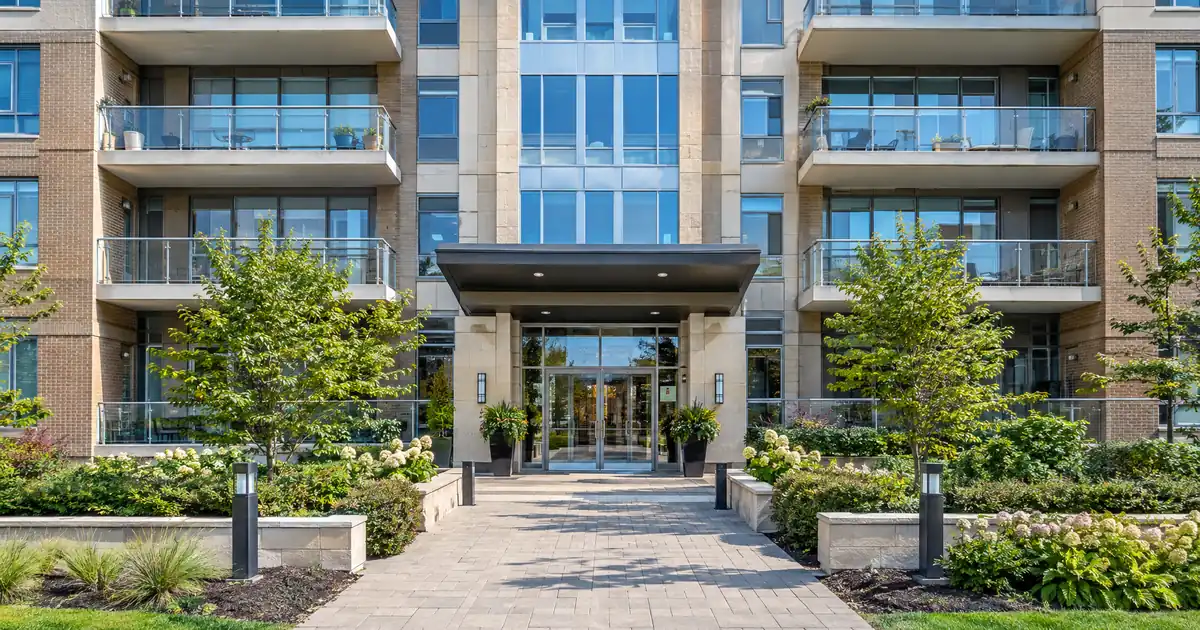
Buying A Condo As Your First Investment Property — The Quick Read: A condo can work as your first rental purchase. But financing splits into two different paths. Conventional loans need Fannie Mae or Freddie Mac to approve the whole building project. DSCR loans skip that step and look only at the unit’s rental income. The building’s warrantable status decides which path applies — before a lender even looks at your credit or your down payment. HOA dues get folded into the debt-service math, too. That means a high monthly assessment can quietly push up the rent you need to qualify.
Is a Condo a Good First Investment Property?
It can be — if you treat the HOA as part of the math, not an afterthought. Condos usually cost less than single-family homes in the same area. The association handles exterior maintenance — roof, siding, landscaping — not you. That means less work for a first-time landlord.
DSCR Calculator
Run the numbers in your market
Rate source: Freddie Mac 30-yr average via FRED® — Federal Reserve Bank of St. Louis · effective Aug 13, 2026
Prefilled with local estimates — enter your own rent or nightly figures, taxes, insurance, and HOA for a more accurate picture.
Program parameters update from Lendmire’s centralized guideline source. Taxes and insurance are editable estimates.
As of Aug 13, 2026 · General Freddie Mac market benchmark, not a Lendmire loan offer. Rent, nightly rate, occupancy, taxes, and insurance are editable estimates. Short-term rental figures are estimates only and vary significantly by season, property type, management approach, and local short-term-rental rules — confirm local regulations before relying on them. Qualifying income for short-term rentals varies by program — some use appraisal market rent, others use documented STR history or projections — and is confirmed in underwriting. Not a Loan Estimate, approval, or commitment to lend. Program availability and eligibility are subject to lender guidelines, credit approval, property review, and underwriting.
But cash flow is the tradeoff. Your HOA fee is a fixed cost every month, and it competes directly with your rent. Condo fees tend to run higher than single-family HOA dues. That fee has to come out of the same rent check that covers your principal, interest, taxes, and insurance. So the rent needs real breathing room above your total monthly cost for the deal to work. A single-family rental with no HOA gives you more room at the same rent level.
The Two Financing Universes: Warrantable vs. Non-Warrantable
Here’s the split that decides everything else. Conventional loans require Fannie Mae or Freddie Mac to approve the project — not just you as the borrower. DSCR loans skip that project review entirely. They underwrite the unit’s rental income instead.
Fannie Mae’s Selling Guide sets the rules for which condo projects can get conventional financing. A lender can ask for a formal exception if a project falls outside those rules but still has merit — see Fannie Mae’s ineligible projects guidance. The review checks owner-occupancy rates, single-entity ownership, pending lawsuits, and reserve funding. If a building fails any of these tests, it’s “non-warrantable.” That means it’s ineligible for conventional financing — full stop — no matter how strong your personal file looks.
This is exactly where DSCR loans work as a separate track. DSCR loans don’t get sold to Fannie Mae or Freddie Mac, so none of that project-review process applies. That’s a big reason non-QM lending has grown so fast. DSCR and other investor products now make up roughly half of all non-QM collateral. Non-QM securitization volume hit a record in 2025, with DSCR loans making up about 30% of it. Condotels, buildings tied up in litigation, projects still in presale, and heavily investor-owned towers — these all fail conventional tests. They end up financed through DSCR instead. Not because the unit is riskier. Because the building fails a project-level box that DSCR underwriting simply doesn’t check the same way.
One recent shift is worth flagging. Both agencies dropped the old rule that made a condo non-warrantable once investors owned more than 50% of its units, according to reporting on the changes at GoverningDocs. That reopens conventional financing for some buildings that used to be DSCR-only, especially in metros with heavy investor ownership. Check this before assuming a building is permanently locked out of conventional loans.
How DSCR Underwriting Actually Treats a Condo
A DSCR lender checks one thing: does the unit’s market rent cover its full monthly cost? That cost includes principal, interest, taxes, insurance, and HOA dues — often shortened to PITIA. This math doesn’t change just because the property is a condo instead of a single-family home. What changes is the size of the “A” in PITIA. HOA dues are a real, recurring cost that shrinks your cushion. A condo with a high monthly assessment needs stronger rent to hit the same coverage ratio as a comparable single-family rental with no HOA at all.
Across the wholesale network Lendmire (NMLS# 2371349) works with, purchase leverage on investment condos typically runs 75%-80% loan-to-value. Those figures describe the standard path for borrowers who already own a primary residence; a borrower who doesn’t currently own one generally works through a dedicated renter-to-investor path offered by select lenders — around a 700+ credit score, a 70% CLTV cap, a 1.15 coverage floor, and loans to $1,000,000 — subject to lender guidelines. That means 20%-25% down on most files. A handful of programs in the network reach 85% LTV for stronger borrowers — generally those with credit around 700 or better. Credit floors sit around 620 in parts of the network. Most programs, though, want closer to 660. The strongest leverage tiers open up around 700 and above.
A 1.00 coverage ratio is where select programs start — it’s not a universal standard. Some lenders in the network want more cushion before offering full leverage. A few will consider sub-1.00 coverage with adjusted LTV and terms. No-ratio qualification is a separate, select-lender structure, generally for borrowers who already own a primary residence. Reserves generally run around six months of PITIA on most files. That steps up toward nine months on loans above $1,500,000. Conservative rate-term refinances at modest leverage under that threshold sometimes see reserves waived entirely. None of this is guaranteed. Every file gets underwritten on its own merits, subject to lender guidelines and program eligibility.
One thing needs to be clear: clearing 1.00 on DSCR coverage is not the same as positive cash flow. The ratio only compares rent to PITIA. It doesn’t account for vacancy, repairs, property management fees, utilities, or capital expenses. A condo that clears 1.2x on paper can still run negative in a real month if a special assessment hits, or if it sits vacant for a stretch. That’s exactly why HOA due diligence matters as much as the loan math itself.
If you want to know where your credit profile lands, check what credit score you need for a first investment property for a fuller breakdown of where the tiers land.
The Appraisal Is Different for a Condo — Here’s Why It Matters
A conventional condo loan uses Form 1073 for the appraisal. This form is built specifically for individual condo units. It layers project-level analysis on top of standard valuation — owner-occupancy percentage, ownership concentration, pending litigation, and master insurance coverage — confirmed directly on Fannie Mae’s site. DSCR appraisals for condo units generally lean on comparable market rent analysis instead. They skip that GSE-specific project checklist, since the loan isn’t headed for agency delivery in the first place.
That difference affects timing expectations and what documents get requested. A DSCR file on a condo still needs a rent-focused appraisal to establish the market rent that drives the coverage ratio. It just isn’t gated by the same project-level checklist a conventional condo loan requires.
The Condo Questionnaire: A Step the Borrower Can’t Control
This trips up more condo files than anything else, so it’s worth stating plainly. The condo project questionnaire — Fannie Mae’s Form 1076 or Freddie Mac’s Form 476 — has to be completed by a representative of the condo association, not by you, according to guidance covered by The HOA Guide. A motivated buyer can’t fill this out themselves, no matter how eager they are to move the file along.
For a DSCR file, this project-level questionnaire usually isn’t the gating document it is on a conventional loan. Underwriting attention shifts to the unit’s rental income and your file instead of a board-completed project form. That’s one practical reason DSCR has become a common route for condo units where the HOA is slow to respond, disorganized, or unfamiliar with the paperwork lenders request.
HOA Due Diligence: What to Actually Check
The HOA’s financial health is a collateral risk — separate entirely from loan underwriting. It deserves its own checklist before you get attached to a unit.
Check insurance first, and don’t assume it’s simple. An HO-6 policy covers a unit owner’s belongings, liability, and any interior damage the association’s master policy doesn’t reach — since master policies typically cover everything outside the individual unit’s walls. But the exact line depends on the type of master policy the association carries. A “bare walls” policy covers just the structural shell. “Single entity” coverage adds original fixtures like countertops and built-in appliances. “All-in” coverage extends to the full interior. You can’t assume which type applies. Pulling the association’s declaration page and CC&Rs is the only way to know for sure. Skipping this step is how owners discover coverage gaps — usually only after filing a claim.
Check reserve funding next. This is turning into a real financial risk, not a rare exception. The average special assessment in 2025 came to $1,100. Nearly one in ten U.S. HOAs levied one that year, up from 7.8% just a few years earlier. Some states mandate reserve funding directly. Florida requires associations in buildings three stories or taller to fully fund reserves based on a Structural Integrity Reserve Study, with no more voting to waive that requirement. Reporting on specific buildings has documented assessments running as high as $134,000 to $400,000 per unit in extreme cases. No DSCR ratio survives an assessment like that. It’s a collateral risk that sits entirely outside the loan file.
A practical checklist before making an offer:
- Request the association’s most recent budget and reserve study
- Confirm what type of master insurance policy is in place (bare walls, single entity, or all-in)
- Ask about pending or recent special assessments and any active litigation
- Check the rental cap — how many units in the building are allowed to be leased at one time
- Review recent board meeting minutes for deferred-maintenance discussions
Worth saying plainly: DSCR programs in Lendmire’s network don’t cover every property type. Manufactured homes, log homes, and barndominiums fall outside these programs entirely — not harder to finance, just not offered. Condos, by contrast, get reviewed through DSCR across a wide range of warrantability situations, as long as the unit itself produces enough rental income.
Short-Term Rental Condos: A Different Set of Numbers
Some investors buy a condo specifically to run as a short-term rental instead of a long-term lease, though lenders treat that collateral differently, apply a lower leverage tier than they would on a standard rental under the same program, and use a 1.00 coverage floor on both purchases and refinances. That changes the math. Purchase leverage on STR-focused DSCR loans in the network typically tops out around 75% LTV. Refinance tops out around 70%. Cash-out also tops out around 70%. Short-term rentals qualify at a 1.00 coverage threshold on purchase and refinance at reduced maximum leverage, and require a 12-month income history or market data report at most lenders.
This is exactly where condotel-style buildings come into play. GSE guidelines treat condo-hotel projects as effectively ineligible for conventional delivery. Fannie Mae’s own materials note that projects professionally managed by hotel or resort companies to run short-term rentals are, in most cases, ineligible for conventional financing. DSCR exists as the practical alternative here — it underwrites the unit’s rental cash flow instead of the project’s classification. Confirm the specific building’s rental restrictions with the HOA before assuming any short-term rental strategy will work. Rules vary by city, county, HOA, and property type. For a deeper look at how this program works generally, Lendmire’s DSCR loan for Airbnb page covers the mechanics in more detail.
House-Hacking a Condo: The Owner-Occupied Middle Path
An investor who moves into one unit of a small building — or lives in the condo while renting out a room — sits in a different lane than a pure rental purchase. Owner-occupied condo financing usually runs through conventional channels first, since occupancy typically unlocks better leverage and a lower down payment than an investment purchase. Once you’ve met the occupancy requirements and later move out to convert the unit into a rental, refinancing into a DSCR loan against the property’s market rent becomes the natural next step. If you’re weighing whether to fund your down payment with equity from an existing home, check using a HELOC as a down payment for an investment property for how that structure typically works.
For a buyer who never plans to live in the unit, DSCR is usually the more direct path from the start. No occupancy documentation. No owner-occupied seasoning requirements. Just rent covering the payment, subject to lender guidelines.
Structuring the Financing: What Lendmire Sees Across the Network
Across the DSCR files Lendmire places, condo transactions tend to move a little differently than single-family files. The loan math doesn’t change. But the paperwork chain runs through a third party — the HOA — that isn’t otherwise part of the deal. Files where the borrower requests the condo questionnaire and HOA financials on day one, instead of waiting for the lender to ask, tend to hit fewer surprises later in underwriting. The single biggest preventable delay on condo DSCR files isn’t your credit or your rent number. It’s waiting on an HOA board or management company to return paperwork nobody asked for until late in the process.
Loan sizes for DSCR condo purchases in the network generally run in the same range as other DSCR investment properties. Most files land well under $2,500,000. Above that threshold, the network generally holds to 30-year fixed structures instead of adjustable terms. Term structures across the board are built on a 30-year fixed spine. Extended 40-year terms and interest-only periods are available through select lenders for investors who want lower initial debt service. Adjustable-rate structures are also available for those who prefer them.
A larger down payment lowers your monthly obligation and can lift your coverage ratio. But it doesn’t erase leverage caps, credit floors, reserve requirements, or property eligibility rules. The strongest condo files clear two separate tests at once: enough equity to satisfy the LTV requirement, and enough rental coverage to satisfy the DSCR floor. A file that’s strong on one test but thin on the other is the one that gets kicked back for restructuring. Terms vary by lender guidelines, property type, leverage, credit profile, and full file review.
If you already own a rental condo and are considering pulling equity out, or refinancing into better terms, check investment property refinance: the complete investor’s playbook and Lendmire’s complete DSCR loans guide for the fuller mechanics of how those transactions run.
DSCR loans are built for non-owner-occupied investment properties. Because they’re business-purpose investor loans, they get reviewed differently than a standard owner-occupied mortgage.
Tax treatment can depend on how you use the funds and how you hold the property. Keep clear records and talk to a qualified tax professional before relying on any deduction.
This article is general information, not legal or tax advice. Talk to a qualified attorney or CPA about your own situation before making a financing or purchase decision. Nothing here is a commitment to lend. Loan approval is never guaranteed. Every scenario described here is subject to lender approval and to borrower, property, and program guidelines, which can change.
Frequently Asked Questions
Is a non-warrantable condo impossible to finance?
No. Non-warrantable just means the building fails Fannie Mae or Freddie Mac’s project-level eligibility tests. It says nothing about whether the unit itself can produce enough rent to cover its own payment. That’s the whole premise behind DSCR underwriting — it qualifies condos on unit-level rental income, not project classification.
Can I fill out the condo questionnaire myself to speed up the file?
No. A representative of the association has to complete the condo project questionnaire, not you. This is a common source of delay that has nothing to do with your credit or income. It applies whether the loan is conventional or DSCR, since some DSCR lenders still request basic HOA information even without a full project review.
Does the HOA’s master insurance policy cover everything inside my unit?
Generally, no. Master policies typically cover the building structure and common areas. An HO-6 policy covers your personal property, liability, and interior finishes the master policy doesn’t reach. The exact split depends on whether the association carries a bare-walls, single-entity, or all-in policy. Confirm this before closing — not after a claim.
How do HOA dues affect my DSCR lender review?
HOA dues get added into PITIA alongside principal, interest, taxes, and insurance. That means a condo with high monthly assessments needs stronger market rent to hit the same coverage ratio as a comparable single-family rental with no HOA. This is simple arithmetic that applies under any DSCR program — it’s not a policy choice by any one lender.
Can I use a condo for short-term rental income?
It depends on the building’s rules and the loan program. But the HOA’s own rental restrictions decide whether short-term leasing is allowed in the first place, and those rules vary by building.
About Lendmire
A DSCR-focused mortgage broker, Lendmire (NMLS# 2371349) places investor financing across 41 markets — 40 states plus Washington, D.C. — with DSCR eligibility generally reviewed by the lender on property cash flow instead of tax returns, subject to lender guidelines. Scotsman Guide named Lendmire a Top Mortgage Workplace in 2025 and 2026.
Lendmire’s Top Mortgage Workplace recognition is documented by Scotsman Guide 2025 Top Mortgage Workplace and Scotsman Guide 2026 Top Mortgage Workplace.
Get Started
Ready to find the right loan for you?
In about 30 seconds you can review financing options available for your home or investment property. No commitment required.
Informational only. Not a Loan Estimate, approval, or commitment to lend. Program availability and eligibility are subject to lender guidelines, credit approval, property review, and underwriting.
References
1. Fannie Mae Selling Guide – Ineligible Projects
2. Fannie Mae Form 1073 – Individual Condominium Unit Appraisal Report
This article is part of Lendmire’s DSCR loan program — full qualification details, guidelines, and scenarios live on the program page.
Related reading: Complete Guide For An Interest-only DSCR Loan On Condo Properties · Is Buying A Rental Before Your First Home A Good Idea? · How The Condo Questionnaire Sets Eligibility On A DSCR Rental Loan?
Brandon Miller
Founder & CEO, Mortgage Loan Originator, Lendmire LLC
- Mortgage Loan Originator · NMLS# 1129696 · Verify on NMLS Consumer Access
- North Carolina Real Estate Broker · License# 343312 · Verify on NCREC
- North Carolina Insurance Producer · License# 19053198 · Property, Casualty, Life, Health · Verify on NAIC SBS
- Lendmire LLC · Firm NMLS# 2371349 · Verify firm licensure
Compliance and disclosures. Lendmire (NMLS# 2371349) is a licensed mortgage broker and is not a direct lender, depository institution, financial advisor, or tax professional. Content in this article is general market analysis and educational information — not financial, legal, or tax advice for any specific situation. Lendmire does not guarantee loan approval; every transaction is subject to underwriting by the funding lender. Mortgage pricing and loan program guidelines are subject to change at any time without notice and vary by borrower characteristics, property type, and state regulations. Lendmire complies with Equal Housing Opportunity. Licensure verification: NMLS Consumer Access.