
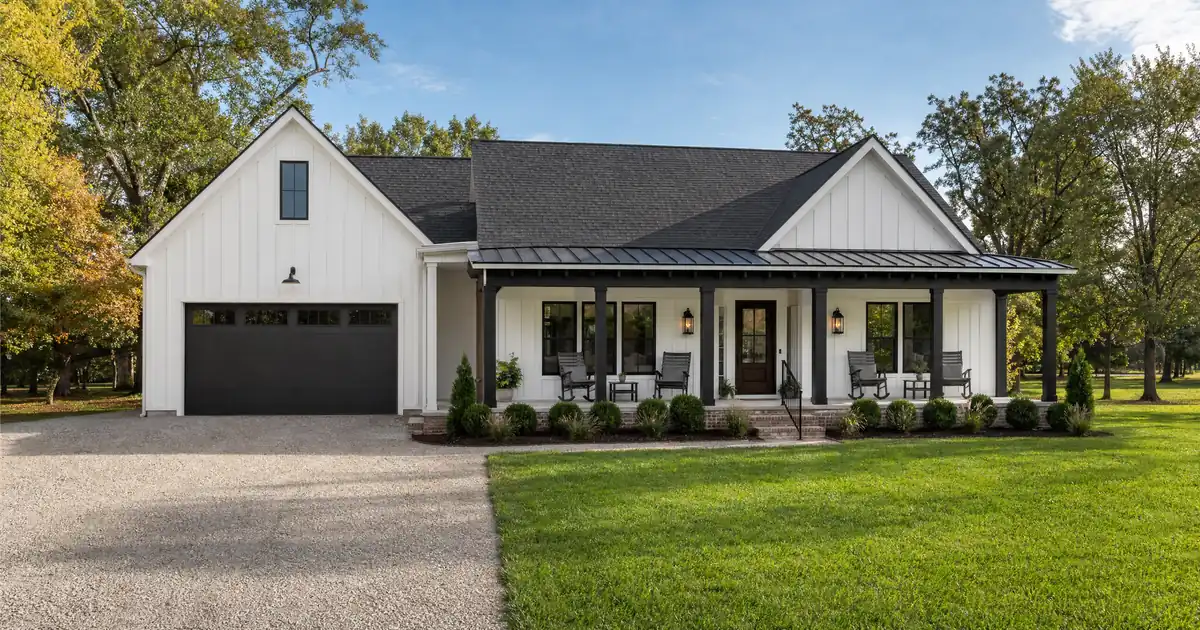
DSCR Loan Complete Guide — The Quick Read: A DSCR loan looks at a rental property’s own income. It does not look at the borrower’s pay stubs or normal income paperwork. The lender takes the monthly rent and divides it by the total monthly housing payment. That payment includes principal, interest, taxes, insurance, and any HOA dues. This gives a coverage ratio. That ratio, plus credit score and leverage, drives approval. This is a non-QM, business-purpose loan. It’s built for landlords, self-employed investors, and anyone whose income paperwork doesn’t fit a conventional lender’s checklist.
Key Takeaways
- DSCR loans qualify on the property’s rent-to-payment ratio. They do not qualify on personal income, standard income paperwork, or employment history.
- Most programs through Lendmire’s wholesale lender network want a coverage ratio at or above 1.00. Select lenders will go below that, but they ask for tighter leverage and stronger credit in return. A 1.00 ratio is a floor on select programs — it’s not a rule every file must hit.
- Purchase leverage typically runs 75-80% LTV. Select high-leverage programs reach 85% for stronger credit files.
- Short-term rental income gets documented differently than long-term lease income at the appraisal stage. The property’s value stays the same either way — only how the rent gets proven changes.
- Manufactured homes, log homes, and barndominiums are not eligible under these programs. Full stop. These property types fall outside DSCR eligibility in Lendmire’s network entirely. That’s true no matter the coverage ratio, leverage, or credit profile. They are not reviewed or financed under any circumstance.
What a DSCR Loan Actually Is
DSCR stands for Debt Service Coverage Ratio. This loan swaps personal income underwriting for property income underwriting. A normal mortgage uses a debt-to-income calculation built on W-2s and two years of income paperwork. A DSCR loan asks one narrow question instead: does the rent this property brings in cover its own monthly housing payment?
DSCR Calculator
Run the numbers in your market
Rate source: Freddie Mac 30-yr average via FRED® — Federal Reserve Bank of St. Louis · effective Aug 13, 2026
Prefilled with local estimates — enter your own rent or nightly figures, taxes, insurance, and HOA for a more accurate picture.
Program parameters update from Lendmire’s centralized guideline source. Taxes and insurance are editable estimates.
As of Aug 13, 2026 · General Freddie Mac market benchmark, not a Lendmire loan offer. Rent, nightly rate, occupancy, taxes, and insurance are editable estimates. Short-term rental figures are estimates only and vary significantly by season, property type, management approach, and local short-term-rental rules — confirm local regulations before relying on them. Qualifying income for short-term rentals varies by program — some use appraisal market rent, others use documented STR history or projections — and is confirmed in underwriting. Not a Loan Estimate, approval, or commitment to lend. Program availability and eligibility are subject to lender guidelines, credit approval, property review, and underwriting.
That single design choice is why DSCR loans exist as a non-QM category rather than an agency product. DSCR loans are built for non-owner-occupied investment properties. Because they are business-purpose investor loans, they get reviewed differently than a standard owner-occupied mortgage. That means no W-2s. No standard income paperwork. No employment verification driving the file. Instead, the lease, an appraiser’s rent-schedule opinion, or verified short-term rental income does that work.
This category has moved well past niche status. Non-QM loan volume is expected to grow a lot heading into 2026. DSCR and investor products now make up roughly half of all non-QM collateral, according to HousingWire. Investors themselves are a growing share of buyers driving that demand. That’s worth knowing before you assume DSCR is a fringe product instead of a mainstream financing tool for landlords.
Lendmire (NMLS# 2371349) arranges DSCR investor loans through a wholesale network of lenders spanning 41 markets, including Washington, D.C. Lendmire is a broker, not the lender. Every file gets placed with — and underwritten by — the lending institution that reviews it.
Key Terms Defined
DSCR (Debt Service Coverage Ratio): Monthly rent divided by the total monthly housing payment. This is the core number lenders use to check whether a rental property pays for itself.
PITIA: Principal, interest, taxes, insurance, and association dues. This is the full monthly obligation used as the bottom number in the DSCR math.
LTV (loan-to-value): The loan amount shown as a percentage of the property’s value or purchase price. It drives down payment size and leverage limits.
Reserves: Liquid funds a borrower must have on hand after closing. Lenders usually count reserves in months of PITIA. They act as a cushion against vacancy or repairs.
Form 1007 / Form 1025: These are standardized rent-documentation forms. Form 1007 covers one-unit properties. Form 1025 covers two- to four-unit properties. Most of the industry — DSCR lenders included — uses these forms to set a defensible market-rent figure, per Fannie Mae’s Selling Guide.
How Underwriting Treats the Ratio, Step by Step
The coverage ratio is the headline number. But four other inputs move around it on every file Lendmire’s network sees.
Step one: the rent gets documented, and it’s often the appraiser’s number, not the lease. DSCR loans aren’t agency products. Even so, most lenders in the network still order the same rent-schedule forms agencies use. That means Form 1007 for single-unit rentals and Form 1025 for two- to four-unit properties. Lenders like these forms because they’re standardized and can be verified by a third party. That matters because the appraiser’s comparable-rent number — not necessarily the signed lease — often drives the qualifying income used in the ratio.
Step two: credit tier sets the ceiling on leverage. Across the network, a 620 credit score is the floor on select programs. Most lenders want closer to 660. A score of 700 or higher opens the strongest leverage tiers, including the higher-leverage purchase options. Exact terms depend on the lender’s guidelines, the property type, the leverage, and a full review of the borrower’s file.
Step three: leverage and coverage move together. Standard purchase files land at 75-80% LTV. A handful of high-leverage programs push to 85% LTV. Those are generally reserved for borrowers with credit around 700 or higher. Cash-out refinances top out lower — typically around 75% LTV across most of the network. Lenders usually expect about six months of ownership before they’ll consider a cash-out refinance.
Step four: reserves scale with size and risk. Reserve requirements vary by lender, leverage, loan size, and transaction type. Six months of PITIA is a common baseline. Some conservative rate-and-term refinances at modest leverage under $1.5 million skip reserves entirely. Loans above that size more often step up to around nine months.
Step five: loan size and term shape which lenders fit. Standard loan amounts run roughly up to $3,000,000 on standard programs, with smaller balances available through select lenders. Above $2.5 million, the network generally sticks to 30-year fixed structures instead of adjustable or interest-only options. The 30-year fixed is the backbone product across the board. But extended 40-year terms and interest-only periods are available through select lenders, and adjustable-rate structures exist for investors who want them.
For a full breakdown of how these pieces fit together, Lendmire’s complete DSCR loans guide walks through the underwriting flow in more depth.
Who a DSCR Loan Is Built For
Self-employed investors are a natural fit. Their conventional income paperwork often understates real income because of legitimate write-offs. A DSCR loan skips personal income documentation entirely, so that problem disappears. Portfolio-scalers who’ve hit the property-count or debt-to-income limits that conventional lenders impose find a new lane here — DSCR loans don’t count against those caps the same way. First-time landlords with strong credit and a clean down payment can qualify even without rental history, since the ratio is calculated off the subject property, not the borrower’s track record. Short-term rental operators and LLC buyers round out the core profile. Both groups tend to hit friction with conventional underwriting, and DSCR programs are built to avoid that friction.
Worked DSCR Scenarios
The ratio itself tells a lender three different stories, depending on where it lands. Here’s a modeled comparison using coverage ratios only — no dollar rents or payments attached — to make that easier to see.
| Scenario | Coverage Ratio | What It Signals | Typical Lender Response |
|---|---|---|---|
| Strong coverage | 1.30x+ | Rent clears the payment comfortably | Best pricing and leverage tier available |
| Standard qualifying | 1.00x-1.25x | Rent covers the payment at or above break-even | Standard leverage, standard documentation |
| Below the 1.00 floor | Sub-1.00x | Rent doesn’t fully cover the payment on paper | Reviewed only through select programs, with reduced leverage or stronger credit required |
That table is a useful gut-check. But it’s worth saying plainly: clearing 1.00 is not the same as positive cash flow. The ratio only compares rent to PITIA. Repairs, vacancy, property management, utilities, and capital expenses all sit outside that math. A property can clear 1.10x on paper and still lose money in a bad year if those other costs run high.
Purchase vs. Refinance: The Process Differs
On a purchase, the order runs like this: property review, then rent documentation (lease or appraiser rent schedule), then credit and reserve checks, then underwriting against the coverage ratio and leverage tier. On a refinance — rate-and-term or cash-out — the same rent documentation and credit review apply. But seasoning matters more here. Cash-out refinances generally expect around six months of ownership before a lender will consider pulling equity out. The LTV ceiling also drops to about 75%, compared to the 75-80% range on a purchase.
Some investors just want a smaller equity draw rather than a full cash-out refinance. Investment-property HELOCs are also available through the network, capped at $500,000 total — there’s no larger tier above that. If you’re weighing which route fits your equity position, Lendmire’s investment property refinance guide gives a side-by-side look at rate-and-term, cash-out, and HELOC structures.
DSCR vs. conventional financing
Two common ways to finance an investment property in this market. They qualify you differently — here’s how investors weigh them.
Why investors choose it
- Qualifies on the property’s rental income — no personal tax returns, W-2s, or pay stubs needed to document income.
- No personal debt-to-income ceiling to clear, so existing mortgages and obligations don’t cap your borrowing the same way.
- Can be closed in an LLC, keeping the property inside a business entity.
- Built for scaling — not held to the limit on number of financed properties that conventional financing applies.
- Underwriting centers on the deal: generally qualifies when the rent covers the payment, a 1.00x coverage ratio being a common baseline (confirmed in underwriting).
- Designed specifically for investment property, including long-term and, where the program allows, short-term rentals.
Where it’s strong
- Often the lowest ongoing financing cost for a buyer who fully qualifies on personal income — a fit for a first property or a cost-first purchase.
Trade-offs for investors
- Requires full personal income documentation and must fit within a debt-to-income limit — salary, existing debts, and other mortgages all count.
- Typically held in your personal name rather than a business entity.
- Caps how many financed properties you can carry, which can become a ceiling as a portfolio grows.
- Evaluates you as a borrower as much as the property, which usually means more paperwork.
How investors usually choose: a first or single property often optimizes for the lowest financing cost; portfolio builders often optimize for leverage, vesting in an LLC, and scaling past conventional caps. The right answer depends on your goals, the property, and current guidelines — both paths run through select lenders in Lendmire’s wholesale network, with eligibility and terms confirmed in underwriting.
Why Investors Close in an LLC
Closing title in an LLC or other entity is one of the reasons DSCR loans qualify as business-purpose credit in the first place. It’s common practice across the network, though not universally required. When an entity holds title, the lender typically wants the LLC’s formation documents, an operating agreement, and sometimes a personal guarantee from the borrower — this is subject to program guidelines. Investors planning to hold multiple properties often prefer the liability separation an LLC gives them, on top of the underwriting fit. For a deeper look at how property-income qualification actually works, Lendmire’s DSCR loan explainer covers the mechanics in more detail, and its DSCR vs. conventional comparison breaks down when each product makes more sense.
Where the General Rule Breaks: Edge Cases
Short-term rentals get a different income pathway, not a different valuation. Fannie Mae’s own appraisal guidance draws a hard line here. Form 1007 values the real property, and business or rental income is explicitly out of scope for that valuation. Lenders generally want a 640-plus credit score, roughly 12 months of hosting history, and coverage at or above a 1.00 floor on both purchases and refinances, with reduced leverage available below that threshold through select lenders. Through Lendmire’s network, short-term rental purchases go up to 75% LTV. Refinances run around 70%, and cash-out sits around 70% too. Short-term rentals qualify at a 1.00 coverage threshold on purchase and refinance at reduced maximum leverage, and require a 12-month income history or market data report at most lenders.
Sub-1.00 coverage exists, but it’s not the default. Some lenders in the network will review a file below the standard coverage floor. That always comes paired with reduced leverage, a stronger credit requirement, or both. It’s a trade-off, not a workaround.Select lenders in the network do offer a no-ratio structure — no coverage ratio is calculated — though it generally requires existing primary-residence ownership, and leverage and terms adjust to match, subject to lender guidelines.
Some property types simply aren’t eligible, full stop. Manufactured homes — both single- and double-wide — along with log homes and barndominiums, are not financeable through DSCR programs in this network under any circumstance. This isn’t a documentation hurdle. It isn’t a “harder to qualify” situation that stronger credit, added reserves, or lower leverage can fix. These property types fall outside program guidelines entirely. No combination of coverage ratio, leverage, or credit profile changes that. If you’re looking at one of these property types, plan on it falling outside DSCR eligibility across the network. Look at alternative financing paths instead.
State overlays change the math in specific places. Connecticut, Florida, Illinois, and New Jersey purchases generally cap near 75% LTV under most programs. Overlay-state deals also tend to cap around $2 million, regardless of the borrower’s credit tier. Separately, prepayment-penalty enforcement varies by state law, not by lender preference. California’s statute, for example, caps penalty-free prepayment at 20% of the original loan amount per year. It also limits any charge on amounts above that to six months’ advance interest, per California Civil Code § 2954.9. Other states structure this differently. So the same loan product can carry a very different prepayment picture depending on where the property sits.
DSCR vs. the Alternatives
| Factor | DSCR Loan | Conventional | Bank Statement | Hard Money |
|---|---|---|---|---|
| Income basis | Property rental income | Personal W-2s/standard personal-income documentation | Personal bank deposits | Asset value/exit strategy |
| Typical entity vesting | LLC or individual | Individual, typically | Individual, typically | LLC, common |
| Purchase LTV | 75-80%, up to 85% select | Up to 80-97%, varies by program | 70-80% | 50-65%, varies widely |
| Best fit | Rental investors, self-employed | W-2 borrowers, owner-occupants | Self-employed with thin DSCR | Short holds, distressed property, fix-and-flip |
Pros and Cons
Here’s the upside: no personal income documentation, entity-friendly closings, and qualification driven by the deal instead of your job history. This also opens access for investors who’ve maxed out conventional lending limits. Here’s the trade-off: leverage tops out lower than some owner-occupied conventional products. Reserve requirements are real. Properties with marginal coverage may get pushed toward stronger credit or lower leverage instead of getting approved outright. And certain property types — manufactured homes, log homes, and barndominiums among them — are simply not eligible under any circumstance, no matter what the rest of the file looks like. Every figure here varies by lender and program. Guidelines, property type, leverage, and credit profile all play a role.
If a property clears both the leverage and coverage tests comfortably, it’s usually the stronger file overall. If it clears one but not the other — say, plenty of equity but thin rent coverage — that’s exactly when a sub-1.00 program or a credit-tier adjustment gets discussed. This is always subject to lender guidelines and property review. Manufactured homes, log homes, and barndominiums aren’t part of that discussion at all. Those property types get excluded from these programs before leverage or coverage ever come into play.
Tax treatment can depend on how you use the funds and how you hold the property. Keep clear records and talk to a qualified tax professional before you rely on any deduction.
Loan approval is never guaranteed, and nothing in this guide is a commitment to lend. Every scenario described here is subject to lender approval and to borrower, property, and program guidelines that can change. This article is general information, not financial, legal, or tax advice.
If you’re buying or refinancing a rental property and want to see how the numbers work, Lendmire can help compare DSCR loan options based on the property’s income, your credit profile, available leverage, and your investment goals. Reach the team at 828-256-2183 or request a quote to start the conversation.
Frequently Asked Questions
Does a DSCR loan require a minimum credit score? Yes — most programs in Lendmire’s network want a score around 660 or higher. A 620 floor exists on select programs, and you typically need 700 or higher to reach the strongest leverage tiers. Exact requirements vary by lender, property, and loan size.
Can a DSCR loan close in an LLC’s name? Yes, and it’s common practice. Closing in an entity is one reason the loan gets reviewed as business-purpose credit in the first place. This is subject to lender program eligibility and documentation of the entity’s formation and ownership.
How do you qualify for a DSCR loan through Lendmire’s network? Qualification centers on the coverage ratio — monthly rent divided by the total monthly housing payment. Credit score, available reserves, and leverage matter too. There’s no personal income documentation involved. The file gets built around the property’s rent documentation, the borrower’s credit tier, and the lender’s specific program guidelines.
What documentation do you need to qualify for a DSCR loan? Instead of conventional income documentation or pay stubs, lenders typically want a signed lease or an appraiser’s rent-schedule opinion (Form 1007 or Form 1025). They also want credit documentation and proof of reserves. If you’re vesting in an entity, add the LLC’s formation documents and operating agreement.
What happens if the coverage ratio comes in under 1.00? Select lenders in the network will still review the file. But expect reduced leverage, a stronger credit requirement, or both as trade-offs.Select lenders in the network do offer a no-ratio structure — no coverage ratio is calculated — though it generally requires existing primary-residence ownership, and leverage and terms adjust to match, subject to lender guidelines.
Is short-term rental income treated the same as long-term lease income? No. The property’s appraised value doesn’t change based on rental strategy. But the income used to qualify runs through a separate method — typically requiring around 12 months of hosting history, a 640-plus credit score, and leverage capped lower than long-term rental purchases.
Are manufactured homes, log homes, or barndominiums eligible for DSCR financing? No. Manufactured homes — whether single- or double-wide — along with log homes and barndominiums, fall outside DSCR programs offered through this network entirely. They’re not financeable under any coverage ratio, leverage, or credit profile. These property types don’t get reviewed through these programs at all. If you own one, plan on alternative financing instead.
About Lendmire
Lendmire (NMLS# 2371349) is a non-QM DSCR mortgage broker, not a direct lender. Lendmire arranges financing through a wholesale network of lenders serving 41 markets. It connects investors to loan programs suited to their property, credit profile, and investment goals. Because Lendmire is a broker, every loan gets underwritten and funded by the individual lending institution reviewing the file. Program terms, eligibility, and availability vary by lender and are subject to change. Scotsman Guide named Lendmire a Top Mortgage Workplace in both 2025 and 2026.
Get Started
Ready to find the right loan for you?
In about 30 seconds you can review financing options available for your home or investment property. No commitment required.
Informational only. Not a Loan Estimate, approval, or commitment to lend. Program availability and eligibility are subject to lender guidelines, credit approval, property review, and underwriting.
References
1. HousingWire — Non-QM Originations Set to Reach $175B in 2026
2. Fannie Mae Selling Guide — Rental Income (B3-3.8-01)
3. California Legislative Information — Civil Code § 2954.9
This article is part of Lendmire’s DSCR loan program — full qualification details, guidelines, and scenarios live on the program page.
Related reading: Complete Guide For A 40-year DSCR Loan · Super Jumbo DSCR Loans In Illinois: Complete Guide · Complete Guide To No-ratio DSCR Loans For High Net Worth Investors
Brandon Miller
Founder & CEO, Mortgage Loan Originator, Lendmire LLC
- Mortgage Loan Originator · NMLS# 1129696 · Verify on NMLS Consumer Access
- North Carolina Real Estate Broker · License# 343312 · Verify on NCREC
- North Carolina Insurance Producer · License# 19053198 · Property, Casualty, Life, Health · Verify on NAIC SBS
- Lendmire LLC · Firm NMLS# 2371349 · Verify firm licensure
Required disclosures. Lendmire (NMLS# 2371349) operates as a licensed mortgage broker, not a direct lender or depository. The discussion in this article is general in nature and should not be relied upon as financial, legal, or tax advice — every investment scenario is unique and should be reviewed by a qualified professional. Any loan inquiry is subject to lender underwriting, and this article is not a commitment to lend or a guarantee of approval. Mortgage rates, loan terms, and program guidelines vary by borrower, property, and state, and may change without notice. Equal Housing Opportunity. Verify licensure at NMLS Consumer Access.