
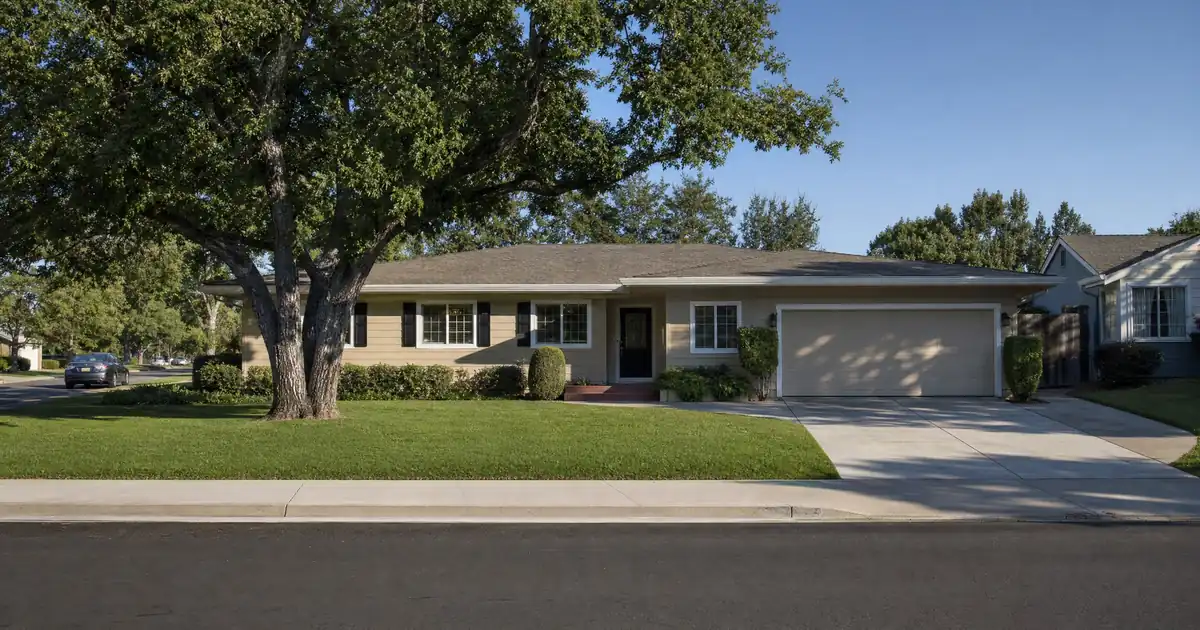
The Quick Read: Most no-tax-form HELOC programs need a credit score in the high 600s. But the real floor changes based on what the line is secured by. A primary residence can qualify with a score as low as 600. A second home usually needs at least 640. An investment property usually needs 700 or better. Score alone doesn’t decide your borrowing power. Combined loan-to-value, debt-to-income, and payment history all push that ceiling up or down.
Key Terms Defined
HELOC (home equity line of credit): This is a revolving credit line secured by the equity in a property. It works like a credit card, but real estate backs it instead of unsecured debt.
How large a line the equity supports in your market.
An equity line is sized by combined loan-to-value, occupancy, and credit — not by rental coverage. Switch the occupancy or the credit band and the ceiling moves with it.
Investment-property lines require a 700 minimum credit score. Second-home tiers reach 640; primary-residence tiers reach 600.
A debt-to-income ratio above 45% requires 680+ credit. Profiles under 640 are limited to single-family homes. At least 75% of the approved line is drawn at closing. Ceilings, floors, and caps update from Lendmire’s centralized guideline source.
Line estimate
Illustrative estimate only — not a quote, Loan Estimate, approval, or commitment to lend. The rate is an editable assumption; equity-line pricing is variable through both the draw and repayment periods and never converts to fixed. Occupancy and credit drive the ceiling together: investment property runs to 70% combined LTV with a 700 credit floor and a $500,000 cap; a second home runs to 70% at a 640 floor with a $500,000 cap; a primary residence reaches up to 80% at a 600 floor, and its $750,000 maximum line applies only at 75% combined LTV or below with 720+ credit and a full appraisal. Lines above $500,000 require a full appraisal. Credit, debt-to-income, property type, and full underwriting review all affect the final line.
No tax form / business-purpose HELOC: This is a HELOC underwritten without normal personal-income paperwork. The line skips that paperwork because it’s used for a rental or investment purpose, not personal, owner-occupied use.
CLTV (combined loan-to-value): This adds up every loan balance against a property — the existing mortgage plus the new line. Then it measures that total against the property’s current value.
Non-QM: This stands for “non-qualified mortgage.” It’s a category of loans underwritten outside Fannie Mae and Freddie Mac’s standard rulebook. Lenders use their own guidelines instead.
DSCR (debt service coverage ratio): This ratio is used on rental-property loans. It compares monthly rent to the property’s monthly payment, instead of looking at the borrower’s personal income or credit alone.
What “No Tax Form” Actually Means
“No tax form” doesn’t mean no verification. It means the loan skips normal personal-income paperwork and leans harder on credit and equity instead. A HELOC used to buy, improve, or maintain a non-owner-occupied rental property usually counts as a business-purpose loan. Because it’s a business-purpose loan, it gets reviewed differently than a HELOC on a home someone actually lives in. The standard consumer tax-return paperwork built for owner-occupied lending doesn’t automatically apply here (Compliance Alliance).
So what replaces that paperwork? Three things get weighted more heavily: credit score, combined loan-to-value, and payment history on other debts. That’s the trade a no-tax-form HELOC makes. You give less paperwork about income. In exchange, lenders scrutinize everything else on your credit file more closely.
The Credit Score Tiers, By Occupancy
The credit floor moves with what secures the line — not with the borrower’s income. On a primary residence, the floor sits at 600. Pricing and available terms vary by lender, borrower profile, property type, and full underwriting review. Investment properties don’t qualify below 700 at all through Lendmire’s network. Your score also decides how much combined leverage the line can carry.
Lendmire arranges no-tax-form HELOCs through select lenders across 16 full-service states — Alabama, California, Colorado, Florida, Georgia, Indiana, Michigan, Montana, New Mexico, North Carolina, Ohio, Pennsylvania, Tennessee, Texas, Virginia, and Washington. Here’s how the credit-to-leverage tiers typically stack up:
| Credit Score | Primary Residence | Second Home | Investment Property |
|---|---|---|---|
| 700-719 | 80% CLTV, up to $500K line | 70% CLTV, up to $500K line | 70% CLTV, up to $500K line |
| 680-699 | 75% CLTV, up to $500K line | 65% CLTV, up to $500K line | Not eligible |
| 660-679 | 70% CLTV, up to $500K line | 60% CLTV, up to $500K line | Not eligible |
| 640-659 | 65% CLTV, up to $500K line | 60% CLTV, up to $500K line | Not eligible |
| 620-639 | 55% CLTV, up to $250K line | Not eligible | Not eligible |
| 600-619 | 50% CLTV, up to $250K line | Not eligible | Not eligible |
At 720 and above, a primary-residence borrower gets a choice. Go with 75% CLTV on a line as large as $750,000. Or take 80% CLTV capped at $500,000. That’s a real trade-off between leverage and line size. It’s worth thinking through before you apply, not after. Lines above $500,000 need that 720-plus profile. They also cap at 75% CLTV and require a full appraisal, not the automated valuation model used on smaller lines.
Investment property is where the ceiling holds firm. Investment-property CLTV caps at 70% across the network with a $500,000 maximum line and a hard 700 credit floor — second homes carry the same 70% ceiling from a 640 floor. And $500,000 is the maximum line size — there’s no higher tier, even with a strong credit file. You may see other parts of the no-doc HELOC market advertise higher combined loan-to-value figures on rental-property equity lines. That reflects the wider market, though, not what’s available through Lendmire’s wholesale network. Want to dig deeper into how score interacts with tax-return-free underwriting? Check out this breakdown of credit-score thresholds for tax-return-free HELOCs, which covers the documentation side in more depth.
How Equity, DTI, and Payment History Shift the Bar
Debt-to-income tops out at 50%. It tightens to 45% for anyone under 680. And here’s the catch: qualification runs off the interest-only payment on the fully drawn line, not just the amount you actually use. That surprises a lot of people. Since at least 75% of the approved line typically gets drawn at closing anyway, underwriting treats the loan as if the full amount were outstanding from day one.
A few other factors move the effective bar:
- Credit report age. Lenders work from a recent credit report. Rescores aren’t accepted — the score used is the one on file, not a projected improvement.
- Tradeline seasoning. Most files need two tradelines seasoned at least 12 months, or one seasoned 24 months.
- Housing payment history. At 640 and above, the file needs a clean run of on-time mortgage or rent payments for the past six months. It can have no more than one 30-day late in the past year. Below 640, the bar tightens to zero late payments in the past 12 months.
Self-employed borrowers who clear the credit bar sometimes worry about how bank-statement documentation fits into this picture. It may help to compare notes with how self-employed borrowers with strong credit and low debt approach HELOC qualification. The credit-and-equity framework stays the same. But the compensating factors look a little different when income is self-reported.
Non-QM performance data explains why lenders hold these lines firmly, instead of treating credit as a soft factor. Recent industry reporting on non-QM loan performance found something telling. Borrowers with scores below 660 show impairment rates approaching 20%. And borrowers under 700 account for more than 80% of the recent rise in impairments across tracked non-QM production (Scotsman Guide). That’s not a reason to panic if your score sits in the 600s — plenty of files close there. But it explains why the tiers get tighter as risk stacks up.
It also helps to know that the published minimum is a gate, not a target. Separate reporting on non-QM production found the average 2024-vintage non-QM loan closed at a 776 credit score and 75% loan-to-value (Scotsman Guide). That’s well above the floors most programs advertise. Clearing 700 gets you in the door. It doesn’t automatically get you the best available leverage.
What Happens If Your Score Falls Short?
A lower score doesn’t disqualify a file outright. But it does box in your options. Below 640, eligibility narrows to single-family primary residences with a clean 12-month payment history. No 2-4 unit properties. No second homes. No investment properties. Those occupancy types already need a higher floor. Two-to-four-unit properties carry their own 640 minimum, regardless of occupancy.
Past credit events come with their own seasoning clocks. That’s four years from a bankruptcy discharge or dismissal, seven years from a foreclosure, and four years from a pre-foreclosure, deed-in-lieu, or short sale. These rules aren’t negotiable inside a single program’s guidelines. But different lenders in a wholesale network can treat the same event a little differently. That’s part of why shopping a file across multiple lenders, instead of applying to one bank directly, tends to surface better outcomes for borrowers sitting near a threshold.
People sometimes float credit unions as a workaround for borrowers below the mainstream floor. The honest answer is mixed. Some credit unions do offer alternative-documentation home equity products. But their credit and occupancy requirements vary widely by institution, so availability of no-tax-return HELOCs at credit unions is something to check case by case.
Where a No Tax Form HELOC Structurally Doesn’t Fit
Some rental-property situations aren’t a credit-score problem at all. They’re a structural mismatch with how a HELOC gets built. Title is the biggest issue. A HELOC in this network requires the property to sit in the individual borrower’s name or a revocable living trust. LLCs, corporations, partnerships, and irrevocable or land trusts can’t hold title. If a rental is already deeded to an LLC, you have two practical paths. Either change vesting back to an individual, or pursue a DSCR-based cash-out refinance instead. DSCR programs are built to lend to entity-titled property, subject to lender program eligibility.
A few other structural limits worth knowing before you apply:
- Exposure caps. A single borrower is limited to three lines totaling $750,000 combined. Owning more than 15 financed properties makes a borrower ineligible for this product entirely.
- Property type. Manufactured homes, co-ops, condotels, timeshares, barndominiums, log homes, and land or commercial-use property aren’t eligible. This is a hard line, not a “harder to finance” situation.
- Listing status. A property listed for sale, or listed within the past 60 days, is excluded in Indiana, North Carolina, Pennsylvania, Tennessee, Texas, and Washington.
- Line size on investment property. $500,000 total is the ceiling, full stop. There’s no higher tier for stronger files.
Say you own a rental with strong cash flow, but your credit file doesn’t clear the HELOC bar. Or maybe the property just doesn’t fit the title, occupancy, or line-size box. In either case, the more common move is a DSCR loan. It qualifies primarily on whether the property’s rental income covers the payment, subject to lender guidelines, rather than leaning on the borrower’s credit score to carry the whole file. Coverage below 1.00 is even available through select lenders in the network, with leverage and terms adjusted accordingly — a path that simply doesn’t exist inside HELOC underwriting, which never looks at rent at all. If you’re weighing the two structures against each other, it’s worth comparing a HELOC against a cash-out refinance on a rental property before you decide which one fits your deal.
No Tax Form HELOC vs. a DSCR Cash-Out Refinance
| Factor | No Tax Form HELOC | DSCR Cash-Out Refinance |
|---|---|---|
| Reviewed on | Borrower credit score & DTI | Property rent vs. payment (DSCR) |
| Title | Individual or revocable trust only | LLC or individual, program-dependent |
| Investment leverage | 70% CLTV, $500K line cap | Up to 75% LTV, typically |
| Credit floor (investment) | 700 | Varies by lender; some start lower |
| Structure | Revolving draw line | Fixed-term loan, single payout |
The underwriting logic here isn’t just a documentation swap — it’s genuinely different. Conventional agency loans that count rental income document it through specific Fannie Mae appraisal forms. That’s the Single-Family Comparable Rent Schedule (Form 1007) for one-unit properties, or the Small Residential Income Property Appraisal Report (Form 1025) for two-to-four unit properties (Fannie Mae Selling Guide). DSCR programs aren’t bound to those exact forms. But they’re built around the same idea: the property’s own income-earning power becomes the qualifying data point, instead of the borrower’s traditional income documentation or credit score doing all the work. A HELOC works differently. It never checks rent at all — it checks the borrower.
Want to weigh both paths against a full DSCR product overview? Start with Lendmire (NMLS# 2371349)’s complete DSCR loans guide. It covers how coverage ratios, leverage, and credit tiers work across the network’s DSCR investor programs — arranged across 40 states plus Washington, D.C., 41 markets in total, separate from the 16-state HELOC footprint described above.
Tax treatment can depend on how you use the funds and how you hold the property. Keep clear records, and talk with a qualified tax professional before you rely on any deduction.
This article is general information, not legal or tax advice. Talk to a qualified attorney or CPA about your own situation before making a financing decision. Loan approval is never guaranteed, and nothing here is a commitment to lend. Every scenario described is subject to full underwriting, lender approval, and borrower, property, and program guidelines, which can change.
If you’re comparing a no-tax-form HELOC against a DSCR cash-out on an existing rental, reach Lendmire at 828-256-2183 or request a quote. That way you can see how your credit profile, property title, and leverage line up against both structures.
Frequently Asked Questions
Can I get a no tax form HELOC with a 600 credit score?
Yes, but only on a primary residence, and only at reduced leverage. A 600 score on a primary home typically caps out around 50% combined loan-to-value on a line up to $250,000. Second homes and investment properties floor higher, at 640 and 700, so a 600 score won’t clear those occupancy types.
Does a bigger down payment or more equity make up for a lower credit score?
Equity helps, but it doesn’t override a hard credit floor. More equity typically shows up as a better available CLTV tier once you clear the minimum score for that occupancy type. It generally can’t push you under the floor into eligibility on its own.
Why do investment property HELOCs require a higher credit score than primary residence lines?
Because the lender has less recourse if things go wrong. A borrower is statistically more likely to prioritize payments on a home they live in over a rental they don’t.
Is a no tax form HELOC the same thing as a DSCR loan?
No. A no-tax-form HELOC qualifies off your credit score, equity position, and debt-to-income — it never looks at rental income. A DSCR loan works differently. It’s reviewed primarily on whether the property’s rent covers its own payment, subject to lender guidelines. That makes it a better fit for investors whose personal credit doesn’t carry the file on its own.
This article is for general informational purposes only and is not a commitment to lend. Lendmire is a mortgage broker, and arranges financing through select lenders in its wholesale network; all program parameters, credit tiers, and leverage figures described above are typical guidelines subject to lender approval, full underwriting, and program eligibility, and are not guaranteed for any individual borrower or property.
About Lendmire
Lendmire (NMLS# 2371349) is a mortgage brokerage built around DSCR investor lending, with programs available in 41 markets, including Washington, D.C. DSCR lenders commonly evaluate rental-income coverage instead of personal income paperwork — a practical fit for LLC-owned and multi-property investors. Terms vary by lender, property, leverage, and program. Scotsman Guide named Lendmire a Top Mortgage Workplace in both 2025 and 2026.
Get Started
Ready to find the right loan for you?
In about 30 seconds you can review financing options available for your home or investment property. No commitment required.
Informational only. Not a Loan Estimate, approval, or commitment to lend. Program availability and eligibility are subject to lender guidelines, credit approval, property review, and underwriting.
References
1. Compliance Alliance — “Regulation Z and ‘Investment’ Properties”
2. Scotsman Guide — “Non-QM gaps widen between full-doc and alt-doc loans”
3. Scotsman Guide — “Which groups are driving non-QM lending?”
4. Fannie Mae Selling Guide — Rental Income
This article is part of Lendmire’s home equity line of credit program — full qualification details, guidelines, and scenarios live on the program page.
Related reading: Apply For Home Equity Without Tax Return · No Income Verification HELOC Good Credit · HELOC Loans For Self Employed No Debt Great Credit Score
Brandon Miller
Founder & CEO, Mortgage Loan Originator, Lendmire LLC
- Mortgage Loan Originator · NMLS# 1129696 · Verify on NMLS Consumer Access
- North Carolina Real Estate Broker · License# 343312 · Verify on NCREC
- North Carolina Insurance Producer · License# 19053198 · Property, Casualty, Life, Health · Verify on NAIC SBS
- Lendmire LLC · Firm NMLS# 2371349 · Verify firm licensure
Legal disclosures. Lendmire (NMLS# 2371349) is a state-licensed mortgage brokerage that arranges financing through wholesale lender relationships. Lendmire is not a direct lender, depository institution, or registered financial advisor. The discussion above is general informational content about real estate financing — it is not financial, legal, or tax advice, and readers should consult licensed professionals for guidance on their individual circumstances. Loan inquiries are subject to lender underwriting; this article does not represent a commitment to lend. Loan terms, rates, and qualification standards vary by borrower, property, and state, and are subject to change at any time. Equal Housing Opportunity. NMLS Consumer Access: nmlsconsumeraccess.org.