
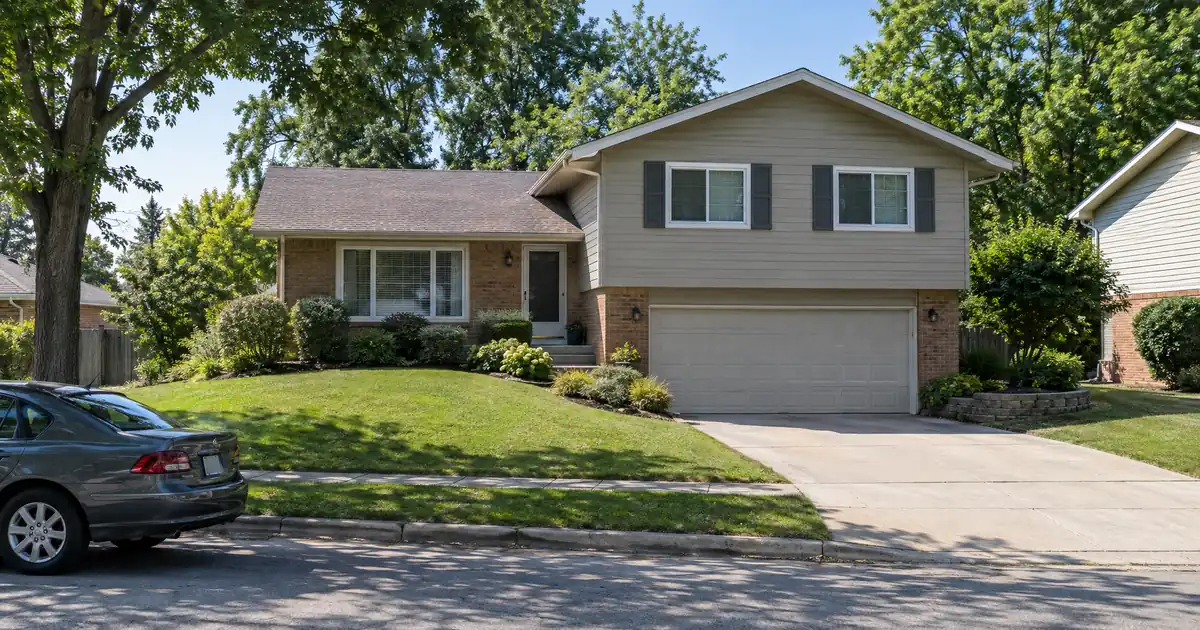
The Quick Read: Usually a HELOC, meaning a home equity line of credit, if the rental is titled in your own name, the cash need is modest, and your personal credit and debts clear a borrower-based review; a cash-out refinance usually wins if the property sits in an LLC, the need is large, or rent coverage tells a stronger story than your traditional personal-income documentation. The core difference is what gets repriced. A cash-out reprices your whole balance, while a second lien reprices only the new dollars.
- On an investment property, the network’s HELOC tops out at 70% combined loan-to-value, with a $500,000 maximum line and a 700 minimum credit score.
- On a standard rental cash-out refinance, leverage reaches about 75% LTV. On short-term-rental collateral, a cash-out tops out at 70% LTV.
- An LLC cannot hold title on the HELOC, so an LLC-owned rental points toward the cash-out, subject to lender program eligibility.
- At least 75% of an investment line is drawn at closing, so it works more like a lump sum than a standby card.
- Neither option is better in general. Title, size of the need, and what your first mortgage is worth decide it. Each figure is subject to lender guidelines and a complete review of property type, leverage, and credit.
Why Is This Question Suddenly Everywhere?
Because millions of owners are sitting on a first mortgage they cannot replace. Wolf Street’s analysis of federal mortgage data puts 50.6% of all mortgages outstanding below 4%. Redfin’s analysis shows the lock-in easing from its peak, though a large majority of mortgaged owners still hold a loan priced below 6%.
How large a line the equity supports.
An equity line is sized by combined loan-to-value, occupancy, and credit — not by rental coverage. Switch the occupancy or the credit band and the ceiling moves with it.
Investment-property lines require a 700 minimum credit score; second-home lines start at a 640 minimum and primary-residence lines at 600, and the combined-LTV ceiling steps down as the credit band drops on primary-residence and second-home lines and holds on investment-property lines; the line cap steps down on primary-residence lines and holds at every tier on investment-property and second-home lines.
A debt-to-income ratio above 45% requires 680+ credit. Profiles under 640 are limited to single-family homes. At least 75% of the approved line is drawn at closing. Ceilings, floors, and caps update from Lendmire’s centralized guideline source.
Line estimate
Illustrative estimate only — not a quote, Loan Estimate, approval, or commitment to lend. The rate is an editable assumption; equity-line pricing is variable through both the draw and repayment periods and never converts to fixed. Occupancy and credit drive the ceiling together: an investment property tops out at 70% combined LTV (minimum credit 700, line cap $500,000); a second home tops out at 90% combined LTV (minimum credit 640, line cap $500,000), with the ceiling stepping down as the credit band drops (the cap holds at every tier); a primary residence tops out at 90% combined LTV (minimum credit 600), and its $750,000 maximum line is available only at 75% combined LTV or below with a 700-or-better credit profile (720 on the longer-runway program) and a full appraisal. Lines above $500,000 require a full appraisal. Credit, debt-to-income, property type, and full underwriting review all affect the final line.
For a landlord, that cheap first mortgage is an asset. It lowers the monthly carry on a rental that may already be thin. Refinancing to pull out equity means giving that loan up.
So the question is real. Do you keep the old loan and add something behind it, or do you trade it for one bigger loan?
What Actually Gets Repriced?
A cash-out refinance replaces your first mortgage with a new, larger loan. Every dollar you owe, old and new, is priced at today’s cost. A HELOC sits beside the first mortgage and leaves its cost, term, and payment untouched. Only the new dollars carry the new price.
That sounds like an automatic win for the HELOC. It is not. Think of it as a blended-cost calculation with two moving parts:
- The size of the draw. A small draw on a cheap first keeps the blend low, because most of your debt stays at the old cost. As the draw grows, the new dollars carry more weight, and the advantage shrinks.
- The price of the second. A second lien usually costs more per dollar than a first. A large draw at that price can leave you paying more per borrowed dollar than one new first would.
So the break-even point is not a rule. It is a point you find by comparing your first balance, your draw, and each option’s pricing. The smaller the draw relative to your existing balance, the more the HELOC tends to win. The bigger the draw, the more the cash-out catches up.
One more difference matters. HELOC pricing floats and never converts to fixed on the lines in this network. A cash-out refinance is typically fixed. NerdWallet’s side-by-side explainer covers the same general contrasts, including lower closing costs on HELOCs.
Key Terms Defined
Lock-in landlord: an investor whose existing first mortgage is cheap enough that replacing it would cost more than the equity is worth.
HELOC: a home equity line of credit, a second loan secured by the property that you draw from over time.
Combined loan-to-value (CLTV): your first mortgage plus the new line, divided by the property’s value.
DSCR: debt service coverage ratio, which compares a rental’s monthly rent to its full monthly obligation (principal, interest, taxes, insurance, and HOA dues).
Draw period: the stretch when you can borrow from the line, usually paying interest only.
Repayment period: the stretch after the draw ends, when the balance amortizes down to zero.
Vesting: how title to the property is held, whether in your own name, a trust, or an LLC.
HELOC or Cash-Out: Side by Side
This table shows the structural differences on an investment property. The HELOC figures are for the network’s investment lines. The cash-out figures are for a DSCR cash-out refinance. All figures are subject to lender guidelines and full file review.
| Factor | Rental HELOC | DSCR cash-out refinance |
|---|---|---|
| Your first mortgage | Stays as written | Paid off and replaced |
| What gets repriced | Only the new dollars | The entire balance |
| Underwritten on | You: credit, income, DTI | The property: rent vs. payment |
| Title | Individual or revocable trust | LLC possible, per program |
| Leverage ceiling | 70% CLTV, investment | About 75% LTV; 70% for STR |
| Size ceiling | $500,000 line | Up to $3,000,000 on standard programs |
| Credit floor | 700 on investment | Around 660 typical; 620 in parts |
| Pricing after closing | Floats, never fixes | Typically fixed |
| Valuation | Usually automated | Full appraisal with rent schedule |
Two rows deserve a closer look. First, an investment line caps at $500,000, so it nearly always runs on an automated valuation instead of a full appraisal. Second, the credit floor is a hard 700. Scoring 720 on an investment line buys no extra leverage, because both tiers top out at 70% CLTV.
Lendmire’s rental HELOC vs cash-out refinance for a lock-in landlord walks through the same comparison in more depth.
When the HELOC Wins
The HELOC is usually the stronger play when most of these are true:
- The rental is titled in your own name or a revocable living trust.
- Your first mortgage is cheap enough that keeping it is worth real money.
- Your cash need is a modest slice of the equity, such as a down payment on the next purchase or a defined renovation.
- Your credit sits at 700 or better and your personal debt-to-income ratio clears a 50% maximum.
- Your traditional personal-income documentation shows strong income. Depreciation and write-offs can shrink that income on paper, and that hurts here.
- You are a buy-and-hold investor who wants a one-time chunk of cash and expects to leave the first mortgage alone for years.
Cheap closing costs make it even better when the draw is small. You are paying to open a line, not to replace your whole loan.
When the Cash-Out Wins
The cash-out is usually the stronger play when these show up:
- The property sits in an LLC. The HELOC cannot go on it, and re-deeding the property to yourself is a structural change with its own consequences. Anything tied to the existing loan or your insurance deserves a conversation with an attorney first.
- You need more than the HELOC’s $500,000 cap allows.
- Your personal profile is thin or your debts are high, but the rent covers the payment well. A DSCR cash-out qualifies primarily on property-level rental income covering the payment, subject to lender guidelines.
- You want one payment instead of two, and a fixed structure for the long haul.
- Your first mortgage is not that cheap, so you give up little by replacing it.
The DSCR route also scales better for investors with several properties. The HELOC limits you to three lines and rules out anyone with more than 15 financed properties. Across the wholesale network Lendmire places files with, the cash-out path has no such small-portfolio ceiling.
Four Gate Questions, in Order
Run these before you compare pricing. They knock out options early.
1. Who holds title? If an LLC, corporation, partnership, or land trust holds title, the HELOC is off the table. If you hold it personally or in an inter vivos revocable trust, keep reading.
2. How much headroom do you have? Combined leverage is the first mortgage plus the line, divided by value. On an investment property, that total cannot pass 70% CLTV. Say your first balance equals 40% of value. You have up to 30 points of value to work with, then the $500,000 cap applies. If your first balance equals 60% of value, only 10 points remain, and the HELOC may be too small to matter. A cash-out refinance, with its 75% ceiling on a standard rental, may offer more room.
3. Does your personal profile clear review? The HELOC reads your credit, income, and debts. It is reviewed around the interest-only payment calculated on the maximum draw, which is tougher than it sounds on a big line. A DSCR cash-out checks the rent against the payment instead.
4. Does your first mortgage allow a second lien? Most do, but the new lender will review your first mortgage documents. Confirm before you assume.
What Does Coverage Look Like With Two Liens?
DSCR math gets tricky when a second lien enters the picture. Here is a modeled illustration, not a market fact. Suppose a rental covers its first mortgage at around 1.5x. Now add a second lien. If the second is tested on rent, both payments count against that rent, and the coverage can fall toward the low 1.1x range or lower.
That matters if you plan to buy again. A HELOC underwritten on you does not test the rent. But it adds to your personal debts, and the next lender may count it, depending on its program.
A related caution applies to the label itself. Clearing 1.00x does not equal positive cash flow. DSCR compares rent to the monthly obligation only. Repairs, vacancy, management, utilities, and capital expenses all sit outside that calculation.
The Repayment-Period Stress Test
Here is what many investors miss on the HELOC side. The investment line runs a 5-year interest-only draw followed by a 25-year fully amortizing repayment. At least 75% of the line is drawn at closing. So you are not holding a flexible reserve. You are taking most of it at once.
During the draw, you pay interest on what you borrowed. When repayment starts, principal joins the payment, and the monthly obligation jumps. Pricing floats the whole way through, so the payment can move even before that.
Test your cash flow against the repayment-period payment, not the draw-period one. If the property only works during the interest-only years, the line is a short-term bridge, not a long-term plan.
The DSCR HELOC Label Is Loose
If you search for a DSCR HELOC, you will find lenders using the term for different products. It might mean a first-lien cash-out that is reviewed on rent. It might mean a standalone line reviewed on your personal debt-to-income ratio. Many dedicated rent-tested seconds are closed-end loans, which means a fixed lump sum, not a revolving line.
HousingWire’s non-QM explainer draws the same line between a revolving second-position line and a closed-end second. In both cases, the first mortgage stays intact.
So ask every lender two questions: which structure is this, and what is it underwritten on? A rent-qualified second that fails a combined-coverage test can sometimes be cured. You can shrink the second, lengthen the amortization, document stronger rent, or pay down the first.
Where Will You Find a Lender?
Scarcity is real. Many big banks and large retail lenders write home equity lines only on a primary residence. That is why investors who hear a flat no from their own bank should not read it as a verdict on the property.
On the Lendmire side, the investment HELOC is available only in Lendmire’s 16 full-service states, which is narrower than the 41-market DSCR footprint. If your property sits outside those states, the cash-out may be the only route Lendmire can arrange.
Some investors also borrow against their own home to fund a rental purchase. That is a separate route from a line on the rental itself, with its own underwriting. Note that primary-residence lines and investment lines carry different leverage ceilings in this network. The 70% CLTV figure above applies only to investment properties.
Exit Plan and What Comes Next
Plan the exit before you open anything.
With a HELOC, you can pay the line down, refinance into a fixed structure later, or hold it through repayment. Keeping the first only partly preserves your flexibility. A future refinance of the first mortgage means the new first lender has to deal with your junior lien. The standard fix is a subordination agreement from the second lienholder. Without one, you may be stuck.
With a cash-out, the exit is simpler. You own one loan. If the market shifts, you refinance one loan. You also give up the cheap first for good, and that is a one-way door.
Your timing matters too. A DSCR cash-out commonly expects about 6 months of seasoning after you acquire the property or complete a prior refinance, and about 6 months of reserves, though reserves vary by lender, leverage, and loan size. A HELOC has its own seasoning rules, and they vary by program.
Tax treatment can depend on how the funds are used and how the property is held; investors should keep clear records and speak with a qualified tax professional before relying on any deduction.
A Decision Flow You Can Run in Ten Minutes
1. Is the property titled in an LLC? If yes, and you do not plan to re-deed it, the cash-out is your path.
2. Do you score 700 or better? If not, the investment HELOC is closed to you. The cash-out may still work, since a 660 score is typical and a 620 floor exists in parts of the network.
3. Do you need more than $500,000? If yes, go cash-out.
4. Is your first balance under about 40% of value? If yes, the HELOC has room to be worth it. If it sits near 60% or higher, the headroom is thin.
5. Does your traditional personal-income documentation understate your real income? If yes, a DSCR cash-out that reads rent may serve you better.
6. Does the property cover itself at 1.00x or better? If yes, the cash-out is open. If it falls below 1.00x, a cash-out is still possible through select lenders in the network, with leverage and terms adjusted.
7. Are you drawing a small slice of equity and holding long term? If yes, lean HELOC.
If you want the broader frame behind these numbers, the complete DSCR loans guide explains how coverage, leverage, and credit fit together.
Frequently Asked Questions
Can I get a HELOC on a rental I just bought?
Usually not right away. Programs apply seasoning and equity tests, and a new purchase often leaves little equity after a high-leverage closing. On the investment side, the ceiling is 70% CLTV, so a recent 80% LTV purchase leaves no room. Expect to wait until paydown or appreciation creates headroom.
Can I do this with an LLC?
Not with the HELOC. An LLC, corporation, partnership, or land trust cannot hold title on the network’s line, so an LLC-owned rental needs a vesting change or a DSCR cash-out instead. The cash-out can work with an LLC, subject to lender program eligibility.
What if my bank says no to a HELOC on my rental?
That is common, because many large retail lenders write lines only on a primary residence. A refusal does not mean the property lacks equity. A broker can look at a wider set of lenders, including the DSCR cash-out path and, in 16 states, a standalone investment line.
Does a HELOC payment count against my next DSCR purchase?
It depends on the lender and the program. A DSCR loan reviews the subject property’s rent against its own payment. But a lender may still look at your other obligations, so plan on disclosing the line either way.
Is it a problem if my property is in a short-term-rental market?
The leverage drops. A DSCR cash-out on short-term-rental collateral tops out at 70% LTV, not 75%. Expect about 12 months of hosting history and a 640-plus credit score. Short-term rental rules can vary by city, county, HOA, and property type, so investors should confirm local rules before relying on projected rental income. Leverage, reserves, and pricing vary by lender and program; the final terms follow the full file review.
Pick the Option That Matches Your File
If you are weighing a home equity line against a cash-out refinance and want to see how the numbers work, Lendmire can help you compare HELOC options based on the property, the equity available, credit profile, combined leverage, and your goals. Lendmire is a broker that arranges financing through select lenders in its wholesale network. It is not a lender, and nothing here is a commitment to lend.
A deeper walk-through of investment-property equity extraction lives in Lendmire’s guide to cash-out refinance on an investment property.
About Lendmire
As a mortgage broker (NMLS# 2371349), Lendmire helps homeowners and real estate investors in its 16 full-service states open home equity lines of credit arranged through wholesale lenders. Lendmire is never the lender; line amounts, ceilings and terms are set by the lender under its guidelines. Scotsman Guide named Lendmire a Top Mortgage Workplace in both 2025 and 2026.
Get Started
Ready to find the right loan for you?
In about 30 seconds you can review financing options available for your investment property. No commitment required.
Informational only. Not a Loan Estimate, approval, or commitment to lend. Program availability and eligibility are subject to lender guidelines, credit approval, property review, and underwriting.
References
1. Wolf Street — Update on the lock-in effect in the housing market
2. Redfin — Mortgage rate lock-in and the housing market
3. NerdWallet — Home equity loan vs. cash-out refinance
4. HousingWire — What are non-QM loans and who are they for?
This article is part of Lendmire’s investment property HELOC program — full qualification details, guidelines, and scenarios live on the program page.
Related reading: Investment Property HELOC Terms When Keeping a Low First Mortgage · Do Investors Scaling 2-10 Doors Fund Deals With a Cash-Out Refinance? · Is Moving a Conventional Rental Loan to DSCR Worth a Higher Payment?
Brandon Miller
Founder & CEO, Mortgage Loan Originator, Lendmire LLC
- Mortgage Loan Originator · NMLS# 1129696 · Verify on NMLS Consumer Access
- North Carolina Real Estate Broker · License# 343312 · Verify on NCREC
- North Carolina Insurance Producer · License# 19053198 · Property, Casualty, Life, Health · Verify on NAIC SBS
- Lendmire LLC · Firm NMLS# 2371349 · Verify firm licensure
Legal disclosures. Lendmire (NMLS# 2371349) is a state-licensed mortgage brokerage that arranges financing through wholesale lender relationships. Lendmire is not a direct lender, depository institution, or registered financial advisor. The discussion above is general informational content about real estate financing — it is not financial, legal, or tax advice, and readers should consult licensed professionals for guidance on their individual circumstances. Loan inquiries are subject to lender underwriting; this article does not represent a commitment to lend. Loan terms, rates, and qualification standards vary by borrower, property, and state, and are subject to change at any time. Equal Housing Opportunity. NMLS Consumer Access: nmlsconsumeraccess.org.