
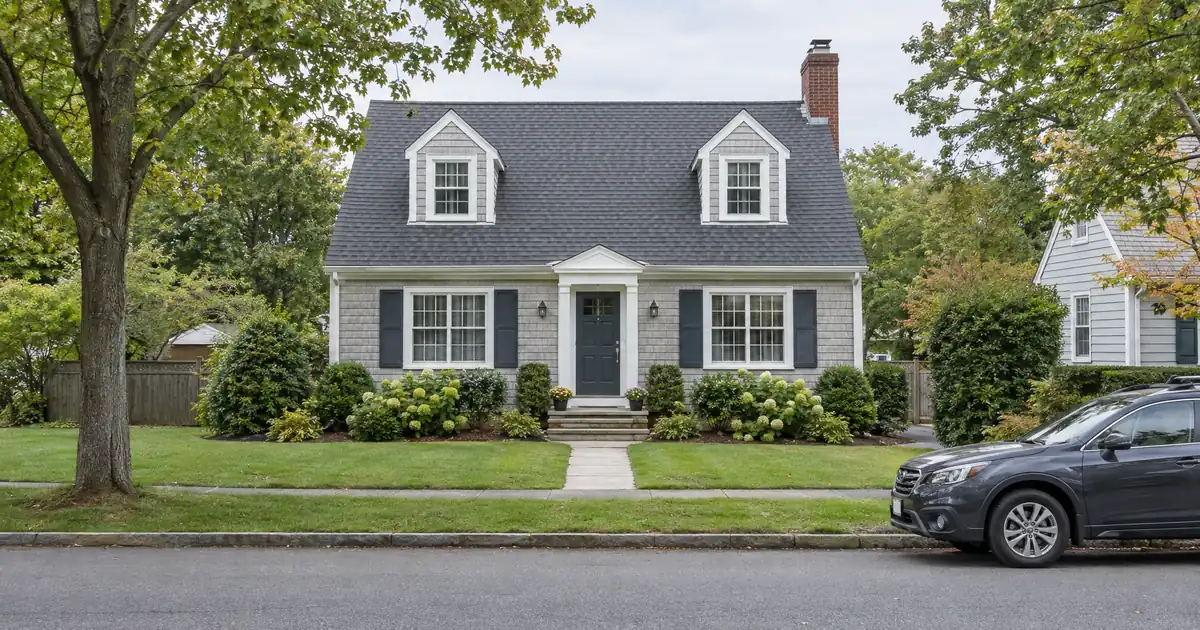
The Quick Read: Sometimes. The old home can carry an equity line, but only when the lender underwrites it as a rental, and on an investment property the network ceiling is 70% CLTV with a 700 minimum credit score and a $500,000 maximum line.
- Occupancy decides the file. Once the home is rented, it falls under investment-property rules, not primary-residence rules.
- Title matters. Individual or revocable trust works; an LLC does not.
- A HELOC is sized on equity, credit and your debt-to-income, not on the rent.
- A DSCR cash-out refinance is the alternative when you want rent to carry the file. It replaces the first mortgage.
- Availability is limited to 16 full-service states, narrower than the DSCR footprint.
A first-time landlord with a house they used to live in has one question: can that equity now fund the next move? The honest answer depends on how the lender classifies the property, what the old paperwork says, and how the home is titled. Everything below is about those three things.
How large a line the equity supports.
An equity line is sized by combined loan-to-value, occupancy, and credit — not by rental coverage. Switch the occupancy or the credit band and the ceiling moves with it.
Investment-property lines require a 700 minimum credit score; second-home lines start at a 640 minimum and primary-residence lines at 600, and the combined-LTV ceiling steps down as the credit band drops on primary-residence and second-home lines and holds on investment-property lines; the line cap steps down on primary-residence lines and holds at every tier on investment-property and second-home lines.
A debt-to-income ratio above 45% requires 680+ credit. Profiles under 640 are limited to single-family homes. At least 75% of the approved line is drawn at closing. Ceilings, floors, and caps update from Lendmire’s centralized guideline source.
Line estimate
Illustrative estimate only — not a quote, Loan Estimate, approval, or commitment to lend. The rate is an editable assumption; equity-line pricing is variable through both the draw and repayment periods and never converts to fixed. Occupancy and credit drive the ceiling together: an investment property tops out at 70% combined LTV (minimum credit 700, line cap $500,000); a second home tops out at 90% combined LTV (minimum credit 640, line cap $500,000), with the ceiling stepping down as the credit band drops (the cap holds at every tier); a primary residence tops out at 90% combined LTV (minimum credit 600), and its $750,000 maximum line is available only at 75% combined LTV or below with a 700-or-better credit profile (720 on the longer-runway program) and a full appraisal. Lines above $500,000 require a full appraisal. Credit, debt-to-income, property type, and full underwriting review all affect the final line.
How Does a Lender Classify an Old Home?
Lenders classify by current occupancy, not by history. A home you lived in for years is no harder to place than any other rental once the lease and rent evidence are in the file. Lenders do vary on how much rental history they want, so a signed lease is the safer assumption.
Here is how the timing usually plays out:
| Your situation | How it is classified | What to expect |
|---|---|---|
| Still living there | Primary residence | Primary-line rules apply |
| Moving out soon | Planned rental | Disclose the plan accurately |
| Moved out, tenant in place | Investment property | Investment line or DSCR cash-out |
| Moved out, vacant | Investment property | Thinner file, no lease evidence |
The row that creates trouble is the first one turned into the third. Opening a line as a primary and then renting the home is where files go sideways. The CFPB’s HELOC booklet says renting the home to others may be prohibited under the terms of the line, so the agreement itself needs a read before anything moves.
Do not count on silence either. Misstating occupancy at application is the real exposure, and no file is built on the idea that the lender will not look.
What Does the Investment-Line Underwriting Look Like?
On this network, an investment HELOC is capped at 70% CLTV, requires at least a 700 credit score, and tops out at a $500,000 line. There is no tier above that on an investment property. Credit above 700 buys eligibility, not extra leverage, because 720 and 700 reach the same 70% ceiling. Every figure here varies by lender and program — guidelines, property type, leverage, and credit profile all apply.
Other key terms on a rental line:
- Draw structure. Investment lines run a 5-year interest-only draw with a 25-year fully amortizing repayment. Pricing floats and never converts to fixed.
- Valuation. A line at or below $500,000 ordinarily runs on an automated valuation, so a traditional appraisal is commonly not part of the file. A borrower can still request a full appraisal.
- DTI. Maximum 50%, with the line qualified on the interest-only payment calculated on the full draw.
- Property types. Single-family, 2-4 units, PUDs, townhomes, and condos including non-warrantable. Manufactured homes, co-ops, condotels, log homes, commercial, mixed-use and agricultural zoning are not eligible.
- Exposure. A borrower is limited to three lines, and anyone owning more than 15 financed properties is not eligible.
Market surveys of rental-property lines often report a 70-75% CLTV range and 700+ scores. On this network, the investment ceiling is 70%, full stop. The 90% CLTV figure that appears on primary-residence lines exists only at a 720-or-better credit profile and never applies to a rental.
Every figure here is subject to lender guidelines and full file review, and none is a commitment to lend.
Why a New Rental Rarely Supports Its Own Line
Equity is the limiting factor. A purchase financed at 75% to 80% LTV already sits above the 70% CLTV cap, so a freshly bought rental has no room for a line behind the first mortgage. The line usually sits on the primary home or on a rental with real equity.
That is what makes the old home interesting. If you owned it for years and paid the balance down, the combined balance of the first mortgage plus the line can land under 70% of value. Run it as a percentage: if the first mortgage is at 50% of value, the line can add up to 20 points of CLTV, and the $500,000 cap and the credit floor still apply.
Picture a landlord who moved out of a long-held house and signed a lease with a tenant. The first mortgage is modest, the house sits at 45% to 50% of value, and the credit score is 720. That file can fit an investment line. Change one thing, a first mortgage at 65% of value, and the room for a line shrinks to almost nothing.
What Does the Documentation Look Like?
Clean rental evidence is the difference between a smooth review and a stalled one. The usual package:
1. Occupancy documents. A signed lease and proof of the first rent payment.
2. Existing loan documents. The first-mortgage note and any existing HELOC agreement, checked for occupancy covenants and live-in periods. Some lenders want the line reclassified when the home becomes a rental.
3. Title evidence. Borrower or revocable living trust on title.
4. Rent estimate, where needed. Appraisers use Form 1007 and Form 1025 to estimate market rent on one-unit and 2-4 unit properties respectively. The agency selling guide requires Form 1007 when a one-unit investment property uses rental income to qualify. That is a contrast point only. DSCR loans are not agency products, and agency rules do not govern them.
5. Credit and DTI file. Report no more than 90 days old at closing, and no rescores.
A HELOC does not underwrite the lease as income the way a DSCR loan does. The lease mainly proves the occupancy classification.
Title: The Quiet File Killer
An investment HELOC on this network needs the individual borrower or a revocable living trust on title. LLCs, corporations, partnerships, and irrevocable, blind or land trusts cannot hold title. This is the sharpest structural difference from a DSCR loan.
Landlords often move a rental into an LLC for liability reasons before asking about equity. That deed change can make the property ineligible for the line. If the home is already in an LLC, the choices are a vesting change back to the individual or a DSCR cash-out refinance, which can be arranged for LLC borrowers subject to program eligibility.
Check title before any deed work, not after.
Line on the Old Home, or DSCR Cash-Out?
These are two different tools. The line sits behind your first mortgage and leaves it untouched, which matters if that first loan is a low-cost one you want to keep. A DSCR cash-out replaces the first mortgage and qualifies primarily on property-level rental income covering the payment, subject to lender guidelines.
| Factor | Rental HELOC | DSCR cash-out refinance |
|---|---|---|
| Underwritten on | CLTV, credit, borrower DTI | Property rent against PITIA |
| First mortgage | Stays in place | Replaced |
| Leverage ceiling | 70% CLTV on investment | About 75% LTV on cash-out |
| LLC title | Not eligible | May be arranged, per program terms |
| Landlord history | Not a requirement | Not required on a long-term rental |
Two cautions on the DSCR side. First, the ratio compares rent to PITIA only. A ratio of 1.00 means rent matches the full monthly payment, and select programs start there; a separate select-lender path takes coverage below 1.00 with leverage and terms adjusted. Clearing 1.00 is not positive cash flow, because repairs, vacancy, management, utilities and capital expenses sit outside the calculation. Second, an existing DSCR first loan may carry a prepayment penalty, and a former-residence first loan may carry owner-occupant terms worth reading before you refinance.
Cash-out on a standard rental tops out around 75% LTV, with about six months of ownership as the common expectation. For a more thorough walk-through of the product, see the complete DSCR loans guide. Final terms depend on lender guidelines, property type, leverage, and the borrower’s complete credit picture.
On the lease side, no landlord history is required for a long-term rental. A first-time landlord can use the DSCR route. If the plan is a short-term rental instead, leverage tightens and lenders want about 12 months of hosting history.
What Do Landlords Get Wrong Here?
The mistakes are repeatable:
- Opening a primary-residence line, then renting. The line’s terms may prohibit rental use. Read the agreement first.
- Assuming rent counts as qualifying income on a HELOC. The line is sized on you and the equity.
- Deeding to an LLC before asking. That can eliminate the line.
- Ignoring the existing first mortgage. Occupancy covenants and live-in periods can sit in the note.
- Reading a DSCR ratio as profit. It is a coverage test, nothing more.
- Forgetting the loan-size split. A line above $500,000 is primary-residence only, so it cannot be used on a rental.
Operationally, files go cleaner when the lease, the first-mortgage note, the title report and the credit report are all in hand before anyone submits. The preventable gaps are almost always paperwork, not underwriting.
Tax treatment can depend on how the funds are used and how the property is held; investors should keep clear records and speak with a qualified tax professional before relying on any deduction.
Which Path Fits Which Landlord?
Keep the line if the first mortgage is low and the home has real equity, the title is individual or trust, and credit clears 700. Choose DSCR cash-out if the home is in an LLC, if you want one clean loan on the rental, or if borrower DTI is the obstacle. Borrowers with strong equity and strong coverage can sometimes use both tools in sequence, though each file is reviewed on its own terms.
If you are considering a home equity line and want to see how the numbers work, Lendmire can help you compare HELOC options based on the property, the equity available, credit profile, combined leverage, and your goals. Equity lines are available in Lendmire’s 16 full-service states, and Lendmire brokers these loans through select wholesale partners, never as the lender. For a purchase instead of a pull-out, see Lendmire’s piece Investment Property HELOC for a First-Time Landlord’s Only Rental.
Key Terms Defined
CLTV: Combined loan-to-value, meaning the first mortgage plus the line, divided by the property’s value.
HELOC: A revolving home equity line with a draw period and a repayment period, secured by the property.
DSCR: The property’s monthly rent divided by its full monthly payment of principal, interest, taxes, insurance and any HOA dues.
Vesting: How title is held, such as an individual, a revocable living trust or an LLC.
Occupancy covenant: A clause in a loan note limiting rental use or requiring a live-in period.
Frequently Asked Questions
Can I apply after I have already moved out?
Yes, if the line is written as an investment line. The home is then reviewed under rental rules: 70% CLTV, a 700 minimum credit score and individual or revocable-trust title. Having a lease in place makes the occupancy classification easy to document.
Do I need a tenant before I apply?
A tenant is not strictly required by the line itself, but a signed lease is the cleanest proof that the home is a rental. A vacant home is a thinner file, and lenders vary on how much rental history they want.
Does rent count as income on a rental HELOC?
Not the way it does on a DSCR loan. The line is sized on equity, credit and your debt-to-income. A DSCR cash-out refinance is the product that qualifies primarily on rental income covering the payment, subject to lender guidelines.
Can I keep my low-rate first mortgage?
Yes, with a line. It sits behind the first mortgage and leaves it untouched. A DSCR cash-out replaces the first loan, so check what you give up before you refinance.
Can I put the home in an LLC first?
Doing so makes it ineligible for the network’s equity line, because LLC title is not allowed. A DSCR cash-out refinance may be arranged for LLC-held rentals subject to program terms.
About Lendmire
Lendmire, NMLS# 2371349, is a mortgage brokerage that arranges home equity lines of credit through wholesale lending partners in its 16 full-service states. Lines on primary residences, second homes and investment properties are each reviewed individually by the lender under the program’s occupancy, credit and combined-loan-to-value guidelines. Scotsman Guide named Lendmire a Top Mortgage Workplace in both 2025 and 2026.
Get Started
Ready to find the right loan for you?
In about 30 seconds you can review financing options available for your home or investment property. No commitment required.
Informational only. Not a Loan Estimate, approval, or commitment to lend. Program availability and eligibility are subject to lender guidelines, credit approval, property review, and underwriting.
References
2. Fannie Mae appraiser resources
This article is part of Lendmire’s investment property HELOC program — full qualification details, guidelines, and scenarios live on the program page.
Related reading: Investment Property HELOC Requirements for a Five-Rental Airbnb Portfolio · How to Handle a Low Rental HELOC Appraisal in a Five-Plus Portfolio · Can an Airbnb Cash Out When the Lender Discounts Its Income?
Brandon Miller
Founder & CEO, Mortgage Loan Originator, Lendmire LLC
- Mortgage Loan Originator · NMLS# 1129696 · Verify on NMLS Consumer Access
- North Carolina Real Estate Broker · License# 343312 · Verify on NCREC
- North Carolina Insurance Producer · License# 19053198 · Property, Casualty, Life, Health · Verify on NAIC SBS
- Lendmire LLC · Firm NMLS# 2371349 · Verify firm licensure
Disclosure information. Lendmire is a state-licensed mortgage brokerage under NMLS# 2371349. Lendmire is not a depository institution, direct lender, or financial advisor — all loans referenced are placed through wholesale lender partners and are subject to each lender's underwriting standards. This article is provided for general informational purposes and is not a commitment to lend, nor does it constitute financial, legal, or tax advice. Loan programs, terms, rates, and qualification standards change without notice and depend on borrower profile, property type, and the state in which the subject property is located. Equal Housing Opportunity provider. NMLS Consumer Access: nmlsconsumeraccess.org.