
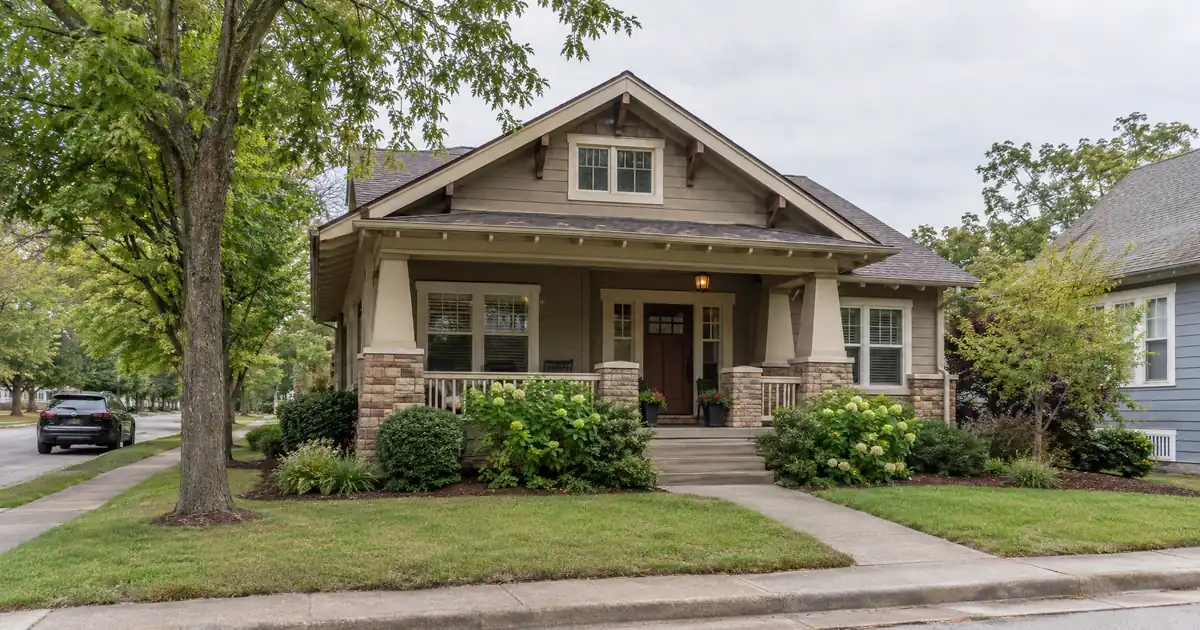
The Quick Read: Often yes, because no universal 12-month rule exists, and a cash buyer inside the usual waiting window typically uses a delayed-financing exception that sizes the new loan to what you documented paying, not to the appraised value, while coverage, appraisal, reserves, and leverage limits still apply.
- The waiting period is lender policy. Across most programs in our wholesale network, about 6 months of ownership from title recording is the common expectation.
- Delayed financing is an exception to the clock, not a separate loan. It is still underwritten as a cash-out refinance, capped at 75% LTV on a standard rental.
- Your proceeds are limited by the lower of the leverage cap and your documented cost.
- Rent must still cover the new payment. Select programs start at 1.00 coverage, and stronger ratios open better terms.
- Hard-money purchases, family sales, and unsourced funds usually break the exception.
Short version: the question is rarely “how long have I owned it?” It is “what can I prove I paid, and does the rent carry the new loan?”.
DSCR Cash-Out Calculator
Run the cash-out numbers in your market
Rate source: Freddie Mac 30-yr average via FRED® — Federal Reserve Bank of St. Louis · effective Oct 8, 2026
Prefilled with starting assumptions — enter your property’s value, balance, taxes, and insurance for a more accurate picture.
Program parameters update from Lendmire’s centralized guideline source. Taxes and insurance are editable estimates.
As of Oct 8, 2026 · General Freddie Mac market benchmark, not a Lendmire loan offer. Property value, balance, taxes, and insurance are editable estimates. Maximum loan-to-value varies by lender, program, property type, and seasoning. Not a Loan Estimate, approval, or commitment to lend. Program availability and eligibility are subject to lender guidelines, credit approval, property review, and underwriting.
Is There Really a 12-Month Rule?
No. The 12-month figure is not a law or a regulation. DSCR loans are non-agency products, so each lender’s own guidelines set the waiting period.
Seasoning is the waiting period a lender wants between buying a property and borrowing against its full value. The idea is simple. A lender wants proof that the value is real before it lends against it.
Where does “12 months” come from? Some lenders have historically asked for 6 to 12 months before cash-out. Investors repeat the larger number because it is the scariest one they heard. Across our network, the common expectation is closer to 6 months from title recording. A few lenders will look at an earlier refinance with an exception, and others hold a stricter line. That spread is exactly why the same investor can get a different answer from two lenders.
Agency loans, which do not govern DSCR files, also use a six-month benchmark, with a cash-buyer exception. The Fannie Mae Selling Guide lays out that exception for contrast. Many non-agency programs borrow its structure, but they do not have to follow it.
What Is Delayed Financing for a Cash-Bought Rental?
Delayed financing lets a cash buyer refinance before the normal waiting period ends. It waives seasoning only. It does not waive coverage, the appraisal, reserves, or the leverage cap.
Picture an investor who pays cash for a duplex and wants that money back to buy the next one. Waiting out the full clock leaves the cash locked in one property. Delayed financing is the shortcut, and it comes with conditions.
Most programs that offer it ask for the same core items:
- An arm’s-length purchase. You bought from an unrelated seller at a real price.
- No purchase-money mortgage. The settlement statement should show no financing. Some programs allow a short-term loan that was paid off at closing.
- Documented source of funds. Bank statements and records of any other borrowing.
- A loan sized to your investment. The new loan cannot exceed what you documented, plus financed closing costs in some programs.
One securitization due-diligence file shows this logic in practice. It says delayed financing loans are treated as cash-out refinances for eligibility purposes. That matters because it kills a common myth: the loan is not a special product with special pricing. It is a cash-out refinance with a seasoning exception.
Another diligence file shows a lender clearing a seasoning flag on a cash purchase by checking the delayed-financing conditions. That file also bases the maximum loan on the lower of the appraised value or the purchase price plus documented improvements. That is one lender’s guideline, but it shows how the sizing logic tends to work.
How the Loan Gets Sized
Your loan is the lower of two numbers. The first is the leverage cap applied to appraised value. The second is your documented cost.
On a cash-out refinance of a standard rental, our network tops out around 75% LTV. LTV, or loan-to-value, is the loan amount divided by the property’s value. Short-term rentals sit lower: cash-out on those is generally 70%.
Now the example. These numbers are illustrations, not market data. Say you pay a price of 100 units for a rental, and it appraises at 120 units. A 75% cap on the appraised value gives 90 units. Your documented cost is 100 units. The lower number wins, so the loan is sized at 90 units, not 100.
Flip the picture. Say you buy a bargain property at 100 units and it appraises at 160 units. The cap on value would be 120 units. Your cost is 100 units. Under delayed financing, the cost basis can hold you to 100 units. You leave equity untouched. After the seasoning period passes, the same refinance can size off the appraised value instead, and more cash may come out.
That is the real tradeoff. An early refinance returns your money sooner. A later refinance may return more of it.
| Factor | Early (delayed financing) | After seasoning |
|---|---|---|
| Loan sizing | Lower of LTV cap or documented cost | LTV cap on appraised value |
| Documentation | Settlement statement, source of funds | Standard cash-out file |
| Upside captured | Limited to what you paid | Appraised equity counts |
| Coverage test | Still applies | Still applies |
| Best for | Recycling cash fast into a new deal | Bargain buys and heavy rehabs |
Does the Rental Still Have to Qualify?
Yes. Coverage is still tested. DSCR compares the property’s rent to its full monthly obligation: principal, interest, taxes, insurance, and any HOA dues. A new, larger loan means a larger payment, and the rent has to carry it.
The appraisal feeds that test. Lenders typically order a standard appraisal, and for rentals they add a rent schedule. For a 2-4 unit property, an operating income statement form comes into play. The lender then compares the rent used for lender review to the new payment.
Here is the part investors miss. 1.00 is where many select programs start, and a separate select-lender path takes coverage below 1.00 with leverage and terms adjusted. A higher ratio generally opens better pricing and leverage. Clearing 1.00 also does not mean the property cash flows. Repairs, vacancy, management, utilities, and capital expenses sit outside the calculation.
Other tests apply as well. Most programs want a credit score around 660. A 620 floor exists in parts of the network, and 700+ unlocks the strongest tiers. Reserves, meaning cash left after closing, commonly run about 6 months of PITIA (the full monthly obligation), and files above $1,500,000 typically step up to about 9 months. Standard programs go up to $3,000,000. This is where the cash-out proceeds can shrink. Reserves are money that stays in your account, so they reduce what you can actually redeploy.
Plenty of cash buyers hit this wall. They assume a refinance is automatic because they own the property free and clear. It is not. The new loan must clear the same coverage and reserve tests as any other cash-out file, subject to lender guidelines.
What Disqualifies You?
Several situations break the delayed-financing exception.
Hard-money or private-loan purchases. If you borrowed to buy, you did not buy with cash. Delayed financing generally does not apply, and lenders often want regular seasoning after a hard-money purchase. Program language matters, though. Some programs allow a short-term loan that was paid off from the closing proceeds.
Non-arm’s-length sales. Buying from a relative or a business partner usually fails the arm’s-length test.
Unsourced funds. If you cannot show where the purchase money came from, the file stalls. Borrowed funds are not automatically disqualifying. The agency guide, for contrast, treats a documented HELOC on another property as an acceptable source. DSCR programs vary, so ask before you rely on it.
Falling outside the look-back. In one diligence file, a borrower paid cash for a build, but the lot was acquired outside the program’s 12-month look-back. Delayed financing was unavailable, and the loan needed an exception to close as a full cash-out. So some programs add their own look-back to the exception itself.
Title and entity issues. Vesting matters. DSCR programs often lend to an LLC, subject to program terms, but who bought the property and who is borrowing now should line up. Changing the title right before a refinance is a common source of delay.
Exceptions exist. Securitization files show originators waiving cash-out seasoning when compensating factors are strong. Treat those as one-off outcomes, not a plan.
What Documents Does a Cash Buyer Need?
Build the file before you call a lender.
- The settlement statement from the purchase, showing no mortgage financing.
- Bank statements showing where the purchase funds came from.
- Records of any other borrowing used, such as a line on another property.
- Proof of arm’s-length purchase: the contract and seller details.
- Title and insurance information.
- A current lease, or the information the appraiser needs for a rent schedule.
- Receipts for improvements, if you want them counted.
A clean file moves the conversation from “can we do this?” to “how do we structure it?” Missing paperwork is a common reason these requests stall.
Should You Refinance Now or Wait?
This one is a genuine judgment call. Refinance now when the cash has a better use right away. Wait when your equity is bigger than your cost.
Run three checks.
1. Spread between cost and value. If the appraisal is close to what you paid, waiting gains little. If you bought a discounted property or finished a heavy rehab, waiting may return more cash. An improvement may support a higher appraised value, depending on comps and underwriter review.
2. Cost of the transaction. Closing costs on a short hold can eat the benefit. Check for prepayment charges on the new loan. Many investors underestimate how much a quick cash-out costs once fees are counted.
3. Coverage after the refinance. If the larger loan pushes coverage below 1.00, you are looking at a different path. Sub-1.00 is available through select lenders in the network, with leverage and terms adjusted.
Each property carries its own clock, too. If you own several cash-bought rentals, their seasoning dates run separately. Staggering your refinances can be smarter than doing one big batch.
Tax treatment can depend on how the funds are used and how the property is held; investors should keep clear records and speak with a qualified tax professional before relying on any deduction.
For the broader picture, Lendmire’s complete DSCR loans guide walks through how these loans work from the start. If your situation is different, Lendmire’s piece Can You Cash-Out Refinance a Rental Owned Less Than 12 Months? covers the general waiting-period question. The inherited-property case is separate. Lendmire’s article How to Cash-Out Refinance an Inherited Rental Before Six Months explains why.
If you are buying or refinancing a rental property and want to see how the numbers work, Lendmire can help you compare DSCR loan options based on the property income, credit profile, leverage, and investor goals. Lendmire is a broker that arranges financing through select lenders in its wholesale network across 41 markets, including Washington, D.C.
Key Terms Defined
Seasoning: the waiting period a lender wants between buying a property and refinancing it for cash.
Delayed financing: an exception that lets a cash buyer refinance before the seasoning period ends, with the loan sized to documented cost.
Cash-out refinance: a new loan that pays off the old balance, if any, and returns extra cash to you.
Arm’s-length purchase: a sale between unrelated parties at a genuine price.
PITIA: principal, interest, taxes, insurance, and association dues, which together make the monthly obligation.
Reserves: liquid funds you must still hold after closing.
Frequently Asked Questions
Is there a 90-day rule for refinancing a cash purchase?
No universal 90-day rule governs DSCR loans. Waiting periods are lender policy, and about 6 months of ownership from title recording is the common expectation across most programs in our network. Delayed financing is the route that can apply sooner, subject to lender guidelines and the conditions above.
Is delayed financing treated as a cash-out refinance?
Yes. It is underwritten as a cash-out refinance, so the 75% LTV ceiling on a standard rental applies, along with coverage, appraisal, and reserve tests. The exception removes the seasoning clock, not the other requirements. Pricing is not better because of it. These specifics are subject to lender guidelines and a full review of property, leverage, and credit.
Can I buy from a family member and refinance right away?
Usually not. The exception generally requires an arm’s-length purchase, and a sale between relatives or business partners typically fails that test. Some programs may review it case by case, but plan on the standard waiting period instead.
Will I get all of my cash back?
Not necessarily. Your loan is limited by the lower of the leverage cap and your documented cost. Reserves and closing costs then reduce the cash you can actually redeploy. Bargain purchases and heavy rehabs often return more after the standard waiting period passes.
Does this work for a short-term rental?
It can, but the terms are tighter. Cash-out on a short-term rental generally tops out at 70% LTV, and lenders typically want a 640+ score and around 12 months of hosting history. Short-term rental rules can vary by city, county, HOA, and property type, so investors should confirm local rules before relying on projected rental income.
A deeper walk-through of investment-property equity extraction lives in Lendmire’s guide to cash-out refinance on an investment property.
About Lendmire
As a non-QM mortgage broker (NMLS# 2371349), Lendmire facilitates DSCR investor loans across 41 markets, including Washington, D.C. DSCR eligibility is generally reviewed around property-level rental income instead of personal income documentation, subject to lender guidelines, serving LLC-structured portfolios and self-employed borrowers who don’t fit conventional boxes. A two-time Scotsman Guide Top Mortgage Workplace (2025, 2026).
Get Started
Ready to find the right loan for you?
In about 30 seconds you can review financing options available for your investment property. No commitment required.
Informational only. Not a Loan Estimate, approval, or commitment to lend. Program availability and eligibility are subject to lender guidelines, credit approval, property review, and underwriting.
References
1. Fannie Mae Selling Guide, Cash-Out Refinance Transactions
2. SEC diligence exhibit: delayed financing treated as cash-out
This article is part of Lendmire’s investment property cash-out refinance program — full qualification details, guidelines, and scenarios live on the program page.
Related reading: Investment Property HELOC Requirements for a Five-Rental Airbnb Portfolio · How to Handle a Low Rental HELOC Appraisal in a Five-Plus Portfolio · Can an Airbnb Cash Out When the Lender Discounts Its Income?
Brandon Miller
Founder & CEO, Mortgage Loan Originator, Lendmire LLC
- Mortgage Loan Originator · NMLS# 1129696 · Verify on NMLS Consumer Access
- North Carolina Real Estate Broker · License# 343312 · Verify on NCREC
- North Carolina Insurance Producer · License# 19053198 · Property, Casualty, Life, Health · Verify on NAIC SBS
- Lendmire LLC · Firm NMLS# 2371349 · Verify firm licensure
Required disclosures. Lendmire (NMLS# 2371349) operates as a licensed mortgage broker, not a direct lender or depository. The discussion in this article is general in nature and should not be relied upon as financial, legal, or tax advice — every investment scenario is unique and should be reviewed by a qualified professional. Any loan inquiry is subject to lender underwriting, and this article is not a commitment to lend or a guarantee of approval. Mortgage rates, loan terms, and program guidelines vary by borrower, property, and state, and may change without notice. Equal Housing Opportunity. Verify licensure at NMLS Consumer Access.