
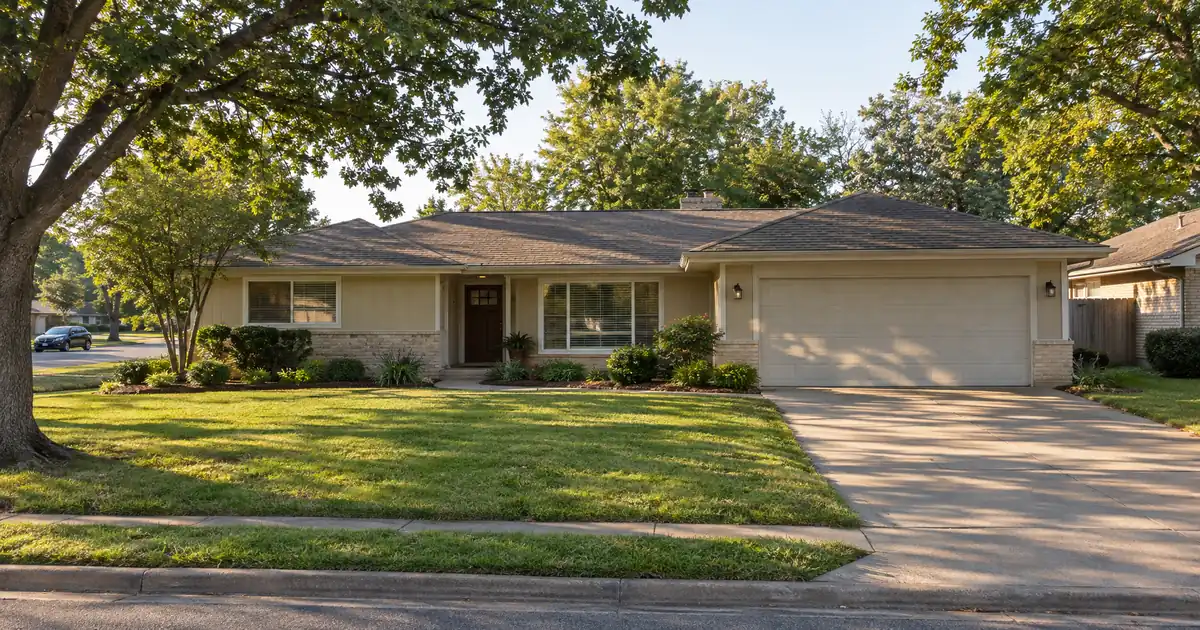
The Quick Read: Appraisers report finished basement space on a rental as below-grade area, separate from gross living area (GLA), so it reaches your cash-out number only through a market-based value adjustment and through whatever rent the appraiser can support, which is why total square footage from a listing often overstates what the loan is sized against. GLA is the finished, above-ground living space. Basement space can still add value and rent, but it gets there by a different route and at a different weight.
- Below-grade space is never added to GLA, even when it is finished and even when it walks out to the yard.
- The appraiser values it through its own adjustment line, based on what comparable sales show.
- Cash-out loans on rentals typically top out at 75% LTV (loan-to-value, the loan as a share of appraised value) on standard rentals, so a lower value shrinks the loan directly.
- Rent matters as much as value. A basement bedroom or unit the appraiser cannot support as legal may add nothing to the coverage ratio.
- Permits and egress decide whether the space is credited at all. They do not turn it into GLA.
Key Terms Defined
Grade: the finished ground level around the outside of the house. Every level gets compared against it.
Below-grade finished area: finished living space on a level that is wholly or partly below grade. It is reported on its own line.
Walkout basement: a lower level with a ground-level exit on one side. Standard measuring rules still treat it as below grade.
Nonstandard area: space with interior access that misses a measuring test, such as ceiling height. The appraiser reports it separately and explains why.
Egress: a code-compliant emergency exit, usually a window or door, that a sleeping room needs to be a legal bedroom.
DSCR (debt service coverage ratio): monthly rent divided by the full monthly housing payment, which is PITIA (principal, interest, taxes, insurance, and any HOA dues).
Seasoning: the ownership period a lender wants before it will do a cash-out refinance.
DSCR Cash-Out Calculator
Run the cash-out numbers in your market
Rate source: Freddie Mac 30-yr average via FRED® — Federal Reserve Bank of St. Louis · effective Oct 8, 2026
Prefilled with starting assumptions — enter your property’s value, balance, taxes, and insurance for a more accurate picture.
Program parameters update from Lendmire’s centralized guideline source. Taxes and insurance are editable estimates.
As of Oct 8, 2026 · General Freddie Mac market benchmark, not a Lendmire loan offer. Property value, balance, taxes, and insurance are editable estimates. Maximum loan-to-value varies by lender, program, property type, and seasoning. Not a Loan Estimate, approval, or commitment to lend. Program availability and eligibility are subject to lender guidelines, credit approval, property review, and underwriting.
What Does an Appraiser Do With a Basement?
The appraiser measures by level, reports below-grade area separately, adjusts it using market evidence, and then decides whether any basement room counts as a bedroom or unit. Each step affects value, rent, or both. None of it is a DSCR-specific rule. It is standard appraisal practice, and DSCR files inherit it.
Step 1: Measure by level. The appraiser measures finished area one level at a time and checks each against exterior grade. Per InspectRadar’s summary of the ANSI Z765 measuring standard, a level counts as above grade only if the whole level is above grade. Finished area also has to be heated by a conventional system, reached from inside the home, and meet ceiling-height rules, as ClearFork Appraisals lays out.
Step 2: Report it separately. McKissock’s appraiser education says areas below or partly below grade are reported as basement area and left out of GLA. A walkout is still a basement. Space that has interior access but misses a measuring test is reported as nonstandard, with an explanation.
Step 3: Adjust in the comparison grid. The appraiser does not compare basement feet to above-grade feet. The basement gets its own adjustment line, set by what buyers paid for homes with and without similar space. Per Opendoor’s consumer guide, finished below-grade space is often valued at roughly 50% to 70% of the above-grade per-square-foot rate. Treat that as a market-dependent estimate, not a rule. Where finished basements are uncommon, comps are thin and the adjustment gets less predictable.
Step 4: Decide what the room is. A basement room can pass every physical test and still not be a legal bedroom. Madison Park Appraisal notes that heat, ceiling height, and egress matter, and so does zoning and certificate-of-occupancy status. When status is unclear, the appraiser makes a judgment call and discloses it.
How Below-Grade Space Moves Your Cash-Out Number
Two numbers come out of the appraisal, and basement space touches both. Value sets the maximum loan, and market rent feeds the coverage ratio. A basement that helps one but not the other is common.
On a cash-out refinance of a standard rental, the network Lendmire places files with generally caps leverage at 75% LTV. The appraised value is the denominator. If the basement is credited at a modest adjustment instead of full above-grade weight, the value is lower than a listing suggests, and the maximum loan moves down with it. The relationship is proportional. A value that lands 10% below what you expected cuts the maximum loan by 10% at the same LTV.
Rent works differently. For one- to four-unit rentals, the appraisal typically includes a rent schedule (Form 1007 for a single-family home) or an operating income statement (Form 1025 for two to four units). Those figures drive the coverage ratio. If the appraiser supports rent for a legal basement unit, it helps. If the unit is informal or unpermitted, it may be excluded or reduced.
Run it as a modeled assumption. Say a rental clears roughly 1.25x with the basement unit’s rent included. Suppose the appraiser cannot support that unit, and it represents about a sixth of total rent. With the debt payment unchanged, coverage falls to about 1.05x. Still above 1.00, but the file now has less cushion. A basement bedroom assumed in the rent that the appraiser doesn’t recognize can push a file below 1.00 on a thinner deal.
Here is the catch with that math. Clearing 1.00 is not the same as positive cash flow. DSCR compares rent to the housing payment only. Repairs, vacancy, management, utilities, and capital expenses sit outside it.
Many select programs start at 1.00 coverage. A separate path through select lenders in the network accepts coverage below 1.00, with leverage and terms adjusted. Either way, stronger coverage generally opens better pricing and more leverage.
The Listing Footage Trap
A listing may advertise 2,000 square feet. MeasureFloorPlan’s finished-basement example shows how that can be 1,400 above grade plus 600 finished below grade. The appraiser reports 1,400 of GLA and 600 below grade. Run your own cash-out math off 2,000 and you overshoot.
County records add another wrinkle. A tax assessor may fold a finished basement into total area, while an appraiser following the measuring standard reports it separately. When the appraisal footage and public records disagree, expect questions. Build your numbers from the appraiser’s categories, not the listing’s.
Where the General Rule Breaks
The rule that below-grade space is not GLA holds everywhere. What changes is whether the space is credited, how much, and whether it supports rent. These are the edge cases.
| Space type | Counts as GLA? | Cash-out effect |
|---|---|---|
| Finished, permitted basement | No | Separate adjustment, market-based |
| Unfinished basement | No | Little or no added value |
| Walkout or daylight level | No | Still below grade, adjusted separately |
| Unpermitted finish | No | May be excluded or heavily discounted |
| Legal basement unit | No | Value plus possible rent support |
Walkouts and sloped lots. A ground-level door, big windows, and nice finishes do not move a partly below-grade level into above-grade area, per InspectRadar. Its example: 500 square feet above grade plus 400 on a partly below-grade walkout level is 500 finished above and 400 finished below. Sloped lots are where the confusion lives. Published explainers differ on exactly how much perimeter must be below grade. The appraiser applies the standard to your specific lot, so don’t promise yourself a result.
Unpermitted finish. Opendoor says appraisers in many jurisdictions exclude unpermitted finished area. Redfin says code-noncompliant space may be acknowledged but at significantly lower value. The wording differs, and so will outcomes. What stays constant is that permits affect whether area is credited, not how it is measured.
Egress and bedroom count. Model building codes generally require an emergency escape opening for basement sleeping rooms, and no qualifying egress generally means no legal bedroom. Local adoption varies. A room can look like a bedroom and still be appraised as a finished basement room.
Basement apartments. Rent support depends on the unit being legal and separately recognized. Whether a program accepts that rent is a lender-level decision, and select lenders in the network differ. The strongest files arrive with permits, a certificate of occupancy where applicable, and evidence of a separate entrance and egress.
Property type. Basement questions assume an eligible property to begin with. Manufactured homes, log homes, and barndominiums are not offered through the network’s DSCR programs, however the lower level is finished.
What Investors Get Wrong
- Counting basement feet as GLA. It doesn’t work that way. The space has value, but on its own line.
- Assuming a walkout is above grade. Still below grade.
- Assuming permits fix the measuring. They help the space get credited. They don’t reclassify it.
- Calling any room with a bed and window a bedroom. Egress, ceiling height, heat, and legal status all count.
- Assuming the appraiser will change the number if you push. Appraisers rarely revise a report without a clear factual error.
- Treating a basement unit’s rent as automatic. If the unit isn’t legal, the rent may not count.
Planning a Basement Finish to Raise the Cash-Out Value
Some investors finish a basement before refinancing, hoping to lift the appraisal. It can work, but it is a bet on comps. An improvement may support a higher appraised value, depending on comps and underwriter review. It is never a guaranteed lift.
The practical order of operations:
1. Ask a local appraiser how basements are being treated in your submarket before you spend money. 2. Check whether nearby comparable sales have finished basements. Thin comps mean less predictable adjustments. 3. Build to code with permits, including egress for any sleeping room. 4. Keep permits, a floor plan, and measurements ready for the appraiser. 5. If you want rent credited, document the space as a legal unit before the appraisal, not after. 6. Remember the timeline on the lender side: the network generally expects about 6 months of seasoning before a cash-out. Lendmire’s piece on investment property cash-out refinance seasoning covers how that clock works.
If the Value Comes In Low
Start by reading the report, not arguing with it. Check whether the appraiser had your permits and measurements, and whether the comps chosen had finished basements at all. A clear factual error, such as a wrong level classification or a missed permit, is worth raising with documentation. A disagreement over the adjustment size usually isn’t.
Then redo your own math at the lower value. At the 75% cash-out ceiling, a lower value means less cash out. Some investors resize the request. Others wait on the refinance until the space is permitted. Either is better than building a plan on a number the appraisal won’t support. These specifics are subject to lender guidelines and a full review of property, leverage, and credit.
Tax treatment can depend on how the funds are used and how the property is held; investors should keep clear records and speak with a qualified tax professional before relying on any deduction.
What Lenders in the Network Expect Around the Appraisal
A few program figures frame the decision. They are typical ranges from select wholesale-network guidelines, subject to lender guidelines, and every file is underwritten individually.
- Leverage: cash-out refinances on standard rentals generally cap at 75% LTV.
- Seasoning: about 6 months of ownership, measured from title recording.
- Credit: a 620 floor exists in parts of the network. Most programs want around 660, and 700 or higher opens the strongest tiers.
- Reserves: commonly around 6 months of PITIA, stepping up to about 9 months on loans above $1,500,000.
- Loan size: up to $3,000,000 on standard programs.
More equity or a bigger down payment never erases a leverage cap, a credit floor, or a property-eligibility rule. The strongest cash-out files clear both tests: enough equity at the appraised value and enough rental coverage. The complete DSCR loans guide walks through how those pieces fit together, and the DSCR cash-out refinance overview covers the equity side.
Next Step
If you are buying or refinancing a rental property and want to see how the numbers work, Lendmire can help you compare DSCR loan options based on the property income, credit profile, leverage, and investor goals. As a broker, Lendmire arranges financing through select lenders in its wholesale network across 41 markets, including Washington, D.C. Bring the property details, including any basement permits and floor plan, and the team can flag value and rent questions before an appraisal is ordered. Qualification is subject to lender guidelines and credit approval, and none of this is a commitment to lend.
Frequently Asked Questions
Does a finished basement count toward gross living area on a rental?
No. Finished space that is wholly or partly below grade is reported as basement area, apart from GLA. It still has value, but the appraiser adjusts for it separately using market comparables.
Does a walkout basement count as above grade?
Not under standard measuring practice. A walkout is still a basement, and a level that is below grade on any side is reported as below grade. Ground-level doors, large windows, and quality finishes do not change that classification.
Will my basement bedroom count toward the rent on a DSCR file?
Only if the appraiser can support it as a legal bedroom or unit. Egress, ceiling height, heat, and zoning or occupancy status all matter. A room that fails those tests is typically treated as finished basement space, so rent assumptions built on it can fall away.
Do permits make the basement count as GLA?
No. Permits do not fix the measuring rule. What they change is whether the finished area is credited at all, and how readily an appraiser can support value or rent for it.
Does this change between a purchase and a cash-out refinance?
The measuring rules are the same. The consequences differ. On a cash-out, the appraised value sets the loan against a 75% LTV ceiling on standard rentals, so a lower basement credit directly reduces the cash you can take out. Qualification is subject to lender guidelines.
About Lendmire
As a DSCR and non-QM mortgage broker, Lendmire — NMLS# 2371349 — connects investors with wholesale lending channels across 41 markets, including Washington, D.C. The property’s rental income, not the borrower’s tax returns, is central to lender review, which works for self-employed operators and portfolios beyond four financed properties. Scotsman Guide named Lendmire a Top Mortgage Workplace in both 2025 and 2026.
Get Started
Ready to find the right loan for you?
In about 30 seconds you can review financing options available for your investment property. No commitment required.
Informational only. Not a Loan Estimate, approval, or commitment to lend. Program availability and eligibility are subject to lender guidelines, credit approval, property review, and underwriting.
References
1. InspectRadar – ANSI Z765 reference
2. ClearFork Appraisals – ANSI Z765 measurement standard
3. McKissock – Understanding Gross Living Area
4. Opendoor – does finishing a basement increase home value
5. Madison Park Appraisal – what qualifies as a bedroom
6. MeasureFloorPlan – finished basement square footage and appraisal
7. Redfin
This article is part of Lendmire’s investment property cash-out refinance program — full qualification details, guidelines, and scenarios live on the program page.
Related reading: How to Get an Investment Property HELOC Vested in an LLC · How to Get a HELOC Behind a DSCR Loan When Banks Decline · Can an LLC-Owned Rental DSCR Cash-Out With No Seasoning?
Brandon Miller
Founder & CEO, Mortgage Loan Originator, Lendmire LLC
- Mortgage Loan Originator · NMLS# 1129696 · Verify on NMLS Consumer Access
- North Carolina Real Estate Broker · License# 343312 · Verify on NCREC
- North Carolina Insurance Producer · License# 19053198 · Property, Casualty, Life, Health · Verify on NAIC SBS
- Lendmire LLC · Firm NMLS# 2371349 · Verify firm licensure
Important disclosures. Lendmire (NMLS# 2371349) is a licensed mortgage brokerage. Lendmire is not a direct lender, depository institution, or financial advisor. All loan inquiries are subject to lender underwriting; this article does not constitute a commitment to lend. Rates, terms, and program guidelines are subject to change without notice and vary by borrower profile, property type, and state. Information in this article is general in nature and is not financial, legal, or tax advice. Equal Housing Opportunity. NMLS Consumer Access: nmlsconsumeraccess.org.