
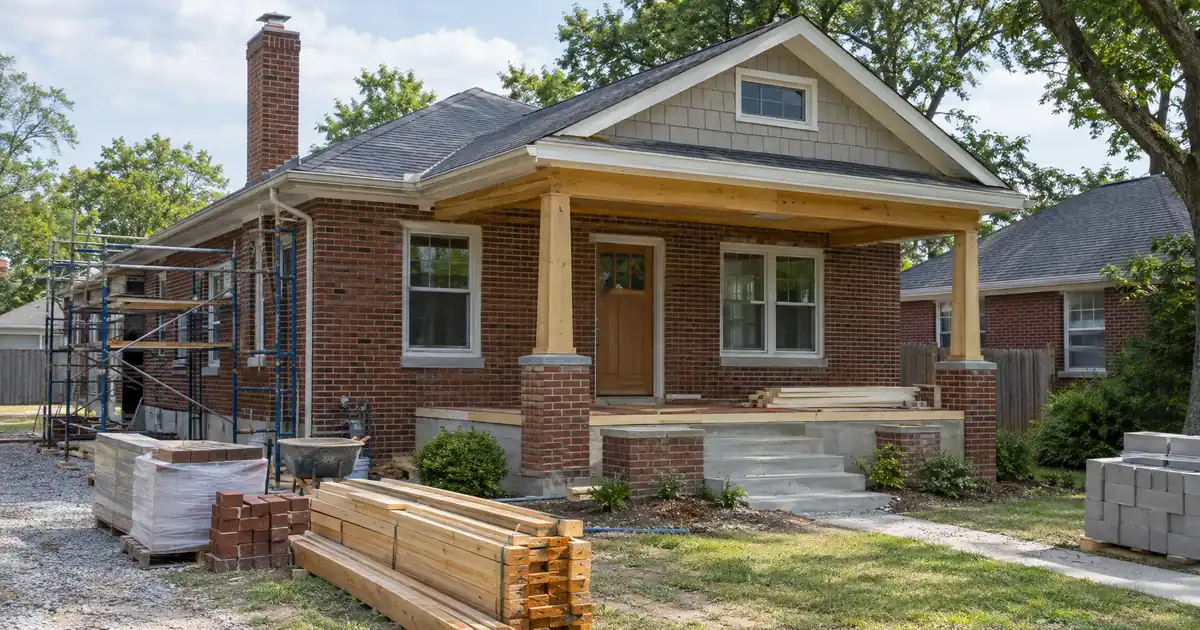
The Quick Read: A DSCR cash-out refinance fits the investor who wants to hold a rented property, pull equity out, and keep the rent stream, while selling fits the investor who wants a clean exit and full redeployment into the next project. The two paths differ in kind. One is a financing event and the other is a disposition event, with its own tax consequences.
- Keep and cash out: qualification runs on property rent against the full housing payment, and loan size is capped by value, coverage, and reserves.
- Sell and roll: a taxable sale is the default, and a 1031 exchange only defers gain on property that was held as a real investment.
- A flip held primarily for sale generally does not qualify for a 1031.
- Clearing 1.00 coverage does not mean positive cash flow.
- Tax treatment varies; consult a qualified professional.
Here is the honest answer on who each option is for. The keep path suits an investor holding a finished rehab that now rents well, with equity to extract and a plan to carry more debt. The sell path suits an investor whose rehab was always a flip, whose property needs capital work they don’t want to fund, or whose rent can’t support a larger loan. Neither is better in the abstract. The deciding variables are rent coverage, appraised value, how the property was held, and what the next deal needs in cash.
DSCR Cash-Out Calculator
Run the cash-out numbers in your market
Rate source: Freddie Mac 30-yr average via FRED® — Federal Reserve Bank of St. Louis · effective Oct 8, 2026
Prefilled with starting assumptions — enter your property’s value, balance, taxes, and insurance for a more accurate picture.
Program parameters update from Lendmire’s centralized guideline source. Taxes and insurance are editable estimates.
As of Oct 8, 2026 · General Freddie Mac market benchmark, not a Lendmire loan offer. Property value, balance, taxes, and insurance are editable estimates. Maximum loan-to-value varies by lender, program, property type, and seasoning. Not a Loan Estimate, approval, or commitment to lend. Program availability and eligibility are subject to lender guidelines, credit approval, property review, and underwriting.
“Roll” here means redeploying capital into the next rehab. It has nothing to do with options contracts or retirement rollovers.
Side-by-Side
The table below compares the structural differences. The cash-out column reflects Lendmire’s network guidelines. The sell column describes published industry norms and tax-code mechanics, which apply regardless of lender.
| Factor | Keep + DSCR cash-out | Sell + roll (taxable or 1031) |
|---|---|---|
| Review basis | Property rent vs. full payment | None at sale; replacement financing is reviewed on its own |
| Documentation | Entity papers, guarantor, lease, appraisal, title, insurance | Purchase contract, intermediary agreement, identification notice |
| Property types | Rentable, appraisable 1-4 unit and similar | Any sale; 1031 limited to real property held as investment |
| Entity vesting | LLC borrower with guarantor, subject to program terms | Taxpayer on sale generally must match taxpayer on purchase |
| Timing driver | About 6 months of seasoning, appraisal, rent test | IRS 45-day and 180-day clocks if a 1031 is used |
| Reserves | About 6 months PITIA; about 9 above $1,500,000 | Cash needed for the next deal and closing costs |
| Tax event | None on loan proceeds | Gain recognized unless a valid 1031 applies |
| Main risk | Low appraisal, thin rent, higher leverage | Taxable gain, failed exchange, lost asset |
How the Keep Path Works
Across the wholesale network, a DSCR cash-out refinance qualifies primarily on property-level rental income covering the payment, subject to lender guidelines. Coverage is monthly rent divided by PITIA: principal, interest, taxes, insurance, and association dues. For a full explanation of how that ratio fits into the product, see Lendmire’s complete DSCR loans guide.
Here are the mechanics that decide how much cash comes out.
- Leverage. Cash-out tops out at 75% LTV on an investment-property cash-out across most of the network. Rate-and-term refinances can go higher, but they return no cash at closing, so they don’t help fund the next rehab.
- Seasoning. About 6 months of ownership, measured from title recording, is the common expectation. A rehab bought recently often runs into this wall. Until seasoning is met, programs generally size off cost basis rather than a fresh appraised value.
- Coverage. 1.00 is where select programs start. Stronger ratios open better leverage and pricing. A separate select-lender path takes coverage below 1.00, with leverage and terms adjusted.
- Credit. A 620 floor exists in parts of the network. Most programs want around 660, and 700+ unlocks the strongest tiers.
- Reserves. Commonly about 6 months of PITIA, stepping up to about 9 months above $1,500,000. They vary by lender, leverage, and loan size.
- Loan size. Up to $3,000,000 on standard programs.
The appraiser supplies both value and market rent. A single-family file uses the 1007 rent schedule and a 2-4 unit file uses the 1025 form. Underwriting may use the lease or the appraiser’s rent figure, and many programs use the lower of the two. A low appraisal shrinks proceeds. A rent opinion below the lease moves the coverage number.
Pulling more equity means a bigger payment, so coverage falls with every dollar drawn. That is the binding constraint on this path: value, rent coverage, and reserves, whichever bites first. And a ratio above 1.00 is not positive cash flow. Repairs, vacancy, management, utilities, and capex all sit outside the DSCR calculation.
Documentation on these files is predictable. Expect entity articles, operating agreement, EIN letter, good-standing certificate, guarantor ID and credit, the lease, the appraisal, title, insurance, and the existing payoff. The keep path leaves title, tenant, and lease untouched, so there is no change in vesting.
How the Sell Path Works
A sale is a tax event. The IRS fact sheet on like-kind exchanges says that selling business or investment property at a gain generally means tax on that gain at sale. That fact sheet is archival, so treat it as a statement of principles and pair it with current guidance.
Section 1031 postpones that tax if the proceeds go into qualifying like-kind property. The same fact sheet is blunt that the result is tax-deferred, but not tax-free. Cash received, relief from debt, or non-like-kind property can trigger gain in the year of the exchange. The rule covers real property only.
The exchange has mechanical limits.
- Replacement property must be identified within the IRS 45-day identification period and acquired within the 180-day exchange period, per The Tax Adviser.
- The taxpayer can’t take actual or constructive receipt of the sale proceeds. A qualified intermediary holds the funds.
- Basis generally carries over to the replacement property.
- The 180 days can’t be extended outside narrow disaster-type circumstances, according to a summary of an IRS private letter ruling on the same Tax Notes page that carries the statute. It’s a ruling summary, not precedent.
On a taxable sale of a depreciated rental, gain tied to past straight-line depreciation is unrecaptured §1250 gain, taxed at a maximum of 25%, according to EisnerAmper. Components reclassified through cost segregation can be taxed at ordinary rates instead, per Wiss. Selling shrinks proceeds by tax and sale costs before anything gets redeployed.
Then comes financing the next deal. Proceeds can fund a rehab with cash or a bridge loan. A DSCR loan generally comes later, as the takeout on a rentable, appraisable property. And the replacement property starts its own seasoning clock.
The Flip Problem
This is where the sell path most often breaks. The statutory text on Tax Notes says nonrecognition doesn’t apply to real property held primarily for sale. IPX1031 lists property held by a developer, flipper, or other dealer as non-qualifying.
So “sell and roll into the next rehab” is often a taxable sale, not an exchange. Intent and surrounding facts control. Labeling a property as investment doesn’t cure a short hold bought for resale. A rehab that was held as a genuine rental may be a different story, but that is a CPA question, not a lender question.
Investors who assume a 1031 will shelter a flip are the ones surprised at tax time. Run the taxable-sale version first. If a 1031 turns out to apply, that’s a bonus, not the plan.
When Cash-Out and Keep Is the Better Fit
Keep the property when several of these are true.
- Rent supports a larger loan with room to spare, so coverage stays comfortably above the program floor after the draw.
- The property was bought and rehabbed as a rental, not a flip, so a sale would be a taxable event with no deferral route.
- The rehab is stabilized, with no major capital items such as a roof coming due.
- Seasoning is met, or close to it, so the loan sizes off value instead of cost.
- Equity is large enough that 75% LTV on a cash-out still returns meaningful cash after payoff, costs, and reserves.
- The investor values the rent stream, future appreciation, and equity access more than a clean exit. Exact terms depend on the lender’s guidelines, property type, leverage, and a full review of the borrower’s file.
Consider an investor with a stabilized duplex that appraised well and rents at a level that covers the new payment at a healthy margin. Pulling equity keeps the asset, avoids a sale, and funds the next down payment. The tradeoff is more debt on that property, and chained cash-outs across a portfolio raise leverage everywhere at once.
Entity structure helps on this path. Select programs commonly allow an LLC as borrower with an individual guarantor, subject to program terms. Conventional cash-outs generally want the individual on title.
When Sell and Roll Is the Better Fit
Sell when the facts point away from holding.
- The project was a flip from the start and the plan is to recycle capital.
- Rent is thin against the payment a cash-out would create. Refinancing doesn’t fix a weak performer, and a bigger loan on soft rent means less cushion.
- The property needs capital work the investor doesn’t want to fund or manage.
- Seasoning isn’t met and the cost-basis sizing would return little cash.
- Liquidity is the goal. If a refinance can’t produce the cash the next deal needs, a sale may be the only route that does.
- The property is an unusual type, since manufactured homes, log homes, and barndominiums are not offered in these DSCR programs.
Picture an investor with a finished fix-and-flip sitting in a market where rents don’t support much leverage. The refinance would return little cash and leave coverage razor thin. Selling realizes the gain, resets the capital, and puts it into the next rehab. A 1031 is unlikely to apply to a flip, so the investor should budget for the tax and confirm with a CPA before assuming otherwise.
Edge Cases That Change the Answer
Refinancing near a 1031. Practitioners describe a refinance right before an exchange as risky. 1031 Capital Advisors notes that borrowing against a property you keep creates no income tax, but cash taken ahead of an exchange can be recharacterized as boot. Refinancing the replacement property after the exchange completes is generally described as workable.
Entity mismatch. A DSCR purchase vested in a new LLC may not match the taxpayer who sold. Check with a CPA before choosing vesting.
Multi-property exchanges. The 180-day clock starts at the first sale. A missed timeline can mean a failed exchange or only partial deferral.
Mixed paths. Hold one property and sell another. Take a partial cash-out. Hold now and sell later. The either-or framing is a simplification, and a portfolio often wants both moves.
Tax treatment varies; consult a qualified professional.
DSCR vs. conventional financing
There are two common ways to finance an investment property, and they qualify you differently — here’s how investors weigh them.
Why investors choose it
- Qualifies on the property’s rental income — no personal tax returns, W-2s, or pay stubs needed to document income.
- No personal debt-to-income ceiling to clear, so existing mortgages and obligations don’t cap your borrowing the same way.
- Can be closed in an LLC, keeping the property inside a business entity.
- Built for scaling — not held to the limit on number of financed properties that conventional financing applies.
- Underwriting centers on the deal: generally qualifies when the rent covers the payment, a 1.00x coverage ratio being a common baseline (confirmed in underwriting).
- Designed specifically for investment property, including long-term and, where the program allows, short-term rentals.
Where it’s strong
- Often the lowest ongoing financing cost for a buyer who fully qualifies on personal income — a fit for a first property or a cost-first purchase.
Trade-offs for investors
- Requires full personal income documentation and must fit within a debt-to-income limit — salary, existing debts, and other mortgages all count.
- Typically held in your personal name rather than a business entity.
- Caps how many financed properties you can carry, which can become a ceiling as a portfolio grows.
- Evaluates you as a borrower as much as the property, which usually means more paperwork.
How investors usually choose: a first or single property often optimizes for the lowest financing cost; portfolio builders often optimize for leverage, vesting in an LLC, and scaling past conventional caps. The right answer depends on your goals, the property, and current guidelines — both paths run through select lenders in Lendmire’s wholesale network, with eligibility and terms confirmed in underwriting.
A Quick Decision Sequence
Run these tests in order.
1. Was the property a flip or a genuine rental hold? A flip points toward a taxable sale.
2. Does rent cover the post-draw payment with margin? If coverage lands near the floor, the keep path is fragile.
3. Is seasoning met, and does value support 75% LTV on a cash-out? These specifics are subject to lender guidelines and a full review of property, leverage, and credit.
4. Does the cash that comes out, after payoff, costs, and reserves, actually fund the next deal?
5. Is there a major capex item on the horizon? Every figure here varies by lender and program — guidelines, property type, leverage, and credit profile all apply.
If most answers are yes, keep and cash out. If the first answer is a flip and the others are weak, sell. Mixed answers suggest a partial path.
Frequently Asked Questions
Is a DSCR cash-out refinance taxable?
Loan proceeds are generally not income, since borrowing isn’t a sale. How the funds are used and how the property is held can affect interest deductibility. Keep clear records and confirm treatment with a tax professional.
Can I use a 1031 exchange on a flipped rehab?
Usually not. Real property held primarily for sale is excluded from like-kind treatment, and intent and conduct control the result. A property held as a genuine rental may differ, which makes it a CPA question.
How much equity can I pull out with a DSCR cash-out?
The ceiling is 75% LTV on an investment-property cash-out across most of the network, and the actual figure also depends on rent used for lender review, PITIA, and reserves. It is never a guaranteed cash number. The loan must also clear the coverage test, which falls as the draw grows. Final terms depend on lender guidelines, property type, leverage, and the borrower’s complete credit picture.
Does clearing 1.00 coverage mean the property cash flows?
No. DSCR compares rent to PITIA only. Repairs, vacancy, management, utilities, and capex sit outside the calculation, so a property can clear 1.00 and still run thin.
Can I refinance right before selling through a 1031?
Practitioners urge caution, because cash pulled ahead of an exchange can be treated as boot or scrutinized. Refinancing the replacement property after the exchange is generally described as workable. Sequence it with a qualified intermediary and tax advisor.
If you are buying or refinancing a rental property and want to see how the numbers work, Lendmire can help you compare DSCR loan options based on the property income, credit profile, leverage, and investor goals. Lendmire is a broker arranging financing through select lenders in its wholesale network, across 41 markets including Washington, D.C. Program details are subject to lender guidelines and are not a commitment to lend.
A deeper walk-through of investment-property equity extraction lives in Lendmire’s guide to cash-out refinance on an investment property.
About Lendmire
Lendmire (NMLS# 2371349) is a mortgage brokerage built around DSCR investor lending, with programs available in 41 markets, including Washington, D.C. DSCR lenders commonly evaluate rental-income coverage instead of personal income paperwork — a practical fit for LLC-owned and multi-property investors. Terms vary by lender, property, leverage, and program. Scotsman Guide named Lendmire a Top Mortgage Workplace in both 2025 and 2026.
Get Started
Ready to find the right loan for you?
In about 30 seconds you can review financing options available for your investment property. No commitment required.
Informational only. Not a Loan Estimate, approval, or commitment to lend. Program availability and eligibility are subject to lender guidelines, credit approval, property review, and underwriting.
References
1. IRS Fact Sheet FS-2008-18 (Like-Kind Exchanges)
3. EisnerAmper, Depreciation Recapture
4. Wiss, Depreciation Recapture
6. IPX1031, Like-Kind Property
This article is part of Lendmire’s investment property cash-out refinance program — full qualification details, guidelines, and scenarios live on the program page.
Related reading: Are Blanket DSCR Loans Still Available for Small Investors? · How to Sell One of Two Rentals Under a Blanket DSCR Cash-Out Loan · How to Refinance a Family-Financed Rental Into a DSCR Loan
Brandon Miller
Founder & CEO, Mortgage Loan Originator, Lendmire LLC
- Mortgage Loan Originator · NMLS# 1129696 · Verify on NMLS Consumer Access
- North Carolina Real Estate Broker · License# 343312 · Verify on NCREC
- North Carolina Insurance Producer · License# 19053198 · Property, Casualty, Life, Health · Verify on NAIC SBS
- Lendmire LLC · Firm NMLS# 2371349 · Verify firm licensure
Legal disclosures. Lendmire (NMLS# 2371349) is a state-licensed mortgage brokerage that arranges financing through wholesale lender relationships. Lendmire is not a direct lender, depository institution, or registered financial advisor. The discussion above is general informational content about real estate financing — it is not financial, legal, or tax advice, and readers should consult licensed professionals for guidance on their individual circumstances. Loan inquiries are subject to lender underwriting; this article does not represent a commitment to lend. Loan terms, rates, and qualification standards vary by borrower, property, and state, and are subject to change at any time. Equal Housing Opportunity. NMLS Consumer Access: nmlsconsumeraccess.org.